11 min read
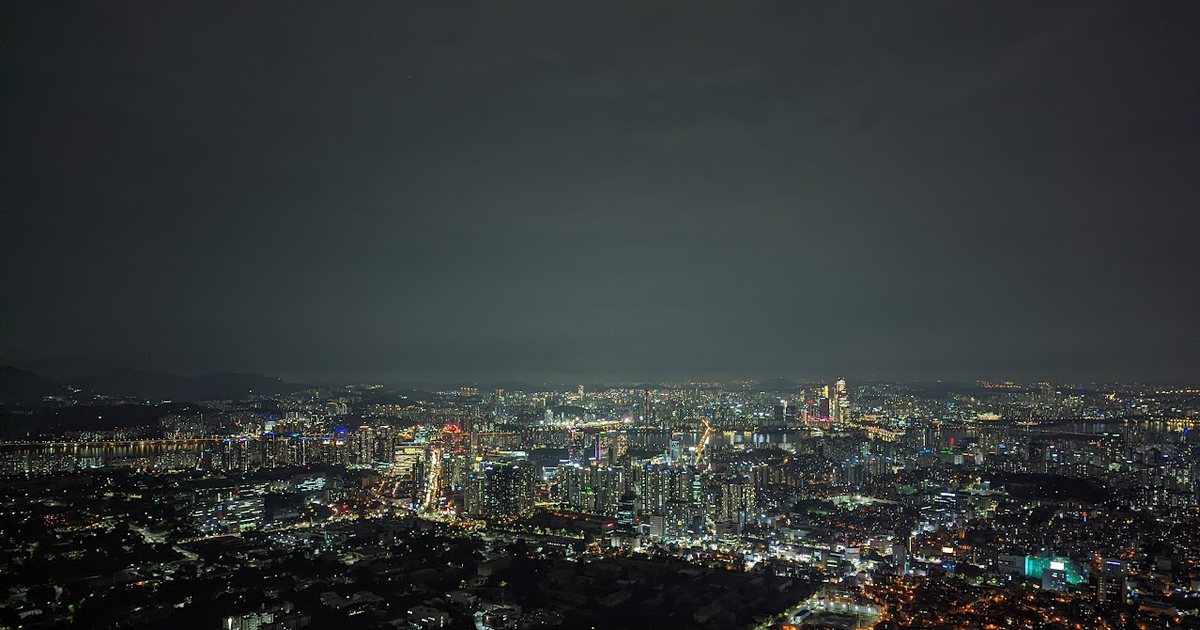
Why is Korean internet so fast? It comes down to 5 reasons, and density matters most. Roughly half of South Korea’s 51 million people live in and around Seoul, most of them in high-rise apartment complexes, so one fiber line into one building can bring gigabit service to hundreds of homes at once.
On top of that you have a government that treated broadband as national infrastructure in the 1990s, three carriers that compete hard, a gaming culture that created demand early and one of the world’s first commercial 5G launches in 2019. For a visitor, that means maps, video calls and streaming that keep working on a Seoul subway train. It also explains why the connection back home may not.
Key takeaways
- Density does most of the work: one apartment tower lets a single fiber run serve hundreds of households, which brings the cost per home way down.
- Korea planned broadband as public infrastructure from the mid-1990s and pushed it much harder after the 1997 Asian financial crisis.
- PC bangs (PC방, pay-by-the-hour gaming cafés) created mass demand for fast connections in the late 1990s, before most countries had broadband at home.
- Korea’s three mobile carriers launched commercial 5G in April 2019, among the first in the world.
Why is Korean internet so fast? The 5 reasons in one table
No single factor explains it. Korea’s speed comes from geography, policy, business and culture all pushing in the same direction at the same time. Here’s how the five pieces fit together.
| Reason | What happened | Why it made the internet faster |
|---|---|---|
| Dense cities and apartments | Most city households live in high-rise apartment complexes (아파트 단지, apateu danji) | Short, cheap fiber runs per home and quick upgrades across whole buildings |
| Early government push | National information infrastructure plans from 1995, then Cyber Korea 21 in 1999 | Backbone networks built ahead of demand, plus building wiring standards and mass internet training |
| Carrier competition | Thrunet, Hanaro Telecom and KT fought for broadband customers from the late 1990s | Speed became the main selling point, so carriers kept upgrading to win subscribers |
| PC bang culture | Gaming cafés spread across the country in the StarCraft era | Showed real demand and taught millions of people to expect low lag |
| Mobile networks and 5G | Nationwide LTE, then a commercial 5G launch in April 2019 | Fast data on phones, including underground on the subway |
Here’s a worked example. Picture a suburban street in the American Midwest: 40 detached houses spread along a kilometer of road, each needing its own line from the pole. Now picture one Seoul apartment complex with several 20-plus-floor towers. The carrier brings fiber to each building’s telecom room once, then uses the building’s internal wiring to reach every unit. The digging and permits are the expensive part, and they get split across thousands of customers instead of dozens.
How apartment living made fiber cheap to install
Apartments are normal in Korea, not a compromise. Families, retirees and young professionals all live in towers, and big branded complexes are built by companies like Samsung C&T and Hyundai Engineering & Construction. That housing pattern is the quiet engine behind the country’s broadband.
The math of one tower versus one street
Laying fiber costs money mostly per meter of trench and per building connection. A tower packs hundreds of homes into a small footprint, so the cost per subscriber collapses. When a carrier upgrades its equipment, it can switch on faster plans for a whole complex in one go instead of rolling trucks to every house.
It also changes how buildings are built. New Korean apartments are designed with telecom rooms and in-building cabling from the start, so faster internet is part of the original plans rather than something added later. That’s why Korean homebuyers treat a good connection as a basic feature, a bit like a parking space.
Why mountains help, oddly enough
South Korea is a small, mountainous country, and most of that mountain land isn’t built on. People crowd into the flat land along rivers and coasts, so even mid-sized cities like Daejeon or Gwangju are compact. Compare that with countries where people spread across huge distances, where rural broadband is a constant political fight because every last mile costs so much.
How the Korean government built broadband in the 1990s
Density made fast internet cheap. Policy made it happen early. Korea’s government decided in the mid-1990s that information networks would be as important to the economy as highways and ports had been in earlier decades.
The 1995 Korea Information Infrastructure plan
The Korea Information Infrastructure project, launched in 1995, set out to build high-speed backbone networks linking cities, government offices, schools and research institutes. The state paid for much of the core network. Private carriers built the connections into homes, using that backbone and, in many cases, government-backed financing.
The government also created a certification scheme that graded buildings by the quality of their internal communication wiring. Developers wanted the higher grades because buyers looked for them, so new apartments came ready for broadband.
What changed after the 1997 financial crisis
The 1997 Asian financial crisis hit Korea hard and led to an IMF bailout. The government’s answer included a big bet on information technology as a new growth industry. The Cyber Korea 21 plan in 1999 pushed broadband rollout and internet use across society.
The plan went beyond cables. Mass internet-training programs reached homemakers, soldiers, farmers and older people, so demand grew alongside supply. Laid-off workers started internet businesses, and many of them needed fast connections to survive. Some of today’s biggest Korean platforms trace their roots to this period, as our guide to Naver vs Kakao explains.
By the early 2000s, Korea led OECD countries for broadband subscriptions per person. That head start shaped everything that followed.
Why Korean carriers compete so hard on speed
Government plans don’t explain why speeds kept climbing for two decades. Competition does. In the late 1990s, Thrunet launched cable-modem broadband, Hanaro Telecom pushed ADSL (internet over existing phone lines), and the former state carrier KT answered with its own ADSL service. They fought block by block for apartment complexes.
Who sells home internet in Korea today
The market now centers on three telecom groups: KT, SK Broadband (part of the SK Telecom group) and LG Uplus, with cable TV operators competing too. Most Korean households buy a bundle of home internet, IPTV and mobile plans from one company, and the bundle discounts keep customers loyal. That gives carriers a reason to keep the home connection good, because a household that leaves takes its phones with it.
How Korean internet plans are sold
Plans are typically sold in speed tiers, usually 100 Mbps, 500 Mbps and 1 Gbps, with multi-gigabit options in some areas. Gigabit plans went mainstream in the mid-2010s, when KT’s GiGA internet brand made gigabit a standard product rather than a novelty. Prices and the exact tiers on offer change often, so check KT, SK Broadband or LG Uplus on their official sites if you’re moving to Korea.
One more detail matters for long-stay residents. Korean home internet usually comes with multi-year contracts, often three years, and installation is fast in cities. Ask for the contract terms in English before you sign, because early-cancellation fees are common.
How PC bang culture created demand for speed
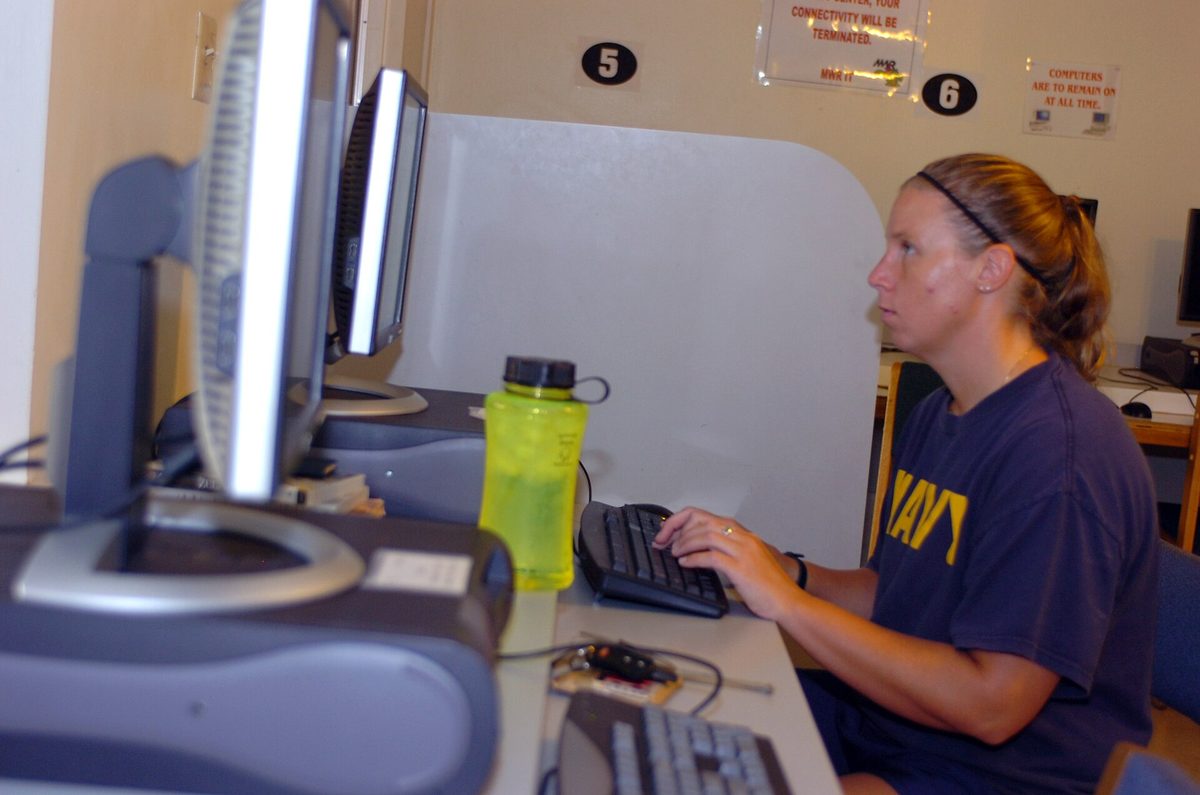
Infrastructure needs customers, and Korea’s first mass broadband customers were gamers. PC bangs (PC방, “PC rooms”) are internet cafés built for gaming: rows of powerful computers, comfortable chairs, snacks and instant noodles, paid by the hour. They spread across the country in the late 1990s, around the release of Blizzard’s StarCraft in 1998 and NCSoft’s Lineage the same year.
For many Koreans, the PC bang was the first place they used fast internet. Business owners paid for the best lines because laggy games meant empty seats. That gave early broadband companies a reliable stream of commercial customers in every neighborhood.
The culture fed itself. Online games needed low latency (the delay between your click and the server’s response), gamers demanded it, and carriers sold it. Televised StarCraft leagues turned pro gamers into celebrities and helped build Korea’s esports scene. The companies that grew out of that era are covered in our guide to Korean game companies.
PC bangs still exist today, now running titles like League of Legends and battle royale shooters. If you visit one, expect self-service kiosks for paying and food orders on the screen. Some kiosks are Korean-only, so a translation app helps.
5G in Korea: first to launch, and what it’s like on the ground
Korea carried its wired head start into mobile. LTE covered the country early, and the three carriers launched commercial 5G smartphone service in April 2019, timed to beat rivals abroad for the “world’s first” title.
What 5G actually delivers in Korea
Most Korean 5G runs on mid-band frequencies, which balance speed with decent range. In big cities you’ll usually see a 5G signal on a compatible phone, and LTE fills the gaps. Phones also keep working on most subway lines, including underground platforms and tunnels, which still surprises visitors from cities where the signal drops the moment you go below street level.
The 28GHz letdown
The flashier side of 5G didn’t pan out. Very high-frequency 5G at 28GHz can deliver extreme speeds but only over short distances, and the carriers built very little of it. Regulators later revoked their 28GHz licenses because the companies missed their build-out commitments. Day to day you won’t notice, but it’s a reminder that “first to launch” and “best possible network” aren’t the same thing.
What visitors notice about the internet in Korea
Most travelers notice the speed within an hour of landing. Here’s what tends to stand out, and what to do about it.
- Signal in the subway. You can keep streaming or messaging between stations, so Seoul’s metro is easy to get around with live maps.
- Wi-Fi almost everywhere. Cafés, convenience stores, airports, KTX high-speed trains and many public spaces offer Wi-Fi, and Seoul runs free public Wi-Fi in many outdoor areas.
- Korean apps beat Google here. Google Maps has limited walking and driving directions in Korea, so most visitors switch to Naver Map or KakaoMap.
- Payments run online too. Card terminals, kiosks and delivery apps all depend on the network, which is part of why Koreans expect it never to drop.
How to get online the moment you land
You have three main choices: an eSIM you install before you fly, a physical SIM card from the airport counter or a pocket Wi-Fi router you share with a group. Each suits a different trip, and our comparison of Korea eSIM vs SIM card vs pocket Wi-Fi walks through which to pick. Check your phone supports eSIM and is carrier-unlocked before you leave home.
Is South Korea’s internet really the fastest in the world?
Korea is reliably near the top of global speed comparisons, but it isn’t always number one. Rankings depend on who runs the test, whether they measure fixed or mobile broadband and whether they report average or median speeds. Some smaller, wealthy places and a few countries with big recent fiber rollouts often score as high or higher. Look at the latest reports from the testing firms directly rather than trusting an old headline.
Where Korea really stands out is consistency. Fast service reaches most homes, on most networks, in most cities, and it has done so for a long time. A high top speed in a few neighborhoods isn’t the same achievement.
The weak spots Koreans talk about
- Network fees. Korea’s rules on what carriers and content companies pay each other have drawn criticism from global tech firms. SK Broadband and Netflix fought a long, public legal battle over network fees before settling in 2023.
- Concentration risk. In 2018, a fire at a KT telecom building in Seoul knocked out phone, internet and card payment services across parts of the city. It showed how much daily life depends on a few facilities.
- Blocked content. South Korea blocks access to North Korean state websites, illegal gambling and some adult content. Most visitors never notice, but the internet isn’t entirely unfiltered.
- Speed versus price. Fast plans are common, but bundles and long contracts make it hard to compare real costs, which consumer groups have complained about.
FAQ
Is Korean internet the fastest in the world?
It ranks near the top in most global comparisons, but not always first. Results vary by testing company, by fixed versus mobile broadband and by the month measured. What sets Korea apart is how evenly fast service is spread across homes and cities.
Why is internet in the US slower than in Korea?
Mostly geography and housing. Americans spread out across suburbs and rural areas, so each home costs far more to connect, while Korea packs households into apartment towers. Korea also had early national planning and strong competition between providers in many buildings.
How fast is home internet in Korea?
Plans are usually sold in tiers of 100 Mbps, 500 Mbps and 1 Gbps, with multi-gigabit plans in some areas. Actual speeds depend on your building’s wiring and your router. Check the official sites of KT, SK Broadband and LG Uplus for current plans.
Is there free Wi-Fi in Seoul?
Yes. Seoul runs free public Wi-Fi in many outdoor spaces, and most cafés, airports and KTX trains offer Wi-Fi too. Public networks are handy but less secure, so avoid logging into banking or sensitive accounts on open hotspots.
Does 5G work everywhere in Korea?
5G is widely available in cities and along major transport routes, with LTE covering the gaps elsewhere. You need a 5G-compatible phone and a plan or eSIM that includes 5G. In mountains and some rural spots, expect LTE instead.
What is a PC bang?
A PC bang (PC방) is a Korean gaming café where you pay by the hour to use a high-end computer with a fast connection. They boomed in the late 1990s with StarCraft and helped create demand for broadband. Most are open late, and you usually pay and order food through a kiosk.
What to watch next for Korea’s internet
The next chapter is less about home speeds and more about what runs on the network. Korea is putting money into AI infrastructure: according to UPI, the government is speeding up a $599 million domestic AI chip project. Data centers to run that AI will need power, cooling and fat network links, so watch how carriers and chipmakers build them.
On the mobile side, Korea has announced 6G research programs and will likely chase another early launch. Whether it learns from the 28GHz episode and builds coverage people actually use matters more than another “world’s first” press release.
If you’re planning a trip, sort out your eSIM or SIM before you fly, download Naver Map or KakaoMap and keep a translation app ready for PC bang kiosks. If you’re moving to Korea, compare bundles from all three carriers on their official sites and read the contract length before you sign.
Related reading
Sources k-korea.blog · news.google.com
Prices, opening hours and availability change. Check the official page before you buy or travel.