11 min read
Using a T-money card takes 3 moves: buy it, load it with cash, and tap it on the reader every time you get on and off. If you searched how to use T money card, that’s the whole system. It also gets you cheaper fares than single tickets, free transfers between subway and bus, and a way to pay for taxis and convenience store snacks with no cash or card juggling.
If you’re in Seoul for more than a day, get one. Below: where to buy and top up, how the transfer window works, where else you can tap it, and how to get your leftover balance back before you fly home.
Key takeaways
- Any GS25, CU, 7-Eleven or emart24 convenience store sells T-money cards and tops them up, usually with cash only.
- Tap off when you leave a bus, every time, or you lose the free transfer and may pay a higher fare.
- Transfers between subway and bus are free or discounted if your next tap comes within 30 minutes of tapping off.
- The same card works on subways and buses in Busan, Incheon and most other Korean cities, plus most taxis.
What is a T-money card and why do visitors need one?
T-money is Korea’s rechargeable transit card, a prepaid chip card you load with won (Korean currency) and tap on readers. It started in Seoul and now works across most of the country, so one card covers the Seoul Metro, city buses, many taxis and a long list of shops.
The case for it is simple. Single-journey subway tickets cost more per ride, need a deposit you have to reclaim at a machine, and give you no transfer discount. Paying cash on buses is slower and gets less and less common. With T-money you tap and walk, which matters at rush hour when nobody at a Gangnam gate wants to wait for you to dig out coins.
There’s another reason it works for visitors: no registration, no passport and no Korean bank account. You buy the card like a pack of gum.
Do foreign credit cards work on the Seoul subway?
Don’t count on it. Contactless Visa or Mastercard taps that work on transit in London or New York generally don’t work at Seoul’s subway gates or on its buses. Plan on a T-money (or a T-money-enabled card, covered below) from day one.
Where to buy a T-money card in Seoul
You have three easy options, and the first one is the default.
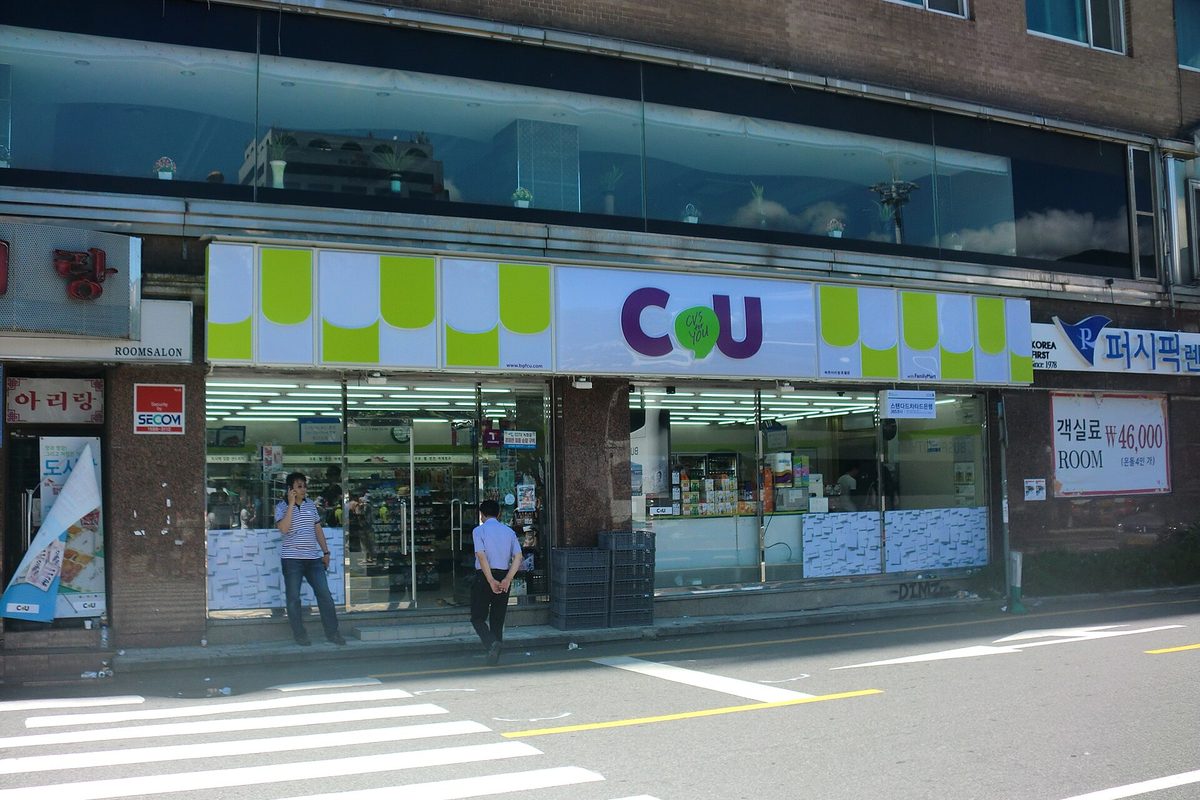
- Convenience stores. GS25, CU, 7-Eleven and emart24 sell plain and character T-money cards at the counter. Ask for “T-money card” and staff will understand. You’ll find these stores in Incheon Airport’s arrivals area, so you can leave the terminal ready to ride.
- Subway station vending machines. Many stations have card machines with an English menu that sell and charge T-money.
- Souvenir and character shops. Designs featuring popular Korean characters and K-pop tie-ins turn up in shops around Myeongdong and Insadong. They work the same as the basic card and usually cost more.
The card itself comes with an empty or near-empty balance. You pay once for the card, then load money separately. Prices change and vary by design, so check the store’s price tag or the official T-money website instead of trusting old blog figures.
How to top up T-money (and why you need cash)
Top-ups are where first-timers get stuck. In most places, T-money is charged with cash, and many machines and counters won’t take a credit card for it.
Topping up at a subway station machine
- Find the ticket and card machine near the gates and switch the screen to English.
- Choose the T-money recharge option.
- Place your card in the tray or on the reader. The current balance appears.
- Pick an amount and feed in won notes.
- Wait until the screen confirms, then take the card.
Some stations also have small dedicated recharge machines. If you leave the card on the reader too early, the charge may fail, so wait for the confirmation screen.
Topping up at a convenience store
Hand over the card and cash and say the amount (“ten thousand won, please”). The cashier charges it and hands back the card with a receipt. If you’re also grabbing triangle kimbap or a banana milk (our Korean convenience store food guide has the picks), it’s one stop.
How much to load? For a typical sightseeing day of four or five rides, a mid-sized top-up covers you, and you can always add more at any station. Loading less and topping up more often keeps your refund small at the end.
How to use T-money card on the Seoul subway
The subway is the easy part. Seoul fares are distance-based, which is why you tap twice.
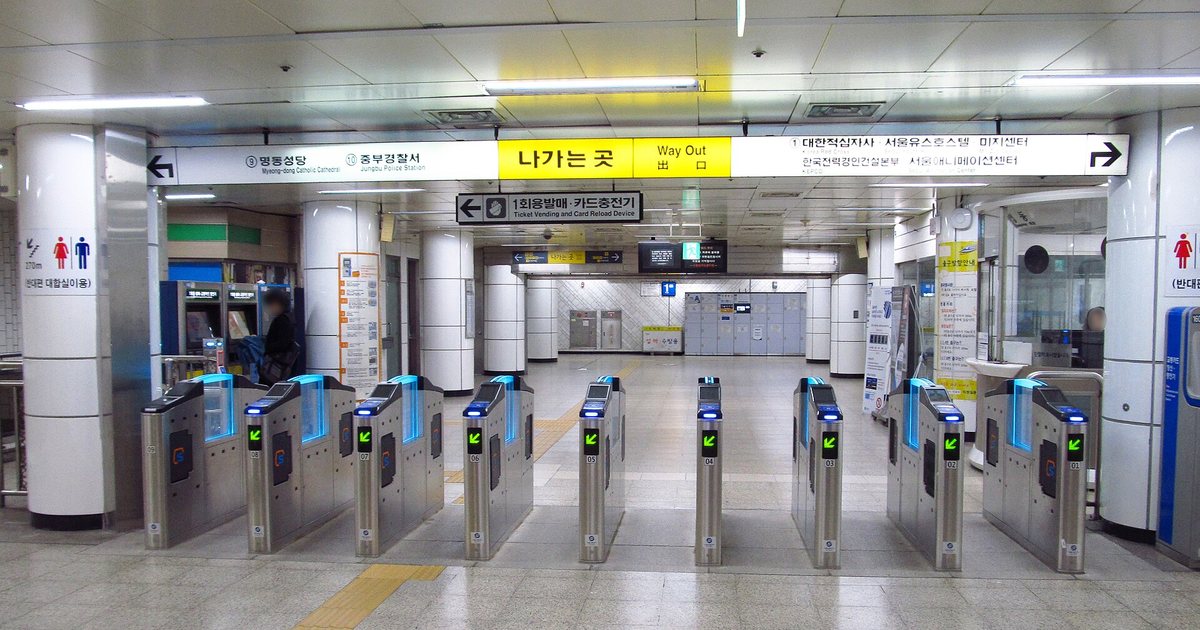
- Tap in at the gate. Hold the card flat on the reader until it beeps and the screen shows your balance.
- Ride. Follow line numbers and colors, and use station numbers on the map if the Korean names blur together.
- Tap out at the exit gate. The system takes any extra fare for longer trips here.
If the gate won’t open on the way out, your balance is probably too low for the distance. Head to the fare adjustment machine near the exit gates, top up, and tap again.
One card per person. You can’t tap once and wave a friend through, and gates may beep or block a second tap with the same card. Families should get one card each. Children and teens can get discounted fares on a T-money card, but the card has to be registered for that age group. Check the official T-money site for how to set it up.
Bus rides and free transfers: the tap-off rule
Buses are where T-money saves the most, as long as you follow one rule: tap when you board at the front and tap again when you get off at the back.
Seoul’s city buses are color-coded. Blue buses run long trunk routes, green buses connect neighborhoods to subway stations, red buses run express routes to satellite cities, and yellow buses loop around central districts. They all take T-money.
How the 30-minute transfer window works
When you tap off one ride and tap on the next within 30 minutes, the system treats it as one continuing trip. You pay the base fare once, plus extra only if the total distance runs long. It works subway to bus, bus to subway and bus to bus. Seoul extends the window late at night (roughly from 9 p.m. to 7 a.m.), so double-check current rules on the T-money site if you’re out late.
Two things break the transfer. Riding the same bus route again (getting off and back on the same number) doesn’t count. Forgetting to tap off the bus means the system has no idea when you left, so your next tap is billed as a brand-new trip.
A worked example
Say you start at your guesthouse near Hongdae and want to see Gyeongbokgung Palace, then eat in a neighborhood not on a subway line.
- Tap in at Hongik University Station, ride the subway, tap out near the palace. You pay the base subway fare.
- Spend three hours at the palace (if you’re going in hanbok, read our hanbok rental Seoul guide first). Your transfer window has long closed, so the next ride is a new trip.
- Board a green bus within 30 minutes of a second subway hop, and tap off when you get out. That bus leg counts as a transfer, not a fresh fare.
The lesson: the window is for chained rides, not for coming back from a long stop. Plan connections back to back and you’ll pay noticeably less across a week.
Taxis, convenience stores and other places T-money works
Transit is only half the use. T-money also works as a small payment card, which is handy when a foreign card gets declined or you don’t want to break a big note.
| Where | How you pay with T-money | What to watch |
|---|---|---|
| Seoul subway | Tap in at the gate, tap out at exit | Low balance blocks the exit; use the fare adjustment machine |
| City buses | Tap at the front on boarding, tap at the rear on exit | No tap-off means no transfer |
| Taxis | Tell the driver “T-money,” tap on the reader by the meter | Most taxis accept it; check the sticker or ask before you ride |
| Convenience stores | Hand the card to staff or tap on the counter reader | Works for purchases, but top-ups usually need cash |
| Other cities | Same tap-in, tap-out routine | Busan, Incheon and most metro areas accept it; transfer rules differ by city |
In taxis, say “T-money” (or “card”) when you reach your stop, before the driver prints a receipt. The driver switches the reader to card mode and you tap. If your balance is short, you can usually pay the rest by credit card or cash.
Beyond these, you’ll see T-money readers on some coin lockers in stations, certain vending machines and a few attractions. The logo on the reader is your sign.
T-money vs Climate Card vs WOWPASS: which should you get?
T-money is the default, but two alternatives come up in every visitor forum.
Seoul’s Climate Card (unlimited rides)
Seoul’s Climate Card is the city’s unlimited-ride pass for subways and buses within Seoul, with short-term options aimed at visitors. If you ride a lot in a few days, it can come out ahead of paying per trip. The catch: it’s designed for Seoul, so rides that cross into some surrounding areas and certain bus types may not be covered. Check the Seoul Metropolitan Government’s official Climate Card page for current pass lengths, prices and coverage before you buy.
WOWPASS and other tourist cards
WOWPASS is a prepaid card for foreigners sold from machines in tourist areas and at the airport. It combines currency exchange and card payments, and versions of it include a T-money function for transit. It’s a fit if you want one card for shopping and rides and don’t want to carry much cash. Read the issuer’s official page for how transit top-ups work on it, because they’re separate from the shopping balance.
Our call
For a short trip with a normal amount of sightseeing, a plain T-money card is the least fuss. Go for a Climate Card if you’ll ride constantly inside Seoul for several days. Pick WOWPASS if avoiding cash matters more than anything else. Mobile T-money exists in Korea, but setup usually assumes a Korean phone and payment method, so most short-stay visitors are better off with the plastic card.
How to get a T-money refund before you fly home
You can get leftover balance back, but not the price you paid for the card itself.
- Small balances: participating convenience stores (GS25, CU, 7-Eleven, emart24 and others) can refund your remaining balance at the counter, minus a small handling fee. There’s a cap on how much a store will refund in one go.
- Larger balances: go to a T-money customer service point or follow the refund process on the official T-money site.
- Subway machines: these return deposits on single-journey tickets, which is a separate system from T-money refunds.
A smarter move is to run the balance down. Spend the last of it on airport rail, a final taxi or a convenience store snack at Incheon. Or keep the card. It doesn’t expire quickly, and it’ll work on your next trip.
Common T-money mistakes foreigners make
- Skipping the bus tap-off. The most expensive habit, because you lose the transfer and may pay a higher fare on the next leg.
- Bringing only cards, no cash. Keep some won notes for top-ups. Station machines and store counters often won’t charge T-money with a foreign credit card.
- Two cards, one wallet. Holding a wallet with two tap cards against the reader can confuse it and charge the wrong one. Take the T-money out.
- Waiting too long between rides. A coffee break longer than the transfer window starts a new fare. Fine if you planned it, annoying if you didn’t.
- Sharing one card in a group. One person, one card, one tap.
FAQ
Can I use one T-money card for two people?
No. Gates and bus readers work on one fare per tap, and transfers are tracked per card. Each traveler, including kids, should carry their own card.
Does T-money work outside Seoul?
Yes. It works on subways and buses in most Korean cities, including Busan and Incheon, and in many taxis nationwide. Transfer rules and fares vary by city, so check local transit pages for the details.
Can I top up T-money with a credit card?
Usually not at station machines or convenience stores, where cash is the norm. Some tourist cards with a T-money function have their own top-up methods, so read the issuer’s instructions.
What happens if my T-money balance runs out mid-trip?
On the subway, the exit gate won’t open. Use the fare adjustment machine near the gates to top up, then tap out. On a bus, you’ll be blocked at boarding, so top up before you get on.
Do T-money cards expire?
Not in the way gift cards do. The card stays usable for years, so plenty of repeat visitors keep the same one between trips. If a card gets damaged, a T-money service point can help.
Is T-money worth it for a 2-day trip?
Yes. You save on every ride compared with single tickets, skip the deposit hassle, and get transfers. Even a weekend in Seoul usually means at least a handful of rides.
What to sort out before your first Seoul ride
Change a little cash into won before you land or at the airport, then buy a T-money card at the first convenience store you pass in arrivals. Load enough for your first day, save a subway map app on your phone, and practice the bus tap-off on your first ride so it becomes habit.
If your trip leans on shopping, map your route around stations so you can chain rides inside the transfer window. Our guide to what to buy at Olive Young covers the stops worth making, and with a T-money card in your pocket, getting between them takes one tap.
Before you go, check the official T-money site and the Seoul Metropolitan Government’s transport pages for current fares, night transfer hours and Climate Card options. Rules get adjusted, and those are the pages that change first.
Related reading
Sources t-money.co.kr · k-korea.blog
Prices, opening hours and availability change. Check the official page before you buy or travel.