13 min read
These 20 basic Korean phrases for travelers will get you through meals, shops, subways and taxis. Most of them end in -yo or juseyo, two small polite endings that make you sound courteous to any stranger in Seoul. Learn the table below and say each line out loud a few times. You’ll open your translation app far less often.
Key takeaways
- Jeogiyo (저기요, “excuse me”) is how you call a server. Koreans say it out loud across the room, so you can too.
- Put juseyo (주세요, “please give me”) after almost any noun. Igeo juseyo plus a pointed finger means “this one, please” and works almost anywhere.
- Romanization fools English speakers: “eo” sounds close to the “u” in “cup,” so Seoul is roughly “Saw-ool,” not “See-oul.”
- Save 1330, the Korea Travel Hotline, for interpretation help, plus 112 for police and 119 for fire and ambulance.
What are the most useful basic Korean phrases for travelers?
The phrases that matter most are the ones you’ll use ten times a day: greeting people, getting attention, asking prices, ordering and paying. Here are the 20 that cover most situations a visitor runs into. The romanization follows the Revised Romanization system, the official one used on Korean road signs and subway maps, so it matches the spellings you’ll see around you.
| English | Korean | Romanization | When you’ll use it |
|---|---|---|---|
| Hello | 안녕하세요 | annyeonghaseyo | Entering any shop, restaurant or taxi |
| Thank you | 감사합니다 | gamsahamnida | Everywhere, all day |
| I’m sorry | 죄송합니다 | joesonghamnida | Bumping into someone, a real apology |
| Excuse me (to get attention) | 저기요 | jeogiyo | Calling a server or stopping someone for directions |
| Yes / No | 네 / 아니요 | ne / aniyo | Answering any question |
| It’s okay / No thanks | 괜찮아요 | gwaenchanayo | Turning down a bag, a sample or help |
| I can’t speak Korean | 한국어 못해요 | hangugeo mothaeyo | When someone starts a fast conversation |
| Please speak slowly | 천천히 말해 주세요 | cheoncheonhi malhae juseyo | Asking for a repeat |
| This one, please | 이거 주세요 | igeo juseyo | Ordering or buying while pointing |
| How much is it? | 얼마예요? | eolmayeyo? | Markets, street stalls, shops |
| Where is the restroom? | 화장실 어디예요? | hwajangsil eodiyeyo? | Restaurants, stations, malls |
| Do you have an English menu? | 영어 메뉴 있어요? | yeongeo menyu isseoyo? | Sitting down to eat |
| Not spicy, please | 안 맵게 해 주세요 | an maepge hae juseyo | Ordering stews, tteokbokki, noodles |
| More of this, please | 이거 더 주세요 | igeo deo juseyo | Refilling side dishes or water |
| The bill, please | 계산해 주세요 | gyesanhae juseyo | Paying at a restaurant |
| Can I pay by card? | 카드 돼요? | kadeu dwaeyo? | Small stalls and markets |
| To go, please | 포장해 주세요 | pojanghae juseyo | Cafes, takeout, leftovers |
| Please take me to ___ | ___(으)로 가 주세요 | ___(eu)ro ga juseyo | Telling a taxi driver where to go |
| Stop here, please | 여기서 세워 주세요 | yeogiseo sewo juseyo | Getting out of a taxi |
| Help! | 도와주세요 | dowajuseyo | Emergencies |
If you only memorize five, make them annyeonghaseyo, gamsahamnida, jeogiyo, igeo juseyo and eolmayeyo. Those five handle greeting, thanking, getting attention, ordering and paying.
How do you pronounce Korean romanization correctly?
Romanization is a crutch, and it wobbles in a few predictable places. If you learn those spots, people will understand you on the first try instead of the third. Hangul, the Korean alphabet created under King Sejong in the 15th century, has 24 basic letters. Plenty of travelers learn to sound it out before they fly, and that’s worth an evening if you have one.
The vowels that trip English speakers
- eo (ㅓ): close to the “u” in “cup,” with the mouth slightly more open. Eolmayeyo starts like “uhl.” Never “ee-oh.”
- eu (ㅡ): the “oo” in “good” with your lips flat, like a soft grimace. You’ll hear it in deuseyo and teureongkeu (trunk).
- ae and e: most Seoul speakers say both like the “e” in “bed.” Don’t stress over the difference.
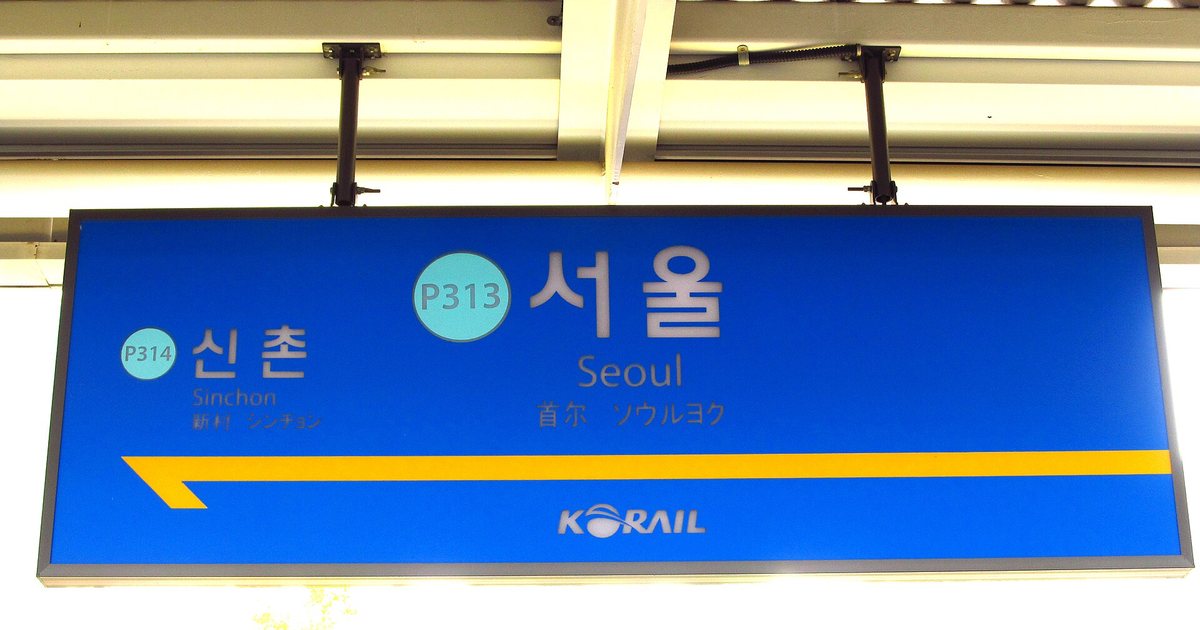
- u is always “oo,” never “you.” Seoul (서울) is two syllables, seo-ul, roughly “Saw-ool.”
Consonants are softer than they look
At the start of a word, Korean g, d, b and j fall somewhere between English g and k, d and t, b and p. That’s why some people hear gamsahamnida as “kamsahamnida.” Both come across fine. Doubled letters (kk, tt, pp, ss, jj) are tense and clipped, with no breath behind them, as in kkakka juseyo.
Final consonants are held, not released. Bap (rice) ends with your lips closed and no puff of air after the p.
Romanization already shows sound changes
Revised Romanization spells words the way they sound, not letter by letter. 감사합니다 is spelled hap-ni-da in Hangul, but the p turns into an m before the n, so the romanization reads gamsahamnida. Trust the romanized spelling and you’ll get those shifts right without trying.
Keep the rhythm flat
Korean gives each syllable about the same weight, with no strong stress like English. An-nyeong-ha-se-yo is five even beats. Raise your pitch on the final -yo to make a question, so eolmayeyo? rises at the end.
Korean greetings and polite endings: when to use -yo and -mnida
Korean changes verb endings depending on who you’re talking to. A visitor only needs two levels, and the rule is easy: with strangers, always be polite.
The two polite levels you’ll hear
-yo endings (해요체, haeyo-che) are everyday polite speech. Gwaenchanayo, eolmayeyo and isseoyo all belong here. This is the register most Koreans use with shop staff and strangers, and it’s the right default for you.
-mnida / -seumnida endings (합니다체, hamnida-che) are formal. Staff, announcers and subway recordings use them, and fixed phrases like gamsahamnida and joesonghamnida come in this form. You don’t need to build formal sentences yourself. Just say these set phrases as they are.
Hello is easy, but goodbye comes in two forms
Annyeonghaseyo works at any hour and comes with a small nod or slight bow. Goodbye depends on who’s leaving:
- Annyeonghi gaseyo (안녕히 가세요, “go in peace”): say it to someone who is leaving while you stay.
- Annyeonghi gyeseyo (안녕히 계세요, “stay in peace”): say it when you’re the one leaving a shop or restaurant.
If you mix them up, nobody will mind. As you walk out of a restaurant, gamsahamnida on its own is perfectly natural.
Juseyo makes any word a polite request
Juseyo means “please give me,” and it softens almost any request. Noun plus juseyo is a full, polite sentence: mul juseyo (water, please), yeongsujeung juseyo (receipt, please), igeo juseyo (this, please). Before verbs it becomes hae juseyo or -a/eo juseyo, as in pojanghae juseyo (please wrap it to go).
Skip banmal with strangers
Banmal (반말) is casual speech used between close friends or with people younger than you. K-drama fans pick up annyeong, gomawo and mianhae from the shows, but those are banmal. Said to a shop clerk or a taxi driver who’s older than you, they sound overfamiliar. Stick to the -yo forms.
Korean phrases for ordering food at a restaurant
Restaurants are where your Korean gets the most use. A typical meal follows a fixed order, so you can learn the phrases in that order.
Getting seated
Staff usually ask Myeot bun-iseyo? (몇 분이세요?, “how many people?”). Hold up fingers and answer with native Korean numbers plus myeong (people): han myeong (1), du myeong (2), se myeong (3), ne myeong (4). Adding -iyo makes it polite: du myeong-iyo.
Ordering and setting the spice level
Many Korean restaurants have a call button on the table. If yours doesn’t, call out jeogiyo. Point at the menu and say igeo juseyo, or name the dish with a number: bibimbap hana juseyo (one bibimbap, please).
- An maepge hae juseyo (안 맵게 해 주세요): not spicy, please.
- Deol maepge hae juseyo (덜 맵게 해 주세요): less spicy, please. Use this when “not spicy” isn’t possible because the sauce is the dish.
- Igeo deo juseyo (이거 더 주세요): more of this, please. Point at an empty banchan (반찬, the small side dishes served with the meal). Refills are common, though some places have a self-serve station instead.
- Masisseoyo! (맛있어요): it’s delicious. Staff and owners like hearing it.
Koreans say jal meokgesseumnida (잘 먹겠습니다, “I will eat well”) before a meal and jal meogeotseumnida (잘 먹었습니다, “I ate well”) after it. Saying the second one at the counter as you pay is a nice touch. At grill restaurants there are extra customs and cut names, which our guide to how to eat Korean BBQ walks through.
Paying and leaving
At many casual restaurants you pay at the counter on your way out, not at the table. Say gyesanhae juseyo at the counter, or to a server if it’s a sit-down place. At cafes you’ll hear deusigo gaseyo? (드시고 가세요?, “eating here?”). Answer ne to stay, or pojanghae juseyo to take it away.
Korean phrases for shopping, markets and convenience stores
Cashiers tend to say the same few lines at every counter. Once you know them, checkout gets much less awkward.
What the cashier will ask you
- Bongtu piryohaseyo? (봉투 필요하세요?): do you need a bag? Answer ne, or gwaenchanayo if you don’t.
- Yeongsujeung deuril-kkayo? (영수증 드릴까요?): would you like a receipt? Keep receipts for anything you plan to claim a tax refund on.
- Pointeu isseuseyo? (포인트 있으세요?): do you have a points membership? Aniyo ends that conversation.
The convenience store version is short and fast, and our list of Korean convenience store food to try covers what to put in the basket.
What you’ll want to ask
- Ibeo bwado dwaeyo? (입어 봐도 돼요?): can I try this on?
- Dareun saek isseoyo? (다른 색 있어요?): do you have another color?
- Keun saijeu isseoyo? (큰 사이즈 있어요?): do you have a bigger size?
- Taekseu peuri dwaeyo? (택스프리 돼요?): is tax-free shopping available here? Most staff know the loanword.
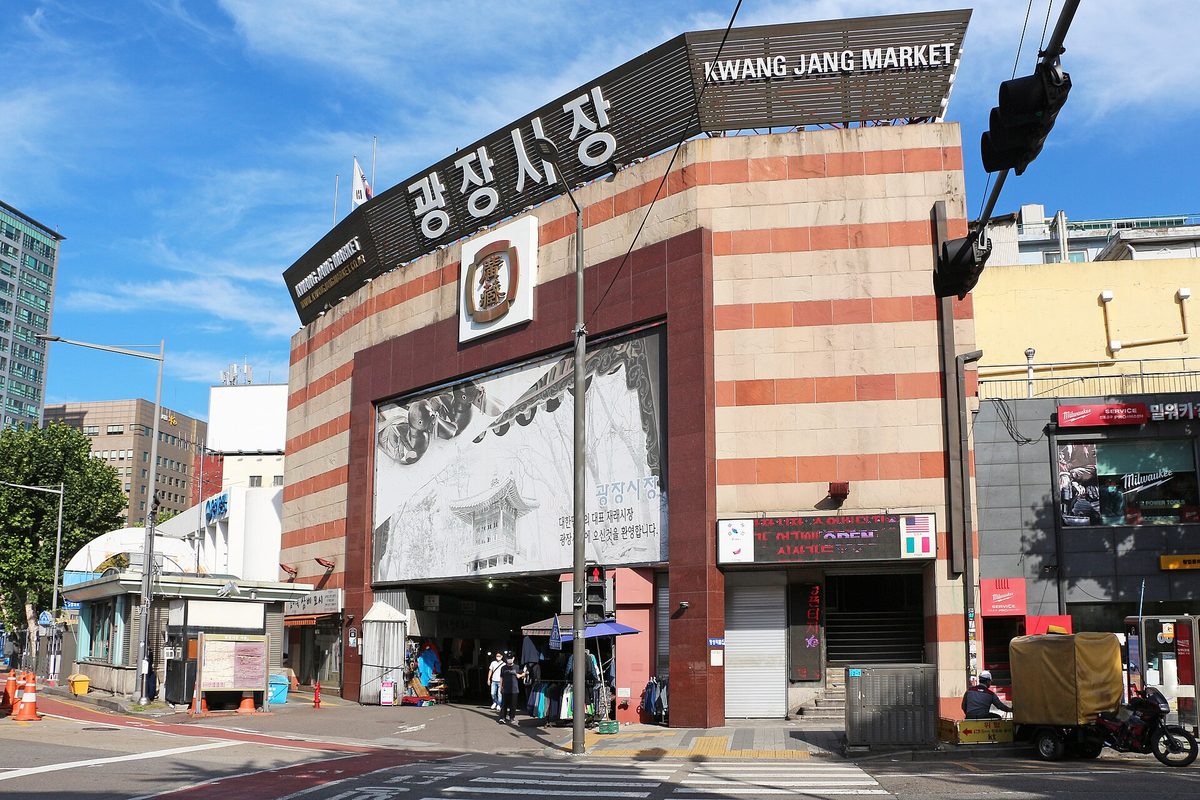
- Kkakka juseyo (깎아 주세요): could you give me a discount? Use it at traditional markets and street stalls, never at department stores or chain shops.
Beauty shops have their own phrases, like saempeul (sample) and skin-type words. Our guide to what to buy at Olive Young, Korea’s biggest health-and-beauty chain, explains how tax refunds work at the register.
Korean phrases for the subway, buses and taxis
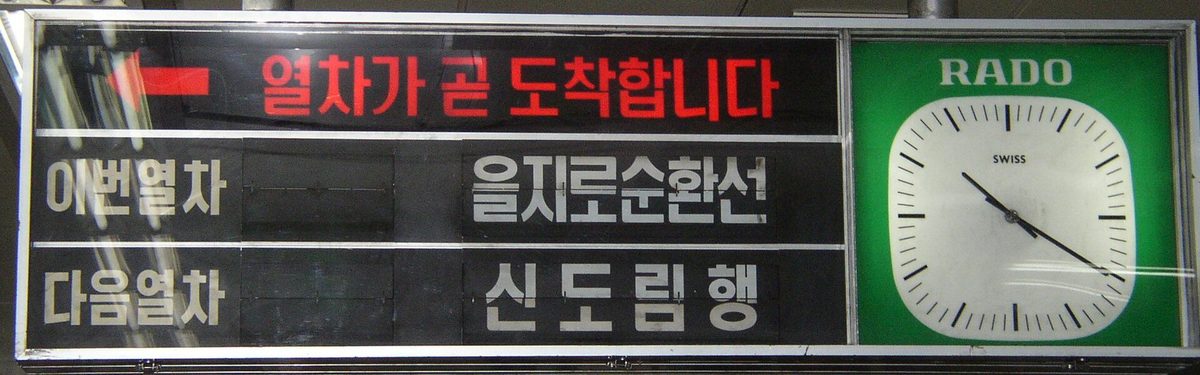
Seoul’s subway is easy for visitors. Signs are in Korean and English, stations have numbers, and announcements on most lines include English. Taxis and buses are where Korean phrases help most.
Subway and bus phrases
- ___ yeok eodiyeyo? (___역 어디예요?): where is ___ station? Yeok means station.
- Eodiseo garatayo? (어디서 갈아타요?): where do I transfer?
- I beoseu ___ gayo? (이 버스 ___ 가요?): does this bus go to ___?
- Chulgu (출구): exit. Station exits are numbered, and Korean directions often say “exit 3” (sam-beon chulgu).
A rechargeable transit card such as T-money, sold at convenience stores and station machines, covers subways and buses. Tap it when you get on and when you get off the bus, or you won’t get the transfer discount.
Taxi phrases
Start with annyeonghaseyo, then give the destination with ro or euro (“to”). Use ro after a vowel or ㄹ, and euro after other consonants:
- Hongdae-ro ga juseyo (홍대로 가 주세요): to Hongdae, please.
- Myeongdong-euro ga juseyo (명동으로 가 주세요): to Myeongdong, please.
- Seoul-yeok-euro ga juseyo (서울역으로 가 주세요): to Seoul Station, please.
For anything other than a landmark, show the driver the address in Korean on your phone. Drivers type it into their navigation, and an English address often won’t come up. When you’re close, say yeogiseo sewo juseyo (stop here, please). If you have luggage, teureongkeu yeoreo juseyo (트렁크 열어 주세요) asks them to open the trunk.
Korean numbers you’ll hear when paying and counting
Korean has two number systems, and visitors run into both on day one. Each has its own job, so you don’t need to know every number. Just learn which system goes where.
Sino-Korean numbers for prices
Prices, phone numbers, floors and subway lines use Sino-Korean numbers (originally from Chinese): il 1, i 2, sam 3, sa 4, o 5, yuk 6, chil 7, pal 8, gu 9, sip 10. The big units are the ones you’ll hear most: baek (100), cheon (1,000) and man (10,000). Korean counts large amounts in ten-thousands, so 10,000 won is man won, not “ten thousand.”
Native Korean numbers for people and things
To count people or items, use native Korean numbers: hana, dul, set, net (1 to 4). Before a counter word they shorten to han, du, se, ne. So it’s du myeong for two people and du gae for two things.
A worked example at a market stall
You point at hotteok (호떡, a sweet filled pancake) and say igeo du gae juseyo, two of these, please. The vendor answers “sa-cheon won-imnida” (사천 원입니다), which is sa (4) + cheon (1,000), so 4,000 won. If you miss it, say dasi hanbeon malhae juseyo (please say it again) or hold out your phone’s calculator. Vendors type the price for tourists all the time.
Common mistakes foreigners make with Korean phrases
Most mistakes are harmless, and Koreans are generous with visitors who try. A few habits, though, make you harder to understand or sound blunter than you mean to.
- Reading romanization as English. “Eo” isn’t “ee-oh,” and “u” isn’t “you.” Saying Seoul as one syllable or eolmayeyo as “ee-ol-ma” is the most common reason people get blank looks.
- Using drama Korean with strangers. Annyeong, gomawo and mianhae are casual. Use annyeonghaseyo, gamsahamnida and joesonghamnida instead.
- Calling people ajumma or ajeossi. These words mean middle-aged woman and man, and from a stranger they can come across as rude. Jeogiyo is always safe.
- Haggling everywhere. Kkakka juseyo belongs at markets and street stalls. In chain stores and department stores, prices are fixed.
- Waiting silently to be served. In busy Korean restaurants, staff expect you to call them over. Sitting quietly can mean a long wait.
- Giving taxi drivers English addresses. Copy the Korean address from Naver Map or Kakao Map, Korea’s two main map apps, before you hail the cab.
Korean phrases for emergencies and getting help
Learn these even if you skip everything else. You probably won’t need them, but if you do, you won’t have time to look them up.
- Dowajuseyo! (도와주세요): help!
- Gireul ireosseoyo (길을 잃었어요): I’m lost.
- Yeongeo hal jul aseyo? (영어 할 줄 아세요?): do you speak English?
- Byeongwon eodiyeyo? (병원 어디예요?): where is a hospital?
- Yakguk eodiyeyo? (약국 어디예요?): where is a pharmacy? Look for the green or red 약 sign.
- ___ apayo (___ 아파요): my ___ hurts. Meori apayo is “my head hurts,” and bae apayo is “my stomach hurts.”
For everything between small talk and an emergency, Papago, the translation app from Korean tech company Naver, handles Korean well and can translate menus and signs through your camera. Download the Korean language pack before you land so it works offline.
FAQ
Is it hard to learn basic Korean for a trip?
Not at survival level. The 20 phrases above lean on a handful of patterns (juseyo, eodiyeyo, isseoyo, dwaeyo), so each new phrase reuses something you already know. Learning to sound out Hangul helps more than anything else, because it lets you read menus and station names.
Do people in Seoul speak English?
Staff at hotels, major shops and tourist areas often speak some English, and many younger Koreans read it well. Taxi drivers, market vendors and small family restaurants are less predictable. That’s where a few Korean phrases and a Korean address on your phone make the biggest difference.
What’s the difference between gamsahamnida and gomapseumnida?
Both mean “thank you” and both are polite. Gamsahamnida (감사합니다) is a little more formal and is what staff say to customers. Gomapseumnida (고맙습니다) sounds a bit warmer. Either one is fine for a traveler, so pick the one that’s easier to say.
Should I say annyeong or annyeonghaseyo?
Say annyeonghaseyo to anyone you don’t know. Annyeong is casual and meant for friends, children or people younger than you. Using the full form with strangers is never wrong.
How do you say cheers in Korean?
Say geonbae (건배) when glasses go up. At a Korean table, people often pour for each other rather than for themselves, and it’s polite to hold your glass with both hands when someone older pours for you.
How do you say “I don’t eat meat” or explain allergies in Korean?
Try gogi an meogeoyo (고기 안 먹어요, “I don’t eat meat”). Many broths use meat or seafood stock even when you can’t see any meat, though, so a translated card in Korean listing what you can’t eat works better than a single phrase. For a serious allergy, show the card before you order and ask the staff to confirm.
What to practice before your trip to Korea
Start with the five core phrases: annyeonghaseyo, gamsahamnida, jeogiyo, igeo juseyo and eolmayeyo. Say them out loud until they come without thinking, then add the restaurant and taxi lines, since those are the situations you’ll face first. If you have one free evening, spend it on Hangul. Once you can sound out 명동 or 비빔밥, menus and signs stop being a wall of symbols.
Before you fly, save the Korean addresses of your hotel and the places you plan to visit, download Papago’s offline Korean pack, and put 1330 in your contacts. If K-dramas are part of your prep, our list of easy first K-dramas will get your ear used to these phrases. Just remember that the actors talk to each other in banmal far more than you should talk to strangers.
Related reading
Sources k-korea.blog
Prices, opening hours and availability change. Check the official page before you buy or travel.