10 min read
This kimchi jjigae recipe takes 6 steps and about 35 minutes, and sour kimchi does most of the work. Fry pork in its own fat, cook old kimchi in that fat until it softens, add water and the kimchi brine, then finish with tofu and scallions.
Kimchi jjigae (김치찌개, kimchi stew) is one of the most common dishes on a Korean home table. It costs little, it uses kimchi that has gone too sour to eat on its own, and it works with rice at any meal. The method below is the classic home version, with swaps for cooks outside Korea and a vegetarian version that still tastes deep.
Key takeaways
- Use kimchi that has fermented for at least 2 to 3 weeks: fresh kimchi makes a thin, flat stew.
- Fry the kimchi in pork fat or oil for about 5 minutes before any water goes in. That step builds the flavor.
- Save the red liquid from the kimchi jar: a few spoonfuls season the broth better than extra salt.
- For a vegetarian pot, check the kimchi label for fish sauce or salted shrimp and use a kelp and shiitake stock.
Why sour kimchi makes or breaks kimchi jjigae
Kimchi keeps fermenting in the fridge. In the first days it tastes fresh, salty and crunchy, which is how you want it as banchan (the small side dishes served with every Korean meal). After a few weeks the lactic acid builds up, the cabbage softens and the flavor turns sharp and sour. Koreans call this stage mugeunji (묵은지) when it has aged a long time, and it is the kimchi most families keep for stews.
Sourness matters because the stew has few other ingredients. The acid cuts the richness of pork belly, the soft cabbage melts into the broth, and the fermented flavor gives the soup a depth you cannot fake with chili alone. Use young kimchi and you get spicy cabbage soup. Use old kimchi and you get jjigae.
How to tell if your kimchi is sour enough
Taste a leaf. If it is clearly tangy, a little fizzy on the tongue and the cabbage bends without snapping, it is ready. If the jar smells pleasantly sour when you open it, that is another good sign. If it still tastes mostly of salt and garlic, leave it.
We cover the health side of fermentation, and the salt catch, in our guide Is Kimchi Healthy for You?
Kimchi jjigae recipe: what you need and what to swap
The core list is short: sour napa cabbage kimchi, the kimchi liquid, a fatty cut of pork, tofu, onion, scallions, gochugaru (Korean chili flakes) and garlic. Everything else is optional. The protein is where Korean households differ most, and each version changes the stew in a predictable way.
| Version | Protein | What it tastes like | Best for |
|---|---|---|---|
| Classic home pot | Pork belly or pork shoulder | Rich, rounded, the fat softens the sourness | A first attempt and most dinners |
| Chamchi kimchi jjigae | Canned tuna | Lighter, savory, a little fishy in a good way | A fast pantry meal |
| Spam or ham | Canned luncheon meat | Salty and smoky, close to budae jjigae | People who like a heavier, salty broth |
| Vegetarian | Tofu and mushrooms | Clean, sour, earthy | Meat-free cooks, with vegan kimchi |
Pork belly gives the most flavor because its fat carries the kimchi. Pork shoulder (Boston butt) is a good, slightly leaner option. Lean loin dries out and adds little, so skip it.
Which tofu to use
Korean cooks usually use soft-firm tofu (labeled “for stew” or “jjigae” on Korean packs). Abroad, medium or firm tofu works. Silken tofu breaks apart if you stir, so add it last and leave it alone.
How to make kimchi jjigae (김치찌개)
- 2 cups (about 300 g) sour napa cabbage kimchi, cut into bite-size pieces
- 1/4 cup kimchi liquid from the jar
- 200 g pork belly or pork shoulder, sliced thin
- 1/2 block (about 200 g) medium or firm tofu, cut into thick slices
- 1/2 onion, sliced
- 2 scallions, cut diagonally
- 1 tablespoon gochugaru (Korean chili flakes)
- 1 teaspoon minced garlic
- 1 teaspoon gochujang (optional, for a thicker, slightly sweet broth)
- 1 teaspoon sugar (only if the kimchi is very sour)
- 1 tablespoon neutral oil
- 2 1/2 cups water, or anchovy-kelp stock
- Soy sauce, fish sauce or salt, to taste
- Heat the oil in a medium pot over medium heat. Add the pork and cook for 3 to 4 minutes, stirring, until the edges turn golden and the fat starts to render.
- Add the kimchi and cook with the pork for about 5 minutes, until the cabbage softens and turns slightly translucent. Add the sugar here if your kimchi is extremely sour.
- Stir in the gochugaru, garlic and gochujang if using, and cook for 30 seconds so the chili blooms in the fat without burning.
- Pour in the water or stock and the kimchi liquid. Bring to a boil, then lower to a steady simmer, partly covered, for 15 to 20 minutes.
- Lay the tofu and onion on top and simmer for another 5 minutes. Taste the broth and adjust with soy sauce, fish sauce or salt.
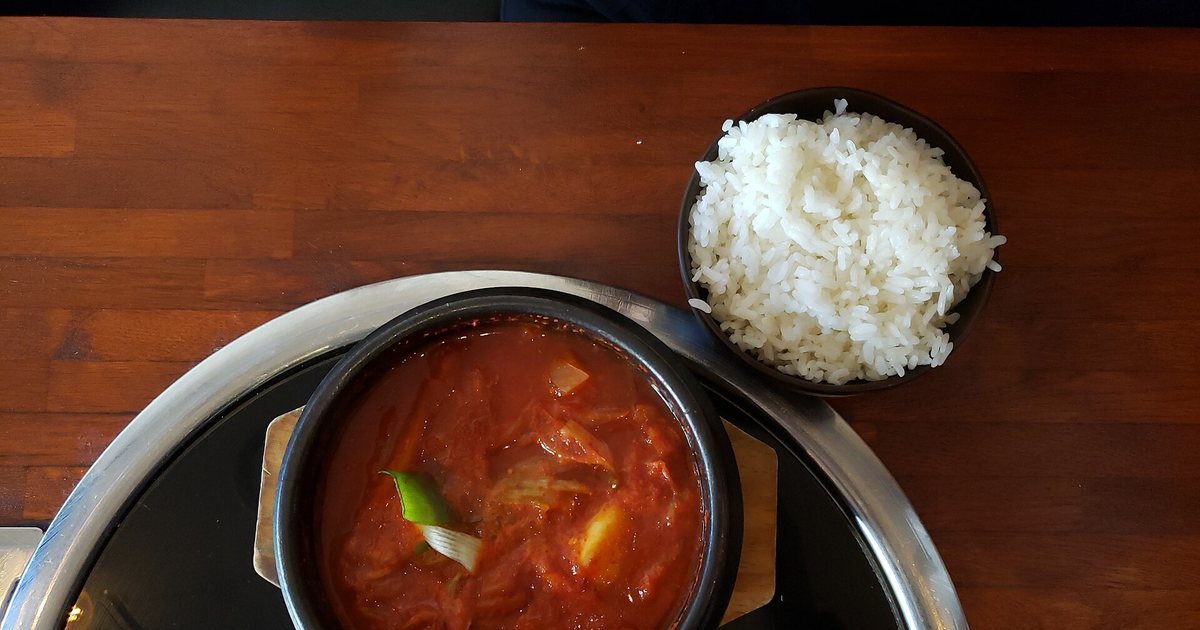
- Scatter the scallions over the top, turn off the heat and bring the pot to the table while it is still bubbling. Serve with hot short-grain rice.
Kimchi jjigae ingredients abroad: substitutions that work
Most of this stew travels well. The two things worth buying properly are the kimchi and the gochugaru. Korean grocery chains such as H Mart in North America, plus many pan-Asian supermarkets and online grocers, stock both. Prices and stock change by country, so check your local store’s site.
| Ingredient | What it does | Best swap if you can’t find it |
|---|---|---|
| Sour napa kimchi | The base of the whole stew | Store-bought kimchi left in the fridge 2 to 3 weeks past opening |
| Gochugaru | Red color and fruity heat | Mild Aleppo pepper or a little paprika plus a pinch of chili flakes |
| Anchovy-kelp stock | Savory depth | Plain water, or water with a spoon of fish sauce |
| Pork belly | Fat and richness | Pork shoulder, or thick-cut unsmoked bacon in a smaller amount |
| Korean stew tofu | Soft texture that soaks up broth | Medium or firm tofu from any supermarket |
Can you use Western chili flakes?
You can, but use less. Common red pepper flakes are hotter and more bitter than gochugaru, and they won’t color the broth the same deep red. If gochugaru is impossible to find, start with half a teaspoon of chili flakes and a teaspoon of sweet paprika, then taste.
How to make kimchi sour faster
Leave a closed jar of kimchi at cool room temperature for a day or two, then put it back in the fridge. Fermentation speeds up when it is warmer. Open the lid now and then to release gas, and keep the cabbage pressed under its liquid.
How to make vegetarian kimchi jjigae
Without pork you lose fat and savory depth, so you have to put both back. The fix is simple: more oil at the start, and a stock that does the job anchovies normally do.
- Kimchi: use vegan kimchi, or make sure yours has no fish sauce or jeotgal.
- Stock: soak a piece of dashima (dried kelp) and 3 or 4 dried shiitake mushrooms in the water for 20 to 30 minutes, then use that liquid. Slice the soaked shiitake into the stew.
- Fat: fry the kimchi in 2 tablespoons of oil instead of 1, with a few drops of toasted sesame oil at the end.
- Body: add extra tofu, oyster or king oyster mushrooms, and a little zucchini.
- Seasoning: soy sauce or soup soy sauce (guk-ganjang, a lighter, saltier Korean soy) instead of fish sauce.
Follow the same six steps, skipping the pork. The frying step matters even more here, because the oil is the only thing carrying flavor into the broth.
Common kimchi jjigae mistakes and how to avoid them
- Using fresh kimchi. The stew tastes of raw chili and salt. Wait until the kimchi is properly sour, or buy an aged one.
- Boiling kimchi in water from the start. Skipping the fry leaves the cabbage tough and the broth thin. Give it 5 minutes in fat first.
- Salting too early. Kimchi and its liquid are already salty, and the broth reduces as it simmers. Season only at the end.
- Too much water. Jjigae is a stew, thicker and stronger than guk (Korean soup). The broth should come just above the ingredients.
- Stirring after the tofu goes in. It breaks into crumbs. Lay it on top and let the broth bubble around it.
- Throwing out the kimchi liquid. That red brine is free seasoning. Keep it in the jar for this exact use.
How Koreans eat kimchi jjigae
At home, kimchi jjigae usually arrives in the pot it cooked in, often a small earthenware pot (ttukbaegi) or a shallow metal pan, set in the middle of the table. Each person gets a bowl of rice and spoons stew straight from the shared pot or into a small bowl. A few banchan sit around it: seasoned spinach, rolled egg omelet, stir-fried anchovies or fish cake. If you’re new to the shared-pot rules, our guide to Korean dining etiquette for foreigners covers them.
The stew is eaten at breakfast, lunch and dinner. Office workers order it at lunch spots near work, and many restaurants keep a pot simmering on a tabletop burner so it stays hot through the meal.
Add-ins Koreans actually use
Instant ramyeon noodles dropped into the last few minutes are a popular extra (see our guide to Korean instant ramen for which packs to keep). Others add a handful of rice cakes, an egg cracked into the broth, or enoki mushrooms right before serving.
Kimchi jjigae vs doenjang jjigae vs budae jjigae
Doenjang jjigae is built on fermented soybean paste instead of kimchi, so it’s earthy and salty rather than sour. Budae jjigae (army base stew) mixes kimchi with sausages, Spam, baked beans and noodles, so it’s richer and saltier. Kimchi jjigae sits in between: simpler than budae jjigae, sharper than doenjang jjigae.
How to store and reheat kimchi jjigae
Plenty of Korean cooks will tell you it tastes better the next day, because the kimchi keeps giving flavor to the broth overnight. Cool leftovers, cover them and refrigerate. Eat them within a few days, and only reheat the portion you need.
Reheat on the stove until it boils all the way through. Add a splash of water if it has thickened too much, and add fresh scallions. Tofu turns spongier after freezing, so if you plan to freeze a batch, freeze the base and add fresh tofu when you reheat.
Got a cup of sour kimchi left after the stew? Use it in kimchi fried rice, which wants the same aged kimchi.
FAQ
What is kimchi jjigae made of?
Kimchi jjigae is made from sour napa cabbage kimchi, its liquid, pork, tofu, onion and scallions, seasoned with gochugaru and garlic. Some cooks add gochujang or anchovy stock. Canned tuna or Spam are common swaps for pork.
Is kimchi jjigae very spicy?
It is moderately spicy, and you control the heat. Most of the burn comes from the gochugaru you add, so cut it to half a tablespoon or leave it out for a milder pot. The kimchi brings some heat as well.
Can I make kimchi jjigae with fresh kimchi?
You can, but it will taste flat and the cabbage stays crunchy. If fresh kimchi is all you have, add a small splash of rice vinegar and simmer longer. Better still, leave the jar at room temperature for a day or two first.
What is the difference between jjigae and guk?
Jjigae is a stew: thicker, less liquid and more strongly seasoned, usually shared from one pot. Guk is a soup with more broth, usually served in individual bowls. Kimchi exists in both forms, as kimchi jjigae and the lighter kimchi-guk.
What do you eat with kimchi jjigae?
Short-grain white rice is essential. Koreans add a few banchan such as rolled egg omelet, seasoned vegetables or fried fish. A fried egg on the rice also works well against the sour broth.
Is kimchi jjigae vegan?
Not usually. The classic version has pork, and most kimchi contains fish sauce or salted shrimp. Make it vegan with vegan kimchi, a kelp and shiitake stock and extra tofu.
What to cook next after kimchi jjigae
Once the basic pot works, try the tuna version on a weeknight. It skips the pork step and goes from pantry to table fast. Next, swap the protein for mushrooms to learn how much the stock matters when there’s no meat to lean on.
Keep one jar of kimchi going just for cooking, and let it sour while you eat a fresher jar as a side dish. For more ideas, search the brand pages of Korean grocers near you for doenjang and gochujang, the two pastes behind most other Korean stews.
Related reading
Sources k-korea.blog
Prices, opening hours and availability change. Check the official page before you buy or travel.