10 min read
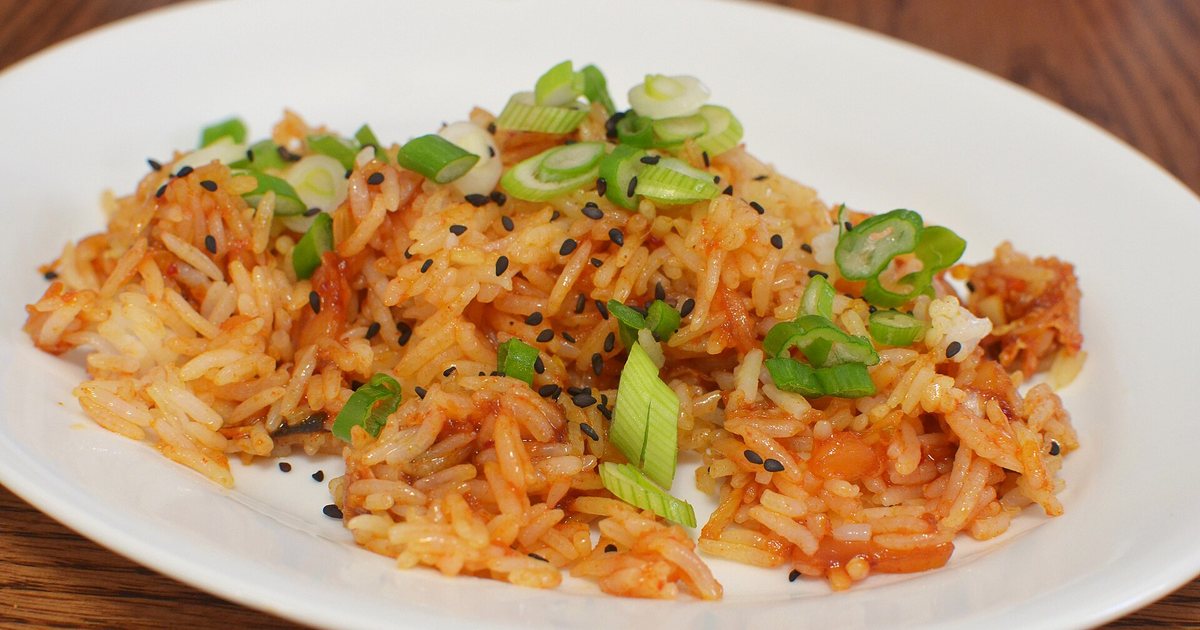
How to make kimchi fried rice: fry sour kimchi, add cold rice, top with an egg, done in 15 minutes. The dish, called kimchi-bokkeumbap in Korean (bokkeumbap means “stir-fried rice”), is what Korean households cook when the kimchi in the fridge has turned too sour to serve on its own. Get two things right, the age of the kimchi and the dryness of the rice, and the rest is easy.
Key takeaways
- Use kimchi that has fermented for at least a few weeks: sour kimchi gives deeper flavor and holds its texture in the pan.
- Cold, day-old rice fries into separate grains; freshly cooked rice turns mushy.
- Fry the kimchi first, for 3 to 5 minutes, before the rice goes in, so its liquid cooks off and its sugars brown.
- A fried egg with a runny yolk, toasted sesame oil and crumbled roasted seaweed are the standard Korean finish.
What you need for kimchi fried rice
The ingredient list is short, and most of it is probably in your kitchen already. Quantities below make 2 servings; scale up freely, but cook in batches if your pan is small, because crowded rice steams instead of fries.
| Ingredient | Amount (2 servings) | What it does | Easy swap |
|---|---|---|---|
| Napa cabbage kimchi, chopped | About 1 cup | Sourness, heat, crunch | Radish kimchi (kkakdugi), diced small |
| Kimchi juice (the brine in the jar) | 2 to 3 tablespoons | Color and seasoning for the rice | A little extra gochujang thinned with water |
| Cooked short-grain rice, cold | About 2 cups | The base | Medium-grain rice; jasmine works in a pinch |
| Neutral oil or butter | 1 to 2 tablespoons | Frying fat | Pork or bacon fat |
| Gochujang (fermented chili paste) | 1 tablespoon, optional | Deeper red, sweet heat | Gochugaru (Korean chili flakes) |
| Sugar | About 1 teaspoon | Balances very sour kimchi | Honey or a splash of corn syrup |
| Soy sauce | 1 teaspoon | Salt and savoriness | Fish sauce, very sparingly |
| Toasted sesame oil | 1 teaspoon | Nutty finish, added off the heat | None; it’s the signature |
| Eggs | 1 per person | Richness | Soft tofu or extra cheese |
| Scallions, roasted seaweed (gim), sesame seeds | To taste | Garnish | Toasted nori snacks, crumbled |
A protein is optional but common. Pork belly, Spam, canned tuna and bacon are the classic choices, and we’ll cover each below.
Why older, sour kimchi works best
Kimchi keeps fermenting in the fridge. Freshly made kimchi tastes bright, salty and a bit raw, like a spicy salad. Over weeks, lactic acid bacteria turn its sugars into acid, and it becomes sour, softer and more complex. Koreans call well-aged kimchi mugeunji or simply say it has “gone sour” (shin kimchi), and that’s the stage cooks want for stews and fried rice.
What sour kimchi does in a hot pan
Heat mellows acidity. When you fry sour kimchi, the sharp edge softens into a tangy, savory flavor, and the cabbage edges caramelize. Fresh kimchi doesn’t have that acid to begin with, so it tastes flat once cooked, and it releases more water, which makes the rice soggy. If your kimchi is fresh, you can still use it: add a small splash of rice vinegar and fry it a little longer.
How to tell your kimchi is ready
Smell and taste it. Sour kimchi has a clearly tangy, almost fizzy taste, the cabbage looks darker and more translucent, and the jar may bulge or hiss when opened. That’s normal fermentation. Mold, a slimy texture or a smell that’s rotten rather than sour means it’s time to throw it out.
How to make kimchi fried rice step by step
This is the standard home method. Use a wide skillet, a wok or a nonstick pan, and keep the heat at medium-high once the rice goes in.
- Prep everything first. Chop the kimchi into small, bite-size pieces with scissors or a knife, slice the scallions, and break up the cold rice with your hands so there are no clumps. Fried rice moves fast, so have it all within reach.
- Render the protein (if using). Add diced pork belly, bacon or Spam to the pan over medium heat and cook until browned and some fat has melted out, about 3 to 4 minutes.
- Fry the kimchi. Add the oil or butter and the kimchi. Stir-fry for 3 to 5 minutes, until the kimchi softens, its edges look slightly browned and the pan smells sweet and tangy. Sprinkle in the sugar here if the kimchi is very sour.
- Add the seasoning. Stir in the gochujang, if using, and fry it with the kimchi for about 30 seconds. A short fry in fat takes off gochujang’s raw edge.
- Add the rice. Raise the heat to medium-high, add the rice and press and fold it into the kimchi with a flat spatula. Pour the kimchi juice and soy sauce around the edges of the pan, so they sizzle before they reach the rice, and toss until every grain is evenly red, about 3 to 4 minutes.
- Taste and finish. Adjust with more soy sauce for salt or a pinch of sugar for balance. Turn off the heat, drizzle in the sesame oil and fold in most of the scallions.
- Fry the eggs and serve. In a separate pan, fry eggs sunny side up with crisp edges and a runny yolk. Plate the rice, set an egg on top, and finish with crumbled roasted seaweed, sesame seeds and the remaining scallions.
Want the crispy bottom Korean restaurants are known for? After step 6, press the rice flat and leave it untouched over medium heat for 2 to 3 minutes. The scorched layer is called nurungji, and many people think it’s the best part.
Which rice to use, and why day-old matters
Korean households use short-grain white rice, the slightly sticky kind sold abroad as “sushi rice” or under Calrose and similar labels. It gives fried rice a pleasant chew and soaks up the kimchi juice without falling apart.
Cold rice versus fresh rice
Rice that has been cooked and refrigerated overnight loses surface moisture and firms up, so the grains separate and fry instead of clumping. Freshly cooked rice is soft and wet, and in a hot pan it turns into a sticky mass. If you only have fresh rice, spread it thin on a tray and let it cool and dry, uncovered, for 20 to 30 minutes, or chill it in the fridge for an hour.
Can you use brown rice or other grains?
Yes. Brown rice and Korean multigrain rice (japgokbap) work, though they stay firmer and absorb less sauce, so add an extra spoonful of kimchi juice. Long-grain rice like basmati gives a drier, fluffier result that’s less Korean in texture but still tasty.
How to season kimchi fried rice so it doesn’t taste flat
Kimchi brings salt, acid and heat, but rarely enough of all three to season 2 cups of rice by itself. That’s why the extras matter.
- Kimchi juice is the cheapest, most effective seasoning. It colors the rice and spreads flavor evenly. Don’t pour it down the sink; save it in the jar.
- Gochujang adds a rounder, slightly sweet heat and a deeper red. It’s optional, and many Korean home cooks skip it when the kimchi is already flavorful.
- Gochugaru, Korean chili flakes, adds heat and color without the sweetness of gochujang.
- Sugar doesn’t make the dish sweet. A small amount balances very sour kimchi, which is why it’s common in Korean recipes for mugeunji.
- Sesame oil goes in at the end, off the heat. Cooked hard, it loses the toasty aroma that makes the dish smell Korean.
Korean chef Judy Joo recently named the Korean ingredients she thinks belong in every pantry, according to Katie Couric Media, which is a useful read if you’re stocking a Korean shelf for the first time.
Kimchi fried rice variations Koreans actually make
There’s no single correct version. Kimchi fried rice is a leftovers dish, and every household adds what it has. These are the versions you’ll most often see in Korean homes, school cafeterias and casual restaurants.
| Variation | What to add | When to add it | Best for |
|---|---|---|---|
| Pork belly | Thin strips of samgyeopsal (pork belly) | Render first, fry kimchi in its fat | The richest, most classic version |
| Spam | Small cubes of canned luncheon meat | Brown before the kimchi | Salty, crispy bites; hugely popular in Korea |
| Tuna | Canned tuna, drained | Stir in with the rice | A cheap, quick weeknight version |
| Bacon | Chopped bacon | Render first | Easy to find outside Korea |
| Cheese | Shredded mozzarella | On top at the end, lid on to melt | Cutting the heat; a Korean pub favorite |
| Butter | A spoonful of butter | Fry kimchi in it, or melt in at the end | Glossy, mellow rice |
| Vegetarian or vegan | Tofu, mushrooms, vegan kimchi | Brown tofu or mushrooms first | Meat-free diets (check the kimchi label) |
The barbecue-restaurant version
At Korean barbecue and dakgalbi (spicy stir-fried chicken) restaurants, diners often ask staff to fry rice in the leftover sauce and meat juices at the end of the meal. Chopped kimchi, seaweed and sesame oil go in, and the rice is pressed flat to crisp. You can copy this at home after a Korean barbecue night: keep the pan, add cold rice and kimchi, and fry.
Common kimchi fried rice mistakes and how to fix them
Most disappointing kimchi fried rice comes down to a handful of avoidable errors.
Adding the rice too early
If the kimchi hasn’t fried long enough, its moisture ends up in the rice, and you get a soft, damp dish with raw-tasting kimchi. Give the kimchi its full 3 to 5 minutes, until the pan sounds like sizzling, not simmering.
Pouring in too much kimchi juice
A few tablespoons season the rice. Half a cup turns it into porridge. Add juice gradually and let each splash cook off before adding more.
Overcrowding the pan
Too much rice in a small pan drops the temperature and steams everything. If you’re cooking for 4, use two pans or cook in two batches.
Using a delicate pan on very high heat
Gochujang contains sugar and burns quickly. Fry it briefly over medium heat, and only raise the heat once the rice is in.
Cooking the sesame oil
Adding toasted sesame oil at the start wastes its aroma. Add it at the very end, off the heat.
Where to buy kimchi and gochujang outside Korea
Korean supermarkets such as H Mart in North America carry a wide range of kimchi, from fresh to well-aged, plus gochujang, gochugaru, roasted seaweed and short-grain rice. Many Asian grocers and large mainstream supermarkets now stock kimchi in the refrigerated section and gochujang in the international aisle.
How to get sour kimchi fast
Store-bought kimchi is often sold fairly fresh. To sour it, leave the sealed jar at cool room temperature for a day or two, opening it occasionally to release gas, then move it back to the fridge. Taste daily. Or simply buy a jar now and save it at the back of the fridge for a few weeks; it will get there on its own. Check the jar’s label for the maker’s storage advice, since some brands recommend refrigeration from the start.
FAQ
Can I make kimchi fried rice with fresh kimchi?
Yes, but it will taste milder and less complex. Fry the kimchi a little longer to drive off its water, and add a small splash of rice vinegar or extra kimchi juice to mimic the tang of aged kimchi.
Is kimchi fried rice spicy?
It’s moderately spicy, depending on your kimchi and whether you add gochujang or gochugaru. For a milder version, skip the gochujang, rinse the kimchi lightly, and add butter, cheese or an extra egg to soften the heat.
Do I need gochujang for kimchi fried rice?
No. Many Korean home cooks use only kimchi, kimchi juice, soy sauce and sesame oil. Gochujang adds color and a sweet, deeper heat, so use it when your kimchi tastes thin or you want a redder dish.
How long does leftover kimchi fried rice keep?
Like other cooked rice, cool it quickly and refrigerate it in a covered container, then eat it within a day or two. Reheat it in a hot pan until steaming throughout, and fry a fresh egg rather than storing one on top.
What do Koreans eat with kimchi fried rice?
It’s usually a one-bowl meal, served with a fried egg and seaweed. Some people add a simple soup, such as a light soybean-paste soup, or a few banchan (small side dishes) like pickled radish. Since kimchi is already in the rice, a separate kimchi side isn’t needed.
Can I make kimchi fried rice in a rice cooker or air fryer?
A pan gives the best result because frying the kimchi and crisping the rice need direct heat. An air fryer can crisp a pressed layer of already-mixed fried rice, but it won’t caramelize the kimchi the same way.
What to cook next with your kimchi
Once you’ve mastered kimchi fried rice, the same jar of sour kimchi opens up a whole set of Korean home dishes. Try kimchi jjigae, the tangy kimchi stew that’s the other classic use for mugeunji, then kimchi jeon, crisp pancakes made with chopped kimchi and flour batter. Both reward the same rule as fried rice: the older the kimchi, the better the result. Keep one jar aging at the back of the fridge, and you’ll always have dinner within 15 minutes.
Related reading
Sources news.google.com · k-korea.blog
Prices, opening hours and availability change. Check the official page before you buy or travel.