9 min read
How to learn Hangul fast: drill its 24 basic letters over one weekend, then read them in blocks. Hangul, the Korean alphabet, was built in the 1440s to be learned quickly, and its letter shapes carry clues about how each sound is made. If you know how to learn Hangul fast, which means learning that logic first and not memorizing romanized spellings, you can be sounding out menus, K-drama titles and K-pop lyrics by Sunday night.
Key takeaways
- Modern Hangul has 14 basic consonants and 10 basic vowels; every other letter is built from those 24.
- Letters stack into square syllable blocks, so 한국 (Korea) is just two blocks: ㅎ+ㅏ+ㄴ and ㄱ+ㅜ+ㄱ.
- The circle ㅇ is silent at the start of a block and sounds like “ng” at the end.
- However many letters can sit in the bottom slot, final consonants (batchim) come down to only 7 sounds.
How Hangul was designed, and why it’s so quick to learn
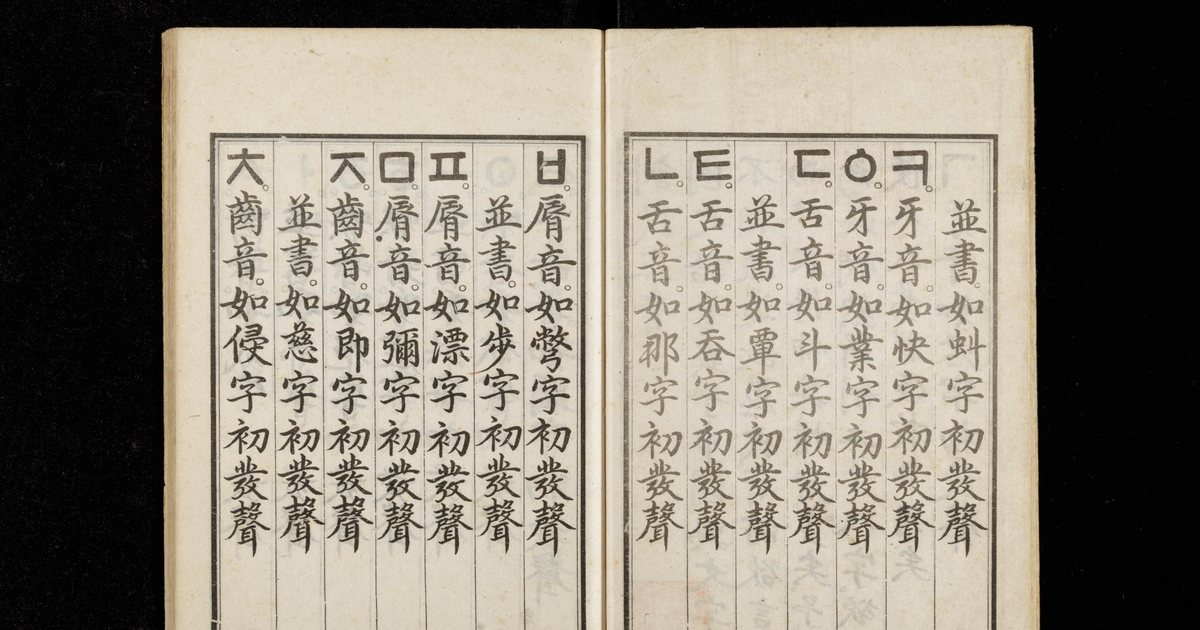
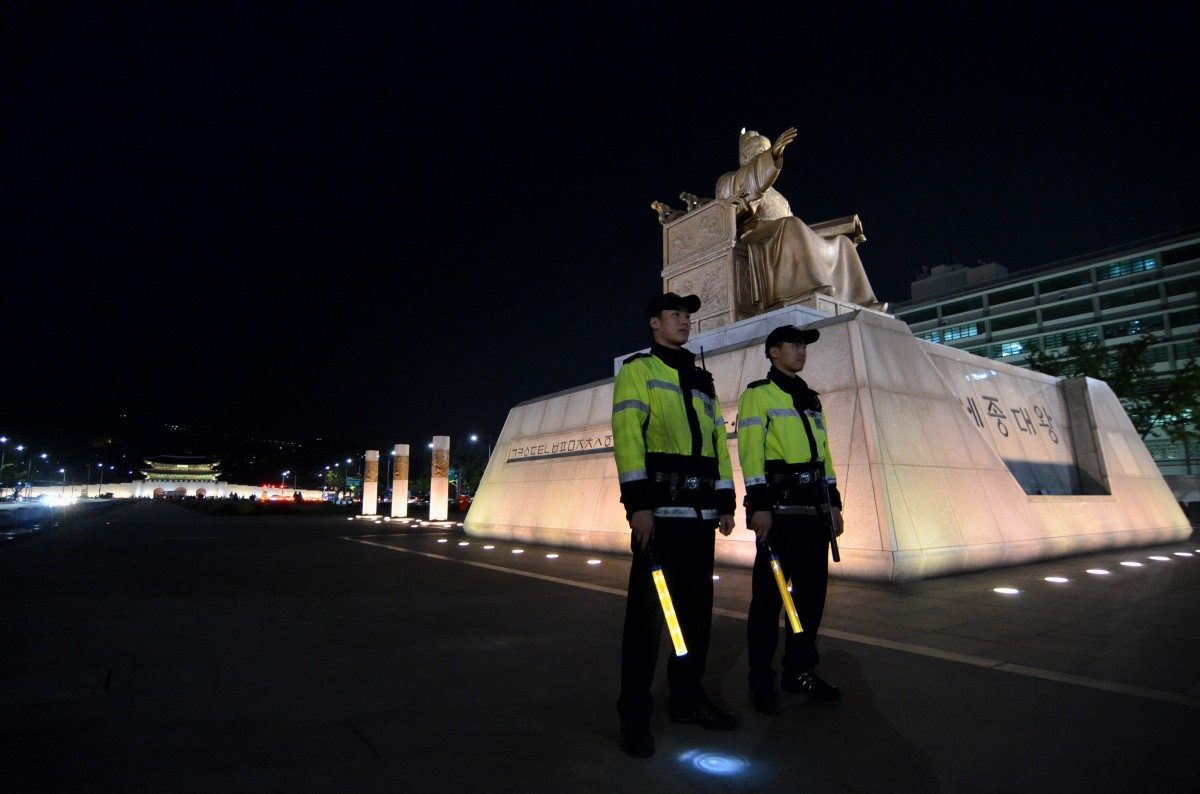
King Sejong the Great, the fourth ruler of the Joseon dynasty, introduced the alphabet in 1446 in a document called Hunminjeongeum, “the correct sounds for instructing the people.” Before that, Koreans wrote in Chinese characters, which took years of study and left most people unable to read. Sejong wanted a script that ordinary people could learn in days, and the design shows it.
The basic consonants are pictures of the mouth. ㄱ shows the back of the tongue lifting against the soft palate (a “g/k” sound). ㄴ shows the tongue tip touching the ridge behind your upper teeth (“n”). ㅁ is the closed mouth (“m”), ㅅ is a tooth (“s”) and ㅇ is the throat.
The other consonants come from adding strokes. Add one stroke to ㄱ and you get ㅋ, a breathier “k.”
The vowels follow a philosophical system. They come from three symbols: a dot for heaven, a flat line (ㅡ) for earth and a standing line (ㅣ) for a person. Put the dot to the right of the standing line and you get ㅏ (“a”). Put it on the left and you get ㅓ (“eo”). Learn that system and you have learned the vowels.
That’s why the one-weekend claim holds up. You aren’t memorizing 24 random symbols. You’re learning about five shapes plus a few rules for changing them.
The 14 basic Korean consonants and how to remember them
Learn the consonants in families. Each family starts from one base shape. Extra strokes either make the sound breathier (aspirated) or turn it into a related sound. The table puts them side by side with the sound in Revised Romanization, the official system South Korea has used since 2000 for road signs and place names.
| Letter | Sound (romanized) | How to remember it |
|---|---|---|
| ㄱ | g / k | Back of the tongue raised to the soft palate |
| ㅋ | k (breathy) | ㄱ plus one stroke for a puff of air |
| ㄴ | n | Tongue tip touching the ridge behind the teeth |
| ㄷ | d / t | ㄴ with a lid on top |
| ㅌ | t (breathy) | ㄷ plus one stroke |
| ㄹ | r / l | Looks like a coiled tongue flapping |
| ㅁ | m | A closed mouth |
| ㅂ | b / p | ㅁ with two posts sticking up |
| ㅍ | p (breathy) | ㅂ variant with extra strokes |
| ㅅ | s | A tooth |
| ㅈ | j | ㅅ with a bar on top |
| ㅊ | ch | ㅈ plus a small stroke |
| ㅇ | silent / ng | The open throat |
| ㅎ | h | ㅇ with a hat, a breath from the throat |
What are the double consonants in Hangul?
Five consonants double up: ㄲ, ㄸ, ㅃ, ㅆ, ㅉ. These are tense sounds. You say them with a tight throat and no puff of air, a bit like the “k” in “skin” compared with “kin.” They’re romanized kk, tt, pp, ss and jj, so 떡볶이 (the spicy rice cake dish) becomes tteokbokki.
The 10 basic Korean vowels, in pairs
Vowels are faster than consonants once you see the pattern. They come in two orientations: vertical vowels, which sit to the right of a consonant, and horizontal vowels, which sit under it. A second short stroke adds a “y” sound in front.
- ㅏ a, ㅑ ya (vertical, stroke points right)
- ㅓ eo, ㅕ yeo (vertical, stroke points left; “eo” sounds like the “u” in “bus”)
- ㅗ o, ㅛ yo (horizontal, stroke points up)
- ㅜ u, ㅠ yu (horizontal, stroke points down)
- ㅡ eu (a flat line; say “oo” with your lips spread, not rounded)
- ㅣ i (a standing line, “ee”)
How do compound vowels work?
The other 11 vowels combine the basic ones. ㅗ+ㅏ makes ㅘ (wa), ㅜ+ㅓ makes ㅝ (wo), ㅏ+ㅣ makes ㅐ (ae) and ㅓ+ㅣ makes ㅔ (e). Don’t make flashcards for all 11 on day one. Read them as two vowels said quickly and they’ll click once you meet them in real words like 사과 (sagwa, apple) and 원 (won, the currency).
How Korean syllable blocks work
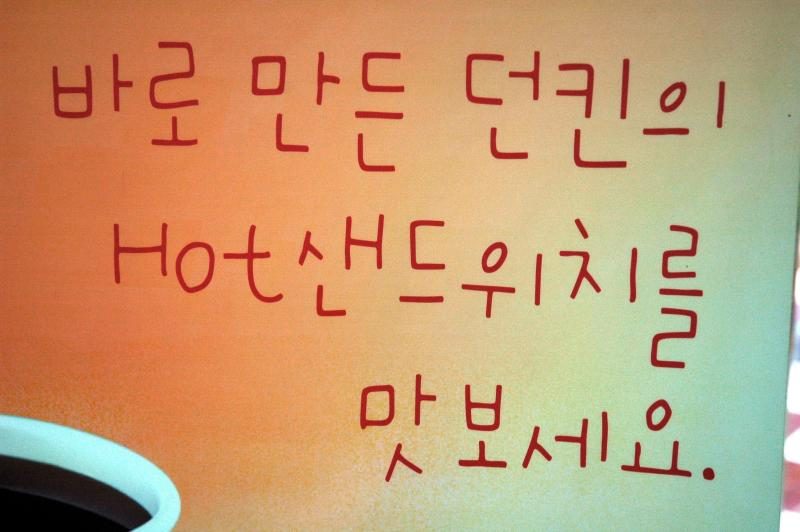
This is the rule that makes Korean writing look complicated, and it takes ten minutes to learn. Korean doesn’t write letters in a line. It groups them into square blocks, one block per syllable. Every block starts with a consonant, then a vowel, and sometimes a final consonant at the bottom.
- Consonant + vertical vowel: side by side. ㄴ+ㅏ = 나 (na).
- Consonant + horizontal vowel: stacked. ㄴ+ㅗ = 노 (no).
- Add a final consonant: it goes underneath. ㄴ+ㅏ+ㅁ = 남 (nam).
- No consonant sound at the start? Use the silent ㅇ as a placeholder. ㅇ+ㅏ = 아 (a).
A worked example: reading 비빔밥
Take a word you may already know from Korean restaurant menus abroad. 비 is ㅂ+ㅣ = bi. 빔 is ㅂ+ㅣ+ㅁ = bim. 밥 is ㅂ+ㅏ+ㅂ = bap. Together that’s bibimbap, the mixed rice dish.
The ㅂ at the start of 밥 sounds like a “b,” while the ㅂ at the bottom closes into a clipped “p.” Many Korean consonants change like this depending on where they sit, which is why romanized spellings drift.
A weekend study plan: how to learn Hangul fast in 2 days
Plan on about three to four focused hours each day, broken into short sessions. Writing by hand beats tapping flashcards for the first pass, because tracing the strokes is how the shapes stick.
| Session | Goal | What to do |
|---|---|---|
| Saturday morning | 14 basic consonants | Learn them in families (ㄱ ㅋ, ㄴ ㄷ ㅌ, ㅁ ㅂ ㅍ, ㅅ ㅈ ㅊ, ㅇ ㅎ, ㄹ). Write each one ten times, saying the sound out loud. |
| Saturday afternoon | 10 basic vowels | Learn them in pairs (ㅏㅑ, ㅓㅕ, ㅗㅛ, ㅜㅠ, ㅡ, ㅣ). Then pair every consonant with ㅏ: 가 나 다 라 마 바 사 아 자 차 카 타 파 하. |
| Saturday evening | Syllable blocks | Build and read two-letter blocks, then add final consonants. Read short words: 나무, 바다, 한국, 서울. |
| Sunday morning | Double consonants and compound vowels | Contrast plain, breathy and tense sets aloud: 가 카 까, 다 타 따, 바 파 빠. Read ㅘ ㅝ ㅐ ㅔ in real words. |
| Sunday afternoon | Batchim and linking | Learn the 7 final sounds and the linking rule (next section). Read food words: 김치, 떡볶이, 삼겹살. |
| Sunday evening | Real text and typing | Install a Korean keyboard, type 20 words, and read real-world Hangul: menus, signs, show titles, song lyrics. |
Two habits speed this up. Say every letter out loud as you write it, and stop looking at romanization by Saturday night. If the English spelling is still sitting under each word, your brain will keep reading the English.
Final consonants (batchim) and the sound changes beginners miss
The bottom consonant in a block is called batchim (받침, literally “support”). This is where most self-taught learners stall, but the rule is smaller than it looks. Lots of letters can sit in the bottom slot, but they’re pronounced as just seven sounds.
- k: ㄱ, ㅋ, ㄲ
- n: ㄴ
- t: ㄷ, ㅌ, ㅅ, ㅆ, ㅈ, ㅊ, ㅎ
- l: ㄹ
- m: ㅁ
- p: ㅂ, ㅍ
- ng: ㅇ
So 옷 (clothes) ends in a clipped “t,” not an “s.” The ㅅ only comes back when a vowel follows.
What is the linking rule in Korean pronunciation?
When a block ending in a consonant is followed by a block that starts with the silent ㅇ, the final consonant slides over and becomes the next syllable’s first sound. 한국어 (the Korean language) is written han-guk-eo but said han-gu-geo. 떡볶이 is said tteok-bo-kki. Expect it every time a ㅇ follows a batchim and you’ll understand a lot more of what you hear in dramas.
Common mistakes when learning the Korean alphabet
Leaning on romanization
Romanization is a crutch that breaks fast. “eo” and “eu” don’t match any English vowel, and the same letter ㄱ shows up as g or k depending on position. Use it for the first few hours, then drop it.
Mixing up ㅓ and ㅗ, or ㅜ and ㅡ
ㅗ (o) rounds the lips. ㅓ (eo) keeps them relaxed and open. ㅜ (u) rounds the lips and ㅡ (eu) spreads them flat. Practice them in front of a mirror, because the difference is visible.
Treating ㄹ as an English R
ㄹ is a quick flap between vowels (like the “tt” in American “butter”) and a light “l” at the end of a block. 서울 ends with an “l,” not a rolled “r.”
Ignoring plain, breathy and tense consonants
달 (moon), 탈 (mask) and 딸 (daughter) are three different words. English speakers tend to hear one sound. Hold your hand in front of your mouth: ㅌ pushes air, ㄸ pushes almost none, and ㄷ sits in between.
Writing in the wrong stroke order
The general rule is top to bottom, left to right. It matters more than it seems, because blocks drawn in the wrong order come out lopsided and harder for you to read back.
How to practice Hangul from outside Korea
You need Hangul in front of you every day after the weekend, and there’s plenty of it online and in shops abroad.
- Type it. Add the Korean keyboard on your phone and computer (on many systems it’s called 2-Set Korean or Dubeolsik). Consonants sit on the left side and vowels on the right, and the software builds the blocks for you as you type.
- Read subtitles and titles. Pause a show and read the Korean title card or on-screen text. Our guide to easy first K-dramas has shows where the signs and text messages on screen are easy to read.
- Read packaging. Korean snacks and instant noodles in Asian grocery stores carry Hangul names. Sounding out a ramyeon packet tests consonants, vowels and batchim together, and our Korean convenience store food guide is full of names to practice on.
- Use spaced-repetition flashcards for the letters you keep missing, not for the whole alphabet. If ㅕ and ㅛ keep tripping you up, drill those two.
- Find a class if you want structure. The King Sejong Institute, a government-backed network of Korean language schools, runs classes in many countries. Check its official site for locations and schedules.
FAQ
Can you really learn Hangul in a weekend?
You can learn to read Hangul aloud in a weekend. That means recognizing all the letters, building blocks and sounding out new words slowly. Reading at speed takes a few more weeks of daily practice, and understanding what you read is a separate job: learning Korean vocabulary and grammar.
How many letters are in the Korean alphabet?
Modern Hangul has 24 basic letters: 14 consonants and 10 vowels. Add the 5 double consonants and 11 compound vowels and you get 40 symbols in everyday use. Every one of the extra 16 is built from the basic 24.
Who invented Hangul and when?
King Sejong the Great of the Joseon dynasty created it, and it was announced in 1446 in the document Hunminjeongeum. South Korea marks Hangul Day every year on October 9.
Is Hangul harder than Japanese kana or Chinese characters?
It’s usually easier to start with. Hangul is a true alphabet with a few dozen symbols, while written Japanese mixes two kana sets with kanji, and Chinese uses thousands of characters. The harder parts of Korean are grammar and vocabulary, not the script.
Should I learn Hangul before Korean words?
Yes. Learning words through romanization builds pronunciation habits you’ll have to unlearn later. Spend the first weekend on Hangul, then learn every new word in Hangul from the start.
Why does the same letter sound different in different words?
Korean consonants shift with their position. ㄱ is closer to “g” between vowels and closer to “k” at the start of a word or at the end of a block, and batchim link onto a following vowel. The spelling stays the same while the sound adapts.
What to learn after Hangul
Once the letters stop feeling foreign, use the momentum. Learn the basic polite sentence ending (-요), the numbers (Korean has two counting systems, native and Sino-Korean) and about 100 high-frequency words, all written in Hangul. Keep reading something small every day: one menu, one song chorus, one drama title card. Within a couple of weeks you’ll see Hangul as syllables instead of a puzzle, and that’s when the Korean language itself starts to open up.
Related reading
Sources k-korea.blog
Prices, opening hours and availability change. Check the official page before you buy or travel.