10 min read
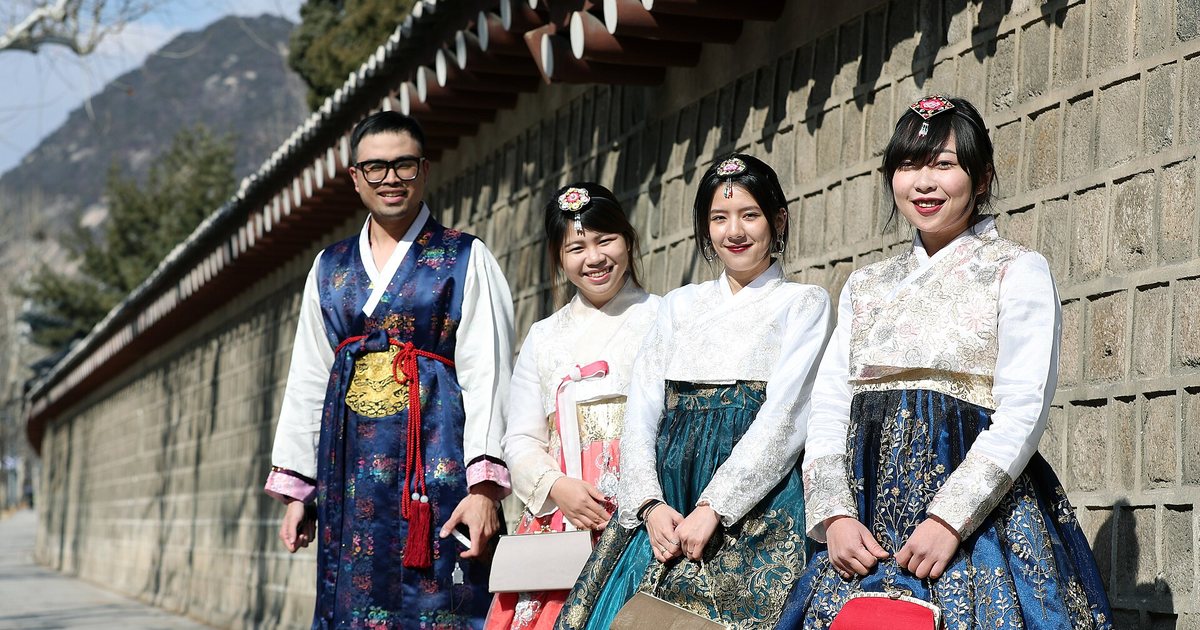
This hanbok rental Seoul guide starts with the best perk: wear a hanbok and 4 royal palaces let you in free. Jongmyo Shrine does the same. The rental shops sit a short walk from the palace gates, so you can be dressed, styled and through the ticket line on the same morning.
Below you’ll find what a hanbok actually is, what the free-entry custom asks of you, how a rental works step by step, which style to pick and how to wear it so it feels like respect, not fancy dress.
Key takeaways
- People wearing hanbok have long been admitted free to Gyeongbokgung, Changdeokgung, Changgyeonggung, Deoksugung and Jongmyo Shrine. Check the Korea Heritage Service’s royal palaces site for the current rules before you go.
- Most rental shops are clustered around Gyeongbokgung Station and Anguk Station, so rent next to the palace you plan to see first.
- Fusion hanbok photographs brighter and costs less effort to wear. Traditional hanbok is closer to the classic cut and holds up better in close-up portraits.
- Wear flat shoes and leave your bag in the shop locker: palace courtyards are wide, uneven and very sunny.
What is a hanbok, and what exactly are you renting?
Hanbok is Korea’s traditional dress. The silhouette most visitors picture comes from the Joseon dynasty (1392-1910), the kingdom that built Seoul’s palaces. Koreans still wear it today, though mostly for occasions: Seollal (Lunar New Year), Chuseok (the autumn harvest holiday), weddings and a baby’s first-birthday party, called dol.
The parts of a women’s hanbok
- Jeogori: a short jacket that closes with a long ribbon tie called the otgoreum.
- Chima: a full, high-waisted wrap skirt that starts just under the arms.
- Sokchima or petticoat: the layer underneath that gives the skirt its bell shape. Rental shops often use a hoop-style version.
- Accessories: a norigae (a tasseled pendant hung from the jacket tie), a daenggi hair ribbon or a binyeo hairpin.
The parts of a men’s hanbok
- Jeogori and baji: a longer jacket worn over roomy trousers tied at the ankle.
- Jokki or durumagi: a vest or a long overcoat on top. The durumagi looks the most formal.
- Gat: the wide-brimmed black hat of the Joseon scholar class. Many shops offer it as an add-on, and it shows up in palace photos constantly.
At a rental shop you get the full outfit plus whatever accessories the package includes. You wear your own underwear and base layer underneath, so what you put on that morning matters (more on that below).
Do you really get free palace entry in a hanbok?
Yes. Free admission for hanbok wearers is a long-standing custom at Seoul’s royal heritage sites, and it’s the reason the rental streets exist at all. The places that have offered it are the four big Joseon palaces (Gyeongbokgung, Changdeokgung, Changgyeonggung and Deoksugung) plus Jongmyo, the royal ancestral shrine. Gyeonghuigung, the fifth palace, is generally free for everyone anyway.
What counts as a hanbok for free entry
The heritage authority, now called the Korea Heritage Service, publishes guidelines on what qualifies. Their aim is an outfit recognizable as hanbok, and both traditional and modernized styles have been accepted. Rules get revised, though, and the details on accessories or costume-style outfits can change. Before your trip, check the royal palaces page on the Korea Heritage Service website or ask at the ticket booth. Rental shop staff usually know the current rules too, since their customers depend on them.
What free entry does not cover
Some experiences at these sites are booked separately. The Secret Garden (Huwon) at Changdeokgung runs as a guided tour with its own ticket, and seasonal night openings at palaces such as Gyeongbokgung usually need advance reservations. Check the official page for each one. Each palace also has its own weekly closing day, and the days differ, so check before you build your route around one palace.
Hanbok rental Seoul guide: how the process works, step by step
Most shops follow the same routine. If you know it in advance, the fitting goes faster.
- Book or walk in. Many shops take bookings on their own sites or on travel platforms such as Klook, KKday and Trazy. On weekends, in cherry-blossom season and in autumn-foliage season, booking ahead matters. On weekday mornings, walking in usually works.
- Choose a package. Packages differ by fabric, embroidery and rental length (usually a set number of hours). Hair styling and premium accessories often cost extra. Prices change, so compare the shop’s current price list.
- Pick your colors. You’ll choose a jacket and a skirt from the racks, often by combining them. Staff will pull your size.
- Get dressed. Staff help with the petticoat, skirt and jacket, then tie the otgoreum. Expect a quick lesson on re-tying it, because it loosens.
- Hair and accessories. Braids with a daenggi ribbon, a low bun with a binyeo pin, or a gat for men.
- Store your things. Most shops have lockers or a bag check. Some ask for ID or a deposit. Take your phone, a card and a small purse. Shops often lend a matching drawstring pouch.
- Return on time. Late returns usually mean an extra fee, and a stained or torn hanbok may cost you. Ask about both when you pay.
Traditional, fusion or premium: which hanbok should you rent?
This is the choice that matters most, and the right answer depends on what you want from the photos.
| Style | What it looks like | Best for | Watch out for |
|---|---|---|---|
| Traditional (jeontong) | Classic Joseon cut, ankle-length skirt, plain or lightly embroidered silk | Portraits, family photos, anyone who wants the authentic look | More layers; can feel warm in summer |
| Fusion / modern | Shorter or lace-trimmed skirts, pastel and shimmer fabrics, sometimes Western touches | Bright, playful social photos; first-timers | Very modernized versions may not suit the free-entry guidelines; check first |
| Premium / embroidered | Heavier silk, gold-leaf print or hand-style embroidery, often with a durumagi | Couples’ shoots, milestone trips, winter | Usually the priciest tier; heavier to wear all day |
| Men’s hanbok with gat | Jeogori, baji, vest or overcoat, black hat | Couples matching outfits, dramatic palace-gate shots | The gat catches wind; hold it on windy days |
Our view: if you’ll only rent once, go traditional in a strong color such as deep red, navy or jade. Those colors stand out against the palace’s painted dancheong eaves (the green, red and blue patterns on palace woodwork), while pale fusion pastels can wash out in midday sun.
Where to rent a hanbok in Seoul: which area fits your day
Rent next to your first stop. Walking 20 minutes in a full skirt is slower than you’d think.
| Area | Nearest subway | Best for | Pairs well with |
|---|---|---|---|
| Gyeongbokgung / Seochon | Gyeongbokgung Station (Line 3) | The biggest palace, the guard-changing ceremony at Gwanghwamun gate | The National Folk Museum inside the grounds, Seochon’s small cafes |
| Anguk / Bukchon | Anguk Station (Line 3) | Changdeokgung, hanok alley photos | Insadong craft shops, tea houses |
| Jongno 3-ga / Changgyeonggung | Jongno 3-ga Station (Lines 1, 3, 5) | Jongmyo Shrine and the quieter Changgyeonggung | Ikseon-dong’s renovated hanok lanes |
| City Hall / Deoksugung | City Hall Station (Lines 1, 2) | Deoksugung, where Joseon buildings stand next to Western-style stone halls | Deoksugung’s stone-wall walk |
A worked example: you rent near Anguk at 9 a.m., walk to Changdeokgung for the main halls, cross to Bukchon for alley shots before lunch, then return the outfit and change back for the afternoon. That’s a comfortable rental window and avoids the hottest part of the day.
How to dress under a hanbok in winter and summer
A rental hanbok is a shell. What’s underneath decides whether you enjoy the day.
Winter (roughly December to February)
Seoul winters are cold and dry. Wear thermal leggings and a thin, close-fitting thermal top with a low neckline that won’t show above the jacket collar. Many shops rent winter extras such as padded vests, fur-trimmed collars or a durumagi overcoat. Ask for them when you book. Heat packs, sold at every convenience store, slip easily into the skirt waistband.
Summer (roughly June to August)
Humidity is the issue. Ask for a lighter-fabric hanbok, wear a thin cotton slip, and bring a handheld fan. Palace courtyards have little shade, so reapply sunscreen. Our guide to choosing a Korean sunscreen explains which finishes survive sweat without leaving white marks on a dark jeogori collar.
Best hanbok photo spots and when to go
Timing changes your photos more than the outfit does. Gates open to crowds within an hour on weekends, and the light turns harsh by late morning.
Palace spots
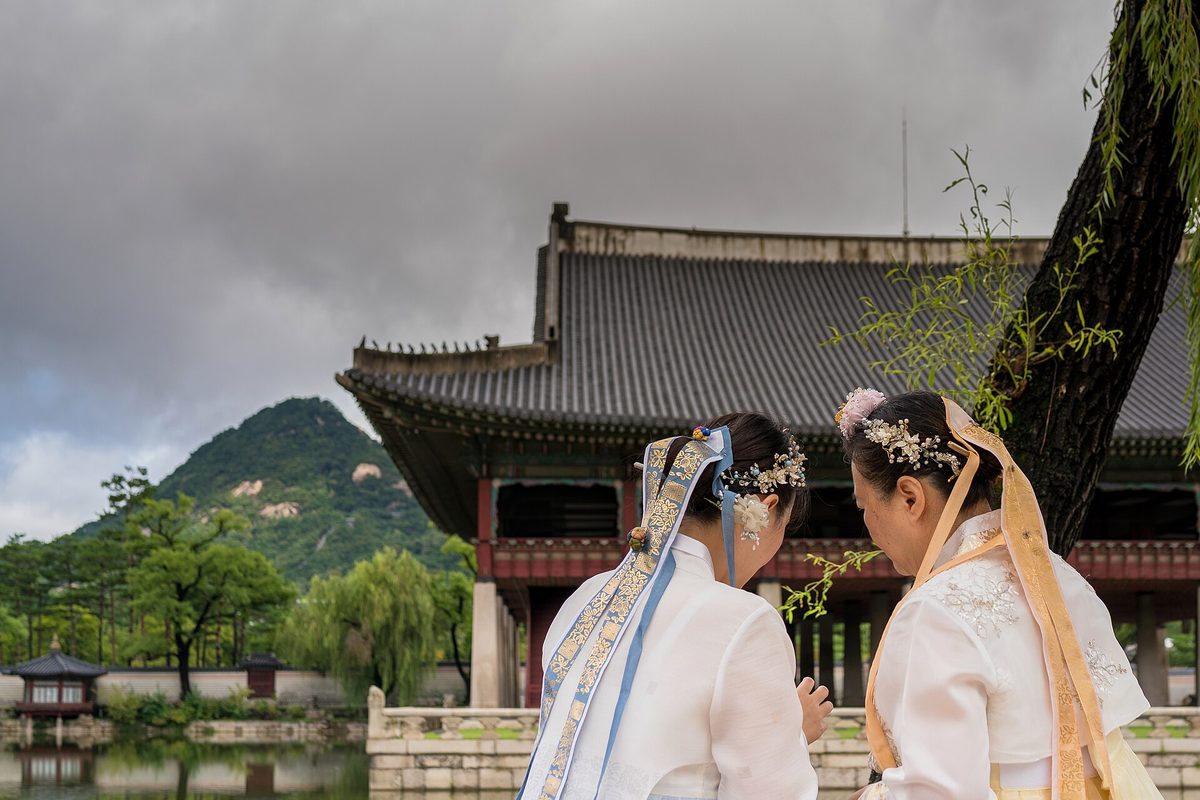
- Gyeongbokgung: Gyeonghoeru Pavilion reflected in its pond, and the long courtyard in front of Geunjeongjeon, the throne hall. The Royal Guard Changing Ceremony at Gwanghwamun gate is a strong backdrop; check the official schedule for times.
- Changdeokgung: wooden halls set into wooded hills, softer and greener than Gyeongbokgung.
- Deoksugung: Joseon halls framed by early-20th-century stone buildings, a combination you won’t find at the other palaces.
Timing rules that work
Go early on weekdays. Overcast days are great for silk because colors read true without glare. Spring cherry blossoms and autumn ginkgo leaves draw the biggest hanbok crowds of the year, so book your rental well ahead if you’re going then.
Hanbok etiquette: how to wear it respectfully
Visitors in rented hanbok are a familiar sight in central Seoul. The whole rental trade near the palaces exists for them, and locals generally take it as interest in Korean culture. What draws frowns is behavior, not the outfit.
- Keep it tied and covered. Re-tie a loose otgoreum and keep the skirt wrapped closed at the back. Shop staff will happily fix it if you pop back in.
- Respect the buildings. Don’t climb on stone platforms, lean on painted pillars or step past rope lines for a shot. Palace grounds have rules on tripods and drones, so check the official page before bringing gear.
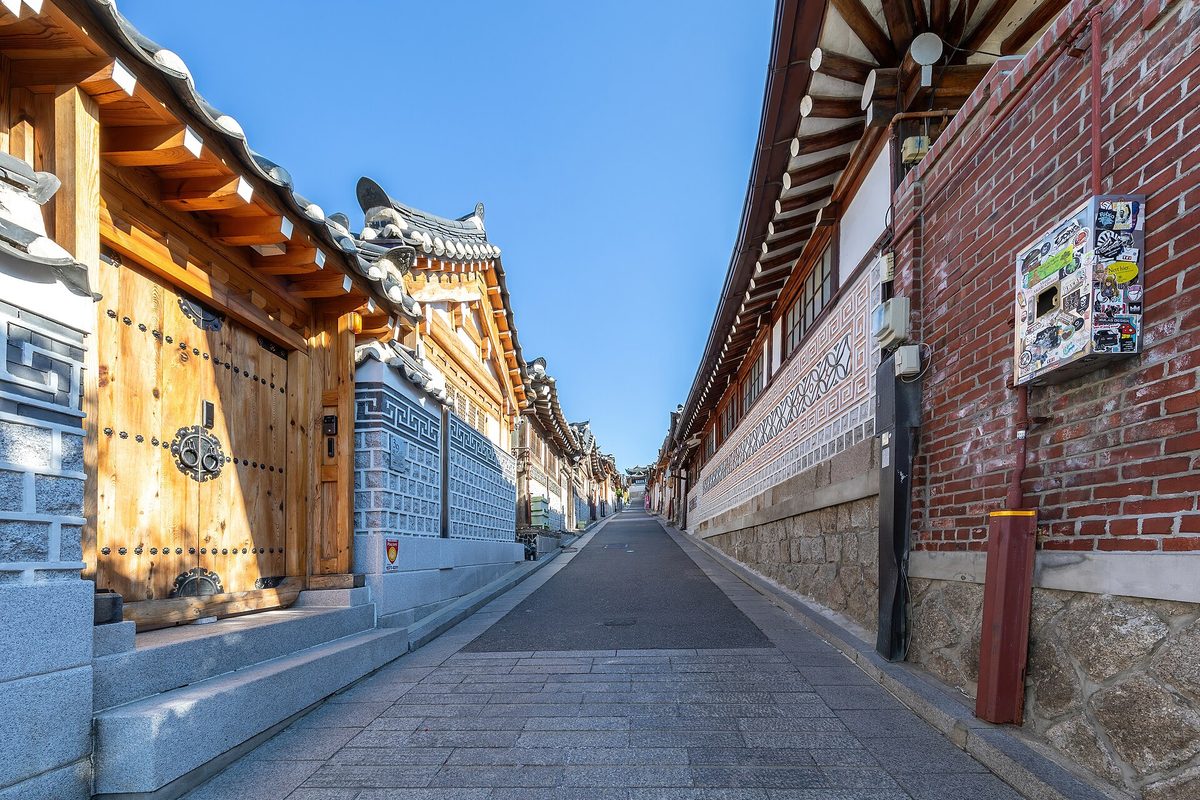
- Bukchon is a neighborhood. People live in those hanok houses. Jongno District, the area’s local government, has set visiting-hour limits in parts of the village, so follow the posted signs, keep your voice down and never pose on doorsteps.
- Share the photo spots. Take your shots and move on. A queue builds behind you at Gyeonghoeru on any weekend.
- Ask before photographing others. Other visitors in hanbok, including Korean families, didn’t sign up to be in your feed.
Common hanbok rental mistakes (and how to avoid them)
Renting too far from the palace. A long walk in a hoop petticoat eats your rental time. Booking the shortest slot. Ticket lines, photos and a snack break add up, so the smallest package can leave you rushing back. Wearing a high-neck top underneath. It shows above the collar in every photo.
Eating the wrong lunch. Rentals are silk, and stains can cost you. Save the grill for after you return the outfit: our guide to how to eat Korean BBQ covers the smoke and splatter you’ll want plain clothes for. If you need fuel mid-shoot, a tidy triangle kimbap from our Korean convenience store food guide is a safer bet than anything with sauce.
Forgetting the closing day. Arriving fully dressed at a closed palace is the most painful mistake on this list. Check the official schedule the night before.
FAQ
Is it OK for foreigners to wear hanbok in Seoul?
Yes. The rental shops around Gyeongbokgung and Bukchon serve mostly visitors, and free palace entry is designed to encourage people to wear hanbok. What matters is wearing it neatly and behaving respectfully at heritage sites.
Which palaces give free entry if you wear a hanbok?
The custom has covered Gyeongbokgung, Changdeokgung, Changgyeonggung, Deoksugung and Jongmyo Shrine. Separately ticketed programs such as Changdeokgung’s Secret Garden tour or special night openings work differently. Confirm current rules on the Korea Heritage Service’s royal palaces site.
How long should I rent a hanbok for?
For one palace plus a nearby neighborhood walk, a half-day window is comfortable. If you only want photos at one palace gate, a shorter slot can work. Check each shop’s rental lengths and late-return fees before you pay.
Can men and kids rent hanbok too?
Yes. Most shops stock men’s hanbok with vests, overcoats and the gat hat, and many carry children’s sizes. Couples and family matching sets are common, so mention group sizes when you book.
Do I need to book a hanbok rental in advance?
On weekday mornings outside peak season, walking in usually works. For weekends, holidays and the spring and autumn peaks, book through the shop’s site or a travel platform so the best sizes and colors aren’t gone.
Can I wear a hanbok in the rain?
You can, but silk spots and long skirts soak up puddles. Many shops lend clear umbrellas. If heavy rain is forecast, move your rental day or choose a darker color that hides splashes.
What to plan next for your hanbok day
Pick your palace first, check its closing day and any special programs on the official royal palaces site, then book a shop within a few minutes’ walk of its gate. Choose traditional or fusion based on the photos you want, plan your base layers for the season, and leave time after returning the outfit for a proper meal in plain clothes. If you plan the day around the ticket line and the light, the hanbok mostly takes care of the rest.
Related reading
Sources k-korea.blog
Prices, opening hours and availability change. Check the official page before you buy or travel.