
10 min read
If you’re asking will North Korea attack South Korea, the answer as of November 17, 2026 is that no attack has happened and neither government has announced one. The border has changed, though. A North Korean mine wounded South Korean soldiers inside the DMZ in September, North Korean troops have crossed the border line far more often this year, and Kim Jong Un has told his commanders to get ready for war.
The tension is real, but a clash at the border is a long way from a war. The last comparable case, in 2015, began the same way with a North Korean mine blast, moved to an artillery exchange and ended in a deal within three weeks.
Key takeaways
- As of November 17, 2026 North Korea has not attacked South Korea. The 2026 incidents are all at the DMZ, the buffer strip along the border.
- A UN Command investigation found that the mine that blew up on September 21, 2026 and seriously wounded South Korean soldiers was North Korean and broke the armistice.
- South Korea’s military counts more than 50 North Korean crossings of the border line in 2026, compared with 17 in 2025 and 9 in 2024.
What happened at the DMZ in 2026?
The Demilitarized Zone, or DMZ (비무장지대), is a strip of land about 4 km wide that runs across the Korean Peninsula. Down its middle runs the Military Demarcation Line, or MDL (군사분계선), which is the actual border between the two Koreas. Both armies are dug in on either side. Almost everything that raised alarm this year happened inside or right next to this strip.
The September 21 mine blast
On September 21, 2026 a mine exploded in the western part of the DMZ while soldiers from the South Korean Army’s 25th Division were clearing a patrol route. South Korean soldiers were seriously wounded, according to The Korea Times and Kyunghyang Shinmun, a Seoul daily.
What the UN Command found
The UN Command (UNC) is the US-led multinational command that has overseen the armistice on the southern side since 1953. It investigated the blast and found that the mine was North Korean and that the explosion violated the Korean War Armistice Agreement, The Korea Times reported on September 30, followed by ROK Drop on October 1. That finding matters because the UNC is not a South Korean body. Its conclusion is the closest thing the border has to a neutral referee’s ruling.
How South Korea’s military responded
South Korea’s Joint Chiefs of Staff (JCS, 합동참모본부), the country’s top military command, demanded that North Korea apologize, take responsible measures and stop fortifying the border. It also vowed a firm response, according to Kyunghyang Shinmun, Financial News and UPI. None of those reports describe a South Korean strike across the line. The response so far has been demands and warnings.
What North Korea says
North Korea rejects the mine findings and accuses Seoul of raising tension with warning shots and loudspeaker warnings, according to The Korea Times. These are Pyongyang’s claims. They have not been independently confirmed, and they contradict the UN Command’s finding.
How often have North Korean troops crossed the border line?
South Korea’s military said North Korean troops crossed the MDL more than 50 times in 2026, UPI reported on October 20, a figure The Korea Times also carried. That is roughly three times the 2025 count and more than five times the 2024 count.
| Year | North Korean MDL crossings counted by South Korea’s military | Source |
|---|---|---|
| 2024 | 9 | UPI / The Korea Times |
| 2025 | 17 | UPI / The Korea Times |
| 2026 (so far) | More than 50 | UPI / The Korea Times |
A crossing in this count is not an invasion. In the reports it means North Korean soldiers stepping over the line inside the DMZ, where the border has no single continuous fence and is marked only by signposts. South Korean troops typically answer with warning broadcasts and warning shots, which matches what North Korea is now complaining about. The trend is what worries South Korea’s military. Each crossing is one more chance for a misunderstanding between armed units standing a few hundred meters apart.

What weapons has North Korea moved to the DMZ?
Self-propelled guns, armored personnel carriers and a 122 mm self-propelled howitzer are the equipment the reports describe. None of the outlets cited here (Nikkei Asia, SecurityStudies.info, UPI) reports tanks.
- Self-propelled guns: North Korea placed self-propelled guns near the DMZ within view of South Korea, Nikkei Asia reported. A self-propelled gun is artillery mounted on its own tracked or wheeled chassis, so it can move and fire without being towed.
- Armored personnel carriers and a howitzer: A report from SecurityStudies.info, a smaller specialist security site, said armored personnel carriers (APCs, armored vehicles that move troops) and a 122 mm self-propelled howitzer were deployed in the DMZ on October 26. It is the only source cited here for that deployment, so weigh it accordingly.
The type of equipment matters for a reader trying to judge the risk. Artillery and troop carriers placed where the other side can see them fit a pattern of pressure and signaling. They are still serious, because heavy weapons inside a zone meant to be demilitarized break the spirit of the armistice. But they are not evidence of an invasion force.
What did Kim Jong Un and Kim Yo Jong say?
Kim Jong Un’s order to prepare for war
In late October 2026, Kim Jong Un (김정은), North Korea’s leader, told military commanders to intensify training and get ready for war as tensions continued along the border, UPI reported on October 28. Kim has also said North Korea is ready for either peace or war with the United States, according to UPI.
Orders like this are a regular part of North Korean messaging, and they are often published for an outside audience as much as for the army. That does not make them empty. It means the words alone are a weak signal of what comes next. Watch what the army actually does.
Kim Yo Jong’s threats
Kim Yo Jong (김여정), Kim Jong Un’s younger sister and a senior official who often issues Pyongyang’s sharpest statements on South Korea, is the voice behind the harshest threat. KCNA quoted her as threatening to “mercilessly eliminate” South Korean forces, according to UPI. Around November 10 she also criticized UN Secretary-General Antonio Guterres over his remarks on the DMZ mine blast, NK News reported. Her statements usually come out through KCNA, the Korean Central News Agency, which is North Korea’s state news service. Read them as official positions, not as independent reporting.
Why the Korean War never officially ended
The Korean War ran from 1950 to 1953 and stopped with an armistice, a ceasefire agreement, signed on July 27, 1953. It was never followed by a peace treaty. Technically the two Koreas are still at war, and that is why every incident at the DMZ is measured against the armistice’s rules.
The armistice was signed by the UN Command, the North Korean army and the Chinese forces that fought in the war. South Korea’s government at the time refused to sign. The agreement created the DMZ as a buffer along the MDL and set rules for what each side may do inside it. That is why the UN Command, not Seoul alone, ruled on the September mine.
For a foreign reader, the practical point is this. South Koreans have lived next to an unfinished war for more than 70 years. Tension at the border goes up and down, and most of the time daily life in Seoul carries on regardless.
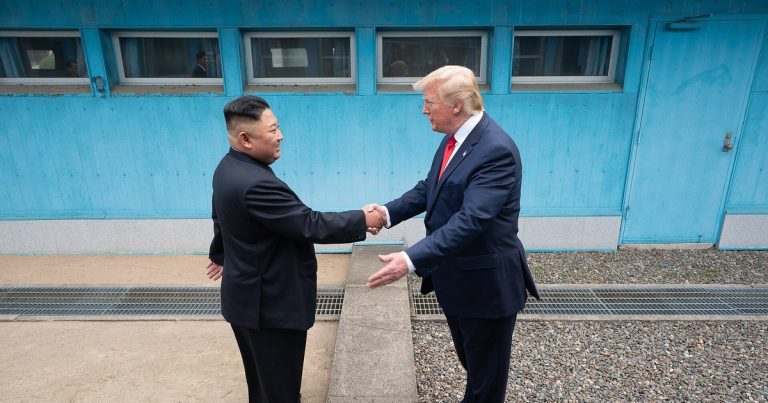
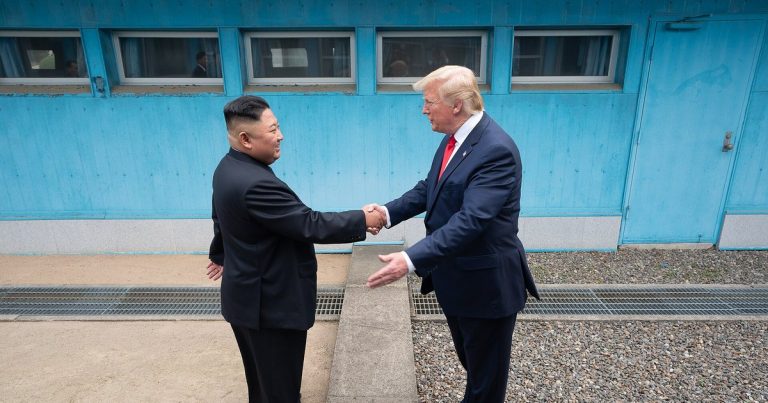
For more on how Washington fits in, see our explainer on whether Trump will meet Kim Jong Un at APEC.
Will North Korea attack South Korea? What analysts and history say
What the American Enterprise Institute said
In its November 11 update, the American Enterprise Institute (AEI), a Washington think tank, said North Korea may test its new command structure through provocations. That points to more incidents like crossings, weapons displays and sharp statements. It does not describe a planned invasion. No source cited in this article predicts a full-scale war.
What past DMZ clashes show
History offers a useful comparison. On August 4, 2015, a North Korean mine in the DMZ maimed two South Korean soldiers. Seoul restarted propaganda loudspeakers, the two sides exchanged artillery fire on August 20, and high-level talks ended in an agreement on August 25, 2015 that lowered tension. On November 23, 2010, North Korea shelled South Korea’s Yeonpyeong Island, killing two South Korean marines and two civilians, and that clash also stayed local.
Those episodes show a pattern. Clashes on the Korean border have tended to stay limited, partly because both sides know how quickly a wider war would become catastrophic. A pattern is not a guarantee, though. This article’s reading of the sources, in line with AEI’s expectation of provocations rather than an invasion, is that the main risk in 2026 is an accident or a miscalculation during a local incident that grows faster than diplomats can contain it.
What would change the picture
- Escalation signs: live fire across the MDL, casualties on either side from a new incident, or large ground units (not just artillery and APCs) moving up to the border.
- De-escalation signs: fewer crossings, North Korea pulling weapons back from the DMZ, or any working contact between the two militaries or between Washington and Pyongyang.
- Official signals: a new statement from the UN Command or South Korea’s JCS, or a change in foreign governments’ travel advisories.
2026 DMZ timeline: what is confirmed, what is reported and what we don’t know
| Date (2026) | Event | Status | Reported by |
|---|---|---|---|
| September 21 | Mine blast in the western DMZ seriously wounds South Korean 25th Division soldiers | Confirmed | The Korea Times, Kyunghyang Shinmun |
| September 30 | UN Command finding that the mine was North Korean and an armistice violation is reported | Confirmed (UNC finding) | The Korea Times |
| September 30 | JCS demands an apology, responsible measures and an end to border fortification, and vows a firm response | South Korean military statement | Kyunghyang Shinmun, The Korea Times |
| September 30 | North Korea rejects the mine findings | Pyongyang’s claim, not independently confirmed | The Korea Times |
| October 1 | UN Command finding reported again | Confirmed (UNC finding) | ROK Drop |
| October 8 | JCS demands and warnings reported | South Korean military statement | Financial News |
| October 20 | Count of more than 50 North Korean MDL crossings in 2026 reported, with the JCS response | South Korean military figure | UPI |
| October 26 | APCs and a 122 mm self-propelled howitzer reported in the DMZ | Single-source report | SecurityStudies.info |
| October 28 | Kim Jong Un orders commanders to prepare for war | North Korean statement, as reported | UPI |
| Around November 10 | Kim Yo Jong criticizes the UN chief over his DMZ mine remarks | North Korean statement, as reported | NK News |
| November 11 | AEI says North Korea may test its new command structure with provocations | Analysis | AEI |
| November 18-19 | APEC summit in Shenzhen, China; Trump has said he might meet Kim Jong Un in China | Summit scheduled; meeting not confirmed | Reuters |
Still unknown: whether border incidents will keep rising and whether one could escalate, whether diplomacy around the APEC summit will lower tension, and why North Korea is fortifying the border now. No official source cited here explains its reasons.
Is it safe to travel to Seoul right now?
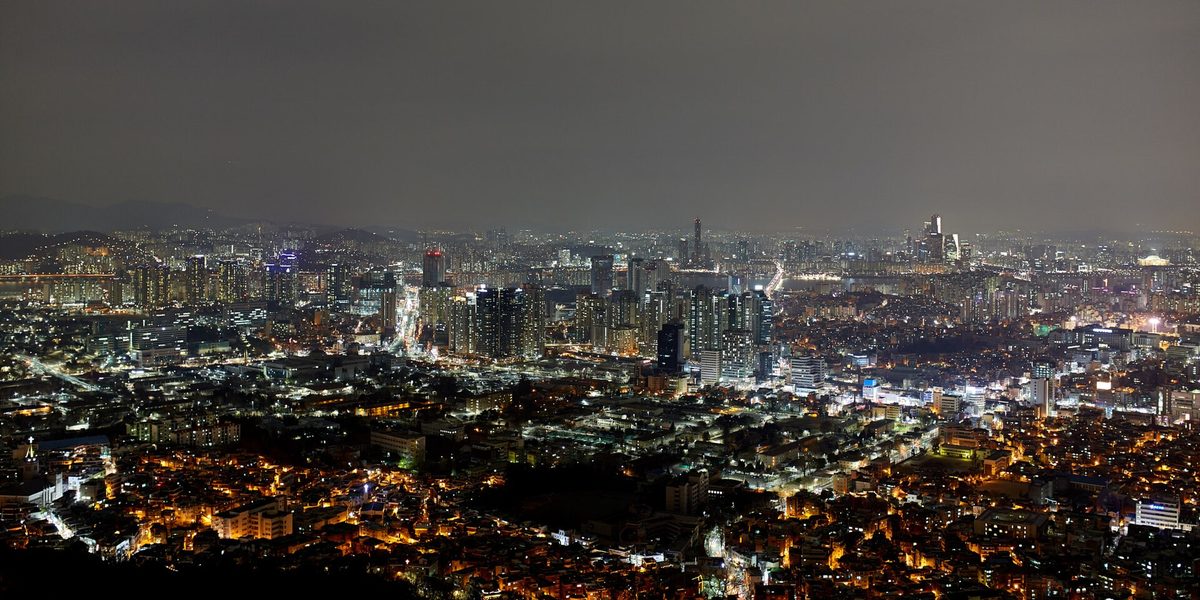
The incidents described above happened at the DMZ, roughly 40-60 km from central Seoul, depending on the point on the border. None of the reports cited in this article describes an incident in the city itself.
Don’t take a news site’s word for your own safety, including ours. Check your own government’s official travel advisory before you book and again before you fly. Examples are the US State Department (travel.state.gov), the UK Foreign Office (gov.uk/foreign-travel-advice), Australia’s Smartraveller and Canada’s travel.gc.ca. Those pages change when the risk changes.
Planning a first trip? Our list of 20 things first-time visitors get wrong covers the practical side, and our guide to day trips from Seoul explains how DMZ tours normally work.
What to watch next: APEC and the next DMZ statement
The next marker is the APEC summit in Shenzhen, China on November 18-19. Diplomacy around the meeting, involving US President Donald Trump, Chinese President Xi Jinping and South Korean President Lee Jae-myung, could change the mood. Trump said he might meet Kim Jong Un in China, according to Reuters. A meeting has not been confirmed.
- UN Command and JCS statements: any new finding or warning about the DMZ is the most direct signal of whether incidents are rising.
- KCNA statements: watch for new threats from Kim Yo Jong or orders from Kim Jong Un, and remember they are state messaging.
- Crossing counts: if South Korea’s military updates the 2026 figure, it shows whether the trend is still climbing.
- Travel advisories: if your government changes its advisory level for South Korea, that is your cue to rethink plans. Headlines alone are not.
FAQ
Is North Korea going to start a war in 2026?
No official or analyst cited in this article has said a war is coming. AEI said on November 11 that North Korea may test its new command structure through provocations, which points to more border incidents rather than an invasion.
Are North and South Korea still at war?
Technically, yes. The Korean War stopped with an armistice signed on July 27, 1953, not a peace treaty. That is why every incident at the DMZ is still judged against the armistice’s rules.
Is it safe to travel to South Korea right now?
The 2026 incidents reported here all happened at the DMZ, not in Seoul. Check your own government’s travel advisory, such as travel.state.gov or gov.uk/foreign-travel-advice, before you book and again before you fly.
Can you still visit the DMZ?
DMZ tours normally run from Seoul, but they can be changed or suspended at short notice during periods of tension. Book through a licensed operator and confirm with them shortly before your date.
What did Kim Yo Jong say about the mine blast?
KCNA quoted her as threatening to “mercilessly eliminate” South Korean forces, according to UPI. Around November 10 she also criticized UN Secretary-General Antonio Guterres over his remarks on the mine blast, NK News reported.
Related reading

Sources koreatimes.co.kr · khan.co.kr · rokdrop.net · en.fnnews.com · upi.com · asia.nikkei.com · securitystudies.info · nknews.org
Prices, opening hours and availability change. Check the official page before you buy or travel.