14 min read
Short answer to why is Korea divided: the US and USSR split it at the 38th parallel in 1945. A line drawn only for accepting Japan’s surrender turned into two rival states in 1948, then a war from 1950 to 1953. That war ended in a ceasefire, and no peace treaty has ever been signed.
That history explains a lot of modern Korea: why South Korean men do military service, why American troops are based in the South, and why a strip of land about 4 km wide is one of the most heavily guarded borders in the world.
Key takeaways
- Two US Army officers picked the 38th parallel in August 1945 as a temporary dividing line, and the Soviet Union accepted it.
- Two governments followed in 1948: the Republic of Korea in the south on August 15 and the Democratic People’s Republic of Korea in the north on September 9.
- The Korean War stopped with an armistice on July 27, 1953. There was no peace treaty, so the two Koreas are technically still at war.
- The DMZ runs about 250 km (155 miles) across the peninsula and is about 4 km (2.5 miles) wide.
Why is Korea divided at the 38th parallel?
Japan ruled Korea as a colony from 1910 to 1945 (our guide to Korea under Japanese rule covers those 35 years). By August 1945 Japan was losing the Pacific War. The Soviet Union declared war on Japan on August 8, and Soviet troops moved into the north of the Korean Peninsula within days.
Washington had no forces nearby and wanted to stop the Soviets from taking the whole peninsula. On the night of August 10 to 11, two American officers, Colonel Charles Bonesteel and Major Dean Rusk (later US Secretary of State), were asked to propose a line. Working from a National Geographic map, they chose the 38th parallel. It roughly halved the country and put Seoul, the capital, in the American zone. Stalin agreed.
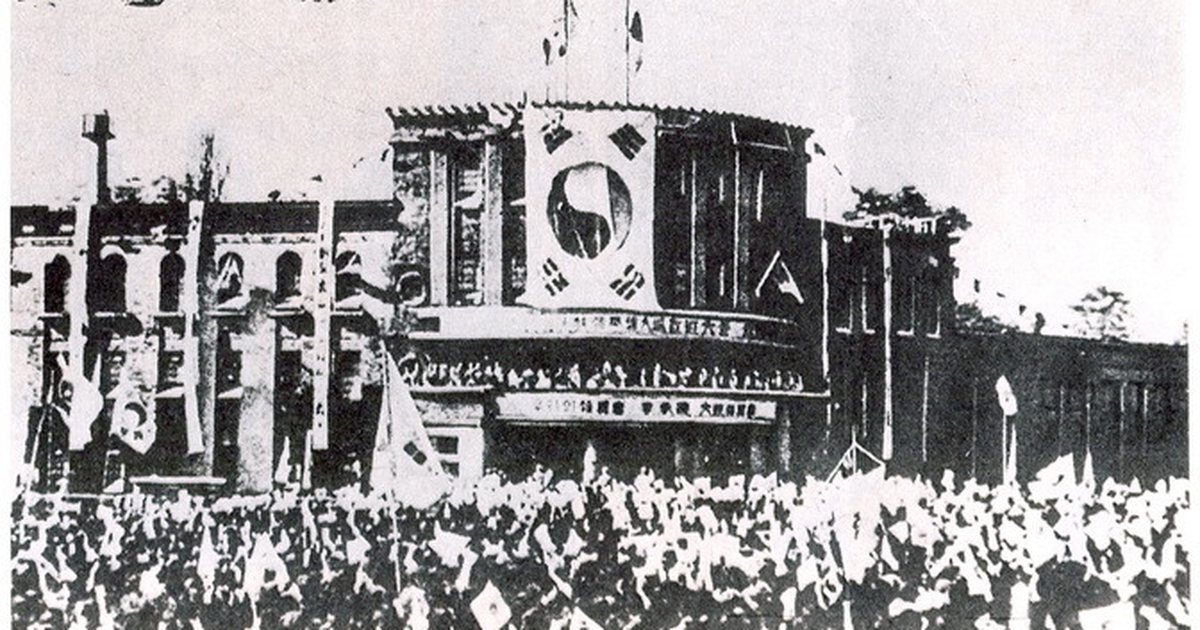
Japan announced its surrender on August 15, 1945. Koreans call that day Gwangbokjeol (광복절, literally “restoration of light day”), and South Korea still marks it as a national holiday. American troops arrived in the south in September.
Was the 38th parallel meant to be permanent?
No. The plan was simple: Soviet troops would accept the Japanese surrender north of the line and American troops south of it. Nobody asked Koreans.
The line ran straight across provinces, rivers, roads, rail lines and family farms. People expected it to disappear once Korea had a government of its own. It never did.
How did one Korea become two countries in 1948?
In December 1945 the US, the Soviet Union and Britain met in Moscow and proposed a trusteeship, meaning international supervision of Korea for up to five years before full independence. After 35 years of colonial rule, many Koreans saw that as another occupation, and protests broke out across the south.
A US-Soviet Joint Commission met in 1946 and 1947 to set up a single provisional government and got nowhere. Each occupation zone was already building its own system.
- In the north, Soviet authorities backed Kim Il Sung, a former anti-Japanese guerrilla who had spent the war years in the Soviet Union. A land reform in 1946 took estates from landlords and redistributed them.
- In the south, a US military government ran things, and Syngman Rhee, a US-educated independence activist and strong anti-communist, became the leading politician.
In 1947 the US took the question to the United Nations, which called for elections across Korea. The Soviet side refused to let the UN commission into the north, so the vote was held only in the south on May 10, 1948. The Republic of Korea (대한민국, Daehan Minguk) was proclaimed on August 15, 1948, with Rhee as president. The Democratic People’s Republic of Korea (조선민주주의인민공화국), or DPRK, followed on September 9, 1948, led by Kim Il Sung.
The two states still use different names for Korea. The South says Hanguk (한국), and the North says Joseon (조선), after the last Korean dynasty. Each claimed to be the only lawful government of the whole peninsula, and that claim is still at the root of the conflict. Soviet troops left the north in late 1948 and most US troops left the south by mid-1949. The years before the war were violent: an uprising on Jeju Island that began in April 1948, and the crackdown that followed, killed many thousands of civilians.
What happened in the Korean War (6·25 전쟁)?
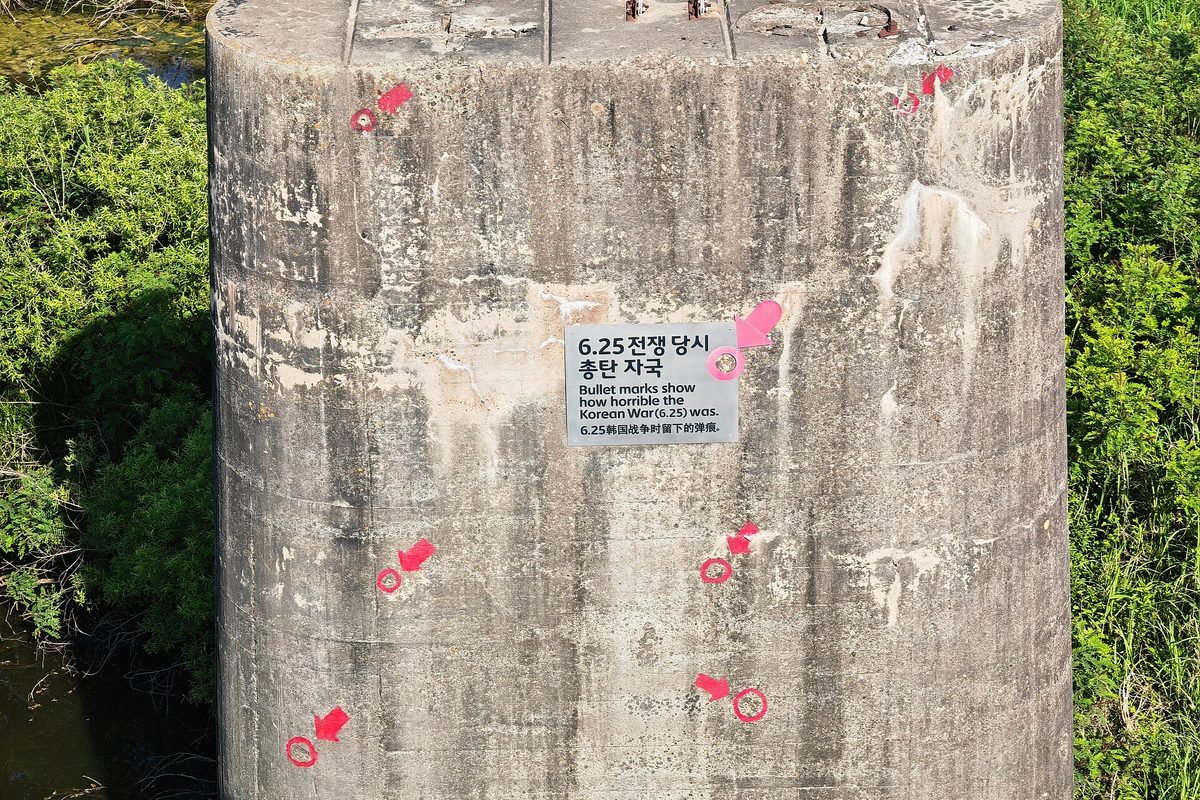
On June 25, 1950, North Korean forces crossed the 38th parallel in a full-scale invasion. South Koreans still call the war “6·25” (yugio) after that date. Seoul fell within days.
The Soviet Union was boycotting the UN Security Council at the time, so the Council was able to call on member states to defend the South. A US-led United Nations Command was formed, and 16 countries sent combat troops. By late summer, South Korean and UN forces were pinned inside a small pocket around the port of Busan, the Pusan Perimeter.
The war then swung back and forth across the peninsula:
- September 15, 1950: General Douglas MacArthur’s landing at Incheon, west of Seoul, cut North Korean supply lines. UN forces retook Seoul and pushed north across the 38th parallel toward the Yalu River on the Chinese border.
- October 1950: China entered the war with hundreds of thousands of troops, officially called “Chinese People’s Volunteers,” and drove UN forces back south.
- January 1951: Seoul fell again. It changed hands four times during the war.
- Mid-1951 onward: The front settled near the 38th parallel, close to where it started, and truce talks dragged on for two years, mainly over how to return prisoners of war.
Who started the Korean War?
Historians who worked with Soviet archives opened in the 1990s found that Kim Il Sung planned the invasion with Stalin’s approval and Mao Zedong’s support. North Korea’s official position, repeated by its state news agency KCNA (Korean Central News Agency), is that the US and South Korea attacked first. Pyongyang calls the conflict the “Fatherland Liberation War.”
How many people died in the Korean War?
Estimates vary a lot, but the dead, soldiers and civilians together, ran into the millions, and many historians put the figure near three million. Roughly 36,000 American service members died. In the US it is often called “the Forgotten War.” In Korea it left millions of separated families, known as isan gajok (이산가족), who were cut off from relatives on the other side.
Are North and South Korea still at war?
Technically, yes. The fighting stopped with the Korean Armistice Agreement, signed at Panmunjom on July 27, 1953, by the UN Command, the Korean People’s Army and the Chinese People’s Volunteers. An armistice is a ceasefire between armies. It is not a peace treaty, and it does not settle the political question of who governs Korea.
South Korea never signed. President Syngman Rhee opposed any truce that left Korea divided. A peace conference in Geneva in 1954 ended without a settlement, and no peace treaty has been signed since.
The consequences are still visible. A US-South Korea Mutual Defense Treaty signed in 1953 is why American troops are still stationed in the South. North Korea signed its own treaty of alliance with China in 1961. It’s also why nearly every able-bodied South Korean man serves in the armed forces, which our explainer on Korean military service covers in detail.
Has anyone tried to formally end the war?
Several times. In the 2018 Panmunjom Declaration, the leaders of the two Koreas pledged to work toward turning the armistice into a peace regime. Talk of an “end-of-war declaration” has come and gone since then, and the armistice is still the legal basis of the ceasefire.
What is the DMZ (비무장지대) and how does it work?
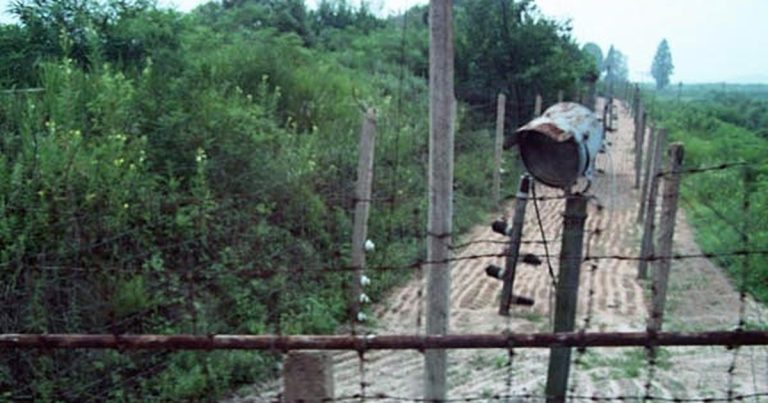
The Korean Demilitarized Zone, or DMZ, is a buffer strip 2 km deep on each side of the Military Demarcation Line (MDL), the line where the two armies stood when the armistice took effect. That makes it about 4 km wide and roughly 250 km long, coast to coast.
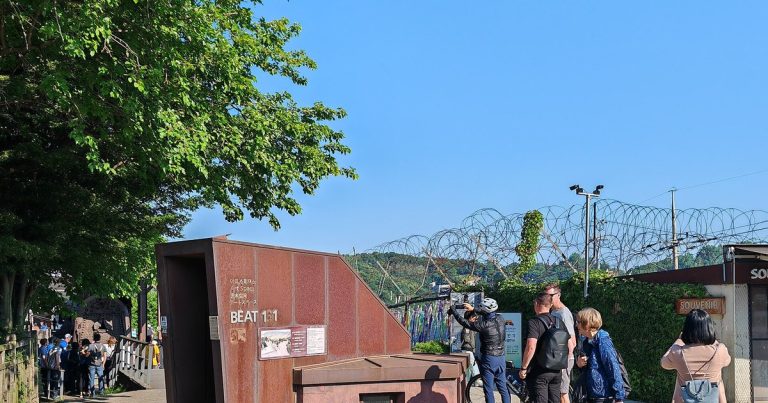
The MDL is not the 38th parallel. It runs at an angle: south of the parallel in the west, where the old city of Kaesong ended up in North Korea, and north of it in the east. Despite the name, the zone is one of the most heavily militarized places on earth, with minefields, fences and guard posts on both sides.
- Panmunjom and the Joint Security Area (JSA): the truce village where the armistice was signed. Its blue conference buildings straddle the line, and soldiers from both sides stand a few meters apart.
- Infiltration tunnels: South Korea has found four tunnels dug under the DMZ from the north since the 1970s. The Third Tunnel, found in 1978, is now a tourist stop.
- The sea border: the armistice never fixed a maritime line. The Northern Limit Line (NLL) in the Yellow Sea, drawn by the UN Command, is disputed by North Korea and has been the scene of deadly clashes.
- Wildlife: because people have been largely kept out for decades, the zone has become a refuge for rare species such as the red-crowned crane.
38th parallel vs DMZ: what’s the difference?
| Line | What it is | When it was set | Who set it | Is it the border today? |
|---|---|---|---|---|
| 38th parallel (38선, sampalseon) | A latitude line used to split US and Soviet occupation zones | August 1945 | US officers, accepted by the Soviet Union | No, only a historical marker |
| Military Demarcation Line (MDL) | The actual ceasefire line between the two armies | July 27, 1953 | Armistice signatories | Yes, on land |
| DMZ | A 4 km buffer zone centered on the MDL | July 27, 1953 | Armistice signatories | Yes, the zone around the border |
| Northern Limit Line (NLL) | A sea boundary in the Yellow Sea | After the 1953 armistice | UN Command | Enforced by the South, disputed by the North |
Korea’s division timeline: key dates since 1945
| Date | What happened |
|---|---|
| 1910 | Japan annexes Korea |
| August 1945 | Soviet troops enter the north; US proposes the 38th parallel |
| August 15, 1945 | Japan surrenders; Korea is liberated |
| December 1945 | Moscow Conference proposes a trusteeship of up to five years |
| May 10, 1948 | UN-supervised election held in the south only |
| August 15, 1948 | Republic of Korea proclaimed in Seoul |
| September 9, 1948 | DPRK proclaimed in Pyongyang |
| June 25, 1950 | North Korea invades; the Korean War begins |
| September 15, 1950 | Incheon landing |
| October 1950 | China enters the war |
| July 27, 1953 | Armistice signed at Panmunjom |
| July 4, 1972 | First inter-Korean joint statement on reunification principles |
| 1985 | First reunions of separated families |
| September 1991 | Both Koreas join the United Nations |
| June 2000 | First inter-Korean summit in Pyongyang |
| 2006 | North Korea conducts its first nuclear test |
| April 27, 2018 | Panmunjom summit and declaration |
| June 2018 | First US-North Korea summit, in Singapore |
| 2024 | North Korea drops reunification as a goal, according to KCNA |
Why hasn’t Korea reunified?
Seventy-plus years on, the obstacles are structural rather than sentimental. Most of them come down to one problem: neither state can merge with the other without ceasing to exist.
Two systems that cannot simply merge
North Korea is a one-party state that has been led by three generations of the same family: Kim Il Sung, Kim Jong Il and Kim Jong Un. South Korea became a democracy after mass protests in 1987 and has since changed governments through elections. Both founding constitutions claim the whole peninsula, so any unification means one system absorbing the other, or a federation that no one has managed to design.
Nuclear weapons and security
North Korea has carried out nuclear tests since 2006 and presents its arsenal as a guarantee of its survival. The US and South Korea have made denuclearization the condition for normal relations. This deadlock has outlasted every negotiation round, including the Trump-Kim summits in Singapore in 2018 and Hanoi in 2019, the second of which ended without a deal.
Neighbors with a stake
China, North Korea’s treaty ally, has long valued the North as a buffer between its border and US forces. The US has its alliance and bases in the South, and Japan and Russia have their own interests. A unified Korea would redraw the security map of Northeast Asia, so outside powers are cautious about any rapid change.
The cost of closing the gap
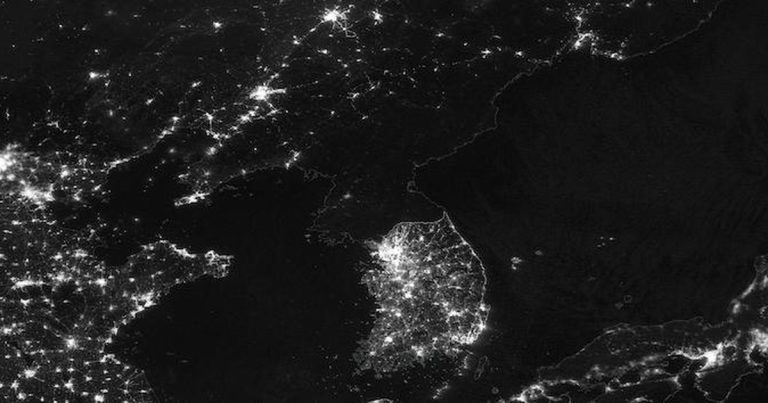
South Korea is one of the world’s major economies and North Korea one of its poorest. Germany’s reunification in 1990 is the usual reference point, and the gap between East and West Germany was much smaller than the one between the two Koreas. Many South Koreans worry about who would pay.
Engagement that stalled
There have been real attempts. South Korean President Kim Dae-jung’s “Sunshine Policy” of engagement led to the first summit in 2000. Joint projects followed: tourist trips to Mount Kumgang in the North (suspended in 2008) and the Kaesong Industrial Complex, where South Korean firms employed North Korean workers until it closed in 2016. In 2018 Kim Jong Un and President Moon Jae-in held three summits. In June 2020 North Korea blew up the inter-Korean liaison office in Kaesong.
The North changed its position
In 2024, North Korean state media (KCNA) reported that Kim Jong Un had called the South a separate, hostile state and that agencies working on reunification were being abolished. Pyongyang had used the language of eventual reunification for decades, so this was a major shift in its official stance.
How do South and North Koreans see unification today?
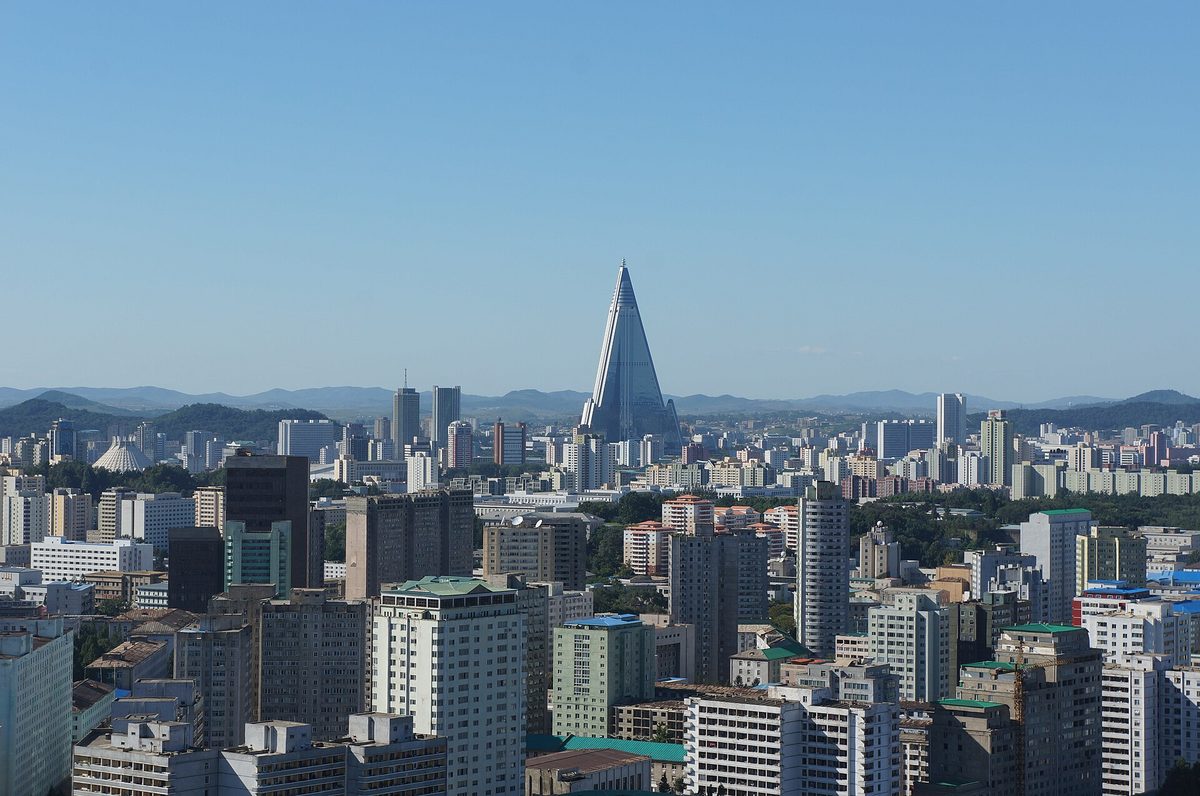
In South Korea, unification is official policy. There is a government Ministry of Unification, and the goal appears in the constitution. Feelings differ a lot by age.
Older Koreans, especially those with relatives in the North, often treat it as unfinished family business. Younger South Koreans grew up in a wealthy democracy and are more likely to see the North as a foreign country and to focus on cost and security. Annual surveys by Seoul National University’s Institute for Peace and Unification Studies have tracked this change for years. Check its latest report for current figures.
Separated families are running out of time. Government-organized reunions began in 1985 and were held on and off after 2000, but many applicants have died still waiting. More than 30,000 North Koreans have resettled in the South. They go through a state resettlement center called Hanawon, and many say adapting to South Korean life is harder than they expected.
North Koreans’ private views are much harder to know. Information is tightly controlled (see how North Korea’s closed internet works), there are no independent polls, and testimony from people who have left gives glimpses but not a representative picture. What can be observed is the official line, and since 2024 that line, as reported by KCNA, has moved away from reunification.
Culture sits between the two. South Korean films and dramas such as Park Chan-wook’s Joint Security Area (2000) and the series Crash Landing on You have given audiences abroad a human picture of the border. Both are fiction, but they’re a common starting point for foreign viewers.
Can you visit the DMZ from Seoul?
Yes. The DMZ is one of the most popular day trips from Seoul, about an hour or so north by road. Most visitors book a guided tour, because much of the area near the line is under military control and civilians can only enter it with an escort.
- Imjingak: a park near the Imjin River with the Freedom Bridge and memorials to separated families. You can reach it without a tour.
- Dora Observatory: a hilltop lookout where you can see into North Korea on a clear day.
- The Third Tunnel: one of the infiltration tunnels, which you can walk part of the way into.
- Dorasan Station: a rail station built for a future inter-Korean line.
- Panmunjom and the JSA: the most sought-after stop. Tours open and close depending on the security situation.
- Area
- Paju, Gyeonggi Province, north of Seoul
- Nearest station
- Imjingang Station (Gyeongui-Jungang Line) for Imjingak
- Time needed
- Half a day for Imjingak; a full day for a guided tour including the Third Tunnel and Dora Observatory
- Before you go
- check opening days, fees and tour status on the official page
FAQ
Why is Korea divided into North and South?
In 1945 the US and the Soviet Union split Korea at the 38th parallel to accept Japan’s surrender. The two occupation zones set up rival governments in 1948. The Korean War from 1950 to 1953 failed to unify the country by force, and the ceasefire line became today’s border.
Who drew the line between North and South Korea?
Two US officers, Charles Bonesteel and Dean Rusk, proposed the 38th parallel in August 1945 using a National Geographic map, and the Soviet Union accepted it. The current border is a different line: the Military Demarcation Line set by the 1953 armistice.
Are North and South Korea technically still at war?
Yes. The 1953 armistice stopped the fighting but no peace treaty has ever been signed. Leaders pledged in 2018 to work toward a peace regime, but the armistice is still the legal basis of the ceasefire.
Can North and South Koreans visit each other?
Not freely. Ordinary citizens cannot cross, call or write to each other without government approval, and North Koreans face severe penalties for unauthorized contact. Limited exchanges such as family reunions and joint projects have happened in some periods and stopped in others.
Did the US and the Soviet Union cause Korea’s division?
The initial split came from US and Soviet decisions made without consulting Koreans. Korean political rivalries, the founding of two separate states in 1948 and the war that followed turned a temporary line into a permanent one. Most historians treat it as the result of all of these together.
Will North and South Korea ever reunify?
Nobody can say. South Korea’s official policy still supports peaceful unification. North Korea, according to KCNA, abandoned reunification as a goal in 2024. Big obstacles remain: nuclear weapons, the economic gap and the interests of neighboring powers.
What to watch next on the Korean Peninsula
A few signals will tell you which way things are moving.
- North Korea’s “two states” line: whether Pyongyang keeps treating the South as a separate, hostile country in law and symbols. The Wall Street Journal has reported that Kim Jong Un has remade North Korea’s flag, replacing the Soviet-era version.
- US-North Korea diplomacy: whether leader-level talks resume after the 2018 and 2019 summits. DW has examined whether new Trump-Kim talks are likely.
- China ties: NK News has reported North Korea reinforcing ties with the Chinese Communist Party through an official’s visit. Beijing’s role will shape any future settlement.
- Separated families: whether reunions restart before the remaining first-generation applicants are gone. South Korea’s Ministry of Unification publishes official updates.
- July 27 each year: the armistice anniversary, when both sides restate their positions on the war and the peace that never came.
If you plan to see the border yourself, start with Imjingak and check VisitKorea for tour status before you book.
Related reading
Sources k-korea.blog · news.google.com
Prices, opening hours and availability change. Check the official page before you buy or travel.