14 min read
Korean War explained: North Korea invaded the South in June 1950, and fighting stopped in July 1953. The war never officially ended, because the armistice signed on July 27, 1953 only stopped the shooting between armies. The peace treaty that was supposed to follow was never signed, so the two Koreas are still technically at war, divided by a 4 km wide buffer called the DMZ.
In South Korea it’s usually called 6·25 전쟁 (yugio jeonjaeng, “the 6-2-5 war”, after its start date) or 한국전쟁 (Hanguk jeonjaeng). North Korea calls it the “Fatherland Liberation War”. Americans often call it the “Forgotten War”. It’s the same conflict, and it explains more about the Korea you see in the news today than any other single event.
Key takeaways
- The war began on June 25, 1950, five years after the United States and the Soviet Union split Korea at the 38th parallel.
- The 1953 armistice was signed by the commanders of the UN Command, North Korea’s army and China’s forces. South Korea never signed it.
- The DMZ is about 4 km wide and roughly 250 km (155 miles) long. Panmunjom is the one spot where the two sides meet face to face.
- Without a peace treaty the war is legally on pause, which is one reason South Korean men still do compulsory military service.
What started the Korean War in 1950?
The war started with a border nobody in Korea chose. Japan ruled Korea as a colony from 1910 until its defeat in 1945. As the Second World War ended, the United States and the Soviet Union agreed to accept Japan’s surrender in Korea by splitting the peninsula along the 38th parallel, a line of latitude, with Soviet troops in the north and American troops in the south.
It was meant to be temporary. It wasn’t. As the Cold War hardened, talks on a single Korean government went nowhere, and in 1948 two rival states were declared: the Republic of Korea (South Korea) in Seoul under Syngman Rhee, and the Democratic People’s Republic of Korea (North Korea) in Pyongyang under Kim Il Sung. Each claimed to be the only legitimate government of all Korea. Both still do.
Who started the Korean War?
North Korea did. On June 25, 1950, its army crossed the 38th parallel in a full-scale invasion and took Seoul within days. Border clashes had been happening for months before that, but the invasion was the step that turned a divided country into a war. Soviet archives opened after the Cold War show that Stalin approved Kim Il Sung’s plan and that Mao Zedong agreed to back it. North Korea’s own official history still says the South attacked first, a claim historians do not accept.
Why did the United States get involved?
Washington read the invasion as communist expansion that had to be stopped. The UN Security Council quickly called on members to help South Korea, at a time when the Soviet Union was boycotting the council and so could not use its veto. That’s why the forces that fought for the South did so under a UN Command, led by the United States.
Korean War explained: the 1950-1953 timeline in 4 phases
The front line moved up and down the peninsula at frightening speed in the first year, then froze. It helps to think of the war in four phases.
- The North pushes south (June to September 1950). South Korean and US forces were pushed back into a small corner around Busan in the southeast, known as the Pusan Perimeter.
- The UN pushes north (September to November 1950). General Douglas MacArthur’s amphibious landing at Incheon, near Seoul, on September 15 cut North Korean supply lines. UN forces retook Seoul, crossed the 38th parallel and advanced toward the Yalu River on the Chinese border.
- China enters (late 1950 to spring 1951). Hundreds of thousands of Chinese troops, officially “volunteers”, poured across the border and drove UN forces back south. Seoul fell a second time in January 1951 before being retaken in March. By then the capital had changed hands four times.
- Stalemate and talks (mid-1951 to July 1953). The front settled near the 38th parallel. For two years soldiers fought brutal battles over hills such as Heartbreak Ridge and Pork Chop Hill while negotiators argued at the table.
| Date | Event | Why it matters |
|---|---|---|
| 1910-1945 | Japan rules Korea as a colony | Korea has no government of its own when Japan surrenders |
| August 1945 | US and Soviet Union divide Korea at the 38th parallel | A “temporary” line becomes a national border |
| 1948 | South Korea (August) and North Korea (September) are founded | Two states, each claiming the whole peninsula |
| June 25, 1950 | North Korea invades | The war begins; Seoul falls within days |
| September 15, 1950 | Incheon landing | UN forces regain Seoul and move north |
| October 1950 | China enters the war | The war becomes a US-China fight on Korean soil |
| April 1951 | President Truman relieves MacArthur | Washington rules out widening the war into China |
| July 1951 | Armistice talks open at Kaesong, later moved to Panmunjom | Two years of talking while fighting goes on |
| July 27, 1953 | Armistice signed at Panmunjom | Fighting stops; no peace treaty |
| October 1953 | US-South Korea Mutual Defense Treaty signed | The basis for US troops still stationed in Korea |
| 1954 | Geneva Conference fails to agree a Korean settlement | The last real attempt at a peace deal in that era |
Who fought in the Korean War, and why did China join?
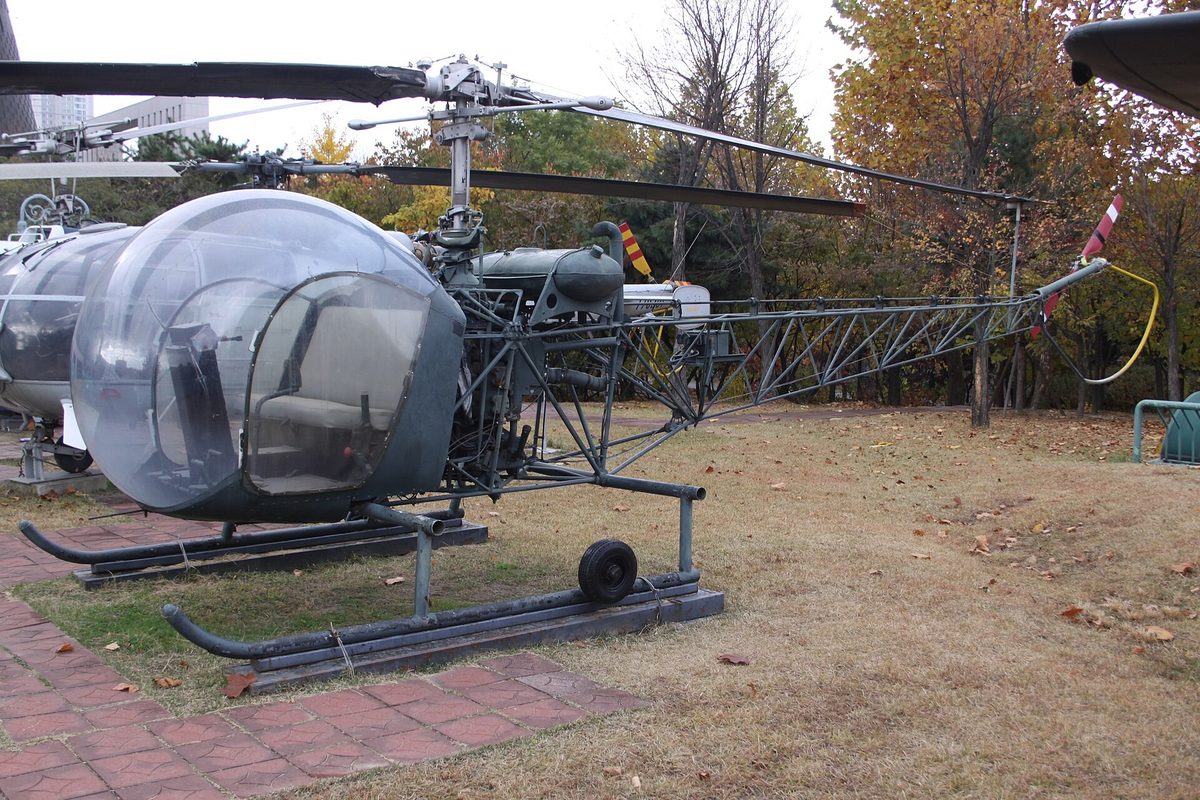
On one side stood South Korea and the UN Command. Sixteen countries sent combat troops, among them the United States, the United Kingdom, Canada, Turkey, Australia, the Philippines, Ethiopia, Colombia and Thailand, and several more sent medical units. The United States supplied by far the largest foreign force.
On the other side stood North Korea and China, with the Soviet Union supplying weapons, advisers and, secretly, pilots. Moscow kept its role quiet to avoid a direct war with the United States.
Why did China enter the Korean War?
Mao’s new government, founded in 1949, saw American troops marching toward the Yalu River as a threat to China itself. Beijing had warned it would intervene if UN forces crossed the 38th parallel. When they did, China sent in its forces under the name Chinese People’s Volunteers, which let it fight without formally declaring war on the United States.
How many people died in the Korean War?
Nobody knows exactly, and estimates vary widely. Commonly cited totals run to around 3 million dead, with civilians making up a large share, and roughly 36,000 Americans killed. Cities such as Seoul and Pyongyang were largely destroyed, and millions of people were displaced. Families split by the moving front often ended up on opposite sides of the final line, and most never saw each other again.
Why did the Korean War end in an armistice in 1953?
By mid-1951 both sides understood that neither could win outright without a much bigger war. The talks that opened that July were meant to stop the fighting, not to settle Korea’s future. That job was left for later.
The talks dragged on for two years. The biggest sticking point was prisoners of war. Many Chinese and North Korean prisoners held by the UN did not want to go home, and the UN side insisted they could not be forced back. North Korea and China at first demanded every prisoner be returned. The compromise was a neutral commission to handle prisoners who refused repatriation.
Two other things helped close the deal: Stalin’s death in March 1953, and a new US president, Dwight Eisenhower, who wanted the war over. The armistice was signed at Panmunjom on July 27, 1953 by the commanders of three forces: the UN Command, the Korean People’s Army of North Korea and the Chinese People’s Volunteers.
Why didn’t South Korea sign the armistice?
President Syngman Rhee opposed any deal that left Korea divided and wanted to keep fighting for unification. He did not sign, though South Korea went along with the ceasefire. In return the United States agreed to a mutual defense treaty, signed that October. South Korea’s absence from the signature page still matters, as you’ll see below.
Why there is no Korean War peace treaty
An armistice is a military agreement between commanders to stop fighting. A peace treaty is a political agreement between governments that ends a war in law and settles borders and relations. The 1953 document said a political conference should follow within three months to settle the Korean question. That conference finally met in Geneva in 1954 and broke down, mainly over how to hold all-Korean elections and whether foreign troops should leave. No treaty has been signed since.
| 1953 armistice | A peace treaty | |
|---|---|---|
| Who signs | Military commanders (UN Command, North Korea, China) | Governments |
| What it does | Stops fighting, sets a demarcation line and a buffer zone | Formally ends the war and settles political questions |
| Border | A military line on land only | Would set agreed borders, including at sea |
| Status today | Still in force | Never signed |
Why is a peace treaty so hard?
Because a treaty would force answers to the questions the war was about. Which government is legitimate? South Korea’s constitution claims the whole peninsula as its territory, and North Korea’s founding claims mirror that. Should US troops stay in the South? What happens to North Korea’s nuclear weapons program?
Who even signs? North Korea has long pushed for a deal directly with the United States, while South Korea, which did not sign the armistice, insists it must be a party to any peace. China’s troops left North Korea by 1958, but Beijing was a signatory, so its role would come up too.
What is an “end-of-war declaration”?
It’s a political statement that the war is over, which is weaker than a treaty and would not replace the armistice by itself. The idea has come up repeatedly in inter-Korean diplomacy. In the 2018 Panmunjom Declaration, the leaders of the two Koreas pledged to pursue declaring an end to the war and to turn the armistice into a peace regime. That pledge has not been carried out.
What is the DMZ, and how does the armistice still work?
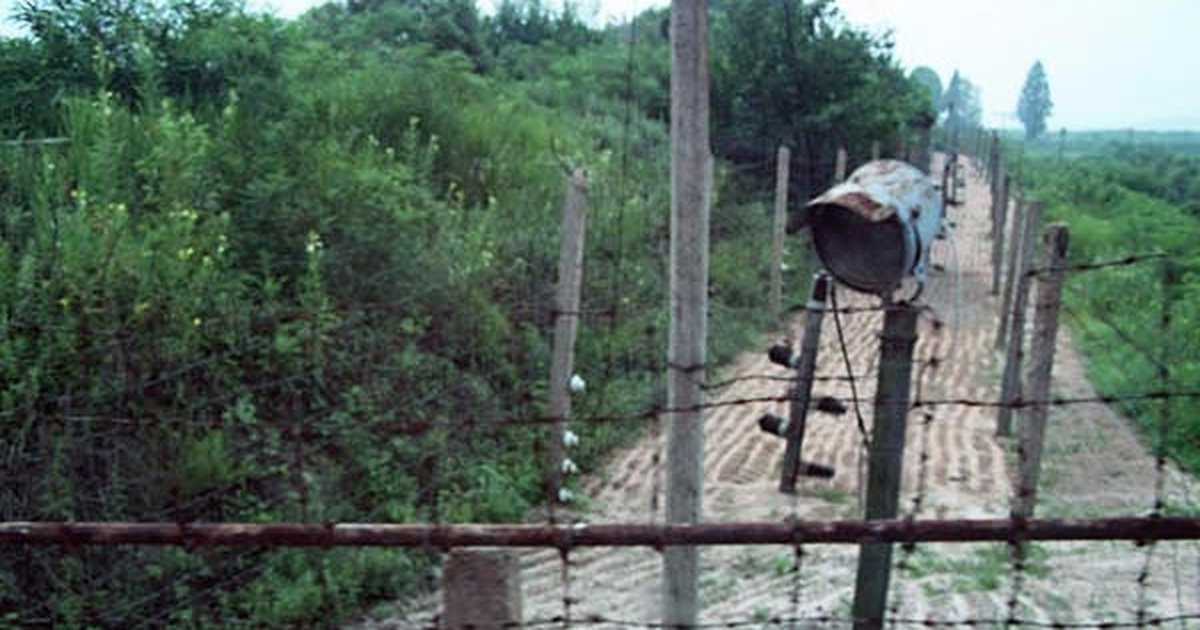
The armistice drew a Military Demarcation Line roughly where the front stood in 1953. It runs across the peninsula at an angle to the old 38th parallel, dipping south of it in the west and rising north of it in the east. Each side pulled back 2 km from that line, creating the Demilitarized Zone (DMZ): about 4 km wide and roughly 250 km long.
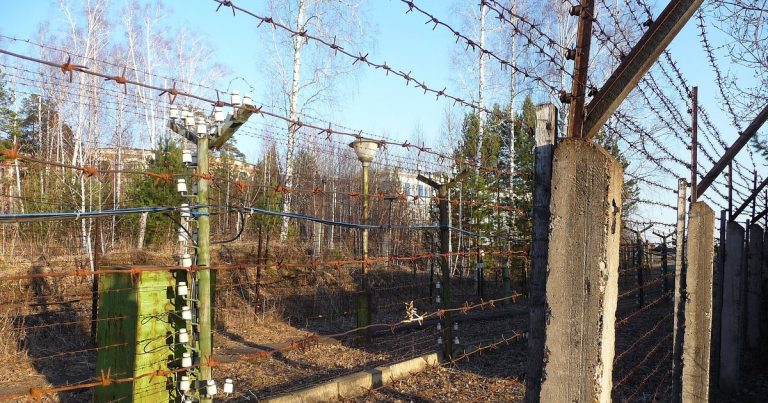
The name is misleading. The DMZ itself is meant to be free of heavy weapons, but the land on either side is among the most heavily armed borders on earth, lined with fences, mines and guard posts. Because people have been kept out for decades, parts of it have also become an accidental wildlife refuge.
What is Panmunjom?
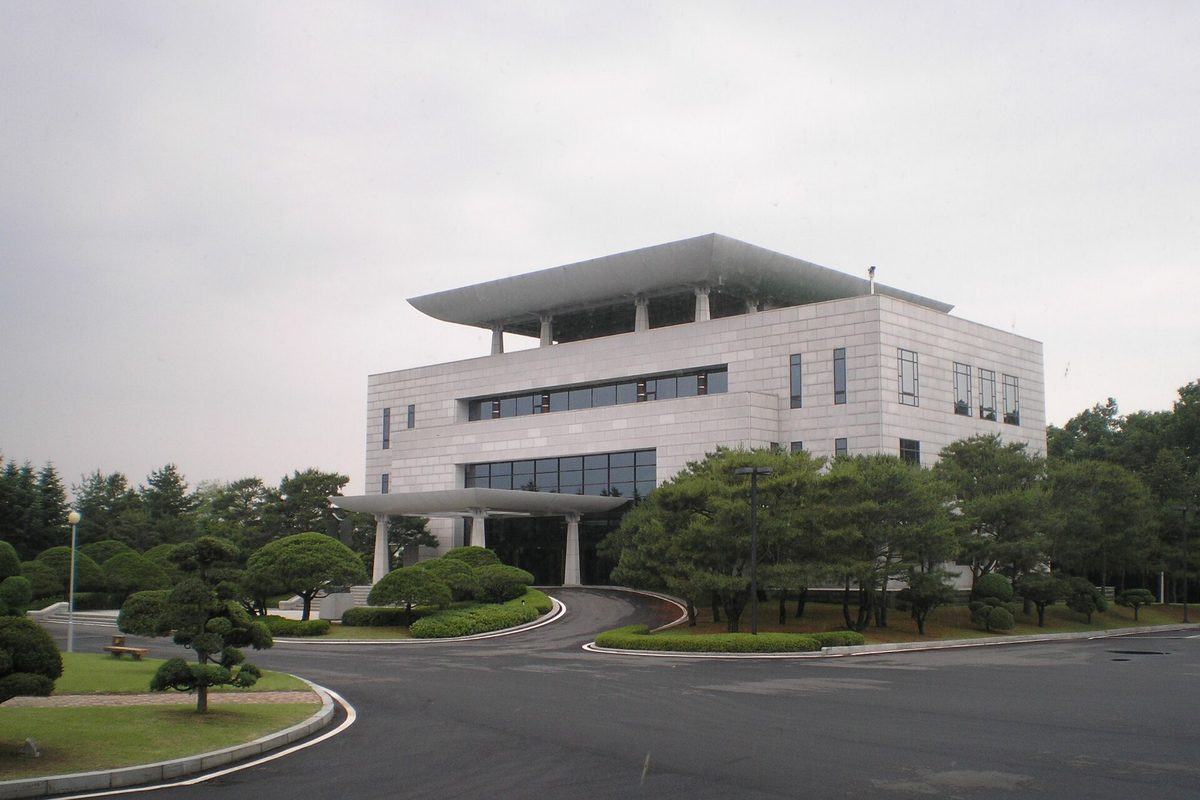
Panmunjom is the village where the armistice was signed, and the Joint Security Area (JSA) there is the one place in the DMZ where soldiers from both sides stand within sight of each other. The famous blue huts straddle the demarcation line. It has hosted military talks, prisoner exchanges and inter-Korean summits, including the 2018 meeting that produced the Panmunjom Declaration.
Who keeps the armistice running?
The armistice set up a Military Armistice Commission to handle violations, and a Neutral Nations Supervisory Commission made up of Sweden, Switzerland, Poland and Czechoslovakia. The UN Command, still led by a US general, remains the signatory on the southern side. North Korea’s state media, KCNA, has at times announced that the country no longer considers itself bound by the armistice; those are North Korea’s own statements, and the agreement’s machinery on the southern side continues to operate.
What about the sea border?
The armistice never agreed a maritime line. The UN Command drew the Northern Limit Line in the Yellow Sea after the war, and North Korea disputes it. That gap explains why some of the deadliest clashes since 1953 have happened at sea rather than across the DMZ.
Can the Korean War officially end? What we know and what we don’t
What we know
- The armistice of July 27, 1953 is still the legal basis for the ceasefire on the peninsula.
- No peace treaty has been signed by any of the governments involved.
- The two Koreas have signed political pledges about reconciliation and peace, including the 1991 Basic Agreement and the 2018 Panmunjom Declaration, but these did not replace the armistice.
- The United States and South Korea remain treaty allies under the 1953 Mutual Defense Treaty.
What we don’t know
- Who would sign a final treaty: the two Koreas alone, or also the United States and China.
- Whether North Korea’s nuclear weapons would have to be dealt with first, and how.
- What would happen to the UN Command and US forces in Korea after a peace deal.
- Whether either Korea would formally drop its claim to the whole peninsula.
Those open questions are why talk of “ending the Korean War” keeps resurfacing and stalling. The war’s original issue, one Korea or two, has never been settled. To understand how North Korea’s leadership has handled that question across three generations, see our explainer on how the Kim family passed down power.
What the Korean War means for Korea today
Walk around Seoul and the war is easy to miss. It’s there anyway, in ways foreigners often don’t connect to 1953.
- Military service. South Korea requires most men to serve in the military, a direct result of facing an army across an unresolved front line. It’s why you hear about K-pop idols and athletes enlisting.
- US troops. American forces have been stationed in South Korea since the war under the 1953 defense treaty.
- Separated families. Millions of Koreans were split by the war. Since 2000 the two governments have held occasional reunions, but they depend on the state of relations, and the generation that remembers life before the division is dying out.
- The search for the missing. Remains of soldiers from many countries are still being recovered from former battlefields, including inside the DMZ.
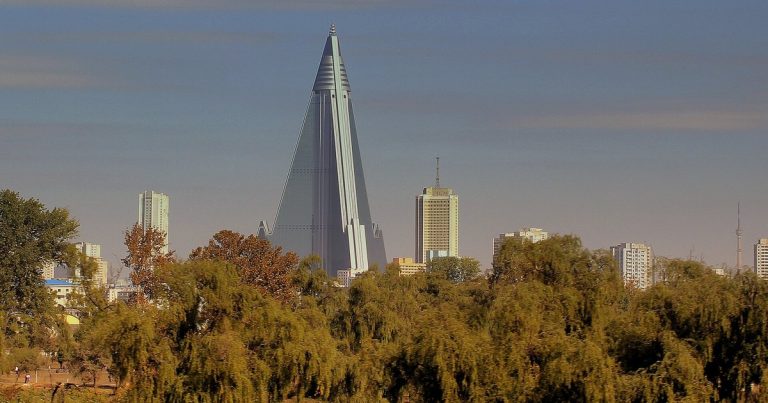
- Two systems, one people. Seventy-plus years of division produced two very different societies. Our piece on daily life in North Korea shows how far apart they’ve grown.
For readers abroad, the unfinished war is the backdrop to almost every North Korea headline: missile tests, sanctions, summits that come and go. When you read that a summit “could end the Korean War”, what’s really meant is replacing the 1953 armistice with a political settlement, the step that has been pending since 1954.
Where to see Korean War history in Korea and abroad
If you want to see the war rather than read about it, these places do the job well. Opening days, booking rules and any fees change, so check each official site before you go.
- War Memorial of Korea (전쟁기념관), Seoul. A large museum in Yongsan with detailed Korean War halls, outdoor displays of tanks and aircraft, and a memorial wall listing names of the dead, including UN soldiers. A good half-day start.
- UN Memorial Cemetery in Korea (재한유엔기념공원), Busan. The burial ground for UN Command soldiers from many countries, and a quiet, moving stop if you’re heading south. Pair it with our Busan travel guide.
- DMZ sites north of Seoul. Tours commonly include Imjingak park, the Dora Observatory and the Third Infiltration Tunnel, dug from the North and discovered by the South in the 1970s. Some require ID checks and run only on approved tours.
- Korean War Veterans Memorial, Washington, DC. On the National Mall, with its statues of soldiers on patrol. Many other UN Command countries have their own memorials.
FAQ
Is the Korean War still going on?
The fighting stopped on July 27, 1953, but the war has not formally ended. The armistice is a ceasefire between military commanders, and no peace treaty has replaced it. That’s why North and South Korea are often described as “technically still at war”.
Who won the Korean War?
Neither side won in the sense of achieving its goal. North Korea failed to unify the peninsula by force, and the UN side failed to unify it after crossing north. The final line ended up close to where the war began, and both Koreas mark the armistice in their own way, with North Korea celebrating July 27 as “Victory Day”.
Why is the Korean War called the Forgotten War?
In the United States it came between the Second World War and the Vietnam War, ended without a clear victory, and drew less public attention than either. Veterans and historians adopted the nickname to push back against that neglect. In Korea, where the war shaped every family, it is anything but forgotten.
What is the difference between the 38th parallel and the DMZ?
The 38th parallel is the line of latitude the US and Soviet Union used to divide Korea in 1945. The DMZ follows the 1953 front line instead, which runs at an angle across the 38th parallel. People still use “the 38th parallel” loosely to mean the inter-Korean border.
Why didn’t the Korean War end with a peace treaty?
The 1954 Geneva Conference, meant to produce a political settlement, collapsed over elections and foreign troops. Since then the core disputes, including which government is legitimate, US troops and North Korea’s nuclear program, have kept any treaty out of reach. South Korea not signing the armistice also complicates who would sign a peace deal.
Can tourists visit the DMZ?
Yes, parts of it, on approved tours that usually leave from Seoul and require a passport. Access to the Joint Security Area at Panmunjom is the most restricted and can be suspended without warning. Check the official tour operators or the Korea Tourism Organization for current rules.
What to watch, read and plan next
If you want the story told on screen, Korean cinema has tackled the war from many angles: Taegukgi (2004) follows two brothers drafted into the war, Welcome to Dongmakgol (2005) strands soldiers from both sides in a mountain village, The Front Line (2011) is set in the stalemate’s final battles, and Park Chan-wook’s Joint Security Area (2000) is a thriller about soldiers at Panmunjom decades later. Availability differs by country, so check JustWatch or your streaming service.
For reading, Bruce Cumings’ The Korean War: A History is a short, opinionated account of the war’s Korean roots, and David Halberstam’s The Coldest Winter covers the American side in depth. Planning a trip? Book a half day at the War Memorial of Korea, then a DMZ tour on a different day, and you’ll understand the peninsula’s map in a way no article can give you.
Related reading
Sources k-korea.blog
Prices, opening hours and availability change. Check the official page before you buy or travel.