14 min read
Since 1948, the Kim family North Korea was built around has produced 3 leaders, all from one bloodline. Kim Il-sung (김일성) founded the state with Soviet backing, his son Kim Jong-il (김정일) took over in 1994, and his grandson Kim Jong Un (김정은) has ruled since December 2011.
No other state founded by communists has handed power from father to son twice. How they did it comes down to three things: purges that removed every rival, a personality cult that runs from kindergarten to the grave, and a written rule that loyalty belongs to one family, the so-called Paektu bloodline.
Key takeaways
- Three rulers, one line: grandfather Kim Il-sung (1948 to 1994), son Kim Jong-il (1994 to 2011), grandson Kim Jong Un (2011 to today).
- Kim Jong-il was groomed for about 20 years (picked inside the party in 1974, unveiled in 1980). Kim Jong Un had roughly 15 months in public view before he took over.
- The family’s right to rule is written into the party’s Ten Principles, revised in 2013 to name the “Paektu bloodline” as the line that carries the revolution forward.
- Kim Il-sung died in 1994 but is still North Korea’s “Eternal President” under the 1998 constitution, and his body lies embalmed in Pyongyang next to his son’s.
Who are the 3 Kims who have ruled North Korea?
North Korea, officially the Democratic People’s Republic of Korea (DPRK), has had exactly three supreme leaders. Each one held the top party post and the top state post at the same time, and each built his authority on the one before him. The table puts them side by side.
| Leader | Born | In power | How he got there | Main titles | Signature idea |
|---|---|---|---|---|---|
| Kim Il-sung (김일성) | 1912 | 1948 to 1994 | Former anti-Japanese guerrilla installed with Soviet support after 1945 | Premier, then President from 1972; “Great Leader”; “Eternal President” since 1998 | Juche (self-reliance) |
| Kim Jong-il (김정일) | Officially 1942, Soviet records point to 1941 | 1994 to 2011 | Two decades as heir inside the Workers’ Party | General Secretary of the party; Chairman of the National Defence Commission; “Dear Leader” | Songun (military first) |
| Kim Jong Un (김정은) | 1984 by South Korean assessments; never officially published | 2011 to today | Fast-tracked from 2010, took over at his father’s death | General Secretary of the party; President of the State Affairs Commission; “Marshal” | Byungjin (nuclear weapons and economy together) |
The pattern matters more than any single date. Each Kim took the party first, the army second and state titles last, and each turned his predecessor into a near-religious figure who never really leaves office.
How did Kim Il-sung come to power?
Kim Il-sung did not inherit anything. He is the only one of the three who fought his way in, and the founding story of the Kim family rests on him.
From guerrilla fighter to Soviet pick
Born Kim Song-ju near Pyongyang in 1912, he grew up partly in Manchuria, the region of northeast China where many Koreans lived under Japanese colonial rule. In the 1930s he led small guerrilla units against the Japanese inside Chinese communist forces. When Japanese pressure became too heavy, he crossed into the Soviet Union and served in the Soviet army during World War II.
After Japan surrendered in 1945, the peninsula was split at the 38th parallel, with Soviet troops in the north and American troops in the south. Kim came home in September 1945, and Soviet officials backed him as the face of the new northern leadership. The DPRK was proclaimed on 9 September 1948 with Kim as premier.
The Korean War and what it left behind
In June 1950 North Korean forces invaded the South, starting the Korean War. Fighting ended with an armistice in July 1953, a ceasefire rather than a peace treaty, which is why the Demilitarized Zone (DMZ), the fortified strip dividing the two Koreas, still exists. North Korea celebrates the armistice as a victory, and the war became a central part of Kim’s legend as the man who defended the country.
The purges that removed every rival
In the early years Kim shared power with several groups: communists who had stayed in Korea, men who had spent the war years in China (the Yan’an faction) and Koreans sent from the Soviet Union. Over the 1950s he removed them one by one. Pak Hon-yong, a leading domestic communist, was tried and executed in the mid-1950s. An attempt by party rivals to criticise Kim at a party meeting in August 1956 failed and led to more purges.
By the late 1960s even his own old guerrilla comrades were not safe. With no faction left to challenge him, the party shifted to what it calls the “monolithic ideological system”, meaning one leader, one line, no debate. That system is what made a family succession possible.
How did Kim Jong-il become North Korea’s leader?
Kim Jong-il was the first communist-era heir to be prepared openly for a family succession, and his grooming took about two decades.
A birth story rewritten
Official North Korean history says he was born in 1942 in a secret guerrilla camp on Mount Paektu, the volcano on the China border that Koreans regard as the mythical birthplace of the nation. Soviet records and most historians outside North Korea place his birth in 1941 in the Soviet Far East, where his father was then based. The Paektu version is the one that matters politically, because it ties the son to the mountain and to the founding legend.
His mother, Kim Jong-suk, was a guerrilla fighter who died in 1949. North Korea honours her as an anti-Japanese heroine, and together with Kim Il-sung she forms the origin of the bloodline.
Twenty years as heir
Kim Jong-il built his base inside the Workers’ Party of Korea, the ruling party, especially its propaganda and organisation departments. He ran film and arts work and wrote a treatise on cinema in the 1970s. That background shows: he understood that a cult is something you produce, like a film.
In 1974 the party leadership quietly named him successor. For years state media referred to him only as the “Party Centre”. At the Sixth Party Congress in 1980 he was revealed to the world with seats on the party’s top bodies, including the Politburo Presidium, the Secretariat and the Central Military Commission.
Taking over during a famine
Kim Il-sung died on 8 July 1994. Kim Jong-il took effective control at once but held a three-year mourning period before taking the formal titles: General Secretary of the party in 1997, and in 1998 he was re-elected Chairman of the National Defence Commission, the post the revised constitution made the top office. The same constitution made his father “Eternal President”, so the presidency was never filled again.
His rule began with disaster. The collapse of Soviet aid and a series of floods led to a famine in the mid to late 1990s that the state calls the “Arduous March”. Estimates of the death toll vary widely, from hundreds of thousands to more than a million. Kim answered with Songun, a “military first” policy that put the army at the centre of the state, and North Korea carried out its first nuclear test in 2006. He died on 17 December 2011; state media announced it two days later.
How did Kim Jong Un take power so quickly?
Kim Jong Un is the third son of Kim Jong-il and the least expected heir. His mother was Ko Yong-hui, a dancer. According to widely published reports, he spent part of his youth at school in Switzerland under an assumed identity. His older half-brother Kim Jong-nam and older brother Kim Jong-chol were both passed over.
September 2010: the public debut
Outsiders barely knew his face until September 2010. At a rare party conference that month he was made a four-star general and vice chairman of the party’s Central Military Commission. It was a compressed version of his father’s 1980 debut, and it came just 15 months before Kim Jong-il’s death.
Locking in control after 2011
Within days of his father’s death he was named Supreme Commander of the Korean People’s Army. In 2012 he became First Secretary of the party, while his father was declared “Eternal General Secretary”, the same trick used for Kim Il-sung. He later took the new post of Chairman of the State Affairs Commission in 2016 and restored the title General Secretary for himself at the Eighth Party Congress in 2021.
The most dramatic step came in December 2013. State media announced that Jang Song-thaek, Kim Jong Un’s uncle by marriage and long seen abroad as a powerful guardian figure, had been executed as a traitor. The message was simple: there would be no regent.
His early image leaned on his grandfather. In 2013 he revived the televised New Year’s address that Kim Il-sung used to give and Kim Jong-il had dropped. Later he stepped onto the world stage with summits with US President Donald Trump in Singapore in 2018 and Hanoi in 2019, and a meeting at the DMZ in June 2019.
How does succession work in North Korea?
There is no law that says the next leader must be a Kim. What exists instead is a party code. The Ten Principles for the Establishment of the Monolithic Ideological System, issued in the 1970s, bind every party member to absolute loyalty to the leader. The 2013 revision added that the party and the revolution are to be carried forward by the Paektu bloodline, which in practice means Kim Il-sung’s descendants.
Both handovers so far have followed the same broad sequence:
- Pick quietly inside the family. The choice is made years before the public hears about it.
- Give party posts first. The heir gets seats on the Central Military Commission or the Politburo, because the party controls the army.
- Add military rank. A general’s title signals that the armed forces answer to the heir.
- Build the myth. Songs, titles and an origin story linked to Mount Paektu.
- Remove anyone who could act as a guardian. Elders who helped the transition can become threats once it is done.
- Make the predecessor eternal. The dead leader keeps his top title forever, so the heir rules in his name.
Kim Jong-il vs Kim Jong Un: two successions compared
| Step | Kim Jong-il | Kim Jong Un |
|---|---|---|
| Time in public as heir | About 14 years (1980 to 1994) | About 15 months (September 2010 to December 2011) |
| First signal | Named inside the party in 1974 | Party conference, September 2010 |
| Key posts as heir | Politburo Presidium, Secretariat, Central Military Commission | Vice chairman of the Central Military Commission, four-star general |
| Pace after taking over | Three-year mourning before formal titles | Top military title within days, party post in 2012 |
| Fate of the elders | Ruled alongside his father’s surviving generals | Uncle Jang Song-thaek executed in 2013 |
| Predecessor’s title | Kim Il-sung made “Eternal President” (1998) | Kim Jong-il made “Eternal General Secretary” (2012) |
The worked example tells you what to look for next time: a new party or military title for a family member, announced by state media, is the moment the clock starts.
The Kim family, North Korea’s ruling bloodline: who’s who
Beyond the three leaders, a handful of relatives have held real public roles. These are the names that show up in news coverage:
- Kim Jong-suk: Kim Il-sung’s first wife and Kim Jong-il’s mother, honoured as a revolutionary heroine. The Paektu bloodline starts with her and Kim Il-sung.
- Kim Kyong-hui: Kim Jong-il’s sister, made a general in 2010 as part of the support around the young heir.
- Jang Song-thaek: Kim Kyong-hui’s husband and a senior official, executed in 2013 according to state media.
- Kim Jong-nam: Kim Jong-il’s eldest son, who lived abroad. He was killed at Kuala Lumpur airport in Malaysia in 2017 with the VX nerve agent. South Korean and US officials blamed Pyongyang, which denied involvement.
- Kim Yo Jong: Kim Jong Un’s younger sister, a senior party official who led the delegation to the 2018 PyeongChang Winter Olympics in South Korea and issues statements on foreign policy through state media.
- Kim Jong Un’s daughter: State media first showed her at a missile launch in November 2022. South Korea’s National Intelligence Service (NIS), the country’s spy agency, has identified her as Kim Ju Ae; North Korea has not published her name.
How does the Kim personality cult work?
The cult is the engine of the whole system. It turns family rule into something North Koreans are taught to see as natural, even sacred.
What North Koreans see every day
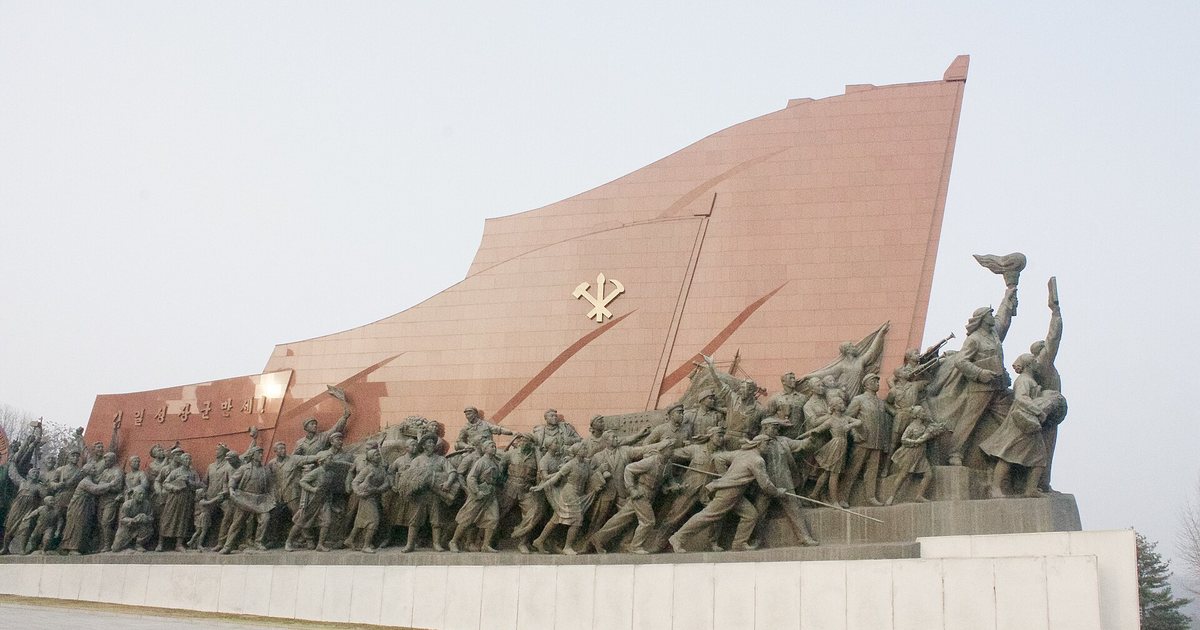
Portraits of Kim Il-sung and Kim Jong-il hang in homes, offices, classrooms and train carriages. Adults wear badges with the leaders’ faces on the left side of the chest. Giant bronze statues of the two stand at the Mansudae Grand Monument in Pyongyang, where people bow and lay flowers. Even flowers carry their names: the Kimilsungia, an orchid, and the Kimjongilia, a begonia.
A calendar built around the family
Kim Il-sung’s birthday, 15 April, is the Day of the Sun, the country’s biggest holiday. Kim Jong-il’s birthday, 16 February, is the Day of the Shining Star. In 1997 the state introduced the Juche calendar, which counts years from Kim Il-sung’s birth in 1912. Big anniversaries of the leaders’ births and deaths are the dates when parades, mass games and amnesties tend to happen.
The mausoleum
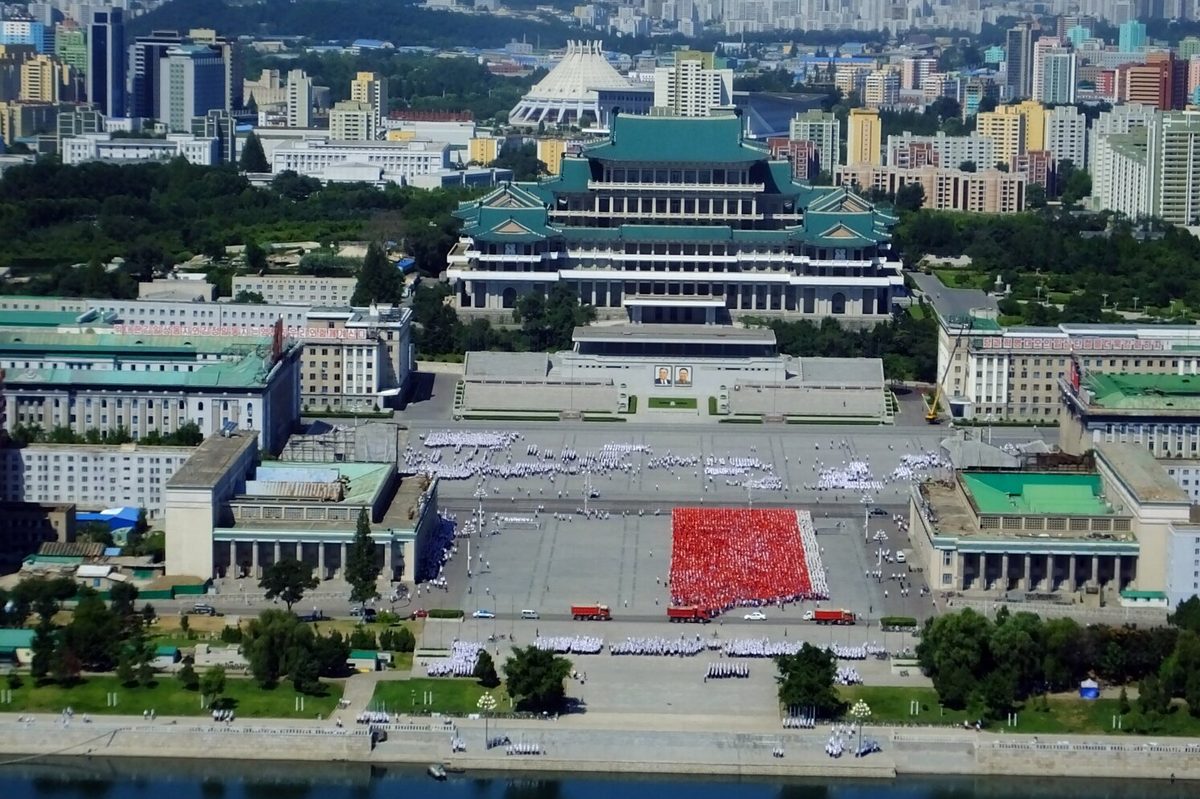
Both dead leaders lie embalmed in glass cases at the Kumsusan Palace of the Sun in Pyongyang. Visits are formal, with strict dress and behaviour rules, and foreign tour groups have usually been taken there. If you are wondering whether that is possible at all, our guide to whether you can visit North Korea covers tours, rules and risks; check your own government’s travel advice before planning anything.
Why the cult keeps the family in power
Loyalty to the Kims is not only a feeling, it is tied to how society is ranked. North Korea’s songbun system classifies families by their political reliability, going back to what relatives did around the founding years. That shapes where people can live, study and work, as our explainer on North Korea daily life describes. When your family’s status depends on loyalty to one bloodline, questioning that bloodline is not an option.
Juche, Songun and Byungjin: what each Kim stood for
Each leader has a slogan-ideology that state media credits to him personally. They are worth knowing because they show up in every speech and headline.
Juche (주체): Kim Il-sung’s self-reliance
Juche, promoted from the mid-1950s, means “self-reliance” or being the master of your own fate. In practice it justified independence from both Moscow and Beijing and placed the leader at the centre of the nation’s will. The Juche Tower in Pyongyang is its monument.
Songun (선군): Kim Jong-il’s military first
Songun put the Korean People’s Army first in resources and politics. It arrived during the famine years and helped Kim Jong-il hold the armed forces close while the economy failed.
Byungjin (병진): Kim Jong Un’s parallel line
Announced in 2013, Byungjin meant developing nuclear weapons and the economy at the same time. In 2018 the party declared the nuclear side achieved and said the focus would shift to the economy. The nuclear programme itself has continued.
What we know and what we don’t know about the Kim family
What we know
- Three Kims have led North Korea since 1948, confirmed by the state itself through its constitution, party rules and state media.
- Both dead leaders keep “eternal” titles, and the Paektu bloodline appears in the party’s 2013 revised Ten Principles.
- Major personnel moves, such as Jang Song-thaek’s execution, were announced by North Korea’s official Korean Central News Agency (KCNA).
What we don’t know
- Kim Jong Un’s exact birth year has never been officially published.
- How succession decisions are made inside the family and the party is not public.
- Who would succeed Kim Jong Un, and when, has not been announced. Claims about relatives often come from South Korean intelligence briefings, which North Korea does not confirm.
Timeline of the Kim family in power
| Year | Event |
|---|---|
| 1912 | Kim Il-sung born near Pyongyang |
| 1945 | Japan surrenders; Kim Il-sung returns to the Soviet-occupied north |
| 1948 | DPRK proclaimed with Kim Il-sung as premier |
| 1950 to 1953 | Korean War, ending in an armistice |
| 1972 | Kim Il-sung becomes President under a new constitution |
| 1974 | Kim Jong-il quietly named successor inside the party |
| 1980 | Kim Jong-il unveiled at the Sixth Party Congress |
| 1994 | Kim Il-sung dies; Kim Jong-il takes control |
| 1998 | Constitution names Kim Il-sung “Eternal President” |
| 2006 | North Korea’s first nuclear test |
| 2010 | Kim Jong Un’s public debut at a party conference |
| 2011 | Kim Jong-il dies; Kim Jong Un takes over |
| 2013 | Ten Principles revised; Jang Song-thaek executed |
| 2018 to 2019 | Summits with the US president in Singapore, Hanoi and at the DMZ |
| 2021 | Kim Jong Un becomes General Secretary of the party |
| 2022 | State media first shows Kim Jong Un’s daughter in public |
What to watch next in North Korea’s leadership
Succession signals in North Korea come through titles and pictures, so watch those rather than rumours. Three things are worth following:
- Party congresses and plenary meetings. New posts for family members are announced there, as they were in 1980 and 2010.
- How state media presents relatives. The titles, honorifics and camera placement KCNA gives Kim Yo Jong or Kim Jong Un’s daughter have historically been the first hint of a role.
- Leader anniversaries. 15 April and 16 February, plus the death anniversaries in July and December, are when the state stages its biggest displays of loyalty.
To follow it from abroad, read KCNA output as what it is, the state’s own account, and compare it with reporting from Yonhap (South Korea’s national news agency), specialist outlets such as NK News and 38 North, and statements from South Korea’s Ministry of Unification. If you want the business side of Korean family power for contrast, see how chaebol families pass control in the South, a very different system under law and shareholders.
FAQ
Who is the current leader of North Korea?
Kim Jong Un has led North Korea since December 2011. He holds the posts of General Secretary of the Workers’ Party of Korea and President of the State Affairs Commission. He is the grandson of the founder, Kim Il-sung.
How is Kim Jong Un related to Kim Il-sung?
Kim Il-sung is his grandfather. Kim Jong-il, Kim Il-sung’s son, was his father. That three-generation chain is the core of the Paektu bloodline the state uses to justify its leadership.
What is the Paektu bloodline?
It is the official name for the descendants of Kim Il-sung and Kim Jong-suk, named after Mount Paektu, the mountain on the China border tied to Korea’s founding myths and to Kim Jong-il’s official birth story. Since the 2013 revision of the party’s Ten Principles, the bloodline is written into party doctrine as the line that carries the revolution forward.
Who will succeed Kim Jong Un?
North Korea has not named a successor. State media has shown Kim Jong Un’s daughter at major events since 2022, and his sister Kim Yo Jong holds a senior party role, but neither has been given a successor title. The clearest signal would be a formal party or military post announced by state media.
Why are the leaders’ bodies preserved?
Embalming follows the Soviet tradition set with Lenin and continued with other communist leaders. At the Kumsusan Palace of the Sun, it keeps Kim Il-sung and Kim Jong-il physically present as “eternal” leaders, which supports the idea that the current Kim rules in their name.
Are all Koreans named Kim related to North Korea’s Kim family?
No. Kim is the most common surname in both Koreas and is divided into many separate clans. The ruling family is one branch, and the vast majority of people called Kim, north or south, have no connection to it.
Related reading

Sources k-korea.blog
Prices, opening hours and availability change. Check the official page before you buy or travel.