12 min read
Where to shop in Seoul comes down to 6 areas, and each one suits a different kind of shopper. Go to Myeongdong (명동) or Garosu-gil (가로수길) for brands you already know, Seongsu (성수동) and Hongdae (홍대) for Korean labels you’ve never heard of, and Dongdaemun (동대문) or the Express Bus Terminal underground mall (고투몰) for cheap clothes by the armful. Pick by what you want to take home, because the areas barely overlap.
Key takeaways
- Seongsu and Hongdae sell Korean designer and street labels. Myeongdong mostly sells global chains you could find at home.
- Most of Dongdaemun’s wholesale towers trade overnight and prefer bulk buyers, so for single pieces go to its retail malls, like Doota.
- Shops showing a “Tax Free” sign can refund VAT to foreign visitors, but only if you have your physical passport with you.
- Underground and market stalls often don’t allow try-ons. Know your measurements in centimetres before you go.
Where to shop in Seoul: the 6 areas compared
Seoul’s shopping districts have specialties. A Hongdae vintage hunt and a Garosu-gil flagship crawl are different days with different budgets, and they’re on opposite sides of the Han River. The table shows what each area does best, so you can match it to your list before you plan any routes.
| Area | Best for | Price level | Nearest station | Best time to go |
|---|---|---|---|---|
| Myeongdong (명동) | Global chains, Korean fast-fashion brands, beauty | Mid | Myeongdong (Line 4) | Afternoon into evening |
| Hongdae (홍대) | Vintage, indie streetwear, student budgets | Budget to mid | Hongik University (Line 2, Airport Railroad) | Late afternoon into night |
| Seongsu-dong (성수동) | Korean designer labels, pop-up stores | Mid to high | Seongsu (Line 2) | Weekday afternoon, to dodge queues |
| Garosu-gil and Sinsa (가로수길) | Brand flagships, polished boutiques | Mid to high | Sinsa (Line 3) | Afternoon, paired with Apgujeong |
| Dongdaemun (동대문) | Wholesale fashion, fabric, late-night malls | Budget | Dongdaemun History & Culture Park (Lines 2, 4, 5) | Evening |
| Express Bus Terminal underground (고투몰) | Cheap women’s clothing, accessories, home goods | Budget | Express Bus Terminal (Lines 3, 7, 9) | Weekday daytime |
If you only have one shopping day, choose between two strategies. Brand hunters should spend it in Seongsu and Garosu-gil. Bargain hunters should spend it in Dongdaemun and the bus terminal mall. Myeongdong works as a first-evening warm-up because it’s central and easy.
Myeongdong (명동): global chains and a first afternoon
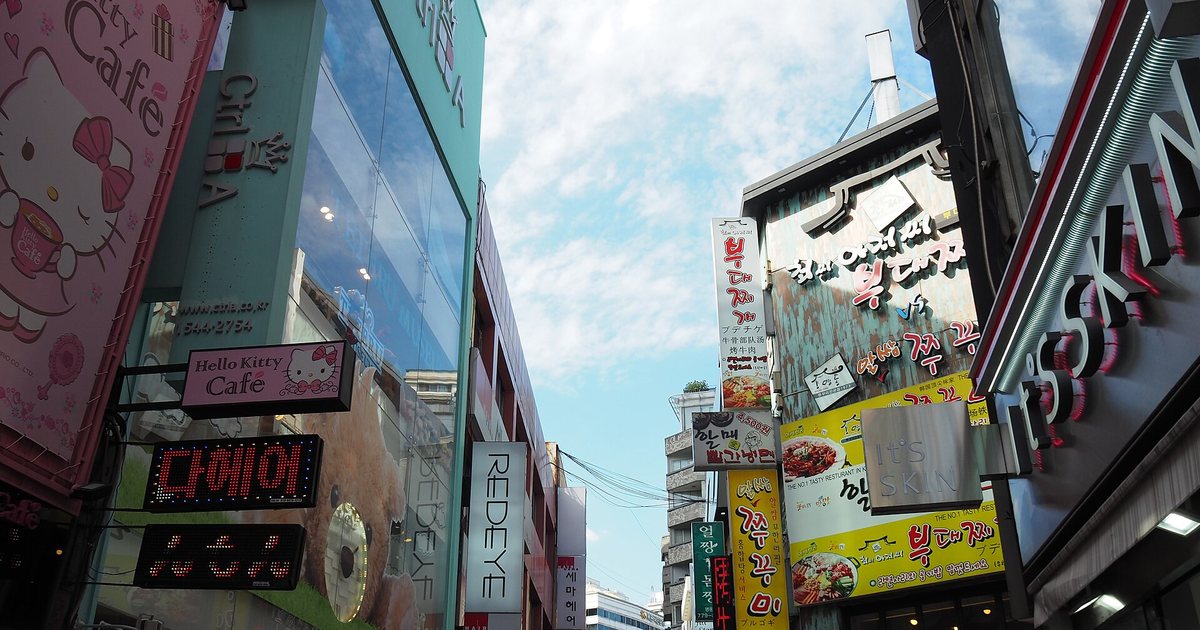
Myeongdong is the grid of pedestrian streets in central Seoul between Euljiro and Namsan, and it’s the most visitor-focused shopping district in the city. International chains like Zara, H&M and Uniqlo stand next to Korean SPA brands (SPA means a retailer that designs, makes and sells its own fast fashion), such as SPAO and Topten. Beauty stores, including several Olive Young branches (Olive Young is Korea’s big health-and-beauty chain), fill much of the ground-floor space.
Two department-store flagships sit on the edge of the district: Lotte Department Store’s main branch and Shinsegae’s main store. For premium brands under one roof with tax-refund desks and English-speaking staff, they’re the easiest stop in central Seoul.
Is Myeongdong worth it for clothes?
Go if you want convenience. Skip it if you want something only Korea sells. Most of what’s on the racks is sold worldwide. Myeongdong’s strengths are density and logistics: everything is within a few blocks, staff are used to foreign customers, and tax-free signs are on almost every door. Street-food stalls usually set up in the evening (see our Korean street food guide for what to order), so a late-afternoon visit gets you both.
- Area
- Jung-gu, central Seoul
- Nearest station
- Myeongdong (Line 4) or Euljiro 1-ga (Line 2)
- Time needed
- 2 to 3 hours
- Before you go
- check opening days and store hours on each brand’s or department store’s official page
Hongdae (홍대): vintage, streetwear and student budgets
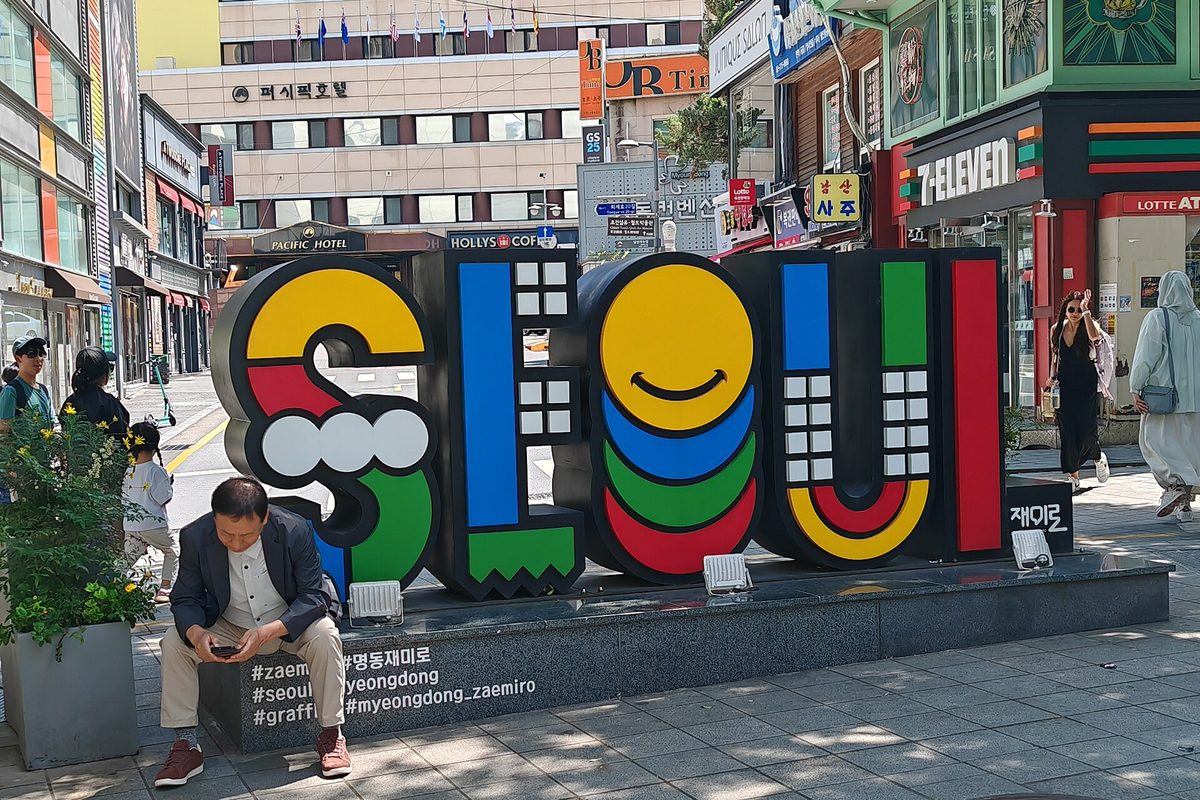
Hongdae is the neighborhood around Hongik University, one of Korea’s best-known art schools, and its shops are priced for students. Expect small streetwear labels, secondhand clothing, accessories stalls and a few bigger stores in the same streets. Musinsa, Korea’s largest online fashion platform, has opened physical stores in neighborhoods like this one, which makes it easy to look at labels that normally sell only online.
Hongdae has more energy than polish. Shops stay busy into the evening, buskers perform on the main walking streets, and the crowd skews young. You go to discover cheap, wearable street style. You don’t go for a calm boutique experience.
Where to find vintage clothes in Hongdae
The vintage shops cluster in the side streets and basements away from the main road, and in neighboring Yeonnam-dong and Mangwon-dong to the north and west. Plan to walk, because many shops are small and easy to miss from street level. If vintage is your main goal, also visit the secondhand clothing section upstairs in Gwangjang Market (광장시장) in Jongno, long known as the place where Seoul’s vintage resellers source stock.
Shopping for menswear? Our Korean fashion men’s guide explains the main looks and fits so you know what to look for on the racks.
- Area
- Mapo-gu, western Seoul
- Nearest station
- Hongik University (Line 2, Airport Railroad, Gyeongui-Jungang Line)
- Time needed
- 3 to 4 hours including Yeonnam-dong
- Before you go
- check opening days and fees on the official page of any market or event you plan around
Seongsu-dong (성수동): Korean designer labels and pop-up stores
Seongsu is the best place in Seoul for Korean designer fashion. It used to be a district of factories and handmade-shoe workshops on the north bank of the Han River. Brands then turned its warehouses and red-brick workshops into showrooms, cafes and concept stores. Korean labels that sell mostly online elsewhere often have their most interesting physical stores here, and some of the old shoe workshops are still in business near Seongsu Station.
Expect mid-to-high prices and design-forward stores where the interior is part of the pitch. Seoul Forest park is nearby, so the area makes a good half-day even for people who don’t want to buy much.
How Seongsu pop-up stores work
Seongsu is also Seoul’s main pop-up street. Fashion labels, beauty brands, entertainment companies and K-pop agencies rent spaces for short runs, often only a few weeks, with limited goods and photo zones. Popular ones can mean long queues or a timed-entry booking. The schedules change constantly, so check the brand’s official Instagram or website before you go, and don’t build a whole day around one pop-up you saw a month ago.
One tip from how locals do it: weekday afternoons are far calmer than weekends, when the queues on the main streets can take longer than the shopping.
- Area
- Seongdong-gu, east-central Seoul
- Nearest station
- Seongsu (Line 2) or Seoul Forest (Suin-Bundang Line)
- Time needed
- Half a day
- Before you go
- check pop-up dates and booking rules on each brand’s official channels
Garosu-gil (가로수길) and Sinsa: flagships and polished boutiques
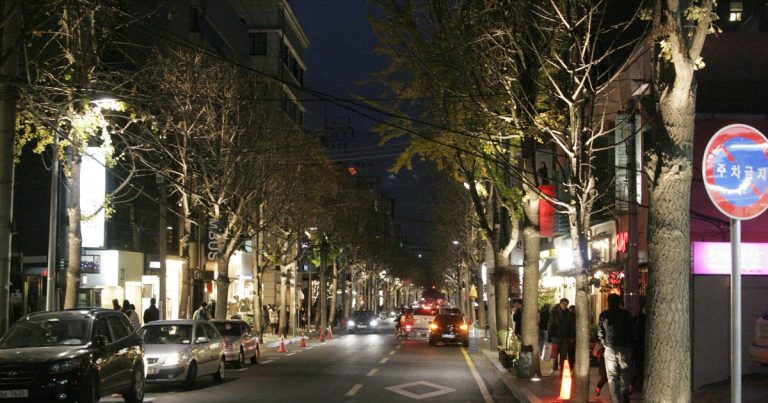
Garosu-gil (the name means “tree-lined street”) is a ginkgo-lined road in Sinsa-dong, Gangnam, a short walk from Sinsa Station. It started as a street of galleries and independent boutiques. As rents rose, global and Korean brands moved in with large flagship stores, and Apple opened its first store in Korea here in 2018.
The main street is now mostly big brands. The smaller Korean boutiques, cafes and concept shops moved into the side streets, which locals sometimes call Serosu-gil. Walk the main road once, then spend most of your time in the side streets.
Garosu-gil vs Apgujeong and Cheongdam
East of Sinsa, Apgujeong Rodeo Street and the Dosan Park area have Korean concept stores and designer labels in quieter, more upscale streets. Further east, Cheongdam-dong is Seoul’s luxury strip, with international fashion-house boutiques. If your budget is mid-range, Garosu-gil and Dosan are the sweet spot. Cheongdam is mainly for luxury shoppers.
- Area
- Sinsa-dong, Gangnam-gu
- Nearest station
- Sinsa (Line 3, Shinbundang Line)
- Time needed
- 2 to 3 hours, more with Dosan Park
- Before you go
- check store hours on each brand’s official page
Dongdaemun (동대문): wholesale towers and late-night shopping
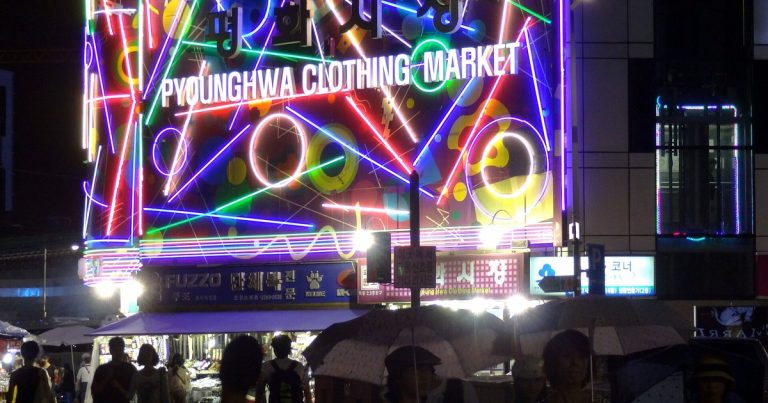
Dongdaemun is the center of Korea’s fashion wholesale trade. Around the old Heunginjimun gate (the “Great East Gate” the district is named after), dozens of buildings are packed with stalls where retailers from across Korea and abroad buy their stock. A lot of Korean online-shop fashion starts its life here.
The district has two sides, and confusing them is the most common visitor mistake. The wholesale buildings trade mainly at night and are set up for bulk buyers. The retail malls, such as Doota, sell single pieces to anyone at fixed prices and keep shopper-friendly hours.
Can tourists buy one item at Dongdaemun wholesale?
Sometimes, but don’t count on it. Many wholesale stalls prefer to sell in quantity, may not let you try things on, and are busy serving professional buyers during their peak hours. If you want to buy one jacket, the retail malls are the better choice. If you run a small shop or want several pieces of the same item, the wholesale side is worth visiting, but go with a clear list and check each building’s trading days, because they differ.
What else is in Dongdaemun
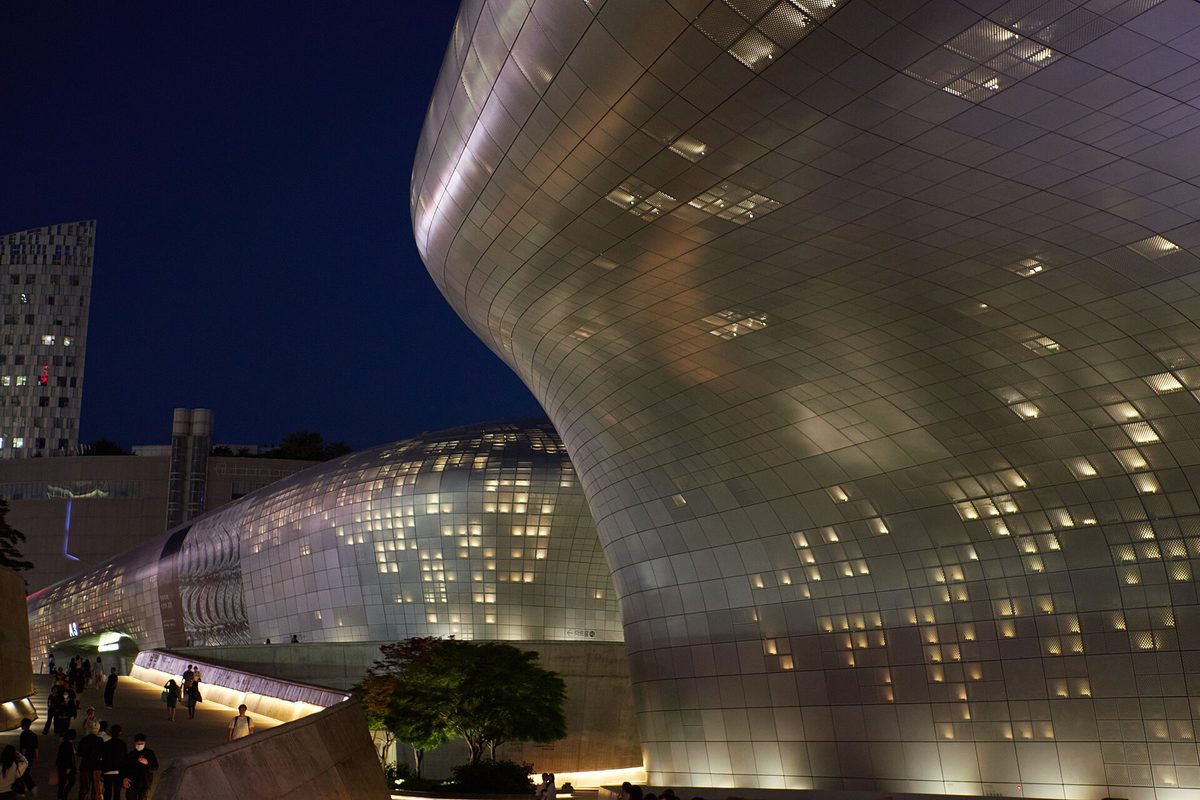
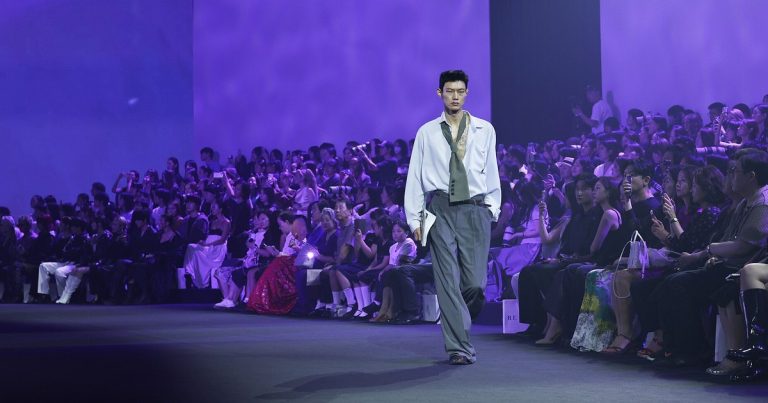
Dongdaemun Design Plaza (DDP), the curved building designed by Zaha Hadid that opened in 2014, is the district’s landmark and a venue for Seoul Fashion Week. Nearby, the Dongdaemun fabric market has rolls of textiles, buttons and trims, used by the city’s tailors and home sewers. If you want something made to measure, it’s a good place to start asking.
- Area
- Jung-gu and Jongno-gu, central-east Seoul
- Nearest station
- Dongdaemun History & Culture Park (Lines 2, 4, 5) or Dongdaemun (Lines 1, 4)
- Time needed
- 2 to 4 hours
- Before you go
- check each mall’s or building’s opening days and hours on its official page
Express Bus Terminal underground (GOTO Mall): Gangnam’s cheapest racks
Under Seoul Express Bus Terminal in Seocho-gu runs GOTO Mall (고투몰), a long underground shopping arcade of small stalls along the station corridors. It’s where many Seoul residents go for cheap, trend-led clothes. Women’s fashion takes up most of it, along with accessories, phone cases, bags and home goods.
It’s the best value in Gangnam. The Shinsegae Gangnam department store is attached to the same terminal complex, so you can go from budget racks to designer floors without going back outside.
What to buy at GOTO Mall, and what to skip
Buy basics, seasonal knits, accessories and gifts. These are inexpensive, and if they don’t fit perfectly, you haven’t lost much. Skip anything where fit really matters, like tailored trousers or shoes, because many stalls don’t have fitting rooms and some don’t allow try-ons or returns. Ask about the exchange policy before you pay. Most stalls take cards, but carry some cash as a backup.
- Area
- Banpo-dong, Seocho-gu
- Nearest station
- Express Bus Terminal (Lines 3, 7, 9)
- Time needed
- 1 to 2 hours
- Before you go
- check opening days on the mall’s official page
How tax refunds work when you shop in Seoul
Foreign visitors can get back part of the value-added tax on goods bought at participating stores, which display a “Tax Free” or “Tax Refund” sign. There are two ways to do it, and which one you use depends on the store.
Immediate refund at the till
Many stores in tourist areas, from department stores to beauty chains, can take the tax off at checkout. You show your passport, the cashier registers it, and you pay the lower price. There are limits per purchase and per trip, and the rules can change, so check the current thresholds before you shop.
Claiming a refund before you fly
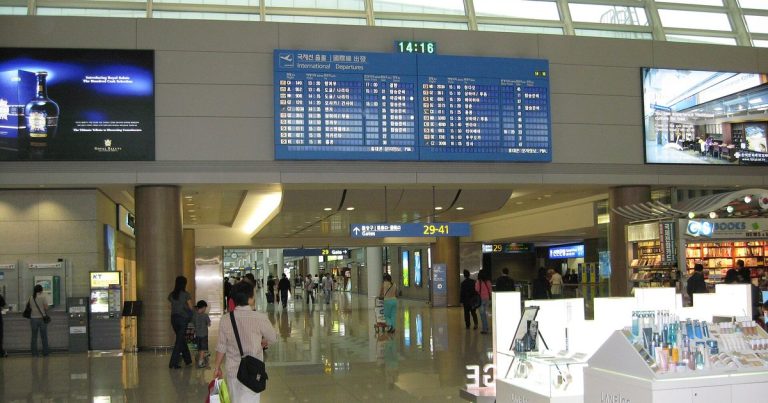
At stores without immediate refunds, ask for a tax refund receipt when you pay. You claim the refund later at a refund kiosk or counter, either at the airport before departure (Incheon has them) or at downtown refund points in the main shopping districts. Customs may ask to see the goods, so keep them unused and pack them where you can reach them.
Market stalls, underground arcades and small independent shops are often not part of the scheme. Price your Dongdaemun and GOTO Mall purchases as final.
Korean clothing sizes and the mistakes that cost you time
Korean sizing is the thing visitors most often get wrong. Women’s clothing often uses a numbered system: 55 is roughly a small and 66 roughly a medium, with 44 and 77 on either side. Men’s tops are often labeled by chest size, as 95, 100 or 105, roughly medium, large and extra-large. Shoes are measured in millimetres, so a 250 is a 25 cm foot.
Many budget shops sell “free size” (프리사이즈) pieces, meaning one size cut to fit a range. These tend to fit a smaller frame than the same label would in Europe or North America.
Common mistakes to avoid
- Assuming you can try everything on. Brand stores have fitting rooms. Market and underground stalls often don’t, and some ask you not to try on light-colored tops because of makeup marks.
- Bargaining in the wrong places. Prices in brand stores, department stores and malls are fixed. A polite ask for a discount on several items can work at market stalls, but it isn’t guaranteed.
- Relying on Google Maps. Walking directions in Korea work far better on Naver Map or Kakao Map. Our Naver vs Kakao guide explains which apps to download.
- Going to Seongsu on a weekend afternoon. It’s the busiest time, and pop-up queues can eat your whole visit.
- Throwing away receipts. You’ll need them for exchanges and for tax refund claims at the airport.
FAQ
What is the cheapest place to buy clothes in Seoul?
Dongdaemun’s retail malls and the GOTO Mall underground arcade at Express Bus Terminal are the two cheapest options for new clothes. Hongdae’s vintage shops and the secondhand section at Gwangjang Market are the cheapest for used clothing. Expect fewer fitting rooms and stricter return rules in all of them.
Is Myeongdong or Hongdae better for shopping?
Choose Myeongdong for global chains, department stores and beauty shopping, all in one central, walkable spot. Choose Hongdae for cheaper streetwear, vintage and small Korean labels. If you want clothes you can’t buy at home, Hongdae, or better still Seongsu, is the stronger pick.
Can tourists shop at Dongdaemun wholesale market?
You can walk in, but many wholesale stalls are set up for bulk buyers and trade mainly at night. Some will sell single items, many won’t. For one or two pieces, use the retail malls such as Doota.
Do shops in Seoul let you try on clothes?
Brand stores, department stores and most Seongsu and Garosu-gil boutiques have fitting rooms. Many market and underground stalls don’t, and some don’t allow try-ons at all. Ask before you take something off the rack.
Can you bargain when shopping in Seoul?
Not in brand stores, malls or department stores, where prices are fixed. At some market stalls a polite request for a small discount on several items can work. Don’t push it, and accept a no gracefully.
Where do Koreans actually buy their clothes?
A large share of Korean fashion shopping happens online, on platforms like Musinsa. In person, younger shoppers favor Seongsu, Hongdae and the bus terminal underground mall, while department stores serve the premium end. For traditional-inspired clothing, see our guide to modern hanbok.
Plan your Seoul shopping trip: a 3-day route
Group the areas by subway line and you’ll save hours of travel time. This route keeps each day on one or two lines.
Day 1: Myeongdong and Dongdaemun
Spend the afternoon in Myeongdong and its department stores, then take Line 4 a few stops to Dongdaemun History & Culture Park for DDP and the retail malls in the evening.
Day 2: Express Bus Terminal and Garosu-gil
Do GOTO Mall in the morning while it’s calm, then take Line 3 north to Sinsa for Garosu-gil, its side streets and, if you have energy left, Dosan Park.
Day 3: Seongsu and Hongdae
Both are on Line 2. Do Seongsu’s showrooms and pop-ups by day, then cross the city to Hongdae for vintage and the evening crowd.
Before you fly, check the brands and pop-ups you care about on their official channels, find the current tax refund rules on VisitKorea, and sort out mobile data so the map apps work. Our eSIM vs SIM vs pocket Wi-Fi guide helps you choose.
Related reading
Sources k-korea.blog
Prices, opening hours and availability change. Check the official page before you buy or travel.