13 min read
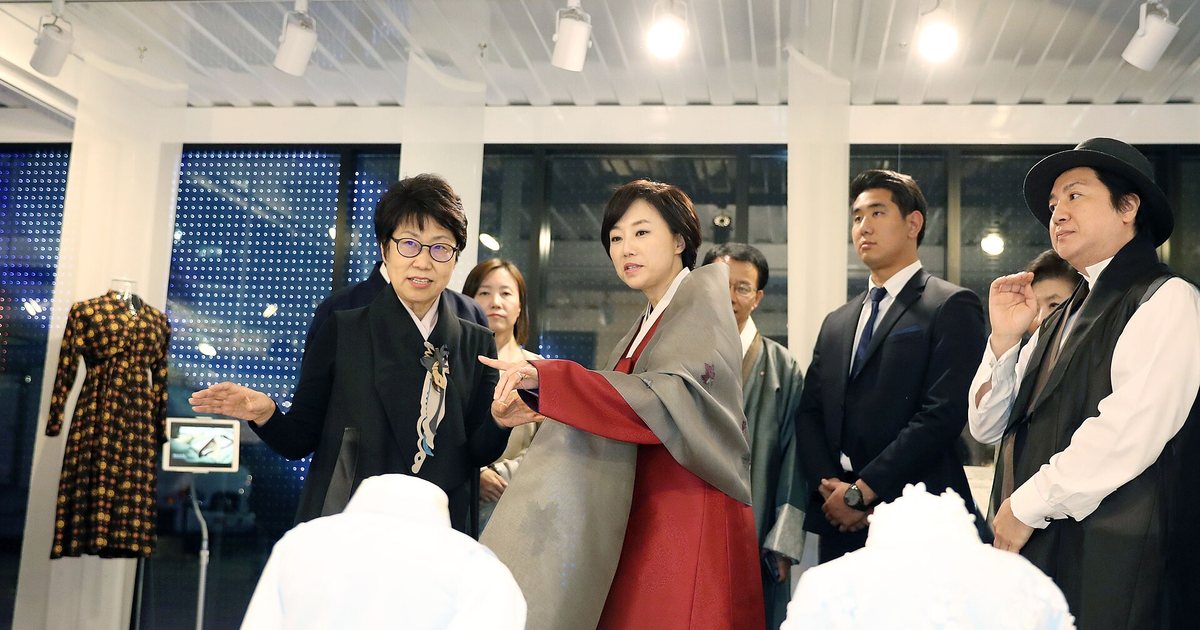
Modern hanbok is Korea’s 2-piece traditional dress recut for daily wear and easy-care fabrics. Koreans call the everyday version saenghwal hanbok (생활한복, literally “life hanbok”): the same jacket plus skirt or jacket plus trousers structure as the classic set, but with shorter hems, real waistbands, pockets and fabric that survives a washing machine.
That matters to you for two reasons. It’s the version you can wear to dinner in London or Toronto without looking like you came from a costume party, and it’s the cousin of what hangs in every rental shop near Seoul’s palaces. Below: what changed, when Koreans actually wear hanbok, which labels to know, and how to rent, buy and wear it as a visitor without getting it wrong.
Key takeaways
- Every hanbok starts from the same 2 pieces, a jeogori (short jacket) over a chima (wrap skirt) or baji (roomy trousers). Modern versions keep that frame and change the cut and the fabric.
- Most Koreans wear a full traditional set only a handful of times in their lives: a baby’s first birthday, family weddings and, for some families, Seollal or Chuseok.
- Seoul’s royal palaces have long given free entry to visitors in hanbok. The dress rules have been revised over the years, so check the palace’s official site before you go.
- Rental shops near Gyeongbokgung mostly stock fusion hanbok built for photos. If you want something closer to the real thing, ask for a traditional-style set.
Modern hanbok vs traditional hanbok: what actually changed
When most people picture hanbok (한복), they see the Joseon dynasty (1392-1910) silhouette. For women: a very short jeogori, a full chima tied high above the bust so it falls like a bell, and a long ribbon tied at the chest. For men: wide baji gathered at the ankle, a jeogori, often a vest, and a durumagi (long overcoat) for going out.
That outfit is beautiful and impractical. The high-tied skirt has no waistband, the layers take time to put on, and the traditional fabrics (silk, ramie, fine cotton) need careful handling. Modern hanbok exists because designers asked a simple question: what if you could wear this on a Tuesday?
What makes a hanbok “modern”
- The waist moves down. Skirts sit at the natural waist with elastic, buttons or a wrap tie, so you can wear them with any top.
- Hems get shorter. Knee or calf length instead of floor length, which means you can climb subway stairs.
- The ribbons shrink. The goreum (the long tie on the jacket) is often replaced by buttons, snaps or a short decorative tie.
- Fabrics get practical. Cotton, linen and blends in black, navy, oatmeal and muted pastels, rather than saturated silk.
- Pieces work alone. A jeogori-style jacket with jeans, a chima with a T-shirt, a dress cut from a historical robe. You don’t need the full set.
Is fusion hanbok the same as modern hanbok?
No, and the difference trips up a lot of visitors. Fusion hanbok (퓨전한복) is the rental-shop style: lace, gold foil print, sheer layers, corset-style waists and big petticoats. It’s built for photos and for one afternoon. Modern daily hanbok is built to be worn for years.
Traditionalists in Korea have criticized fusion hanbok for drifting far from historical forms, and the debate over what counts as “real” hanbok has come up repeatedly around the palaces’ free-entry policy. You don’t have to pick a side. Just know which one you’re choosing, and why.
| Type | What it looks like | Usual fabrics | Where you see it | Best for |
|---|---|---|---|---|
| Traditional hanbok | High-tied full skirt, cropped jacket, long goreum ribbon; men in baji, vest and durumagi | Silk, ramie, fine cotton | Weddings, first birthdays, holidays, formal portraits | Family ceremonies and anyone who wants the classic form |
| Modern daily hanbok (생활한복) | Waist-level skirts, shorter hems, buttons or short ties, separates | Cotton, linen, blends | Designers’ shops, streets of Seoul, online labels | Everyday wear at home or abroad |
| Fusion rental hanbok (퓨전한복) | Lace, prints, sheer overlays, petticoats, corset waists | Mostly synthetics | Rental shops near palaces and hanok villages | A few hours of photos in Seoul, Jeonju or Gyeongju |
| Stage and screen hanbok | Exaggerated, often cut short or mixed with Western pieces | Varies | K-pop music videos, historical dramas | Inspiration, not a template |
The parts of a hanbok, named so you can shop and rent with confidence
Rental staff and shop listings use these words constantly. Knowing them saves you from pointing and guessing.
- Jeogori (저고리): the short jacket, worn by everyone. Women’s versions are cropped; men’s sit at the hip.
- Chima (치마): the wrap skirt. In the traditional form it ties above the bust.
- Baji (바지): wide trousers, traditionally tied at the ankle.
- Goreum (고름): the pair of ribbons that close the jeogori, tied in a flat single loop at the chest.
- Dongjeong (동정): the thin white strip along the jacket’s collar, the detail that makes a hanbok look “right” from across a room.
- Durumagi (두루마기): the long overcoat worn outdoors, especially in cold months.
- Baeja (배자) and magoja (마고자): a vest and a short over-jacket worn on top of the jeogori.
- Cheollik (철릭): a historical robe with a pleated lower half, originally military wear, now the base for many modern hanbok dresses.
- Sokchima (속치마): the underskirt or petticoat that gives the chima its volume.
- Beoseon (버선) and kkotsin (꽃신): traditional padded socks and embroidered “flower shoes”.
The cheollik is the one to remember if you’re shopping. Its fitted top and pleated skirt translate almost directly into a modern dress, which is why so many saenghwal hanbok labels build their collections around it. A cheollik dress with white sneakers is probably the single easiest way to wear hanbok outside Korea.
When do Koreans wear hanbok today?
Less often than visitors expect. Hanbok stopped being daily clothing for most Koreans during the 20th century, and today the full traditional set is a ceremonial outfit. Here’s where it still shows up.
Seollal and Chuseok
Lunar New Year (Seollal) and the autumn harvest holiday (Chuseok) are the classic hanbok days. In practice, children are the ones most likely to wear it, often for sebae, the deep New Year’s bow to elders. Many adults now visit family in ordinary clothes, though some families still dress up for ancestral rites or photos.
Weddings
Even at a Western-style Korean wedding, the mothers of the couple usually wear hanbok, and by long convention the bride’s mother wears pink or red tones while the groom’s mother wears blue. The couple often changes into traditional dress for pyebaek, the private ceremony of bows to the family. Our guide to Korean wedding traditions walks through how that part works.
Doljanchi, the first birthday
A baby’s first birthday party (doljanchi, 돌잔치) is one of the most common hanbok moments in modern Korea. The baby wears a tiny, brightly colored set, and parents sometimes coordinate in hanbok too.
Palaces, hanok villages and photo days
Walk around Gyeongbokgung on a weekend and you’ll see dozens of hanbok, most of them rented. Young Koreans do this as much as tourists: it’s a date activity, a friends’ outing, a graduation-season photo shoot. The free-entry policy at Seoul’s palaces turned it into a habit.
Everyday saenghwal hanbok
A smaller group wears modern hanbok as daily clothing. You’ll notice it among people in crafts, tea culture and traditional music, and among fashion-minded Seoulites who mix a jeogori jacket into ordinary outfits. It’s niche, but it’s visible, and it’s what modern hanbok designers are really selling.
On stage and on screen
K-pop has done a lot for hanbok’s image abroad. BLACKPINK’s “How You Like That” video (2020) put modern, cut-down hanbok on a global stage, and plenty of idols have worn hanbok-inspired outfits for performances and holiday greetings. Historical K-dramas (sageuk) keep the traditional forms in front of viewers, though costume departments take liberties with history.
Modern hanbok designers and labels worth knowing
A few names come up again and again when Koreans talk about where modern hanbok came from and where to buy it.
- Lee Young-hee (이영희): the late designer who took hanbok to Paris runways in the 1990s and reframed it as fashion, not museum dress. Most of today’s modern hanbok conversation traces back to that shift.
- Tchai Kim (차이킴): designer Kim Young-jin’s label, known for clean, quiet lines and pieces meant to be worn daily rather than for a single occasion.
- Leesle (리슬): a label built on casual, street-friendly modern hanbok: jackets, skirts and dresses that pair with sneakers and denim.
- Danha (단하): the studio widely credited for the hanbok outfits in BLACKPINK’s “How You Like That”, and a good example of the dramatic, stage-ready end of the scale.
- Gwangjang Market’s hanbok floors: not a label, but the place many Koreans go for hanbok fabric and made-to-measure traditional sets, especially before weddings.
Before ordering from any label, check its official site for international shipping, size charts and return rules, which change often and differ by country. For the wider picture of Korean labels and how to buy from them abroad, see our list of Korean fashion brands and where to buy them.
How to rent hanbok in Seoul, step by step
Renting is the easiest way to try hanbok, and the process is nearly identical across shops.
- Pick your area. The densest clusters of rental shops sit around Gyeongbokgung and Anguk stations, Bukchon Hanok Village, Ikseon-dong and Insadong. Choose the shop closest to where you’ll spend the afternoon.
- Book or walk in. Many shops take online bookings; walk-ins work on quiet weekdays. Weekends and holiday periods fill up.
- Choose traditional or fusion. Most racks lean fusion. If you want the classic silhouette, ask for a traditional-style set and look for a plain dongjeong collar and a silk-look jacket.
- Get dressed by staff. They’ll fit the petticoat, wrap the chima and tie the goreum. Hair styling and accessories are usually extra.
- Leave your things. Shops typically store your clothes and bag. Bring a small pouch for your phone and cards; the rental may come with a matching bag.
- Return on time. Rentals are sold in time blocks. Late returns usually cost extra, so check the shop’s rules for current rates.
Renting outside Seoul
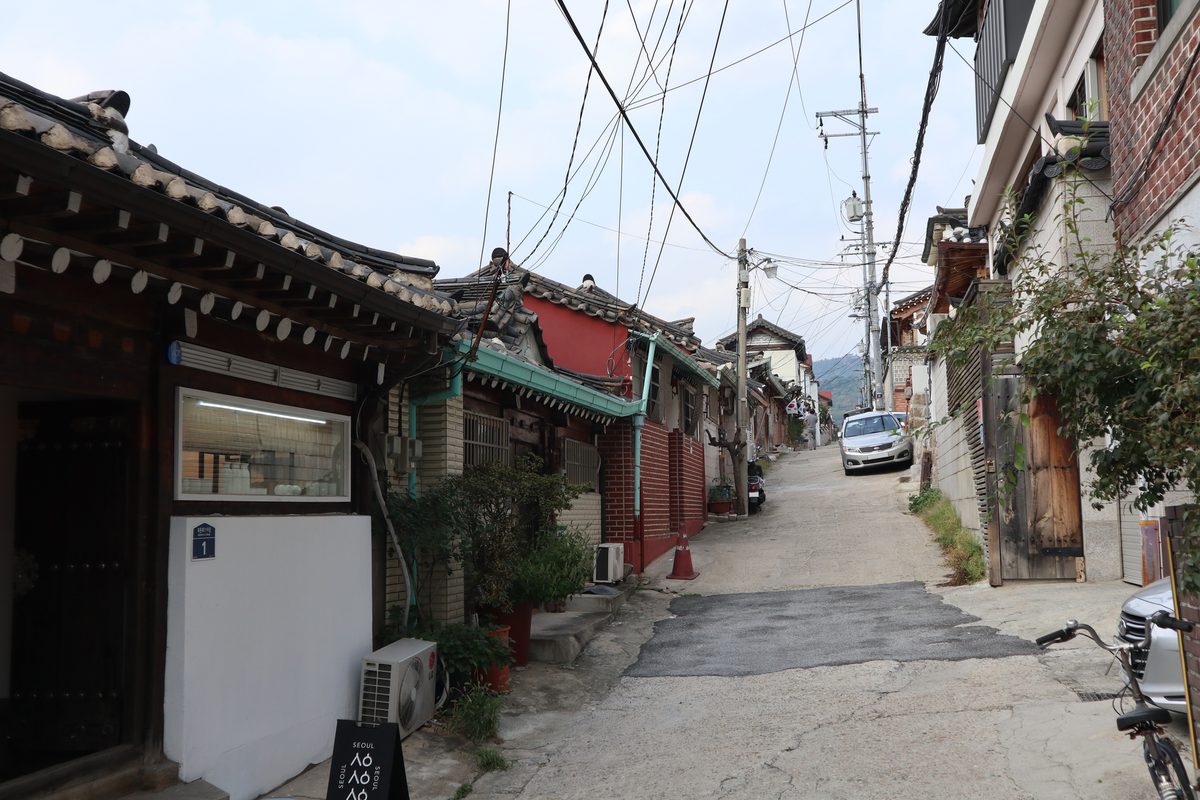
Jeonju Hanok Village and Gyeongju, the old Silla capital, both have strong hanbok rental scenes, and their low-rise streets make a calmer backdrop than central Seoul. If you’re building a trip around traditional Korea, either city is a good second hanbok day.
A worked example: one hanbok morning at Gyeongbokgung
Say you have one free morning in Seoul. Book a shop near Gyeongbokgung Station (Line 3) or Anguk Station for an early slot, since the first hours are quieter and the light is softer. Get dressed, then walk into Gyeongbokgung through Gwanghwamun gate; check the palace site for the Royal Guard changing ceremony schedule if you want it in your photos.
From the palace, walk east toward Bukchon’s alleys, keeping your voice down because people live in those houses. Head back to return the hanbok before your slot ends, change, and eat lunch in your own clothes. That last step is the one people skip, and it’s how rental hanbok ends up with tteokbokki sauce on it.
In winter, ask for a lined jacket or fur-trimmed vest, which many shops add in cold months, and wear thermal layers underneath. Our guides to things to do in Seoul in winter and dressing for the cold help you plan around the temperature.
How to buy modern hanbok from abroad
Buying is where modern hanbok pays off. One good piece will get more wear than a full ceremonial set ever will.
Start with one piece, not a set
Pick the piece that fits your wardrobe. A jeogori-style jacket over a plain dress or with jeans is the lowest-risk start. A wrap chima in black or navy works like any midi skirt. A cheollik dress is a whole outfit in one purchase.
Get the size right
Korean labels often use their own size scales or “free size” for wrap pieces. Measure your bust, waist and the length you want, then compare with the label’s chart rather than your usual letter size. Our Korean size chart to US explains the numbering you’ll see.
Choose fabric by how you’ll use it
- Cotton and linen: the everyday choice. Breathable, washable, gets softer with wear.
- Ramie (모시, mosi): crisp and cool, the traditional summer fabric. It wrinkles, and that’s part of the look.
- Silk: for ceremonies. Usually dry clean only, so it’s not for daily use.
- Synthetics: cheap and colorfast, which is why rental shops use them, but warmer and less comfortable for all-day wear.
Custom-made traditional hanbok
If you need a proper set for a Korean family wedding, a tailor (for example at Gwangjang Market) can make one to measure. It takes fittings and lead time, so start well before the date and confirm timing directly with the tailor.
Can foreigners wear hanbok? How to wear it respectfully
Yes. Koreans are generally pleased to see visitors in hanbok, and the government actively promotes it, which is the whole point of free palace entry. Respect comes down to wearing it properly and behaving well in it.
What to do
- Wear it fully. Keep the jacket closed and the skirt wrapped. Half-on hanbok reads as careless.
- Learn the goreum tie. It’s a single flat loop with the long ends hanging down, tied at the wearer’s right side of the chest. Ask staff to show you once.
- Mind the overlap. The jacket’s left front panel crosses over the right. Rental staff will do this for you; if you’re dressing yourself at home, check it in the mirror.
- Hold the skirt on stairs. Lift the chima slightly at the front so you don’t step on it, which is how Korean women traditionally move in it.
What to avoid
- Climbing on palace structures, walls or railings for photos.
- Blocking gates and narrow paths with long photo shoots.
- Loud behavior at Jongmyo Shrine, a place of royal ancestral rites, and in residential Bukchon.
- Treating hanbok as a joke costume or wearing it for parody.
- Wearing it as a guest at a Korean wedding. That’s for the families; guests wear ordinary formal clothes.
A lot of foreigners ask whether wearing hanbok is cultural appropriation. The general feeling in Korea leans the other way: wearing it with care is read as appreciation. The line is crossed by mocking it, sexualizing it or claiming it as something it isn’t, not by a tourist enjoying a palace afternoon.
Common hanbok mistakes visitors make
- Booking too short a slot. Getting dressed, walking to the palace and finding light eats the first hour.
- Skipping the palace calendar. Arriving dressed on a closing day is a common way to waste a rental.
- Eating in rental hanbok. Red sauces and wide sleeves don’t mix. Return first, then eat.
- Bringing a big backpack. It crushes the jacket’s shape and ruins the silhouette in photos.
- Wearing chunky shoes with a floor-length chima. Flats or the shop’s shoes look better and keep the hem from catching.
- Buying a fusion set to wear at home. If you want something for daily life abroad, buy modern daily hanbok, not a rental-style costume.
FAQ
What is the difference between hanbok and modern hanbok?
Traditional hanbok follows Joseon-era forms: a high-tied full skirt or wide trousers, a cropped jacket and long ribbon ties. Modern hanbok keeps that jacket plus skirt or trousers structure but moves the waist down, shortens hems and uses everyday fabrics like cotton and linen, so you can wear it daily.
Can foreigners wear hanbok in Korea?
Yes, and most Koreans welcome it. Wear it properly, keep the jacket closed and the goreum tied, and behave quietly at palaces and in residential areas like Bukchon.
Do Koreans wear hanbok every day?
Most don’t. Full hanbok is mainly for first birthdays, weddings and, in some families, Seollal and Chuseok. A small but visible group wears modern saenghwal hanbok as everyday clothing.
Is it free to enter Gyeongbokgung in hanbok?
Seoul’s royal palaces have long offered free entry to visitors in hanbok. The rules on which styles qualify and which areas are covered have been revised over time, so check the official palace site before you visit.
How much does it cost to rent a hanbok in Seoul?
Prices vary by shop, rental length, style and extras like hair styling. Check the shop’s official page or booking listing for current rates, and compare a couple of shops near where you’ll spend the day.
Can I wear modern hanbok to a Korean wedding abroad?
As a guest, it’s better not to. At Korean weddings hanbok is worn by the families, especially the two mothers, and by the couple during pyebaek. Guests wear regular formal clothes.
What to plan next: your first modern hanbok
If you’re visiting Seoul, put one hanbok morning near Gyeongbokgung or Bukchon into your plan, book an early slot and check the palace calendar that week. If you’re shopping from home, start with a single piece, a jeogori-style jacket or a cheollik dress, from a label whose official site ships to your country, and measure before you order. Then wear it like real clothing, which is exactly what modern hanbok was made to be.
Related reading
Sources k-korea.blog
Prices, opening hours and availability change. Check the official page before you buy or travel.