14 min read
The 12 best things to do in Seoul in winter run from snowy palaces to all-night saunas. December to February in the capital is cold, dry and mostly sunny, and January nights regularly drop well below freezing. That cold is the reason to go: ski slopes sit a couple of hours away, the street food turns hot and sweet, and indoor Seoul (saunas, malls, underground shopping arcades, cafés) is built for exactly this weather.
Below you’ll find typical temperatures by city, the Seoul activities that earn their place in a cold-weather trip, ski resorts you can reach without a car, how Korea’s ice festivals work, a 5-day route, and what to pack versus what to buy once you land.
Key takeaways
- Seoul in January usually hovers around freezing by day and sits several degrees below at night; the Gangwon mountains run roughly 5 to 10 degrees colder.
- Jisan Forest and Konjiam are the closest ski resorts to Seoul, while Yongpyong and High1 in Gangwon Province get more snow and longer runs.
- Ice fishing festivals need thick river ice, so a mild winter can postpone or cancel them: check the official site the week before you travel.
- Buy your long padded coat (롱패딩, “long padding”) and thermal base layers in Seoul instead of filling your suitcase with them.
How cold is Korea in winter? Typical temperatures by city
Korea’s winter is continental. Cold, dry air blows in from Siberia, so skies are often bright blue while the wind cuts straight through a light jacket. Koreans have an old saying for the rhythm, samhan saon (삼한사온, “three cold days, four warm days”): a hard cold snap, then a softer spell. It doesn’t run like clockwork anymore, but you’ll still feel weather arriving in waves.
The figures below are rough long-term January averages, which is the coldest month. For your actual week, check the Korea Meteorological Administration (KMA) or a weather app a few days out.
| City or area | Typical January daytime high | Typical January night low | What it means for you |
|---|---|---|---|
| Seoul | Around 0 to 3°C | Around -6°C, much colder in cold snaps | Real winter coat, hat and gloves; wind chill near the Han River bites |
| Busan | Around 7 to 9°C | Around 0°C | Mildest big city on the mainland; a good warm-up after Seoul |
| Gangneung (east coast) | Around 5°C | Around -3°C | Sea views with occasional heavy snowfall from the coastal mountains |
| Pyeongchang highlands | Below 0°C | Often -10°C or lower | Ski country; dress for serious cold, especially at night |
| Jeju | Around 8°C | Around 3°C | Damp and windy on the coast, snow on Hallasan mountain |
Does it snow in Seoul in winter?
Yes, but not constantly. Seoul gets a handful of snowfalls most winters, some light dustings and the occasional proper blanket that turns palace rooftops white for a day or two. If guaranteed snow is the point of your trip, head to Gangwon Province (the mountainous northeast), where the ski resorts make their own and the higher ground holds natural snow far longer.
What about air quality?
Fine dust (미세먼지, misemeonji) can build up in the cold season when the air sits still. Koreans check it the way they check the temperature, through the government’s AirKorea service or a weather app. On a bad day, swap a long outdoor walk for a museum or market and wear a KF94 mask (a Korean-rated filter mask sold in every convenience store).
12 things to do in Seoul in winter
Cold-weather Seoul works best as a mix of short outdoor stretches with warm stops in between. Here’s the shortlist, then the details.
| Activity | Why it’s better in winter | Where | Tip |
|---|---|---|---|
| Palace walk | Snow on the tiled roofs, thinner crowds | Gyeongbokgung, Changdeokgung | Go on a clear morning after snowfall |
| Bukchon hanok lanes | Smoke from chimneys, quiet alleys | Bukchon, Jongno | Residents live here, keep voices low |
| Jjimjilbang night | Hot rooms and baths after a freezing day | 24-hour saunas across the city | Bring cash or card for snacks inside |
| Street snacks | Winter-only stalls appear | Myeongdong, subway exits, markets | Look for bungeoppang and hotteok carts |
| Market dinner | Steaming bindaetteok and noodles | Gwangjang Market | Eat at the counters, not a restaurant |
| Ice skating | Seasonal outdoor rinks | Seoul Plaza in many winters, Lotte World indoors | Check whether the city rink runs this year |
| Han River sledding | Winter sledding areas in some parks | Han River parks | Seasonal, check Seoul city pages |
| Winter hike | Clear views, frozen granite | Bukhansan, Inwangsan | Wear micro-spikes |
| Namsan night view | Crisp air means sharper city lights | N Seoul Tower | Take the cable car or bus up, not the icy steps |
| Indoor mall day | Heated, connected to the subway | COEX and Starfield Library | Pair with a Gangnam dinner |
| Museum afternoon | Big, warm, uncrowded | National Museum of Korea | Check exhibitions on the official site |
| Christmas lights | Department store façades and plazas lit up | Myeongdong, Gwanghwamun | Go after dark on a weekday |
Outdoor Seoul on cold, clear days
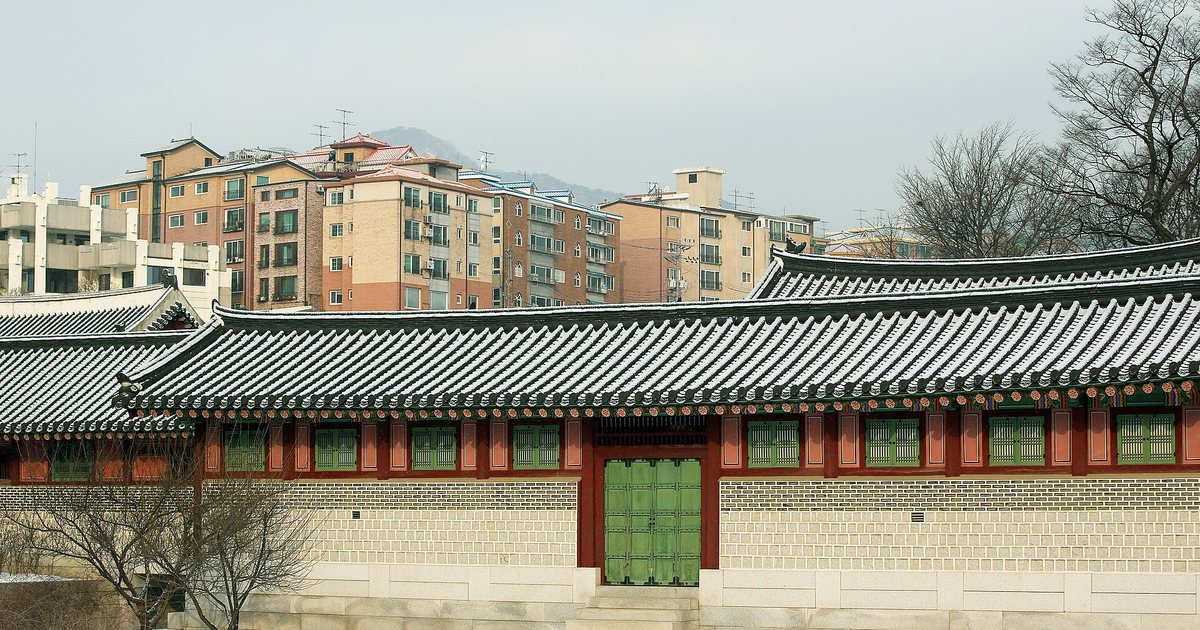
Gyeongbokgung (경복궁), the largest of the Joseon-era palaces, is the classic snow photo, with Bugaksan mountain behind the throne hall. Pair it with Bukchon, the neighborhood of traditional hanok (Korean wooden houses) just east, and finish in Insadong for tea.
- Area
- Jongno, central Seoul
- Nearest station
- Gyeongbokgung Station (Line 3)
- Time needed
- 2 to 3 hours with Bukchon
- Before you go
- check opening days and fees on the official page
Seoul is ringed by mountains, and Koreans hike them all year. According to the South China Morning Post, tourists are flocking to Seoul’s urban mountain trails. In winter, Inwangsan is the easy option (an hour or two, city views). Bukhansan is a proper climb with icy rock. Local hikers wear 아이젠 (aijen, from the German word for iron), slip-on micro-spikes sold at outdoor shops near trailheads, and you should too.
Warm-up Seoul: saunas, markets and street food
A jjimjilbang (찜질방) is a Korean bathhouse with heated rest rooms. The baths are separated by gender and you go in nude, as everyone does. Then you put on the provided T-shirt and shorts and join the shared floor, where families nap on heated mats, people sweat in kiln-style hot rooms and snack on baked eggs and sikhye (a sweet rice drink). Many stay open 24 hours, and some travelers sleep there overnight.
Winter is also when the snack carts come out. Look for bungeoppang (붕어빵), fish-shaped waffles with red bean filling, hotteok (호떡), a griddled pancake with molten brown sugar inside (let it cool for a minute), eomuk (어묵), fish cake skewers in hot broth, and roasted sweet potatoes from drum ovens. For a sit-down version, Gwangjang Market’s counters serve bindaetteok (mung bean pancakes) and kalguksu (knife-cut noodle soup) in clouds of steam.
- Area
- Jongno 5-ga, central Seoul
- Nearest station
- Jongno 5-ga Station (Line 1)
- Time needed
- 1 to 2 hours
- Before you go
- check opening days on the official page; some stalls close on holidays
Indoor days when the wind wins
On the bitterest days, think like a Seoulite and stay underground. COEX in Gangnam connects straight to Samseong Station (Line 2) and holds Starfield Library, the two-story wall of bookshelves everyone photographs. Lotte World in Jamsil has a large indoor theme park and an indoor skating rink. The National Museum of Korea in Yongsan can easily take a whole afternoon. Long underground shopping arcades also run beneath Myeongdong, City Hall and the Express Bus Terminal, so you can walk a long way without going outside.
Christmas and New Year in Seoul
Christmas Day is a public holiday in Korea, and for most people it’s a couples’ and friends’ night out, not a family holiday. Department stores in Myeongdong cover their façades with light displays, and in recent winters the city has put up seasonal lights around Gwanghwamun and Cheonggyecheon stream. Check Visit Seoul or the Seoul city site for this year’s events. On New Year’s Eve, crowds gather at Bosingak bell pavilion in Jongno for the midnight bell-ringing.
Best ski resorts near Seoul for a day trip or weekend
Korea’s slopes are shorter and busier than the Alps, but they are well run, easy to reach and lit for night skiing. Pyeongchang hosted the 2018 Winter Olympics, so the Gangwon resorts have serious infrastructure.
| Resort | Where | Getting there from Seoul | Best for |
|---|---|---|---|
| Jisan Forest Resort | Icheon, Gyeonggi | Short drive or seasonal shuttle bus | A half day or night session |
| Konjiam Resort | Gwangju, Gyeonggi | Short drive or seasonal shuttle bus | Beginners, groomed slopes close to the city |
| Elysian Gangchon | Chuncheon, Gangwon | Gyeongchun Line train to Baegyang-ri Station | Car-free day trip |
| Vivaldi Park | Hongcheon, Gangwon | Resort shuttle bus or car | Families, plus the Ocean World water park |
| Yongpyong Resort | Pyeongchang, Gangwon | KTX to Jinbu (Odaesan) Station, then shuttle or taxi | Long runs, a 2 or 3 night stay |
| Alpensia / Phoenix Pyeongchang | Pyeongchang, Gangwon | KTX to Pyeongchang or Jinbu, then shuttle or taxi | Olympic venues, mixed groups |
| High1 Resort | Jeongseon, Gangwon | Long bus ride or resort shuttle | Snow-sure higher slopes |
| Muju Deogyusan Resort | Muju, Jeonbuk | Bus via Muju or resort shuttle | A south-of-Seoul option |
How a Korean ski day works for foreigners
You don’t need to bring gear. Resorts and the rental shops along the access roads rent skis, snowboards, boots and helmets. Many also rent full ski outfits, which is what a lot of Korean skiers do, so you can arrive in normal winter clothes. Lift tickets are often sold in time blocks (half day, day, night) rather than as a single day pass. Compare the options on the resort’s own site before you buy.
Shuttle buses from Seoul usually run only during the season and need booking ahead. Schedules and pickup points change every year, so get them from the resort’s official page. For trains, a T-money card covers the subway leg to Seoul or Cheongnyangni Station; our T-money card guide explains the taps and transfers.
Day trip or overnight?
If you just want to try snow sports, a Jisan, Konjiam or Elysian Gangchon day trip is enough. For real mileage, stay at least two nights in Pyeongchang, because the KTX ride is easy but the shuttle and rental time eat into a single day. Weekends and the Lunar New Year holiday are the busiest times. Go on a weekday if you can.
Korean winter festivals: ice fishing, snow and lights
Winter festivals in Korea are mostly rural, mostly in Gangwon Province, and mostly built around frozen rivers. The best known include the Hwacheon Sancheoneo Ice Festival (화천산천어축제), named after the mountain trout people fish for through holes in the ice, the Pyeongchang Trout Festival, the Inje Icefish Festival and the Taebaeksan Snow Festival with its snow sculptures.
How an ice fishing festival works
You drill or are given a hole in the river ice, drop a short line and wait. Organizers usually set aside zones for bare-hand catching, sledding and ice slides, and a common setup lets you take your catch to a grill tent nearby to cook it. Dress warmer than you think you need, because you’ll be standing still on ice for an hour or more. Bring a folding seat if the festival allows it, and pack hot packs for your boots.
All of this depends on the ice. In a mild winter, festivals get postponed, shortened or canceled for safety. Dates, fees and foreigner-only programs (some festivals have run dedicated foreigner zones and tour packages) change every year, so check the festival’s official site and the Korea Tourism Organization’s VisitKorea pages.
Light festivals and the New Year sunrise
If you’d rather not sit on a frozen river, winter light festivals cover gardens and hillsides in LEDs. The Garden of Morning Calm in Gapyeong and the tea fields of Boseong in the south have both become known for them. On New Year’s Day, many Koreans travel to the east coast to watch the first sunrise, with Jeongdongjin near Gangneung and Homigot in Pohang among the most famous spots. Expect heavy traffic and book transport early.
A 5-day Korea winter itinerary: Seoul plus the mountains
This route puts outdoor time in the late morning and early afternoon, when it’s warmest, and keeps evenings indoors or close to food. It assumes you’re based in central Seoul. For a first trip that’s mostly city, our Seoul 3-day itinerary covers the neighborhoods in more detail.
Day 1: Jongno and the palaces
Gyeongbokgung in the morning, Bukchon’s hanok lanes before lunch, tea in Insadong. Head to Gwangjang Market for bindaetteok as it gets dark, then go to bed early to beat the jet lag.
Day 2: Myeongdong, Namsan and a sauna night
Buy your winter layers in Myeongdong in the morning (see the shopping section below). Snack from the street carts, ride up to N Seoul Tower around sunset for the city lights, then finish with a long soak at a jjimjilbang.
Day 3: Ski or snow day trip
Take the train to Elysian Gangchon for a car-free ski day, or a seasonal shuttle to Jisan or Konjiam. Not skiing? Nami Island (남이섬) near Gapyeong, with its tree-lined paths, is a classic snowy day out reached by train and ferry.
Day 4: Gangwon highlands or a festival
Take the KTX east toward Pyeongchang and Gangneung. Spend the day on the slopes, at an ice festival if it’s running, or on the Gangneung coast with its seafood and cafés, then take the train back in the evening or stay the night.
Day 5: Indoor Seoul and a river sunset
COEX and Starfield Library in the morning, Seongsu’s warehouse cafés for lunch, and a short Han River walk at sunset if the wind is calm. Then pack for the airport.
Worked example: when a cold snap hits
Say the forecast for Day 2 shows a daytime high of -8°C and a strong northwest wind. Move the Namsan evening to Day 5 and spend Day 2 underground instead: start with the Myeongdong arcades and the Express Bus Terminal’s GOTO Mall, then the National Museum, then the sauna. The cold days are usually the clearest, so give the next calm one to the palaces. You lose nothing, you just shuffle the order.
What to pack for Korea in winter
Pack for two climates: freezing streets and overheated interiors. Subway cars, cafés and shops run warm, and Korean homes and many hotels use ondol, underfloor heating that can make rooms feel very warm and dry.
- Thermal base layers, top and bottom, which you can buy cheaply in Seoul.
- A warm mid-layer such as fleece or a knit that you can wear on its own indoors.
- A wind-blocking outer coat that covers your hips; Koreans favor knee-length padded coats.
- Hat, scarf and touchscreen gloves, because you’ll be checking Naver Map or KakaoMap (the local map apps) outside.
- Shoes with grip; Seoul’s hilly lanes and stairs ice over.
- Heavy moisturizer and lip balm; the air is very dry, so patch test any new product first.
- A plug adapter; Korea uses 220V with two round pins (Type C/F).
How Koreans layer for winter
Watch a Seoul commuter in January and you’ll see three layers: a thin thermal, a sweater, and a long padded coat zipped to the chin. The coat comes off indoors, and the layers underneath are thin enough to sit in a café. Many people also carry hot packs (핫팩), disposable heat pads from any convenience store, in a coat pocket, and stick-on versions go inside boots or on the lower back.
Where to buy warm clothes in Seoul
Buying in Seoul is often smarter than packing. You save suitcase space, Korean winter wear is designed for this exact weather, and many stores offer tourist tax refunds (look for the tax-free sign and bring your passport). For the bigger style picture, see our Korean street fashion guide.
| Where | What you’ll find | Best for |
|---|---|---|
| Myeongdong | Global and Korean chains (Uniqlo, SPAO, Topten), department stores | Thermals and a coat in one stop |
| Dongdaemun | Late-night fashion malls and wholesale buildings | Knitwear, scarves, cheaper padded jackets |
| GOTO Mall, Express Bus Terminal | Long underground arcade of small shops | Budget hats, gloves, sweaters |
| Korean outdoor brand stores | K2, Black Yak, Nepa and The North Face’s Korean lines | Technical down coats, hiking gear, micro-spikes |
| Daiso and convenience stores | Hot packs, gloves, neck warmers, socks | Last-minute basics |
Is a Korean long padded coat worth it?
If you’ll spend real time outdoors, yes. A knee-length 롱패딩 covers your thighs, which a hip-length jacket doesn’t, and that matters at a bus stop in a -10°C wind. If you’re mostly hopping between malls and cafés, a shorter down jacket plus thermals is easier to carry around indoors.
Common winter mistakes foreign visitors make in Korea
- Wearing one thick sweater instead of layers. You’ll freeze outside and sweat on the subway. Thin layers under a big coat work better.
- Trusting sneakers on icy hills. Bukchon and Namsan paths get slick. Wear shoes with real tread and use the handrails.
- Booking an ice festival without checking for cancellations. A warm week can close the river. Check the official site a few days before.
- Leaving Seollal train tickets to the last minute. Holiday KTX seats go fast. Book as soon as sales open.
- Driving in Gangwon without experience. Mountain roads ice over and need winter driving skills. Foreigners also need an International Driving Permit. Trains and resort shuttles are simpler.
- Ignoring the fine dust reading. On high-dust days, wear a KF94 mask and plan indoor stops.
FAQ
Is Seoul worth visiting in winter?
Yes, if you dress properly. You get clear skies, smaller crowds at the palaces, ski resorts within a few hours, and winter-only food like hotteok and bungeoppang. For how winter compares with spring and autumn, see our best time to visit Korea guide.
How cold is Seoul in December, January and February?
December is cold but not at its worst. January is the coldest month, with daytime highs around freezing and nights several degrees below, and cold snaps go well below that. February starts to ease toward the end. Check the KMA forecast for your dates.
Does it snow in Seoul at Christmas?
Sometimes, but you can’t count on it. Seoul gets several snowfalls in most winters, often in January rather than December. If you want guaranteed snow, plan a day in Gangwon Province.
Can you ski in Korea without a car?
Yes. Elysian Gangchon is reachable by train, Pyeongchang resorts are close to KTX stations with shuttles or taxis for the last stretch, and several resorts run seasonal shuttle buses from Seoul. Book shuttles in advance through the resort’s official site.
What should I wear in Seoul in January?
A thermal base layer, a sweater or fleece, and a long, wind-blocking padded coat, plus a hat, scarf and gloves. Wear shoes with grip and carry a hot pack in your pocket. Skip heavy cotton, which stays damp and cold.
Are things closed in Korea during Lunar New Year?
Some are. Many small restaurants and market stalls close for part of the holiday, while large malls, chain cafés, convenience stores and major sights usually stay open. Transport is the bigger issue, so book trains early.
What to book first for a Korean winter trip
Start with whatever sells out first. That means Seollal-period KTX seats if your dates overlap the holiday, then ski resort accommodation in Pyeongchang for weekends. After those, check whether the ice festival you want has announced dates, and whether Seoul’s outdoor rink and light events are running this year on the city’s official pages.
Leave the rest for when you arrive. Coats, thermals, hot packs and micro-spikes are all easy to buy in Seoul, often for less than you’d pay at home, and the warm interiors mean you’ll want to carry less than you think. Book the trains, check the ice, then pack light.
Related reading
Sources news.google.com · k-korea.blog
Prices, opening hours and availability change. Check the official page before you buy or travel.