14 min read
Korean winter fashion at minus 10°C comes down to 3 layers under a long padded coat. Seoul’s coldest weeks bring dry, biting wind from the northwest. So Koreans dress first for the walk from the subway exit to the office, then style around that: a good knit, a scarf worn high, boots that grip ice. Below is the full formula, six outfits for men and women, and what to pack if you’re flying in from somewhere milder.
Key takeaways
- The long padded coat (롱패딩, “long padding”) falls to the knee or lower, and that extra length is what keeps your thighs warm on a minus 10°C commute.
- Koreans layer thin: a thermal base, one knit or fleece, then the coat. Subways, cafés and floor-heated restaurants run hot, so you need to peel down fast.
- Brushed-fleece lining (기모, gimo) inside leggings, jeans and sweatshirts is the cheapest warmth upgrade in any Korean clothing shop.
- Every convenience store sells disposable hot packs (핫팩) in winter. Never stick one directly on bare skin or sleep with one on.
What Korean winter fashion looks like at minus 10°C
Walk through a Seoul subway station on a January morning and you’ll see the same silhouette over and over: a knee-length padded coat, often black, beige or ivory, a scarf or neck warmer, and sneakers or boots. The faces above them change. The outline doesn’t. That is Korean winter fashion at its most practical, and it works because Seoul’s cold is a specific kind of cold.
The Korean peninsula’s winter is shaped by the Siberian high-pressure system, which pushes dry, freezing air south. Koreans have an old saying for the rhythm it creates, samhan saon (삼한사온), “three cold days, four warm days”. Climate patterns have loosened that cycle, but the idea still holds: you get sharp cold snaps followed by milder days, and wind chill makes the snaps feel worse than the thermometer says.
Where you go matters too. The south coast around Busan is usually milder than Seoul, while the mountains of Gangwon Province (home of the 2018 PyeongChang Winter Olympics and most ski resorts) run colder. Before you pack, check the Korea Meteorological Administration forecast for your dates, and read our guide to the best time to visit Korea if you’re still choosing a month.
Why style still matters in the cold
Seoul is a city where people dress up for ordinary days, and winter doesn’t change that. The trick Koreans use is to let the coat handle warmth and let the details handle style: the knit at the collar, the color of the scarf, the shape of the boots. You’ll rarely see someone sacrifice a whole look to the cold, or freeze for the sake of a look.
Why Koreans wear the long padded coat (롱패딩)
The long padding (롱패딩, rong paeding) is a down or synthetic-fill parka that reaches the knee, mid-calf or even the ankle. Koreans use the word “padding” for any puffer, so a short puffer jacket is a short padding (숏패딩). The long version became a national uniform around the 2018 PyeongChang Winter Olympics, when long padded coats sold as official goods drew huge public attention, and it never really left.
The logic is simple. A short puffer keeps your torso warm and leaves your thighs exposed to wind. A long one covers you from neck to knee in one piece, so you can wear normal trousers or a skirt underneath. Teenagers wear them over school uniforms, office workers wear them over suits, and parents wear them at weekend football games.
Down or synthetic fill: how to choose
Korean labels usually list the fill as a ratio of down clusters (솜털, somteol) to feathers (깃털, gitteol), written something like 80/20. More down means more warmth for the weight. Synthetic fill (often labeled as padding cotton or a branded insulation) is warm enough for a city winter, dries faster and is easier to wash. If you’ll mostly be in Seoul, walking between heated buildings, synthetic is fine. If you’re heading to the mountains or to an outdoor winter festival, go for real down.
How to wear a long padding without looking like a sleeping bag
- Size for one layer underneath, not three. An oversized coat looks deliberate. A coat that’s simply too big looks like a duvet.
- Look for a two-way zipper. Unzipping from the bottom lets you walk, climb subway stairs and sit down without the coat bunching.
- Pick a calmer color. Black still dominates, but beige, ivory, khaki and charcoal read more polished in photos and against Seoul’s grey winter streets.
- Break up the column. A bright scarf, a beanie or a contrasting bag stops the long shape from swallowing you.
Outdoor brands sold in Korea, such as The North Face, Discovery Expedition, K2 and National Geographic (a Korean-licensed apparel line), push new long padding designs every autumn. Fast-fashion and online labels make cheaper versions. Current prices and models change each season, so check the brand’s official Korean site.
The Korean layering formula: base, mid, outer
The real secret of Korean winter fashion is that it assumes you’ll be overheated half the day. Subway cars are warm. Cafés are warm. Many restaurants and homes use ondol (온돌), traditional underfloor heating, so the floor itself radiates heat.
A huge chunky sweater under a long padding is a mistake, because you’ll be sweating by the second station. Koreans build three thin layers they can strip in seconds.
| Layer | Korean term | What Koreans wear | Why it works at minus 10°C |
|---|---|---|---|
| Base | 내복 (naebok), 발열내의 (heat-generating innerwear) | Thin thermal top and leggings, fleece-lined tights | Traps body heat close to the skin and stays invisible under clothes |
| Mid | 니트 (knit), 기모 (gimo, brushed fleece) | Turtleneck, fine knit, fleece-lined sweatshirt or hoodie | Adds insulation you can still wear indoors without looking overdressed |
| Outer | 롱패딩 / 숏패딩 / 코트 | Long padding, short puffer or wool coat | Blocks wind; comes off as one piece the moment you’re inside |
| Extras | 목도리 (mokdori), 비니, 장갑 | Scarf or neck warmer, beanie, gloves | Covers the neck, ears and hands, where wind chill bites first |
| Feet | 패딩 부츠, 어그 | Padded or sheepskin-style boots, grippy sneakers, wool socks | Keeps toes warm on icy pavements and frozen palace courtyards |
Base layer: the thermals Koreans call naebok (내복)
Thermal underwear used to be an old-fashioned item in Korea, the thing grandparents gave you. Thin synthetic heat-tech-style innerwear changed that, and now it’s normal for people of every age to wear a thermal top under a shirt. Women commonly wear fleece-lined tights (기모 스타킹) under skirts, and men wear thin thermal leggings under suit trousers. Nobody sees it, which is the point.
Mid layer: knit, fleece or hoodie
This is the layer people see indoors, so it carries your style. More on knitwear below. The practical rule: if you can’t comfortably sit in a warm café wearing it, it’s too thick.
Outer layer: one coat that does the heavy work
Pick one coat for the trip and plan everything else around it. Most Koreans own two winter options: a padding for the coldest days and a wool coat for milder ones or for dressier occasions.
Worked example: one minus 10°C day in Seoul
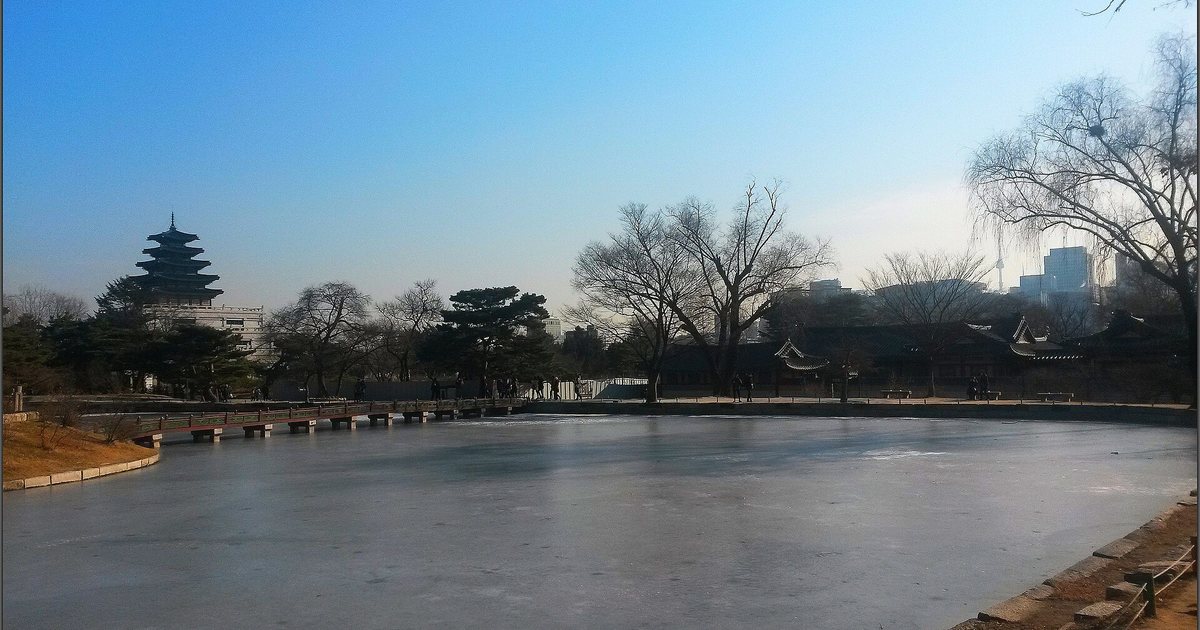
Say you leave your hotel at 9 a.m. for Gyeongbokgung (경복궁), Seoul’s main royal palace, where you’ll spend a couple of hours outdoors on open stone courtyards. Wear thermals, a fleece-lined sweatshirt, a long padding zipped to the chin, a scarf, a beanie and gloves. At lunch in a warm café, the coat and scarf come off and the sweatshirt alone looks fine.
In the afternoon, shopping in Myeongdong’s heated stores, carry the scarf and leave the coat open. At dinner, if it’s Korean BBQ, many restaurants offer a large plastic bag or a seat with storage space so your coat doesn’t soak up the smoke. Same three layers, four different settings, no wardrobe change.
Korean winter knitwear: what to wear under the coat
Knitwear is where Korean winter dressing gets its softness. A few staples come back every year.
- The turtleneck, called a “pola” (폴라) in Korea. A thin one replaces a scarf indoors and looks sharp under both padding and wool coats.
- Fine-gauge crewneck knits. Worn alone, or over a collared shirt with the collar showing, a favorite look for both men and women.
- Cardigans. Short cropped cardigans for women, longer relaxed ones for men, often buttoned up and worn as a top.
- Knit vests. Layered over a shirt or a thin turtleneck for a preppy, slightly retro look.
- Cable knits. Thicker, more textured, better for weekend outfits under a roomy coat.
Read the composition label before you buy. Wool and wool blends breathe better and smell fresher after a day of central heating. Cheap 100% acrylic looks fine in the shop but pills fast. Angora and mohair blends are pretty and shed on dark coats, so pair them with lighter outerwear.
If you like the idea of these pieces year-round, our Korean street fashion style guide covers the four core looks and where to shop for them.
Korean winter outfits for women: 3 formulas
1. The everyday long padding
Long padding in ivory or beige, a fleece-lined hoodie or a fine knit, fleece-lined leggings or wide straight jeans, and chunky sneakers or sheepskin-style boots. Add a knit beanie and a long scarf in a soft color. This is the outfit you see on campuses and in subway stations, and it survives a full day outdoors.
2. The wool coat for city days
A long wool coat (Koreans prize the so-called “handmade coat”, 핸드메이드 코트, a double-faced wool coat finished by hand with no lining), a thin turtleneck, a long knit or wool skirt, fleece-lined tights and knee-high or ankle leather boots. A muffler wrapped twice finishes it. Save this for milder days, around zero rather than minus ten, or wear a thermal top underneath to stretch it.
3. The short puffer and wide pants
A cropped short padding, a short knit or sweatshirt, high-rise wide jeans or cargo pants, a beanie or earmuffs, and padded boots. Younger Seoulites love this proportion because the short jacket shows off the trousers. The trade-off is colder thighs, so wear fleece-lined jeans or thermals.
Korean winter outfits for men: 3 formulas
1. The commuter long padding
Black or charcoal long padding, a fleece-lined sweatshirt or knit, fleece-lined joggers or straight trousers, and sneakers with a thick rubber sole. A neck warmer is easier than a scarf if you’re carrying a bag. This is the default for students and office workers on the coldest mornings.
2. The overcoat and turtleneck
A single- or double-breasted wool overcoat in camel, navy or grey, a thin turtleneck or a knit over a shirt, wool slacks and leather Chelsea or lace-up boots. A wool muffler in a solid color adds warmth without fuss. Thin thermals under the slacks make this outfit workable well below freezing.
3. The short puffer and fleece
A boxy short padding (the outdoor-brand style many Koreans wear), a boa fleece jacket (Koreans call it ppogeuri, 뽀글이, from the word for “curly”) or a hoodie under it, wide cargo or work pants, a beanie and grippy boots. It’s relaxed, very Seoul weekend, and fine for markets, hikes on city trails and night food streets.
Boots, hats and scarves Koreans wear in winter
Accessories do more of the warming work than most visitors expect. Wind chill hits the neck, ears, hands and feet first, and those are exactly the spots a coat leaves open.
Winter boots and shoes for Seoul’s ice
Seoul is a hilly city, and after snow, side streets, palace grounds and staircases can stay icy for days. Grip matters more than looks. Koreans wear sheepskin-style boots (어그, “ugg”), padded boots (패딩 부츠), leather boots with a lug sole, and chunky sneakers. Smooth-soled fashion boots are a common way to fall on a frozen slope. Wear wool or thick cotton socks and pack a spare pair, because wet socks turn a cold day into a miserable one.
Hats and ear warmers
The beanie (비니) is the default for every age. Earmuffs (귀마개) are popular with women and teenagers, and fleece bucket hats and knitted balaclavas (바라클라바) show up on the most fashion-forward streets in Seongsu and Hongdae. A hood with faux-fur trim on your padding counts too, especially in wind.
Scarves, neck warmers and gloves
The muffler (목도리, mokdori) is worn high and wrapped tight, often over the coat collar. Neck warmers, simple fleece or knit tubes, are a cheaper and quicker option. Touchscreen gloves help, since you’ll be checking maps and tapping a transit card all day. If you haven’t sorted that yet, read how to use a T-money card in Seoul.
What to pack for a winter trip to Korea
You can buy almost anything once you land, often at reasonable prices, so pack the essentials and leave room in your case. Here’s a practical list for a week in Seoul in the coldest months.
- One warm coat. A long padding or a well-insulated parka. If you don’t own one, consider buying it in Korea on day one.
- Two to three thermal tops and one or two thermal leggings. Thin enough to wear under everything.
- Three or four mid layers. Knits, a fleece, a sweatshirt. Choose pieces that look good on their own indoors.
- Two pairs of trousers or skirts, ideally one fleece-lined, plus fleece-lined tights if you wear skirts.
- One pair of grippy, waterproof boots or sneakers and plenty of warm socks.
- Beanie, scarf or neck warmer, and touchscreen gloves.
- Lip balm, a rich hand cream and a moisturizer. Korean winter air is dry and indoor heating dries it further.
On that last point, if your skin tightens up in winter, our Korean skincare routine for beginners lays out four simple steps, and an Olive Young (Korea’s big health-and-beauty chain) branch is never far away.
Where to buy winter clothes in Seoul
Korean fast-fashion chains such as SPAO, TOPTEN and 8seconds, the Musinsa Standard stores from Korea’s big online fashion platform Musinsa, and international chains all stock thermals, knits and padding in season. Outdoor brands have stores in department stores and on busy shopping streets. For cheaper, trendier pieces, try Dongdaemun’s fashion malls, the underground arcade at Express Bus Terminal (Goto Mall) and the shops around Hongdae. Many stores offer tax refunds for foreign visitors on qualifying purchases; check the current rules and minimum spend on the official Korea tourism or tax refund pages before you shop. Tourist spending has been propping up Korean retail as domestic consumption slows, according to Bloomberg, so expect shops in tourist areas to be well stocked and used to foreign shoppers.
Packing for hiking or skiing
Hiking Seoul’s urban mountains has become a tourist activity in its own right, according to the South China Morning Post. In winter, trails freeze. Korean hikers carry slip-on crampons (아이젠, aijen) and wear proper outdoor layers, not city padding. For ski trips to Gangwon, rent gear at the resort and bring your own thermals, goggles and gloves.
Common Korean winter fashion mistakes foreigners make
- One huge sweater instead of thin layers. You’ll freeze outside if you take the coat off and roast inside if you don’t.
- Fashion boots with no grip. Icy hills and stone palace grounds are unforgiving.
- No hat. Koreans of every age wear beanies in a cold snap. Nobody will think you’re overdressed.
- Ignoring the thighs. A short jacket with thin jeans is the classic tourist shiver. Wear thermals or fleece-lined trousers.
- Forgetting socks for floor seating. At traditional restaurants and some guesthouses you take your shoes off, so your socks are on show. Bring decent ones. Our Korean dining etiquette guide covers the other table rules.
- Skipping moisturizer. Cold wind plus dry heating cracks lips and hands within a couple of days.
FAQ
How cold does Seoul get in winter?
Seoul’s coldest stretch is usually from late December through January, and cold snaps can push temperatures well below freezing, with minus 10°C mornings not unusual. Wind chill makes it feel colder. Check the Korea Meteorological Administration or a reliable weather app for your exact dates.
What do Koreans wear in winter?
Most Koreans wear a padded coat (long or short), a knit or fleece-lined sweatshirt, thermal innerwear, and a scarf or neck warmer. Wool coats come out on milder or dressier days. Boots or thick-soled sneakers finish the look.
Is a long padding coat worth buying for a trip to Korea?
If you’re visiting in the coldest weeks and don’t own a long, warm coat, yes. It covers your thighs, which most short jackets don’t, and you’ll see it everywhere, so you won’t stand out. You can buy one in Seoul at outdoor-brand stores, fast-fashion chains or department stores.
What should I wear in Korea in January?
Thermals, a warm mid layer, a long padded coat, a beanie, a scarf, gloves and grippy waterproof shoes. Dress in thin layers so you can strip down in heated subways, shops and restaurants. Pack lip balm and hand cream for the dry air.
Do Koreans wear skirts in winter?
Yes. Long knit and wool skirts are common winter pieces, worn with fleece-lined tights (기모 스타킹) and boots. Under a long padding, a skirt outfit can be just as warm as trousers.
Where can I buy cheap winter clothes in Seoul?
Dongdaemun’s fashion malls, the Goto Mall underground arcade at Express Bus Terminal and the shops around Hongdae are good starting points. Korean fast-fashion chains such as SPAO and TOPTEN stock affordable thermals and knits in season. Prices change, so compare in store or on the brands’ official sites.
What to try, buy or plan next for a Korean winter
Start with the coat. If yours stops at the hip, decide now whether to buy a long padding before you fly or on your first afternoon in Seoul. Then fill in the layers: two thermal tops, one fleece-lined pair of trousers, a knit you’d happily wear in a café, and boots that grip.
Next, plan your days around the cold. Put outdoor sights like palaces and markets in the late morning and early afternoon, when it’s least cold, and keep museums, shopping and long meals for the evening. Our Seoul 3-day itinerary works in winter with that one tweak.
Finally, check the forecast a week out and again the night before you leave. A cold snap changes what you need more than any trend does, and the Korean way of dressing for it, three thin layers under one serious coat, will keep you warm and looking like you belong.
Related reading
Sources weather.go.kr · k-korea.blog · news.google.com
Prices, opening hours and availability change. Check the official page before you buy or travel.