12 min read
What is Suneung exam day? It’s Korea’s one-day college entrance test, held each November since 1993. Officially the College Scholastic Ability Test (CSAT), or 대학수학능력시험 (daehak suhak neungnyeok siheom), it’s the score most Korean universities use to rank applicants. That makes it the single most consequential day in a Korean teenager’s life, and the whole country adjusts its schedule to protect it.
For anyone outside Korea, the Suneung (수능) explains a lot: the hagwon cram schools, the night-time study cafés, the plot of half the school dramas you’ve watched. It also affects visitors directly, because flights, office hours and even the stock market shift on exam day.
Key takeaways
- The Suneung is sat once a year, on a single day in November. Miss it or bomb it and the next chance is 12 months away.
- Planes stop taking off and landing nationwide for about 25 minutes while the English listening section plays.
- Scores come back as 9 grades per subject. Grade 1 in a relatively graded subject means the top 4% of test takers.
- China’s gaokao runs 2 days or more and draws over 10 million students; the Suneung packs everything into one day for roughly half a million.
What is the Suneung exam, and who takes it?
The Suneung is a standardized national exam set by the Korea Institute for Curriculum and Evaluation (KICE), the state agency that writes and grades the papers for the Ministry of Education. It replaced an older entrance test in the 1994 admissions cycle and has kept the same basic shape ever since: one day, several subjects, multiple-choice and short-answer questions marked by machine.
Most takers are high school seniors, called go-sam (고3, “third year of high school”). A large share are retakers who sat the test the year before and want a better score. Koreans call a one-year retake jaesu (재수), a second retake samsu (삼수), and anything beyond that N-su. Some retakers spend a whole year at specialized cram academies doing nothing but Suneung prep.
If you’ve wondered why Korean students talk about being “19” or “20” at exam time in a confusing way, it’s tied to how school years and ages used to be counted. Our explainer on Korean age vs international age untangles that.
What the Suneung covers: subjects, questions and timing
The test runs in five periods, always in the same order. Students who take every section are in the building for roughly nine hours, from a morning check-in to a late-afternoon finish. Each period has a fixed length, and nobody leaves early.
| Period | Subject | Questions / max score | Length | Notes |
|---|---|---|---|---|
| 1 | Korean (국어) | 45 / 100 | 80 min | Reading, literature, grammar; a common part plus one elective |
| 2 | Mathematics (수학) | 30 / 100 | 100 min | Common part plus one elective (probability and statistics, calculus or geometry) |
| 3 | English (영어) | 45 / 100 | 70 min | Opens with a listening section of about 25 minutes |
| 4 | Korean History (한국사) + Inquiry (탐구) | 20 / 50 each | 30 min per subject | Korean History is compulsory; Inquiry means up to two social science, science or vocational subjects |
| 5 | Second foreign language or Classical Chinese (한문) | 30 / 50 | 40 min | Optional; languages include Japanese, Chinese, French, German, Spanish and others |
The Korean and math sections are where reputations are made. Korean demands speed through dense passages on philosophy, economics and science, so it’s really a reading-comprehension marathon. Math leans on calculus-heavy problems, and the last few questions of each paper are the ones students drill for months.
Is the Suneung multiple choice?
Mostly. Almost every question has five options and students mark an OMR answer sheet (the bubble sheet scanned by machine). Math includes some short-answer questions where students write a number. There are no essays, which is one reason the exam is criticized for rewarding pattern drilling.
What can students bring into the room?
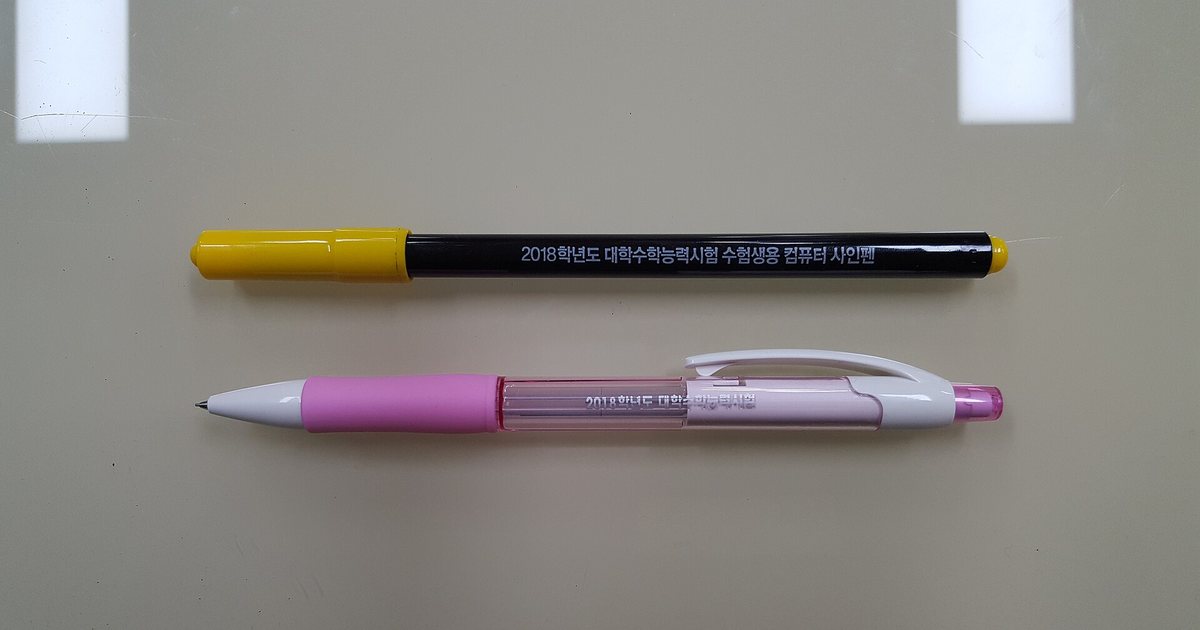
Very little. Phones, smartwatches and most electronics are banned, and being caught with one can void the whole exam. Students get an official computer-sign pen in the room. The allowed and banned items list is published by KICE each year, so check the official notice rather than relying on old advice.
Why Korea goes quiet on Suneung day
No other country rearranges its morning like this for a test. The idea is simple: nothing outside the exam room should cost a student points, so the government and private companies clear the way.
Why do flights stop during the Suneung?
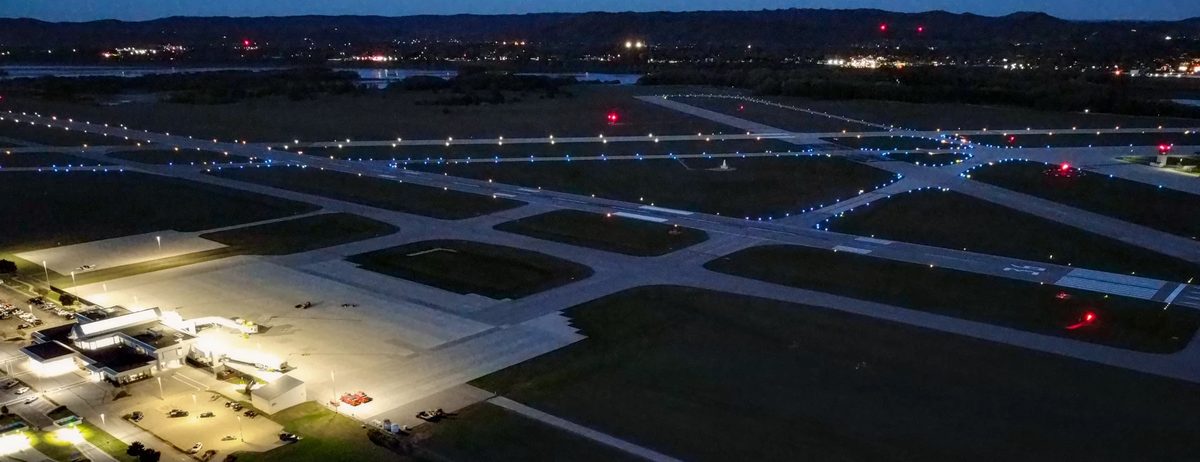
During the English listening section, takeoffs and landings at airports across the country are halted for about 25 minutes so engine noise can’t drown out the audio. Planes already in the air are held at high altitude until the window closes. Airlines reschedule around it, and military training flights and firing drills pause too. If you’re flying in or out of Korea that day, expect your departure time to have been moved; the airline’s notice will say so.
Do offices and the stock market open late?
Yes. Public offices and many large companies push their start time back by an hour, typically to 10 a.m., to keep roads clear for students. The Korea Exchange, which runs the KOSPI (Korea’s main stock index), traditionally opens and closes an hour late as well. Subways and buses add extra services in the morning rush. Exact arrangements are announced each year, so check the transport operator or Korea Exchange notice.
Do police really give students rides?
They do, and it’s one of the most photographed parts of the day. Police patrol cars and motorbikes pick up students stuck in traffic, at the wrong test site or running late, and race them to the gate before it closes. Local volunteers and taxi drivers offer free rides too. Near test centers, honking is discouraged, construction is limited and traffic is diverted.
What is Suneung cheering?
In the early morning, younger students line up outside test centers with banners and snacks, cheering seniors as they walk in. Parents gather at the gates, and many spend the day praying at Buddhist temples and churches; some have been doing 100-day prayers (baegil gido, 백일기도) in the run-up. The day also has a reputation for a sudden cold snap, which Koreans call suneung hanpa (수능 한파, “Suneung cold”), so you’ll see a lot of padded coats.
How Suneung scoring works: grades 1 to 9
Students never see a simple percentage. The score report gives each subject three numbers: a standard score (표준점수, adjusted for how hard that year’s paper was), a percentile (백분위) and a grade (등급) from 1 to 9. Raw scores don’t appear on the report.
The grade is the number everyone talks about. In relatively graded subjects (Korean, math and Inquiry), grades follow fixed shares of test takers:
| Grade | Share of takers | Cumulative | What it usually means |
|---|---|---|---|
| 1 | Top 4% | 4% | Competitive for the most selective universities |
| 2 | Next 7% | 11% | Strong; meets many top schools’ minimum requirements |
| 3 | Next 12% | 23% | Solid for many four-year universities |
| 4 | Next 17% | 40% | Above the middle |
| 5 | Next 20% | 60% | The middle band |
| 6 to 9 | Remaining 40% | 100% | Lower bands; grade 9 is the bottom 4% |
Why are English and Korean History graded differently?
Both use absolute grading, so your grade depends on your score, not your rank. In English, 90 points or more out of 100 is grade 1, 80 to 89 is grade 2, and so on in 10-point steps. Korean History is out of 50, and 40 or more earns grade 1. The change was meant to cut the arms race in English prep, though how well that worked is still argued over.
When do results come out?
KICE posts the answer key on its website soon after the exam, and students score themselves that evening (a ritual called gachaejeom, 가채점). After a short period for formal objections to disputed questions, official reports go out roughly a month later. For the exact release date, check KICE.
How the Suneung decides who gets into university
Korean admissions run on two tracks, and the Suneung matters on both. Susi (수시, rolling or early admission) looks mainly at school records, essays, interviews and activities, and it fills the majority of places at most universities. Jeongsi (정시, regular admission) ranks applicants largely on Suneung scores, and it runs after results are out.
Susi doesn’t let students ignore the test. Many selective programs set a minimum Suneung requirement (수능 최저학력기준), for example a combined set of grades across chosen subjects. Miss it and the offer is gone, even with a perfect school record.
Why does one exam carry so much weight?
Because a lot of Korean life is sorted by university name. The top three, Seoul National, Korea and Yonsei, are known together as SKY, and graduating from one still opens doors in large companies, government and law. That’s why families spend heavily on hagwon (private cram schools), clustered most famously in Seoul’s Daechi-dong neighborhood in Gangnam. The JTBC drama SKY Castle built a whole satire around that pressure.
The intensity echoes other Korean systems where years of training lead to one make-or-break moment. If that rings a bell, see how the K-pop trainee system works.
Suneung vs gaokao: how Korea’s exam compares with China’s
The gaokao (高考) is China’s national college entrance exam, and the two often get lumped together as “the world’s hardest tests”. They share the stakes and the security, but the format is very different.
| Suneung (Korea) | Gaokao (China) | |
|---|---|---|
| When | Once a year, in November | Once a year, in early June |
| Length | One day | 2 days or more, depending on the province |
| Takers | Roughly half a million | More than 10 million |
| Paper | One national paper for everyone | National and provincial papers vary by region |
| Question style | Almost all multiple choice | Includes long essays and written working |
| Result format | Standard score, percentile, 9 grades per subject | A total score, often out of 750 |
| National response | Flights halted for listening, late office openings, police rides | Police escorts, noise and construction limits near sites, strict anti-cheating checks |
The biggest practical gap is the essay. Gaokao candidates write a long Chinese composition, while Suneung takers never write a paragraph. The Suneung’s other quirk is compression: an entire school career is judged in a single day, so one bad morning hurts more than it would over several days of testing.
Suneung good-luck gifts: yeot, forks and what not to eat
In the weeks before the exam, convenience stores and bakeries fill up with good-luck gift sets. Almost all of them are wordplay, so knowing a bit of Korean makes them make sense.
- Yeot (엿): a sticky traditional taffy made from grains. The Korean verb for “stick”, 붙다 (butda), also means “to pass” an exam, so a sticky sweet means you’ll stick to the university. Parents have been known to press yeot onto school gates.
- Chapssaltteok (찹쌀떡): chewy glutinous rice cakes filled with sweet red bean, same “sticking” logic.
- Forks: 찍다 (jjikda) means both “to stab” and “to pick” an answer, so a fork helps you pick the right one.
- Toilet paper: 풀다 (pulda) means “to unroll” and “to solve”, so a roll means you’ll solve every problem.
- Mirrors: from the phrase “see the test well”, 시험을 잘 보다, since 보다 means both “to see” and “to take” a test.
The food to avoid is just as symbolic. Miyeokguk (미역국, seaweed soup) is slippery, and 미끄러지다 (“to slip”) is slang for failing, so nobody serves it to a candidate before the exam. Bananas get the same treatment for the same reason.
What Suneung day looks like for one student
Walk through a typical day for a candidate in Seoul and you’ll see why the national arrangements exist. Times below are approximate and change slightly from year to year; KICE publishes the official timetable.
- Early morning: a light breakfast, often rice porridge, because nobody wants an upset stomach. Parents pack a dosirak (lunch box) with familiar, mild food.
- Around 8 a.m.: arrival at an assigned school, often not the student’s own. Younger students cheer at the gate. Entry closes at a set time, which is when police rides matter.
- Morning: phones handed in, then Korean followed by math. Two of the most important papers are done before lunch.
- Lunch: eaten at the desk. Most students review notes for English.
- Early afternoon: English, beginning with the listening section. Outside, planes are holding and traffic is calm.
- Mid to late afternoon: Korean History and Inquiry subjects, then the optional language paper. Students finish as it gets dark.
- Evening: the answer key goes up and students mark their copies of the questions against it. Restaurants, cinemas and shops run Suneung-taker discounts in the weeks that follow, usually if you show your exam admission ticket.
What the Suneung means if you live outside Korea
For most readers abroad, the Suneung is something you watch rather than take. Foreign nationals applying to Korean universities usually go through separate international admissions based on school records, language scores such as TOPIK (the Test of Proficiency in Korean) or English, and interviews. Korean nationals who studied abroad often have their own special admission tracks. If you’re considering study in Korea, check each university’s international admissions page, not the Suneung rules.
Travelers should know the day matters too. Expect rescheduled flights around the listening window, slower mornings in central Seoul and very quiet streets near schools. November is otherwise a good time to visit, with autumn colors fading into early winter; see our guide to the best time to visit Korea. Shops and attractions keep running as normal, and the post-exam discounts aimed at students can make Seoul feel lively for weeks afterward.
The exam also helps you read Korean pop culture. School dramas and webtoons constantly reference go-sam stress, late nights at study cafés and the “one shot” nature of the test. Once you know what a grade 1 in math means, a lot of plotlines hit harder.
FAQ
What does Suneung mean?
Suneung (수능) is short for 대학수학능력시험, which translates as “College Scholastic Ability Test”. In English it’s usually called the CSAT. Koreans almost always just say “suneung”.
How long is the Suneung exam?
It’s a single day. Students taking every section, including the optional language paper, are at the test site for about nine hours, from morning check-in to late afternoon. The individual papers run from 30 to 100 minutes each.
Can you retake the Suneung?
Yes, but only once a year, since it’s held one day each November. There’s no limit on how many times you can sit it, and retakers make up a significant share of each year’s candidates. Many spend a full year at a cram academy between attempts.
Is the Suneung harder than the SAT?
Most comparisons say yes in content: the math goes further into calculus, and the Korean reading passages are long and technical. The bigger difference is stakes. The SAT can be taken several times a year and is one part of a US application, while the Suneung happens once and can decide admission on its own.
Do foreigners take the Suneung?
Rarely. Foreign students usually apply to Korean universities through international admissions that use school records and language tests such as TOPIK. Check the admissions page of the university you’re interested in for its current requirements.
Why do Koreans give yeot before the exam?
Yeot is a sticky taffy, and the Korean word for “stick” also means “to pass” an exam. Giving it is a wish that the student will stick to their chosen university. Sticky rice cakes and forks follow the same kind of wordplay.
What to watch around the next Suneung
The format is changing. The education ministry has announced reforms that drop the elective choices in Korean and math and make integrated social studies and integrated science common subjects, starting with the 2028 university admissions cycle. If you’re following Korean education, KICE’s official site is where the details and sample questions appear first.
Each year, watch three things after the exam: how hard the papers were judged to be (it shapes the grade cut-offs), whether any questions are formally challenged, and the score release about a month later. Planning a November trip? Check your airline’s schedule for exam day, then build the rest of your visit around Seoul’s early-winter season with our list of things to do in Seoul in winter.
Related reading
Sources kice.re.kr · k-korea.blog
Prices, opening hours and availability change. Check the official page before you buy or travel.