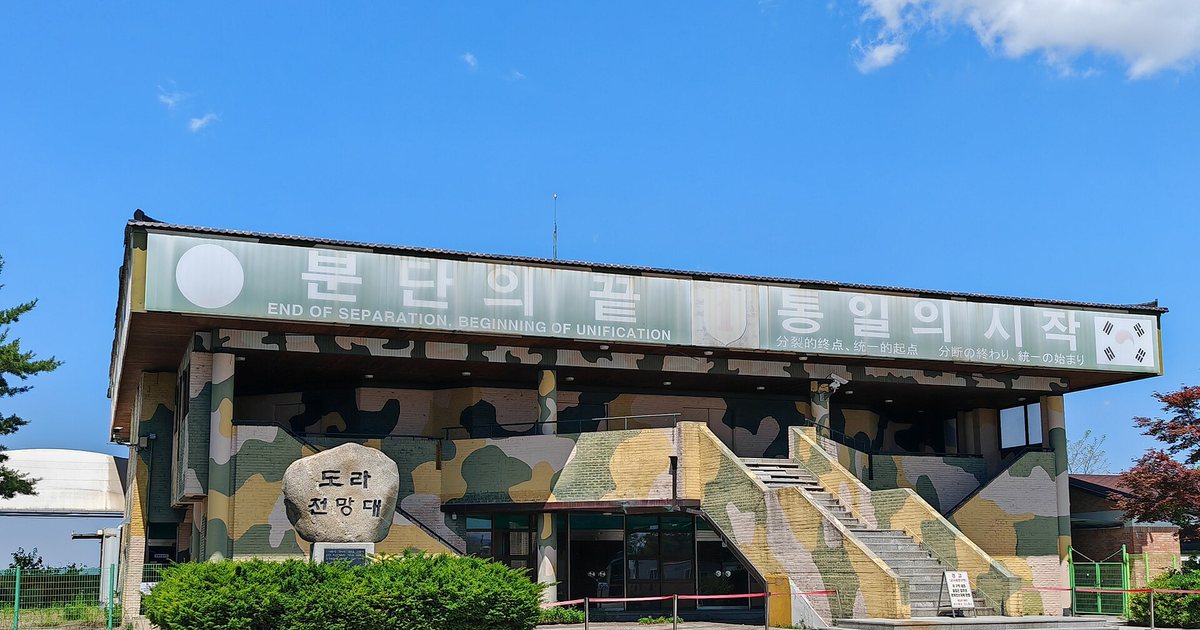
11 min read
A DMZ tour from Seoul is about a 1-hour drive north and needs your passport, booked days ahead. Most tours visit 4 to 5 stops in the Paju area: Imjingak park, the Third Tunnel, Dora Observatory and Dorasan Station. The Joint Security Area (JSA) at Panmunjom, where North and South Korean soldiers stood face to face, is a separate and much harder booking that has been suspended for long stretches.
Why it matters if you’re visiting: this is the only place on a normal Korea trip where you can look straight into North Korea. Military and security conditions decide whether a site opens on any given day, not the tour company, so the planning works differently from any other day trip.
Key takeaways
- The DMZ runs about 250 km coast to coast and is roughly 4 km wide, 2 km on each side of the border line.
- Bring your physical passport on tour day. Operators also need your passport details in advance for security screening, and if they don’t match, you don’t go in.
- A standard DMZ tour and a JSA tour are different products. Check the JSA’s current status before you pay for anything that names Panmunjom.
- Sites can close at short notice for military, security or animal-disease reasons. Read the official notice the day before you go.
What the DMZ and the JSA actually are
The DMZ in one paragraph
The Korean Demilitarized Zone is a buffer strip set up by the 1953 Armistice Agreement that stopped the fighting in the Korean War. The war never formally ended with a peace treaty, so technically the two Koreas are still in a state of armistice. Down the middle runs the Military Demarcation Line (MDL), the actual border, with about 2 km of zone on each side. It’s one of the most heavily fortified borders in the world. Over 70 years with almost no people inside it, it has also become an accidental wildlife refuge.
South of the DMZ is a second band called the Civilian Control Line (CCL, mintongseon in Korean). You can’t cross it freely. Tour buses stop at a military checkpoint, soldiers check IDs against the passenger list, and only then do you continue to the Third Tunnel and Dora Observatory. That checkpoint is the reason passports matter so much.
How the JSA differs from the DMZ
The Joint Security Area, usually called Panmunjom after the village that once stood there, is a small zone straddling the MDL where the armistice talks took place. Its blue conference buildings sit right on the line. On a JSA visit, which has historically been run under UN Command rules, you could step inside one of those buildings and stand on the North Korean side of the table. A regular DMZ tour never takes you this close. You look across the border from observatories several kilometers back.
If you want the bigger picture of how the two Koreas split and live today, our explainer on North Korea vs South Korea differences is a good primer before the trip.
How a DMZ tour from Seoul works, step by step
Almost every foreign visitor goes with a licensed tour operator. Civilians can’t drive themselves past the Civilian Control Line, and the screening has to be done before the day. Here’s the usual sequence.
- Book online with a licensed operator. You’ll enter your full name, nationality, date of birth and passport number exactly as printed. Do it at least several days ahead. Weekend and holiday departures fill first.
- Get your pickup point. Most tours collect people from central Seoul hotels or a fixed meeting point near a subway station. Early starts are normal.
- Ride north. Expect roughly an hour on the road toward Paju, along the Han and Imjin rivers. The guide usually explains the history on the bus, so this is your briefing.
- First stop at Imjingak. This park sits just outside the restricted zone and works as the staging area.
- Pass the military checkpoint. Soldiers board or check the list. Have your passport in hand, not in your checked luggage at the hotel.
- Visit the sites inside the line. Typically the Third Tunnel, Dora Observatory and Dorasan Station, in whatever order the operator’s slot allows.
- Return or continue. Half-day tours head back to Seoul. Full-day versions add another stop, often a lunch break or a second area.
Timing slots inside the zone are set by the authorities, which is why operators are strict about pickup times. If you’re late, the bus can’t wait.
What you see on a standard DMZ tour
The stops below are the core of most Paju-area itineraries. Your operator may drop one or swap the order depending on closures.
| Stop | What it is | What to expect |
|---|---|---|
| Imjingak | Park and memorial area by the Imjin River | Freedom Bridge, ribbon-covered fences, war memorials, a gondola over the river; open to the public without a tour |
| Third Tunnel of Aggression | Infiltration tunnel dug from the North, discovered in 1978 | Steep walk down or a small train, hard hats, low ceilings, no photos inside |
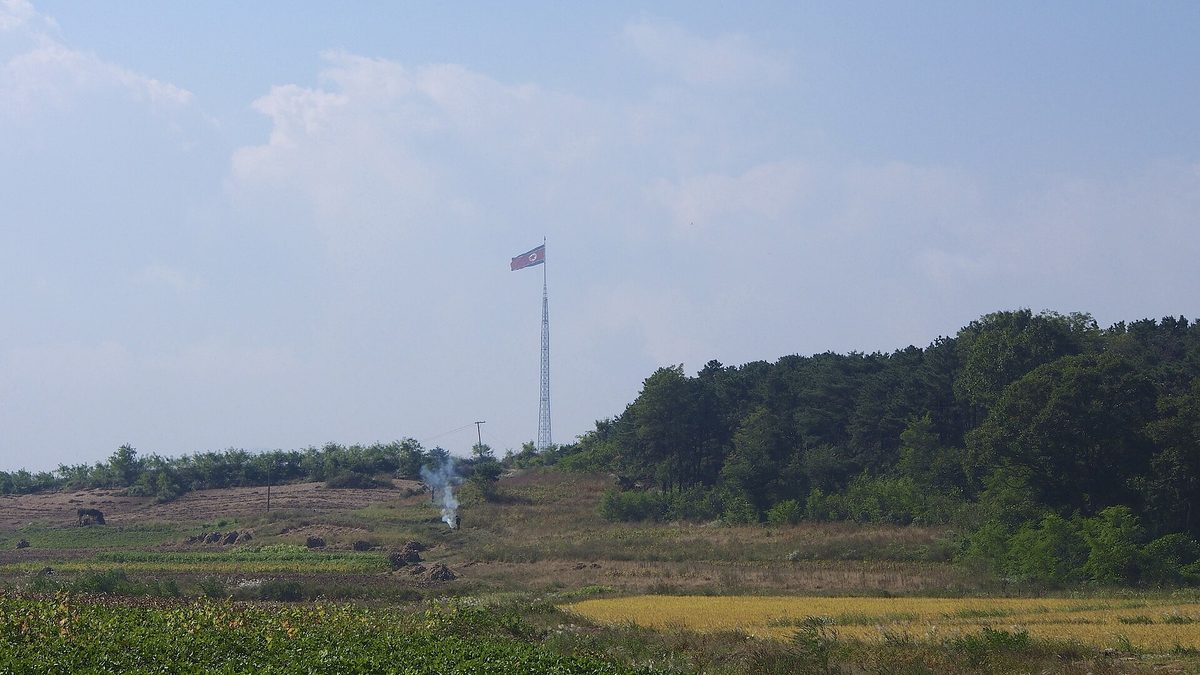
| Dora Observatory | Viewing deck facing North Korea | Binoculars toward North Korean villages and hills; photo rules set by the military |
| Dorasan Station | Railway station built for an inter-Korean line | A real station with a sign pointing to Pyongyang; trains to the North don’t run |
| DMZ Theater and Exhibition Hall | Short film and displays near the tunnel | Context on the war and the zone, useful if your guide is brief |
The Third Tunnel: is it hard to walk?
It’s the most physical part of the day. The access slope is long and steep, and the walk back up is the tiring bit. Inside, the tunnel is narrow and tall people will bend. If you have knee, heart or mobility problems, ask the operator whether the train option is running that day. Lockers are usually provided because cameras and phones can’t be used inside.
Dora Observatory: what can you actually see?
On a clear day you look across farmland and hills into North Korea, often including a village built close to the border and, further away, the outskirts of the city of Kaesong. Haze is common, so manage expectations. Visibility is usually better on crisp autumn and winter days than in humid summer. There’s a marked line on the deck, and photography beyond it may be restricted. Follow the soldiers’ instructions without arguing.
Can you visit the JSA and Panmunjom right now?
This is the question foreigners ask most, and the honest answer is that it depends on the month. JSA visits have been suspended several times in recent years, including during an animal-disease outbreak in 2019, through the pandemic, and again after a security incident in 2023. Each reopening has been announced separately, often with new rules.
Before you book, check two things. Is the JSA currently accepting civilian visitors? And is the tour you’re looking at a genuine JSA visit, or a regular DMZ tour that just uses the word “Panmunjom” in its marketing? Look for a clear statement from the operator on what happens if the JSA portion is cancelled: a refund, a partial refund, or a swap to standard DMZ stops.
When JSA tours have run, they came with stricter conditions than a regular DMZ trip: much earlier booking, a minimum age, a dress code, and a signed declaration acknowledging the risks of entering a hostile area. Expect something similar whenever it reopens, and check the current rules on the official notice rather than an old blog post.
Passport, booking and ID rules for the DMZ
What ID do foreigners need?
Your original, valid passport. A photo on your phone, a photocopy or a driver’s license won’t get you through the checkpoint. Foreign residents in Korea usually use an Alien Registration Card instead, but confirm that with the operator first. Korean citizens on the same bus need their national ID.
How far ahead should you book?
For a standard DMZ tour, several days is a safe minimum, and more for weekends, Korean public holidays and peak autumn weeks. Operators submit passenger lists in advance, so same-day bookings rarely work. If the details you enter don’t match your passport exactly, a swapped first and last name for example, you can be turned back at the checkpoint. Copy them straight off the photo page.
Are there nationality restrictions?
Some nationalities have historically faced extra conditions or exclusions for specific sites, especially the JSA. If your passport is from a country with complicated ties to either Korea, ask the operator directly before paying. Don’t assume.
Half-day vs full-day DMZ tour: which to pick
For most first-timers a half-day tour is enough. You get the tunnel, the observatory and the station, and you’re back in Seoul in time for the afternoon. Pick a full day if you want slower pacing or an extra area, or if the operator is bundling something like a JSA slot or a second border region.
| Option | Best for | Trade-off |
|---|---|---|
| Half-day DMZ tour | First visit, tight schedules, families | Fast pace, little free time at each stop |
| Full-day DMZ tour | History fans, photographers, slower travelers | Long day on a bus; check what the extra hours actually add |
| JSA-inclusive tour (when available) | People who want to stand on the border itself | Earliest booking, strictest rules, highest cancellation risk |
| Imjingak on your own | Budget travelers, people without passport access that day | You stay outside the restricted zone; no tunnel or observatory |
Here’s a worked example. Say you have five days in Seoul and land with your passport in your bag. Book a half-day DMZ tour for day two or three, a weekday if possible, so a sudden closure still leaves you a fallback date. Then do a palace and a hanbok rental in the afternoon, since half-day tours usually get you back to central Seoul with daylight to spare.
Can you visit the DMZ without a tour?
Partly. Imjingak is outside the Civilian Control Line, so you can reach it on your own by train from Seoul on the Gyeongui-Jungang line toward Munsan, then transfer onward. There you’ll see the Freedom Bridge, the memorials and the views over the Imjin River. You can’t walk on into the Third Tunnel or Dora Observatory without an organized, pre-screened visit.
The South Korean government also runs the DMZ Peace Trail, guided walking and vehicle routes in several border regions that open on a reservation basis. Routes, dates and eligibility for foreigners change, so check the official reservation page and the Korea Tourism Organization’s VisitKorea site for what’s open. Another option is Odusan Unification Observatory in Gimpo, a viewing point over the river toward the North, which has generally been easier to reach independently. Check whether it’s open before you go.
Common mistakes foreigners make on a DMZ tour from Seoul
- Leaving the passport at the hotel. This is the number one reason people get turned away at the checkpoint.
- Booking the last day of the trip. If the tour is cancelled for security reasons, you have no second chance. Go early in your stay.
- Assuming “Panmunjom” in the title means the JSA. Read the itinerary line by line.
- Underestimating the tunnel climb. Wear real shoes. Sandals and heels make the slope miserable.
- Treating it like a theme park. Soldiers on duty are not photo props. Pointing, waving across the border or posing near military gear can get you warned or removed.
- Ignoring the weather. The area is open and windy, and noticeably colder than central Seoul in winter. Pack a layer.
Rules on photos, dress and behavior at the DMZ
Photography rules change by site and are enforced by the military. Inside the Third Tunnel, cameras are banned. At Dora Observatory there’s usually a marked photo line. At checkpoints, don’t photograph soldiers, vehicles or installations unless your guide says it’s fine. If someone in uniform asks you to delete a picture, do it.
For standard DMZ tours, dress is relaxed: comfortable, weather-appropriate clothing works. JSA visits have historically required neater clothing, with no ripped jeans, flip-flops or revealing outfits, because you’re entering an area under military command and in view of the other side. Follow whatever your operator lists for your date.
Curious about the leadership on the other side of the line you’re looking at? Our profile Who Is Kim Jong Un? covers the background without the hype.
FAQ
Is a DMZ tour from Seoul safe?
Tours run inside a tightly controlled, heavily guarded area. Visitors follow fixed routes under guidance, and the authorities close sites when they judge conditions unsafe. That’s exactly why sudden cancellations happen. Follow the guide and the soldiers’ instructions at all times.
How long does a DMZ tour from Seoul take?
Half-day tours usually take a morning or an afternoon including travel, and full-day tours take most of the day. The drive each way to the Paju area is about an hour, depending on traffic and pickup points. Check the exact schedule on your operator’s booking page.
Can children go on a DMZ tour?
Standard DMZ tours generally accept children, though the Third Tunnel slope is tough for small kids. JSA visits have historically had a minimum age. Confirm the current age rules with the operator before booking.
Do I need to speak Korean?
No. Tours aimed at foreigners run with English-speaking guides, and some operators offer Chinese, Japanese or other languages. Signs at the main sites usually include English.
Can I see North Korean soldiers?
On a standard DMZ tour you’re several kilometers back and will mostly see farmland, hills, villages and guard posts through binoculars. Close views of North Korean soldiers were only realistic at the JSA, and only when it was open to visitors.
When is the best time of year to visit the DMZ?
Autumn is popular for clear air and good views from the observatory. Winter is also clear but cold and windy. Summer haze and rain can cut visibility a lot, so in July and August, booking a weekday early in your trip gives you a backup date.
What to plan next before you book
Start by deciding whether you need the JSA or whether the observatory-and-tunnel tour covers what you want. Then check the JSA’s current status and the latest site notices, pick a weekday early in your stay, and book with a licensed operator using details copied straight from your passport. Put the passport in your day bag the night before.
If you have spare time afterward, get the context first. Read up on how the two Koreas diverged before you stand at the observatory, and the view over the river will mean a lot more than a hazy line of hills.
Related reading
Sources k-korea.blog
Prices, opening hours and availability change. Check the official page before you buy or travel.