13 min read
More than 30,000 North Korean defectors have reached South Korea, most of them via China. The usual path runs across a border river into China, through China to a third country, then to Seoul for security screening and 12 weeks at Hanawon (하나원), the government’s resettlement school, before a new life in a country that shares their language but very little else.
This guide explains the escape routes in general terms, what support defectors actually get, where they struggle, whose stories are worth reading and how you can help from wherever you live.
Key takeaways
- China is the first stop for most escapes, but Beijing treats North Koreans as illegal migrants and sends many back, so the journey usually continues to a third country.
- South Korea’s constitution counts North Koreans as its own citizens, so defectors who arrive get citizenship after security screening and a 12-week course at Hanawon.
- Roughly 7 in 10 defectors who reach the South are women, many of whom spent years in China first.
- Arrivals fell sharply after North Korea sealed its borders in 2020; the Ministry of Unification publishes the current figures.
How do North Korean defectors escape?
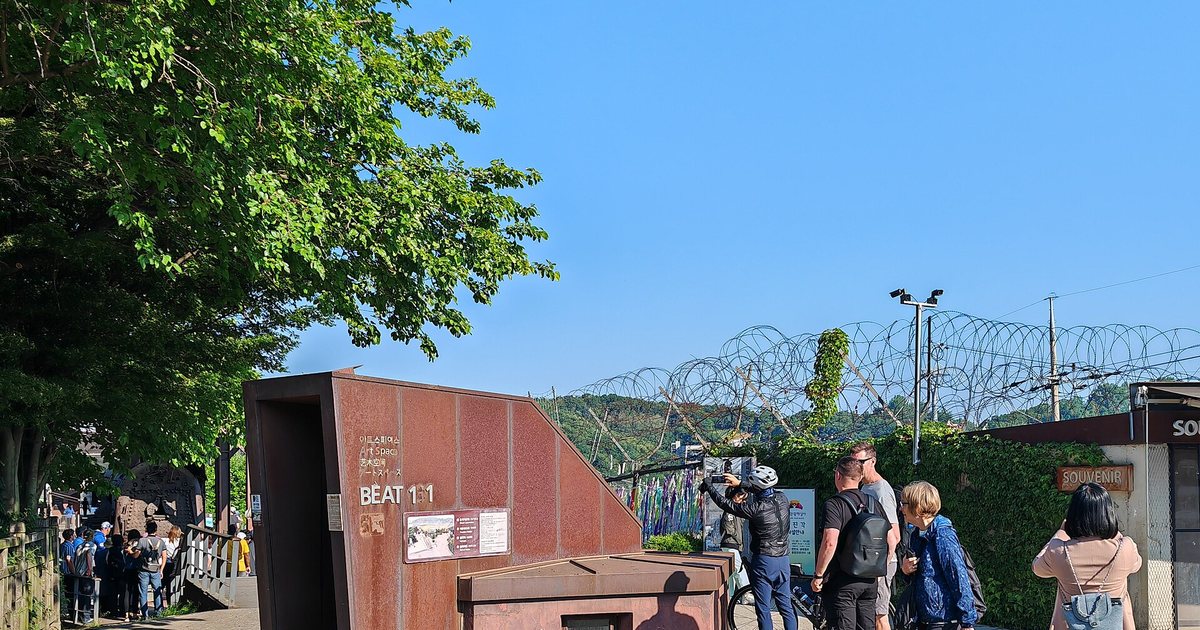
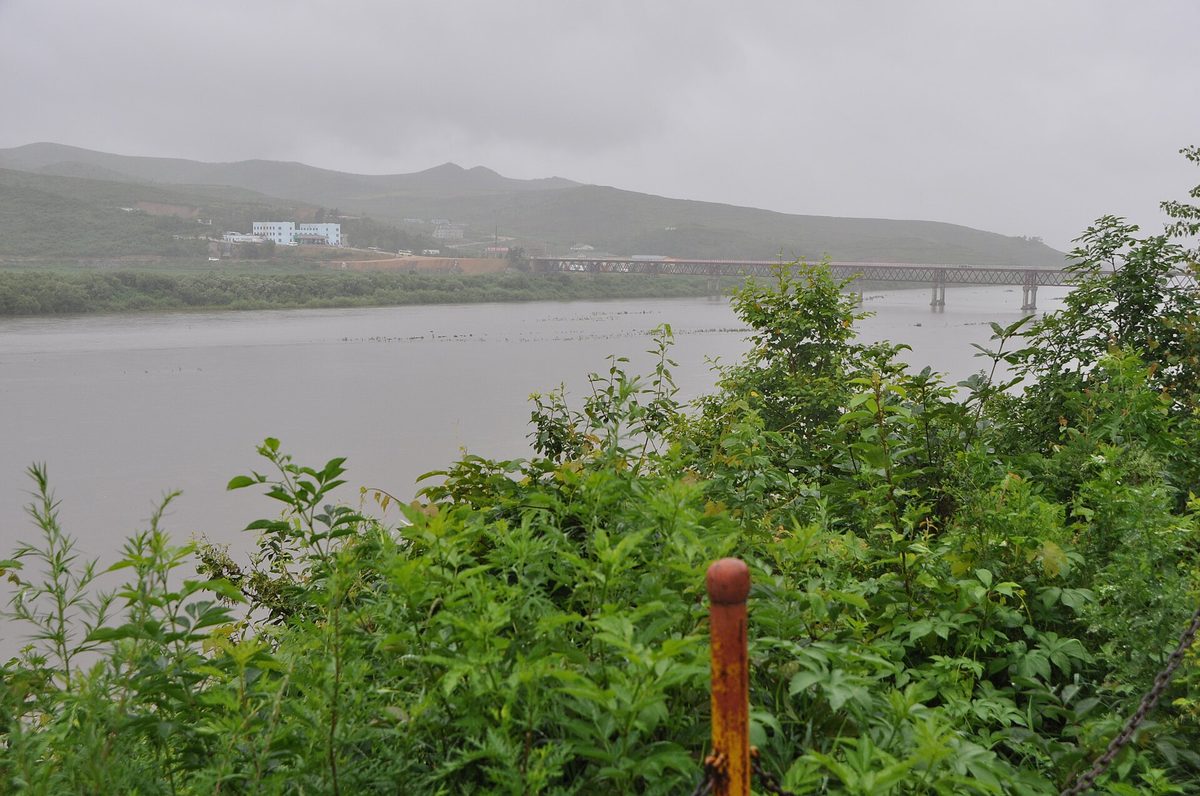
Most North Korean defectors leave on foot, across the northern border, not across the heavily mined Demilitarized Zone (DMZ, the 4 km-wide buffer strip that has split the peninsula since the 1953 armistice). The northern border with China follows two rivers, the Tumen (두만강) in the northeast and the Yalu (압록강) in the northwest. In winter parts of the Tumen freeze, and in places it is shallow enough to wade.
We describe these routes only in general terms. Specific crossing points, broker networks and methods change constantly, and publishing them helps border guards more than it helps anyone escaping.
Why China is the first stop, and why it is not the last
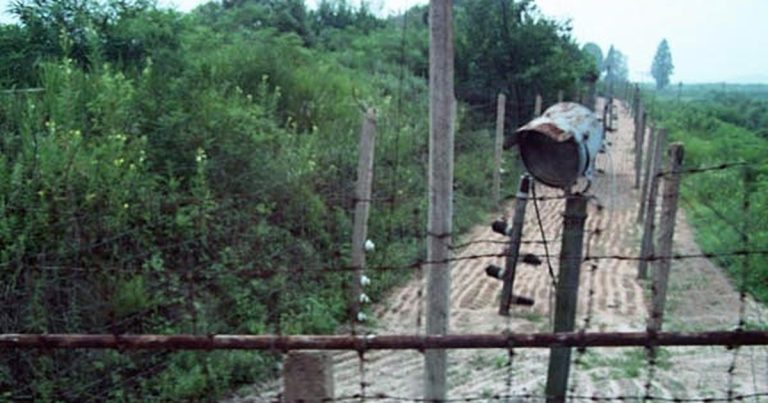
China is the only realistic land exit for most people. It is also dangerous. Beijing classifies North Koreans who cross without papers as illegal economic migrants rather than refugees, and under a border agreement with Pyongyang dating to 1986 it returns many of those it catches. People sent back face interrogation and detention, and repeat or “political” cases can be sent to prison camps, according to the 2014 report of the UN Commission of Inquiry on human rights in North Korea.
That is why few defectors try to stay in China. Without legal status they cannot work openly, rent a home, see a doctor or report a crime. Women are especially exposed: many have been trafficked into forced marriages or exploitative work, sometimes for years, before they find a way out.
How the journey continues to a third country
The common pattern is to travel the length of China, usually with a broker (a paid smuggler or guide), into Southeast Asia, then reach a country that will let them go on to South Korea. Thailand has been the best-known end point of this route: defectors who reach it are typically held for illegal entry and then transferred to South Korea. Mongolia was also used in earlier years, via the Gobi Desert. Brokers are expensive, and many defectors arrive in Seoul already owing money for their own escape.
Other routes: sea, the DMZ and people already abroad
A small number come by boat across the maritime border. Fewer still cross the DMZ itself, usually soldiers who know the terrain, and the risk of mines and gunfire is extreme. A third group never crosses a border at all: diplomats, overseas workers and students who are already abroad and ask a South Korean embassy or the host government for protection. Thae Yong-ho, a former deputy ambassador in London, left this way in 2016.
| Route | How it works (in general) | Main danger |
|---|---|---|
| River crossing into China | Across the Tumen or Yalu, then hiding in northeast China | Arrest by Chinese police and forced return |
| China to Southeast Asia | Overland through China with a broker, toward Thailand | Checkpoints, detention, long and costly journey |
| China to Mongolia | Across the border desert (used more in earlier years) | Harsh terrain, getting lost, capture |
| By sea | Small boats across the maritime boundary | Weather, patrols, rough seas |
| Across the DMZ | Rare; mostly soldiers | Mines, guards on both sides |
| From abroad | Diplomats or workers seek protection where they are posted | Consequences for family left in the North |
Why North Koreans leave in the first place
The first large wave followed the famine of the mid-1990s, which North Korea calls the Arduous March (고난의 행군). The state food distribution system collapsed, and hundreds of thousands of people crossed into China simply to find food. Many went back and forth; some never returned.
Over time, the reasons widened. Defectors describe fear of punishment for watching South Korean dramas, a family member already in the South who could fund a broker, the songbun system (성분, an inherited loyalty ranking that limits jobs and schooling for families labelled unreliable), or the simple wish for a future for their children. For elite defectors, it is often fear of a purge, or of being recalled home.
Information matters too. Smuggled USB sticks and SD cards carrying South Korean shows have given many North Koreans a picture of life outside, and defectors often say this shaped their decision. If you want the political background on who rules the country and how, our explainer on the Kim family and the passing of power across 3 rulers covers it.
What happens when North Korean defectors arrive in South Korea
South Korea’s constitution claims the whole peninsula, so in law a North Korean is already a South Korean citizen. That single fact shapes everything that follows: there is no asylum application in the usual sense. The state instead runs a fixed process, set out in a 1997 law on the protection and settlement of North Korean defectors (officially 북한이탈주민, “residents who escaped North Korea”; you will also hear 탈북자, talbukja, and 새터민, saeteomin, “people of new land”).
Step 1: security screening
On arrival, defectors are questioned by the National Intelligence Service (NIS, South Korea’s spy agency) at a protection facility. The aim is to confirm they really are from the North, check they are not agents sent by Pyongyang, and gather information. Screening often lasts weeks and can run longer for complicated cases. Human rights groups have criticised parts of this stage in the past, particularly the length of detention, and the system has been revised over the years.
Step 2: 12 weeks at Hanawon
Hanawon, the Settlement Support Center for North Korean Refugees run by the Ministry of Unification (the South Korean ministry in charge of North Korea policy), opened in Anseong, south of Seoul, in 1999. The core program lasts 12 weeks. It covers the practical basics of a society most arrivals have never seen: how to open a bank account, use a credit card, read a lease, ride the subway, vote, apply for a job.
Language is part of it. Northerners and Southerners speak the same Korean, but decades apart have produced different vocabulary, and South Korean speech is full of English loanwords. Health checks, psychological counselling, job training and education about democracy and individual rights fill the rest. Children and teenagers get separate schooling to prepare for South Korean classrooms.
| Stage | Who runs it | What happens | How long |
|---|---|---|---|
| Request for protection | South Korean missions abroad and host governments | Defector asks for help and is moved to South Korea | Varies widely |
| Security screening | National Intelligence Service | Identity checks, questioning, screening for spies | Often several weeks |
| Hanawon | Ministry of Unification | Life skills, language, health care, job training | 12 weeks |
| Local resettlement | Hana Centers and local governments | Housing, registration, schooling, first job steps | First months |
| Protection period | Ministry of Unification, police protection officers | Ongoing support and safety check-ins | Generally 5 years |
What support do defectors get after Hanawon?
When the course ends, each defector receives citizenship documents and moves to a home, usually a public rental apartment assigned through the government. Support continues through regional Hana Centers, run with the Korea Hana Foundation (the state-backed foundation for defector resettlement), which help with paperwork, job searches and counselling in the first months.
The package has included settlement money, housing help, job training, incentives for employers who hire defectors, and support for university tuition and school fees. A police protection officer is assigned for the protection period, generally five years, partly to help and partly for safety, since some defectors are targets of surveillance or pressure from the North. Amounts and rules change, so for current details check the Ministry of Unification and Korea Hana Foundation official websites.
The hardest parts of life in South Korea for defectors
Arrival is not the end of the story. Surveys by the Korea Hana Foundation and South Korean researchers have for years shown defectors earning less and facing higher unemployment than the general population, though the gap has narrowed in some measures. The reasons are concrete.
Work and education gaps
North Korean diplomas and work experience rarely transfer. A doctor or teacher may have to retrain from scratch. Teenagers who lost years of school during the escape often end up in classes with much younger children, which is why alternative schools for defector youth, such as Yeomyung School in Seoul, exist alongside regular schools.
Accent, prejudice and loneliness
A northern accent marks someone immediately. Defectors describe being treated as poor relatives, asked intrusive questions about the North, or assumed to be less capable. Some hide where they are from, introducing themselves as being from a South Korean province or from China’s ethnic Korean community.
Trauma, debt and family left behind
Many carry trauma from famine, prison, trafficking or the escape itself. Broker debts take a bite from early income. Many also send money to relatives in the North through informal channels, which is costly and risky. A small number of defectors have even returned to the North, a reminder that resettlement does not always work.
The flip side is real: defectors now work as entrepreneurs, academics, YouTubers, nurses and lawmakers, and South Korean society has grown more familiar with them, helped by TV shows and dramas featuring northern characters.
Well-known North Korean defector voices to read and hear
Defector memoirs are how most of the world learned what happens inside North Korea. They are first-person testimonies, so read them as one person’s account and pair them with broader sources like the UN Commission of Inquiry report.
- Hyeonseo Lee: left in the late 1990s as a teenager, spent years in China and later guided her family out. Her 2013 TED talk and her memoir The Girl with Seven Names are among the most widely shared accounts.
- Yeonmi Park: escaped through China as a young teenager and reached South Korea via Mongolia. Her memoir In Order to Live brought her a global audience; some journalists have questioned details of her accounts, which she has disputed.
- Ji Seong-ho: lost a hand and a leg in a train accident during the famine and later escaped on crutches. He was elected to South Korea’s National Assembly in 2020.
- Thae Yong-ho: the former deputy ambassador in London who defected in 2016, and was also elected to the National Assembly in 2020. His view comes from inside the elite.
- Kang Chol-hwan: sent to the Yodok prison camp as a child; his memoir The Aquariums of Pyongyang was one of the first widely read camp accounts.
- Shin Dong-hyuk: subject of Blaine Harden’s book Escape from Camp 14. He later revised parts of his story, a case often cited on how hard it is to verify testimony from a closed country.
For film, Beyond Utopia (2023) follows a real family’s escape through China and Southeast Asia with a South Korean pastor who helps defectors, and shows the route more honestly than any summary can.

North Korean defectors: what we know and what we don’t
What we know
The Ministry of Unification counts more than 30,000 arrivals in total, with women making up roughly 70 percent. Annual arrivals peaked in the late 2000s and early 2010s, then dropped as North Korea and China tightened border security, and fell much further after Pyongyang sealed its borders in 2020 during the Covid-19 pandemic. Defectors remain an important source on the country: according to NPR, many defectors see Kim Jong Un’s daughter as his heir apparent.
What we don’t know
Nobody knows how many North Koreans live hidden in China; estimates vary widely. How many are caught and returned each year, and what happens to each of them, is mostly known only from survivor testimony. Whether border controls will loosen again, and whether arrival numbers recover, is an open question.
| When | What happened |
|---|---|
| Mid-1990s | Famine (the “Arduous March”) drives the first mass crossings into China |
| 1997 | South Korea passes its law on protection and settlement support for defectors |
| 1999 | Hanawon opens in Anseong |
| 2004 | The US North Korean Human Rights Act allows North Korean refugees to resettle in the United States |
| 2014 | The UN Commission of Inquiry reports crimes against humanity, built largely on defector testimony |
| 2020 | North Korea seals its borders during Covid-19; arrivals in the South drop sharply |
Can North Korean defectors live in the US, UK or elsewhere?
Yes, though in much smaller numbers. Since the 2004 US law, a small number of North Korean refugees have resettled in the United States through the refugee program. The UK has one of Europe’s best-known communities, centred on New Malden in southwest London, which already had a large South Korean population. Canada and several European countries have also taken in defectors.
One complication: because North Koreans can claim South Korean citizenship, some countries have rejected asylum claims from people who had already settled in the South. Rules differ by country, so anyone researching this should check the immigration authority of the country concerned and the UNHCR.
How to support North Korean defectors from abroad
You do not need to live in Seoul to help, and the most useful help is often unglamorous.
- Donate to established groups. Liberty in North Korea (LiNK), founded in 2004 and based in the US, funds rescues and resettlement support. Check any organisation’s official site and annual reports before giving.
- Tutor online. English is a major barrier to jobs and university in South Korea. Teach North Korean Refugees (TNKR) in Seoul matches defectors with volunteer tutors, including remote sessions; check their site for current requirements.
- Buy and share defectors’ own work. Books, talks and channels made by defectors pay them directly and put their own voices first.
- Contact your representatives. Forced returns from China are a policy question; governments respond to constituents who raise it.
- Be careful with stories. Do not circulate unverified escape details, names or photos, and treat dramatic viral claims with the same care you would any unconfirmed report.
If you are travelling and curious about the border itself, our guide to whether you can visit North Korea, with its 9 rules and real risks covers DMZ tours from Seoul and what they can and cannot show you.
FAQ
How many North Korean defectors live in South Korea?
The Ministry of Unification counts more than 30,000 arrivals since records began, the large majority since the late 1990s. About 70 percent are women. The ministry’s official site publishes updated totals and yearly arrivals.
Do North Korean defectors get South Korean citizenship?
Yes. South Korea’s constitution treats North Koreans as its citizens, so after security screening and Hanawon they receive full citizenship, including a resident registration number and the right to vote. People who turn out to be from China’s ethnic Korean community rather than the North are not eligible.
What is Hanawon?
Hanawon (하나원) is the government resettlement center run by the Ministry of Unification, opened in 1999 in Anseong. Defectors spend 12 weeks there learning how South Korean society works, from banking to job hunting, and receive health care and counselling.
Why don’t North Koreans just cross the DMZ?
The DMZ is one of the most heavily guarded borders on earth, with mines, fences and armed troops on both sides. Crossings are rare and mostly made by soldiers. For civilians, the northern border with China, though risky, is far more accessible.
Can defectors contact their families in North Korea?
Not openly. Some use smuggled Chinese mobile phones near the border and informal brokers to send money, which is expensive and dangerous for relatives. This is one reason many defectors avoid being identified in public.
How can I help North Korean defectors?
Give to established organisations such as Liberty in North Korea, volunteer as an English tutor through groups like Teach North Korean Refugees, and support books and channels made by defectors themselves. Respect their privacy above all.
What to read, watch and follow next
Start with one memoir, The Girl with Seven Names or The Aquariums of Pyongyang, then watch Beyond Utopia to see the route in real footage. Read the summary of the 2014 UN Commission of Inquiry report for the wider human rights picture, and our explainer on why the 1953 truce never became peace for the history behind the divided border. For numbers, follow the Ministry of Unification’s yearly arrival figures: they are the clearest sign of whether the routes out are opening or closing again.
Related reading
Sources k-korea.blog · news.google.com
Prices, opening hours and availability change. Check the official page before you buy or travel.