14 min read
Korean New Year, or Seollal (설날), is a 3-day holiday built around the first day of the lunar year. Families gather in their hometowns, bow to their elders, share a bowl of tteokguk (rice cake soup) and play yut nori, a stick-throwing board game.
The date moves every year because it follows the lunar calendar, so it usually lands somewhere between late January and mid-February. If you’re traveling, studying or working in Korea, it’s the one week where trains sell out, many restaurants close and Seoul goes strangely quiet.
Key takeaways
- Seollal is the day before, the day of, and the day after the lunar new year, so you get 3 public holidays, plus a substitute day when the dates overlap a Sunday.
- The sebae bow earns children sebaetdon, crisp cash handed over in an envelope, along with a few words of advice from elders.
- One bowl of tteokguk traditionally made you one year older, which is why Koreans still joke about “eating a year” at New Year.
- Intercity trains and buses fill up weeks ahead, so book early or travel on the holiday itself when roads are quieter.
When is Korean New Year, and why does the date move?
Seollal falls on the first day of the first month of the lunar calendar, the same day the Chinese, Vietnamese and other East Asian communities celebrate their own Lunar New Year. Because a lunar month is about 29.5 days, the date drifts against the Western calendar, generally falling between late January and mid-February.
The official holiday covers three days: the eve (설 전날), Seollal itself and the day after. Since 2014, South Korea has added a substitute holiday when one of those days lands on a Sunday, so some years stretch into a longer break. For the exact dates in the year you plan to visit, check the Korean government’s public holiday calendar or the Korea Tourism Organization’s official site, VisitKorea.
Koreans also mark January 1 (신정, sinjeong), but quietly: people watch the bell-ringing at Bosingak in Seoul at midnight and see the first sunrise on the east coast. The big family holiday is the lunar one, called gujeong (구정, “old new year”) by older people.
Seollal vs Chuseok vs Chinese New Year
Foreigners often mix up Korea’s two biggest holidays. Here’s how they compare.
| Holiday | When | Signature food | Main customs | Feel |
|---|---|---|---|---|
| Seollal (설날), Korean New Year | 1st day of the 1st lunar month (late Jan to mid-Feb) | Tteokguk (rice cake soup), mandu, jeon | Sebae bows, charye rite, yut nori, New Year money | Winter, family, starting fresh |
| Chuseok (추석), Korean harvest festival | 15th day of the 8th lunar month (Sept to early Oct) | Songpyeon (half-moon rice cakes) | Charye rite, tidying ancestors’ graves (beolcho) | Autumn, gratitude for the harvest |
| Chinese New Year (Spring Festival) | Same lunar new year date | Dumplings, fish, sticky rice cake (nian gao) | Red envelopes, fireworks, lion dances | Loud, public, red and gold |
The practical difference for a visitor: Korean New Year is mostly a private, at-home holiday. You won’t see fireworks or parades in most neighborhoods. The action happens in living rooms.
What Koreans actually do on Seollal, day by day
The 3-day pattern is remarkably consistent across families, even as the details get simpler with each generation.
The eve: travel and cooking
Most people head to the paternal grandparents’ home, often hours away. Once there, the kitchen takes over. Families fry trays of jeon (전, savory pancakes dipped in egg and flour), fold mandu (dumplings) and prepare dishes for the ancestral table. Folklore says if you fall asleep on New Year’s Eve, your eyebrows turn white, so kids were once kept awake by teasing relatives. It sits alongside the other beliefs in our guide to Korean superstitions.
The day: rites, bows and soup
Morning starts with charye, the ancestral rite, for families that still hold it. Then comes sebae, the deep New Year bow to living elders, followed by breakfast centered on tteokguk. Many families then visit ancestral graves (성묘, seongmyo) or relatives nearby. Afternoons are for yut nori, card games like go-stop played with hwatu cards, long naps and too much fruit.
The day after: heading home
The last day is the return trip, with roads and trains at their busiest. Some couples split the holiday, spending the eve with one side of the family and the rest with the other.
Gifts move in both directions before the holiday. Supermarkets stack “gift sets” (선물세트) of fruit, hanwoo (Korean beef), dried fish, cooking oils, shampoo bundles and the famously popular canned ham sets. It sounds odd to outsiders. In Korea, a tin of Spam in a gift box is a perfectly respectable thank-you.
How to do sebae, the Korean New Year bow
Sebae (세배) is a full kneeling bow given to parents, grandparents and other elders on the morning of Seollal. It is the emotional center of the holiday, and if you’re a guest in a Korean home, you may be invited to join.
- Line up by age. Elders sit on the floor or a sofa, side by side. Younger family members bow in order, oldest first, often as couples or siblings.
- Place your hands. Men usually put the left hand over the right; women the right over the left. Raise them to forehead height.
- Kneel and bow. Lower yourself to your knees, then bend forward until your forehead nears your hands on the floor. Women often use a slightly different, seated form of the bow in hanbok.
- Rise and say the greeting. Stand, bow your head slightly and say “saehae bok mani badeuseyo” (새해 복 많이 받으세요), roughly “please receive lots of luck in the new year.”
- Sit and listen. Elders reply with deokdam (덕담), short words of encouragement: study hard, stay healthy, get a good job.
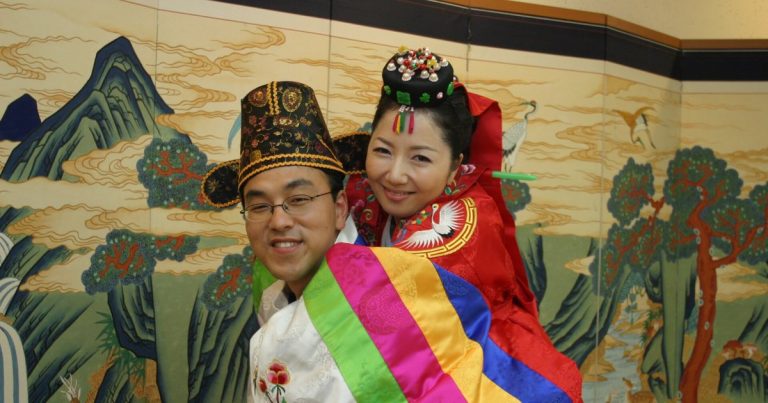
Some families wear hanbok for the bow. Others wear seolbim (설빔), simply new or neat clothes for the new year. Our guide to modern hanbok shows how Koreans dress for occasions like this today.
Sebaetdon: the New Year money
After the bow, children and unmarried young adults receive sebaetdon (세뱃돈), cash usually in a small paper envelope. Adults often withdraw new, uncreased bills from the bank before the holiday for this. The amount depends entirely on the family and the child’s age, and there’s no fixed rule, so don’t believe any “standard rate” you read online.
One etiquette point catches foreigners out: receive the envelope with both hands, and don’t open it in front of the giver. Once adult children start earning, the flow often reverses, and they give money to their parents.
Why Koreans eat tteokguk on Korean New Year
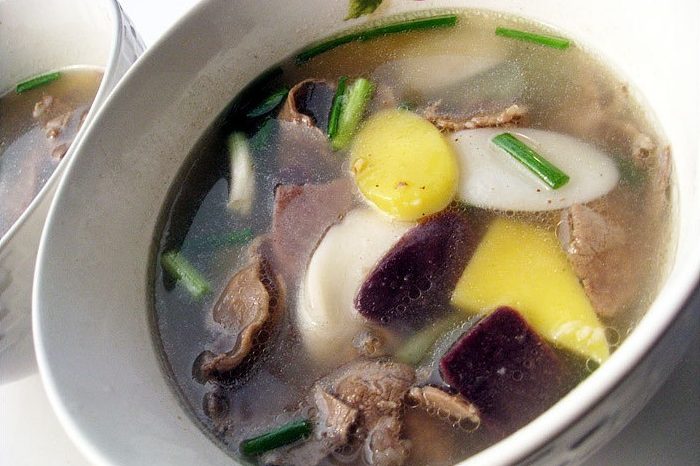
Tteokguk (떡국) is a clear, mild soup of sliced white rice cakes, and it’s the one dish nearly every Korean household eats on Seollal morning. The meaning is layered into the ingredients.
- White rice cakes stand for a clean, fresh start to the year.
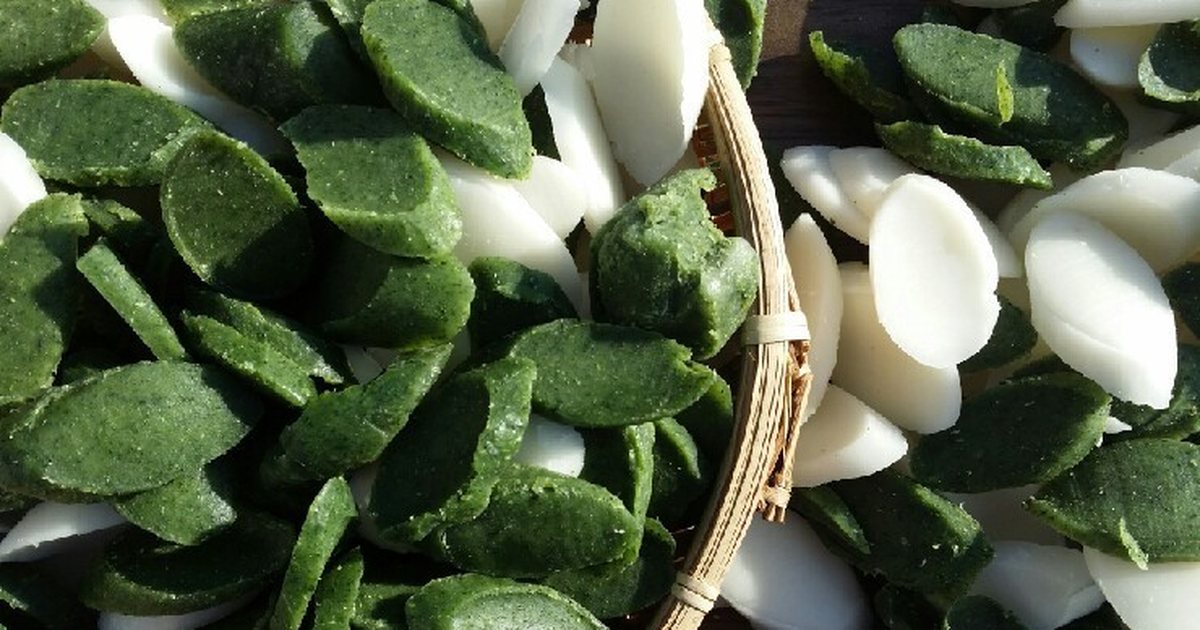
- Long garaetteok (가래떡, cylinder rice cake) symbolizes a long life before it’s sliced.
- Diagonal coin-shaped slices are said to resemble old coins, a wish for prosperity.
Then there’s age. Under traditional Korean age counting, everyone got a year older together at New Year, so eating your bowl of tteokguk meant “eating a year” (나이를 먹다). Children used to ask for a second bowl to grow up faster. South Korea standardized international age for legal and official purposes in 2023, but the tteokguk joke is still alive at every family table.
Regional versions
Beef brisket broth is the standard in Seoul and much of the country. Coastal homes may use anchovy or oyster broth. Families with roots in the north often make tteok-manduguk, adding dumplings to the soup. In parts of Gaeseong tradition, people use joraengi-tteok, small rice cakes pinched into a snowman shape.
How to make Tteokguk (떡국) at home
- 500 g sliced rice cakes for soup (tteokguk-tteok)
- 200 g beef brisket or beef for soup, thinly sliced
- 10 cups water
- 1 tbsp sesame oil
- 2 cloves garlic, minced
- 2 tbsp Korean soup soy sauce (guk-ganjang)
- Salt and black pepper, to taste
- 2 eggs
- 1 green onion, sliced on the diagonal
- 1 sheet roasted seaweed (gim), crumbled
- Rinse the rice cakes and soak them in cold water for about 30 minutes if they are hard or frozen.
- Heat sesame oil in a pot, add the beef and garlic, and stir until the meat is no longer pink. Add the water and simmer for about 20 minutes, skimming off any foam.
- While the broth simmers, separate the eggs. Fry yolks and whites separately as thin sheets in a lightly oiled pan, then slice into thin strips (jidan).
- Season the broth with soup soy sauce and salt. Drain the rice cakes, add them to the pot and boil for 3 to 5 minutes, just until they float and turn soft.
- Add the green onion, cook for 30 seconds, then ladle into bowls. Top with egg strips, crumbled gim and a pinch of black pepper.
Substitutions if you live outside Korea
Korean grocery chains such as H Mart, as well as many Asian supermarkets, sell sliced rice cakes in the refrigerated or frozen section. Look for packs labeled “rice cake for soup” or 떡국떡, not the thick cylinders meant for tteokbokki. Japanese mochi won’t work: it melts into goo. If you can’t find soup soy sauce, use regular soy sauce in a smaller amount, because guk-ganjang is saltier and lighter in color. Chicken stock or an anchovy-kelp broth is a fine stand-in for beef.
What is charye? The ancestral table explained
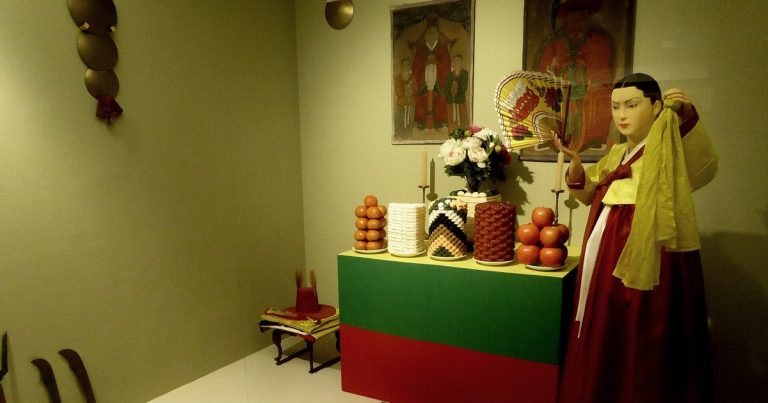
Charye (차례) is a morning rite held on Seollal and Chuseok to honor family ancestors, rooted in Joseon-era Confucian practice. It’s different from jesa (제사), which is held on the anniversary of a specific ancestor’s death.
How the table is laid out
Food is arranged in rows following traditional rules that vary by region and family. A few well-known ones:
- Hongdong baekseo (홍동백서): red fruits to the east, white to the west.
- Jo-yul-i-si (조율이시): jujubes, chestnuts, pears and persimmons placed in that order from the left.
- Eodong yukseo (어동육서): fish to the east, meat to the west.
A paper tablet called jibang (지방) or a photo stands in for the ancestors. Family members, traditionally the men of the paternal line, pour rice wine and bow twice. Afterward everyone shares the food, a step called eumbok (음복), believed to bring the ancestors’ blessing.
How Koreans do it now
Charye is shrinking, and openly so. Many families cut the table down to a few dishes, hold it only for Chuseok, or replace it with a short memorial and a family meal. Christian households often hold a prayer service instead.
In 2022, Sungkyunkwan, the Confucian institution that oversees traditional rites, issued a simplified guideline that said fried jeon isn’t required on the table, a move widely read as permission to ease the cooking load that has long fallen on women in the family. If you’re a guest, you’ll simply be asked to watch or join the bow. Follow whatever the family does.
How to play yut nori, the Seollal board game
Yut nori (윷놀이) is the game you’ll see in every living room and at every folk village event over Korean New Year. It’s a race game for two teams, and the rules fit in a minute.
- Set up. Draw or unfold the board (윷판), a square with a cross through it and 29 stations. Each team gets 4 tokens, called mal (말).
- Throw the sticks. Toss 4 wooden sticks, each flat on one side and rounded on the other. Count how many land flat side up.
- Move. One flat side is do (도, pig, 1 space), two is gae (개, dog, 2), three is geol (걸, sheep, 3), four is yut (윷, cow, 4), and none flat (all rounded up) is mo (모, horse, 5).
- Earn extra throws. A yut or mo gives you another throw. So does landing on an opponent’s token, which sends it back to the start.
- Take shortcuts and stack. Landing exactly on a corner or the center lets you cut diagonally across the board. Land on your own token and you can carry them together (업기, eopgi), which is fast but risky.
- Win. The first team to bring all 4 tokens home wins.
Many sets mark one stick on the flat side. If that stick alone lands flat, it’s back-do (빽도), and you move one space backward. Families add house rules freely, so agree on them before anyone throws.
Other games of the season
In folk villages and palace events you may also see yeonnalligi (kite flying), jegichagi (kicking a feathered shuttlecock, a bit like hacky sack) and neolttwigi, a standing seesaw where two people jump each other into the air.
Korean New Year greetings to say (and when)
You only need one phrase to get through Seollal politely, but a few more will impress coworkers and shopkeepers in the days before the holiday.
| English | Korean | Romanization | When to use it |
|---|---|---|---|
| Happy New Year (receive lots of luck) | 새해 복 많이 받으세요 | saehae bok mani badeuseyo | Polite. The all-purpose greeting, said during sebae and to anyone older or unfamiliar |
| Happy New Year (casual) | 새해 복 많이 받아 | saehae bok mani bada | Casual. Close friends or people younger than you |
| Have a good Seollal | 설 잘 보내세요 | seol jal bonaeseyo | Polite. Before the holiday, to coworkers, neighbors, shop staff |
| Have a good holiday | 명절 잘 보내세요 | myeongjeol jal bonaeseyo | Polite. Works for both Seollal and Chuseok |
| Please stay healthy | 건강하세요 | geonganghaseyo | Polite. A warm add-on for grandparents and elders |
| May all your wishes come true | 소원 성취하세요 | sowon seongchwihaseyo | Polite. Often written on cards and messages |
| Thank you | 감사합니다 | gamsahamnida | Polite. When you receive sebaetdon or a gift, with both hands |
KakaoTalk, Korea’s main messaging app, fills with New Year stickers and greeting images in the days around the holiday. Sending your Korean friends a simple “새해 복 많이 받으세요” goes a long way.
Traveling in Korea during Korean New Year: the holiday rush
Koreans call the holiday exodus minjok dae-idong (민족 대이동), “the great migration of the people.” Millions head out of Seoul on the eve and come back on the final day. For a visitor, that has three practical effects.
Trains, buses and roads
KTX and other Korail trains for the holiday go on sale in advance and popular routes sell out quickly. Korail’s official website and app (Korail Talk) post the holiday booking schedule, and foreign visitors can book there too. Express buses fill up as well. Highways jam badly on the eve and the last day, and the government has in recent years often waived expressway tolls over the holiday, so check current policy before you drive. Our list of the best apps for Korea travel covers the train, map and taxi apps you’ll want installed.
What’s open and what’s closed
On the eve and the day after, much of Seoul runs close to normal. On Seollal day itself, many family-run restaurants, traditional markets and small shops close. Convenience stores, chain cafes and fast-food outlets, plus places in tourist districts like Myeongdong, are more likely to stay open. Large supermarkets and department stores often close on the main day.
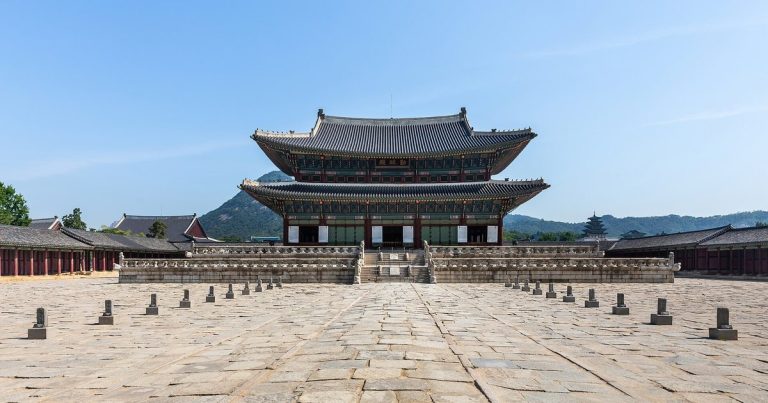
Palaces such as Gyeongbokgung and museums such as the National Folk Museum of Korea typically hold Seollal programs with yut nori, kite making and folk performances, and some heritage sites have offered free entry on the holiday in past years. Opening days change, so check each venue’s official page before you go. Hospitals keep emergency rooms running, and local authorities publish lists of pharmacies open during the holiday.
The upside: an empty Seoul
With half the city away, Seoul’s roads, subways and usually crowded cafes are unusually calm on Seollal day. It’s a good time to walk palace grounds in the winter air, or join a folk event where locals bring their kids.
FAQ
Is Korean New Year the same as Chinese New Year?
They fall on the same date, because both follow the lunar calendar, but the customs are different. Korea’s Seollal centers on the sebae bow, tteokguk and ancestral rites at home, while Chinese celebrations are known for red envelopes, fireworks and public festivities. Many Koreans prefer the term “Lunar New Year” over “Chinese New Year” for this reason.
How long is the Korean New Year holiday?
Three days: the eve, Seollal itself and the day after. If one of those days falls on a Sunday, a substitute holiday is added, and when the holiday sits next to a weekend, the break can run five days or more. Check the official public holiday calendar for the year you’re interested in.
What do you say on Korean New Year?
Say “saehae bok mani badeuseyo” (새해 복 많이 받으세요), meaning “please receive lots of luck in the new year.” It’s polite enough for anyone. Before the holiday, “seol jal bonaeseyo” (have a good Seollal) is the natural way to say goodbye to coworkers.
How much sebaetdon do Koreans give?
There’s no official amount. It varies by family, region, income and the child’s age, with older kids generally getting more. If you’re a foreign guest, you’re not expected to hand out money unless you’re close to the family, and a small gift for the hosts is always welcome.
Is it a good idea to visit Korea during Seollal?
Yes, if you plan around it. You’ll see folk events at palaces and museums and enjoy a quiet capital, but expect sold-out trains and some closed restaurants on the main day. Stay in one city for the holiday itself and move between cities before or after.
Do Koreans still get a year older on New Year?
Not legally. South Korea adopted international age for official purposes in 2023, so your age now changes on your birthday. Socially, the old habit lingers, and people still joke that a bowl of tteokguk makes you one year older.
What to plan next for Seollal
Start by checking the lunar new year date for the year you care about on an official holiday calendar, because that one date decides everything else. If you’ll be in Korea, book trains on Korail as soon as holiday sales open, and save the palace and museum pages to see which Seollal programs they announce.
If you’re celebrating abroad, the easiest way in is the food: buy a pack of sliced rice cakes at a Korean grocery, make a pot of tteokguk, print a yut nori board and learn the one greeting that matters. Then try the bow on someone who’ll appreciate it.
Related reading
Sources k-korea.blog
Prices, opening hours and availability change. Check the official page before you buy or travel.