
13 min read
Personal color analysis Seoul studios offer usually takes 1 to 2 hours and places you in one of 4 seasons: spring warm, summer cool, autumn warm or winter cool. A consultant holds dozens of colored fabric drapes under your face in controlled light, watches what each one does to your skin, then hands you a palette for makeup, hair and clothes.
It matters because Korea’s beauty industry speaks this language fluently. Once you know your type, you can walk into Olive Young, read the shade tags and Korean reviews, and stop buying lipsticks that look great in the tube and wrong on your face.
Key takeaways
- Korean studios sort you into 4 seasons, then usually into finer tones such as light, bright, mute or deep, often in a 12-type system.
- Arrive bare-faced or with minimal makeup and no colored contact lenses, or the drapes can’t be read properly.
- Most studios book through Instagram DMs, KakaoTalk channels or Naver booking; ask for an English consultation in your very first message.
- Your result works directly at Olive Young, where many cushion and foundation ranges add a C, N or W suffix for cool, neutral and warm undertones.
What is personal color analysis, and why do Koreans take it so seriously?
Personal color analysis (퍼스널 컬러 진단, peoseoneol keolleo jindan) is a method for finding which colors flatter your natural coloring: skin undertone, eye color, hair color and the contrast between them. The idea came from Western color theory and the seasonal approach popularized by Carole Jackson’s 1980 book Color Me Beautiful. Korea took it, refined it and turned it into an everyday consumer habit.
In Seoul, it’s normal conversation. Koreans describe themselves as “봄웜” (bom-warm, spring warm) or “여름쿨” (yeoreum-cool, summer cool) the way people elsewhere mention their star sign. Beauty YouTubers label videos by season, makeup brands tag shades as warm-tone or cool-tone, and product reviews are filtered by tone. Some people book a session before a job interview or wedding photos; others go simply because a friend did.
For a visitor, that ecosystem is the real draw. You can get the same draping elsewhere, but in Seoul the result plugs straight into the shops, the salons and the reviews around you.
The 4 seasons and their tones, explained
Every Korean studio starts with the same first split: is your undertone warm (yellow, golden, peachy) or cool (pink, blue, rosy)? That gives you two warm seasons and two cool ones. The next split is about brightness and clarity, which decides the season and then the sub-tone.
| Season (Korean) | Undertone | Common sub-tones | Colors that usually work | Colors that usually fight you |
|---|---|---|---|---|
| Spring warm (봄웜, bom-warm) | Warm, golden | Light, bright | Coral, peach, warm pink, camel, ivory | Black, icy gray, deep burgundy |
| Summer cool (여름쿨, yeoreum-cool) | Cool, rosy | Light, bright, mute | Rose pink, lavender, powder blue, soft gray | Orange, mustard, heavy brown |
| Autumn warm (가을웜, gaeul-warm) | Warm, deep | Mute, strong, deep | Brick, terracotta, khaki, mustard, brown | Neon pink, icy pastels, stark white |
| Winter cool (겨울쿨, gyeoul-cool) | Cool, high contrast | Bright, deep | True red, fuchsia, black, pure white, royal blue | Beige, dusty pastels, orange-brown |
Studios differ in how far they split. Many use a 12-type system (three tones per season), some go to 16 or more, and the tone names vary slightly from one studio to the next. Don’t worry about matching another studio’s label exactly. What you want is the palette and the reasoning behind it.
Spring warm (봄웜)
- Good for
- People whose face brightens in clear, warm, light colors
- Skip it if
- Black near your face makes you look tired; that’s a sign you’re not winter
- How to use
- Coral or peach blush, glossy apricot lips, honey or milk-brown hair
- Key shades
- Coral, salmon, warm ivory, light camel
Summer cool (여름쿨)
- Good for
- People who look clearest in soft, cool, slightly grayed colors
- Skip it if
- Orange-based lips make your teeth look yellow
- How to use
- Rosy or mauve tints, pink-lavender blush, ash-brown hair
- Key shades
- Rose, lavender, powder blue, soft navy
Autumn warm (가을웜)
- Good for
- People who carry rich, earthy, muted colors without looking heavy
- Skip it if
- Pastels wash you out and make your skin look sallow
- How to use
- Brick or terracotta lips, brown eyeshadow, chocolate or copper-brown hair
- Key shades
- Khaki, mustard, rust, camel, deep olive
Winter cool (겨울쿨)
- Good for
- People with strong contrast who look sharpest in vivid, cool colors
- Skip it if
- Soft beige and dusty pink make your face look blurry
- How to use
- True red or berry lips, crisp eyeliner, black or blue-black hair
- Key shades
- Fuchsia, cobalt, black, pure white, cool red
What happens in a personal color draping session
The format is consistent across most studios, even if the decor isn’t. Here’s how a typical session runs, step by step.
Step 1: Setting up the light and your face
You sit in front of a large mirror under lighting set to mimic daylight, usually wearing a neutral gray or white cape so your own clothes don’t interfere. Good studios ask you to come bare-faced, or they’ll remove base makeup and lip color before starting. Colored contacts come out, and hair is often clipped back or covered if it’s dyed.
Step 2: Warm vs cool (the gold and silver test)
The consultant starts broad. Expect gold and silver fabric or foil, then pairs of warm and cool drapes in similar colors held right under your chin. They’re watching specific things: does your skin look even or blotchy, do shadows under your eyes deepen, does redness around your nose show more, does your jawline look sharper or softer?
Step 3: Narrowing to the season and tone
Once the undertone is settled, the drapes get more specific: light vs deep, clear vs muted. This is where you’ll hear the consultant compare two very similar colors and explain why one makes your skin look clearer. Ask questions here. The explanation is worth more than the label.
Step 4: Best and worst colors
Most studios finish the draping by showing your best colors side by side with your worst. It’s the moment that convinces skeptics, because the difference is often obvious even to the person in the chair.
Step 5: Makeup, hair and sometimes more
Many packages add a makeup test, where the consultant swatches lip, blush and eyeshadow colors on you, and a hair color consultation using wig pieces or swatch books. Some studios also offer body type analysis (골격 진단, golgyeok jindan, which classifies your frame into types such as straight, wave or natural) and face shape analysis as add-ons. Check what each package includes before booking.
What you get at the end of a session
The deliverable is what separates a good studio from a photo-op. At a minimum, you should leave knowing your season, your sub-tone and the reasons behind both.
- A color palette: often a printed card, a fabric swatch fan or a digital file you can save on your phone.
- A written report: some studios send a PDF summary covering best and worst colors, makeup notes and hair suggestions.
- Product recommendations: specific lip, blush or foundation shades the consultant tested on you. Photograph every swatch with the product name visible.
- Photos: many studios let you take before-and-after pictures of the drapes, which are handy at a salon later.
What you won’t get is a promise that your skin will change. This is about color and contrast, not skin health. If you have redness, breakouts or a skin condition you’re trying to manage, a dermatologist is the right person to see, not a color consultant.
Makeup and hair color advice by season
Koreans use their result mostly for three things: lip color, base shade and hair dye. Clothes often come later, partly because changing a lipstick is cheaper than replacing a wardrobe.
Lip and blush: the fastest win
Lips sit closest to your skin, so they show the effect most clearly. Spring warm types usually reach for coral and peach tints; summer cool for rose, mauve and pink with a blue base; autumn warm for brick, terracotta and brown-red; winter cool for true red, berry and fuchsia. Match blush to the same temperature as your lip.
Foundation and cushion shades
Korean base products use a numbering system you’ll see everywhere: 13 for very light, 17, 21 and 23 for light to medium, with deeper shades in newer and global ranges. Many brands add a letter: C for cool, N for neutral, W for warm. Your season tells you which letter to try first. Depth still needs a swatch on your jaw.
Hair color: what to tell a Korean salon
Korean hairdressers know the system, so saying your season helps. Spring warm suits honey and milk brown; summer cool suits ash brown and soft cool tones; autumn warm suits chocolate, copper and orange-brown; winter cool suits black, blue-black and cool dark brown. Bring the photos from your session. If you’ve ever reacted to hair dye, ask the salon about a patch test before coloring.
Where to go for personal color analysis in Seoul
Studios cluster in three districts, and each has its own type of studio. We don’t list individual studios because names, packages and English availability change often; the district tells you what kind of place you’ll find and how it books.
- Hongdae (홍대), the university district around Hongik University: small independent studios, many offering pair and group sessions popular with students and friends. Most take bookings by Instagram DM or KakaoTalk channel. English isn’t standard here, so confirm in your first message that the consultation itself runs in English.
- Gangnam (강남), including Sinsa and Apgujeong: image-consulting studios that tend to bundle draping with makeup, hair and body type add-ons. Booking is usually through Naver booking or a KakaoTalk channel, which can need a Korean phone number, so message on KakaoTalk or Instagram if Naver blocks you. Ask about English before paying any deposit.
- Seongsu (성수), the former factory district now full of cafes and pop-up stores: newer, design-led studios that run mostly on Instagram. Check pinned posts for booking rules and whether an English session is mentioned.
- Visitor-focused studios on Klook or Creatrip: spread across these districts. A listing that states an English consultation is the clearest confirmation you’ll get before arrival, and booking and payment happen on the platform in English.
How to book personal color analysis in Seoul in English
Booking is where most foreign visitors stall, mainly because Korean studios run on Korean platforms. It’s very doable with a bit of lead time.
Where studios are and how they take bookings
Whichever district you pick, bookings usually go through one of these routes:
- Instagram DMs: the easiest route for foreigners. Many studios post their packages and booking rules in their bio or pinned posts.
- KakaoTalk channels: KakaoTalk is Korea’s main messaging app, and most businesses run a channel you can message directly.
- Naver booking (네이버 예약): convenient, but it sometimes requires a Korean phone number or account.
- Global booking platforms such as Klook or Creatrip, which often list studios that offer English sessions.
What to ask before you pay
Ask whether the consultation itself is in English (not just the booking), whether an interpreter costs extra, how long the package runs, what’s included (makeup test, hair consult, report) and the deposit and cancellation rules. Prices and packages change, so check the studio’s official page or booking listing for current details rather than relying on old blog posts.
If this is your first trip, our list of 20 things first-time visitors get wrong in Korea covers SIM cards, payment and apps that make booking easier. Planning the whole week? Slot the session into a shopping day on our 7 day Seoul itinerary.
Solo, pair or group?
Many studios offer pair or small-group sessions, which Korean friends and couples often book together. They’re fun and you learn by watching others draped, but each person gets less time. If you want detailed makeup and hair advice, book solo.
How to use your result when shopping at Olive Young
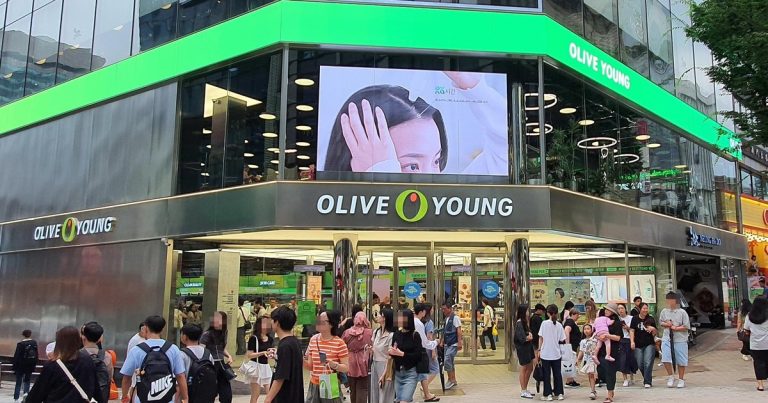
Olive Young, Korea’s biggest health-and-beauty chain, is where most Koreans put their result to work. You’ll find one on almost every busy street in Seoul. Here’s how locals shop it by season.
Read the shade labels and Korean tags
Many Korean color products carry warm or cool cues in their shade names or descriptions, and the words to look for are 웜톤 (warm-tone) and 쿨톤 (cool-tone). On the Olive Young app, reviewers often list their own skin tone, so you can read reviews from people with your season. Searching Korean phrases such as “봄웜 립” (spring warm lip) or “여름쿨 블러셔” (summer cool blusher) in a search engine or on YouTube brings up shade roundups for your type.
Swatch the way Koreans do
Store lighting is warm and flattering, which can fool you. Swatch on the back of your hand or jawline, then step toward a window or the entrance and look again. Compare against the palette photo on your phone. For lip tints from brands every Olive Young stocks, such as rom&nd, Peripera, Clio and 3CE, line up two or three candidates and keep only the one that matches your palette’s temperature.
A worked example
Say your result is summer cool, light tone. At Olive Young you’d skip the coral and orange-red tints entirely, pick two rosy-pink tints and one mauve, and swatch all three in daylight. For base, you’d start with a cushion in a 21C or 21N if those suffixes exist in the range, test it on your jaw, and choose the one that disappears. For blush, a cool pink powder. That’s a full face in three purchases, all matched to your drapes.
Shopping both in Seoul and back home? Our guide to Olive Young Global vs Korea stores explains which items are worth buying in Korea and which you can reorder online. If you have sensitive skin, patch test any new product before putting it all over your face.
Common mistakes to avoid
- Showing up in full makeup. Base and lip color distort the drapes. Go bare-faced or skin-care only.
- Wearing colored contacts or a freshly dyed vivid color. Both change how the drapes read. Tell the consultant about any dye.
- Treating the result as a rulebook. Your season is a guide for what sits near your face. You can still wear any color you love in shoes, bags and trousers.
- Shopping only by label. “Cool-tone” on a box is the brand’s opinion. Your palette and a daylight swatch are better evidence.
- Forgetting to photograph swatches. Product names are easy to forget once you’re home. Take clear photos of every test.
- Expecting identical results everywhere. Two studios can name your tone differently. If the underlying palette is similar, the advice is consistent.
FAQ
How long does personal color analysis in Seoul take?
Most sessions run about 1 to 2 hours, depending on the package. A basic draping is shorter; adding a makeup test, hair consultation or body type analysis makes it longer. Check the studio’s listing for the exact duration.
How much does personal color analysis cost in Seoul?
Prices vary by studio, package and whether the session is solo, pair or group, and they change over time. Check the studio’s Instagram, KakaoTalk channel or booking platform listing for current prices. Ask whether English interpretation costs extra.
Can I book personal color analysis in English?
Yes. Many studios in Seoul offer English consultations, and global booking platforms list some of them. Confirm that the consultation itself is in English, not just the booking messages.
What should I wear to a personal color analysis?
Wear something neutral and arrive bare-faced or with skincare only. Studios usually provide a gray or white cape to cover your clothes. Remove colored contact lenses before the draping starts.
Is personal color analysis accurate?
It’s a structured visual judgment by a trained consultant, not a lab test, so results can differ slightly between studios. The value is in the comparison you see with your own eyes in the mirror. Treat it as practical advice, not a fixed fact about you.
Can I do personal color analysis online or at home?
Apps and online quizzes exist, but phone cameras and home lighting skew color, which makes the result less reliable. In-person draping under controlled light is the reason Koreans still book studio sessions.
What to plan next after your session
Book the studio first, then build the day around it. A morning session followed by an Olive Young run and, if you’re changing hair color, a salon appointment the same afternoon is the most efficient way to use the result while the advice is fresh. Save your palette as your phone’s lock screen for the trip, so it’s in front of you every time you pick up a tester.
Back home, use your season when reordering K-beauty online: read the warm-tone and cool-tone tags, check reviewers who share your tone, and stick to the base shade letter that matched in Seoul. If you’re also building a skincare routine to go with your new makeup palette, our guide to Korean skincare routines for your 30s to 50s is a good next read.
Related reading

Sources k-korea.blog
Prices, opening hours and availability change. Check the official page before you buy or travel.