13 min read
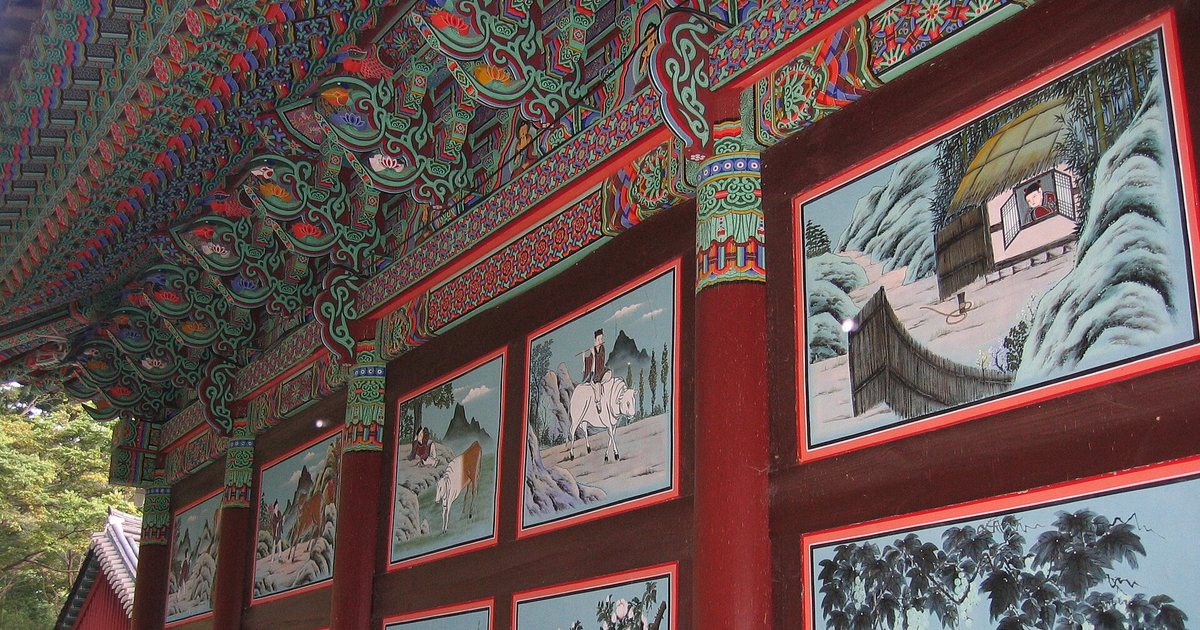
A temple stay in Korea puts you on a monk’s schedule for 1 night, waking before 4 a.m. Every temple stay Korea program is booked through the official Templestay site: you choose a short day program or an overnight one, and the temple gives you loose clothes, vegetarian meals and a floor bed.
It’s the closest look most visitors get at how Korean Buddhism actually works day to day. It also costs you only one night of your trip, and plenty of Koreans book one for exactly the reason you might: to switch off for a day.
Key takeaways
- Book through the official Templestay site run by the Jogye Order, Korea’s largest Buddhist order; it lists programs, dates and fees for each temple.
- There are 3 formats: a few-hour day program, a structured overnight program and a “rest” overnight where most of the schedule is optional.
- Overnight guests usually eat dinner around 5 p.m., go to bed around 9 p.m. and get up before 4 a.m. for morning chanting.
- The temple lends you a vest and loose trousers; bring socks, toiletries, a towel and warm layers, because mountain temples get cold at night.
What is a temple stay in Korea?
Templestay (템플스테이) is a nationwide program where Buddhist temples open their grounds to visitors for a few hours or a night or two. It’s coordinated by the Cultural Corps of Korean Buddhism, part of the Jogye Order (조계종), the order that runs most of the country’s major temples. The program went national in 2002, when Korea co-hosted the FIFA World Cup and needed places for foreign visitors to stay. It has grown into a standard part of Korean travel since then.
You’re not joining a monastery, and nobody asks about your religion. Think of it as a guest program. You follow the temple’s daily rhythm, learn the basic etiquette, eat what the monks eat and take part in the practices (chanting, bowing, meditation) as far as you want to. Many participants aren’t Buddhist at all, Korean or foreign.
Koreans treat it less as sightseeing and more as a reset. Burned-out office workers, students after exams and families wanting a quiet weekend all book the “rest” programs. If your trip is all Myeongdong shopping and late-night barbecue, one night in a mountain temple is a sharp contrast.
Day program or overnight: which temple stay should you pick?
Your first decision is how long you stay. Each temple’s page on the official site shows which formats it offers, and not every temple runs all three.
| Program type | How long | What you do | Best for |
|---|---|---|---|
| Day program (당일형) | About 2 to 4 hours | Temple tour, etiquette lesson, often tea with a monk, lantern or prayer-bead making, short meditation | Tight itineraries, families with kids, a first taste in Seoul |
| Experience-type overnight (체험형) | 1 night, sometimes 2 | The full schedule: evening and dawn chanting, 108 bows, meditation, formal monastic meal, communal work | Anyone who wants the real routine |
| Rest-type overnight (휴식형) | 1 night or longer | Meals and a room; services and activities are optional, the rest of the time is yours | Burnout, long trips, people who want silence more than structure |
Our call: if you have one free night outside Seoul, take the experience-type overnight. The day program shows you the buildings. The overnight shows you the life, and the parts people remember (the 4 a.m. drum, the silent meal) only happen if you sleep there. Pick the rest-type if you already know temple etiquette or you’re traveling for weeks and need a slow day.
Is a day temple stay worth it?
Yes, if Seoul is your only base. City temples like Jogyesa and Bongeunsa run short programs you can fit between a palace visit and dinner, and they’re the easiest way to try tea with a monk without leaving the subway map. You won’t get the mountain silence, though.
A typical temple stay schedule, hour by hour
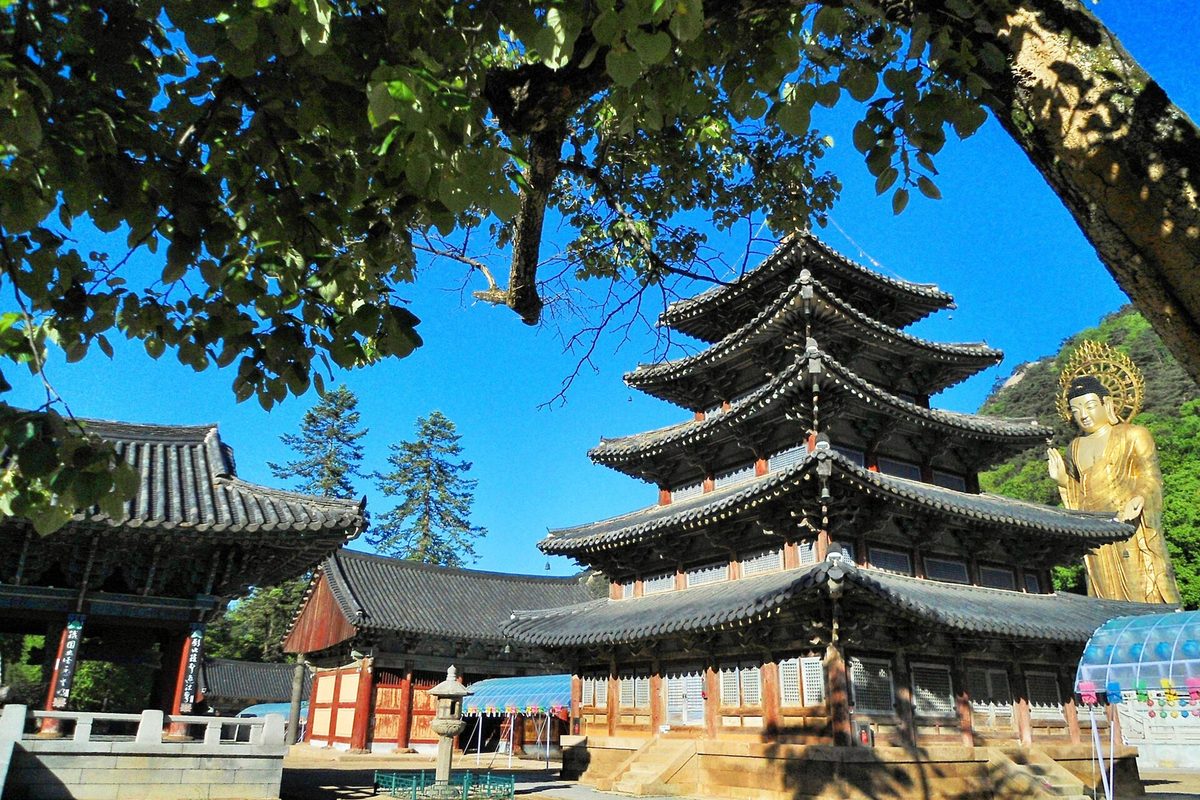
Every temple sets its own timetable, and the official program page lists it. The overnight shape is broadly the same everywhere, so here’s what a standard experience-type stay looks like, with approximate times.
Afternoon: arrival and orientation
You check in at the templestay office in the early to mid afternoon, change into the vest and loose trousers the temple provides, and get a room. Rooms are usually shared and split by gender, with couples and families sometimes able to share.
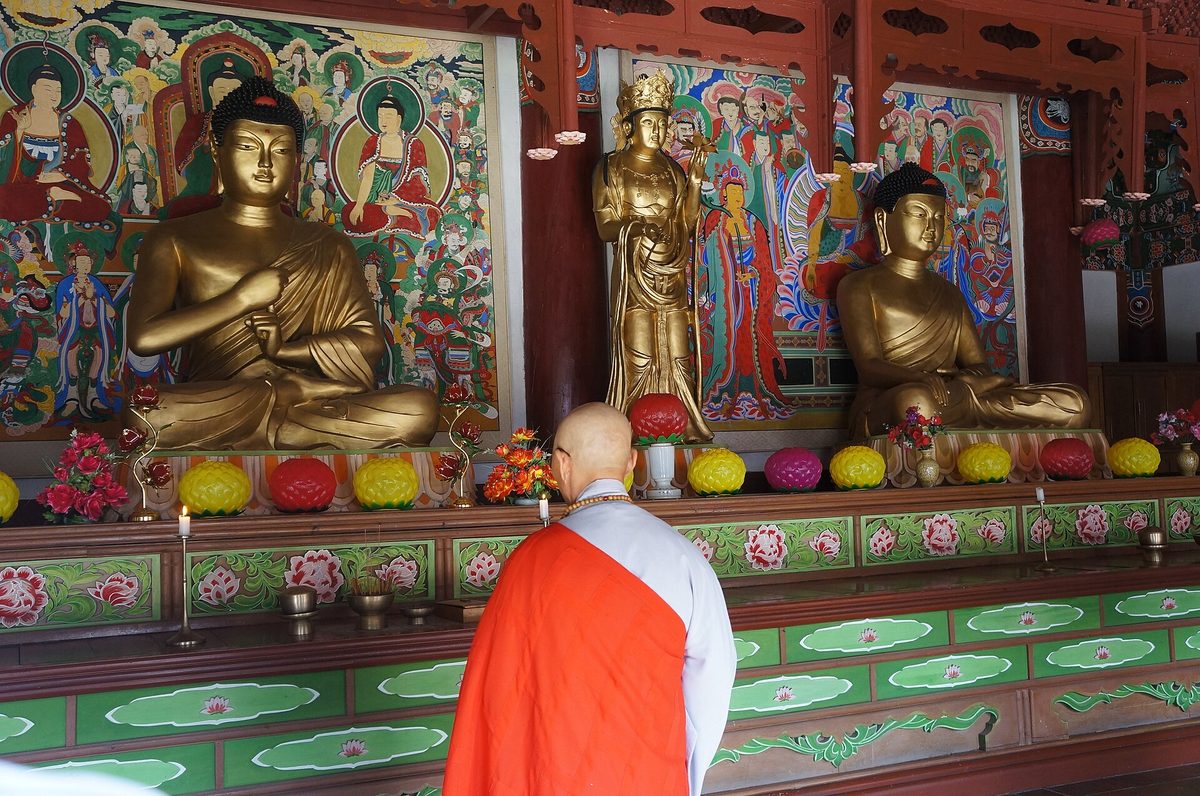
Then comes orientation: how to do hapjang (합장), the palms-together greeting; how to bow; and which doors and paths to use. You’ll also learn the practical rules. Don’t walk through the central door of the main hall (it’s reserved for the senior monk), keep your voice low, and keep your shoes neat.
Evening: early dinner and yebul
Dinner comes early, often around 5 p.m., because monastic schedules run on daylight. Afterwards comes the evening yebul (예불), the chanting service in the main hall. Just before it, monks play the four ritual instruments, known as samul (사물): the big barrel drum (beopgo, 법고), the bronze bell (beomjong, 범종), the wooden fish (mogeo, 목어) and the cloud-shaped gong (unpan, 운판).
Each one is said to call to a different kind of living being. Standing in the courtyard while the drum rolls is the moment most participants describe first afterwards.
Lights out is usually around 9 p.m. You’ll sleep on a thin floor mattress called a yo (요) on a heated ondol (온돌) floor, the traditional Korean underfloor heating.
Before dawn: the morning service
Wake-up is typically around 3 or 3:30 a.m. You walk to the main hall in the dark for the dawn yebul, with the instruments sounding again. Attendance is expected on experience programs and optional on rest programs. Go anyway. The temple in the dark, with frost on the courtyard stones in winter, is the whole point.
Morning: 108 bows, meditation and the formal meal
Next comes 108 bows (108배). You go from standing to a full prostration (knees, elbows and forehead to the floor) and back up, 108 times. The number stands for the 108 defilements, or troubles of the mind, in Buddhist teaching.
Many temples have you thread one bead onto a string with each bow, so you leave with your own yeomju (염주), a Buddhist prayer bracelet. It takes a while and it’s tough on the thighs, so go at your own pace. Nobody is counting.
Chamseon (참선), seated Zen meditation, is usually taught alongside: how to sit, where to rest your eyes, how to count breaths. Some temples add walking meditation along a forest path.
Breakfast may be barugongyang (발우공양), the formal monastic meal, covered in the next section. Later in the morning you’ll often do ulyeok (울력), communal work such as sweeping paths or raking leaves. After that comes dado (다도) or chadam (차담), sitting down with a monk over green tea where you can ask questions. Most overnight programs end around lunchtime the next day.
Barugongyang: how the silent four-bowl meal works
Barugongyang is the most structured hour of a Korean temple stay. It’s also where foreigners worry most about getting it wrong. Here’s the logic, so it makes sense when you sit down.
- You get a set of four nested wooden bowls, the baru, wrapped in cloth. You lay them out in a fixed order: rice, soup, water and side dishes.
- Food is passed down the line in silence. Take only what you’ll finish. Nothing can be left behind.
- You eat quietly, lifting the bowl rather than leaning over it, and you avoid clicking your utensils.
- You clean the bowls with water and a piece of pickled radish or kimchi you saved for this. Then you drink the rinse water. Some temples collect a portion of clean water at the end to show that nothing was wasted.
- You wrap the bowls back up exactly as you found them.
The meal is a practice in gratitude and zero waste, and the food is sachal eumsik (사찰음식), Korean temple cuisine. It’s vegan in most temples, with no meat, fish or eggs. It also skips the five pungent vegetables, osinchae (오신채), which include garlic, green onion and chives, because Buddhist tradition holds that they stir up the mind. Expect rice, a clear soup, seasonal namul (seasoned vegetables) and temple-style kimchi. It tastes far milder than what you get in a Seoul restaurant.
Best temples for a temple stay in Korea as a foreigner
The official site lists well over a hundred temples, but only some run programs in English or on fixed foreigner dates. These are the names that come up again and again for visitors from abroad, and each is a reliable choice for a different reason. Check the temple’s page for current dates and English availability before you plan around it.
Bongeunsa (봉은사), Seoul
This is an old temple in the middle of Gangnam, across from the COEX mall, with high-rises rising behind the main hall. It’s popular with foreigners because it’s easy to reach and has long run English-friendly programs. Pick it if you only have Seoul.
- Area
- Samseong-dong, Gangnam, Seoul
- Nearest station
- Bongeunsa Station (Line 9)
- Time needed
- A few hours for a day program, or 1 night
- Before you go
- check opening days and fees on the official page
Jogyesa (조계사), Seoul
Jogyesa is the head temple of the Jogye Order, right downtown near Insadong. It’s the most convenient short program to pair with a palace day, and the courtyard is famous for its lantern displays around Buddha’s Birthday.
- Area
- Jongno, central Seoul
- Nearest station
- Anguk (Line 3) or Jonggak (Line 1)
- Time needed
- A few hours
- Before you go
- check opening days and fees on the official page
Golgulsa (골굴사), Gyeongju
Golgulsa is a cave temple near Gyeongju, the old capital of the Silla kingdom, and it’s known for Sunmudo (선무도), a Buddhist martial art that mixes movement, breathing and meditation. It’s the most physical temple stay on this list, and a great add-on to a Gyeongju trip.
- Area
- Outskirts of Gyeongju, North Gyeongsang Province
- Nearest station
- No subway; bus or taxi from Gyeongju
- Time needed
- 1 night or more
- Before you go
- check opening days and fees on the official page
Haeinsa (해인사), Hapcheon
Haeinsa sits on Gayasan mountain and holds the Tripitaka Koreana, more than 80,000 woodblocks of Buddhist scripture carved in the 13th century. The storage halls, Janggyeong Panjeon, are a UNESCO World Heritage Site. This is the choice for serious history and a deep mountain setting.
- Area
- Gayasan, Hapcheon, South Gyeongsang Province
- Nearest station
- No subway; intercity bus via Daegu
- Time needed
- 1 night
- Before you go
- check opening days and fees on the official page
Woljeongsa (월정사), Pyeongchang
Woljeongsa is a large temple in Odaesan National Park, known for its fir-tree forest path, which is ideal for walking meditation. It’s a strong pick in autumn, and it pairs well with a fall foliage trip. Dress warmly in winter, because Gangwon Province is one of the coldest parts of South Korea.
- Area
- Odaesan, Pyeongchang, Gangwon Province
- Nearest station
- Jinbu (Odaesan) Station on the KTX line, then bus or taxi
- Time needed
- 1 night
- Before you go
- check opening days and fees on the official page
The UNESCO mountain monasteries
In 2018 UNESCO listed seven temples together as Sansa, Buddhist Mountain Monasteries in Korea: Tongdosa, Buseoksa, Bongjeongsa, Beopjusa, Magoksa, Seonamsa and Daeheungsa. Several of them take part in Templestay. If you want an old, working mountain monastery rather than a city temple, start your search with these names.
What to wear and bring to a Korean temple stay
The temple gives you a templestay uniform, usually a padded or cotton vest and wide trousers in grey or orange-brown. You wear it for the whole stay, so what you arrive in matters less than what’s in your bag.
- Socks, several pairs. You’re shoeless indoors all the time, and bare feet in halls are frowned on.
- Warm layers. Mountain temples get cold at night outside summer, and the dawn walk to the main hall is outdoors. A fleece and a thin down jacket earn their place.
- Toiletries and a small towel. Bathrooms are often shared and basic, and towels aren’t guaranteed.
- A plain T-shirt to wear under the vest, plus modest clothes for arrival: shoulders and knees covered, nothing tight or see-through.
- Slip-on shoes. You’ll take them off and put them on dozens of times.
- A flashlight or phone light for the pre-dawn walk.
Leave the strong perfume at home, along with alcohol and anything meaty in your snack bag. Phones are allowed in most programs, but keep them on silent and don’t film during services unless the staff say you can.
How to book a temple stay in Korea from abroad
Booking is straightforward, and you can do it all online before you fly.
- Go to the official Templestay website (templestay.com, which has an English version) and search by region, program type or date.
- Filter for English-friendly programs. Some temples run programs with English guides, often only on certain dates. Others are Korean-only but still accept foreigners. The program page says which.
- Check the details on the temple’s page: dates, fee, what’s included, check-in time and minimum group sizes. Some programs only run if enough people sign up.
- Reserve and pay online, then keep the confirmation. The temple may email you directions and a packing list.
- Plan your transport. Mountain temples are often a bus or taxi ride from the nearest town, and the last buses can be early. Aim to arrive with time to spare before check-in closes.
Book well ahead for weekends and holidays, when Korean families and office workers fill the popular temples. Weekday stays are easier to get and quieter. Avoid long national holidays such as Chuseok and Lunar New Year unless the program page confirms it’s running. If you’re fitting this into a longer route, our 7-day Seoul itinerary shows where a night out of the city slots in best.
Temple etiquette mistakes foreigners make
Monks are used to beginners and won’t scold you for a wobbly bow. A few habits do stand out, though, and they’re easy to avoid.
- Walking through the central door of the main hall. Use the side doors. The centre is for the senior monk.
- Pointing your feet at the Buddha when you sit. Tuck them to the side or sit cross-legged.
- Chatting on paths and in halls. Silence is the default, especially from evening service until after breakfast.
- Skipping the dawn service on an experience program. It’s part of what you signed up for.
- Overloading your bowl at barugongyang. Take small amounts, because you’ll eat everything.
- Treating it like a hotel. Rooms are basic and shared, and helping with chores is expected.
More on the everyday Korea version of these traps is in 20 things first-time visitors get wrong.
FAQ
Do you have to be Buddhist to do a temple stay in Korea?
No. Templestay is open to anyone, and many participants, Korean and foreign, aren’t religious. You’re asked to follow the etiquette and join the activities respectfully. You aren’t asked to believe anything.
How much does a temple stay in Korea cost?
Fees vary by temple, program type and length, and they change over time, so we don’t quote numbers here. Each program page on the official Templestay site shows the current fee and what it includes, usually meals, the uniform and your room.
Can you do a temple stay in Seoul?
Yes. Bongeunsa in Gangnam and Jogyesa in Jongno are the best-known city options, and both are reachable by subway. They’re a good choice for day programs or a short overnight if you don’t want to leave the city.
Is the temple stay food vegan?
Temple food in Korea is generally plant-based. There’s no meat or fish, and it skips pungent vegetables such as garlic and green onion. If you have allergies or strict dietary needs, mention them when you book, because everyone is served the same meal.
Do you have to do all 108 bows?
No one forces you to finish. Most people manage it at their own pace, and the monks will tell you to rest if your knees complain. If you have a joint or back problem, tell the staff beforehand and do half-bows or simply sit.
Can couples or families stay together?
Rooms are usually split by gender, but many temples have family or couple rooms for some programs. Check the program page or ask the temple when you book.
Planning your temple stay: what to do next
Start on the official Templestay site. Shortlist two or three temples that fit your route, then check which dates have English-friendly programs. If your trip is Seoul-only, book a Bongeunsa or Jogyesa program for an afternoon. If you can spare a night, pair a mountain temple with a regional trip: Golgulsa with Gyeongju, Haeinsa with Daegu, Woljeongsa with Gangwon. Our day trips from Seoul guide helps you map the transport.
Autumn and spring are the most comfortable seasons for sleeping on a mountain temple floor. Winter is stark, cold and beautiful if you pack properly. Whatever the season, set your alarm early, fill your bowl lightly and go to the dawn service.
Related reading

Sources k-korea.blog
Prices, opening hours and availability change. Check the official page before you buy or travel.