12 min read
Noraebang Korean karaoke (노래방) puts your group in 1 private room, paid by the hour or by the song. Nobody sings to strangers in a bar. You get a soundproofed room with a big screen, two microphones, a remote and a sofa, and the only audience is the people you came with.
That’s why Koreans of every age go, including people who swear they can’t sing. Below: how coin rooms and regular rooms differ, how to pay, how to find songs on the remote, which English and Japanese songs you can expect, and the unwritten rules that make a night go well.
Key takeaways
- A noraebang is a private room for your group only, so shy singers and bad voices are fully protected.
- Coin noraebang (코인노래방) charges per song and suits 1-2 people; regular noraebang charges per hour and suits groups.
- Every song has a number, and the number differs between the two big machine makers, TJ Media and KY (Kumyoung).
- Regular rooms often add free “service” (서비스) minutes when your time is about to run out, so don’t panic at the countdown.
What is noraebang Korean karaoke, exactly?
The word breaks down simply: norae (노래) means song and bang (방) means room. A noraebang is a business made of many small rooms off a corridor, each with its own screen, speakers, mic set and lighting. You rent one room for your group and close the door.
This is the main difference from karaoke in the US or UK, where you usually put your name on a list and sing to a whole bar. In Korea the stage is gone. The room is the venue, your friends are the crowd, and no one outside hears you miss the high note.
You’ll find a noraebang sign on almost any busy street in a Korean city, usually above a restaurant or down a basement staircase. Look for the Hangul 노래방 or 노래연습장 (norae yeonseupjang, “singing practice room”, the legal name for the business type) in neon or LED.
What’s inside a typical room
- A large screen showing lyrics over music videos or stock footage
- Two wireless microphones, sometimes more in bigger rooms
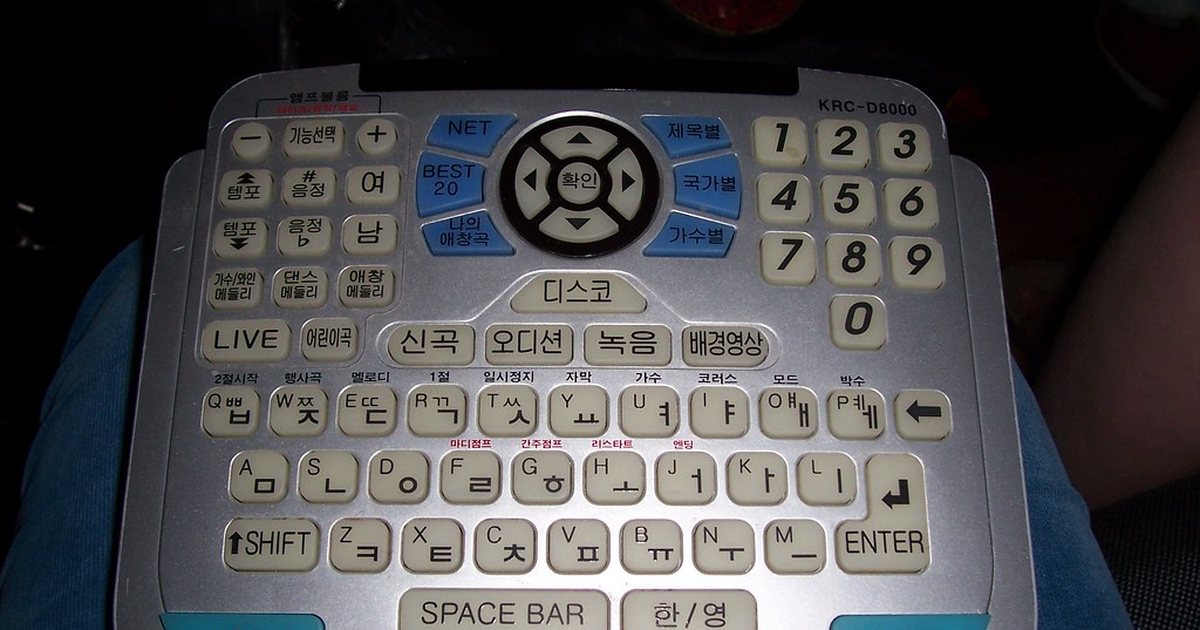
- A remote control and, in older places, a thick printed song book
- Tambourines and a sofa along the wall, plus a small table
- Disco or colored lights you can switch on from the remote or a wall panel
Coin noraebang vs regular noraebang: which should you pick?
Korea has two main formats, and choosing the right one saves you money and awkwardness. Coin noraebang (코인노래방, “coin singing room”) is a row of small booths where you pay per song. Regular noraebang (just 노래방) rents bigger rooms by the hour, with a staff member at the front desk.
Koreans use them differently. Students and office workers pop into a coin noraebang alone after class or work to blow off steam or practice a song. Regular noraebang is where groups go after dinner, birthdays and company nights out.
| What you want | Coin noraebang (코인노래방) | Regular noraebang (노래방) |
|---|---|---|
| Group size | 1-2 people, sometimes 3 in a larger booth | 2 to 10+ depending on room size |
| How you pay | Per song, at a machine in or beside the booth | Per hour, at the front counter |
| Staff contact | Little or none, mostly self-service | Staff assign the room and handle payment |
| Room feel | Small booth, glass door, very casual | Larger room with sofa, table and party lights |
| Best for | Solo practice, a quick 3-4 songs, couples | After-dinner groups, birthdays, friend nights |
| Free extra time | Rare | Common (“service” minutes) |
| Current prices | Posted on the machine, varies by area | Posted at the counter, often higher at night and weekends |
If it’s just you, or you and one friend, go coin. If you’re four people coming out of a barbecue dinner, go regular. Four people crammed into a coin booth meant for two is a common first-timer mistake, and it’s no fun for anyone.

How to book a noraebang room and pay
Most noraebang don’t take reservations. You walk in, and if a room is free you get it. Weekend nights in student areas can mean a short wait, but there’s usually another noraebang a few doors down.
Walking into a regular noraebang, step by step
- Go to the front counter and hold up fingers for your group size, or say the number in English. Staff in Seoul’s nightlife areas are used to foreigners.
- Say how long you want. “Han sigan-iyo” (한 시간이요) means “one hour, please”.
- Pay at the counter, either up front or when you leave. Ask which, or watch what the group ahead does. Cards are widely accepted.
- Staff walk you to a room or tell you the room number, then start your timer.
- Pick up drinks from the counter fridge if there is one. Many places sell soft drinks and snacks.
- When the timer on screen hits zero, the machine stops. Leave, or ask at the counter for more time.
Paying at a coin noraebang
Coin rooms run on a machine. You feed in cash (bills or coins, depending on the machine) or, at many newer places, tap a card, and the screen shows how many songs you’ve bought. Some booths sell time blocks instead of song credits. Read the panel by the door, since every chain sets its own rules and prices.
Tip from how locals do it: buy a few songs at a time, not a big bundle. Credits usually stay with that booth, and you won’t want to leave songs unsung.
Can you reserve a noraebang in advance?
Some larger or premium places, especially party rooms, take bookings through Naver Map (Korea’s most used map app) or by phone. For ordinary neighborhood places, just walk in. If you’re planning a big group for a birthday, call ahead or check the venue’s Naver Map listing.
How to use the noraebang remote and song book
This is the part that confuses foreigners most, and it’s easy once you know one rule: every song has a number. You type the number on the remote, press the reserve button, and it joins the queue.
TJ Media vs KY: why song numbers don’t match
Almost every noraebang machine in Korea comes from one of two makers: TJ Media (태진, Taejin) or KY (금영, Kumyoung). Each keeps its own catalog with its own numbers. A song that’s one number on a TJ machine has a different number on a KY machine.
Check the brand logo on the screen or the remote before you look anything up. Both companies run websites and apps where you can search songs by title or artist and get the right number. Koreans often keep a list of “their” numbers in their phone notes before a night out.
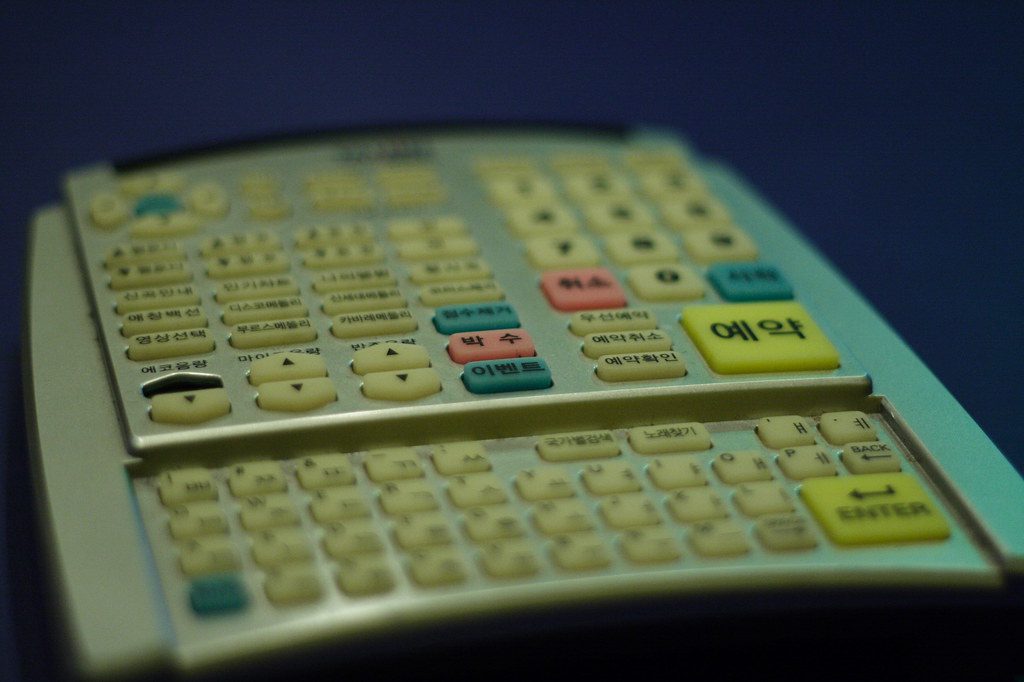
The buttons you actually need
Remotes vary, but the labels are usually in Korean. These are the ones that matter:
- 예약 (yeyak): reserve. Type a number, press this, and the song is queued.
- 우선예약 (useon yeyak): priority reserve. Puts your song at the front of the queue. Use it sparingly with friends.
- 시작 (sijak): start. Plays the next song in the queue.
- 취소 (chwiso): cancel. Stops the current song or removes a queued one.
- 반주 / 키 (key) and 템포 (tempo): key and tempo controls. Lower the key if a song sits too high for you.
- 검색 (geomsaek): search. Newer machines let you search titles on screen or on a tablet-style remote.
Many newer rooms have a touchscreen remote or tablet where you can search by title in English letters. Older rooms rely on the printed book, which is split by Korean songs, foreign songs and sometimes Japanese and Chinese sections.
About the score at the end
Most machines show a score after each song, often with a fanfare. It’s mainly based on whether you kept singing into the mic, not whether you sang well, so a confident shout can beat a careful ballad. Nobody takes it seriously, which is the point.
Can you sing English and J-pop songs at a Korean noraebang?
Yes. Both TJ and KY carry English-language pop songs, and both have Japanese song sections, which is why J-pop fans and Japanese visitors use noraebang too. Catalogs also include Chinese songs on many machines.
Expect the big, long-running hits in English rather than every new release. Classic pop, well-known ballads and songs from popular films are the safest bets. If you have a specific newer song in mind, search the TJ or KY app before you go instead of hoping.
How to find English songs on the remote
- On touchscreen remotes, switch the search to English letters and type the title or artist.
- In the printed book, look for the foreign song section (often marked 팝송, popsong, or 외국곡).
- On older machines, look up the number on your phone using the TJ or KY app, then type it in.
What about K-pop?
K-pop is the core of the catalog, and new releases get added regularly. Lyrics show in Hangul, so if you can’t read Korean, songs with English hooks or repeated choruses are the easiest way in. Some machines can show romanized lyrics for certain songs, but don’t count on it. If you’re learning Hangul, noraebang is one of the most fun ways to practice reading fast.
Noraebang etiquette: what Koreans actually do
There’s no rulebook, but a few habits make a group night smooth. Koreans pick these up from school trips and company nights out, and they’ll notice if you get them right.
Share the mic and the queue
Queue one or two songs at a time, then let others go. Stacking five songs in a row reads as mic hogging. Priority reserve (우선예약) is fine for a birthday person or someone leaving early, not for jumping in front of everyone all night.
Cheer, even for bad singers
The room’s energy matters more than talent. Grab a tambourine, clap on the beat, sing the chorus along. Looking at your phone while a friend sings a ballad is the quickest way to kill the mood.
Don’t cancel someone else’s song
Pressing 취소 on a friend’s song mid-verse is rude unless they ask, or unless the song is dragging and everyone’s laughing about it. Among close friends, cutting a long, slow song and moving on is a running joke, so read the room.
Mix the energy
A good Korean noraebang night swings between upbeat group songs and big solo ballads. If the last three songs were slow, pick something everyone can jump to. If you’re the only foreigner, one English song the whole room knows will go over better than an obscure favorite.
Why Koreans go to noraebang after dinner
Korean nights out move in rounds. The first round, il-cha (1차), is dinner: Korean barbecue, fried chicken, or market food like the stalls in our Gwangjang Market food guide. The second round, i-cha (2차), is often a bar or a noraebang. A third round, sam-cha (3차), might be noraebang if the second was drinks.
This is why noraebang streets sit right next to restaurant streets, and why the busiest hours are late evening. After a big meal and some soju, singing in a private room is the natural next step, and it gives quieter people something to do besides keep drinking.
Noraebang and hoesik (company dinners)
Hoesik (회식) is a company dinner for a team. For years, a noraebang second round was a standard part of it, with junior staff expected to sing. Many workplaces have moved away from long, late hoesik, but noraebang still turns up at team events, year-end parties and farewells.
Family and friends, too
It’s not only a drinking thing. Families go together on holidays, teenagers go after exams, and coin noraebang near schools stay busy all afternoon. Plenty of Koreans also go alone to a coin booth to sing a few songs and leave. Solo noraebang is completely normal and nobody will look twice.
Where to find noraebang in Seoul
You don’t need a destination. Any area with restaurants and bars will have one. Still, some neighborhoods are packed with them, which means more choice and more late-night options.
| Area | Why go | Best format |
|---|---|---|
| Hongdae (홍대) | University and nightlife area with dense streets of noraebang and coin rooms | Both; coin rooms for quick sessions |
| Sinchon (신촌) | Student area near major universities, lots of budget options | Coin noraebang |
| Gangnam (강남) | Office crowd, bigger and more polished rooms | Regular noraebang for groups |
| Konkuk University area (건대) | Young crowd, food alleys right next to singing rooms | Both |
| Your hotel’s neighborhood | Almost every busy street has one within walking distance | Whatever is closest |
Search “노래방” or “코인노래방” in Naver Map or Kakao Map (Korea’s two main map apps, which work much better here than Google Maps). You’ll see nearby places, photos and often posted prices. Opening hours vary, and many stay open very late, but check the listing before you head out.
Common noraebang mistakes foreigners make
- Using the wrong song number. You looked up a TJ number but the machine is KY. Check the brand first.
- Booking too much time. An hour goes faster than you think, but three hours for two people is long. Start with one and add more; staff can extend.
- Choosing a coin booth for a group. Coin booths are tight. Four or more people should go regular.
- Waiting for the perfect English song. Catalogs are deep but not complete. Have three backup songs ready.
- Treating it like a stage. You don’t need to perform. Singing badly with commitment is exactly what Koreans do.
- Walking into the wrong kind of venue. Places with “단란주점” (danran jujeom) or doumi signs are adult drinking venues, not karaoke rooms.
For more of the small things first-time visitors trip over, from transit cards to tipping, see our list of Korea travel tips first-timers get wrong.
FAQ
Is noraebang the same as karaoke?
It’s Korean karaoke, but the format is different. Instead of singing to a bar, you rent a private room for your group. The machine, lyrics screen and mics are the same idea as karaoke anywhere.
How much does noraebang cost?
Prices vary by neighborhood, time of day and room size, so we won’t quote a figure that may be out of date. Regular noraebang post hourly rates at the counter, often higher on weekend nights. Coin noraebang show the per-song or per-block price on the machine. Naver Map listings often show current prices too.
Can I go to a noraebang alone?
Yes, and many Koreans do. Coin noraebang is built for exactly this: a small booth, pay per song, no staff interaction. Regular noraebang will also give you a room, though it’s less cost-effective for one person.
Do noraebang have English songs?
Yes. Both major machine makers, TJ Media and KY, carry English pop catalogs plus Japanese and often Chinese songs. Search their apps by title before you go to confirm a specific song and get its number.
Can you drink alcohol at a noraebang?
Standard noraebang are not licensed to sell alcohol, and most sell soft drinks and snacks instead. Rules on bringing your own differ by venue, so ask at the counter. Many groups drink at dinner first and arrive at the noraebang afterwards.
What should I sing at my first noraebang?
Pick something you know by heart and that the room might sing along to: a big English pop hit or a K-pop song with an easy chorus. Save the hard ballad for when everyone’s warmed up. Upbeat songs that everyone can join in on beat solo showpieces early in the night.
How to plan your first noraebang night
Make it the second round. Eat dinner in a lively area like Hongdae or near Konkuk University, then search 노래방 on Naver Map and walk to the nearest one with good photos. Book one hour, and extend if the room is still going.
Before you leave your hotel, download the TJ Media or KY app and save the numbers for five songs: two upbeat, two you know cold, one ballad. If you’re travelling solo, try a coin noraebang near a university for a low-pressure first go, then bring friends to a regular room another night. And if you need fuel on the way, grab something from a convenience store first; our guide to Korean snacks covers what locals reach for.
Related reading


Sources k-korea.blog
Prices, opening hours and availability change. Check the official page before you buy or travel.