13 min read
Korea weather by month follows 4 distinct seasons: freezing, dry winters and hot, wet summers. Spring (April to May) and autumn (late September to early November) are the most comfortable months. July brings the jangma monsoon, January brings biting wind chill, and spring can bring hazy dust days.
That pattern decides most of what you pack. Below you’ll find each month in plain terms, the weather hazards Koreans plan around, and the gear Seoul locals actually carry, so you can choose a month and pack for it.
Key takeaways
- The jangma (장마, summer monsoon) usually soaks the country from late June to late July, and a large share of the year’s rain falls in summer.
- Typhoon risk peaks in August and September. Jeju and the south coast get hit first and hardest.
- Yellow dust (황사, hwangsa) and fine dust (미세먼지, misemunji) are worst from late winter through spring. Koreans check an air-quality app every morning and wear KF94 masks on bad days.
- Mid-January in Seoul often stays below freezing all day, and Siberian wind makes it feel much colder. Locals live in a knee-length padded coat they call a long padding.
Korea weather by month at a glance
Korea has a continental climate with a monsoon on top. In winter, cold dry air blows down from Siberia and Mongolia. In summer, warm, wet air comes up from the Pacific. That’s why the same city can feel like Moscow in January and Bangkok in August.
The table shows typical conditions in Seoul and the north-west. The south coast (Busan) and Jeju island run milder in winter and get more summer rain and typhoons.
| Month | What it feels like in Seoul | Main weather watch-out | What to wear |
|---|---|---|---|
| January | The coldest month: dry, sunny, harsh wind | Wind chill, icy sidewalks | Long padded coat, thermals, gloves, hat |
| February | Still freezing, a little less brutal late in the month | Cold snaps, fine dust | Full winter gear |
| March | Cool and changeable, chilly mornings | Yellow dust, big day-night swings | Layers, light padded jacket |
| April | Mild, cherry blossom season | Yellow dust, cool evenings | Trench coat or light jacket, knitwear |
| May | Warm, bright, very pleasant | Strong sun, occasional dust | T-shirts with a thin layer for evening |
| June | Getting hot and humid, rain starts late in the month | Start of jangma | Breathable clothes, umbrella |
| July | Hot, sticky, many rainy days | Monsoon downpours, flooding | Quick-dry clothes, waterproof sandals |
| August | Hottest stretch, muggy days and warm nights | Heat waves, typhoons | Linen, sun hat, sunscreen, handheld fan |
| September | Warm early, drier and clearer later | Late typhoons | Summer clothes plus a light layer |
| October | Crisp, clear, often the best weather of the year | Cold mornings in the mountains | Light jacket, sweater |
| November | Cool to cold, fall foliage ends early in the month | Sudden first cold snap | Wool coat, scarf |
| December | Winter sets in, dry and cold | Wind chill, first snow | Padded coat, gloves, warm shoes |
This guide covers seasonal patterns only. Weather varies from year to year, so check the forecast from the Korea Meteorological Administration (KMA, the national weather agency) in the week before you fly.
Spring in Korea (March to May): blossoms, dust and big temperature swings
Spring is short, pretty and moody. Koreans love it for the flowers, but they also expect hazy days and a jacket you put on and take off five times a day.
March: is it still cold?
Yes, at least in the morning. March in Seoul often starts with winter-like days and ends with mild afternoons. The gap between a frosty early morning and a sunny mid-afternoon is big, so locals layer: a knit, a light padded vest or jacket, and a scarf they can stuff in a bag.
Jeju and Busan warm up first, and the first blossoms (camellia, plum, then cherry) appear in the south.
April: cherry blossom season
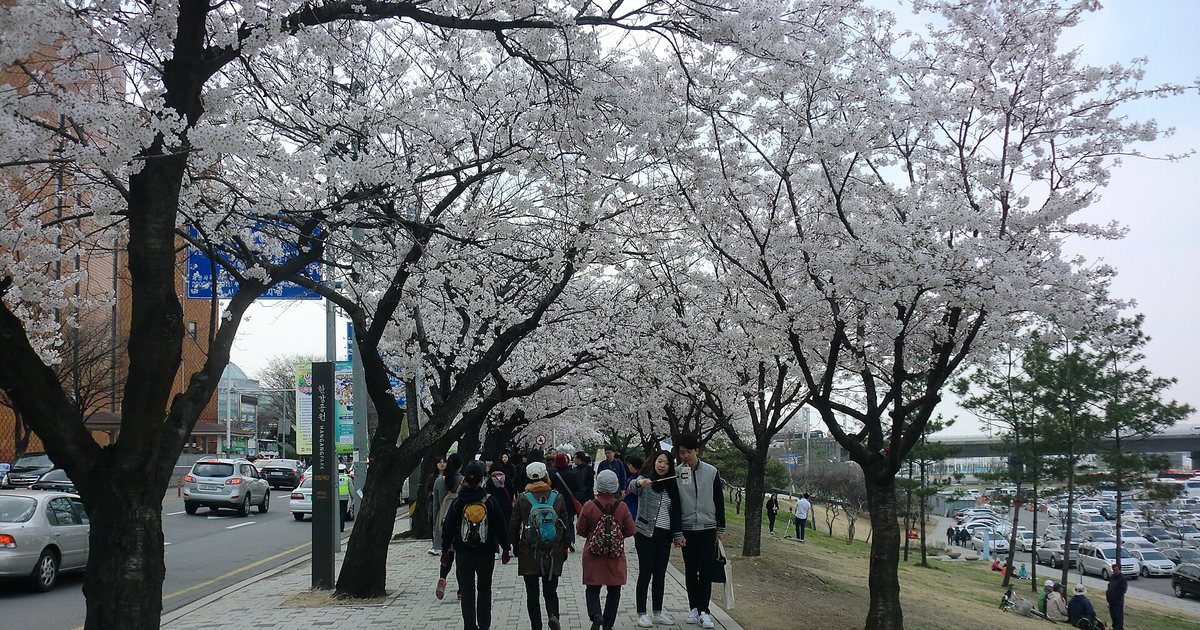
Cherry blossoms move north up the peninsula from late March to mid-April. Jeju and the south coast bloom first, Seoul follows about a week or two later, and mountain areas come last. The exact dates change every year with the temperature, so watch the blossom forecasts Korean weather services publish in early spring rather than booking around a fixed date.
Evenings stay cool. Seoul office workers wear a trench coat this month.
May: the sweet spot before summer
May is warm, green and mostly dry. It’s one of the easiest months for long walking days, palace visits and hiking. The sun gets strong, though. Koreans are serious about sunscreen and hats from May on, and you’ll see sunscreen with a high PA rating (the Asian scale for UVA protection, shown as PA+ to PA++++) on every Olive Young shelf.
Summer in Korea (June to August): jangma, heat and humidity
If you’re from a dry climate, Korean summer is a shock. It’s hot, the humidity is heavy, and some weeks it rains almost every day. It’s also festival, beach and night-market season, so plenty of visitors come anyway. Plan around the weather and it’s fine.
When is rainy season in Korea?
The jangma (장마), Korea’s summer monsoon, usually starts in the south in late June, reaches Seoul soon after and lasts about a month, often into late July. It rarely means steady drizzle all day. Expect a pattern of heavy bursts, grey muggy breaks, then more downpours, sometimes with flash flooding in low-lying areas.
The start and end dates move every year, and some years have a “dry jangma” with little rain. Check KMA for the current outlook.
What Koreans do: carry a compact umbrella every day, wear sandals or quick-dry shoes, and plan indoor backups like museums, shopping malls, cafés, a jjimjilbang (Korean bathhouse and sauna) or a noraebang. Our noraebang guide covers how those karaoke rooms work. If you forget an umbrella, every convenience store sells cheap ones, and they always seem to appear by the counter the moment rain starts.
How hot is August in Korea?
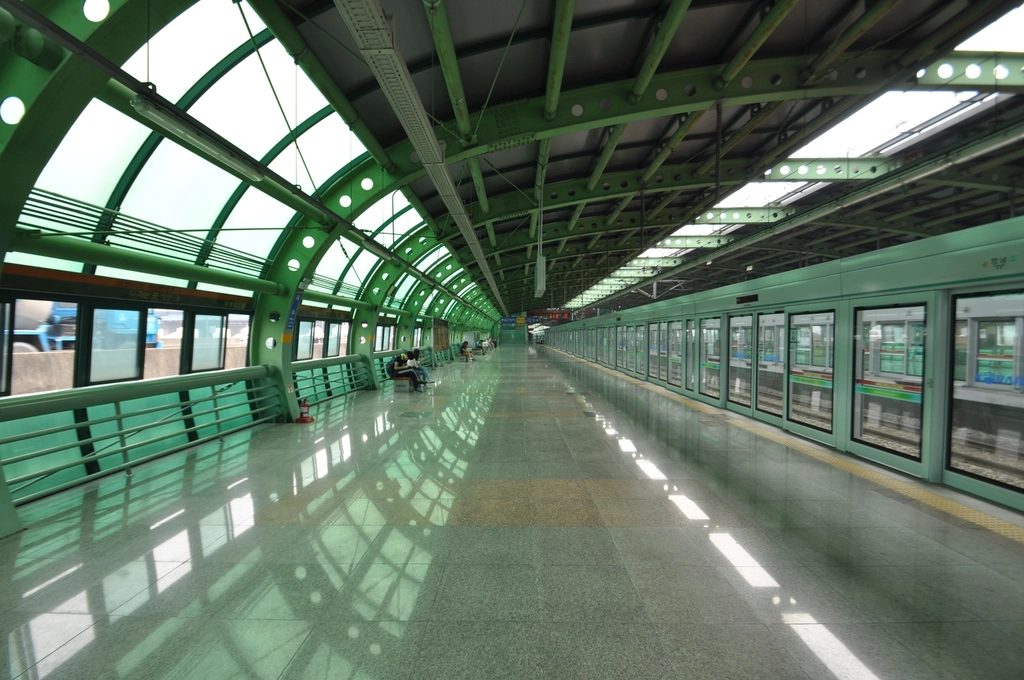
The weeks after the monsoon, from late July through August, are usually the hottest of the year. Seoul afternoons regularly reach the low-to-mid 30s °C (around 90 °F and above), and nights stay warm and sticky. Koreans call a stretch of extreme heat pokyeom (폭염, heat wave), and KMA issues heat advisories when it hits.
Locals carry a handheld electric fan, stay in air-conditioned subway stations and cafés at midday, and cool down with patbingsu (shaved ice with sweet red beans) or a cold bowl of naengmyeon (chilled buckwheat noodles). Some Koreans follow an old tradition of eating samgyetang (ginseng chicken soup) on the hottest days, on the idea of fighting heat with heat.
Summer packing tips Koreans would give you
- Linen, cotton and quick-dry fabrics. Jeans are miserable in July.
- A light cardigan, because air conditioning on the subway, in cinemas and in offices runs cold.
- Waterproof sandals or shoes that dry overnight.
- Sunscreen, a cap or parasol, and insect repellent if you go hiking or camping.
Typhoon season in Korea: when it hits and what to do
Typhoons that hit Korea form over the western Pacific and usually arrive between July and September, with August and September the riskiest. Most years only a few reach the peninsula, and many weaken before they arrive. Jeju and the southern coast, including Busan, usually take the strongest wind and rain. Seoul often gets heavy rain and gusts rather than a direct hit.
When a typhoon approaches, KMA publishes its forecast track days in advance and Korean news follows it closely. Expect cancelled ferries and flights to and from Jeju, closed beaches and hiking trails, and emergency alerts on your phone (Korean networks push disaster text alerts, often in Korean and English). If you’re on Jeju or the south coast when a storm is forecast, keep your schedule flexible for a day or two and check your airline’s official page before heading to the airport.
Travel insurance that covers weather disruption is worth having in late summer. Read what it covers before you buy it.
Autumn in Korea (September to November): the best months to visit
Ask Koreans when to visit and most will say autumn. After the summer heat breaks, the air dries out, the sky turns deep blue and fine dust is usually lower. Koreans describe it as the season when “the sky is high and horses grow fat” (천고마비, cheongomabi), an old saying for clear skies and good harvests.
September
Early September can still feel like summer, and a late typhoon is possible. By the second half, mornings cool down and the humidity drops.
Chuseok, the Korean harvest holiday, often falls in September or early October. It moves with the lunar calendar, so check the date for your year. Many businesses close and trains sell out during the holiday.
October
October is the safest bet for good weather across most of the country. Days are mild and sunny, nights are cool, and fall foliage (danpung, 단풍) starts in the northern mountains, such as Seoraksan in Gangwon province, then moves south. It’s also the busiest hiking month. Koreans hike in full outdoor gear, and weekend trails near Seoul get crowded.
November
Foliage peaks in Seoul and the south in late October and early November, with ginkgo trees turning bright yellow along city streets and palace grounds. Then the temperature drops quickly. The first real cold snap often arrives in mid or late November, and Koreans swap trench coats for padded jackets almost overnight.
It’s also kimjang season, when families make winter kimchi in big batches, so markets are piled high with napa cabbage. Our Seoul markets guide covers where to see that.
Winter in Korea (December to February): cold, wind chill and snow
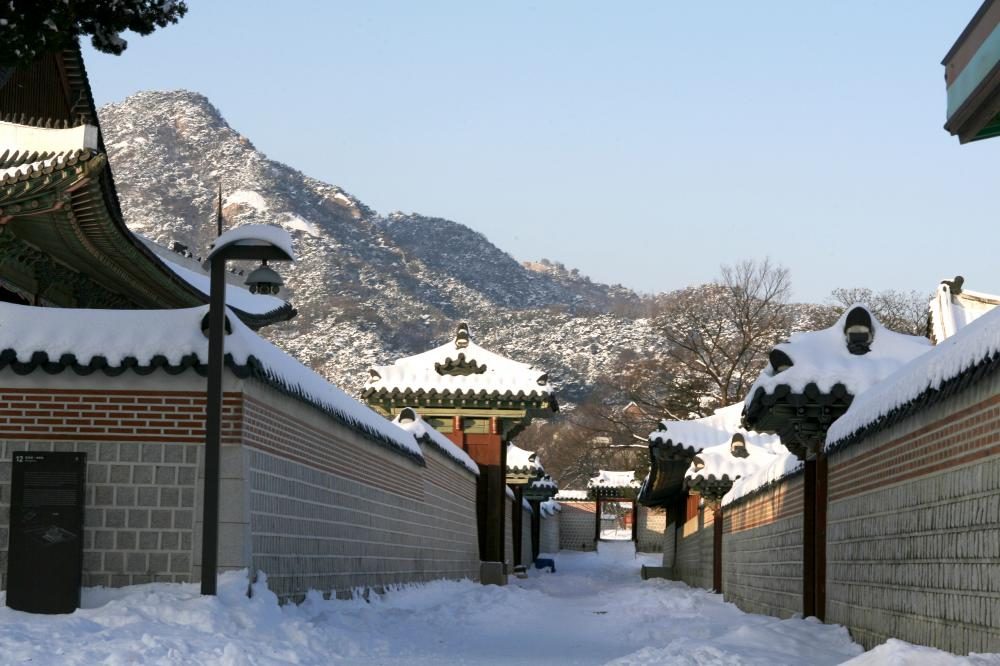
Korean winter is colder than many visitors expect, especially if you compare Seoul’s latitude with Rome or Washington. Siberian high pressure brings dry, sunny, bitter days. January is usually the coldest month. In a cold snap, Seoul can stay below freezing for days and drop well below -10 °C, and the wind off the Han River makes it feel even colder.
What is samhan saon?
Koreans describe winter with the phrase samhan saon (삼한사온): three cold days, four warm days. It’s an old saying for the way cold waves come and go in cycles. It doesn’t follow a strict schedule anymore, but the idea holds: a bitter spell, then a milder stretch that often brings more fine dust, then another cold wave. Many Koreans joke that the modern version is “three cold days, four dusty days”.
Where does it snow in Korea?
Seoul gets occasional snowfalls, usually light, and the snow doesn’t always stay. For real snow, go to Gangwon province in the north-east, especially the mountains and the east coast (Yeongdong), which gets some of the heaviest snow in the country. That’s where Korea’s ski resorts are, including the Pyeongchang area that hosted the 2018 Winter Olympics.
Jeju’s Hallasan mountain also gets snow, even though the coast stays milder. Busan and the south coast rarely see snow that settles.
How Koreans stay warm
- Long padding (롱패딩): the knee-length or ankle-length puffer coat that half of Seoul wears from December to February.
- Hatpaek (핫팩): disposable heat packs sold at every convenience store, slipped into pockets or stuck inside a coat.
- Thermal underwear under everyday clothes, plus a neck warmer, ear muffs or a beanie.
- Ondol (온돌): Korean underfloor heating. Homes, guesthouses and hanok stays heat the floor, so rooms feel cosy and very dry. Bring lip balm and a rich moisturiser.
Winter is also low season for some sights and a great time for hot food: street-stall eomuk (fish cake skewers in broth), hotteok (syrupy filled pancakes) and big pots of stew. A winter temple stay in the mountains is cold but beautiful. Pack warmer layers than you think you need.
Fine dust and yellow dust in Korea: how locals check the air
Air quality is one of the first things Koreans check in the morning, right next to the temperature. There are two separate problems.
What is yellow dust (hwangsa)?
Hwangsa (황사) is sand and dust from deserts in China and Mongolia, carried east by spring winds. It comes in episodes, mostly from March to May, and can turn the sky a hazy yellow-grey for a day or more. It’s a natural seasonal event, and it’s the reason older Koreans tell you to wash your face and hands as soon as you get home in spring.
What is misemunji (fine dust)?
Misemunji (미세먼지) means fine particulate matter, the PM10 and PM2.5 particles from traffic, industry and other pollution, both domestic and carried in from overseas. Levels tend to be worst from late autumn through spring, especially on still, mild winter days, and lower in summer when rain washes the air and in early autumn.
How to check and what to do
- Check air quality on AirKorea, the government’s official air-quality service, or in the dust section of any Korean weather app. Naver’s weather page shows it too.
- On “bad” or “very bad” days, wear a KF94 or KF80 mask outdoors, move hikes and long walks to another day, and choose indoor sights.
- If you have asthma or another respiratory condition, talk to your doctor before a spring trip and bring your usual medication.
What to pack for Korea in each season
Koreans dress for the season with real commitment, and the shops are full of exactly what you need. Pack the basics and buy the local fixes (masks, heat packs, umbrellas, handheld fans) when you land. They’re sold at convenience stores everywhere.
| Season | Pack from home | Buy in Korea like a local | Leave behind |
|---|---|---|---|
| Spring (Mar to May) | Layers, light jacket or trench, comfortable walking shoes | KF94 masks, high-PA sunscreen | Heavy winter coat (after March) |
| Summer (Jun to Aug) | Breathable clothes, sandals, a thin cardigan for air con | Compact umbrella, handheld fan, cooling towels | Jeans, leather shoes |
| Autumn (Sep to Nov) | Light jacket, sweaters, hiking shoes; a coat for November | Hiking snacks, gimbap for the trail | Heavy rain gear (after September) |
| Winter (Dec to Feb) | Thermals, warm gloves, hat, waterproof shoes with grip | Hatpaek heat packs, lip balm, rich moisturiser | Thin city shoes, a light jacket |
A worked example: say you’re visiting Seoul for a week in mid-April. Pack a trench or light jacket, two knits, a T-shirt for warm afternoons and comfortable shoes for a lot of walking (Seoul days often mean many kilometres on foot and plenty of subway stairs). Add a slot in your plans for an indoor afternoon in case a yellow dust day hits, and pick up a pack of KF94 masks at the first convenience store you pass. For more first-trip basics, read our Korea travel tips.
Best month to visit Korea for what you want
If you only care about comfort, choose October, then May. Here’s how the other goals line up:
- Cherry blossoms: late March to mid-April, south first, Seoul after. Watch the blossom forecast for your year.
- Fall foliage: mid-October to early November, mountains first.
- Snow and skiing: late December to February in Gangwon province.
- Beaches: July and August in Busan or Jeju, if you accept the heat, rain and typhoon risk.
- Fewer crowds: early March or late November, between the big seasons, when you need layers but the weather is often manageable.
- Avoid if you hate rain: July. Avoid if you hate cold: January.
Also check Korean public holidays, especially Seollal (Lunar New Year, January or February) and Chuseok (September or October). The weather may be fine, but trains and buses fill up and some shops and restaurants close for a few days.
FAQ
What is the best month to visit Korea?
October is the most reliable month for clear, dry, comfortable weather across most of the country, with fall foliage as a bonus. May is a close second. Both have mild days and fewer weather risks than summer or winter.
When is rainy season in Korea?
The jangma monsoon usually runs from late June to late July, starting in the south and moving north. It brings heavy downpours and high humidity, and the exact dates change every year. Check the Korea Meteorological Administration for the current year’s outlook.
How cold does Seoul get in winter?
January is the coldest month, and Seoul often stays below freezing all day during cold snaps, sometimes dropping well below -10 °C. Dry wind makes it feel colder than the thermometer says. A padded coat, thermals, gloves and a hat are standard.
Does it snow in Seoul?
Yes, but usually in light, occasional falls that don’t always stay on the ground. For deep snow and skiing, Koreans head to Gangwon province, especially its mountains and east coast.
Is yellow dust dangerous for tourists?
On bad days, health authorities advise people to cut down on time outdoors, and Koreans wear KF94 masks. Most healthy visitors manage fine by checking AirKorea and moving long outdoor plans to clearer days. If you have asthma or heart or lung conditions, ask your doctor before travelling in spring.
Are typhoons a reason to avoid Korea in August?
Not necessarily. Only some typhoons reach Korea each year and KMA tracks them days ahead. If you travel in August or September, keep a buffer day, especially for Jeju flights and ferries, and carry insurance that covers weather delays.
What to check before you fly to Korea
A week out, open the Korea Meteorological Administration forecast for the cities on your route, since Seoul, Busan, Jeju and Gangwon can look very different on the same day. Two days out, check AirKorea for dust and look for typhoon tracks if you’re travelling in late summer. Then pack for the season using the table above, leave room for masks, heat packs or a fan you’ll buy locally, and book one indoor backup day. In Korea, the weather changes the plan more often than the plan changes the weather.
Related reading

Sources weather.go.kr · k-korea.blog · airkorea.or.kr
Prices, opening hours and availability change. Check the official page before you buy or travel.