13 min read
Korean skincare for acne comes down to 5 gentle steps: a low-pH cleanse, one treatment, a light moisturizer, daily sunscreen and a pimple patch on any spot that comes to a head. Korean brands lean on calming ingredients like centella and heartleaf, along with proven pore-clearers such as BHA and niacinamide, and the whole routine is built to settle breakouts without stripping your skin.
This matters if your answer to every new pimple has been to scrub harder. Acne-prone skin usually gets worse when its outer barrier is damaged, and the Korean approach is designed to protect that barrier first.
Key takeaways
- Use only one exfoliating active at a time. Starting BHA (salicylic acid) on 2 or 3 nights a week is gentler than starting it every night.
- Pimple patches (여드름 패치) work best on a whitehead that has already come to a head. They do little for deep, painful bumps under the skin.
- Wear sunscreen every morning and look for a PA rating, Korea’s UVA grade, alongside SPF. Light gel textures suit oily, breakout-prone skin.
- Add one new product at a time, about every 2 weeks, and patch test it first, so you can tell which product caused a reaction.
Korean skincare for acne: the 5-step gentle routine
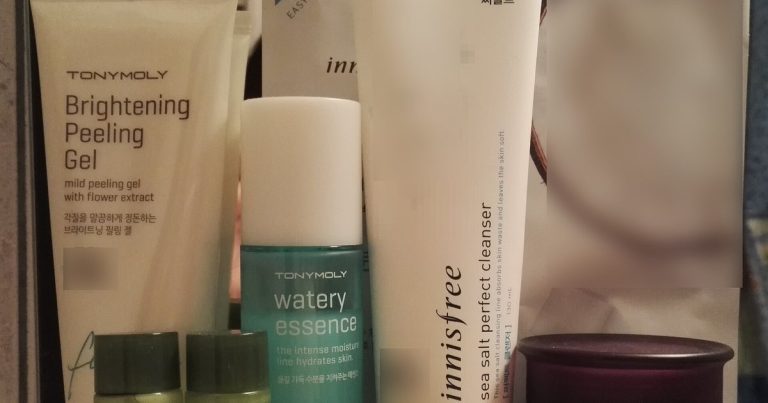
The famous 10-step routine isn’t what Koreans with breakouts actually use. Most people in Seoul who deal with what they call teureobeul (트러블, “trouble”), the everyday Korean word for breakouts, keep things short: wash gently, treat with one product, moisturize lightly, protect, and patch the spots that flare up.
- Cleanse with a low-pH gel or low-foam cleanser, morning and night.
- Treat with a single targeted product: a BHA liquid, a niacinamide serum or a centella ampoule (a concentrated serum).
- Moisturize with a light gel-cream, even if your skin feels oily.
- Protect every morning with sunscreen that carries both SPF and a PA rating.
- Spot-treat with hydrocolloid pimple patches when a whitehead appears.
Here is how those steps line up in practice.
| Step | What Koreans call it | When | What to look for | Skip it if |
|---|---|---|---|---|
| 1. Cleanse | 약산성 클렌저 (yaksanseong, “weakly acidic” cleanser) | Morning and night | Gel or low-foam texture, “low pH” on the label | Your face feels squeaky and tight afterwards |
| 2. Treat | 앰플 or 세럼 (ampoule or serum), 토너 (toner) | BHA at night; centella and niacinamide either time | One active, clearly named on the front | You already use prescription acne medication and your doctor hasn’t approved it |
| 3. Moisturize | 수분크림 (subun keurim, “water cream”) | Morning and night | Gel-cream or light lotion | It’s a rich balm or face oil going on breakout areas |
| 4. Protect | 선크림 (seonkeurim, sun cream) | Every morning | SPF plus PA+++ or PA++++, fluid or gel texture | Never skip this step |
| 5. Spot care | 여드름 패치 (yeodeureum paechi, acne patch) | Day or overnight | Plain hydrocolloid patch | The bump is deep and sore with no visible head |
Why Korean routines treat breakouts gently
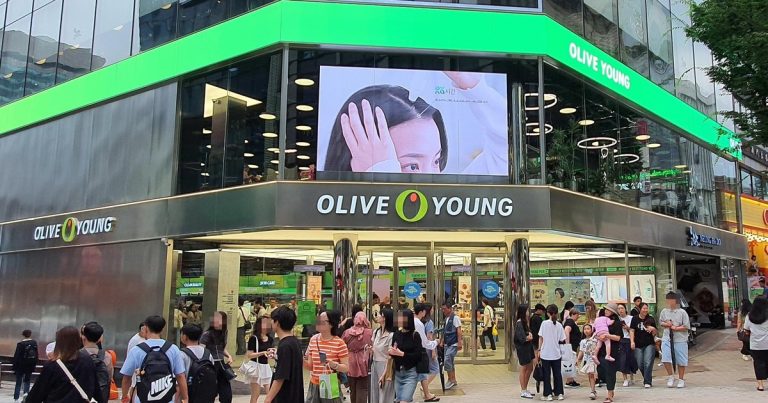
Walk the skincare aisles at Olive Young, Korea’s biggest health-and-beauty chain, and you’ll see acne products sorted into two broad camps. One camp is jinjeong (진정, “soothing”): products that calm redness and irritation. The other is gakjil (각질, “dead skin”) care: exfoliants that clear out pores. Korean shoppers with acne-prone skin usually buy from the soothing camp first and add exfoliation carefully.
The reason is simple. Harsh cleansers, alcohol-heavy toners and daily scrubbing can leave skin tight, flaky and still breaking out. A damaged barrier also stings more when you put actives on it, so you end up abandoning the products that might actually help.
The other Korean habit is paying attention to pH. Healthy skin sits on the slightly acidic side, and Korean cleanser labels often advertise 약산성 (weakly acidic) because so many shoppers look for it. Few Western drugstore cleansers mention their pH at all, which is one reason Korean cleansers built a following abroad.

Centella, tea tree, BHA and niacinamide: what each one does
These four ingredients show up on almost every Korean acne shelf, and they do different jobs. Choose based on what your breakouts look like, not on which bottle is trending.
Centella asiatica (병풀, cica): for red, irritated skin
Centella, called byeongpul in Korean and sold as “cica”, is a plant extract long used in skincare to soothe. Its well-known compounds include madecassoside and asiaticoside. It doesn’t unclog pores. What it does is help calm the angry, stinging skin that often comes with breakouts and with acne treatments. SKIN1004’s Madagascar Centella Ampoule and Dr.Jart+’s Cicapair line are among the centella products you’ll find on every Korean shelf.
- Good for
- Redness, sensitivity, skin that stings when you use exfoliants
- Skip it if
- You’ve reacted to centella before; plant extracts can still cause allergies
- How to use
- After cleansing, as an ampoule, toner or cream, morning and night
- Key ingredients
- Centella asiatica extract, madecassoside, asiaticoside
Tea tree (티트리): for oily skin with surface bumps
Tea tree oil is a classic acne-care ingredient, and Korean brands put it in toners, gels and spot treatments; Some By Mi’s AHA BHA PHA line is one well-known example. The warning here is about strength. Pure tea tree essential oil dabbed straight onto skin can irritate badly, so stick to finished, formulated products and never apply the undiluted oil.
- Good for
- Oily skin with small, frequent surface breakouts
- Skip it if
- Your skin is dry or sensitive, or you react to fragrance and essential oils
- How to use
- In a formulated toner or spot gel; patch test first
- Key ingredients
- Melaleuca alternifolia (tea tree) leaf oil or extract
BHA (salicylic acid): for blackheads and clogged pores
BHA stands for beta hydroxy acid, and in skincare it usually means salicylic acid or a gentler relative like betaine salicylate. It’s oil-soluble, so it can work inside the pore, which makes it the go-to for blackheads, whiteheads and that rough, bumpy texture. COSRX’s BHA Blackhead Power Liquid is the bottle most Koreans and foreign K-beauty fans recognize.
- Good for
- Blackheads, closed comedones (small flesh-colored bumps), oily T-zone
- Skip it if
- You’re allergic to aspirin (ask a pharmacist or doctor first), your barrier is already raw, or you’re pregnant and haven’t checked with your doctor
- How to use
- At night after cleansing, starting 2 or 3 nights a week; don’t layer it with other exfoliating acids; wear sunscreen the next day
- Key ingredients
- Salicylic acid or betaine salicylate
Niacinamide (나이아신아마이드): for oil and lingering marks
Niacinamide is a form of vitamin B3. It’s popular in Korea for oily skin, uneven tone and the flat red or brown marks that stay behind after a pimple heals. It sits comfortably in most routines and pairs well with BHA. Some people do get a warm flush or tingling from high-strength serums, so a moderate product is a better first choice than the strongest one on the shelf.
- Good for
- Shine, the look of enlarged pores, post-acne marks
- Skip it if
- You flush or itch after using it
- How to use
- Morning or night as a serum or toner, before moisturizer
- Key ingredients
- Niacinamide, often paired with zinc in oil-control products
Heartleaf (어성초): the Korean favorite you’ll keep seeing
Heartleaf, eoseongcho in Korean, is a plant extract that Korean brands market for calming oily, breakout-prone skin. Anua’s heartleaf toner made it famous outside Korea. Think of it as a gentle soothing toner step, in the same family as centella, rather than a treatment.
How to cleanse acne-prone skin the Korean way
Cleansing is where most people with acne go wrong, usually by doing too much. The Korean method is gentle and short.
Do you need double cleansing for acne?
Only on days you wear sunscreen or makeup, which for most Koreans is every day. Ijung sesaan (이중세안, “double cleansing”) means an oil or balm cleanser first to dissolve sunscreen, then a water-based cleanser to wash everything away. Pick an oil cleanser that turns milky when you add water and rinses clean. If a particular oil cleanser seems to bring on breakouts, switch to a cleansing water or milk for the first step.
The routine, step by step
- Rinse your face with lukewarm water, never hot.
- Massage the oil cleanser over dry skin with your fingertips, add a little water, then rinse.
- Lather a pea-sized amount of low-pH gel cleanser, such as COSRX’s Low pH Good Morning Gel Cleanser, and wash for about the length of a slow count to thirty.
- Rinse well along the hairline and jaw, where cleanser often gets left behind.
- Pat dry with a clean towel and apply your next step while the skin is still slightly damp.
In the morning, a quick wash with the same gel cleanser, or even just water if your skin is on the dry side, is enough. Skip the scrubbing brushes and grainy scrubs. They feel productive, but on inflamed skin they mostly add irritation.
How to use pimple patches (여드름 패치) properly
Pimple patches are one of the most ordinary things in Korean daily life. You’ll see office workers and students wearing them on the subway without a second thought. The classic is COSRX’s Acne Pimple Master Patch, and nearly every Korean pharmacy and Olive Young sells some version.
Most of them are hydrocolloid, a gel-forming material first used in wound dressings. It absorbs fluid, keeps the spot covered and stops you from picking.
- Wash and dry the area completely. Patches won’t stick over serum or moisturizer.
- Choose a patch slightly larger than the spot.
- Press it on and leave it for several hours or overnight.
- Remove it when it turns white and puffy, then replace it if the spot is still draining.
Be realistic about what they can do. A patch helps most on a whitehead that has come to a head. On a deep, sore lump with no head, a plain patch has little to absorb. Some brands sell “micro-point” patches for early bumps, and results with those vary.
The big benefit is that you stop squeezing. In Korea, apchul (압출, “extraction”) is something people get done at a dermatology clinic, not with their fingernails in front of the bathroom mirror.
Best Korean sunscreen for acne-prone skin: what to look for
Koreans wear sunscreen every day, in winter and on cloudy days too. If you have acne, this step pulls double duty, because UV exposure can make red and brown post-acne marks darker and slower to fade, and some acne actives leave your skin more sensitive to the sun.
What does PA+++ mean on Korean sunscreen?
PA stands for Protection Grade of UVA, a rating system used in Korea and Japan. More plus signs mean more UVA protection, up to PA++++. SPF measures UVB protection. For daily wear, look for both numbers on the tube.
Which textures suit breakout-prone skin?
Gel and fluid textures, often labeled “watery sun gel” or “sun serum”, feel lightest on oily skin. Isntree’s Hyaluronic Acid Watery Sun Gel and Beauty of Joseon’s Relief Sun are two that Koreans and foreign shoppers both buy a lot. Tone-up creams, which leave a white brightening cast, are popular in Korea but can feel heavy on oily skin. A “non-comedogenic” label is a helpful guide, not a guarantee, so give any new sunscreen the same patch test and two-week trial as everything else.
Reapply when you’re outdoors for long stretches, and wash sunscreen off properly every night. Sleeping in it is one of the most common causes of clogged pores along the jaw. For more on how Korean women build sunscreen into longer routines as they age, see our guide to Korean skincare for anti-aging.

What to avoid when you have acne-prone skin
Most acne routines fail because of what people add, not what they leave out. These are the mistakes Korean skincare shop staff and dermatologists warn about most often.
- Stacking exfoliants. BHA toner, AHA serum and an exfoliating pad on the same night is a fast route to raw, stinging skin.
- Daily exfoliating toner pads. Korean toner pads are convenient, but many contain acids. Check the label before you use them every day.
- Grainy scrubs and cleansing brushes on active breakouts.
- Heavy oils and balms left on breakout zones overnight.
- Buying the whole viral routine at once. If you break out, you won’t know which of six new products did it.
- Picking and squeezing, which raises the risk of marks and scarring.
- Skipping moisturizer because your skin is oily. Dehydrated, irritated skin handles actives worse.
How to patch test Korean skincare products
A patch test won’t catch every problem, especially clogged pores, which can take weeks to show. It will catch most quick irritation and allergy reactions, and it costs you nothing but patience. Do it for every active and every product with plant extracts or fragrance.
- Apply a small amount to a discreet spot, such as behind the ear or along the side of the neck.
- Repeat once or twice a day for several days, leaving it on as you normally would.
- Watch for itching, burning, swelling or a rash. If you see any, stop and wash it off.
- If it’s fine, try it on one small patch of your face, like the jawline, for a few more days.
- Only then use it on your whole face.
A worked example: starting a centella cream and a BHA liquid
Say you’ve ordered a centella cream and a BHA liquid together. Start the cream first, after a patch test, and use it alone for about two weeks. If your skin stays calm, patch test the BHA, then add it at night on 2 or 3 evenings a week, never on the same night as another exfoliant. Give that combination several weeks before you judge it. If you get a reaction, you’ll know exactly which product caused it.
When to see a dermatologist for acne
Cosmetics can support acne-prone skin, but they aren’t medical treatment. See a dermatologist if any of these apply:
- Deep, painful lumps or cysts under the skin
- Breakouts that leave scars or pitted marks
- No real improvement after a few months of a consistent, gentle routine
- Acne that appears suddenly in adulthood or comes with other symptoms
- Breakouts that knock your confidence, which is a perfectly valid reason on its own
Koreans go to a pibugwa (피부과, dermatology clinic) for acne as routinely as they go to a pharmacy. You’ll find them in nearly every Seoul neighborhood, and people use them for extraction, prescription creams and oral treatment when needed. A dermatologist can prescribe treatments such as retinoids or antibiotics that no Olive Young product replaces. If you’re already on a prescription, ask before adding BHA or other actives. If you’re visiting Korea, our first-timer’s Korea travel tips cover the practical basics of getting around.
FAQ
Is Korean skincare good for acne?
It can suit acne-prone skin well because it favors gentle, low-pH cleansing, soothing ingredients and lightweight textures. The products are cosmetics, though, so they help manage oily, breakout-prone skin rather than treat moderate or severe acne. Persistent or painful acne needs a dermatologist.
Which Korean skincare ingredient is best for acne?
It depends on the type of breakout. BHA (salicylic acid) is the usual pick for blackheads and clogged pores, niacinamide for oil and post-acne marks, and centella or heartleaf for red, irritated skin. Most people do best with one active plus one soothing product.
Can I use BHA and niacinamide together?
Yes, many people use both in the same routine, and the two are widely considered compatible. A simple way is BHA at night and niacinamide in the morning. Introduce them one at a time and patch test each.
Do pimple patches really work?
Hydrocolloid patches work best on a whitehead that has come to a head: they absorb fluid, cover the spot and stop you from picking. They do much less for deep bumps with no head. Think of them as protection and damage control rather than a cure.
Is cica (centella) good for acne-prone skin?
Centella is popular in Korea for calming redness and irritation, which often comes with breakouts and acne treatments. It doesn’t clear clogged pores, so it works best alongside an active like BHA. As with any plant extract, patch test it first.
How long before a Korean acne routine shows results?
Give any new routine several weeks, and change only one product at a time so you can judge it fairly. Some actives can cause a short adjustment period. If things keep getting worse or haven’t improved after a few months, see a dermatologist.
What to try first: a starter Korean acne routine
If you’re starting from scratch, keep it to four products: a low-pH gel cleanser, a light gel-cream moisturizer, a gel sunscreen with a PA rating, and a box of hydrocolloid patches. Run that for two weeks. Then, if blackheads and clogged pores are your main problem, add a BHA liquid on a few nights a week. If redness bothers you most, add a centella or heartleaf soothing product instead.
For buying from abroad, stick to official brand stores and authorized retailers. Popular Korean skincare gets counterfeited on marketplaces, and fakes can contain anything. Olive Young sells internationally online and keeps opening physical stores abroad; according to Drug Store News, it is expanding its store count in Southern California. Our guide to Olive Young Global vs Korea stores explains what to buy where. Check current prices and ingredient lists on the brand’s official page before you order, since formulas get updated.
Related reading

Sources k-korea.blog · news.google.com
Prices, opening hours and availability change. Check the official page before you buy or travel.