10 min read
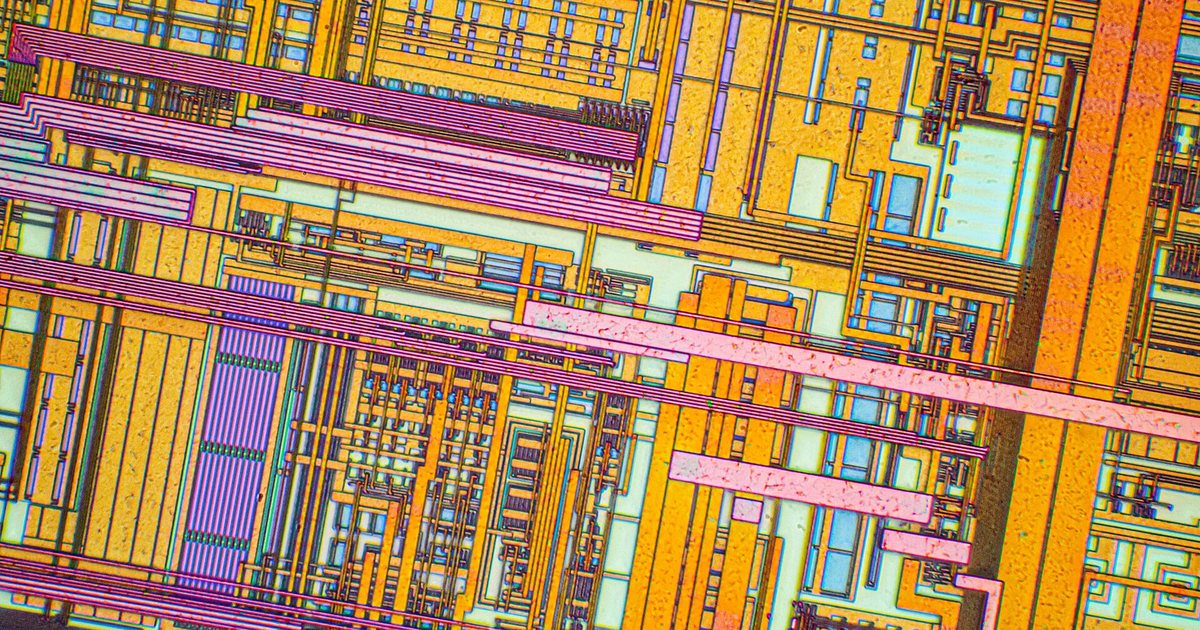
South Korea semiconductor industry explained: it rests on one 1983 bet on memory chips. That year Samsung committed to making DRAM, the working memory inside every computer and phone, and Hyundai founded its own chip arm. Four decades later, Samsung Electronics and SK Hynix make most of the world’s memory. If you own a laptop, a smartphone or shares in an AI company, part of what you rely on comes out of fabs south of Seoul.
This guide covers how the industry was built, why memory and not logic, what the government and the chaebol (Korea’s family-controlled business groups) each did, how the supply chain works, and the risks that could undo it.
Key takeaways
- Samsung’s founder Lee Byung-chul publicly committed the group to DRAM in 1983, and the first Korean 64K DRAM came out the same year.
- Korea’s two leaders are memory makers. Samsung Electronics and SK Hynix dominate DRAM and NAND, while Taiwan’s TSMC leads contract chipmaking (foundry).
- Korea’s edge came from spending heavily during price crashes, when rivals cut back. In memory, the downturn is when market share gets won.
- Chips are Korea’s biggest export item, so a global memory slump hits Korea’s trade figures, its currency and its stock market at once.
Why South Korea dominates memory chips, in one paragraph
Memory chips are close to a commodity. A DRAM chip from one maker can usually replace one from another, so buyers choose on price and supply. The winner is whoever builds the most advanced factories first, gets yields up (yield is the share of chips on a wafer that work) and survives the price crashes. That takes enormous capital, patience and a willingness to lose money for years. Korean conglomerates had all three, plus a government that saw chips as a national project.
Logic chips, such as the processors Apple or Nvidia design, are a different business. Design is spread across thousands of companies and the manufacturing is concentrated at TSMC. Korea chose the segment where scale and manufacturing discipline matter more than a big ecosystem of design firms, and it played that hand well.
How Samsung and Hyundai bet on DRAM in the 1980s
Samsung entered semiconductors in the 1970s by buying a small Korean chip firm, but it was the February 1983 announcement in Tokyo by Lee Byung-chul, Samsung’s founder, that set the course. Samsung would make VLSI memory (very-large-scale integration, meaning chips with hundreds of thousands of transistors). Many inside and outside Korea thought it was reckless. Japanese and American firms owned the market and Korea had little of the know-how.
Samsung moved fast anyway. It licensed designs, recruited Korean engineers who had trained and worked in the United States, and built production lines at Giheung, south of Seoul, at a pace that surprised rivals. The same year, Hyundai set up Hyundai Electronics, and Goldstar (today’s LG) pushed into chips too.
Why the timing worked
The mid-1980s were brutal for memory. Prices collapsed and Korean newcomers lost heavily.
Two outside shifts helped them. The 1986 US-Japan semiconductor agreement pushed Japanese makers to stop selling below cost, which lifted prices and gave Korean producers room to breathe. American PC companies also wanted a second source of memory that was not Japanese. Korea supplied it.
By the early 1990s, Samsung had become the world’s largest DRAM maker, a position it has held for most of the time since.

How Korea won memory chip dominance in the 1990s and 2000s
Korean chipmakers learned one lesson early and repeated it: invest hardest when prices are worst. Memory runs in sharp cycles. Demand jumps, everyone builds fabs, supply floods the market, prices crash, weaker players exit. Samsung kept spending through those crashes and came out each time with a bigger share and newer technology.
The consolidation that created SK Hynix
The 1997 Asian financial crisis forced Korea to restructure its chaebol. In a government-brokered swap known as the “Big Deal”, LG’s chip business was merged into Hyundai Electronics in 1999. The combined company carried huge debts, was split from the Hyundai group and renamed Hynix in 2001, and survived a long creditor-led rescue. SK Group, the energy and telecom conglomerate, bought it in 2012, and it became SK Hynix.
Abroad, the cycles wiped out or merged rivals. Germany’s Qimonda went bankrupt in 2009 and Japan’s Elpida in 2012 (it was later bought by Micron). By the 2010s, DRAM had narrowed to three big makers: Samsung, SK Hynix and Micron of the United States. Two of the three are Korean.
From DRAM to NAND and HBM
Korea repeated the formula in NAND flash, the storage memory in phones and SSDs, where Samsung also became the largest maker. The latest chapter is HBM (high-bandwidth memory, stacks of DRAM chips joined vertically and placed next to an AI processor). SK Hynix bet early on HBM and has been widely reported as the main supplier to Nvidia’s AI accelerators. Our explainer on what HBM memory is and why SK Hynix makes it covers the technology step by step.
What role did the Korean government and the chaebol play?
A common story says the Korean state built the chip industry. That is half right. The government set direction and lowered costs, but the money and risk came mostly from the chaebol.
What the state did
- Research coordination. In the mid-to-late 1980s, the state research institute ETRI (Electronics and Telecommunications Research Institute) ran joint projects with Samsung, Goldstar and Hyundai to develop 4-megabit DRAM and later generations, sharing cost and talent.
- Cheap capital and tax breaks. Policy loans, tax credits for investment and support for industrial parks cut the cost of building fabs.
- Engineers. Heavy spending on science and engineering universities, such as KAIST, created a steady pipeline of graduates.
- Infrastructure. Power, water and land for clusters such as Giheung, Hwaseong, Pyeongtaek and Icheon in Gyeonggi Province.
What the chaebol did
Family control let founders make decade-long bets without worrying about next quarter’s profit. Profits from other businesses (electronics, construction, trading) could subsidize years of chip losses. The groups also controlled their own customers: Samsung’s phones, TVs and PCs gave its memory division a built-in buyer.
The trade-off is concentration. A large share of the industry depends on two companies, and their decisions move the whole economy. For a side-by-side look at how the two differ, read Samsung vs SK Hynix: 5 differences.
South Korea semiconductor industry explained, from wafer to your phone
Korea’s strength is concentrated in one link of a long chain. Knowing where it is strong and where it depends on others explains most of the risks.
| Step in the chain | What happens | Korea’s position | Who else matters |
|---|---|---|---|
| Chip design tools and IP | Software and licensed blueprints for designing chips | Small | US firms dominate; Arm (UK) for processor designs |
| Equipment | Lithography, etching, deposition machines | Growing local suppliers, but key tools are imported | ASML (Netherlands) for EUV lithography; US and Japanese toolmakers |
| Materials | Wafers, photoresist, specialty gases and chemicals | Partly local, still reliant on Japan for some high-purity items | Japanese chemical makers |
| Memory manufacturing | Making DRAM, NAND and HBM in fabs | World leader (Samsung, SK Hynix) | Micron (US), Kioxia (Japan), Chinese newcomers |
| Foundry (contract making of logic chips) | Making chips other companies design | Samsung is a distant second | TSMC (Taiwan) leads by a wide margin |
| Packaging and testing | Stacking, connecting and testing finished chips | Strong for memory, critical for HBM | Taiwan and Southeast Asia for many logic chips |
A worked example: one AI server
Take a single AI server. The processor is designed in California, built at TSMC in Taiwan, and surrounded by HBM stacks likely made in Icheon or Cheongju by SK Hynix, or by Samsung or Micron. The machines that printed those memory chips came largely from the Netherlands, the United States and Japan. Korea owns the memory. It does not own the chain.
Memory vs foundry: where Korea leads and where it trails
Samsung decided in the 2010s that memory alone was not enough. It expanded its foundry business to compete with TSMC for orders from chip designers, and it has been building a fab in Taylor, Texas. Progress has been harder than in memory, because foundry customers want a trusted partner, a deep library of design tools and a supplier that is not also a competitor. Samsung makes its own phone processors, which some customers see as a conflict.
SK Hynix stayed focused on memory, and the AI boom rewarded that focus. The contrast is a good lesson: Korea’s model works best where manufacturing scale decides the winner.
What are the biggest risks to South Korea’s chip industry?
The memory cycle
Memory profits swing wildly. A record year can be followed by losses within months when supply catches up with demand. Because chips are Korea’s largest export, the cycle feeds straight into GDP, the won and the KOSPI (the main Korean stock index).
Geopolitics and export controls
China is a huge customer and also home to Samsung and SK Hynix factories. US export controls on advanced chipmaking tools to China have left Korean companies managing plants there under special arrangements. Any tightening affects them directly.
Supply chain choke points
In 2019, Japan tightened export rules on three materials Korean chipmakers used: photoresist, high-purity hydrogen fluoride and fluorinated polyimide. Production did not stop, but the episode pushed Korea to develop local suppliers and diversify. Reliance on a few foreign toolmakers, ASML above all, remains.
People, power and North Korea
Korea’s low birth rate threatens the future supply of engineers, and new fabs need vast amounts of electricity and water, which is why the planned Yongin mega-cluster debates are mostly about power lines and water pipes. The fabs also sit within reach of the inter-Korean border, a risk investors have long priced in; our guide to North Korea vs South Korea differences gives the background.
Who are South Korea’s chip rivals?
- Micron (US): the third big DRAM maker and an HBM competitor, with backing from US industrial policy.
- TSMC (Taiwan): not a memory rival, but the benchmark in foundry and a key partner for HBM packaging with AI processors.
- Chinese memory makers: CXMT in DRAM and YMTC in NAND, supported by the Chinese state. Their rise in older, cheaper chips is the long-term pressure Korea watches most.
- Kioxia (Japan): a major NAND producer.
The pattern is familiar. Korea once took memory from Japan by out-investing it during downturns. China is now trying a version of the same playbook, with even deeper state funding.
What the chip giants did in the market this week
Korean chip stocks bounced hard after a steep fall. According to Yahoo Finance data as of November 10, 2026, SK Hynix closed at 1,193,000 won, up 5.02% on the day but down 25.67% over one month, while Samsung Electronics closed at 196,800 won, up 3.63% on the day and down 21.44% over one month. The KOSPI rose 3.19% to 5,178.99, still 18.88% lower than a month earlier. The US Philadelphia Semiconductor Index gained 6.85% on November 9.
KED Global reported that Korean stocks rebounded as chip giants led the recovery, tracking a rally in US tech shares. The WSJ reported that SK Hynix plans $75 billion in shareholder returns after blockbuster earnings. The Hankyoreh asked whether a scandal at Nvidia could rattle Korea’s semiconductor industry, and THE ELEC reported that Korea partnerships with Nvidia are proceeding. The details of that story are still developing, so read the original reports before drawing conclusions.
The takeaway for readers abroad: Korean chip stocks now move with the global AI trade, sometimes more sharply than US chip stocks. This is not investment advice.
FAQ
Why is South Korea so good at making semiconductors?
Korea focused on memory, a segment where manufacturing scale and speed decide the winner. Samsung and SK Hynix spent heavily through price crashes while rivals cut back, and the government supported them with research projects, tax breaks, infrastructure and engineering education.
Does South Korea make the most chips in the world?
It leads in memory chips (DRAM and NAND), not in every kind of chip. Taiwan’s TSMC makes most of the world’s advanced logic chips under contract. Asking which country makes “the most chips” depends on which type you count.
What is the difference between Samsung and SK Hynix?
Samsung Electronics is a giant that makes memory, foundry chips, phones, TVs and appliances. SK Hynix, part of SK Group, makes almost only memory and has been widely reported as a leading HBM supplier for AI chips.
What is a chaebol and why does it matter for chips?
A chaebol is a large Korean business group controlled by a founding family, such as Samsung or SK. Their size and long-term family control allowed decade-long chip investments that a smaller company could not have funded or survived.
How can foreigners invest in Korean chip companies?
Samsung Electronics and SK Hynix trade on the Korea Exchange, and some international brokers offer access to Korean shares. Funds and ETFs focused on Korea or on semiconductors often hold both. Check your broker and each fund’s official holdings page, and note that this is not investment advice.
Can China catch up with Korea in memory chips?
Chinese makers such as CXMT and YMTC have grown quickly with state support, especially in less advanced products. Korea still leads at the cutting edge, including HBM, but US export controls and Chinese subsidies make this the rivalry to follow.
What to watch next in Korean chips
Watch four things. First, memory prices and quarterly results from Samsung Electronics and SK Hynix, published on their investor relations pages, which show whether the AI demand behind HBM is holding. Second, follow-up reporting on the Nvidia story the Hankyoreh and THE ELEC covered, because Nvidia is the biggest single customer for Korean HBM.
Third, any change to US export controls on chipmaking tools for China, where both Korean companies run factories. Fourth, progress on the Yongin cluster’s power and water supply, which decides how fast Korea can add capacity. For the company-level picture, start with our Samsung vs SK Hynix comparison.
Related reading
Sources k-korea.blog · news.google.com
Prices, opening hours and availability change. Check the official page before you buy or travel.