13 min read
Who is Faker? He is Lee Sang-hyeok (이상혁), the South Korean mid laner who has played League of Legends for T1 since 2013. By 2024 he had won five World Championships, more than any other player in the game’s history, and he did it without ever leaving the team that signed him as a teenager.
That loyalty is half the story. The other half is a playing career that has lasted more than a decade at the top of a game where most pros burn out after three or four years. For fans abroad, that’s why the name keeps coming up even if you have never opened the client.
Key takeaways
- Faker’s real name is Lee Sang-hyeok (이상혁), born in Seoul in 1996, and he plays the mid lane.
- He won Worlds with T1 in 2013, 2015, 2016, 2023 and 2024, a span of 11 years between the first and fifth titles.
- He has played his whole pro career for one organization, known first as SK Telecom T1 and later as T1.
- Riot Games made him the first inductee of its Hall of Legends in 2024.
Who is Faker? The short answer for non-gamers
League of Legends (often shortened to LoL) is a five-versus-five team game made by Riot Games. Each player takes one role: top, jungle, mid, bottom (the ADC, or attack damage carry) and support. Faker plays mid, the lane through the center of the map, which tends to be the position that decides fights and sets the tempo.
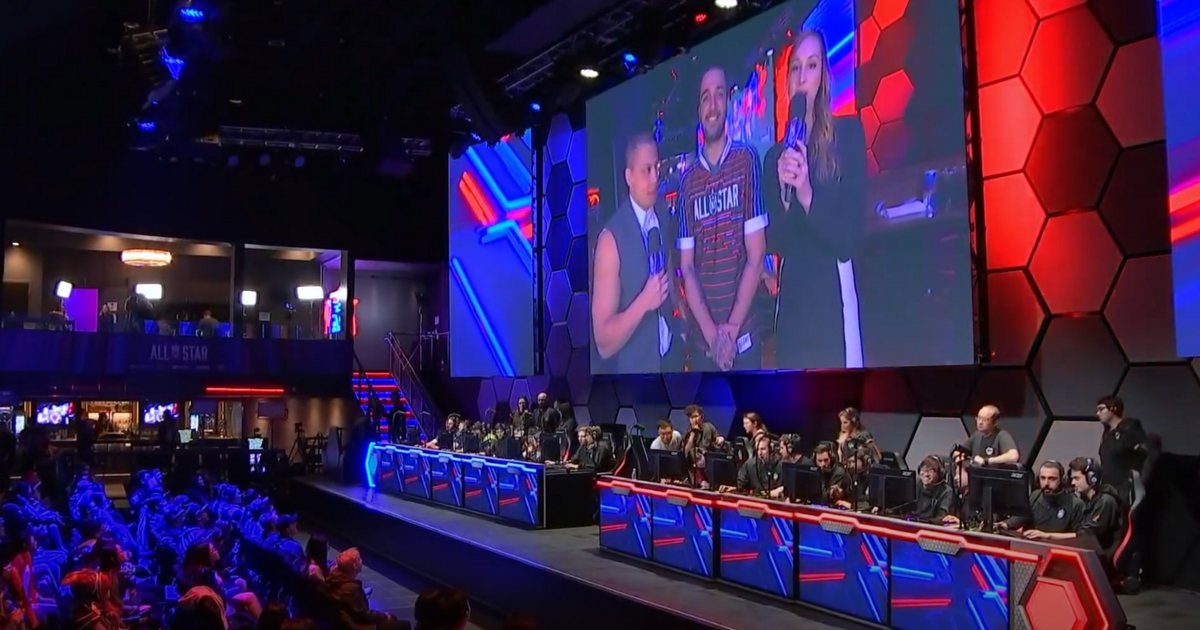
He competes in the LCK (League of Legends Champions Korea), Korea’s top professional league, which Riot runs. The best LCK teams qualify for the yearly World Championship, called Worlds, which is the biggest event in the game. Faker winning Worlds is roughly what a fifth Champions League title would mean for a football player who never changed clubs.
What does the name “Faker” mean?
It’s simply his in-game handle. Before turning pro he was already famous in the Korean solo queue (the ranked ladder anyone can play) under the name GoJeonPa (고전파), and he switched to Faker when he joined SK Telecom T1. The nickname you’ll hear more in Korea is 불사대마왕 (bulsa daemawang), usually translated as “Unkillable Demon King”. Fans abroad mostly just call him God or the GOAT, short for greatest of all time.
Why is he famous outside esports?
Because he’s one of very few gamers who has become a mainstream Korean public figure. He has appeared in national advertising campaigns, spoken at public events, and represented South Korea on the national esports team. In a country where pro gaming started with StarCraft on cable TV, he is the bridge between that first era and today’s global audience.
Faker’s career with T1, year by year
The quickest way to understand Faker is to follow his results, because the highs and the slumps both shaped how people talk about him. T1 itself went through a rebrand along the way: it started as SK Telecom T1 (SKT), the team of Korea’s largest mobile carrier, and became T1 in 2019 when SK Telecom formed a joint venture with Comcast Spectacor, the US sports and entertainment company. If you want the wider picture of who owns which team, our guide to Korean esports teams and their owners lays it out.
| Year | What happened | Why it matters |
|---|---|---|
| 2013 | Debuted with SK Telecom T1 K, won the OGN Champions Summer league and then Worlds, beating Royal Club 3-0 in the final in Los Angeles | Champion in his first pro season, aged 17 |
| 2014 | Missed Worlds after Samsung White took Korea’s spot | Proved he could lose, which made later wins mean more |
| 2015 | Won Worlds in Berlin, beating KOO Tigers 3-1 | Second title with a rebuilt SKT roster |
| 2016 | Won MSI and then Worlds, beating Samsung Galaxy 3-2 in Los Angeles; named Worlds MVP | First back-to-back Worlds winner |
| 2017 | Won MSI again; lost the Worlds final 0-3 to Samsung Galaxy in Beijing | The famous image of him crying on stage |
| 2018 | SKT failed to qualify for Worlds | The low point of his career |
| 2019 | Reached the Worlds semifinal in Paris, lost to G2 Esports | T1 back near the top |
| 2022 | Lost the Worlds final 1-3 to DRX in San Francisco | Showed he could still carry a team deep into Worlds |
| 2023 | Won Worlds at home in Seoul, beating Weibo Gaming 3-0 | First title in seven years, after missing games with an arm injury that summer |
| 2024 | Won Worlds in London, beating Bilibili Gaming 3-2; named Finals MVP; first Hall of Legends inductee | Fifth title, eight years after his second MVP-level run |
The 2013 to 2017 dynasty
SKT dominated these years with Faker as the center of gravity. Three Worlds titles in four years plus two MSI trophies (the Mid-Season Invitational, Riot’s spring international event) built the idea that Korean League of Legends was simply on another level. His domestic haul in the LCK also grew into double digits over his career, a record for the league.
The slump and the long road back
Between 2018 and 2022, T1 went through roster changes, coaching changes and near misses. Plenty of pundits wrote him off as past his peak. What makes the later titles stand out is that he adjusted his game instead of chasing his teenage form, which we come to below.
The 2023 and 2024 titles
Winning in 2023 at Gocheok Sky Dome in Seoul, in front of a home crowd, gave Korea a sports moment that spilled well beyond gaming news. Doing it again in 2024 in London settled most of the remaining GOAT arguments. For anything after that, including current results and the active roster, check the official LoL Esports site or T1’s official channels, since rosters change each season.
Why Faker is called the GOAT of League of Legends
GOAT debates usually come down to three things: titles, peak and longevity. Faker leads on all three, and that’s rare. Most players who win early fade, and most late bloomers never had an early peak.
| GOAT test | Faker’s case | Why rivals fall short |
|---|---|---|
| Worlds titles | Five by 2024 (2013, 2015, 2016, 2023, 2024) | No other player had reached that count by 2024 |
| Peak | Three titles in his first four years, plus two MSI wins | Few players have dominated a full era like that |
| Longevity | Eleven years between his first and fifth Worlds titles | Most pros retire within a few years of their best season |
| Loyalty | One organization for his whole career | Top players usually move teams for money or a better roster |
| Recognition | Worlds MVP 2016, Finals MVP 2024, first Hall of Legends inductee in 2024 | Riot picked him first for a reason |
Is Faker the best League of Legends player ever?
By trophies, yes, and by a margin. The more interesting point is that he won as two different kinds of player. The 2013 Faker won fights by out-dueling everyone in his lane. The 2024 Faker won by making his teammates’ jobs easier and making very few mistakes in the biggest games.
What about the losses?
His record includes painful finals, especially 2017 against Samsung Galaxy and 2022 against DRX. Fans in Korea tend to count those in his favor: reaching a Worlds final is itself a career highlight for most pros, and he has done it many times.
What makes Faker’s playing style different
If you watch an old Faker highlight reel next to a recent match, you might think it’s two players. That shift is the key to his career.
Early Faker: mechanics and outplays
In his first years he was known for raw mechanical skill, meaning how fast and precisely he controls his champion. He would bait opponents into fights they thought they were winning, dodge key abilities by inches, and turn them around. This is where the Unkillable Demon King name came from: he survived situations that should have killed him.
Later Faker: map control and team play
As the game changed and team coordination became more important, Faker moved toward what analysts call a playmaker or enabler style. He picks champions that help his team fight, uses roaming (leaving his lane to help other lanes) to create advantages elsewhere, and focuses on wave management, which is how a player controls the waves of computer-controlled minions to gain time and space. It’s less flashy and arguably harder.
A huge champion pool
League has well over 150 playable characters, called champions. Faker has won big games on assassins, mages and utility picks, which makes it hard for opponents to ban his best options in the pick-and-ban phase (draft) before each game.
What you can learn from his style if you play
Don’t copy his mechanics, you won’t. Copy the habits: watch the minimap constantly, track where the enemy jungler is, think about where your minion wave will be in 30 seconds, and choose champions that fit what your team needs. That is the part of Faker’s game that transfers to a normal ranked match.
Faker’s signature champions and famous plays
Fans abroad often search for specific champions tied to his career. These are the ones that come up most, with why each matters.
- Zed: his 2013 Zed mirror match against Ryu, then KT’s mid laner, in the OGN Champions Summer 2013 final run, is still the most shared clip in League history. He survived at very low health and won the duel.
- Ryze, Syndra and Ahri: champions linked to his Worlds runs; Riot makes a commemorative skin for each title-winning player, and these picks became part of that tradition.
- LeBlanc: a slippery assassin that suited his early outplay style and became a fan favorite.
- Azir and Orianna: control mages that reward positioning and patience, central to his later, team-first approach.
- Galio: a tanky utility pick that sums up later Faker, used to arrive in a fight at the right moment and protect teammates.
To check which champions he plays in a current season, look at the LCK’s official match pages or the stats sections on LoL Esports, since picks change with every game patch.
Faker’s role in Korean esports culture
Korea has treated competitive gaming as a real sport since the StarCraft boom of the late 1990s, when matches ran on cable channels and pro players had fan clubs. Our piece on how StarCraft built Korean esports covers that first era. Faker is the figure who carried that culture into the League of Legends age and then to a global audience.
Asian Games gold and military service
Most South Korean men must do military service, usually around 18 months to two years depending on the branch. Athletes who win Asian Games or Olympic gold can receive an exemption. Esports was a medal event for the first time at the Hangzhou 2022 Asian Games, held in 2023, and South Korea won League of Legends gold with Faker on the roster, which gave the team that exemption. For Korean fans this was a symbolic moment: gaming treated legally like any other national sport.
Part-owner of T1
In 2020, T1 announced a new contract that made Faker a part-owner of the team and set him up for a future executive role. It’s an unusual arrangement in esports and it fits his image: someone the organization is built around, not just a star on a payroll.
Why Koreans respect him beyond the game
His public image is calm, modest and studious. He is known for reading widely and for measured answers in interviews, and he largely stays out of controversy. In a culture where seniority and sincerity matter (our guide to Korean honorifics explains why respect shows up even in how people address each other), that combination has made him a role model that parents, not just gamers, recognize. Younger LCK players often describe facing him as a career milestone.
The PC bang connection
Many Korean pros, Faker’s generation included, grew up gaming in PC bangs, the 24-hour internet cafés found on almost every Korean street. That’s where solo queue reputations like his GoJeonPa name got started. If you’re curious why Korea keeps producing elite players, our explainer on why Korea is good at League of Legends walks through the system behind it.

How to watch Faker and T1 from abroad
You don’t need to be in Korea or speak Korean to follow him. The LCK streams official broadcasts with English commentary, and Worlds is broadcast in many languages.
| What you want | Where to look | Tip |
|---|---|---|
| Live LCK matches | LoL Esports site and the LCK’s official YouTube and Twitch channels | Check the official schedule, because Korean evening matches land in the morning in Europe and overnight in the Americas |
| Worlds and MSI | LoL Esports site and Riot’s official channels | Riot announces host cities and dates each year |
| Faker’s own content | T1’s official channels and his official streams | Follow the links from T1’s official site to avoid fake accounts |
| Watching in person in Seoul | LoL Park in Jongno, the LCK’s dedicated arena | Ticketing runs online and sells out fast for T1 games; check LCK’s official ticketing page |
| Highlights and VODs | LoL Esports VOD section and official YouTube | Good for catching up on finals you missed |
A worked example: following one T1 season from overseas
Say you live in London and want to follow T1 for a season. Bookmark the LCK schedule on LoL Esports and set it to your local time zone. Watch live when matches fall on weekends, and use the official VODs for weekday games that land during work. When the international events come around, MSI mid-year and Worlds in the autumn, the time zone depends on the host city, which Riot announces in advance. That’s the whole system, and it costs nothing beyond your internet connection.
Common myths and mistakes about Faker
“He’s just a fast-fingered gamer”
His mechanics made him famous, but his later titles came mostly from decision-making, draft flexibility and team play. Analysts who break down his recent games focus on positioning and timing, not reflexes.
“He has always been the best in every game”
He has had bad years. In 2018 his team missed Worlds entirely, and he lost three Worlds finals in his career. The greatness is in coming back, not in never losing.
“T1 and SKT are different teams”
They’re the same organization. SK Telecom T1 became T1 in 2019 after the joint venture with Comcast Spectacor. Old SKT highlights and new T1 matches are one continuous story.
“You need to play League to enjoy watching him”
It helps, but the big finals are easy to follow: watch the gold lead, the towers and the big team fights. Casters explain the key plays, and his reputation means the broadcast usually points out what he’s doing.
FAQ
What is Faker’s real name?
His real name is Lee Sang-hyeok, written 이상혁 in Hangul. Some English sources spell it Lee Sang-hyuk. He was born in Seoul in 1996.
How many Worlds has Faker won?
By the end of 2024 he had won five League of Legends World Championships: 2013, 2015, 2016, 2023 and 2024. All five came with the same organization, SK Telecom T1 and later T1. For any titles after that, check Riot’s official LoL Esports site.
What team does Faker play for?
He has played his entire career for T1, which competed as SK Telecom T1 until 2019. T1 is based in Seoul and plays in the LCK, Korea’s top League of Legends league. For the current roster, check T1’s official site, since lineups change between seasons.
Why is Faker called the Unkillable Demon King?
The nickname, 불사대마왕 in Korean, comes from his early career, when he kept surviving fights that looked lost and turning them into wins. It stuck as a sign of respect and is still used by Korean fans and commentators.
Is Faker rich?
His salary and earnings are not officially published, so any figure you see online is an estimate. What is public is that T1 made him a part-owner under a 2020 contract. Treat specific numbers in viral posts with caution.
Did Faker do military service?
He was on South Korea’s League of Legends team that won gold at the Hangzhou 2022 Asian Games, held in 2023. Asian Games gold medalists are eligible for an exemption from mandatory military service, which applied to that team.
What to watch next if you’re new to Faker
Start with three matches: the 2013 Zed duel against Ryu, the 2016 Worlds final against Samsung Galaxy, and the 2023 Worlds final in Seoul. Watched in that order, they show the young outplay artist, the dynasty leader and the veteran playmaker. All are on official LoL Esports and LCK channels.
After that, pick a current LCK week and watch T1 live, ideally a match against a long-time rival like Gen.G. If you get hooked on the scene, the next step is learning who the other Korean teams are and why the league produces so many top players. And if you’re ever in Seoul during the season, a night at LoL Park is the closest thing to seeing a Korean sports legend at his home ground. Check the official ticketing page early.
Related reading
Sources k-korea.blog
Prices, opening hours and availability change. Check the official page before you buy or travel.