10 min read
Why Korea is good at League of Legends: its teams won every Worlds title from 2013 to 2017. That run grew out of two decades of groundwork: PC bang culture, a ladder packed with elite players on one fast server, team houses that make practice a full-time job, and the LCK, which Riot Games has run as a franchised league since 2021.
If you follow the game from abroad, this is useful to know. Many of the strategies and players you later see at Worlds show up in the LCK first, and every match streams free on official channels.
Key takeaways
- Korean teams won 9 of the 14 World Championships held from 2011 to 2024, including five in a row from 2013 to 2017.
- The LCK has been a 10-team franchise league with no relegation since 2021, and the LCK Challengers League sits below it for academy rosters.
- Korean pros live and train in team houses: scrims against other teams by day, solo queue on the Korean server by night.
- You can watch every LCK match free at LoL Esports, on YouTube and on Twitch. Games run in the Korean evening (KST, UTC+9).
Why Korea is good at League of Legends: the 5 reasons
Other countries have some of these pieces. Korea had all five at once, and had them early.
- Infrastructure came first. Fast, cheap broadband and thousands of PC bangs (hourly-rate internet cafes) made competitive PC gaming a normal teenage hobby from the late 1990s.
- The esports habit already existed. StarCraft: Brood War gave Korea pro teams, TV channels, star casters and KeSPA (the Korea e-Sports Association, founded in 2000) years before League of Legends launched.
- Solo queue is brutal. One Korean server with low ping for nearly everyone means pros, amateurs and scouts all grind the same ladder, and you can’t blame your connection for a loss.
- Team houses and scrims. Players live with teammates, coaches and analysts, and spend the day playing practice matches against other top teams.
- A stable league with corporate owners. Big companies like SK Telecom, KT and Hanwha have backed teams for years, and since 2021 the franchise model has given organizations time to develop young players.
China’s LPL (League of Legends Pro League) has more teams, more viewers and often more money. Korea’s edge has always been depth of development: how many players reach a pro standard, and how quickly they get there.
How StarCraft and PC bangs built Korean esports
The PC bang (피시방, literally “PC room”) took off in the late 1990s, around the time StarCraft came out in 1998 and the 1997 Asian financial crisis pushed laid-off workers into opening small businesses. You paid by the hour, played on a better computer than you had at home, and sat next to your friends. Gaming became a social activity that happened in public.
StarCraft then turned into a spectator sport. Cable channels such as OGN and MBCGame broadcast pro leagues, players like Lim Yo-hwan (known as BoxeR) became household names, and companies started sponsoring teams. KeSPA arrived to organize the scene.
How League of Legends took over from StarCraft
League of Legends opened its Korean server in late 2011 and inherited the whole system: the fans, the casters, the broadcast know-how and the corporate team owners. OGN launched its LoL league, Champions, in 2012. It was renamed League of Legends Champions Korea, the LCK, in 2015.
PC bangs stayed central. Riot has long given players who log in from registered PC bangs perks such as access to the full champion roster, so LoL became one of the default games on PC bang screens for years.
What is the LCK and how does it work?
The LCK is Korea’s top League of Legends league, run by Riot Games Korea. Matches are played best-of-three or best-of-five, five players a side, and results decide which Korean teams go to the two big international events: MSI (the Mid-Season Invitational) and the World Championship, usually just called Worlds.
The format has changed several times over the years, including how the season is split and how playoffs work. Check the season schedule on the official LoL Esports site for the current setup.
How the LCK franchise system works
From 2021 the LCK moved to franchising: 10 partner teams with permanent slots and no relegation. Under the old system a bad season could drop a team out of the league, so organizations chased short-term results. A permanent slot made long-term spending on coaches, facilities and young players worth it.
What is the LCK Challengers League?
The LCK Challengers League (LCK CL) is the second tier, where each franchise fields an academy roster. It works like a farm system: rookies get stage experience, coaches test them in real matches, and the main roster can call players up. A lot of the young players who break through in the LCK came through this route.
How Korean pro gamers train: team houses, scrims and solo queue
Korean teams treat League of Legends like a full-time job. Most top players live in a team house or train at a team facility with coaches, analysts and support staff. Days are long, and there’s a set structure to them.
What is a scrim in League of Legends?
A scrim (scrimmage) is a private practice match against another pro team. Korean teams play several a day, usually in blocks, then go over the replays with coaches to fix rotations, objective timing and draft plans. The level of scrim partners matters a lot. In Seoul, a team can book practice against several world-class opponents in a single week, and that’s hard to match anywhere else.
Why Korean solo queue is so hard
Solo queue is ranked play you enter alone, matched with strangers. On the Korean server it’s famously harsh for three reasons:
- Low ping for almost everyone. Korea is small and well wired, so reaction speed and mechanics decide fights, not lag.
- Pros play it seriously. The top of the ladder is crowded with LCK players, academy players and trainees all chasing the same spots.
- Scouting happens there. High-ranked amateurs get noticed and invited to trial with teams, so every game is a kind of audition.
This is why teams from other regions often bootcamp in Seoul before Worlds. They come for the scrim partners and the Korean ladder.
Famous Korean League of Legends teams and players
Rosters change every off-season, so check the team’s official channels for the current lineup. The organizations themselves, and their history, are more stable. Here’s how the big names compare.
| Team | Roots and former names | Worlds titles (2011 to 2024) | Why you’ve heard of it |
|---|---|---|---|
| T1 | SK Telecom T1, backed by telecom company SK Telecom | 2013, 2015, 2016, 2023, 2024 | Faker’s team and the most successful club in LoL history |
| Gen.G | Took over the Samsung Galaxy organization | 2014 (as Samsung White), 2017 (as Samsung Galaxy) | Long-running T1 rival with Samsung-era titles |
| Dplus KIA | DAMWON Gaming | 2020 | Brought the title back to Korea after two Chinese wins |
| DRX | Earlier known as Kingzone DragonX | 2022 | Beat T1 in the 2022 final as underdogs |
| KT Rolster | Backed by telecom company KT | None | The other side of the “Telecom War” rivalry with T1 |
| Hanwha Life Esports | Backed by insurer Hanwha Life | None | Corporate-backed LCK regular |
Who is Faker and why is he so famous?
Faker is Lee Sang-hyeok, a mid laner who debuted with SK Telecom T1 in 2013 and has stayed with the same organization ever since, which is rare in esports. He has won more World Championships than any other player, and he was on the South Korean team that won esports gold in League of Legends at the Hangzhou Asian Games, held in 2023. If you’re new to the LCK, a few of his old Worlds finals on the official YouTube channel will show you why Korean League of Legends is built around mid lane control.
Why Korean players went abroad, and what it changed
After Worlds 2014, many of Korea’s best players and coaches signed with teams in China and other regions. Fans called it the Korean exodus. Riot then changed Korean rules so one organization could no longer run two “sister” teams in the league, which ended the Samsung White and Samsung Blue setup.
Korea came out of it strong. T1 won Worlds in 2015 and 2016 and Samsung Galaxy won in 2017, because the development pipeline kept producing new players to replace those who left. The exodus did spread Korean training methods, though, and that helped other leagues catch up.
Is Korea still the best at League of Legends? Korea vs China
Korea won five straight Worlds from 2013 to 2017. Then Chinese LPL teams won in 2018 (Invictus Gaming), 2019 (FunPlus Phoenix) and 2021 (Edward Gaming). Korean teams took it back in 2020, 2022, 2023 and 2024.
The fair reading is that Korea and China are the two top regions, and Worlds usually comes down to a Korea-versus-China fight in the knockout rounds. Korea’s strength is consistency at the top and a steady flow of young talent. China’s is a bigger player base and a larger league. If you want the headline storylines each autumn, watch those two regions.
How to watch the LCK from abroad
You don’t need a subscription. Official LCK broadcasts stream free, and English coverage has been part of the setup for years.
Where to stream LCK matches in English
- LoL Esports: the official schedule, live streams and VODs are at lolesports.com. Logged-in viewers can earn in-game rewards during some broadcasts.
- YouTube and Twitch: the official LCK channels carry live games and full replays.
- Co-streams: Riot allows approved streamers to rebroadcast matches with their own commentary, so you can pick a streamer in your language.
- Korean broadcasts: Korean platforms such as SOOP (formerly AfreecaTV) and Naver’s Chzzk carry Korean-language streams, which is handy if you’re learning Korean.
Watching the LCK in person at LoL Park in Seoul
LCK matches are played at LoL Park, Riot’s arena in the Jongno district of central Seoul, which opened in 2018. Seats for big matches, especially anything involving T1, go fast. Watch the LCK’s official channels for ticket release announcements and book the moment sales open. If you’re planning a trip around a match, our first-time Seoul itinerary fits an arena evening easily, and a T-money card covers the subway ride there.
How to visit a PC bang in Korea as a foreigner
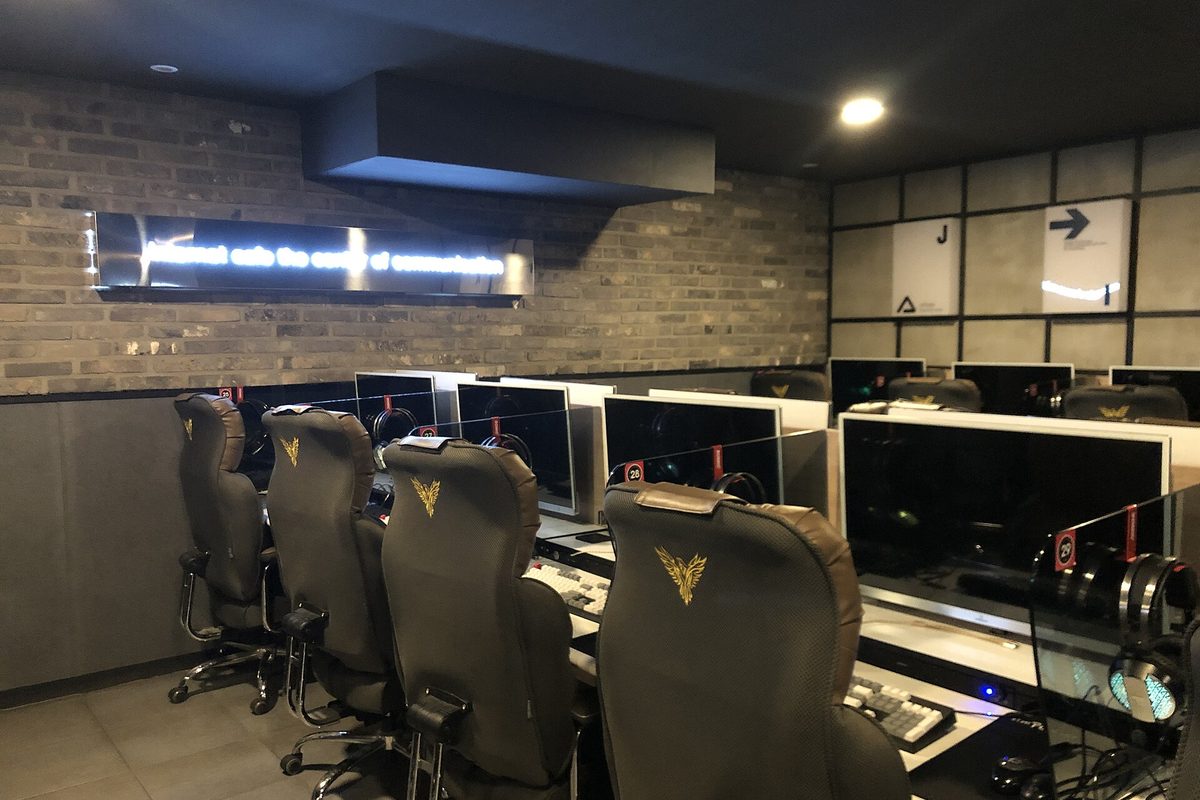
A PC bang visit is the easiest way to see what turned Korea into an esports country. Here’s how it usually works:
- Find one. Look for a “PC방” sign. They’re often on upper floors or in basements in student areas like Hongdae and Sinchon.
- Pay for time. You buy hours at a counter or kiosk. Some systems ask for a Korean phone number to register, so ask staff for a guest or non-member option.
- Order from your seat. Most PC bangs let you order instant ramyeon, fried rice and drinks on screen and have it brought to you. Indoor smoking has been banned in PC bangs for years.
- Check your account first. LoL accounts are usually tied to their home server, so if you want to play ranked on the Korean server, read Riot’s support pages on accounts and regions before you go.
A few words of Korean help at the counter. Our basic Korean phrases for travelers cover paying and asking for help.
FAQ
Why are Korean League of Legends players so good?
They come out of a system that rewards practice and makes it easy to get noticed. A crowded, low-ping solo queue, PC bang culture, team houses with daily scrims and a stable franchise league all push players to a high level early. The country’s StarCraft history also meant teams, broadcasters and sponsors were already in place when LoL arrived.
What does LCK stand for?
LCK stands for League of Legends Champions Korea. It started as OGN’s Champions league in 2012 and took the LCK name in 2015. Riot Games Korea runs it, and since 2021 it has been a franchise league.
Which Korean team has won the most League of Legends Worlds?
T1, formerly SK Telecom T1. From 2011 to 2024 it won Worlds in 2013, 2015, 2016, 2023 and 2024, more than any other organization. Faker played on all of those title teams.
How can I watch the LCK in English?
Use the official streams on lolesports.com or the LCK’s YouTube and Twitch channels. Replays go up after each match. Approved co-streamers also rebroadcast games with their own commentary in many languages.
Can foreign players join an LCK team?
League rules allow foreign players, but LCK rosters have historically been almost all Korean, because the domestic talent pool is so deep. Import rules can change, so check the LCK’s official rules for the current limits.
Where is the LCK played?
At LoL Park, Riot’s dedicated esports arena in Jongno, central Seoul. Tickets are announced on the LCK’s official channels. Popular matches sell out quickly, so plan ahead if you’re visiting.
What to watch next in Korean League of Legends
November is off-season, which makes it a good time to start following. Roster changes are usually announced in the weeks after Worlds, so watch team social channels to see who stays, who moves and which LCK CL rookies get promoted. Then check the LoL Esports schedule for the start of the next LCK season, and pick one team to follow through to MSI and Worlds. The Korea-versus-China rivalry should decide the biggest matches again. If you’re traveling to Seoul, try to line up a LoL Park match night with a few hours in a PC bang.
Related reading
Sources lolesports.com · k-korea.blog
Prices, opening hours and availability change. Check the official page before you buy or travel.