
14 min read
Kpop photocards are small idol photos packed at random, usually 1 or 2 per album, so you rarely get the member you want on your first try. That randomness drives the whole hobby. Fans buy extra copies, chase store-exclusive cards and trade the rest with collectors all over the world.
This guide covers how kpop photocards work, where the rare ones come from, how to trade without getting scammed, how to keep cards flat and scratch-free, and how to tell an official card from a fake. It works the same whether you live in Seoul or São Paulo.
Key takeaways
- Most albums hide 1 or 2 random member photocards. That’s why fans buy several copies of the same release.
- The cards people chase hardest usually come from pre-order benefits (POBs), lucky draws and fansign events, not from the album itself.
- Put every card in a penny sleeve first, then into a toploader or binder pocket. That two-layer habit prevents most scratches and bent corners.
- Fakes give themselves away with blurry printing, the wrong corner shape and a price that seems too good. Compare against official unboxing photos before you pay.
What are kpop photocards, and why are they random?
A photocard (포토카드, shortened by Korean fans to poka, 포카) is a printed photo of one idol, or sometimes a unit or the full group, cut to roughly credit-card size with rounded corners. The front is the photo. The back usually carries a design from that album: the group logo, the album title, sometimes a printed signature or a short message.
Most albums come in several versions, each with its own cover, photobook and set of cards. Inside each copy you get one or two cards from that version’s set, sealed so you can’t see which member you got. Fans call opening them “pulling”, and getting a card you didn’t want is so common that the trading scene grew up around it.
Why do K-pop companies use random photocards?
Physical album sales matter in Korea in a way they no longer do in most Western markets. Fandoms track first-week sales (초동, chodong, the number of albums sold in the first seven days after release) through sales trackers such as Hanteo and Circle Chart. A big first week is a public point of pride for a fandom and a headline for the agency.
Random cards turn one purchase into several. If you want your favorite member (your bias), you may buy three, five or ten copies to get them. Each copy counts as a sale. For a look at the companies behind the biggest groups and how their business works, see our guide to the four major K-pop agencies.
The model gets criticized, inside Korea and abroad, for the stacks of unwanted CDs and photobooks it leaves behind. Some labels now also sell lighter formats: small digipack versions, and “platform” albums that replace the CD with a card or QR code that unlocks the music in an app. Many of these still come with photocards.
Does every member’s card show up equally often?
Agencies don’t publish pull ratios, so nobody outside the factory knows for sure. The common working assumption is that each card in a set is packed in roughly equal numbers. Popular members’ cards feel rarer because more people want them and fewer owners trade them away. Demand creates scarcity in the trading market even when the print run is even.
What comes inside a K-pop album, and which photocards are rarest?
A standard album usually contains a CD (or a code), a photobook, and a mix of inclusions such as a lyric sheet, stickers, a postcard, a folded poster in some versions, and the photocard. Exact contents differ by release and version, so check the official album notice before buying. Agencies list every inclusion there.
The album card is just the starting point. Collectors sort cards by where they came from, and the source decides how hard a card is to find.
| Card type | Where it comes from | How hard to get | Fan shorthand |
|---|---|---|---|
| Album photocard | Packed at random inside the album | Easiest to find, but random | 앨포 (album poka) |
| Pre-order benefit (POB) | Given by one specific store for pre-orders or early purchases | Limited to that store and period | 특전 (teukjeon); often 미공포 (unreleased photo) |
| Lucky draw | A store event where buyers get an extra random card | Rarer, often limited to one region or shop | 럭드 (lucky draw) |
| Fansign or event card | Handed out at fansign events or other offline events | Very hard from abroad | 팬싸 포카 (fansign poka) |
| Broadcast card | Handed out during music show recordings or promotions | Rare, mostly Korea-only | 방포 (broadcast poka) |
| Merch card | Bundled with official goods, fan club kits or concert merchandise | Varies with how widely the item sold | MD 포카 (merch poka) |
The shorthand matters because Korean sellers and international trading accounts both use it in listings. If a card is labeled 미공포 (migongpo, short for 미공개 포토카드, “unreleased photocard”), it uses a photo that wasn’t shown in the album’s official concept images. That’s a big part of why POBs get chased so hard.
Pre-order benefits (POBs) and store-exclusive photocards
When a group announces a comeback (a new release and the promotion around it), several retailers get their own exclusive card set to give buyers. These are the POBs. One comeback can produce many separate POB sets: one for each major Korean record store, one for the agency’s own shop, sometimes more for overseas partners.
Each store posts a notice saying which set it carries, which album versions qualify, and how long the offer runs. POBs are usually “while supplies last”, and the notice is the only reliable source. Don’t trust a reposted screenshot without checking the store’s official page.
What is a lucky draw photocard?
A lucky draw (럭키드로우) is a store event where every buyer gets one extra card, packed at random, from a set made only for that event. It stacks on top of the random album card, so you get two layers of luck in a single purchase. Lucky draw sets are often tied to one shop or one country, which is why they show up on trading accounts with a store name attached, like “[store name] LD”.
Can you get fansign photocards from abroad?
Sometimes. A fansign (팬사인회) is an event where a set number of fans meet the members and get albums signed. Entry usually works like a raffle: you buy albums from the designated store during the entry window, and winners are drawn.
Video-call fansigns, where winners talk to an idol over a short video call, opened this up to more overseas fans. Rules differ by store and event (eligibility, shipping, ID checks), so read the specific notice. A fansign card is one of the hardest items in the hobby to get, because the only people who receive it are the winners.
How to start collecting kpop photocards without overspending
Random packing is designed to make you buy more. A plan protects your wallet and keeps the hobby fun.
- Pick a focus. One member, one era, or one card type (for example, only POBs). Collecting every card from every version of every release gets out of hand fast.
- Use a template. Fans make “photocard templates”, one image showing every card in a release, grouped by version and store. Save one, then mark what you have and what you want.
- Get a collect book. A collect book (콜렉트북) is a small binder with photocard-size pockets. Plenty of Korean stationery brands make them, and so do general card-supply brands abroad.
- Do the math before buying another album. Buying the single card you want from a trusted seller is often cheaper than gambling on more albums.
- Join a group order. In a group order (GO), one organizer buys a batch of albums and gives each participant the member they claimed. You pay for one share and get the card you picked, not a random one.
A worked example: how many albums for one bias card?
Take a made-up group of 5 members. Each album holds 1 card drawn evenly at random from the 5. To get one specific member, you’ll need 5 albums on average, and an unlucky run can go far past that. To complete the whole set of 5, the average climbs to about 11 to 12 albums, because the last missing card gets harder to hit as your set fills up. (Probability calls this the coupon collector’s problem.)
Now add 3 album versions with their own card sets, and the numbers triple. That’s why experienced collectors buy one or two albums for the experience of opening them, then trade or buy singles for everything else. It’s also why group orders took off.
How kpop photocard trading works
Most trading happens on social media and fan marketplaces. Fans post what they have, what they want and their rules, then agree on a swap or a sale in private messages. The scene is friendly, but it runs on trust, so the conventions matter.
Trading terms you’ll see in every listing
- WTS / WTB / WTT: want to sell, want to buy, want to trade.
- LF / ISO: looking for, in search of.
- H / W: have and want, used in trade posts.
- GO / GOM: group order and group order manager.
- PC, POB, LD: photocard, pre-order benefit, lucky draw.
- Proofs: screenshots or a feedback thread showing a trader’s past completed deals.
- Mint / near mint: no visible flaws, or only tiny ones.
Fans also mix in Korean fandom slang like 포카 and 최애 (choe-ae, your top favorite). If you see a word you don’t know, our list of Korean slang words with meanings covers the everyday ones.
Photocard trading etiquette
Describe condition honestly, with a real photo taken in daylight. Point out every flaw: white marks on corners, dents, surface scratches, print lines, slight curl. Some cards leave the factory with marks (fans call these factory flaws), and they still need a mention.
Agree on shipping before anyone sends anything: who pays, which method, whether there’s tracking, and when each side ships. Then stick to that date. Silence after a deal is agreed (“ghosting”) gets traders blocked across the community, and fandom circles are smaller than they look. Keep haggling in private messages, not in public replies under someone’s listing.
How to trade safely online
Check proofs before you deal with a stranger, and be wary of brand-new accounts offering rare cards. Ask for a photo of the actual card next to a note with your username and today’s date. A real owner can do that in a minute.
When paying for a card, use a payment method with buyer protection, and avoid “friends and family” style transfers with people you don’t know. If you’re new, start with small, low-value trades until you have proofs of your own. And if a rare card is priced far below every other listing, assume something is wrong until proven otherwise.
How to protect photocards: sleeves, toploaders and binders
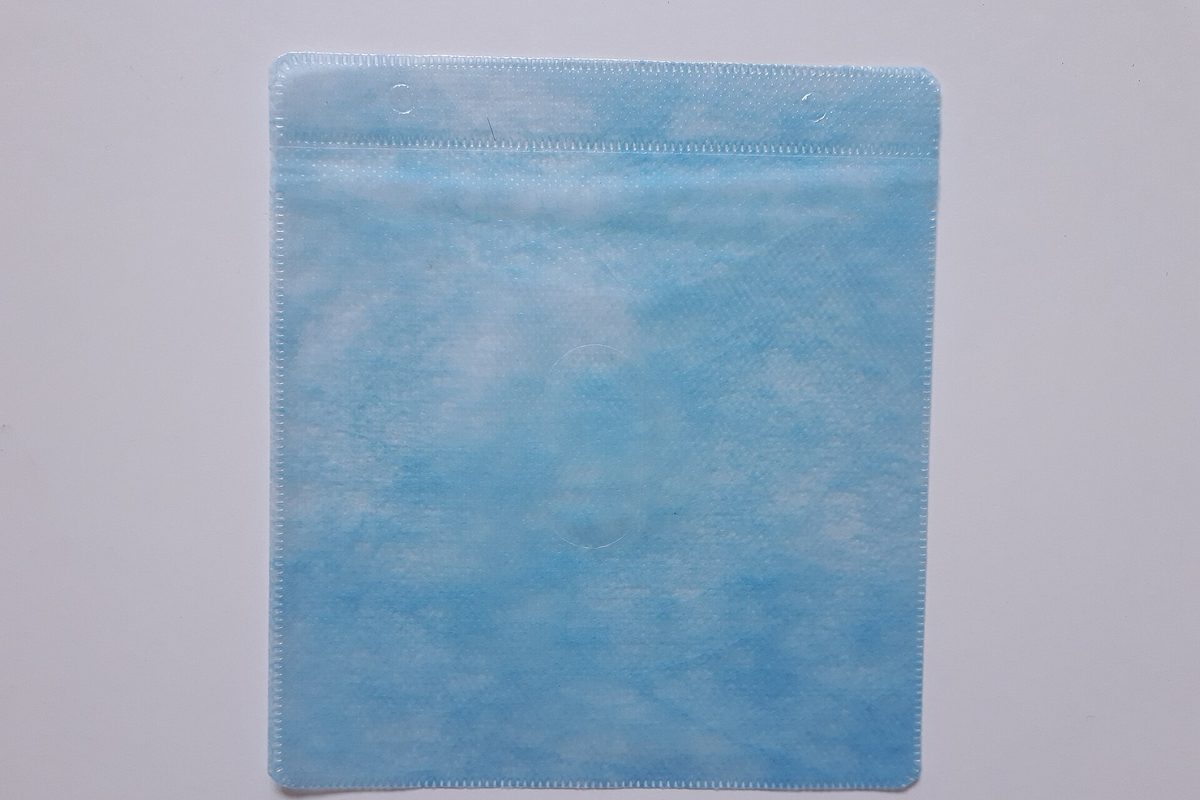
Photocards are thin, glossy and easy to mark. The good news: protecting them is cheap and simple once it becomes a habit. Sleeve every card the moment it comes out of the album.
| Storage | Best for | Watch out for |
|---|---|---|
| Penny sleeve (thin soft sleeve) | The first layer for every card, always | Very tight sleeves can rub the corners; pick photocard-size ones |
| Toploader (rigid plastic holder) | Favorite cards, shipping, display | Never put a card in without a penny sleeve first; the hard plastic can scratch it |
| Collect book or binder | Organizing large collections by member or era | Overstuffed pockets bend cards; one card (or two back to back) per pocket |
| Decorated toploader (탑꾸, tapkku) | Showing off a bias card in a bag or on a desk | Put stickers on the toploader only, never on the card |
Photocards are slightly smaller than Western sports and trading cards. Look for sleeves sold as photocard size, or measure your card before ordering. In Korea, B8-size toploaders are a common fit. For binders, many card collectors choose pages labeled acid-free and PVC-free, since those materials are less likely to react with printed surfaces over time.
How to keep cards flat and unfaded
Keep cards out of direct sunlight, which fades prints, and away from heat and humidity, which cause curling. A car dashboard in summer will ruin a card. If a card has curled a little, keep it in its sleeve and leave it flat under a stack of heavy books for a few days. Don’t use heat to flatten it.
Handle cards by the edges with clean, dry hands, and never tape a card to a wall. Tape lifts the print when you peel it off.
How to spot fake kpop photocards
First, separate two things. Fanmade or unofficial cards are openly sold as fan-made items, and buyers know what they’re getting. Counterfeits are reprints passed off as official cards, often at near-official prices. Counterfeits are the problem, and they show up most around expensive POBs and fansign cards.
Check these points against high-resolution photos of the same card from official unboxing videos or fan archives:
- Print sharpness: zoom in on hair and eyes. Fakes are often soft, pixelated or noisy, because they’re printed from a scan.
- Color: too saturated, too dark or tinted compared with the official photo.
- Corners and cut: official cards have clean, even rounded corners. Fakes can have sharper or uneven corners, rough edges or slightly different dimensions.
- Finish and thickness: a card that should be glossy arrives matte (or the reverse), or feels thinner and bends more easily.
- Back design: check logo placement, font weight, text alignment and any printed signature. The back is often where reprints cut corners.
- Special effects: holographic foil, textures or cutouts that are missing or look flat.
Seller behavior counts as much as the card. Red flags: several copies of a fansign card that only a few winners ever received, stock images instead of a real photo, refusing a dated proof photo, and pricing far under everyone else.
Is it wrong to buy unofficial photocards?
Unofficial cards use the agency’s photos without a license, and many large marketplaces ban counterfeit merchandise. Some fans buy clearly labeled fan-made cards for display and are open about it. What crosses the line in every fan community is reselling them as official. If you own unofficial cards, say so whenever you trade.
How to buy K-pop albums and photocards from outside Korea
You have more options than you might think, though POBs make choosing a store more complicated.
- The agency’s official shop. Several labels run their own global stores, such as Weverse Shop for HYBE artists. Official shops sometimes carry their own POB set.
- Korean music retailers with global sites. Many ship worldwide, and some list which POB comes with an overseas order. That set can differ from the one in their Korean stores.
- Local stores in your country. Shops that stock K-pop albums sometimes run their own lucky draws or regional POBs.
- Group orders and secondhand sellers. The best route when you only want one member’s card.
Before you order, check three things on the store’s notice: whether the POB ships with your album, whether it’s guaranteed or “while supplies last”, and whether the store reports sales to Korean trackers like Hanteo or Circle Chart, if that matters to you. Factor in shipping and possible import duties for your country, which can change the real cost of a bulk order a lot.
Common photocard mistakes new collectors make
- Leaving cards loose in the album. They slide against the photobook and scratch. Sleeve them on day one.
- Buying every version at launch. Wait until the templates come out and you know which cards you actually want.
- Skipping the dated proof photo. It takes a minute and filters out most scams.
- Overfilling binder pockets. Pressure bends cards over time.
- Shipping without a toploader. One sorting machine can put a crease in a rare card.
- Treating cards as an investment. Demand moves with comebacks, popularity and fandom mood. Collect what you’d be happy to keep.
FAQ
How many photocards come in a K-pop album?
Most albums include 1 or 2 random photocards, though some versions include more, or include a unit or group card. The exact number is listed in the official album notice from the agency or retailer. Check that notice before buying, because versions of the same album can differ.
What does POB mean in K-pop?
POB stands for pre-order benefit, an extra item a store gives to people who buy an album from it, usually during a set period. In K-pop it’s most often an exclusive photocard set, sometimes with unreleased photos. Each store announces its own POB on its official page.
Why are some kpop photocards so expensive?
Price comes from supply and demand: how many cards exist (a fansign card versus an album card), how popular the member is, the era, and the card’s condition. A card from a small event or one store’s lucky draw can be scarce worldwide. Prices change constantly, so compare several current listings rather than trusting an old figure.
What size are kpop photocards?
Most are roughly credit-card size with rounded corners, a little smaller than Western sports cards. Sizes vary slightly between releases and companies. Measure a card from your collection before buying sleeves in bulk, or choose sleeves sold specifically as photocard size.
Can I get my bias’s photocard without buying albums?
Yes. You can buy the single card from a trusted seller, trade a card you don’t want for it, or join a group order where you claim that member in advance. For one specific card, these routes are usually cheaper and faster than buying albums until you pull it.
Should I keep photocards in a toploader or a binder?
Both work, as long as the card is in a penny sleeve first. Toploaders give the most protection and suit favorites and shipping. Binders and collect books are better for organizing a larger collection by member or era.
What to check before your next comeback haul
When your group announces a release, read the agency’s album notice for versions and inclusions, then each store’s POB notice for sets, deadlines and overseas shipping. Save the photocard template once fans post it, decide on your focus and budget, and have sleeves and toploaders ready before the boxes arrive.
If you’re also planning a concert, our K-pop lightstick guide covers the other item most fans carry, including how lightstick sync works in a stadium.
Related reading





Sources k-korea.blog
Prices, opening hours and availability change. Check the official page before you buy or travel.