11 min read
So how long does it take to learn Korean? About 88 weeks of full-time classes for professional fluency, by the US Foreign Service Institute’s estimate, though you can learn to read Hangul in a weekend. Between those two points, the answer depends on your goal: travel phrases take weeks, basic conversation takes months, and following a K-drama without subtitles usually takes years of steady study.
This guide breaks the question down by goal, shows the math behind each timeline and explains which habits cut months off the total.
Key takeaways
- Hangul (한글), the Korean alphabet, has 24 basic letters. Most learners can read it slowly within 1-3 days of focused practice.
- The US Foreign Service Institute puts Korean in its hardest category for English speakers: about 88 weeks of full-time study.
- One hour a day adds up to roughly 365 hours a year, so steady daily study beats weekend cramming every time.
- TOPIK, Korea’s official proficiency test, has 6 levels. Levels 1-2 are beginner, and 5-6 are close to professional use.
How long does it take to learn Korean, goal by goal
“Learning Korean” means very different things to different people. A traveler wants to order food and read subway signs. A K-pop fan wants to understand lyrics and livestreams. A student wants a TOPIK certificate for a Korean university. Each goal has its own finish line, and they sit years apart.
The table below gives planning ranges for an English speaker studying about 5-7 hours a week. They’re estimates, not promises. Your pace will shift with how much time you put in, whether you speak a related language such as Japanese, and how much Korean you hear every day.
| Your goal | What you can do | Rough study time | At 5-7 hours a week |
|---|---|---|---|
| Read Hangul | Sound out any Korean word, signs, menus | 5-10 hours | 1 weekend to 2 weeks |
| Travel Korean | Greet, order, ask prices and directions | 20-40 hours | 1-2 months |
| Basic conversation (TOPIK 1-2) | Talk about yourself, daily routines, simple plans | 200-400 hours | About 1 year |
| Intermediate (TOPIK 3-4) | Hold real conversations, follow slow content | Roughly 600-1,000 hours (round planning example) | 2-4 years |
| K-dramas without subtitles | Follow most everyday dialogue at native speed | Roughly 1,000-2,000 hours (round planning example) | 4-6 years |
| Advanced (TOPIK 5-6) | Work, study and read news in Korean | 88+ weeks of full-time study (FSI estimate) | 6+ years |
The bottom row lines up with the Foreign Service Institute (FSI), the US State Department’s language school. It places Korean in Category IV, alongside Japanese, Mandarin and Arabic, and estimates 88 weeks of full-time instruction for English-speaking diplomats to reach professional working proficiency. Those diplomats sit in small classes all day and study in the evenings, so the hour count is the honest number to compare with your own schedule.
Why Korean takes English speakers so long
The alphabet is the easy part. The hours go into the things English never prepared you for.
The word order is flipped
Korean is a subject-object-verb language, so “I eat rice” becomes “I rice eat” (저는 밥을 먹어요, jeoneun bab-eul meogeoyo). The verb comes last, which means you often have to hear the whole sentence before you know what’s happening. Our guide to Korean grammar for beginners covers the core rules behind every sentence.
Particles do the work that word order does in English
Small endings such as 은/는 (topic marker) and 이/가 (subject marker) attach to nouns and tell you who is doing what. The difference between them takes most learners months to feel naturally, and it’s one of the most common mistakes even at intermediate level.
Speech levels and honorifics
Every Korean verb changes depending on who you’re talking to. The polite -요 (-yo) form works with strangers and shop staff, the formal -ㅂ니다 (-mnida) form appears in news and announcements, and casual speech (banmal, 반말) is reserved for close friends and younger people. You also choose different titles and sometimes different verbs for elders. Our list of Korean honorifics and their meanings explains who uses which.
Few shared words
Spanish gives English speakers thousands of familiar-looking words. Korean gives you a handful of English loanwords (컴퓨터, keompyuteo, “computer”) and little else. Much of the core vocabulary comes from Chinese characters (Sino-Korean words), which helps Mandarin and Japanese speakers far more than English speakers.

How long it takes to read Hangul (한글)
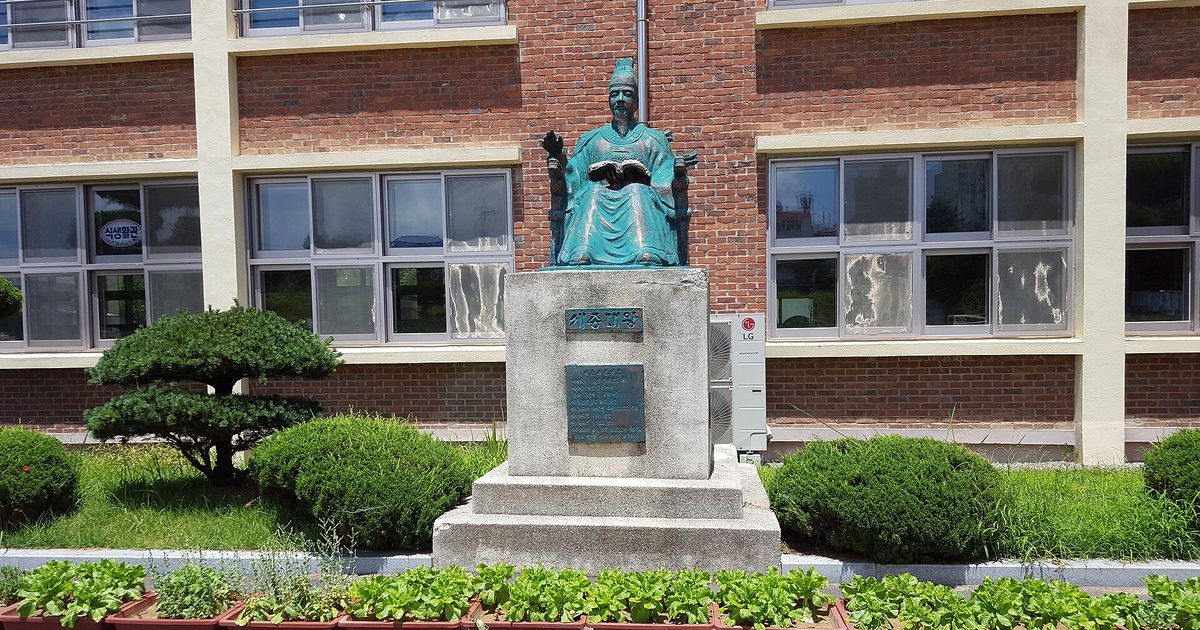
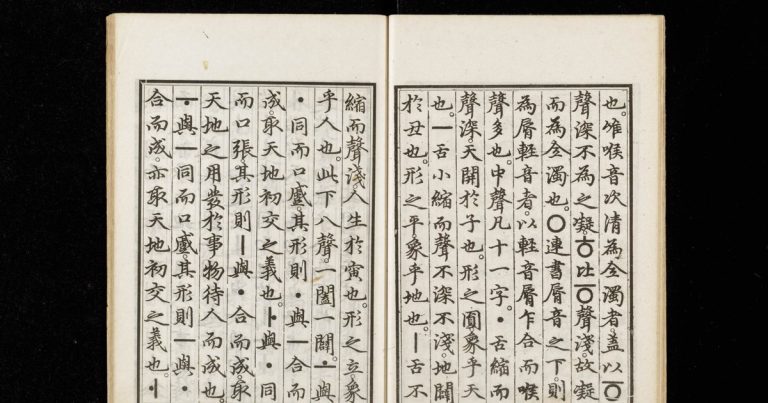
Plan on one focused weekend. Hangul was created under King Sejong the Great and published in 1446 specifically so ordinary people could learn to read quickly, and it still does that job well.
The system has 14 basic consonants and 10 basic vowels. Letters stack into square syllable blocks, so 한 is ㅎ (h) + ㅏ (a) + ㄴ (n). Once you know the letters and how blocks are built, you can sound out any Korean word, even ones you don’t understand.
A 3-day plan for Hangul
- Day 1: the 10 basic vowels and the 14 basic consonants. Write each one by hand several times while saying it aloud.
- Day 2: syllable blocks, including the final consonant called batchim (받침), the letter that sits at the bottom of a block. Practice reading simple words such as 김치 (kimchi) and 서울 (Seoul).
- Day 3: double consonants (ㄲ, ㄸ, ㅃ, ㅆ, ㅉ), combined vowels (ㅘ, ㅝ, ㅢ) and reading real text: menus, K-pop song titles, signs in photos.
Reading slowly isn’t the same as reading fluently. Expect another few weeks of daily practice before you can read a menu at normal speed, and longer to master sound-change rules, where letters are pronounced differently depending on what’s next to them (학교 is written hak-gyo but sounds like hak-kkyo).
How long it takes to learn enough Korean to travel
A month or two of light study gets you a working travel kit. You won’t hold conversations, but you’ll be able to read station names, greet people politely, order food and ask what something costs. Learn the polite -요 forms first: they’re right for almost every situation a traveler meets.
| English | Korean | Romanization | When to use it |
|---|---|---|---|
| Hello | 안녕하세요 | annyeonghaseyo | Polite greeting for anyone, any time of day |
| Thank you | 감사합니다 | gamsahamnida | Formal polite; safe in shops, taxis and restaurants |
| Excuse me (to get attention) | 저기요 | jeogiyo | Calling a server in a restaurant (polite) |
| This one, please | 이거 주세요 | igeo juseyo | Pointing at a menu item or product (polite) |
| How much is this? | 이거 얼마예요? | igeo eolmayeyo? | Markets and street stalls (polite) |
| Where is the restroom? | 화장실 어디예요? | hwajangsil eodiyeyo? | Anywhere (polite) |
| I’m sorry | 죄송합니다 | joesonghamnida | Formal apology, bumping into someone |
| It’s okay / No thanks | 괜찮아요 | gwaenchanayo | Declining a bag, reassuring someone (polite) |
Numbers are the one travel skill worth more time than you’d expect. Korean has two number systems, native Korean (하나, 둘, 셋) for counting items and age, and Sino-Korean (일, 이, 삼) for prices, dates and phone numbers. Prices you hear at a market will be in Sino-Korean, so learn that set first.
How long it takes to reach each TOPIK level
TOPIK, the Test of Proficiency in Korean, is the official exam run by Korea’s National Institute for International Education. It comes in two papers. TOPIK I covers levels 1-2 and tests listening and reading. TOPIK II covers levels 3-6 and adds a writing section. Your score decides your level, and results are generally valid for two years.
TOPIK 1 and 2: about 6-12 months
Level 1 means you can introduce yourself, buy things and handle simple daily routines. Level 2 adds phone calls, asking favors and using public services. With 5-7 hours a week and a structured textbook series, most motivated learners can sit TOPIK I within a year.
TOPIK 3 and 4: about 2-4 years
This is where Korean starts feeling like a real language you can use. Level 3 handles everyday life without much strain. Level 4 lets you follow news-style content and discuss social topics in simple terms. Many Korean universities set level 3 or 4 as an entry requirement for international students, but requirements vary, so check each school’s admissions page.
TOPIK 5 and 6: 5 years or more
Levels 5 and 6 mean you can work and study in Korean. You read newspapers, write formal reports and understand specialist topics. Reaching this level from scratch usually takes the full FSI-style hour count, plus a lot of real-world exposure.
How long until you can watch K-dramas without subtitles
Expect 4-6 years of consistent study for most everyday dramas, and longer for some genres. TOPIK 4 is a reasonable marker for following the plot. Catching the jokes, wordplay and fast arguments takes more.
Dramas are harder than textbooks for specific reasons. Characters speak at full speed, mix polite and casual speech, and drop subjects that context makes obvious. Office dramas lean on workplace titles, crime shows use police and legal vocabulary, and historical dramas (sageuk, 사극) use old-fashioned speech that modern Koreans also find formal. Regional dialects, such as the Busan-area Gyeongsang dialect, show up often and sound noticeably different from Seoul Korean.
How to build up to it
- Start with slice-of-life dramas and romantic comedies set in modern Seoul, where dialogue is everyday speech.
- Switch to Korean subtitles (not English) once you can read Hangul at a decent speed. Hearing and reading the same words at once is one of the fastest ways to train your ear.
- Rewatch a single episode several times instead of bingeing new ones. The second and third viewings are where vocabulary sticks.
- Learn common slang and internet abbreviations; our list of 50 Korean slang words with meaning covers the ones that pop up in dialogue and comments.
What actually speeds up learning Korean
Hours matter most, but how you spend them changes the result. These habits make each hour count for more.
Drop romanization early
Romanized spelling such as “gamsahamnida” is a crutch that hides how Korean actually sounds. Learn Hangul first and use it from week one. Every textbook, app and dictionary assumes you can read it anyway.
Use spaced repetition for vocabulary
Flashcard apps such as Anki show you a word just before you’re likely to forget it. Ten to fifteen minutes a day on a well-made deck builds vocabulary far faster than rereading word lists. Add full example sentences, not single words, so you learn particles and verb endings in context.
Speak from the first month
Many learners read and listen for years, then freeze in a real conversation. A weekly session with a tutor on a platform such as italki, or a language exchange partner, forces you to produce sentences. Speaking practice also shows you which grammar you only half know.
Learn Sino-Korean roots
A large share of Korean vocabulary is built from Chinese-derived syllables. Once you know that 학 (hak) relates to learning, words such as 학교 (school), 학생 (student) and 대학 (university) start to explain themselves. This pays off most from the intermediate stage.
Get daily input
Korean you hear for fun counts. Variety shows, K-pop interviews, webtoons and YouTube vlogs give you the natural speech textbooks leave out. Pick content slightly above your level and use subtitles in Korean whenever possible.
Korean study plans: 15 minutes, 1 hour or full-time
The simplest way to predict your own timeline is to do the math. Take the hours in the goal table and divide by your weekly study time.
Worked example
Say you study 30 minutes a day. That’s 3.5 hours a week, or about 180 hours a year. At that pace, you’d reach basic conversation (roughly 300 hours) in under two years and TOPIK 4 territory (around 1,000 hours) in five to six years. Double it to one hour a day, about 365 hours a year, and those same goals arrive in under a year and roughly three years. The calendar shrinks only when the hours grow.
| Plan | Hours per year (approx.) | What a typical week looks like | Realistic first-year goal |
|---|---|---|---|
| 15 minutes a day | 90 | Flashcards plus one short lesson on weekends | Hangul, travel phrases, early TOPIK 1 material |
| 1 hour a day | 365 | Textbook lesson, flashcards, 1 tutor session, Korean-subtitled shows | Ready for TOPIK I, simple conversations |
| Full-time course (in Korea or abroad) | 800-1,000+ | Daily classes plus homework and immersion | Solid intermediate, around TOPIK 3 |
Full-time study in Korea, such as at a university language institute (eohakdang, 어학당), is the fastest route because class time and daily life both run in Korean. Course lengths, costs and visa rules differ by school, so check each institute’s official admissions page.
Common mistakes that add months to learning Korean
- Skipping polite speech. Learners who pick up casual Korean from dramas sound rude to strangers. Learn the -요 form first, then add casual speech for friends.
- App-only study. Gamified apps are a good start, but they rarely cover grammar deeply. Pair one with a structured textbook series.
- Avoiding grammar until “later”. Korean grammar is where the meaning lives. Learning particles and verb endings early makes every drama and song easier to follow.
- Translating word for word from English. Korean drops subjects, flips word order and uses different idioms. Copy whole sentences from native material instead.
- Stopping after the beginner plateau. Most learners stall between TOPIK 2 and 3, when progress stops feeling fast. Add harder input and regular speaking to get through it.
FAQ
Can I learn Korean in 3 months?
You can learn Hangul, travel phrases and basic sentences about yourself in three months with daily study. You won’t be conversational in the full sense. Intensive full-time learners can reach a strong beginner level in that time.
Is Korean harder than Japanese for English speakers?
The FSI rates both in its hardest category, with the same estimate of about 88 weeks of full-time study. Korean has the easier writing system, since Hangul is a phonetic alphabet while Japanese uses thousands of kanji. The grammar of the two languages is quite similar, which is why Japanese speakers often learn Korean faster.
How many words do I need to watch K-dramas?
There’s no official number, but intermediate TOPIK study typically covers a few thousand words, and dramas use more than that. Focus on the most common everyday vocabulary first, then add genre words for the shows you watch. Rewatching episodes helps far more than raw word counts.
Can I learn Korean just by watching K-dramas?
Dramas build listening skills and natural phrasing, but on their own they rarely teach grammar or speaking. Most learners who succeed combine shows with a textbook, flashcards and conversation practice. Use dramas as the reward and the ear training, not the whole course.
Is TOPIK worth taking if I’m not moving to Korea?
Yes, if you like clear goals. Booking a test date gives your study a deadline, and the level structure shows exactly what to learn next. It’s required mainly for Korean universities, some jobs and certain visa routes, so check the official requirements for your situation.
What is the fastest way to learn Korean from abroad?
Daily study of at least an hour, weekly speaking practice with a tutor or exchange partner, and lots of Korean-subtitled content. A King Sejong Institute or university evening course adds structure if one is near you. Consistency matters more than any single method.
What to do this week to start learning Korean
Pick one goal from the table above and write down the hours it needs. Then spend this weekend on Hangul, using the 3-day plan, so you never have to rely on romanization again.
Next week, choose a beginner textbook series and a flashcard app, and book a single conversation session to hear your own Korean out loud. If a TOPIK certificate is the goal, check the official TOPIK website for the next test dates in your country and count backward from there. Six weeks from now, you should be reading menus and ordering in polite Korean, and you’ll know whether your weekly hours match the timeline you want.
Related reading

Sources k-korea.blog
Prices, opening hours and availability change. Check the official page before you buy or travel.