
13 min read
US citizens don’t need a visa for tourist trips to South Korea of up to 90 days. You fly in on your US passport, and the only paperwork is either a K-ETA (Korea’s online travel authorization) or an arrival card, depending on the rules in force when you travel. Korea exempted US citizens from K-ETA in April 2023 and has extended that exemption several times for fixed periods, including through December 31, 2025, according to official notices on k-eta.go.kr, so confirm there whether an exemption covers your own travel dates. Working, studying or staying longer than 90 days is different: for any of those you need a real visa from a Korean embassy or consulate before you leave.
Last updated: November 13, 2026. Entry rules can change with little notice, so treat k-eta.go.kr as the final word on K-ETA.
Key takeaways
- US passport holders can enter South Korea visa-free for up to 90 days for tourism, family visits and short business meetings, but not for paid work.
- K-ETA is an online pre-approval, not a visa. Korea has at times exempted Americans from it, so check the official site (k-eta.go.kr) before you book.
- If you don’t have an approved K-ETA, you fill in an arrival card, either on paper on the plane or online through Korea’s official e-Arrival card site.
- Use only the official .go.kr sites. Lookalike “K-ETA” sites charge extra fees and pass on your passport data.
How the 90-day visa-free rule works
South Korea and the United States have a visa waiver arrangement. If you have an ordinary US passport, immigration at the airport stamps you in for up to 90 days as a short-term visitor. Officially that’s B-1 or B-2 status, the visa-exempt categories for visitors. You don’t apply for anything at an embassy.
The 90 days start the day you land, and you get them per entry. They aren’t a yearly allowance like Europe’s Schengen rule, but don’t treat that as a loophole. Officers notice when someone leaves for a weekend in Fukuoka and comes straight back to start another 90 days, and they can refuse entry if it looks as though you actually live in Korea.
What you can and can’t do visa-free
As a visa-exempt visitor you can sightsee, visit friends and family, go to conferences, attend business meetings and take a short course that doesn’t lead to a degree. You can’t take paid work in Korea, and that includes teaching English, modeling gigs or a weekend job at a café. Remote work for a US employer sits in a gray area. Korea created the F-1-D workation visa, launched in 2024, for remote workers because the tourist status doesn’t really cover it, so if you plan to work from Seoul for months, check its requirements on Hi Korea (the government’s immigration portal) or the Ministry of Justice site instead of relying on visa-free entry.
Other passports get different periods
The period depends on your nationality, not where you fly from. Canadians, for example, have long had a longer visa-free period than Americans, and some nationalities get 30 days or need a visa. If you’re a dual national, the passport you enter on decides your rules. Korean-American dual citizens should read the dual nationality question in the FAQ below.
What is K-ETA (전자여행허가) and do Americans need it?
K-ETA (Korea Electronic Travel Authorization, 전자여행허가 in Korean) is an online pre-screening for visa-exempt travelers. It’s the same idea as the US ESTA that Europeans fill in before flying to America. You upload your passport details and a photo, answer questions about your trip, and Korea’s Ministry of Justice either approves or rejects you before you board.
It’s still not a visa. Approval only means you’re allowed to board a flight and show up at immigration. The officer at the airport makes the final decision on entry.
Why the K-ETA rules for Americans keep changing
Korea brought in K-ETA for visa-exempt countries, and then, to encourage tourism, it temporarily exempted a list of countries that included the United States, starting in April 2023. That exemption has been extended several times, each time for a fixed period, including an extension through December 31, 2025, according to official notices on k-eta.go.kr. So the honest answer to “do Americans need K-ETA?” is that it depends on the dates of your trip. Check the official K-ETA website or the Korean Embassy in Washington’s site about a month before you fly. Don’t rely on a forum post from last year.
Why some travelers get a K-ETA when they’re exempt
An approved K-ETA has historically let you skip the paper arrival card, and frequent visitors have used it to get through arrival faster. Approval is valid for up to 3 years, according to the official K-ETA site (k-eta.go.kr), and covers multiple trips in that time as long as your passport doesn’t change. If you’re exempt and you’re only going once, the arrival card is enough.
Who never needs K-ETA
If you hold a valid Korean visa (a student, work or residence visa) or a Korean residence card, you don’t need K-ETA. It applies only to people entering visa-free.
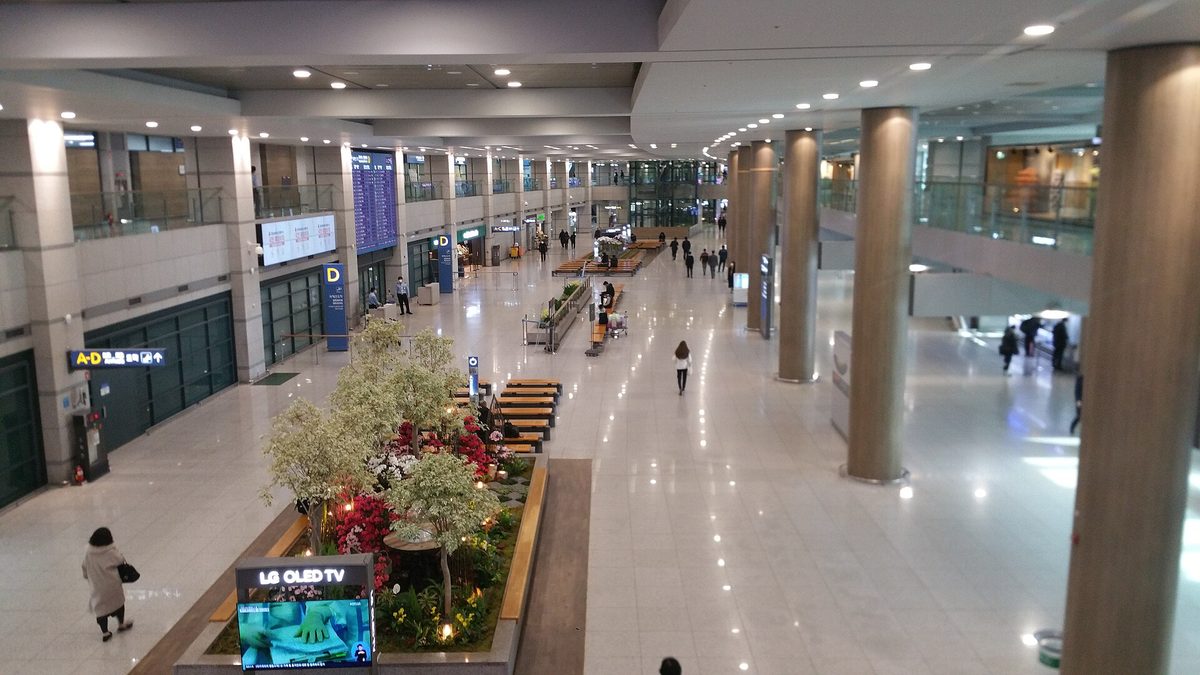
This photo was taken with Samsung Galaxy Not, CC BY-SA 4.0
What is the Korea e-Arrival card (입국신고서)?
The arrival card (입국신고서, ipguk singoseo) is a short form every foreign visitor without an approved K-ETA has to complete. It asks for your name, passport number, flight number, purpose of visit and your address in Korea. That last field trips people up. A hotel name with its full address works. “Seoul” on its own doesn’t.
You have 2 ways to do it:
- Paper: flight attendants hand out cards before landing. Bring your own pen, because the plane never has enough.
- Online (e-Arrival card): you can submit the form up to 3 days before you arrive, according to Korea’s official e-Arrival card site. Doing it online means one less job in a cramped seat.
If you have nothing to declare, you generally don’t need a separate customs form. If you’re carrying goods over the duty-free allowance, large amounts of cash, or food and plant products, you declare them at customs. The Korea Customs Service site lists the current limits.
K-ETA, arrival card or visa: which one do you need?
Find your trip in the table and you’ll know what to prepare.
| Your situation | What you need | Where to get it | When to do it |
|---|---|---|---|
| US tourist, under 90 days, K-ETA exemption in force | Passport plus arrival card (paper or e-Arrival); K-ETA optional | On the plane, or the official e-Arrival card site | Before landing |
| US tourist, under 90 days, K-ETA required | Approved K-ETA | Official K-ETA site or app | At least 72 hours before boarding, ideally a week or more |
| Business meetings, conferences, under 90 days | Same as tourist (no paid work in Korea) | As above | As above |
| University degree or language school | Student visa (D-2 or D-4) | Korean embassy or consulate, with school documents | Months ahead, after admission |
| Teaching English or any paid job | Work visa (E-2 for language teachers, others by job) | Korean embassy or consulate, with employer sponsorship | Months ahead |
| Staying longer than 90 days for any reason | A long-stay visa, then a residence card in Korea | Embassy first, then a Korean immigration office | Before you travel |
How to apply for K-ETA (and avoid scam sites)
If your dates fall in a period when Americans need K-ETA, the application takes about 15 minutes if you have everything ready. Here’s the order:
- Go to the official site. It ends in .go.kr, which is the Korean government domain. The official K-ETA mobile app is also available on the major app stores.
- Have your passport, a recent photo and your trip details ready. The photo must be a clear, front-facing shot. Blurry selfies are a common reason for rejection.
- Enter your details exactly as they appear on your passport, including middle names and the passport number. One wrong digit can void the approval.
- Pay the official fee by card on the government site. The current amount is listed there. Don’t trust a figure quoted anywhere else.
- Wait for the result by email and check its status on the official site. Most applications come back quickly, but leave several days in case yours doesn’t.
How to spot a fake K-ETA website
Search “Korea ETA” and you’ll find plenty of slick sites that look official, use the Korean flag and charge you several times the government fee to “process” your form. Some of them file the application for you. Others take your money and your passport scan and send you nothing. Watch for these warning signs:
- The domain isn’t .go.kr (it ends in .com, .org, .online and so on).
- A “service fee”, “expedite fee” or “guaranteed approval” on top of the government fee.
- They ask for your US Social Security number, which the official form never does.
If you’ve already paid one of these sites, contact your card issuer about a dispute, then check on the official site whether a real application exists under your passport number.
Arriving at Incheon Airport: the 6 entry steps
Most flights from the US land at Incheon International Airport (인천국제공항), about an hour west of central Seoul. Getting through is usually quick. This is the sequence:
- Follow the yellow “Arrival” signs from the gate. At Incheon’s Terminal 1 you may ride a short shuttle train from the concourse to the main building.
- Pick the right line at immigration. Look for the lanes marked for foreigners (외국인). Korean citizens and residents use separate lanes.
- Hand over your passport and arrival card (or nothing extra if you have K-ETA and no card is needed).
- Give your fingerprints and a face photo. Most foreign visitors aged 17 and over press both index fingers on a scanner and look into a camera. It takes seconds.
- Answer a question or two. “Purpose of visit?” and “Where are you staying?” are typical. Keep your hotel name and return flight handy on your phone.
- Collect your bags and walk through customs. Use the green “Nothing to declare” lane unless you have goods to declare, in which case take the red lane.
Gimhae Airport in Busan and Jeju’s airport work the same way on a smaller scale. If Busan is on your list, our Busan travel guide covers the KTX ride between the two cities.
Is there a faster lane for frequent travelers?
Korea runs Smart Entry Service (SES), a pre-registered automated gate program, and it has a reciprocal arrangement with the US that links it to Global Entry. If you visit Korea often, check the SES eligibility rules on the Korea Immigration Service site. For a one-off trip, the regular foreigner lane is fine.
What to sort out right after immigration
Before you leave the arrivals hall, get your phone working and some way to pay for transit. Our comparison of Korea eSIM vs SIM card vs pocket Wi-Fi explains which option suits which trip, and our list of the best apps for Korea travel covers maps and taxis, since Google Maps directions are limited in Korea.
When you need a real Korean visa: work, study and long stays
Visa-free entry covers visits. If you’re going to earn money in Korea, enroll in a degree program or live there longer than 90 days, you need a visa issued before you travel. Korean visas are named by letter and number, and the code is what employers and schools will ask about.
Student visas: D-2 and D-4
The D-2 covers degree students at Korean universities. The D-4 covers Korean language programs, such as the university language institutes in Seoul that many foreigners join for a term or two. You apply after the school admits you and sends a certificate of admission. If you’re studying for the TOPIK (Korea’s official Korean proficiency test), our TOPIK guide explains the levels schools ask for.
Work visas, including E-2 for English teachers
The E-2 is the visa most Americans meet, because it’s the one for foreign language instructors at hagwons (private after-school academies) and public school programs. It requires an employer’s sponsorship and a document check that usually includes an apostilled degree and a criminal background check. Other work visas cover professors, researchers and specialist jobs. In each case the employer starts the process.
Staying beyond 90 days: the residence card
If you enter on a long-stay visa, you register within your first 90 days in Korea and get a Residence Card (often still called an ARC, Alien Registration Card). It works as your Korean ID for bank accounts, phone contracts and sometimes online shopping. Appointments are booked through Hi Korea, the government’s immigration portal.
Where to apply from the US
US residents apply through the Korean consulate that covers their state. Jurisdiction depends on where you live, and each consulate posts its own document checklist. Korea’s official visa portal also handles some categories online. Requirements, processing times and fees vary by visa type, so take them from the consulate’s page and not from a blog.
Common mistakes that cause problems at the border
Most entry problems for Americans come down to small, avoidable errors. These are the usual ones.
- Using a third-party K-ETA site. You overpay, and sometimes there’s no real application behind it.
- Applying for K-ETA at the gate. The official guidance is at least 72 hours before boarding. Airlines check before you fly, so a pending application can mean a missed flight.
- A passport that expires soon. Make sure it covers your whole stay. Airlines often apply stricter checks than the border itself, so having six months left is the safe habit.
- No address in Korea. Leaving the address blank or writing “Seoul” invites extra questions. Write your hotel’s full name and address.
- Calling a job a vacation. Saying you’re a tourist while carrying a teaching contract counts as misrepresentation, and it can lead to refusal or a ban.
- Overstaying, even by a day. Overstays can bring fines and restrictions on future entry. If a flight cancellation pushes you past 90 days, contact immigration before your status runs out.
- Bringing banned items. Amphetamine-based drugs such as Adderall are banned in Korea, even with a valid US prescription. Some other controlled medicines need approval from Korea’s Ministry of Food and Drug Safety (MFDS) before you travel. Check the MFDS guidance or the Korean embassy’s page well before your trip, and carry your prescription for anything you bring.
FAQ
Is K-ETA the same as a visa?
No. K-ETA is an online travel authorization for people who are already visa-exempt, much like the US ESTA. It lets you board a flight to Korea, and the immigration officer still decides whether you can enter. It doesn’t let you work or stay longer than the visa-free period.
How long does K-ETA approval take?
Many applications are processed quickly, but the official guidance is to apply at least 72 hours before boarding. Some applications take longer or need more information, so apply a week or more ahead to be safe. You can check the status on the official K-ETA website.
Do Korean-American dual citizens need a visa or K-ETA?
Korea treats dual nationality differently from many countries, and some Korean-born or Korean-parent travelers are expected to enter as Korean nationals. Men with Korean nationality may also have military service obligations depending on their age and status. Before you travel, ask the Korean consulate covering your US state, because the answer depends on your individual records.
Can I extend my 90-day visa-free stay in South Korea?
Extensions of visa-exempt stays are limited and granted only for specific reasons, such as illness or flight cancellations. Contact a Korean immigration office through Hi Korea before your 90 days run out. If you know from the start that you’ll stay longer, apply for the right visa before you leave the US.
Do I need a return ticket to enter South Korea?
Immigration officers can ask for proof that you’ll leave, and airlines sometimes check before boarding. A return or onward ticket within your permitted stay is the easiest proof. Keep the booking on your phone along with your hotel details.
What to check before you book your flight to Korea
About a month before departure, go through this short list. First, check the K-ETA status for US citizens on the official K-ETA site and confirm whether the temporary exemption covers your travel dates. Next, confirm your passport is valid for your whole stay with a good margin to spare. Third, decide between K-ETA and the e-Arrival card, and complete it on the .go.kr site only. If any part of your trip involves work, study or a stay beyond 90 days, look up the visa checklist on your local Korean consulate’s page before you book anything nonrefundable.
Rules can change with little notice, especially exemptions that run for a fixed period. Once you’ve confirmed what applies to you, plan the rest of the trip: where to shop in Seoul and how a jjimjilbang works are good places to start.
Related reading




Sources k-eta.go.kr · e-arrivalcard.go.kr · k-korea.blog
Prices, opening hours and availability change. Check the official page before you buy or travel.