13 min read
For an Incheon Airport layover, use one rule: under 7 hours, stay airside; 7 to 8 hours is marginal; with 8 hours or more, you can ride into Seoul and back. If you have less, stay airside: Incheon International Airport (인천국제공항, Korea’s main international gateway) has showers, nap zones, a capsule hotel and free culture corners, which beat spending your whole layover in a train and an immigration line.
This guide gives you a plan for 5, 8 and 12 hours, how long the AREX train to Seoul takes, how the transit tours work and what to check before you leave the terminal.
Key takeaways
- Under 7 hours, stay inside. Immigration, the ride to Seoul and the return buffer use up nearly 5 hours by themselves, and 7 to 8 hours is marginal.
- The AREX express runs nonstop to Seoul Station in roughly 45 to 50 minutes. The all-stop train takes about an hour.
- Leaving the airport means entering Korea, so your passport has to qualify and you may need a K-ETA approved in advance.
- Incheon runs transit tours for layover passengers, and you register at the Transit Tour desk after you land.
How long does an Incheon Airport layover need to be to leave?
Do the math backward from your next departure. A trip out of the airport and back carries four fixed costs, and they add up faster than most travelers expect.
- Getting out: deplaning, walking to arrivals and passing immigration usually take 30 to 60 minutes, and more when several long-haul flights land together.
- Getting to Seoul: about 1 hour each way on the AREX (공항철도, Airport Railroad Express), counting walking and waiting.
- Getting back through: airlines generally ask you to be at the airport 2 to 3 hours before an international departure, because you still have to clear security and departure immigration.
- Slack: trains, palace queues and traffic all run late sometimes. Leave 30 minutes spare.
Worked example: you land at 9:00 and leave at 17:00, an 8-hour layover. You’re out of arrivals by 10:00 and at Seoul Station around 11:00. You need to be back at the airport by 15:00, so you leave Seoul at 14:00.
That gives you about 3 hours in the city. That’s enough for a market lunch and one sight. It isn’t enough for a full day.
| Layover length | Best plan | Time in Seoul | Main risk |
|---|---|---|---|
| Under 5 hours | Stay airside: lounge, shower, nap zone, culture center | None | Missing the transfer if your first flight lands late |
| 5 to 7 hours | Stay airside | None | Long immigration lines eating the margin if you try to leave |
| 7 to 8 hours | Marginal: a short transit tour if one fits, or stay airside | An hour or two at most | A late arrival or slow immigration wiping out the buffer |
| 8 to 10 hours | AREX to Seoul Station for one area (market or Hongdae) | About 2 to 4 hours | Trying to fit in two neighborhoods |
| 12 hours or more | A palace, a traditional neighborhood and a proper meal | About 6 to 7 hours | Overnight gaps in train service |
Can you leave Incheon Airport during a layover?
Usually, yes, as long as you would be allowed into Korea as an ordinary visitor. Stepping outside the transit area means passing immigration, so the airport’s transit status doesn’t matter. Korea’s entry rules do.
Do you need a visa or K-ETA for a layover in Korea?
Many nationalities, US citizens among them, can visit South Korea without a visa for short stays. Most visa-free visitors have to get a K-ETA (Korea Electronic Travel Authorization, an online pre-approval) before they fly. Korea ran a temporary K-ETA exemption for a list of countries that included the US, and its end date has been extended before; as of November 2026, check k-eta.go.kr for whether it still covers your passport. Apply well before your trip, because approval isn’t instant every time. Our guide to South Korea visa rules for US citizens goes through the steps.
If you won’t leave the transit area, you don’t pass immigration. Confirm with your airline anyway, because transit rules can differ by nationality and itinerary.
What happens to your checked bags?
On a single ticket with one booking reference, checked bags are normally sent straight through to your final destination. Ask at your first check-in desk so you know. On two separate tickets, you usually have to pick up your bags in arrivals, go through customs, check in again and clear security. That alone can rule out a trip into Seoul.
Where can you store carry-on luggage?
Incheon has luggage storage counters landside (the public side, after immigration). Leaving a carry-on there makes a half-day in Seoul much easier. Allow time to collect your bag on the way back.
Things to do at Incheon Airport during a layover (without leaving)
Incheon is built for long connections, and the transit area (airside, behind security) does more than most airports’. With under 7 hours, this is where your layover belongs.
Showers, nap zones and the transit hotel
Start with a shower. Incheon has shower facilities for transit passengers, and a transfer information desk can point you to the nearest one. After a 13-hour flight from the US, a shower is the fastest way to feel human again.
To sleep, you have three options. The airport has relax zones and nap areas with reclining seats, which are free and open to anyone in the transit area. For a real bed, Darakhyu (다락휴), a capsule-style hotel at the airport, rents compact rooms in short blocks.
Before you book, find out whether your terminal’s branch is airside or landside, since you can’t reach a landside room without passing immigration. A transit hotel inside the airport also offers rooms.
Lounges for long connections
You’ll find airline lounges for premium passengers and elite members, plus independent pay-per-use lounges. Some of these accept lounge-access programs bundled with credit cards. The tenants and their entry rules change, so check your card’s lounge app for your terminal before you arrive. If a lounge is only a quiet chair and a coffee for you, the free relax zones do most of the same job.
Free Korean culture spots airside
This is Incheon’s best surprise. The Korean Traditional Culture Center (한국전통문화센터) sits in the airside departure area among the boarding gates, so you can reach it without passing immigration. It runs short craft activities and has traditional art on display. The airport has also staged traditional performances, including a parade modeled on a royal procession from the Joseon dynasty (Korea’s last kingdom, 1392 to 1910); an information desk can tell you if one is on that day.
Food, duty free and charging up
Eat Korean food airside instead of another burger. The food courts usually serve bibimbap (rice with mixed vegetables and gochujang, a fermented chili paste) and noodle soups. The duty-free stores are a good place to pick up K-beauty products like sheet masks and cushion compacts (a compact holding a sponge soaked in liquid foundation, applied with a puff) if your trip home has no Seoul stop. Charging points and free Wi-Fi are easy to find.
Incheon Airport transit tours: how they work
Incheon has run transit tours for layover passengers for years. They’re guided trips that start and end at the airport, so you don’t have to work out trains or worry about getting lost. For a first-timer with 7 to 10 hours who’s nervous about leaving the airport alone, they’re the safest choice.
- Check eligibility first. You must be allowed to enter Korea (visa or K-ETA as needed), because every tour goes through immigration.
- Pick a route length. Routes have ranged from short trips to temples and coastline near the airport to longer Seoul city routes. The current lineup is on airport.kr.
- Register at the Transit Tour desk once you land. It’s on the arrivals side, after immigration; follow the signs or ask a transfer information counter. Bring your passport and onward boarding pass.
- Match the tour to your buffer. Pick a tour that gets you back with at least 2 hours to spare before departure, more if you still need to check in.
Tours are worth it when your time in Seoul would be short and stressful on your own. With 12 hours, going independently gives you more freedom.
Getting from Incheon Airport to Seoul: AREX, taxi or bus
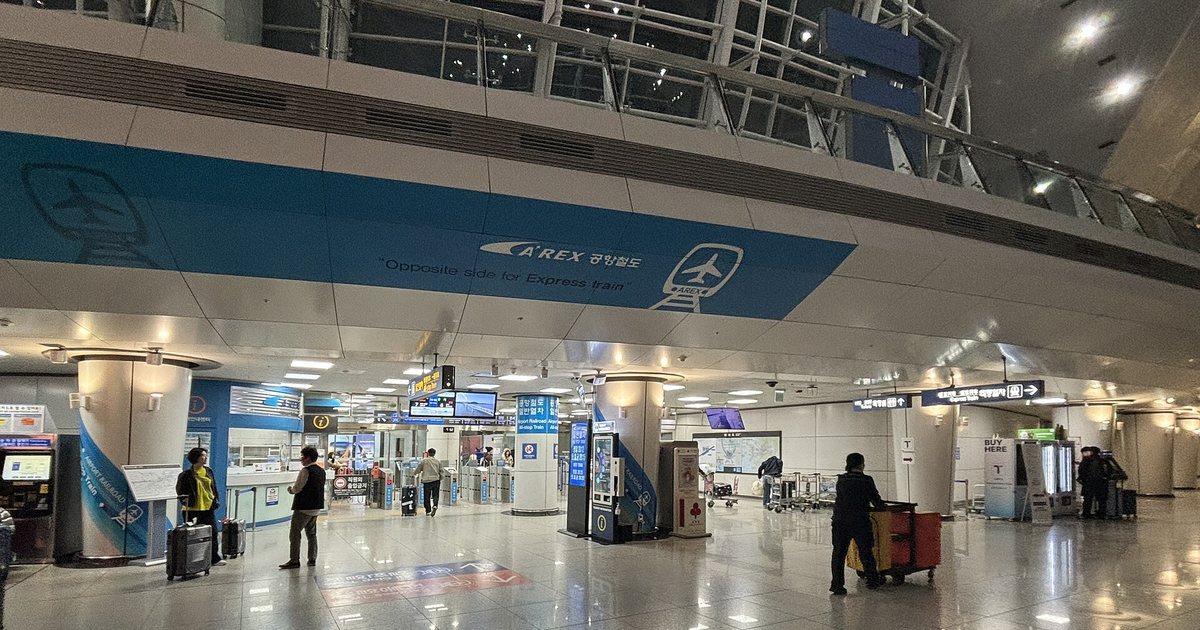
The AREX is the default, and for good reason: it’s frequent, it isn’t affected by road traffic, and it’s easy to follow with English signs. It has two kinds of service.
| Option | Rough travel time to central Seoul | Stops | Best for |
|---|---|---|---|
| AREX Express | About 45 to 50 minutes | Nonstop to Seoul Station | Namdaemun Market, a quick hop to Myeongdong or Gyeongbokgung |
| AREX All-stop | About 1 hour | Many, including Hongik University (Hongdae) and Seoul Station | Hongdae, saving money, paying by transit card |
| Taxi | Around 1 hour, depending on traffic | Door to door | Groups, late nights, heavy bags |
| Airport limousine bus | Usually longer than the train, depending on traffic | Hotels and districts around Seoul | Direct trips to a hotel area |
Times from Terminal 2 run a few minutes longer than from Terminal 1, since the line starts farther out. The AREX doesn’t run through the night, so if you’re going to arrive or leave in the small hours, look up the first and last trains before you go.
For the all-stop train you can pay with a T-money card (티머니, Korea’s rechargeable transit card), sold and topped up at convenience stores and ticket machines. The express needs its own ticket from the AREX counters or machines. Our guide on how to pay in Korea as a foreigner covers cards and cash, and having an eSIM or data plan ready means you can follow a map from the moment you land.
A 5-hour Incheon Airport layover plan
Stay inside. Five hours minus 1 hour to get out, 2 hours of train time and a 2-hour return buffer leaves nothing in Seoul. A plan that takes no risks gets more out of five hours.
Hour 1: Transfer and reset
Follow the transfer signs, clear transfer security and find your departure gate area first, so the last stretch holds no surprises. Then shower.
Hours 2 to 3: Eat and explore
Have a Korean meal at an airside food court, then visit the Korean Traditional Culture Center and catch a performance if one is on.
Hours 4 to 5: Rest and board
Nap in a relax zone or lounge, shop duty free if you want to, and be at the gate by boarding time.
If your arriving flight is late, cut the culture stop, not the gate check.
An 8-hour layover: one Seoul neighborhood, done well
Eight hours buys about 3 hours in the city. Choose one area beside an AREX station and don’t add a second.
Option A: Seoul Station and Namdaemun Market
Take the express to Seoul Station. Namdaemun Market (남대문시장), one of Seoul’s oldest and biggest traditional markets, is a short walk or one subway stop away at Hoehyeon Station on Line 4. Eat street food and kalguksu (knife-cut noodle soup), see Sungnyemun (숭례문, the old south gate of the city wall) and head back.
- Area
- Jung-gu, central Seoul
- Nearest station
- Hoehyeon (Line 4), Exit 5 opens onto the market; or walk from Seoul Station past Sungnyemun in about 15 minutes
- Time needed
- 1.5 to 2.5 hours
- Before you go
- Many stalls close on Sundays, so a weekday layover gets the busier market
Option B: Hongdae on the all-stop train
Hongdae (홍대), the area around Hongik University, has street performers, cafés and indie fashion shops. The all-stop AREX stops right there, so there’s no transfer. It’s at its best from late afternoon into the evening, so this suits a layover that lands around midday.
- Area
- Mapo-gu, western Seoul
- Nearest station
- Hongik University (AREX all-stop, Line 2); Exit 9 leads toward the main street
- Time needed
- 2 to 3 hours
- Before you go
- Many cafés and shops open late in the morning, so mornings here are quiet
Set a phone alarm for the time you have to board the train back. Then don’t ignore it.
A 12-hour layover: a palace, a hanok village and dinner
Twelve hours gives you 6 to 7 hours in Seoul. That’s enough to see the city’s historic center without rushing.
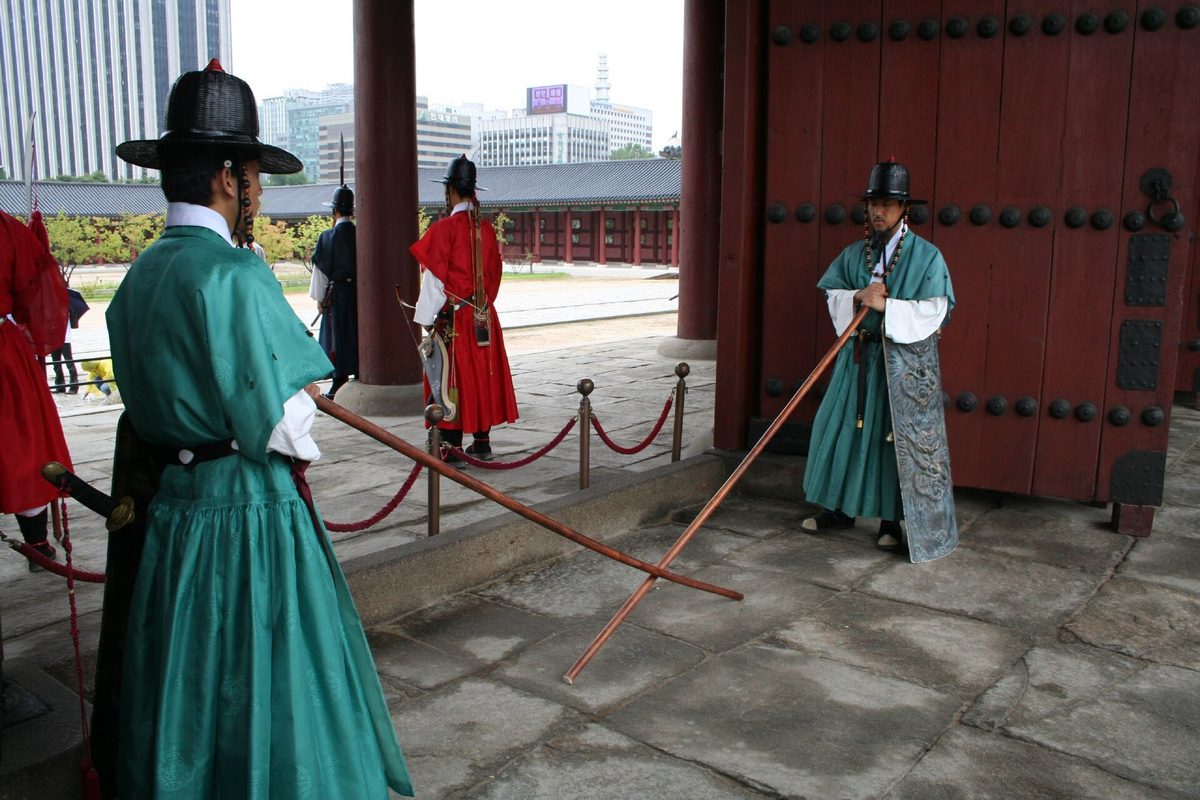
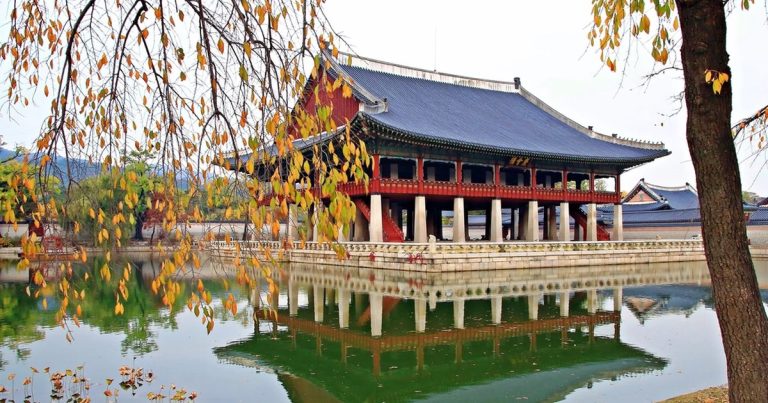
Stop 1: Gyeongbokgung (경복궁)
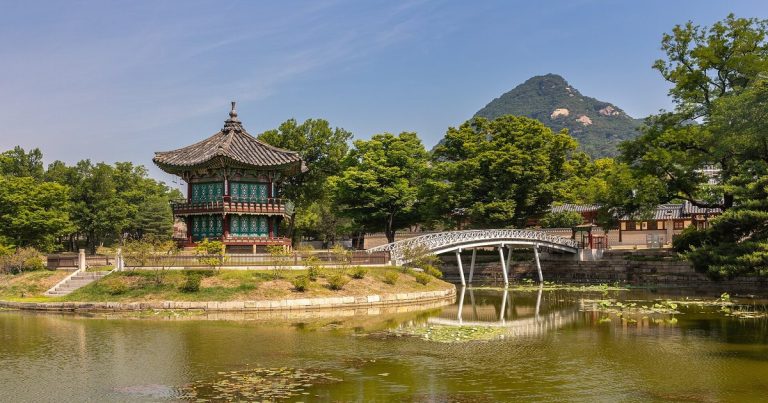
Take the express to Seoul Station, then a short taxi or subway ride to Gyeongbokgung, the main royal palace of the Joseon dynasty. Visitors wearing hanbok (traditional Korean dress) have historically gotten free entry, and rental shops nearby make that easy.
Stop 2: Bukchon Hanok Village (북촌한옥마을)
Walk uphill to Bukchon, a neighborhood of hanok (traditional Korean houses) where people still live. Keep your voice down. Parts of the area have visiting-hour limits for tourists, posted on signs in the lanes.
Stop 3: Insadong (인사동) or Myeongdong (명동)
Insadong has tea houses and craft shops for a calmer finish. Myeongdong has street food and K-beauty stores if you want to shop before flying. Then go back to Seoul Station and take the express.
- Area
- Jongno-gu, central Seoul
- Nearest station
- Gyeongbokgung (Line 3), Exit 5 leads straight toward the palace grounds
- Time needed
- 1.5 to 2 hours
- Before you go
- The palace closes on Tuesdays, so a Tuesday layover should swap in Changdeokgung or Insadong
If your 12 hours fall overnight, the plan changes. The AREX stops overnight and most sights are closed, so book an airport room and sleep. Seoul at 3 a.m. is not a good use of a layover. If you do go out at night, our guide to things to do in Seoul at night covers which areas stay lively and how to get back.
Common Incheon layover mistakes to avoid
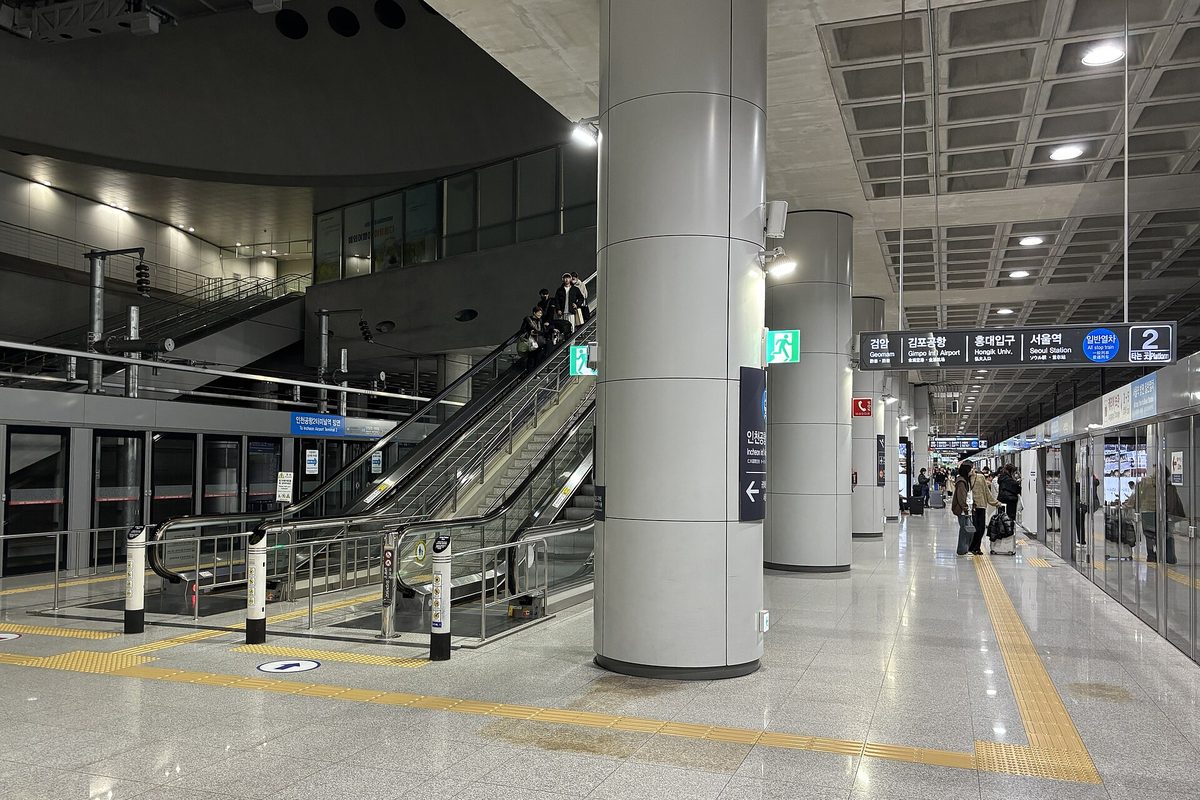
- Taking a train that stops short of Incheon. The AREX line also serves Gimpo Airport (김포공항), Seoul’s mostly domestic airport, and some trains on the way back end at Gimpo or Seoul Station rather than running to Incheon. Check the destination on the platform display: it should read Incheon Airport Terminal 1 or Terminal 2, and you need the one your flight leaves from.
- Forgetting which terminal you leave from. Incheon has two terminals, T1 and T2, linked by a free shuttle bus on the public side. Your boarding pass or airline app shows yours. Going to the wrong one can cost you 20 minutes or more.
- Assuming you can just walk out. Without a valid K-ETA or a visa where you need one, you can’t pass immigration, and the airline at your first airport may not even let you board.
- Fitting in a second neighborhood. Most missed connections start with one more stop.
- Leaving tax refunds until the end. If you shop in Seoul, read up on Korea’s tax refund options for tourists so you aren’t stuck at a kiosk with boarding about to close.
FAQ
Is 6 hours enough to leave Incheon Airport?
No. Under 7 hours, stay airside. After immigration, the round trip on the AREX and a 2-hour return buffer, you’d have under an hour anywhere, so the shower, food court and culture center are the better use of the time.
Do I need a K-ETA if I stay in the transit area?
Usually not, because you never pass immigration. You need the K-ETA or a visa only when you enter Korea. Rules can depend on nationality and itinerary, so confirm with your airline.
Can you sleep in Incheon Airport overnight?
Yes. The airport is open around the clock, and it has relax zones with reclining seats plus bookable rooms at Darakhyu and the transit hotel. Confirm which rooms are airside and which are landside before you book.
How long is the train from Incheon Airport to Seoul?
The AREX express runs nonstop to Seoul Station in roughly 45 to 50 minutes. The all-stop train takes about an hour and stops at Hongik University (Hongdae) on the way. Times are a little longer from Terminal 2.
Are Incheon Airport transit tours free?
Some transit tours have been free in the past and others have charged a fee, and the lineup changes. You’ll need to qualify for entry into Korea to join any of them, and you register at the Transit Tour desk after immigration.
Can I go between Terminal 1 and Terminal 2 during a layover?
Yes. A free shuttle bus links the terminals on the public side, and transfer passengers have routes between terminals that the transfer signs point out. Leave extra time, because the terminals are a real ride apart.
Check before you fly: your Incheon layover list
Opening times, fees and schedules at the airport change, so do all your checking in one sitting before departure day:
- Entry rules: whether your passport needs a K-ETA as of your travel date, on k-eta.go.kr.
- Airport services: current transit tour routes and fees, shower and Darakhyu locations, lounges, luggage storage and performance times, on airport.kr.
- Trains: first and last AREX trains and express fares, on arex.or.kr.
- Your airline: that your bags are checked through and which terminal your second flight leaves from.
Then pick your plan by the clock. With 5 hours, shower, eat and rest airside. With 8, ride to Seoul Station for one market or one neighborhood. With 12 and daylight, see Gyeongbokgung and Bukchon. If this layover gives you a taste of Seoul, plan a longer trip next time.
Related reading
Sources k-korea.blog · k-eta.go.kr · airport.kr · arex.or.kr
Prices, opening hours and availability change. Check the official page before you buy or travel.