
10 min read
What is a kdrama in plain terms: a Korean TV series, classically 16 episodes, that ends in one season. Koreans just call it a deurama (드라마), and fans abroad added the K to tell it apart from American, Japanese and Chinese shows. If you grew up on US television, the biggest difference is this: most K-dramas are written as one complete story with a planned ending, so you can finish one over a long weekend and actually get closure.
Key takeaways
- The classic K-drama is a 16-episode miniseries that airs two episodes a week, each running about an hour.
- Dorama is the Japanese word for TV drama. Spanish-, Portuguese- and Russian-speaking fans use it for Korean shows too, but in Korea nobody does.
- Most K-dramas get one season. A season 2 is the exception, so don’t wait for one.
- A 16-episode show is roughly 16 to 19 hours of viewing, about as much as two seasons of a typical US streaming series.
What is a kdrama, exactly?
A K-drama is a scripted, live-action Korean TV series. It’s made in Korean and watched abroad with subtitles, sometimes with dubbing. The shows come from three kinds of producers: the terrestrial broadcasters KBS, MBC and SBS (Korea’s old free-to-air networks), cable channels like tvN and JTBC, and streaming services that commission their own Korean originals.
In Korean you’ll hear deurama (드라마) or hanguk deurama (한국 드라마, Korean drama). The word drama is broad here. It covers comedy, horror, crime and romance alike, so a rom-com is still a drama. When fans abroad say K-drama, they mean any Korean TV series, not just serious ones.
K-dramas are one strand of Hallyu (한류, the Korean Wave), the term Korean media use for the global spread of Korean pop culture, along with K-pop, film and webtoons. Webtoons are Korean digital comics, and they’ve become one of the biggest sources of drama plots.
Is a K-drama the same as a Korean movie?
No. A K-drama is episodic TV. Korean films like Parasite are a separate industry with their own directors, cinemas and festivals, although actors move between the two. If you came in through film, our Parasite explainer shows how differently a two-hour story is built.
Why some fans say dorama instead of K-drama
Dorama (ドラマ) is how Japanese pronounces the English word drama. Japanese fans use it for their own TV series. As Asian shows spread online through fan-subtitled communities, the word moved into other languages and grew to mean any Asian TV drama.
Today Spanish and Portuguese speakers in Latin America, Brazil and Spain commonly say dorama for Korean, Japanese, Chinese and Thai series alike, and Russian-speaking fans say дорама. English-speaking fans tend to split by country instead: K-drama for Korea, J-drama for Japan, C-drama for China, and Thai drama or lakorn for Thailand.
- In Korea: deurama (드라마). Saying dorama in Seoul will just get you a confused look.
- In English: K-drama, kdrama or Korean drama. All three show up in search.
- In Spanish or Portuguese: dorama coreano finds Korean shows specifically.
Neither word is wrong. They’re just regional habits, so use whichever one your streaming app and fan forums use.

How long is a K-drama? Episodes, runtime and seasons
The standard prime-time format is the miniseries (미니시리즈). It runs 16 episodes, usually two a week in paired slots like Monday-Tuesday or Saturday-Sunday, over about two months. Broadcast episodes typically run about an hour and often longer. Some miniseries run 12 or 20 episodes, and streaming originals are often shorter, with 6 to 10 episodes being common.
There are two very different formats you can click into by mistake. Weekend dramas (주말 드라마, jumal deurama) are long family sagas that often run past 50 episodes. Daily dramas (일일 드라마, ilil deurama) air on weekdays and can pass 100 episodes. Both are made mainly for Korean family audiences and are a big commitment.
| Format | Typical length | Episode runtime | Best for |
|---|---|---|---|
| Miniseries (미니시리즈) | 12 to 20 episodes, classically 16 | About 60 to 70 minutes | First-time viewers, rom-coms, thrillers |
| Streaming original | Often 6 to 12 episodes | Varies, about 45 to 70 minutes | Binge-watchers who want a tight story |
| Weekend drama (주말 드라마) | Often 50+ episodes | About an hour | Family stories, long-haul fans |
| Daily drama (일일 드라마) | Often 100+ episodes | Around 30 to 40 minutes | Viewers who want a daily habit |
| Web drama | Short runs | Often 10 to 20 minutes | Commutes, Korean listening practice |
Why most K-dramas only have one season
Korean series are usually written by one screenwriter as one finished arc with an ending planned from the start. Actors sign on for a single production, and top stars rarely commit to years of sequels. Male actors also have to fit in mandatory service (see our guide to Korean military service), which makes long multi-season contracts harder.
There are exceptions, though. Hospital Playlist, Kingdom, Sweet Home and Squid Game all came back for more. Treat a second season as a bonus, not as the plan.
How long will it take to finish one?
Here’s a worked example. Sixteen episodes at about 65 minutes each comes to roughly 17 hours. Watch two episodes a night and you’ll finish in eight evenings. That’s about as much as two seasons of an eight-episode US streaming show, but with one story and one ending. A 50-episode weekend drama, by contrast, is a project of several weeks.
K-drama genres foreigners should know
Almost every K-drama has a romance thread running through it, even the crime shows. Beyond that, genres are clearly labeled in Korea, and knowing the Korean terms helps you read reviews and fan posts.
| Genre | Korean term | What to expect | Well-known example |
|---|---|---|---|
| Romantic comedy | 로코 (roko) | Banter, slow-burn romance, a happy ending | Business Proposal |
| Melodrama | 멜로 (mello) | Tears, fate, illness or separation | Winter Sonata |
| Historical | 사극 (sageuk) | Joseon-era courts, hanbok, palace politics | Dae Jang Geum (Jewel in the Palace) |
| Over-the-top family drama | 막장 (makjang) | Secret births, affairs, wild revenge plots | The Penthouse |
| Revenge thriller | 복수극 (boksugeuk) | A wronged lead, a long, careful payback | The Glory |
| Fantasy romance | 판타지 (pantaji) | Immortals, time slips, body swaps | Goblin |
| Crime and mystery | 수사물 (susamul) | Detectives, cold cases, twists | Signal |
| Medical and legal | 의학·법정 드라마 | Workplace cases told through ensemble casts | Hospital Playlist, Extraordinary Attorney Woo |
| Zombie and survival | 좀비·서바이벌 | Horror with sharp social commentary | Kingdom, Squid Game |
| Slice of life | 일상물 (ilsangmul) | Neighborhoods, friendship, nostalgia | Reply 1988 |
What makes a show feel Korean
Some things show up across genres: family obligations, class gaps between rich and poor, workplace hierarchy, food scenes over shared banchan (반찬, small side dishes), and a dedicated OST (original soundtrack) whose songs play at every emotional peak. If the theme song sticks in your head after episode 3, the show is working as intended.
How K-dramas differ from US TV, anime and other Asian dramas
The quickest way to understand a format is to compare it with the ones you already know. These are typical patterns, and every category has exceptions.
| Feature | K-drama | US TV series | Anime | J-drama | C-drama |
|---|---|---|---|---|---|
| Medium | Live action | Live action | Animation | Live action | Live action |
| Typical run | 16 episodes | 8 to 22 episodes per season | 12 to 13 or 24 to 26 episodes per cour | About 10 to 11 episodes | Often 30 to 50+ episodes |
| Seasons | Usually one | Renewed if ratings allow | Often several | Usually one, plus specials | Usually one long run |
| Ending | Planned from the start | Often open until cancellation | Often follows the source manga | Planned | Planned |
| Common source | Original scripts, webtoons | Original scripts, books | Manga, light novels | Manga, novels | Web novels |
In Korea, the writer is the star
Korean screenwriters, called jakga (작가), are often as famous as the cast. Kim Eun-sook wrote Descendants of the Sun, Goblin and The Glory. Park Ji-eun wrote My Love from the Star and Crash Landing on You. Fans follow writers the way Americans follow showrunners, and a big-name writer’s next project makes headlines in Korea before the cast is even set.
Live shoots versus pre-produced shows
Many broadcast dramas used to be filmed while they aired, with scripts handed out in pieces, a habit nicknamed jjokdaebon (쪽대본, page-by-page scripts). That let writers react to ratings, but it was brutal on crews. Streaming deals have pushed more shows toward sajeon jejak (사전제작, fully pre-produced), which is why many recent series feel more polished from start to finish.
Content and tone
Network K-dramas follow Korean age ratings (all ages, 12, 15 or 19) and tend to be restrained about sex. Romance often builds over many episodes before a first kiss. Streaming originals go further on violence and language. Product placement, known in Korea as PPL, is common and fairly open: if a character lingers over a coffee brand or a sandwich chain, that’s a paid spot.
Why the world watches K-dramas: a short history of the boom
The global rise happened in waves, and each wave brought in new countries.
- 2002: Winter Sonata became a phenomenon in Japan and is widely seen as the start of the drama boom there.
- 2003: Dae Jang Geum (Jewel in the Palace), a historical drama about a palace cook turned physician, traveled across Asia and the Middle East.
- 2009: Boys Over Flowers, based on a Japanese manga, built a young fan base across Southeast Asia and online.
- 2013 to 2016: My Love from the Star was a massive hit in China, and Descendants of the Sun followed it across Asia.
- 2019: Kingdom, a zombie sageuk, launched as Netflix’s first original Korean series, and Crash Landing on You found a global audience during the pandemic.
- 2021 to 2022: Squid Game became a worldwide hit on Netflix, and Lee Jung-jae won the 2022 Emmy for lead actor in a drama series for it.
Why does it stick? Finished stories respect your time. Production values are high, budgets go to cinematography and music, and the emotions play sincere rather than ironic, which a lot of viewers find refreshing next to US prestige TV. Subtitles were a barrier for a long time, but streaming made them routine.
How to watch K-dramas from abroad
In the US and most other countries, you’ll find Korean series on Netflix, Disney+, Prime Video, Rakuten Viki (known for community-made subtitles in many languages) and Kocowa (a service in the Americas focused on Korean network shows). Viu is a major option in parts of Asia and the Middle East. Which shows each service carries depends on your country and changes as licenses expire.
Subtitles flatten a lot of Korean. Terms like oppa, sunbae and the shift from formal to casual speech carry relationship information that English can’t fully show. Our list of Korean words in kdramas covers the 25 you’ll hear most.
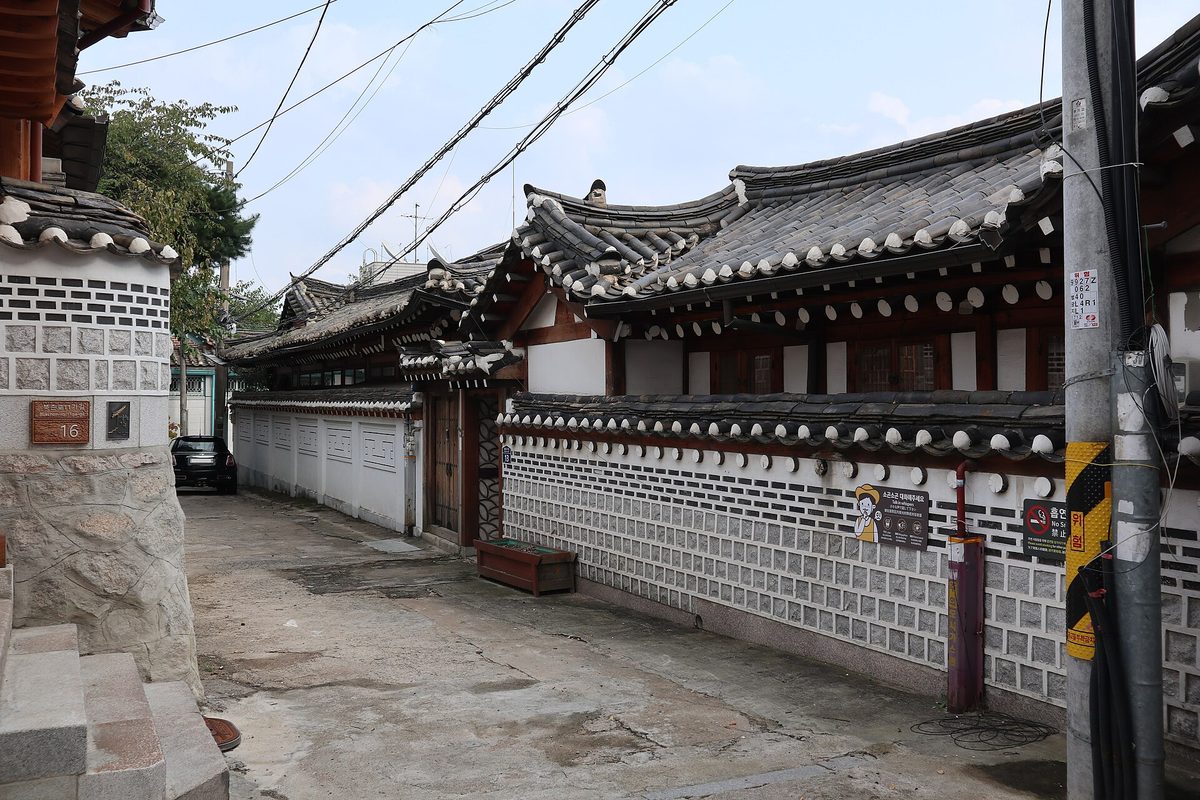
If watching turns into a trip, Korea.net reports a new platform that guides foreign visitors to Hallyu-related locations, including drama filming spots. Check opening days and access rules on each site’s official page before you go.
Common mistakes new K-drama viewers make
Quitting after episode 1
K-drama openings often spend a lot of time on setup. Many fans give a show about four episodes before deciding, because that’s usually where the central relationship and the main conflict lock in.
Starting a 100-episode daily drama by accident
Check the episode count before you press play. If it’s above 50, you’re looking at a weekend or daily family drama, a very different experience from a 16-episode miniseries.
Waiting for a season 2 that was never planned
The ending you get is usually the ending. Unless the broadcaster or platform has officially announced a new season, assume the story is finished.
Skipping the credits
Many episodes end with a short preview of the next one, and some hide extra scenes during or after the credits. Fast-forward carefully.
Judging the whole industry by one genre
If a sugary rom-com didn’t work for you, try a thriller like Signal or a slice-of-life show like Reply 1988. The range is far wider than the romance reputation suggests.
FAQ
Why are K-dramas only 16 episodes?
The 16-episode miniseries became the standard prime-time slot length on Korean TV: two episodes a week for about two months. It’s long enough for a full romance or mystery arc and short enough for one writer to plan an ending. Streaming originals have pushed many shows shorter.
Is a dorama the same as a K-drama?
Sometimes. Dorama is the Japanese word for TV drama, and in Spanish, Portuguese and Russian fan communities it covers Asian dramas in general, Korean ones included. In English, K-drama means Korean shows specifically.
Do K-dramas have seasons?
Most have just one season with a planned ending. A few, including Hospital Playlist, Kingdom, Sweet Home and Squid Game, returned for more. Check the broadcaster or streaming service for any official renewal news.
Where can I watch K-dramas in the US?
Netflix, Disney+, Prime Video, Rakuten Viki and Kocowa all carry Korean series. Catalogs change often and differ by country, so check JustWatch or the platform itself for a specific title.
What is the difference between a K-drama and anime?
K-dramas are live action with real actors, made in Korea. Anime is Japanese animation, often adapted from manga and frequently renewed for several seasons. Some K-dramas are adapted from manga too, Boys Over Flowers being the best-known case.
Are K-dramas family friendly?
Many network dramas are fairly mild, especially on sex, but each show carries a Korean age rating, and streaming originals can be very violent. Check the rating your platform shows before watching with kids.
What to try next as a new K-drama viewer
Pick one 16-episode miniseries in a genre you already like in English. Crime fans can start with Signal, rom-com fans with Business Proposal, and horror fans with Kingdom. Give it four episodes. Our K-drama guide for beginners has 12 starter picks across 8 genres if you want a shortlist.
For new releases, follow the official pages of the major platforms and broadcasters. As one example of what’s in the pipeline, C21media reports that Netflix has greenlit the K-drama series The Twilight Between Us. Check Netflix’s own page for release timing in your country. And keep an eye on webtoon hits, because today’s popular webtoon is often the source of a drama a few years later.
Related reading





Sources k-korea.blog · news.google.com
Prices, opening hours and availability change. Check the official page before you buy or travel.