12 min read
Why do Koreans sleep on the floor? For 1 big reason: ondol (온돌), heating that makes the floor the warmest place in the house. For centuries, Korean homes warmed the ground instead of the air, so lying on it made more sense than lifting yourself away from it on a bed frame.
That habit still shapes how Koreans sleep, sit and furnish their homes today, even in high-rise apartments full of beds. If you’re visiting, it also decides what kind of room you get when you book an “ondol room” in a hanok or spend the night at a Korean spa.
Key takeaways
- Ondol means roughly “warm stone”: smoke or hot water runs under the floor, so the heat rises from below your body.
- A yo (요) is a thin floor mattress; you sleep on it under an ibul (이불), a quilt, and fold both away in the morning.
- Almost every Korean apartment still has underfloor heating, even the ones where people now sleep in Western beds.
- Book an “ondol room” at a hotel, hanok stay or jjimjilbang and you’ll sleep on a heated floor, not a bed.
Why do Koreans sleep on the floor? The ondol answer
Korean winters are long, dry and cold, and traditional houses had no central heating in the Western sense. Instead of a fireplace warming one wall of a room, the ondol system pushed heat from a fire under the entire floor. The stone and clay floor soaked up that heat and released it slowly through the night.
Once your floor is the radiator, a raised bed is a bad idea. You’d be sleeping in the coldest layer of air. So Koreans spread bedding directly on the warm floor, and daily life followed: people sat on the floor to eat at low tables, took shoes off at the door to keep it clean, and used the same room for meals, guests and sleep.
What does ondol mean?
Ondol (온돌) combines on (온, warm) and dol (돌, stone). Older Korean texts also call the heated stone floor gudeul (구들). You’ll still hear Koreans say ondol-bang (온돌방), “ondol room”, for any room where people sleep on a heated floor.
How ondol heating works, step by step
The traditional system is surprisingly clever. It reused the heat from cooking, so one fire did two jobs.
- The agungi (아궁이), the firebox. A wood fire was lit in an opening, usually in the kitchen, which sat lower than the living rooms. The same fire often cooked the rice in an iron pot set on top.
- The gorae (고래), the flues. Hot smoke traveled through channels built under the floor of the next room.
- The gudeul stones. Flat stones covered the channels and absorbed heat, then were sealed with clay and finished with layers of oiled paper called jangpanji (장판지), which gave old floors their glossy yellow color.
- The gulttuk (굴뚝), the chimney. Smoke left through a chimney on the far side of the house, pulling the draft through the floor.
Because the heat had to travel, the floor was never even. The spot closest to the firebox was the hottest.
What are araenmok and witmok?
Araenmok (아랫목) is the warm end of an ondol room, near the fire. Witmok (윗목) is the cooler end, far from it. In a traditional household the araenmok was the place of honor, offered to grandparents and guests, and Korean families sometimes tucked a bowl of rice under a blanket there to keep it warm for someone coming home late. The words are still used today, even in apartments where the heat is spread evenly.
A short history of ondol in Korea
Heated-floor structures on the Korean Peninsula go back to ancient times, and archaeologists have found early versions in settlements across the region. In early forms, only part of a room was heated. Over the centuries the heated area spread until, by the Joseon dynasty (1392 to 1910), full ondol floors were standard in homes from farmhouses to palaces.
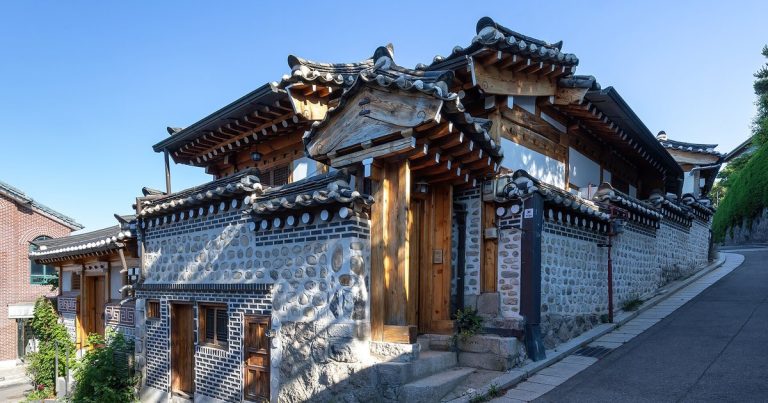
Traditional hanok (한옥), Korean wooden houses with tiled or thatched roofs, were designed around two systems: the ondol room for winter warmth and the maru (마루), a raised wooden-floored hall that stayed cool in summer. That pairing is why a hanok feels so different from a Western house: one half is built to hold heat, the other to let air move.
The big change came in the 20th century. Burning coal briquettes, called yeontan (연탄), replaced wood in many homes, and that brought a well-known danger: carbon monoxide leaking through cracked floors. Modern ondol solved it by replacing smoke with hot water. Today a gas boiler (보일러, boiler, used as a Korean word) pumps hot water through pipes laid in the concrete floor. No smoke goes under the room at all.
Yo, ibul and begae: what Korean floor bedding is
Korean floor bedding is a set, not a single mattress. Each piece has its own name, and you’ll see these words on booking sites and in shops.
Yo (요): the floor mattress
A yo is a padded mattress laid straight on the floor. Traditional versions were stuffed with cotton; modern ones use cotton, polyester or memory foam and come in different thicknesses. It’s softer than the floor but much thinner than a Western mattress, so you still feel the warmth coming up through it.
Ibul (이불): the quilt
The ibul is the top blanket, often a thick cotton or down comforter in winter and a light one in summer. Koreans use “ibul” loosely for any blanket, and bedding shops are often signposted with the word.
Begae (베개): the pillow
Korean pillows are often smaller and firmer than American ones. A classic type is filled with buckwheat hulls (메밀 베개, memil begae), which shift to fit your neck and stay cool. Some people love them. Some find them like sleeping on a beanbag of gravel for the first few nights.
In the morning, everything is folded and stacked in a cabinet called an ibuljang (이불장). That’s the practical genius of floor sleeping: a small room becomes a bedroom at night and a dining or living room by day.
Korean floor bedding vs a Western bed
Which setup suits you depends on your body, your room and your climate. Here’s how the main options compare in practice.
| Setup | How it feels | Best for | Watch out for |
|---|---|---|---|
| Yo on an ondol floor | Firm, warm from below | Back sleepers, small rooms, cold winters | Hip and shoulder pressure for side sleepers; dry air |
| Thick yo or folding mattress on an unheated floor | Firm, cooler | Guests, studio apartments abroad | Moisture underneath if never aired out |
| Western bed in an ondol-heated apartment | Soft, warm room air | People who want a familiar bed | You miss most of the floor warmth |
| Dol chimdae (돌침대), a heated stone bed | Hard, warm surface at bed height | Older sleepers who like ondol heat but find getting up from the floor hard | Very firm; check the maker’s safety and temperature guidance |
| Jjimjilbang sleeping room mat | Thin mat on a heated floor | Budget overnight, travelers between trains | Noise, light and shared space |
Is sleeping on the floor good for your back?
This is the question foreigners ask most, and it deserves a straight answer: there isn’t strong scientific evidence that sleeping on the floor is better for everyone’s back. You’ll hear plenty of claims online, but they’re mostly personal stories.
What is reasonable to say is this. A firm, flat surface keeps the spine from sagging the way it can on an old, soft mattress, and many Koreans say warmth on the back feels relaxing, the same reason heat packs are popular. Some people with back stiffness report feeling better on a firm surface.
Others feel worse. Side sleepers put weight on the hip and shoulder, and a thin yo can leave those joints sore. People with existing back, hip or joint problems, pregnant people and anyone who struggles to get up from low positions should talk to a doctor or physical therapist before switching. A thicker yo or a firm mattress topper is the usual middle ground.
Do Koreans still sleep on the floor? Modern apartments and beds
Many don’t, at least not every night. As Korea urbanized and apartment blocks went up across the country, Western beds became common, especially among younger people and couples. Walk through a Korean furniture shop and you’ll find beds of every size.
The floor heating stayed, though. Korean apartments are still built with hot-water ondol pipes under the floors, controlled by a wall panel. So even a family that sleeps in beds walks barefoot on a warm floor in January, and kids often end up sprawled on the living room floor with a blanket.
Where floor sleeping still survives
- Grandparents’ homes. Older Koreans are more likely to prefer a yo, and many families keep spare bedding for holidays like Seollal (설날, Lunar New Year) and Chuseok (추석, the autumn harvest holiday) when relatives crowd in.
- Small studios. In a one-room apartment, folding bedding frees up space.
- Winter nights. Some people who use a bed most of the year sleep on the floor when it’s coldest.
- Electric mats. The jeongi jangpan (전기장판), an electric heating mat, brings ondol-style warmth to a bed.
The heated stone bed, dol chimdae, is the clearest compromise: ondol warmth at mattress height. It’s popular with older buyers and you’ll see it in Korean home-shopping TV ads.
Where to sleep on the floor in Korea as a traveler
You don’t need a Korean friend’s grandmother to try ondol. Several kinds of accommodation put you on a heated floor by design.
Ondol rooms in hotels and guesthouses
Many Korean hotels, motels and guesthouses list two room types: a bed room (침대방, chimdae-bang) and an ondol room (온돌방). The ondol room usually has bedding folded in a closet and a heated floor. Families often choose it because more people can fit. Read the room description carefully on booking sites, since “ondol” means no bed frame.
Hanok stays
A hanok stay puts you in a traditional-style house, often in areas like Bukchon in Seoul or Jeonju Hanok Village in North Jeolla Province. Expect paper-screen doors, a yo and ibul on a heated floor, and a shared or compact bathroom in some older houses. Facilities, heating type and rules vary a lot, so check the listing and the Visit Korea official site before booking.
Jjimjilbang (찜질방)
A jjimjilbang is a Korean bathhouse-and-sauna complex where people relax on heated floors in shared clothes provided at the entrance. Many allow overnight stays in sleeping areas with mats and small pillows. Our jjimjilbang guide covers the two zones, etiquette and what sleeping over is really like. Overnight policies differ by venue, so check before you plan around one.
Templestay
Buddhist temples that run Templestay programs usually house guests on floor bedding in heated rooms. Bedtime is early and wake-up is before dawn. Details and availability are on the official Templestay site.
How to sleep well on a Korean floor: 6 steps
Your first night on a yo can feel odd. These steps are what Koreans do without thinking about it.
- Set the heat before bed. Find the wall panel or ask the host. Moderate is better than high; the floor keeps releasing heat after you turn it down.
- Lay the yo away from the door. In a traditional room, the warm araenmok side is usually nearest the firebox or the boiler pipe inlet. Feel the floor with your hand to find it.
- Ask for a second yo. If you’re a side sleeper or used to a soft mattress, stacking two is normal and hosts rarely mind.
- Fight the dry air. Floor heat dries a room fast. Drink water, hang a damp towel or use the humidifier if one is provided.
- Roll out of bed slowly. Getting up from floor level uses your knees and hips. Roll to your side and push up rather than sitting up sharply.
- Fold it in the morning. Folding the yo and ibul airs out the floor and is expected etiquette in hanok and temple stays.
A worked example: your first winter hanok night
Say you check into a hanok guesthouse in Jeonju on a cold evening. The room is empty except for a low table and a closet. You take your shoes off at the stone step, open the closet and find two yo, an ibul and buckwheat pillows.
The floor is already warm because the host turned the boiler on. You lay out both yo on the warmer side, set the thermostat to a mid level, put a glass of water nearby and sleep. In the morning you fold everything back into the closet before breakfast. That’s the whole ritual.
Common mistakes foreigners make in ondol rooms
- Wearing shoes inside. The floor is the bed. Shoes come off at the entrance, always.
- Cranking the heat to maximum. It feels great for an hour, then you wake up thirsty and overheated.
- Sleeping on the bare floor. Always use the yo; it’s both for comfort and to avoid lying directly on a hot surface.
- Booking an ondol room by accident. If you need a bed for medical or mobility reasons, filter for 침대방 or “bed room” specifically.
- Forgetting socks. Old hanok floors are warm, but corridors and bathrooms often aren’t. Our Korea packing list covers what to bring for winter.
- Leaving bedding out all day. In shared or traditional rooms, folded bedding is the polite default.
FAQ
Do most Koreans sleep on the floor today?
Not most every night. Beds are common in modern Korean homes, especially among younger people. Floor sleeping survives with older generations, in small studios, on holidays when relatives visit, and in hanok, temple and spa stays.
What is a Korean floor mattress called?
It’s called a yo (요). It’s used with an ibul (이불), a quilt or comforter, and a begae (베개), a pillow. Together they’re called ibul or bedding, and they’re folded away during the day.
Is ondol the same as radiant floor heating?
Modern ondol is a form of hydronic radiant floor heating: hot water from a boiler runs through pipes in the floor. Traditional ondol used smoke from a wood fire running through stone flues instead. Korea is unusual in how universal it is in housing.
Is sleeping on the floor bad for you?
It depends on the person. Some people find a firm, warm surface comfortable; side sleepers and people with joint problems may feel pressure on the hips and shoulders. There’s no strong evidence it’s better for everyone, so anyone with back or health conditions should ask a doctor or physical therapist.
Can I buy a Korean yo outside Korea?
Yes. Korean grocery chains and online marketplaces abroad often sell yo mattresses, buckwheat pillows and Korean electric mats. Search for “Korean yo mattress” or “Korean floor mattress,” and check the voltage on any electric mat, since Korea uses 220V.
What does “ondol room” mean when booking a hotel in Korea?
It means a room with a heated floor and folding bedding instead of a bed frame. It often sleeps more people, which suits families. If you want a bed, choose a room marked “bed” or 침대 instead.
How to try ondol on your next Korea trip
The easiest first step is one night in a hanok stay or an ondol room at a regular hotel, ideally between late autumn and early spring when the floor heat actually matters. If you’re traveling on a budget or between late trains, a jjimjilbang gives you the same heated-floor sleep for a lot less planning; just confirm the overnight policy on the venue’s page first.
Want to take the habit home? Start with a buckwheat pillow, then a thick yo on a rug. And if Korean home habits interest you, our piece on Korean superstitions, from fan death to the number 4 explains another bedroom belief that surprises visitors.
Related reading
Sources k-korea.blog
Prices, opening hours and availability change. Check the official page before you buy or travel.