12 min read
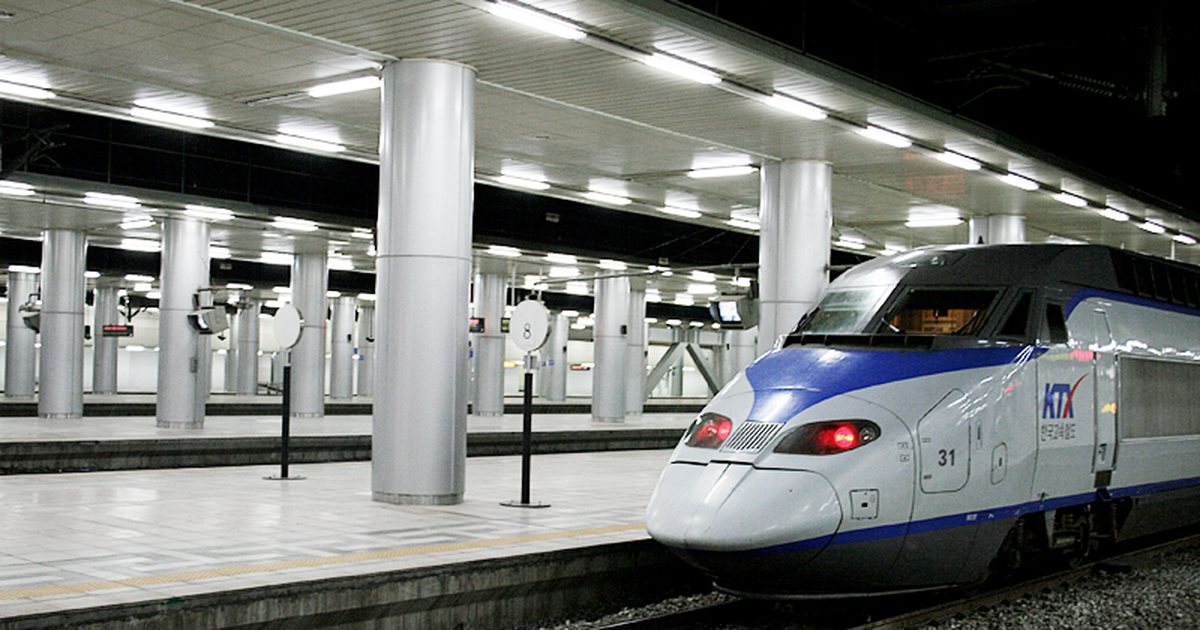
The fastest KTX Seoul to Busan trains take about 2 hours 30 minutes from Seoul Station to Busan Station, so the trip fits easily into a single morning. Book on Korail’s English site (Let’s Korail) or the Korail Talk app, choose a forward-facing seat, and if you’re staying in Gangnam, check the SRT from Suseo too.
This guide covers how Koreans actually book and ride the train between the country’s two biggest cities, plus the trips you can take on the same network: Gyeongju, Jeonju, Yeosu and Gangneung.
Key takeaways
- KTX (Korea Train eXpress) has linked Seoul and Busan since 2004, and the quickest trains do it in roughly 2.5 hours.
- Busan trains leave from Seoul Station (서울역). Yongsan Station (용산역) mostly handles trains heading southwest, to Gwangju, Mokpo and Yeosu.
- SRT is a separate high-speed train that leaves from Suseo (수서역) in Gangnam. You book it somewhere else, and the Korail Pass doesn’t cover it.
- Friday evenings, Sunday afternoons and the Chuseok and Seollal holidays sell out first, so book early for those.
What is the KTX, and why do Koreans take it to Busan?
KTX (케이티엑스) is South Korea’s high-speed rail service, run by Korail (코레일, the Korea Railroad Corporation, the state rail operator). It opened in 2004 on the Gyeongbu Line, the main line linking Seoul and Busan. The name “Gyeongbu” combines the old names for the two cities.
For most Seoul residents the KTX is simply how you get to Busan. Flying from Gimpo to Gimhae is short in the air, but once you add getting out to the airport, security and the trip into Busan from Gimhae, the door-to-door time comes out about the same. The express bus is cheaper, takes much longer and depends on highway traffic. The train goes from one city center to the other, with no security line and no luggage check, and you can usually board a few minutes before departure.
The Seoul–Busan route also stops at the cities you may want on the way: Daejeon, Dongdaegu (for Daegu), Singyeongju (for Gyeongju) and Ulsan. Some trains make more stops than others, which is why journey times differ from one departure to the next.
How long does the KTX Seoul to Busan take?
Expect roughly 2 hours 30 minutes on the faster departures and closer to 3 hours on trains that stop more. The booking screen shows the exact running time for each train, so compare a few before you pick. A train leaving 10 minutes later can arrive earlier because it skips stops.
Which stops does the train make on the way to Busan?
Common stops on the Gyeongbu high-speed line include Gwangmyeong (southwest Seoul), Cheonan-Asan, Osong, Daejeon, Gimcheon-Gumi, Dongdaegu, Singyeongju and Ulsan. No two trains have exactly the same stopping pattern, so check the stop list on your ticket before you plan a stop on the way.
Where does the train arrive in Busan?
Busan Station (부산역) is on the old downtown side of the city, close to Nampo-dong, Jagalchi Fish Market and the ferry terminal. Busan Metro Line 1 stops right outside. If you’re staying in Haeundae, plan on another subway ride or a taxi from the station. Busan is spread out, and Haeundae is on the other side of the city.
Seoul Station, Yongsan or Suseo: which station do you need?
This catches more first-time visitors than anything else. Seoul has several high-speed rail stations, and each serves different lines.
| Station | Operator | Main destinations | Best if you’re staying in |
|---|---|---|---|
| Seoul Station (서울역) | Korail KTX | Busan, Daegu, Gyeongju, Ulsan, Pohang; some Gangneung trains | Myeongdong, Jongno, Hongdae, anywhere on the AREX airport line |
| Yongsan Station (용산역) | Korail KTX | Gwangju, Mokpo, Jeonju, Yeosu (Honam and Jeolla lines) | Yongsan, Itaewon, Mapo |
| Suseo Station (수서역) | SR Corporation (SRT) | Busan, Daegu, Mokpo, Gwangju | Gangnam, Jamsil, southeast Seoul |
| Cheongnyangni (청량리역) | Korail KTX | Gangneung and the east coast | Dongdaemun, northeast Seoul |
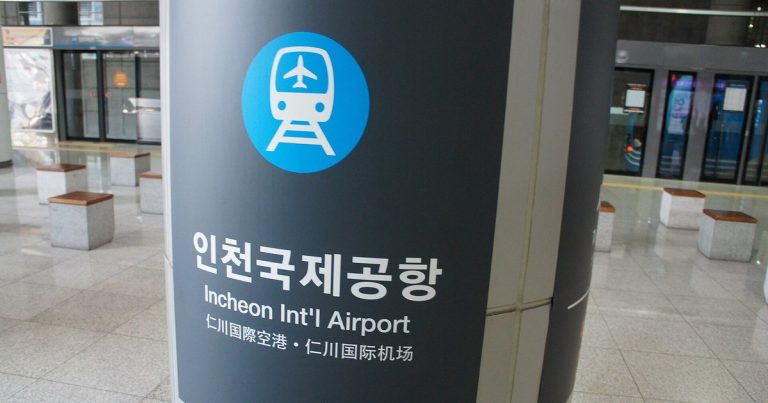
For Busan, use Seoul Station unless you’re closer to Suseo. Seoul Station sits on subway Lines 1 and 4 and the AREX airport railroad, which runs from Incheon Airport. That means you can land, ride AREX into the city and take a KTX south without ever leaving the rail network.
How to book KTX tickets as a foreigner
Koreans book on their phones and almost never queue at a counter. You have three good options.
- Let’s Korail (the English website). This is Korail’s booking site for overseas visitors. You search by date and stations, pick a train and seat, and pay by card. Have your passport name ready, spelled exactly as it is in the passport.
- The Korail Talk app (코레일톡). This is the app most Koreans use. It has an English interface, and your ticket shows up as a QR code on your phone. Whether it accepts foreign-issued cards depends on your card, so if a payment fails, switch to the website.
- Ticket machines and counters at the station. Machines at Seoul Station have an English option. This works fine for weekday trips with flexible timing and is risky for weekends.
Tickets usually go on sale about a month ahead. Exact opening rules and fares change, so check the current details on the official Korail site before you plan around them.
Do you need a printed KTX ticket?
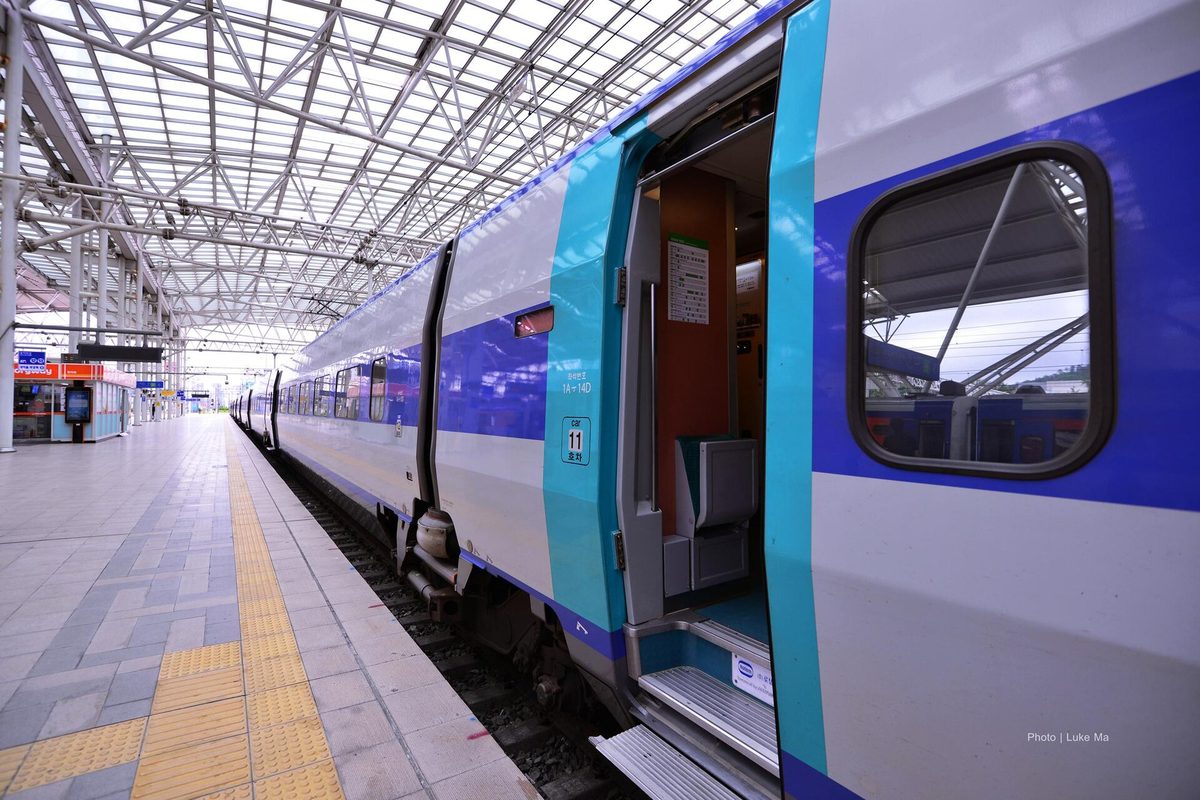
Usually not. KTX platforms don’t have ticket gates. You walk onto the platform, find your car number on the floor markings or the signs, and sit down. Conductors check tickets against the system as they walk through, so keep the e-ticket or confirmation on your phone, and screenshot it in case your data connection drops in a tunnel.
Should you buy a Korail Pass?
The Korail Pass is a rail pass sold only to foreign visitors. It covers Korail trains, including KTX, for a set number of days. It pays off when you plan several long trips in a short window, for example Seoul to Busan to Gyeongju to Jeonju and back.
For a single Seoul–Busan round trip a regular ticket is often simpler. Compare the pass price on the official Korail site with the separate fares for your exact route. You still have to reserve a seat for each trip with the pass, and it is not valid on SRT.
KTX vs SRT: which fast train should you take?
SRT (Super Rapid Train) is a second high-speed service that opened in 2016. A separate company, SR Corporation, runs it from Suseo Station in southeast Seoul. South of Seoul the SRT joins the same high-speed track as KTX, so for Busan the speed and comfort are much the same. What differs is where you board and how you book.
| KTX | SRT | |
|---|---|---|
| Seoul station | Seoul Station, Yongsan, Cheongnyangni and others | Suseo (also Dongtan and Pyeongtaek-Jije) |
| Where to book | Let’s Korail, Korail Talk app | SRT’s own website and app |
| Korail Pass | Valid | Not valid |
| Network | The whole country, including Gangneung and the east coast | The Busan and Mokpo/Gwangju corridors only |
| Who uses it | Anyone starting north of the Han River or near Yongsan | People in Gangnam, Jamsil and the southern suburbs |
A simple rule: go to whichever station you can reach faster. Crossing Seoul by subway at rush hour can easily take as long as the gap between the two services. If KTX is sold out, check SRT, and the other way round. Seats come from separate pools, so one often still has seats when the other doesn’t.
KTX seat types: general, first class and standing
KTX has two main classes, and on busy days you’ll see a few other ticket types too.
- General (일반실, il-ban-sil): four seats across, two on each side of the aisle. Comfortable enough for 2.5 hours, and it’s what most Koreans book.
- First class (특실, teuk-sil): wider seats, usually three across (2+1), more legroom, quieter cars. Worth it if you want to work or nap, or if general class is sold out.
- Standing (입석) and unreserved seats (자유석): when reserved seats sell out, some trains sell standing tickets, and some have cars with unreserved seating. You get on but have no guaranteed seat. For 2.5 hours with luggage, it’s a hard ride.
Forward-facing or backward-facing seats?
KTX seats are fixed, so on many trains about half the seats face backward. Koreans call these 역방향 (yeok-bang-hyang, reverse direction). Forward-facing seats are 순방향 (sun-bang-hyang). If backward travel bothers you, pick a forward-facing seat on the seat map when you book. Window seats on the right side, heading south, aren’t especially scenic on this route, which runs through tunnels and farmland, so don’t pay extra or wait for a specific window.
Which car should you choose?
Cars near the middle of the train put you closer to the platform exits at most stations. If you have big suitcases, a seat near the end of a car means you’re right next to the luggage racks by the doors.
Luggage on the KTX: what fits and where it goes
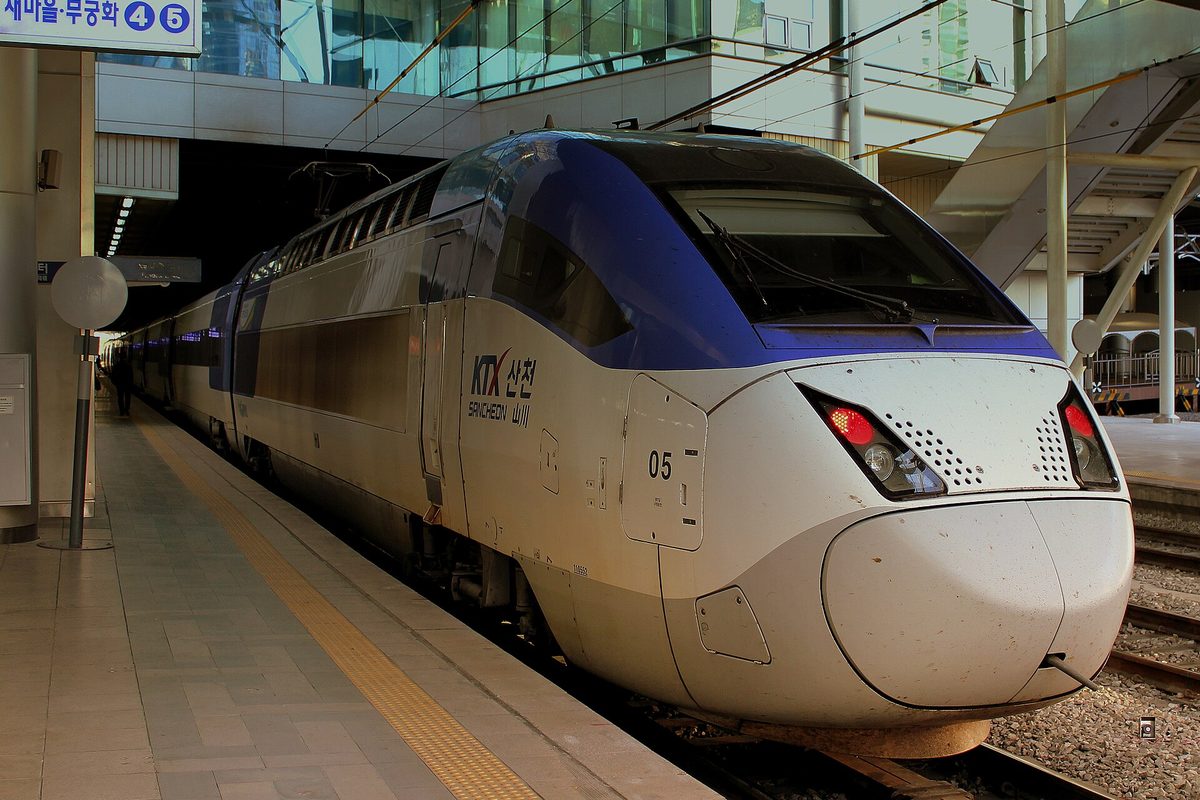
KTX has no checked baggage. You carry everything on yourself, and space is easy to find if you know where to look.
- Overhead racks: backpacks, carry-on suitcases and shopping bags.
- Luggage racks at the ends of each car: large suitcases. These fill up on Friday evenings and holiday weekends, so board early if you have a big bag.
- Behind the last row of seats: a small gap that suits a medium case.
A common mistake is leaving a giant suitcase in the aisle or the vestibule. Conductors will ask you to move it. If you’re hauling several big bags on a holiday weekend, look into luggage delivery services in Seoul and Busan, which many travelers use to send bags between hotels. They often operate from major stations. Check current options at the station’s information desk.
Food on the KTX: what Koreans eat on board
Don’t count on buying a meal on the train. The old snack carts are gone, and only some trains have vending machines. Koreans buy food at the station before they board, and Seoul Station has plenty of options: convenience stores, bakeries, coffee chains and a food court upstairs.
The standard choices are:
- Gimbap (김밥): rice and fillings rolled in seaweed, sliced into bite-size pieces. It’s the classic train food because it’s neat and has almost no smell.
- Samgak gimbap (삼각김밥): triangle rice balls from any convenience store, the cheapest option.
- A coffee and a pastry from one of the station bakeries.
- Hodu-gwaja (호두과자): small walnut-shaped cakes filled with red bean, a classic at train stations, especially around Cheonan.
Eating at your seat is normal. Strong-smelling hot food, like fried chicken or anything with lots of garlic, gets looks in a closed train car. Koreans also keep phone calls short and quiet, and step into the vestibule between cars to talk. For what to eat once you arrive, our list of 30 Korean dishes Koreans would order for you includes the Busan favorites.
Beyond Busan: other KTX trips from Seoul
Once you’ve booked one KTX trip, the others work exactly the same way. These are the trips Koreans take most for weekends.
| Destination | Depart from | Arrival station | Best for |
|---|---|---|---|
| Gyeongju (경주) | Seoul Station | Singyeongju | Silla-era tombs, temples, Bulguksa |
| Jeonju (전주) | Yongsan | Jeonju | The hanok village, bibimbap, street food |
| Yeosu (여수) | Yongsan | Yeosu Expo | The south coast, seafood, night views over the sea |
| Gangneung (강릉) | Seoul Station or Cheongnyangni | Gangneung | East Sea beaches, coffee street |
| Daegu (대구) | Seoul Station or Suseo (SRT) | Dongdaegu | Markets, food alleys, a stop on the way to Busan |
A popular combination: Seoul to Gyeongju by KTX, a night or two there, then a short onward hop to Busan, and the KTX back to Seoul from Busan Station. Booking each leg separately works fine, and it’s also the kind of trip where a Korail Pass can come out ahead.
A worked example: a Seoul–Busan weekend
Say you’re staying near Myeongdong and want two days in Busan. Book a mid-morning Friday KTX from Seoul Station on Let’s Korail about two weeks ahead, choosing a forward-facing seat in general class. Grab gimbap and coffee in the station, board ten minutes before departure, and you’re in Busan by early afternoon.
Take Line 1 to Nampo for Jagalchi, then spend the next day in Haeundae. For the return, avoid Sunday late afternoon, when half of Seoul is heading home. A Sunday morning or Monday train is easier to book and less crowded.
Common KTX mistakes foreigners make
- Going to the wrong station. Your ticket says Yongsan but you’re at Seoul Station, or you booked SRT from Suseo. Check the station name in Korean and English on the ticket.
- Cutting it too close. Seoul Station is big, and the walk from the subway to the KTX platforms takes time. Give yourself 20 minutes at least. Trains leave on the minute.
- Getting on the wrong car. The car number is on your ticket and on the platform floor. Boarding at the wrong end of a 2.5-hour train means a long walk with your bags.
- Forgetting to get off. Busan is the last stop on most Gyeongbu trains, but if you’re getting off at Dongdaegu or Singyeongju, be at the door before the train stops. Stops are short.
- Assuming the Korail Pass covers everything. It doesn’t cover SRT, the subway or city buses.
A few words of Korean help at the station. Our guide to 30 basic Korean phrases for travel has the ones for tickets and directions. There’s no tipping for station or train staff either. Our guide to tipping in Korea explains why.
What to plan next for your KTX trip
First, look up the current Seoul–Busan fares and train times on the official Let’s Korail site, and on the SRT site if you’re staying in Gangnam. If you plan to visit three or more cities, compare a Korail Pass with separate tickets for your exact route. Check whether your dates overlap Chuseok or Seollal and, if they do, note when holiday sales open. Then pick your Busan base by neighborhood, Nampo near the station or Haeundae for the beach, because it decides how far you’ll travel once you arrive.
FAQ
How long is the KTX from Seoul to Busan?
The fastest trains take about 2 hours 30 minutes from Seoul Station to Busan Station. Trains that stop more often take closer to 3 hours. The booking screen shows the running time for each departure.
Can foreigners book KTX tickets online?
Yes. Korail’s English booking site, Let’s Korail, is built for overseas visitors, and the Korail Talk app has an English mode. If your foreign card doesn’t go through in the app, use the website or a station ticket machine.
Is the SRT faster than the KTX to Busan?
Not in any way that matters. Both use the same high-speed track for most of the route. The real differences are the Seoul station (Suseo for SRT, Seoul Station for KTX), the booking platform, and the fact that the Korail Pass only works on KTX.
Do I need to book KTX tickets in advance?
On weekdays you can often buy on the day. On Friday evenings, weekend returns and the Chuseok and Seollal holidays, trains sell out, so book as early as you can. Tickets usually go on sale about a month ahead, but check Korail for the current rules.
Can you eat on the KTX?
Yes. Koreans eat at their seats, usually gimbap, sandwiches or snacks bought in the station. Don’t expect food to be sold on board, and avoid strong-smelling hot food out of courtesy to other passengers.
How do I get from Incheon Airport to the KTX?
Take the AREX airport railroad to Seoul Station, where the KTX trains to Busan leave. The airport line and the KTX platforms are in the same station complex, but leave yourself time to walk between them with your luggage.
Related reading

Sources k-korea.blog
Prices, opening hours and availability change. Check the official page before you buy or travel.