12 min read
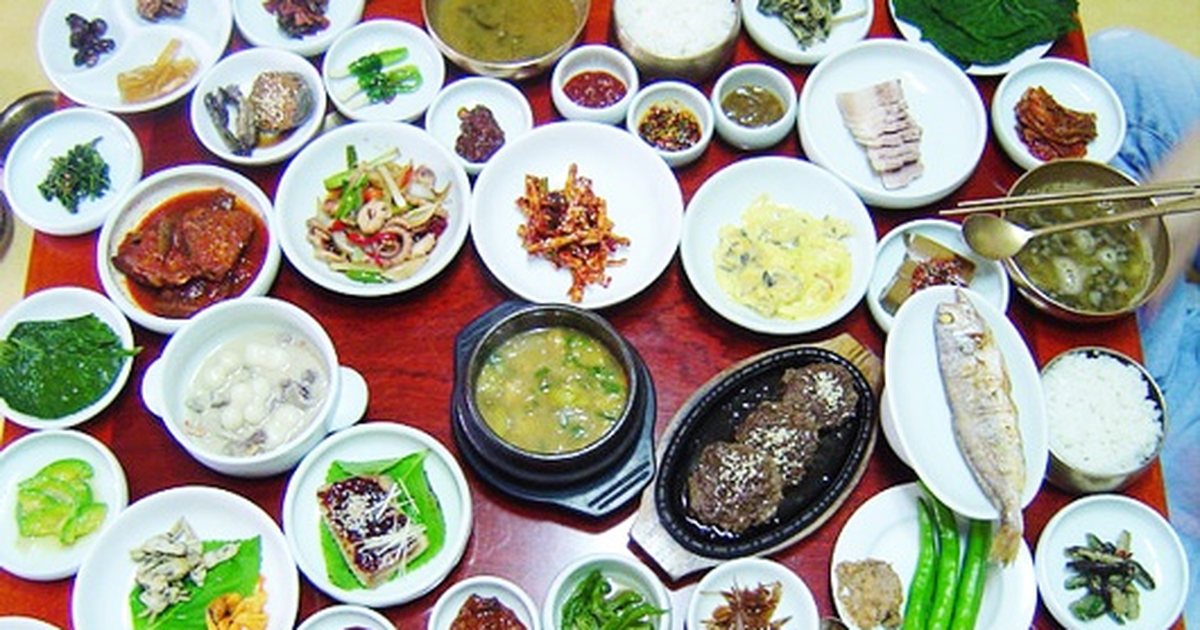
Korean food to try first comes down to 30 dishes, and a Seoul local would sort them by situation. Start with samgyeopsal (삼겹살, grilled pork belly) on a BBQ night, kimchi jjigae when you want comfort, and tteokbokki from a street cart. Then work outward from there.
Key takeaways
- Many Korean BBQ restaurants expect you to order at least 2 portions (2인분, i-inbun) of meat, so solo diners should pick stews or noodles instead.
- Banchan (반찬, the small side dishes that arrive with your meal) are free and usually refillable; just ask or use the self-service bar.
- Broths and kimchi often contain anchovy or fermented seafood, so a dish that looks vegetarian frequently isn’t.
- Korea has no tipping culture: you usually pay at the counter on your way out.
Grouping by situation matters because Koreans don’t eat these dishes interchangeably. Fried chicken is a late-night order with beer, naengmyeon is a summer lunch, and hotteok shows up when the air turns cold. Order the right dish in the right setting and the meal makes sense.
Korean food to try: the 30-dish shortlist at a glance
Here’s the whole list in one table, so you can plan meals around how you’ll actually spend your days. Spice levels are general; every restaurant seasons differently.
| Situation | Dishes | Heat level | When Koreans eat it |
|---|---|---|---|
| BBQ night | Samgyeopsal, dwaeji galbi, so galbi, bulgogi, dakgalbi | Mild (you add heat yourself) | Dinner with friends or coworkers, often with soju |
| Market food | Bindaetteok, mayak gimbap, yukhoe, sundae | Mild | Afternoon grazing, cheap evening drinks |
| Comfort stews and rice | Kimchi jjigae, doenjang jjigae, sundubu jjigae, budae jjigae, gamjatang, samgyetang, seolleongtang, bibimbap | Mild to hot | Lunch, cold days, hangover mornings |
| Street snacks | Tteokbokki, eomuk, hotteok, bungeoppang, gyeranppang | Tteokbokki is hot; the rest are mild or sweet | Walking around, especially in winter |
| Noodles | Naengmyeon, kalguksu, jajangmyeon, jjamppong | Jjamppong is hot; others mild | Quick lunch; naengmyeon in summer |
| Chicken and beer | Fried chicken, yangnyeom chicken | Mild to sweet-spicy | Late night, sports nights, delivery |
| Cafe desserts | Bingsu, yakgwa | None | Afternoon cafe break; bingsu in summer |
Korean BBQ night: 5 dishes to order at the grill
Korean BBQ (gogi-gui, 고기구이) means meat grilled at your table, wrapped in lettuce with garlic, chili and sauce. It’s the default group dinner in Korea, and it’s where most visitors should spend their first night.
1. Samgyeopsal (삼겹살): thick slices of unmarinated pork belly. It’s the most ordered BBQ meat among ordinary Koreans because it’s casual and goes perfectly with soju. Dip it in sesame oil with salt, or ssamjang (쌈장, a thick paste of soybean paste and gochujang chili paste).
2. Dwaeji galbi (돼지갈비): pork ribs or rib meat in a sweet soy marinade. If you find plain pork belly too fatty, order this. The sugar caramelizes on the grill, so turn it often.
3. So galbi (소갈비): beef short rib, the special-occasion version. Koreans save it for family celebrations and business dinners because beef costs more than pork in Korea. Check the menu board before you commit.
4. Bulgogi (불고기): thin-sliced marinated beef, often cooked on a domed pan or in a shallow broth rather than over open flame. It’s the gentlest entry point for kids and anyone wary of spice.
5. Dakgalbi (닭갈비): chicken stir-fried in a big iron pan at the table with gochujang sauce, cabbage, sweet potato and rice cakes. It’s linked to the city of Chuncheon. Koreans finish it the classic way: ask for fried rice (bokkeumbap, 볶음밥) cooked in the leftover sauce.
How to eat Korean BBQ the way Koreans do
- Order meat by the portion (인분, inbun). Many places want at least two.
- Let the staff cut the meat with scissors if they offer; at busy places you’ll do it yourself.
- Build a ssam (쌈, wrap): lettuce or perilla leaf, meat, a dab of ssamjang, garlic, maybe a slice of kimchi.
- Eat it in one bite. Nibbling a ssam in halves makes a mess.
- Close with doenjang jjigae or naengmyeon. Most Koreans order a “finishing” dish after the meat.
Market food in Seoul: 4 dishes Koreans line up for
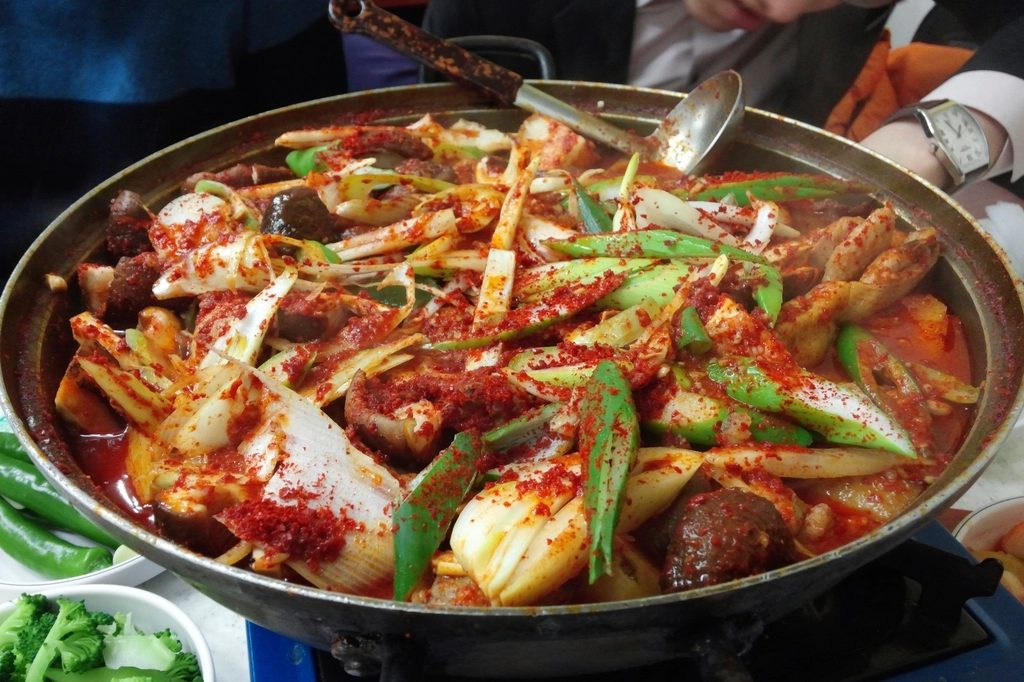
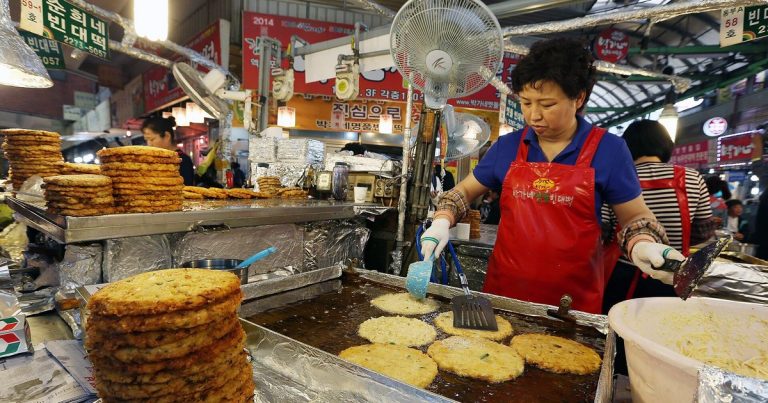
Traditional markets (sijang, 시장) are where Koreans go for cheap, fast, unfussy food at long counters. If you’re heading to one, our Gwangjang Market food guide covers how the stalls work and four more markets worth your time.
6. Bindaetteok (빈대떡): a crisp pancake of ground mung beans, often with pork, kimchi and bean sprouts, fried on a flat griddle. Pair it with makgeolli (막걸리, milky rice wine). Koreans crave this combo on rainy days.
7. Mayak gimbap (마약김밥): mini rice rolls wrapped in seaweed, served with a mustard-soy dip. The name translates as “drug gimbap”, a joke about how addictive it is. Love it? Try our kimbap recipe and roll the full-size version at home.
8. Yukhoe (육회): Korean beef tartare, raw strips of beef dressed with sesame oil and pear, usually topped with an egg yolk. It’s a market classic, but skip it if you’re pregnant or avoid raw meat.
9. Sundae (순대): Korean blood sausage, a pork casing stuffed mainly with glass noodles and pig’s blood. It’s milder than it sounds. Locals dip slices in salt or eat them with tteokbokki sauce.
Comfort stews and rice bowls: 8 Korean dishes for cold days
A jjigae (찌개) is a thick stew served bubbling in its pot, and a tang (탕) or guk (국) is a soupier broth. Either comes with rice and banchan, and either is the easiest solo meal in Korea.
10. Kimchi jjigae (김치찌개): aged kimchi simmered with pork or tuna and tofu. It’s the stew most Koreans cook at home, and the best ones use sour, well-fermented kimchi. Expect medium heat.
11. Doenjang jjigae (된장찌개): stew of doenjang (fermented soybean paste) with zucchini, tofu and onion. Earthy, salty, rarely spicy. It’s the stew that follows BBQ.
12. Sundubu jjigae (순두부찌개): silken tofu stew, often cracked with a raw egg at the table. Many sundubu restaurants let you choose the spice level, which makes it a safe first order.
13. Budae jjigae (부대찌개): “army base stew”, with ham, sausage, beans, ramyeon noodles and kimchi in a spicy broth. It’s tied to the period after the Korean War, when US base surplus found its way into Korean kitchens, and the city of Uijeongbu is famous for it. Order it for a group.
14. Gamjatang (감자탕): pork backbone stew with potatoes, greens and perilla seeds. It’s a late-night and hangover favorite, and you’ll need to pick the meat off the bones with chopsticks.
15. Samgyetang (삼계탕): a whole young chicken stuffed with sticky rice, garlic, jujube and ginseng in a clear broth. Koreans eat it on the hottest summer days (boknal, 복날), following the old idea of fighting heat with heat. Season it yourself with the salt and pepper on the table.
16. Seolleongtang (설렁탕): milky ox-bone broth simmered for hours, served with thin slices of beef and noodles. It arrives unsalted on purpose. Add salt and chopped green onion to taste, then dump in your rice.
17. Bibimbap (비빔밥): rice topped with seasoned vegetables, gochujang and usually egg and meat. Order dolsot bibimbap (돌솥비빔밥) if you want it in a hot stone bowl, which crisps the rice at the bottom. Mix everything hard before you eat.
Korean street snacks: 5 to grab from a cart
Street food in Korea is built for eating while walking, and much of it is seasonal. Carts and stalls cluster near subway exits, markets and university areas.
18. Tteokbokki (떡볶이): chewy rice cakes in a sweet, spicy gochujang sauce, usually with fish cake. It’s the spiciest dish on most street menus. Koreans often order it with fried snacks (twigim, 튀김) and dunk them in the sauce.
19. Eomuk (어묵): fish cake folded onto skewers and kept warm in broth. You grab a skewer from the pot and pay by counting your sticks at the end. At most stalls the broth is free: ladle it into a paper cup.
20. Hotteok (호떡): a griddled pancake filled with brown sugar, cinnamon and nuts that melt into syrup. Bite carefully; the filling is scalding.
21. Bungeoppang (붕어빵): a fish-shaped pastry filled with sweet red bean paste, sometimes custard. Its arrival on the streets is how many Koreans know winter has started. Locals argue cheerfully over whether to bite the head or tail first.
22. Gyeranppang (계란빵): a small oblong of sweet bread baked with a whole egg on top. It’s warm and filling, and a cheap breakfast if you’re out early.
Korean noodles: 4 bowls and when locals eat them
Noodles are lunch food in Korea: quick, filling and cheap. Each of these has its own season and setting.
23. Naengmyeon (냉면): buckwheat noodles served icy cold. Mul naengmyeon (물냉면) comes in a chilled, tangy beef broth with a Pyongyang-style lineage, and bibim naengmyeon (비빔냉면) is dressed in spicy sauce, the Hamhung style. The noodles are long and chewy, so staff may offer scissors. Add the vinegar and mustard on the table.
24. Kalguksu (칼국수): knife-cut wheat noodles in an anchovy, chicken or clam broth. It’s a mild, soothing bowl, and Koreans gravitate to it on rainy days.
25. Jajangmyeon (짜장면): Korean-Chinese noodles in a thick black bean sauce with pork and onion. It’s the classic delivery meal and the moving-day lunch. On April 14 (Black Day), singles traditionally eat it together.
26. Jjamppong (짬뽕): jajangmyeon’s spicy sibling, a red seafood noodle soup. Ordering both at a Korean-Chinese restaurant is the national dilemma. Many places sell a half-and-half bowl (jjamjjamyeon, 짬짜면) so you don’t have to choose.
Chicken and beer, then dessert: 4 orders Koreans share
Chimaek: fried chicken with beer
Chimaek (치맥) is short for chikin (chicken) plus maekju (beer). It’s what Koreans order for sports nights, Han River picnics and late evenings at home, very often by delivery app.
27. Fried chicken (후라이드 치킨, huraideu chikin): Korean frying makes the crust thin and very crisp. Ask for a half-and-half order (반반, banban) to get plain and sauced in one box. It usually comes with cubes of sweet pickled radish (chikin-mu, 치킨무) to cut the grease.
28. Yangnyeom chicken (양념치킨): fried chicken tossed in a sticky sweet-spicy gochujang glaze. Soy-garlic versions are common too, and that’s the one to pick if you can’t handle heat.
Korean cafe desserts worth a stop
Koreans treat cafes as living rooms: places to meet, study and sit for hours. Dessert is part of that ritual.
29. Bingsu (빙수): finely shaved ice or frozen milk topped with sweet red beans, fruit or injeolmi (인절미, rice cake dusted with roasted soybean powder). The classic is patbingsu (팥빙수, red bean). Bowls are big; Koreans share one between two or three people.
30. Yakgwa (약과): a deep-fried honey cookie soaked in ginger syrup, once a holiday and ancestral-rite sweet. Younger Koreans have embraced it, and bakeries and cafes now sell it in new forms. It also packs well as a gift; our guide to Korean snacks to take home covers more of those.
How to order Korean food: bells, portions and phrases
Ordering in Korea is efficient once you know the system. Most of the confusion comes from small habits locals take for granted.
Calling staff and paying the bill
- Call button: many tables have a bell. Press it when you’re ready. No bell? Call out “Yeogiyo!” (여기요, “over here”). It’s polite, not rude.
- Kiosks and tablets: many casual places take orders by touchscreen. Some have an English option.
- Utensils: spoons and chopsticks are often in a drawer under the table.
- Paying: take the bill to the counter as you leave. No tip is expected.
Phrases that get you what you want
| English | Korean | Romanization |
|---|---|---|
| This one, please | 이거 주세요 | Igeo juseyo |
| Two portions, please | 2인분 주세요 | I-inbun juseyo |
| Less spicy, please | 덜 맵게 해 주세요 | Deol maepge hae juseyo |
| Please leave out the meat | 고기 빼 주세요 | Gogi ppae juseyo |
| More side dishes, please | 반찬 더 주세요 | Banchan deo juseyo |
For greetings, numbers and the rest of your trip, keep our list of basic Korean phrases for travel on your phone.
The most common mistakes visitors make
- Ordering one portion at a BBQ place that requires two. Read the menu or ask first.
- Eating all the banchan before the main dish arrives. They’re meant to go with the meal.
- Pouring your own drink. Koreans pour for each other, and the youngest at the table usually takes the lead.
- Leaving chopsticks standing upright in rice. It evokes ancestral-rite offerings, so lay them down.
How spicy is Korean food? Heat levels and vegetarian notes
Heat in Korean cooking comes mostly from gochugaru (고추가루, red chili flakes) and gochujang (고추장, fermented chili paste). It builds slowly and stays sweet-savory rather than sharp.
A spice ladder for first-timers
- No heat: bulgogi, samgyeopsal, seolleongtang, samgyetang, kalguksu, jajangmyeon, fried chicken, hotteok, bingsu.
- Mild to medium: doenjang jjigae, bibimbap (you control the gochujang), dwaeji galbi, yangnyeom chicken.
- Medium to hot: kimchi jjigae, budae jjigae, gamjatang, dakgalbi, sundubu jjigae.
- Hot: tteokbokki, jjamppong, bibim naengmyeon.
If you’re unsure, order one spicy dish and one mild one, and keep rice and water nearby. Dairy helps too; that’s partly why cheese toppings are so popular on tteokbokki and dakgalbi.
Eating vegetarian in Korea
Safer vegetarian picks include bibimbap without meat or egg (confirm the sauce), hotteok, bungeoppang, gyeranppang if you eat eggs, and vegetable pancakes. Even then, check the cooking oil and batter. Strict vegans should plan meals in advance with dedicated vegan restaurant listings and allergy cards written in Korean.
FAQ
What is the most popular Korean food to try first?
For most visitors, Korean BBQ is the best first meal because it’s social, mild and shows how Koreans actually eat together. Pair it with kimchi jjigae the next day and tteokbokki from a street stall. Those three cover the core flavors of Korean food.
Is Korean food very spicy?
Some of it is, but plenty isn’t. Bulgogi, seolleongtang, samgyetang, jajangmyeon and fried chicken have no real heat. You can also ask for less spice with “deol maepge hae juseyo”.
Can I eat Korean BBQ alone?
Sometimes. Many BBQ restaurants require at least two portions per order, which makes solo dining awkward. Look for places advertising single portions (1인분) or solo seating, or pick a stew or noodle shop instead.
What Korean food is good for vegetarians?
Bibimbap without meat, vegetable pancakes and sweet street snacks like hotteok are the easiest options. Watch out for anchovy broth and fish sauce in kimchi. Temple food restaurants are the most reliable choice for strictly plant-based meals.
Do you tip at restaurants in Korea?
No. Tipping isn’t part of Korean dining culture, and prices on the menu are what you pay. You usually settle the bill at the counter near the exit.
What do Koreans eat with soju and beer?
Soju goes with grilled pork belly, stews and market pancakes. Beer is paired with fried chicken in the combination called chimaek. Makgeolli, the milky rice wine, belongs with bindaetteok and other pancakes, especially on rainy days.
Plan your first Korean food day
If you only have one day, eat the way a Seoul office worker does. Have a stew or kalguksu for lunch, then a bungeoppang or hotteok in the afternoon if it’s cold, or bingsu if it’s hot. At dinner, go to a busy BBQ place with at least one friend, and finish with fried chicken and beer if you still have room.
Seasons change the menu, so plan around them. Naengmyeon, samgyetang and bingsu peak in summer, while bungeoppang, hotteok and steaming stews fill the streets in winter. Before you go, check opening days and current menus on each restaurant’s official page or map listing, since small places change hours without much notice.
Related reading



Sources k-korea.blog
Prices, opening hours and availability change. Check the official page before you buy or travel.