19 min read
This Korean food guide starts with the 10 dishes worth knowing first, then shows how Koreans eat them and how to cook them abroad. The short version: a Korean meal is rice, a soup or stew, and a spread of small shared side dishes called banchan (반찬), held together by three fermented pastes and one chili powder.
Get those building blocks right and the rest of the cuisine, from barbecue to street snacks, starts to make sense quickly. Below you’ll find the dishes, the pantry, the table manners, a bibimbap recipe card, a glossary and the mistakes foreigners make most often.
Key takeaways
- Learn these 10 dishes first: kimchi, bibimbap, bulgogi, samgyeopsal, kimchi jjigae, tteokbokki, japchae, naengmyeon, Korean fried chicken and gimbap.
- Banchan come with the meal and Korean restaurants usually refill them for free. You don’t order them.
- Four pantry items carry most Korean flavor: gochujang (chili paste), doenjang (soybean paste), ganjang (soy sauce) and gochugaru (chili flakes).
- Sour, well-aged kimchi isn’t spoiled. It’s an ingredient, and it’s what Koreans reach for when they make stew and fried rice.
Korean food guide: the 10 dishes to know first
You could spend years working through Korean regional cooking. You don’t need to. These ten dishes cover the flavors, techniques and eating habits that show up across the whole cuisine, and you can find all of them in Korea and in most Korean restaurants abroad.
| Dish | What it is | Heat | How Koreans eat it | Easy at home? |
|---|---|---|---|---|
| Kimchi (김치) | Fermented vegetables, usually napa cabbage with chili, garlic and fish sauce or salted seafood | Medium | At almost every meal, as a side and as a cooking ingredient | Yes, needs a few days to ferment |
| Bibimbap (비빔밥) | Rice topped with seasoned vegetables, meat and egg, mixed with gochujang | Mild to medium (you add the paste) | Single-bowl lunch, sometimes in a sizzling stone bowl (dolsot) | Yes |
| Bulgogi (불고기) | Thin beef in a sweet soy and garlic marinade | None | Pan-cooked or grilled, eaten with rice or wrapped in lettuce | Yes |
| Samgyeopsal (삼겹살) | Unmarinated pork belly grilled at the table | None (sauces vary) | Korean BBQ with friends, wrapped in lettuce with ssamjang | Yes, in a pan |
| Kimchi jjigae (김치찌개) | Stew of sour kimchi, pork and tofu | Medium to hot | Everyday home meal, shared from one pot | Yes |
| Tteokbokki (떡볶이) | Chewy rice cakes in a sweet-spicy gochujang sauce | Hot | Street snack and comfort food | Yes |
| Japchae (잡채) | Sweet potato glass noodles stir-fried with vegetables and soy | None | Holidays, parties and as a banchan | Yes |
| Naengmyeon (냉면) | Thin buckwheat noodles in icy broth (mul) or chili sauce (bibim) | None (mul) to hot (bibim) | Summer meal and an after-BBQ finisher | Medium, noodles are easy to buy |
| Korean fried chicken (치킨, chikin) | Double-fried chicken, plain or glazed in sweet-spicy yangnyeom sauce | None to medium | Delivered at night with beer | Medium, the frying takes care |
| Gimbap (김밥) | Rice and fillings rolled in dried seaweed (gim) and sliced | None | Picnic food, quick lunch, road trips | Yes |
Which Korean dishes are not spicy?
Plenty. Korean food has a fiery reputation, but a big share of what Koreans eat every day has no chili at all. Bulgogi, japchae, gimbap, galbi (marinated short ribs), samgyetang (whole small chicken soup with ginseng), mul-naengmyeon and baek kimchi (white kimchi made without chili) are all safe if you don’t handle heat well. You can also ask for less spice when you order (the phrase is in the glossary below).
What to order on your first night in Korea
If you only have one dinner, make it Korean BBQ. It shows you banchan, wraps, dipping sauces, shared eating and the after-meat rice or noodles in one sitting. For lunch the next day, a bowl of bibimbap or a kimchi jjigae set at a simple restaurant shows you the everyday side. Our first-time Seoul itinerary for 3 days marks the neighborhoods where these meals are easy to find.
How a Korean meal works: rice, soup and banchan
A Korean meal isn’t served as courses. Everything arrives at once: a bowl of rice (bap, 밥) for each person, a soup or stew, and banchan spread across the middle of the table. In Korean the word for “meal” and the word for “cooked rice” are the same word, bap, which tells you where the center of gravity sits.
What is banchan?
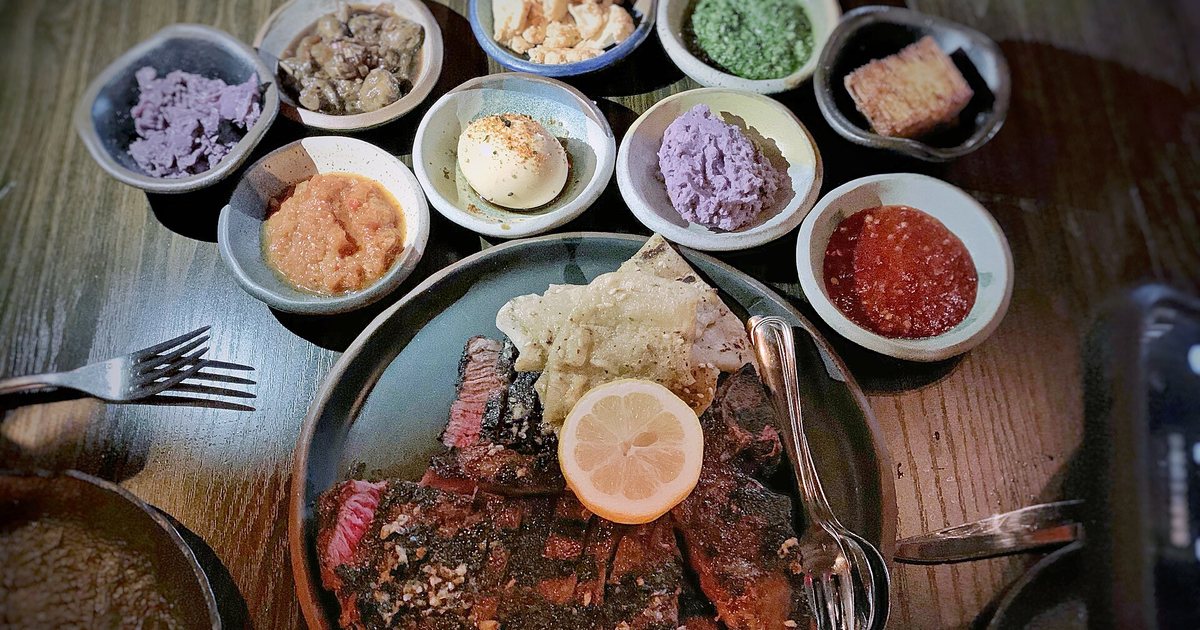
Banchan are small side dishes, and a normal restaurant table might have anywhere from a few to a dozen. Expect kimchi, seasoned spinach or bean sprouts (namul), braised potatoes or lotus root in soy (jorim), a little stir-fried fish cake, maybe a rolled omelette or a small pancake (jeon). They’re there to be picked at between bites of rice, not finished one by one like a starter.
Why everything is shared
Stews, grilled meat and banchan go in the middle and everyone eats from them. At home that often means everyone dips into the same stew pot. Restaurants usually give you a small personal bowl and a ladle, and that’s the polite move for guests. Rice is the exception. Your rice bowl is yours, and you don’t share it.
Spoon or chopsticks?
Koreans use a long metal spoon (sutgarak) for rice and soup, and flat metal chopsticks (jeotgarak) for banchan. Unlike in Japan, you leave the rice bowl on the table instead of lifting it to your mouth. Don’t stand chopsticks upright in the rice, because that echoes the way food is offered at ancestral rites. Our guide to Korean dining etiquette and the 9 mistakes foreigners make goes through the rest, including who starts eating first.
The Korean pantry: 6 ingredients that make food taste Korean
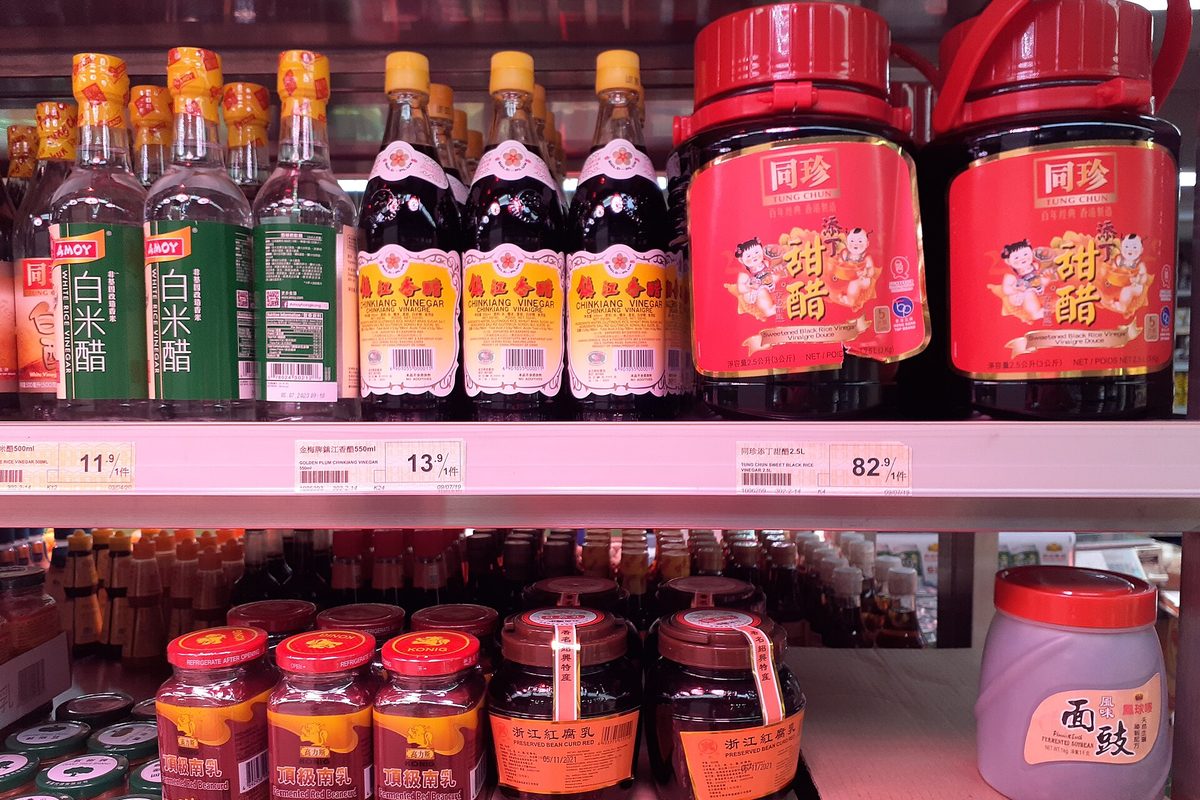
Korean cooking runs on jang (장), a family of fermented soybean and chili products. These were traditionally made at home in large earthenware jars called onggi, and they still sit at the base of most dishes. Buy these six things and you can cook most of this guide.
| Ingredient | What it does | Closest swap abroad | How to store it |
|---|---|---|---|
| Gochujang (고추장) | Thick fermented chili paste: sweet, savory and hot. Base for tteokbokki, bibimbap sauce and marinades | None really. Sriracha or chili paste lacks the fermented sweetness | Fridge after opening |
| Doenjang (된장) | Fermented soybean paste, funkier and saltier than miso. Base of doenjang jjigae and ssamjang | Red or brown miso, though it tastes milder and sweeter | Fridge after opening |
| Ganjang (간장) | Soy sauce. Jin-ganjang is the all-purpose kind, guk-ganjang is the lighter, saltier soup soy | Regular soy sauce for jin-ganjang. Use a little less for guk-ganjang dishes | Cool cupboard |
| Gochugaru (고춧가루) | Sun-dried red chili flakes, fruity and only moderately hot. Essential for kimchi and stews | Mild chili flakes plus a little sweet paprika, as a stopgap only | Freezer keeps the color and aroma |
| Sesame oil (참기름, chamgireum) | Toasted, nutty finishing oil for namul, bibimbap and dipping salt | Any toasted sesame oil (not the pale cold-pressed kind) | Cool, dark cupboard |
| Garlic and scallions (마늘, 대파) | The aromatic base of almost every dish, used in quantities that surprise newcomers | Any fresh garlic. Thick leeks can stand in for Korean large scallions (daepa) | Fresh |
How to tell gochujang, doenjang and ssamjang apart
Gochujang is red and sticky. Doenjang is brown and coarse. Ssamjang (쌈장), the dip you get at BBQ restaurants, is basically the two mixed with garlic, sesame oil and sometimes sesame seeds. If you only have room for one tub, buy gochujang, then add doenjang once you start making stews.
The broth Koreans use instead of stock cubes
Many soups and stews start with a quick broth of dried anchovies and dried kelp (myeolchi yuksu, 멸치육수), simmered for roughly 15 minutes and strained. Asian grocers sell both, plus ready-made broth packs that work like tea bags. Plain water works for kimchi jjigae if you’re short on time, because the kimchi and pork bring plenty of flavor.
Kimchi explained: types, ageing and what to do with sour kimchi
Kimchi isn’t one dish. It’s a method: salt a vegetable, season it, and let lactic acid bacteria ferment it. Koreans keep several kinds in the fridge, and many households have a separate kimchi refrigerator built to hold steady fermentation temperatures. The autumn tradition of making a winter’s worth of kimchi together, kimjang (김장), is on UNESCO’s intangible cultural heritage list, inscribed in 2013.
The kinds of kimchi you’ll meet most
- Baechu kimchi (배추김치): the napa cabbage version most people picture.
- Kkakdugi (깍두기): crunchy cubes of Korean radish, the classic side for beef soups.
- Oi sobagi (오이소박이): stuffed cucumber kimchi, eaten fresh and most popular in warm months.
- Chonggak kimchi (총각김치): whole small radishes with their greens.
- Baek kimchi (백김치): white kimchi without chili, mild and refreshing.
- Pa kimchi (파김치): scallion kimchi, sharp and pungent.
Fresh vs sour kimchi: which one to use
Freshly made kimchi is crunchy, salty and bright, and it’s good as a side dish. As it ferments it turns sour and softer, and that’s when it becomes a cooking ingredient. Very old kimchi, called mugeunji (묵은지), is prized for stew. If a jar in your fridge smells sharply sour, that’s your cue to cook with it, not to throw it out. (Throw it out if it’s slimy, fuzzy or smells rotten rather than tangy.)
Two recipes make the most of sour kimchi. Our kimchi jjigae recipe in 6 steps with pork and tofu is the everyday stew, and our kimchi fried rice guide explains why sour kimchi beats fresh in the pan. If you’re curious about the nutrition side, read whether kimchi is healthy, including the gut upside and the salt catch.
How Korean BBQ works at the table
At a Korean BBQ restaurant you cook the meat yourself on a grill set into the table, or the staff do it for you at busier or more upscale places. Meat is ordered by the portion, called inbun (인분), and many places expect you to order at least two portions, so solo diners sometimes get turned away at BBQ spots. Banchan, lettuce, sliced garlic, green chili and dipping sauces arrive before the meat.
Samgyeopsal, galbi, bulgogi or chadolbagi?
- Samgyeopsal (삼겹살): thick-cut pork belly, unmarinated. The default night out.
- Moksal (목살): pork neck, leaner and chewier than belly.
- Galbi (갈비): short ribs, pork (dwaeji galbi) or beef (so galbi), usually marinated in sweet soy.
- Bulgogi (불고기): thin marinated beef, often cooked on a domed pan rather than an open grill.
- Chadolbagi (차돌박이): paper-thin beef brisket that cooks in seconds.
How to make a ssam wrap in 4 moves
- Lay a lettuce or perilla leaf flat in one hand.
- Add a piece of grilled meat, a dab of ssamjang, and a slice of raw or grilled garlic.
- Top with a little kimchi, scallion salad (pa-muchim) or green chili if you want it.
- Fold it into one bite-sized parcel and eat it in one go. Biting a ssam in half is how the filling ends up in your lap.
What Koreans order after the meat
The meal isn’t over when the meat is gone. Common finishers are fried rice made on the grill with leftover kimchi and meat (bokkeumbap), a bowl of doenjang jjigae with rice, or cold naengmyeon to cool down. BBQ is also a drinking meal for many groups. If soju is on the table, read our Korean drinking etiquette guide with 7 soju rules before you pour your own glass (you don’t, by the way).
Jjigae, guk and tang: Korean stews and soups decoded
Soup is part of nearly every Korean meal, and the vocabulary tells you what kind you’re getting. Once you know the four words below, a Korean menu becomes far easier to read.
| Type | Texture | How it’s served | Examples to try |
|---|---|---|---|
| Jjigae (찌개) | Thick, strongly seasoned, more solids than liquid | Bubbling in one pot, shared or as a set meal | Kimchi jjigae, doenjang jjigae, sundubu jjigae (soft tofu), budae jjigae (army stew with ham and noodles) |
| Guk (국) | Thinner, lighter broth | One bowl per person next to the rice | Miyeokguk (seaweed soup), kongnamul-guk (bean sprout soup), tteokguk (rice cake soup) |
| Tang (탕) | Long-simmered, often bone or meat broth | Individual bowl, often a full meal | Seolleongtang (milky ox bone soup), galbitang (short rib soup), samgyetang, gamjatang (pork spine stew) |
| Jeongol (전골) | Hot pot with neatly arranged ingredients | Cooked at the table for a group | Beef, mushroom or seafood jeongol |
Why Koreans eat seaweed soup on birthdays
Miyeokguk is traditionally eaten by new mothers after giving birth, and by extension it became the birthday soup. Many Koreans still get a bowl on their birthday morning. Tteokguk plays a similar role at Lunar New Year, when a bowl symbolically adds a year. Our explainer on Korean age vs international age covers how that counting system worked.
Hot soup in summer?
Yes. On the hottest days of the year, called boknal, many Koreans eat samgyetang, a small whole chicken stuffed with sticky rice, garlic, jujube and ginseng. The logic is fighting heat with heat. If you’d rather cool down, mul-naengmyeon is the other summer classic. Our best time to visit Korea guide shows what each season feels like on the ground.
Korean street food and drinking food: what to look for
Korea’s street and snack food is cheap, fast and built for eating standing up. Markets such as Gwangjang Market in Seoul and the stall-lined streets of Myeongdong are the famous places to try it, but every neighborhood has a tteokbokki shop and a convenience store with a hot food counter.
Street snacks to try first
- Tteokbokki (떡볶이): rice cakes in red sauce, often sold with fish cake.
- Eomuk (어묵): fish cake on skewers in hot broth. You can usually sip the broth while you eat.
- Sundae (순대): Korean blood sausage stuffed with glass noodles, dipped in salt.
- Twigim (튀김): battered fried vegetables, squid or boiled egg, often dunked in tteokbokki sauce.
- Hotteok (호떡): a griddled pancake filled with brown sugar, cinnamon and nuts, a winter favorite.
- Bungeoppang (붕어빵): fish-shaped waffle filled with sweet red bean, another cold-weather classic.
- Gyeran-ppang (계란빵): a small sweet bread baked with a whole egg on top.
Hotteok and bungeoppang stalls tend to appear when the weather turns cold, which is one more reason to look at our list of things to do in Seoul in winter.
What is anju, and what is a pojangmacha?
Anju (안주) is food made to go with alcohol, and in Korea drinking almost always comes with food. Classic anju include haemul pajeon (seafood and scallion pancake, traditionally paired with makgeolli, a milky rice wine), dried squid, jokbal (braised pig’s trotters) and fried chicken. Chimaek, from chikin plus maekju (beer), is the name for the fried chicken and beer combination. A pojangmacha (포장마차) is a tented street bar or stall serving drinks and anju late into the night.
The instant noodle question
Instant ramyeon (라면) is a real part of Korean eating, not just student food. Koreans add egg, scallions, cheese or leftover kimchi, and some restaurants cook it to order. Our ranking of the best Korean instant ramen from mild to Buldak hot helps you pick packs at your local Asian grocer.
How to cook Korean food abroad: where to buy and what to swap
Korean home cooking is easier to reproduce abroad than many cuisines, because the hard parts (the fermented pastes) come in tubs and keep for months. Fresh produce is where you’ll need to improvise.
Where to buy Korean ingredients outside Korea
Start with a Korean supermarket if there’s one near you. In North America that often means H Mart, the large Korean grocery chain. Pan-Asian grocers usually carry gochujang, doenjang, gochugaru, frozen rice cakes, glass noodles and dried seaweed. Many big supermarkets now stock gochujang in the international aisle. Online Asian grocery shops fill the gaps, but check the shipping rules for fresh kimchi and refrigerated items in your country.
Swaps that work, and ones that don’t
- Korean radish (mu): daikon works well. It’s a little more watery.
- Short-grain rice: any Japanese-style short-grain or sushi rice is the same type of rice Koreans eat. Long-grain rice is too loose for bibimbap and gimbap.
- Perilla leaves (kkaennip): shiso is the nearest look-alike but tastes different. Use lettuce for wraps if you can’t find perilla.
- Asian pear in marinades: grated apple works. Kiwi tenderizes very fast, so keep it to short marinades.
- Salted shrimp (saeujeot) for kimchi: fish sauce is the usual substitute. Vegetarian kimchi can skip both and lean on salt and kelp broth.
- Rice syrup or corn syrup (jocheong, mulyeot): honey or plain sugar does the job.
- Gochugaru: this is the one to hunt down. Cayenne or crushed red pepper is far hotter and will turn kimchi bitter and fierce.
A worked example: a Korean weeknight dinner in about 40 minutes
Here’s what a realistic Korean home dinner looks like when you cook it in a kitchen abroad, using one tub of kimchi and supermarket staples.
- Minute 0: wash short-grain rice and start it in a rice cooker or pot.
- Minute 5: start kimchi jjigae: fry sliced pork belly, add sour kimchi and a spoon of gochugaru, then water or anchovy broth.
- Minute 15: while the stew simmers, blanch spinach for 30 seconds, squeeze it dry and season it with salt, garlic and sesame oil. That’s your first banchan.
- Minute 25: make a quick rolled omelette (gyeran-mari) with egg and chopped scallion, or simply cut sheets of seasoned seaweed.
- Minute 35: add tofu to the stew, simmer briefly, then bring everything to the table at once with kimchi on the side.
That’s a complete Korean table: rice, stew, kimchi and two banchan. It costs you one shopping trip and very little technique. The next step up is the bibimbap below, which turns the same blanched-vegetable method into a one-bowl meal.
How to make bibimbap (비빔밥) at home
- 2 cups cooked short-grain rice, warm
- 150 g beef mince or thinly sliced beef
- 1 tbsp soy sauce plus 1 tsp sugar and 1 small clove garlic, minced, for the beef
- 2 large handfuls spinach
- 1 cup soybean or mung bean sprouts
- 1 small carrot, cut into thin matchsticks
- 1 small zucchini, cut into thin matchsticks
- 4 shiitake mushrooms, sliced
- 2 eggs
- 2 tbsp gochujang
- 1 tbsp toasted sesame oil, plus extra for the vegetables
- 1 tsp sugar or honey and 1 tsp rice vinegar for the sauce
- 1 tsp toasted sesame seeds
- Salt and neutral cooking oil
- Mix the beef with the soy sauce, 1 tsp sugar and garlic and set it aside. Stir the gochujang, 1 tbsp sesame oil, sugar or honey, vinegar and half the sesame seeds into a sauce.
- Blanch the spinach for about 30 seconds and the bean sprouts for about 3 minutes, then drain them, squeeze out the water and season each with a pinch of salt and a few drops of sesame oil.
- In a little oil, stir-fry the carrot, zucchini and mushrooms one at a time for 1 to 2 minutes each, salting lightly. Keeping them separate keeps the colors clean. Then cook the beef until browned, about 3 minutes.
- Fry the eggs sunny side up so the yolks stay runny.
- Divide the rice between two wide bowls, arrange the vegetables and beef in sections on top, and finish with the egg and the remaining sesame seeds.
- At the table, add sauce to taste and mix everything thoroughly with a spoon before eating. The mixing is the point: bibim means “mixed”.
Common mistakes foreigners make with Korean food
Most of these come up at the table in Korea, and some in your own kitchen. None will cause a scene, but avoiding them makes the food taste better and the meal go smoother.
- Ordering banchan: they come with the meal. Ask for refills instead.
- Eating the BBQ lettuce like a salad: it’s for wrapping meat. Ask for more when you run low.
- Using cayenne instead of gochugaru: your kimchi or stew will be harsher and much hotter than intended.
- Making kimchi jjigae with fresh kimchi: it tastes flat. Let it sour first, or add a splash of kimchi brine and a pinch of sugar.
- Lifting the rice bowl: in Korea it stays on the table, and you eat rice with the spoon.
- Pouring your own drink in company: Koreans pour for each other, and younger people pour for older ones.
- Leaving bibimbap unmixed: it’s designed to be stirred together, sauce and all.
- Ignoring the salt: stews, jang and kimchi add up. Balance a meal with plain rice and lighter namul, and check the sodium on store-bought products if you’re watching your intake.
- Assuming everything is spicy, or nothing is: the same restaurant may serve mild bulgogi and fiery buldak (fire chicken). Read the menu or ask.
What about vegetarians and allergies?
Korean food looks vegetable-heavy, but meat, anchovy broth and fish sauce or salted shrimp turn up in places you might not expect, including most kimchi and many stews. Korean Buddhist temple cuisine is the traditional plant-based option, and some restaurants in Seoul specialize in it. If you have an allergy, carry a card in Korean that names the ingredient, because a spoken request can get lost in a busy kitchen.
Korean food glossary: Hangul, romanization and meaning
These are the words and phrases you’ll see on menus and hear at the table. Romanization follows the Revised Romanization system Korea uses on its road signs. If you want to read menus yourself, our plan to learn Hangul’s 24 letters in one weekend pays off quickly, and portions are counted with Sino-Korean numbers, explained in our guide to native and Sino-Korean numbers.
| English | Korean | Romanization | When to use it |
|---|---|---|---|
| Cooked rice; a meal | 밥 | bap | Rice at every meal. “Bap meogeosseoyo?” (Have you eaten?) is also a greeting |
| Side dishes | 반찬 | banchan | The small shared plates that come with the meal |
| Thick stew | 찌개 | jjigae | Menu word for stews like kimchi jjigae |
| Soup | 국 | guk | Lighter individual soups |
| Long-simmered soup | 탕 | tang | Bone and meat soups such as galbitang |
| Savory pancake | 전 | jeon | Pancakes such as pajeon, common at holidays and with makgeolli |
| Lettuce or leaf wrap | 쌈 | ssam | Wrapping BBQ meat. Ssamjang is the dip that goes in it |
| Food eaten with alcohol | 안주 | anju | Bar and pub menus |
| Portion (per person) | 인분 | inbun | Ordering BBQ: “samgyeopsal i-inbun” is two portions of pork belly |
| Excuse me! (to call staff) | 여기요 | yeogiyo | Calling a server in a restaurant. Polite and normal |
| This one, please | 이거 주세요 | igeo juseyo (polite) | Pointing at a menu item or photo |
| Not spicy, please | 안 맵게 해 주세요 | an maepge hae juseyo (polite) | Asking for less chili when the kitchen can adjust it |
| More side dishes, please | 반찬 더 주세요 | banchan deo juseyo (polite) | Asking for banchan refills |
| Thank you for the meal (before eating) | 잘 먹겠습니다 | jal meokgetseumnida (formal) | Said before eating, especially when someone else is paying or cooked |
| That was a good meal (after eating) | 잘 먹었습니다 | jal meogeotseumnida (formal) | Said after eating to the host, or to staff as you leave |
| The bill, please | 계산해 주세요 | gyesanhae juseyo (polite) | At the end. In many places you pay at the counter by the door |
For more survival language beyond the table, see our list of 20 basic Korean phrases for travelers.
FAQ
What is the most popular food in Korea?
There’s no single official answer, but kimchi is eaten at nearly every meal, and rice is the base of almost all of them. For dishes, kimchi jjigae, samgyeopsal, fried chicken and tteokbokki are everyday favorites you’ll find everywhere. Bibimbap and bulgogi are often the best-known abroad.
Is Korean food very spicy?
Some of it is, but a lot isn’t. Gochugaru and gochujang bring heat to stews, kimchi and tteokbokki, while bulgogi, galbi, japchae, gimbap and most clear soups have no chili at all. At restaurants you can often ask for less spice, though some dishes are made in batches and can’t be adjusted.
What should I eat on my first trip to Korea?
Plan one Korean BBQ dinner, one market visit for street food, a bibimbap or kimchi jjigae lunch, and a fried chicken night. Add a bowl of naengmyeon in summer or hotteok from a street stall in winter. That covers the main styles of Korean eating in a few days.
Can I make Korean food without a Korean grocery store?
Yes, if you can get gochujang, soy sauce, sesame oil and ideally gochugaru, which many Asian grocers and online shops sell. Bulgogi, bibimbap, japchae and kimchi fried rice all work with otherwise standard supermarket ingredients. Kimchi itself is the dish that most rewards proper gochugaru.
How long does homemade kimchi last?
Kept cold in a sealed container, kimchi keeps for a long time but keeps changing as it ferments, getting more sour. Eat it fresh as a side dish early on and use it for stews and fried rice once it’s sour. Discard it if you see mold, a slimy texture or a rotten rather than tangy smell.
Do you tip at restaurants in Korea?
Tipping isn’t a custom at ordinary Korean restaurants, and the price on the menu is what you pay. In many casual places you settle the bill at the counter near the exit rather than at the table. Some upscale or hotel restaurants add a service charge, which will be shown on the bill.
Your Korean food plan: a 7-step checklist for what to cook and eat next
Work through these in order and you’ll go from reading menus to cooking a full Korean table at home.
- Stock the core pantry: gochujang, doenjang, soy sauce, gochugaru, toasted sesame oil and short-grain rice.
- Buy a jar of kimchi and taste it fresh, then leave part of it in the fridge to sour for stew.
- Cook bibimbap using the recipe card above. It teaches you namul, the base of most banchan.
- Make kimchi jjigae once your kimchi turns sour, and use the leftovers for kimchi fried rice.
- Try a Korean BBQ restaurant near you and practice the four-move ssam wrap.
- Learn the table phrases in the glossary, starting with yeogiyo and jal meokgetseumnida.
- Plan your eating trip by season: naengmyeon and samgyetang in summer, hotteok and stews in winter, and songpyeon (half-moon rice cakes) during the autumn harvest holiday, explained in our guide to Chuseok, Korea’s 3-day harvest holiday.
Once those are done, the next dishes to tackle are japchae for a party, homemade gimbap for a picnic and, when you’re ready for a weekend project, your own napa cabbage kimchi.
Related reading
Sources k-korea.blog
Prices, opening hours and availability change. Check the official page before you buy or travel.