16 min read
This Korean fashion guide covers the 6 styles Seoul actually wears, 12 Korean brands to know and 7 areas to shop. Start with the short version. Koreans dress clean and layered, care more about fit and color than logos, and buy most of it either online through apps like Musinsa or in a handful of neighborhoods you can reach on Seoul’s subway.
Why should you care if you live abroad? These brands now ship worldwide, Seoul shopping streets are a big part of any trip, and Korean sizing trips up most first-time buyers. Below you’ll find what to wear, what to buy, where to go, and how to get sizes right.
Key takeaways
- The default Seoul look is kkuankku (꾸안꾸), “looks effortless, took effort”: neutral knits, wide slacks, clean sneakers.
- Women’s Korean sizes run 44, 55, 66, 77 (roughly XS to L) and shoes are sold in millimeters, so 240 means a 24 cm foot.
- Seongsu-dong is where new Korean brands open flagships and pop-ups; Dongdaemun is for volume and late-night wholesale.
- Tourists can claim tax refunds at stores showing a Tax Free sign, so carry your passport when you shop.
What Koreans actually wear: the 6 styles in this Korean fashion guide
Walk out of any Seoul subway exit at 8:30 a.m. and you’ll see the base layer of Korean style: muted colors, long silhouettes, nothing too tight. Korean fashion isn’t one look. It’s a small set of styles that people mix depending on age, job and neighborhood. These six cover almost everything you’ll see on the street and in K-dramas.
1. Minimal (미니멀): the office and Gangnam uniform
Think long wool coats in camel, charcoal or black, wide-leg slacks, crisp shirts and leather loafers. This is what most Seoul office workers wear, and it’s why Korean menswear looks so put together. The rule is tonal: two or three shades of the same color, no loud prints. If you want one Korean look that works anywhere, from London to Toronto, pick this one.
2. Kkuankku (꾸안꾸): effortless on purpose
The word is short for “kkumin deut an kkumin deut”, meaning dressed up but looking like you didn’t try. A loose cardigan over a plain tee, straight jeans, white sneakers, a canvas tote. It’s the most searched daily look among young Koreans on Instagram and shopping apps, usually tagged 데일리룩 (daily look). The secret is proportion: oversized top, slim or straight bottom, or the reverse, never oversized on both.
3. Street (스트릿): oversized and graphic
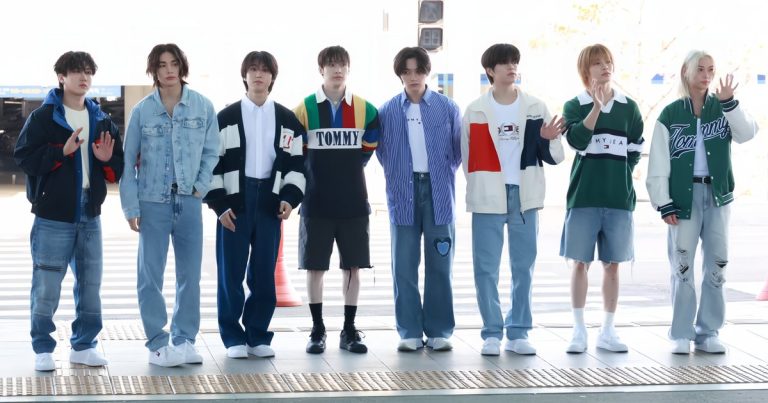
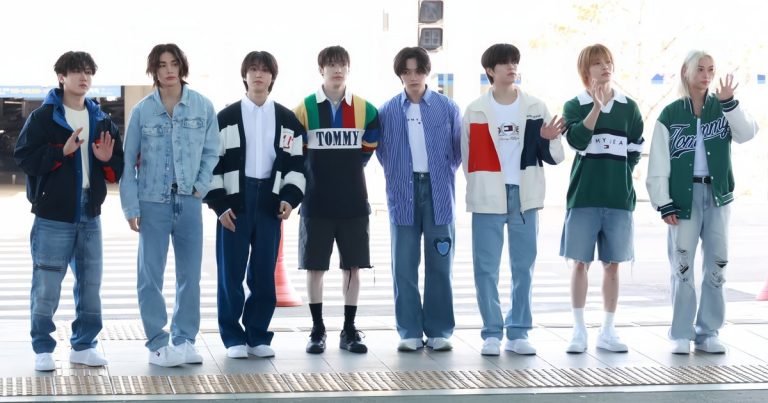
Hoodies with small chest logos, baggy denim, ball caps, chunky sneakers and nylon track jackets. This is the Hongdae and university look, and it’s where Korean labels like thisisneverthat and Ader Error built their names. K-pop stage and airport outfits pushed it abroad. If you’re over 30 and want the vibe without looking costumed, keep one oversized piece per outfit.
4. Gorpcore and outdoor (고프코어)
Korea has a serious hiking culture, and its outdoor brands such as Kolon Sport, K2 and Black Yak have dressed weekend hikers for decades. Younger Koreans now wear fleece, windbreakers and trail shoes in the city. Seoul winters are cold and dry, so this style is practical, not just a trend. The famous 롱패딩 (long padding), a knee-length puffer, is the winter version you’ll see on every street from December.
5. Lovely and feminine (러블리)
Soft pastels, ribbons, cropped cardigans, pleated skirts and Mary Jane shoes. Brands like Mardi Mercredi (with its daisy logo) and Kirsh (the cherry logo) sell this look in graphic form. It’s popular with students and women in their twenties and shows up constantly in K-drama campus scenes.
6. Hanbok and modern hanbok (한복, 생활한복)
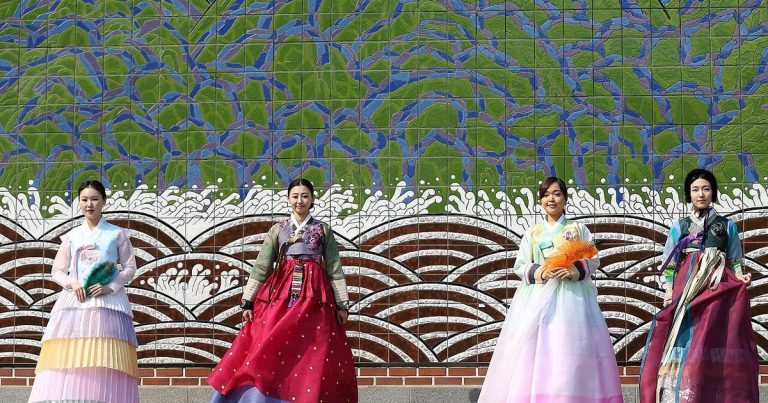
Hanbok is Korean traditional dress: a short jacket (jeogori) with a full skirt (chima) for women, or jacket and roomy trousers (baji) for men. Koreans wear it for weddings, first birthdays and holidays like Seollal. Tourists rent it near Gyeongbokgung Palace for photos. A modern version, called 생활한복 (everyday hanbok) or 개량한복 (modernized hanbok), adapts the collar and wrap lines into pieces you can actually wear to dinner.
| Style | Key pieces | Who wears it | Where you’ll see it |
|---|---|---|---|
| Minimal | Long coat, wide slacks, loafers | Office workers, 30s and up | Gangnam, Yeouido, Gwanghwamun |
| Kkuankku | Cardigan, plain tee, straight jeans, sneakers | Students to 30s | Everywhere, especially Seongsu |
| Street | Hoodie, baggy denim, cap | Teens, 20s | Hongdae, Sinchon |
| Gorpcore / outdoor | Fleece, windbreaker, long padding | All ages | Hiking trails, winter streets |
| Lovely | Ribbons, pastels, pleated skirts | Students, 20s | Ewha and Hongdae areas |
| Hanbok | Jeogori, chima, baji | Weddings, holidays, tourists | Palaces, Bukchon |
How Koreans dress through Seoul’s four seasons
Seoul has sharp seasons, and Koreans dress for them more carefully than most visitors expect. Summers are hot and humid with a monsoon stretch; winters are cold, windy and dry. Spring and autumn are short, which is why Koreans own a lot of layering pieces.
- Spring: trench coats, light knits, cardigans over tees. Layers come off by lunch.
- Summer: loose linen shirts, wide shorts, sleeveless tops with a light cover-up for air-conditioned offices and subways.
- Autumn: the best dressing season. Blazers, suede jackets, knit vests, the first wool coats.
- Winter: long padding, wool coats with scarves, thermal innerwear underneath. Koreans call heat-tech style base layers 내복 (naebok) when they’re the old-school kind.
One local habit to copy: Koreans dress for the subway and the office as much as the street. Buildings run strong heating in winter, so a coat that comes off easily beats a heavy sweater you’re stuck in. For the social rules behind dressing up, like what to wear to a family visit or a temple, our guide to the everyday rules Koreans actually follow fills in the context.
12 Korean fashion brands foreigners should know
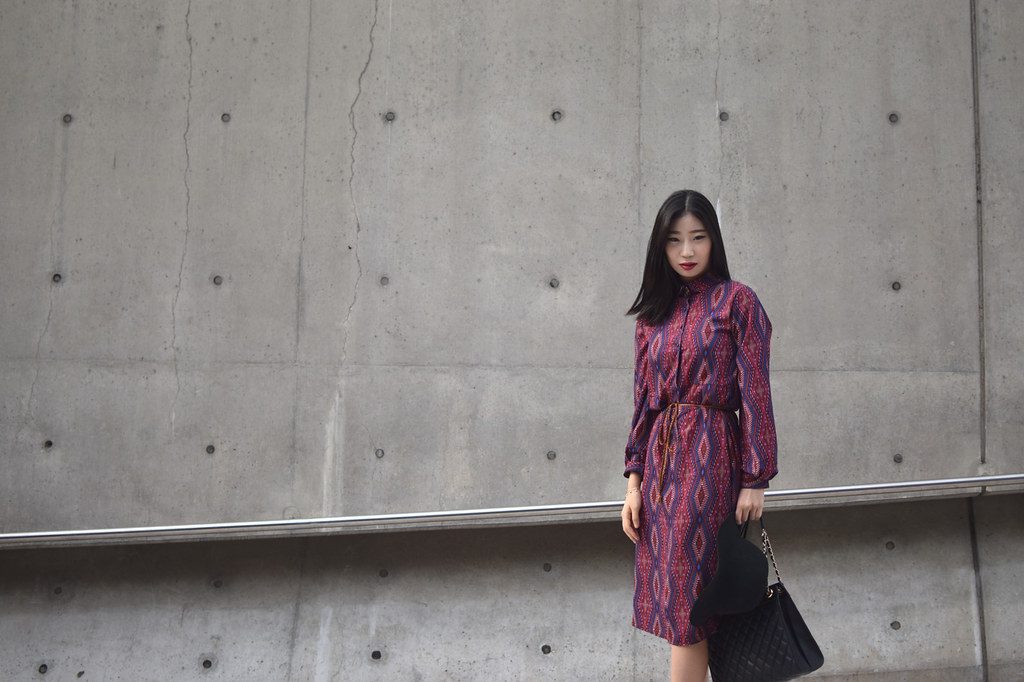
Korean fashion runs on three tiers. Designer labels that show in Paris and Seoul, contemporary brands that young Koreans buy on apps, and basics brands that compete with Uniqlo and Zara. Here are 12 worth knowing, with what each does best.
| Brand | Known for | Style fit | Best for |
|---|---|---|---|
| Gentle Monster | Sunglasses and optical frames, art-installation stores | Minimal, street | A signature Korean accessory |
| Ader Error | Oversized, color-blocked pieces with odd details | Street | Statement outerwear |
| thisisneverthat | Hoodies, sweats, caps | Street | Everyday logo casual |
| Andersson Bell | Contemporary unisex with Scandinavian and Korean influences | Street, minimal | Knitwear, jackets |
| Wooyoungmi | Tailored menswear shown at Paris Fashion Week | Minimal | Investment coats and suits |
| Juun.J | Dramatic oversized tailoring | Minimal, avant-garde | Statement menswear |
| Mardi Mercredi | Daisy-logo sweatshirts and tees | Lovely | An easy Korean souvenir piece |
| Matin Kim | Feminine casual, bags, logo pieces | Kkuankku, lovely | Bags and cropped jackets |
| Kirsh | Cherry-logo casualwear | Lovely | Graphic tees for students |
| Stand Oil | Structured everyday handbags | Minimal, kkuankku | Work and daily bags |
| Musinsa Standard | Affordable basics from Korea’s biggest fashion app | All | Slacks, shirts, plain tees |
| Kolon Sport | Heritage Korean outdoor brand | Gorpcore | Fleece, padding, hiking gear |
Designer labels: Wooyoungmi and Juun.J
These two are the reason Korean menswear gets taken seriously abroad. Both show in Paris and are sold in department stores and select shops worldwide. Expect designer pricing, so check the brand’s official site or a stockist near you for current prices before you plan around them.
Contemporary brands young Koreans actually buy
Ader Error, thisisneverthat, Andersson Bell, Matin Kim, Mardi Mercredi and Kirsh live on apps like Musinsa and 29CM and in Seongsu and Hongdae flagships. They drop new collections often and sell out of popular sizes fast. If you like a piece, buy it in that visit. Restocks aren’t guaranteed.
Basics and the Korean SPA brands
SPA means a fast-fashion brand that designs, makes and sells its own clothes. Korea’s homegrown ones include SPAO (by E-Land), 8seconds (by Samsung C&T Fashion) and TOPTEN10, alongside Musinsa Standard. Koreans buy their slacks, shirts and inner layers here and spend the bigger money on one coat or bag. That split is the smartest way to shop Seoul too.
Where to shop in Seoul: 7 areas compared
Seoul’s fashion districts each do one thing well. Pick by what you want to buy, not by which one is most famous. The table gives the short version; facts boxes for each follow.
| Area | Best for | Price level | Vibe |
|---|---|---|---|
| Dongdaemun (동대문) | Volume, trend copies, fabric, late-night shopping | Low to mid | Busy, wholesale |
| Myeongdong (명동) | SPA brands, global chains, department stores | Low to high | Tourist center |
| Hongdae (홍대) | Street style, vintage, student brands | Low to mid | Young, loud |
| Seongsu-dong (성수동) | New Korean brand flagships and pop-ups | Mid | Converted factories, cafes |
| Sinsa-dong Garosu-gil and Dosan Park (가로수길, 도산공원) | Contemporary labels, eyewear, concept stores | Mid to high | Polished Gangnam |
| Hannam-dong (한남동) | Designer boutiques, select shops | High | Quiet, curated |
| Goto Mall (고투몰), Express Bus Terminal | Cheap trendy basics, accessories | Low | Underground arcade |
Dongdaemun (동대문): volume and late nights
Dongdaemun is Korea’s garment hub. Wholesale buildings sell in bulk to boutique owners, often through the night, while retail malls such as Doota serve individual shoppers. Next door sits Dongdaemun Design Plaza (DDP), the silver curved building that has hosted Seoul Fashion Week. Come for trend pieces at low prices and fabric markets, and know that wholesale floors may not sell single items.
- Area
- Jung-gu, central Seoul
- Nearest station
- Dongdaemun History & Culture Park (Lines 2, 4, 5)
- Time needed
- 2 to 4 hours
- Before you go
- check opening days and fees on the official page; wholesale and retail buildings keep different hours
Myeongdong (명동): the easy first stop
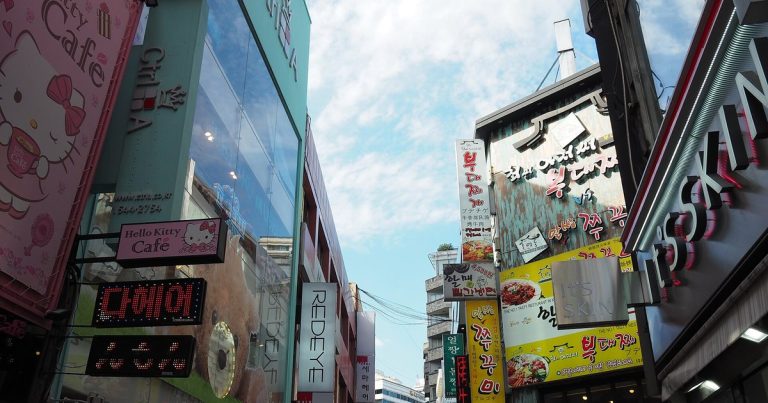
Myeongdong is built for visitors. You’ll find SPA brands, global chains, cosmetics shops and big department stores within a few blocks, plus staff who speak English, Chinese and Japanese. It’s convenient rather than exciting. Go for basics and tax-free shopping, not for discovering new labels.
- Area
- Jung-gu, central Seoul
- Nearest station
- Myeongdong (Line 4), Euljiro 1-ga (Line 2)
- Time needed
- 1 to 3 hours
- Before you go
- check opening days and fees on the official page
Hongdae (홍대): street style and vintage
The area around Hongik University is the city’s youth district. Small boutiques, vintage shops, sneaker stores and street brands line the side streets, and Musinsa has a large store here. Prices are student-friendly. Weekends are packed, so go on a weekday afternoon if you actually want to try things on.
- Area
- Mapo-gu, western Seoul
- Nearest station
- Hongik University (Line 2, Airport Railroad, Gyeongui-Jungang Line)
- Time needed
- 2 to 3 hours
- Before you go
- check opening days and fees on the official page
Seongsu-dong (성수동): where Korean brands launch
Once a district of shoe workshops and small factories, Seongsu is now Seoul’s go-to spot for brand flagships, pop-up stores and cafes in converted warehouses. If a Korean label is hot this season, it probably has a space here. Pop-ups change constantly, so check brand Instagram accounts the week you visit.
- Area
- Seongdong-gu, eastern Seoul
- Nearest station
- Seongsu (Line 2), Seoul Forest (Suin-Bundang Line)
- Time needed
- Half a day
- Before you go
- check opening days and fees on the official page; many pop-ups run for a few weeks only
Sinsa-dong Garosu-gil and Dosan Park: contemporary Gangnam
Garosu-gil, the tree-lined street in Sinsa-dong, and the streets around Dosan Park near Apgujeong are where polished contemporary labels, eyewear and concept stores sit. Gentle Monster’s showpiece stores in this part of Gangnam are worth seeing even if you buy nothing. Apgujeong Rodeo street and Cheongdam-dong, next door, hold the luxury flagships.
- Area
- Gangnam-gu, southern Seoul
- Nearest station
- Sinsa (Line 3, Sinbundang Line), Apgujeong Rodeo (Suin-Bundang Line)
- Time needed
- 3 to 4 hours
- Before you go
- check opening days and fees on the official page
Hannam-dong (한남동): designer and select shops
Hannam-dong, between Itaewon and the Han River, is quieter and more expensive. Designer boutiques and select shops (multi-brand stores that curate local and foreign labels) sit along sloping streets. Come here for one considered purchase, not a haul.
- Area
- Yongsan-gu, central Seoul
- Nearest station
- Hangangjin (Line 6)
- Time needed
- 2 to 3 hours
- Before you go
- check opening days and fees on the official page
Goto Mall (고투몰): the underground bargain arcade
Under Express Bus Terminal station in Gangnam runs a long underground shopping arcade packed with small stalls selling trendy clothes, accessories and home goods at low prices. Locals go for cheap seasonal pieces. Quality varies, so check stitching and fabric before you pay.
- Area
- Seocho-gu, southern Seoul
- Nearest station
- Express Bus Terminal (Lines 3, 7, 9)
- Time needed
- 1 to 2 hours
- Before you go
- check opening days and fees on the official page
Department stores, outlets and the apps Koreans use
A lot of Korean fashion shopping doesn’t happen on the street at all. It happens in department stores and, even more, on phones.
Department stores
Korea’s big three are Lotte, Shinsegae and Hyundai. Their flagship stores near Myeongdong and in Gangnam carry luxury, Korean designer floors and contemporary brands under one roof. The Hyundai Seoul in Yeouido, with its indoor garden, has become a destination in itself, and younger shoppers go there for Korean contemporary labels and pop-ups. Department stores also make tax refunds easy and usually have foreigner service desks.
Outlets
Premium outlets outside Seoul, such as the ones in Yeoju and Paju, sell past-season stock from Korean and foreign brands. They’re a day trip. Check the outlet’s official site for shuttle buses and holiday closures before you go.
The fashion apps behind Korean style
Musinsa is the platform most young Koreans start with, especially men, and its ranking pages show what’s selling right now. 29CM leans more curated and design-led. W Concept focuses on women’s contemporary brands. Zigzag and Ably are popular with women in their teens and twenties for affordable trend pieces. Even if you shop in person, browsing these apps first tells you which brands are worth a detour.
Korean clothing sizes explained
Korean sizing is the single biggest headache for foreign shoppers. Fits run smaller and narrower than US sizing, and labels use three different systems. Here’s the conversion Koreans themselves use, as an approximate guide only. Always check the brand’s measurement chart in centimeters.
| Korean size | Common international equivalent | Used for |
|---|---|---|
| 44 | XS | Women’s tops and dresses |
| 55 | S | Women’s tops and dresses |
| 66 | M | Women’s tops and dresses |
| 77 | L | Women’s tops and dresses |
| 90 / 95 | S / M | Men’s tops (chest-based) |
| 100 / 105 | L / XL | Men’s tops (chest-based) |
| 110 | XXL | Men’s tops (chest-based) |
| 230 to 290 (mm) | Foot length in millimeters | Shoes for all genders |
What “free size” really means
You’ll see 프리사이즈 (free size) or F on tons of tags, especially in Dongdaemun and on women’s apps. It means one size, cut loose, and it usually fits a Korean 55 to 66. If you’re a US women’s large or above, assume free size will be tight in the shoulders and sleeves.
How to read a Korean size chart
Korean apps list flat measurements in centimeters: 총장 (total length), 어깨 (shoulder), 가슴 (chest, measured flat across), 소매 (sleeve). Measure a piece you already own lying flat and compare. Koreans do exactly this before buying online, and it beats any S-M-L guess.
Shoe sizes in millimeters
Korean shoe sizes are your foot length in millimeters, so 250 means 25 cm. Measure your foot from heel to longest toe, then round up to the nearest 5. That one habit prevents most shoe returns.
How to shop for clothes in Seoul: a step-by-step checklist
- Browse Musinsa or 29CM rankings before the trip. Save brands and screenshot pieces so you can show staff.
- Measure yourself in centimeters. Chest, waist, hips, inseam and foot length. Save them in your phone notes.
- Plan by area, not by brand. Group Seongsu with nearby spots, Sinsa with Dosan Park and Apgujeong, Hongdae with Yeonnam-dong.
- Check holiday dates. Markets and some shops close over Seollal and Chuseok; see our full list of Korean public holidays in 2027 before booking.
- Carry your passport. Stores with a Tax Free sign need it to process refunds.
- Ask before trying on. Say “입어 봐도 돼요?” (ibeo bwado dwaeyo, “can I try this on?”).
- Check the refund and exchange policy at the till. Small boutiques often offer exchange only, and markets rarely refund.
- Keep receipts together. You may need them for airport tax refund checks.
How tax refunds work for tourists
Korea lets foreign visitors reclaim VAT on purchases from participating stores. Some shops deduct it right at the till, while others give you a form to process at the airport or a refund kiosk. Minimum purchase amounts, caps and procedures change, so check the current rules with the store or the official Korea tourism information before you shop.
Budgeting in won
Prices in Korea are always shown in won (₩). As a round example only, before you treat a ₩50,000 knit as a bargain, run that price through a live currency converter instead of a rate you remember from your last trip. The rate moves, and it has been volatile alongside Korean markets (our explainer on why the KOSPI has been falling covers the backdrop), so check a live rate before your trip.
Worked example: a 3-day Seoul fashion shopping plan
Say you have three days and a mid-range budget, and you want a Korean coat, two everyday outfits and something only Seoul sells. Here’s how a local would route it.
Day 1: Myeongdong and Dongdaemun
Start in Myeongdong for basics at SPAO, 8seconds or TOPTEN10: slacks, shirts, plain knits. Lunch, then a department store for one look at the Korean designer floors so you know what good tailoring feels like. Head to Dongdaemun in the evening for trend pieces and accessories, and walk past DDP lit up at night.
Day 2: Seongsu-dong
Give Seongsu a full afternoon. Check which brands have pop-ups that week, visit two or three flagships of the contemporary labels you saved on Musinsa, and buy your one statement piece here. Cafe stops between stores are part of the plan; this is how Koreans spend a Seongsu Saturday.
Day 3: Sinsa, Dosan Park and Hannam
Morning on Garosu-gil and around Dosan Park for eyewear and contemporary labels. Afternoon in Hannam-dong for select shops if you still have budget for a designer coat. If not, swap Hannam for Goto Mall at Express Bus Terminal and fill gaps cheaply.
The logic: cheap basics first, so you know what’s missing; statement pieces in the middle; expensive decisions last, when you’ve seen the market.
How to buy Korean fashion from abroad
You don’t need a plane ticket. Many Korean brands now sell internationally, though shipping and returns vary a lot.
- Brand websites: Gentle Monster, Ader Error, thisisneverthat and several others run global online stores. Check whether your country is on the shipping list.
- Global versions of Korean apps: Musinsa and W Concept have run English-language stores for overseas shoppers. Selection is smaller than the Korean app, so compare.
- International retailers and select shops: Designer labels like Wooyoungmi and Juun.J are stocked by department stores and online luxury retailers abroad.
- Purchasing agents and forwarders: Some shoppers use a Korean address forwarding service to buy from Korea-only apps. Factor in import duties for your country.
Before you order, convert the size using the centimeter chart, read the return policy (international returns can cost more than the item), and check customs rules where you live.
Common mistakes foreigners make shopping for Korean fashion
Trusting S-M-L labels
A Korean M is often closer to a US S, and Korean shoulders and sleeves are cut narrower. Always go by centimeters.
Expecting retail in wholesale buildings
Some Dongdaemun floors only sell in bulk to shop owners. Look for retail-oriented malls or ask “한 장도 돼요?” (han jangdo dwaeyo, “can I buy just one?”).
Assuming you can return anything
Big chains and department stores usually take returns with a receipt; markets and small boutiques often don’t, or offer exchange only. Ask at the till, not after you’re home.
Dressing too lightly in winter
Seoul’s winter wind surprises visitors every year. Do what Koreans do: a long padding or wool coat, a scarf and a thin thermal layer underneath.
Chasing logos over fit
Korean style is about proportion and color, not branding. A well-fitted Musinsa Standard slack does more for the look than a big logo hoodie in the wrong size.
Skipping the passport
No passport, no tax refund. Keep it in your bag on shopping days.
Korean fashion words to know (glossary)
These are the words you’ll see on tags, apps and shop signs. Knowing them makes Korean search results and size charts readable.
| Hangul | Romanization | Meaning |
|---|---|---|
| 꾸안꾸 | kkuankku | Effortless look that took effort |
| 데일리룩 | deillirук | Daily look, everyday outfit |
| 오오티디 | ootidi | OOTD, outfit of the day |
| 커플룩 | keopeullup | Matching couple outfit |
| 시밀러룩 | similleoruk | Similar look: coordinated, not identical, outfits |
| 롱패딩 | rongpaeding | Knee-length winter puffer coat |
| 프리사이즈 | peurisaijeu | Free size, one size fits most |
| 보세 | bose | Unbranded boutique clothes, often from Dongdaemun |
| 한복 | hanbok | Korean traditional dress |
| 생활한복 | saenghwal hanbok | Everyday modern hanbok |
| 총장 | chongjang | Total garment length |
| 어깨 | eokkae | Shoulder width |
| 가슴단면 | gaseum danmyeon | Chest measured flat across |
| 세일 | seil | Sale |
| 교환 | gyohwan | Exchange |
| 환불 | hwanbul | Refund |
FAQ
What is Korean fashion style called?
There isn’t one name, but the look most people mean is a clean, layered, neutral style Koreans call kkuankku (꾸안꾸), effortless on purpose. Alongside it you’ll see minimal office wear, oversized street style, outdoor gorpcore and a feminine “lovely” style. Hanbok is the traditional dress.
Where is the best place to shop for clothes in Seoul?
It depends on what you want. Seongsu-dong for new Korean brands, Dongdaemun for cheap trend pieces, Hongdae for street style and vintage, and Sinsa or Hannam for contemporary and designer labels. Myeongdong is easiest for a first visit.
Are Korean clothes sized smaller?
Generally yes. Korean fits are narrower in the shoulders and sleeves, and an M often fits like a US S. Women’s sizes use 44, 55, 66 and 77, men’s use chest numbers like 95 and 100, and shoes are measured in millimeters. Always compare the centimeter chart.
Which Korean fashion brands are famous internationally?
Gentle Monster is the best known worldwide, alongside Ader Error, thisisneverthat, Andersson Bell, and designer labels Wooyoungmi and Juun.J. Mardi Mercredi and Matin Kim are popular with visitors as Seoul-specific buys.
Can I buy Korean clothes online from outside Korea?
Yes. Many brands ship internationally from their own sites, and platforms like Musinsa and W Concept have run English-language stores. Check shipping countries, return costs and your local import duties before ordering.
Can tourists get tax refunds on clothes in Korea?
Yes, at stores that participate in the tax-free system, usually marked with a Tax Free sign. Bring your passport. Minimum spend and refund procedures change, so confirm current rules at the store or through official Korea tourism information.
What to watch next: Seoul Fashion Week, winter coats and sales
Seoul Fashion Week runs twice a year, in spring and autumn, and has long been staged at Dongdaemun Design Plaza. It’s the place to spot the next Korean labels before they reach the apps; check the official Seoul Fashion Week site for dates. Right now, late November, Seoul is in full coat season, so it’s the moment to compare long padding and wool coats in person or on Musinsa’s outerwear rankings.
Planning a trip? Map your shopping days by area, check holiday closures, measure yourself in centimeters, and save five brands from this list before you land. And if you want to understand why Seoul dresses the way it does, from office dress codes to holiday hanbok, start with our guide to Korean culture and the rules locals follow.
Related reading

Sources k-korea.blog
Prices, opening hours and availability change. Check the official page before you buy or travel.