
11 min read
K-pop terms explained: learn 30 fan words, from bias to comeback, and you can follow almost any fan post. Most are English words with new meanings, a handful are Korean, and you’ll run into all of them within a week of following one group.
Below, each term comes with the way fans actually use it in a sentence. That way you can join the conversation in comment sections, livestream chats and concert lines without stopping to look things up.
Key takeaways
- Your bias is your favorite member. Your bias wrecker is the member who keeps tempting you to switch.
- The maknae is the youngest member. Age is all it tells you, nothing about rank or talent.
- A comeback is any new release, even when the group never went anywhere.
- On SBS’s weekly show Inkigayo, a song that wins three times earns a triple crown and leaves that show’s chart.
What does bias mean in K-pop? Five words about how you’re a fan
These words describe your relationship with a group. They come up first, usually as “who’s your bias?”, which is the K-pop version of small talk.
Bias and ult bias
Your bias is your favorite member of a group. Most fans have one per group they follow. Your ult (short for ultimate bias) is your single favorite idol across every group you like. Example: “I have a bias in every group, but my ult hasn’t changed since 2019.”
Bias wrecker
A bias wrecker is the member who keeps pulling your attention away from your bias. It’s said half as a complaint and half as a compliment: “I came for the leader, but the main dancer is a bias wrecker in this era.”
Stan and fandom names
To stan is to be a dedicated fan. The word comes from Eminem’s 2000 song “Stan” and has lost its creepy edge in K-pop use. If you follow several groups seriously, you’re a multi-stan. Nearly every group also has an official fandom name: ARMY for BTS, BLINK for BLACKPINK, ONCE for TWICE, STAY for Stray Kids. Fans call themselves by it (“STAYs are trending again”), and idols use it on stage too.
Group roles: what maknae, leader, visual and center mean
K-pop groups are often big, sometimes nine or more members, so fans lean on role labels to keep track of who does what. Agencies announce many of these positions at debut, though fans add their own.
What is a maknae?
Maknae (막내) is the Korean word for the youngest person in a family or group. In K-pop it means the youngest member, and the youngest few are the maknae line. Plenty of maknaes end up as the group’s loudest personality on variety shows. That’s why you’ll see “evil maknae”, a joking label for a youngest member who teases the older ones.
Leader, visual and center
The leader speaks for the group in interviews and acceptance speeches and usually takes the lead in group decisions. The visual is the member put forward as the face of the group, often in the middle of photos. The center is the member placed in the middle of key formations in a choreography. It can rotate from song to song.
Lines and trainees
A line is a subgroup by role or birth year. The vocal line, rap line and dance line group the members by their main skill. “00-line” means members born in 2000. A trainee is someone signed to an agency who trains in singing, dancing and often languages before debut. Fans talk about trainee years a lot, because some idols train for a long time before debuting.
What is a comeback in K-pop? The release words you’ll see every month
Release vocabulary trips up new fans the most, because K-pop releases music on a schedule Western pop doesn’t share. Groups often put out several albums or mini albums a year, and each one comes with its own visual theme.
Debut and comeback
A debut is a group’s or soloist’s first official release and first stage. A comeback is every release after that, whether the gap was two years or four months. “Their comeback is next month” just means new music is coming. It says nothing about a hiatus.
Title track and b-side
The title track is the album’s lead single. It gets the music video and the TV performances. A b-side is any other song on the album. Fans love to argue that a b-side beats the title track, and some b-sides go on to become concert favorites.
Era and concept
An era is the period around one release, with its own hair, styling and stage outfits: “the blond-hair era”. Each era has a concept, the theme behind the visuals, like dark, retro, school or fantasy. Before a release, agencies post teasers and concept photos for days, and fans pick through each one for clues.
Concert and merch terms: photocard, lightstick, fanchant and more
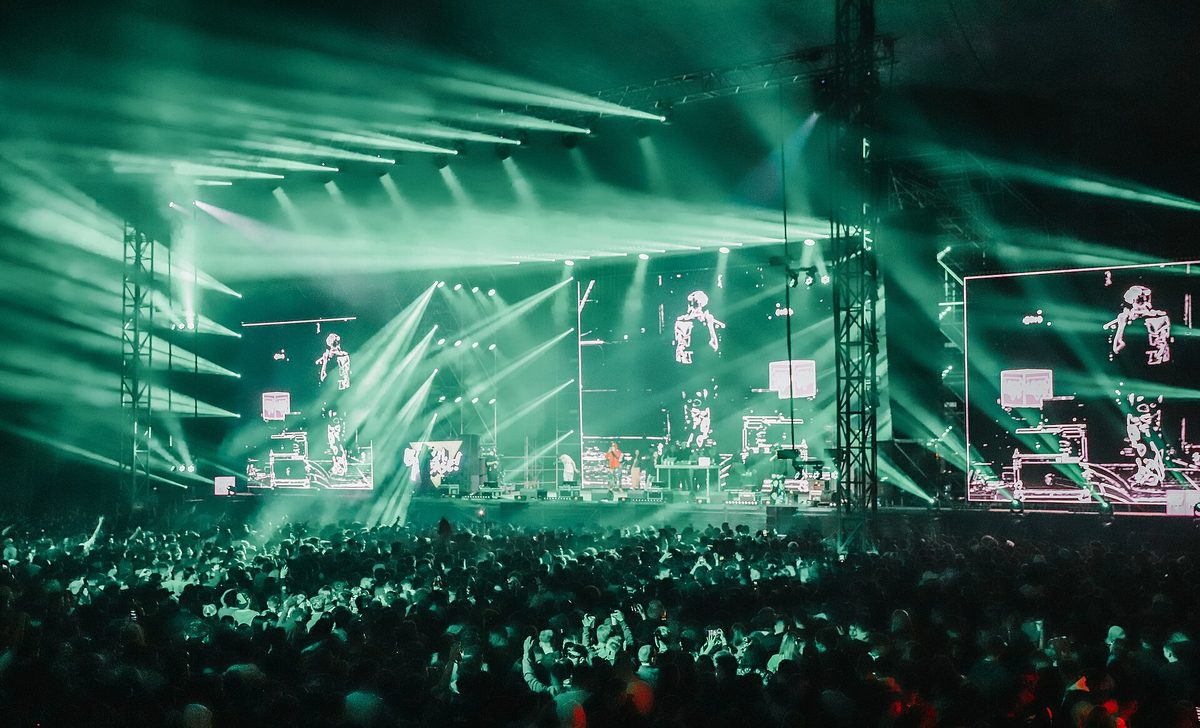
These words matter once you start buying albums or going to shows. Shows are getting bigger: WBAL-TV reports that Stray Kids are coming to Baltimore’s M&T Bank Stadium next summer. That’s a whole stadium of lightsticks and fanchants.
Photocard and lightstick
A photocard is a small printed photo of one member, packed into physical albums, usually at random. Many albums come in several versions with different covers and card sets, which is why fans trade cards. A lightstick is each group’s official handheld light, designed in its own shape. At many concerts, lightsticks can be synced so the whole venue changes color together. Check the group’s official shop or concert notice to see which model works at a given tour.
Fanchant and fancam
A fanchant is the set of names and lines the crowd shouts at fixed moments in a song, usually members’ full names during the intro. Agencies often publish official fanchant guides around a release. A fancam is a video that follows one member through a whole performance. Korean music shows post official ones too, and a fancam going viral can change a member’s profile overnight.
Fansign and sasaeng
A fansign is an event where fans meet members briefly and get albums signed. Entry is often decided by a draw tied to album purchases, so read the organizer’s notice closely. A sasaeng is an obsessive fan who stalks idols or invades their private life. Agencies have announced legal action against this behavior, and mainstream fandoms condemn it. If a post celebrates someone’s flight details or home address, report it and don’t share it.
Chart words: music show wins, all-kills and triple crowns
Korea has weekly TV music programs that rank songs and hand out a trophy, something most Western countries no longer have. This vocabulary comes straight from those programs.
What is a music show win?
A music show win is first place on one of the weekly broadcast chart shows, such as KBS’s Music Bank, MBC’s Show! Music Core, SBS’s Inkigayo or Mnet’s M Countdown. Each show uses its own mix of digital sales, album sales, broadcast play, video views and votes. A group’s first win is a big moment, often followed by tears and a thank-you speech that fans clip and share.
All-kill and triple crown
An all-kill means a song reached number one across the major Korean music charts, such as Melon, Genie and Bugs, at the same time. A triple crown refers to Inkigayo’s rule: a song that wins three times leaves that show’s chart so other songs get a turn. When fans say “we got the triple crown”, that’s the trophy they mean.
Korean words K-pop fans borrow: oppa, unnie, sunbae and aegyo
A few Korean words appear untranslated in English-language fan posts, because no English word does the same job. You’ll hear them in K-dramas too, so if you’ve started with our K-drama shows for beginners, some of these will sound familiar.
Oppa and unnie
Oppa is what a younger woman calls an older man she’s close to, like an older brother or a friend. Unnie is what a younger woman calls an older woman. Male speakers use hyung and noona instead. Fans sometimes use oppa for male idols in a playful way, but in Korean the words follow the speaker’s gender and age.
Sunbae and hoobae
Sunbae and hoobae mean senior and junior: someone who debuted earlier and someone who debuted later. Idols greet sunbae groups formally backstage, and fans use the words to talk about generations: “they covered their sunbae’s song at the year-end show.”
Aegyo and hwaiting
Aegyo is deliberately cute behavior, like baby voices, finger hearts and pouting, and it’s often requested on variety shows. Hwaiting is the Korean take on “fighting” and means “you can do it” or “go for it”. You’ll see it in comments before a big performance: “comeback hwaiting!” If drama-style romance moments are your entry point, our guide to K-drama tropes explained covers where a lot of this cute-versus-serious play comes from.
K-pop terms explained in one table: the 12 you’ll see most
Save or screenshot this table. These 12 come up most often in the first weeks of being a fan.
| Term | What it means | How fans use it |
|---|---|---|
| Bias | Your favorite member | “Who’s your bias in SEVENTEEN?” |
| Bias wrecker | The member tempting you away from your bias | “The rapper is wrecking me this era.” |
| Maknae | The youngest member | “The maknae line carried that stage.” |
| Visual | Member put forward as the group’s face | “The visual got the center shot in the teaser.” |
| Debut | First official release | “They debuted with a summer song.” |
| Comeback | Any later release | “Comeback in two weeks, start saving.” |
| Title track | The album’s lead single | “The title track is fine, the b-sides are better.” |
| Era | Look and concept of one release period | “Bring back the red-hair era.” |
| Photocard | Random member photo in an album | “Trading two leader cards for one maknae.” |
| Fancam | Video focused on one member | “Her fancam is everywhere this week.” |
| Music show win | First place on a weekly TV chart show | “First win on Music Bank, I’m crying.” |
| All-kill | Number one on the major Korean charts at once | “An all-kill on release day.” |
How to read a real fan post: a worked example
Here’s a made-up post, typical of what you’ll find under a music video: “Debut era me would never believe this. My bias wrecker’s fancam passed my bias’s, the maknae line got their own unit song, and we’re one win away from the triple crown. Comeback hwaiting!”
Decoded, line by line:
- “Debut era me”: the writer has followed the group since its first release.
- “My bias wrecker’s fancam passed my bias’s”: the solo video of their second-favorite member now has more views than the one of their favorite.
- “The maknae line got their own unit song”: the youngest members recorded a track as a smaller subgroup, which is what unit means.
- “One win away from the triple crown”: the song has two Inkigayo wins and needs a third.
- “Comeback hwaiting”: good luck with this release.
Once you can read that post, you can read most of the comments section. What’s left is mostly in-jokes specific to one group, and you’ll pick those up from its variety content.
Common mistakes new K-pop fans make with these words
A few errors mark you as brand new. None of them are serious, but they’re easy to avoid.
- Reading “comeback” as a return from a break. It just means new music. A group can have two comebacks in one year without ever going quiet.
- Treating “visual” as “the only good-looking one”. It’s a role label. Saying another member “isn’t the visual, so he’s ugly” is rude, and fans will push back.
- Using oppa for everyone. See the callout above. Stage names are safer.
- Thinking maknae means least important. Plenty of maknaes are main vocalists or main dancers.
- Sharing sasaeng content. Airport crush videos and leaked private schedules feed the problem. Mainstream fandoms ask people not to spread them.
The vocabulary is also spreading beyond fandom spaces. ABC7 Los Angeles reports a second drop of limited-edition KPop Demon Hunters x heyday gear at Target, so expect to hear words like comeback and lightstick from people who have never streamed a music show.
FAQ
What does bias mean in K-pop?
Your bias is your favorite member of a group. Most fans have one bias per group, plus an “ult” who is their favorite idol overall. The word has no negative meaning in K-pop.
What is a maknae in K-pop?
The maknae is the youngest member of a group, from the Korean word for the youngest in a family. It refers only to age. The youngest few members together are often called the maknae line.
Why is it called a comeback if the group never left?
In K-pop, comeback simply means a new release with promotions, music show stages and a new concept. The word became industry habit, and agencies and broadcasters use it the same way. A group may have several comebacks a year.
What is the difference between a stan and a fan?
A stan is a very dedicated fan who follows releases, streams and votes. In K-pop use it’s mostly positive and often a verb: “I stan them.” The word comes from Eminem’s 2000 song “Stan”.
What does all-kill mean in K-pop?
An all-kill means a song is number one on the major Korean music charts, such as Melon, Genie and Bugs, at the same moment. It shows strong domestic listening, which is harder for groups whose fanbase is mostly overseas.
How do I watch music shows from outside Korea?
Each broadcaster posts performance clips and many full episodes on its official YouTube channel, and some shows stream live. Availability differs by country, so check the official channel or broadcaster site for Music Bank (KBS), Show! Music Core (MBC), Inkigayo (SBS) or M Countdown (Mnet).
What to try next: follow one comeback start to finish
The fastest way to make these words stick is to follow one group through one full comeback. Watch the teaser and concept-photo schedule the agency posts, then the music video release, then that week’s music show stages and the official fancams that follow.
Track whether the title track gets a music show win, which b-side fans pick as the real favorite, and which member’s fancam takes off. By the end of the cycle you’ll be using bias, era, comeback and all-kill without thinking about them. Then pick a second group, and you’re a multi-stan.
Related reading
Sources news.google.com · k-korea.blog
Prices, opening hours and availability change. Check the official page before you buy or travel.