
13 min read
How to learn kpop dance comes down to 6 steps: pick an easy song, play a mirrored video, count it in 8s, learn one section at a time, drill it slowly, then film yourself. You don’t need a studio, a dance background or a big room. A phone, about two square meters of floor and a willingness to look awkward for the first few days will get you through your first chorus.
This guide covers the method at home, the songs that make the best first projects, how visitors take a drop-in class in Seoul, and how to film a cover that looks deliberate instead of accidental.
Key takeaways
- Use a mirrored video so your right hand matches the dancer’s right hand on screen, and you stop translating left and right in your head.
- K-pop choreography is built in 8-counts: learn one 8-count until it’s automatic, then chain it to the next.
- Start with the chorus, because the “point choreography” (포인트 안무, the signature move) lives there and it’s what people recognize in a cover.
- Seoul studios run drop-in classes for visitors, often taught in Korean with counts you can follow without the language; check each studio’s official site or booking page for schedules and fees.
How to learn kpop dance at home: the 6-step method
Most people who quit learning K-pop dances quit because they press play on the full song, try to copy everything at full speed, and feel lost by the second verse. The fix is to shrink the problem. Here is the order that works.
- Pick one song and one section. Choose a song from the beginner list below and commit to the chorus only. A full song can come later.
- Find a mirrored version. Search the song title plus “mirrored” or “dance tutorial mirrored”. You want the dancer facing you with their movements flipped, so it feels like looking in a mirror.
- Count the music in 8s. Listen once without moving and count “1, 2, 3, 4, 5, 6, 7, 8” over the beat. Note where each 8-count starts.
- Learn one 8-count at a time. Feet first, then arms, then head and face. Stack them only when the feet are automatic.
- Drill at slow speed. Drop the playback speed to 0.5x or 0.75x, repeat each 8-count until you can do it without looking, then raise the speed.
- Film yourself and compare. Your body never moves the way you think it does. A 15-second clip beside the original shows you exactly which arm is lazy.
That loop of slow, repeat, film and fix is the same thing trainees do in agency practice rooms, just without a choreographer watching. If you’re curious how serious that training gets, our guide on how to become a K-pop idol walks through the audition routes and what trainees practice daily.
How much space and gear do you need?
Clear a spot where you can stretch your arms fully and take two steps in any direction. Wear shoes with some grip but not so much that turns stick (clean sneakers work; socks on a smooth floor are a slip risk). A mirror helps, but your phone camera does the same job if you don’t have one. Warm up your ankles, knees and wrists for a few minutes first, because K-pop choreography loads them hard.
Why mirrored practice videos make K-pop dances easier to learn
When a dancer faces you on screen and lifts their right arm, it appears on your left. Your brain has to flip every move in real time, which is exhausting and is why beginners keep going the wrong way. A mirrored video flips the image so you can move with the screen as if it were your reflection.
Dance practice, mirrored and tutorial videos: which to use
Three kinds of video help you, and each does a different job.
- Official dance practice videos (안무 연습, anmu yeonseup, “choreography practice”): agencies upload these to their artists’ YouTube channels, filmed in a practice room with a fixed camera and casual clothes. They show the real choreography clearly, without music-video edits cutting away. Our guide to the K-pop agencies behind BTS, BLACKPINK and TWICE explains who runs those channels.
- Mirrored versions: fan-made or dance-channel uploads of the practice video, flipped horizontally. Use these for actual learning.
- Tutorials: a dance instructor breaks the routine down count by count, often with a front view and a back view. Use these when a section confuses you.
A smart workflow: watch the official practice video once to see the real thing, learn from the mirrored version, and only open a tutorial when you’re stuck on a specific 8-count.
How to slow down and loop a dance video
On YouTube, open the settings gear (or the three-dot menu on mobile) and choose playback speed. 0.5x is ideal for new moves, 0.75x for linking sections. To repeat one short part, many dancers simply drag back on the progress bar; on desktop, the arrow keys jump back a few seconds, and some players and browser extensions let you set an A-to-B loop. Work at slow speed longer than feels necessary. Speed comes from clean muscle memory, and you can’t build that while you’re scrambling.
How to break K-pop choreography into 8-counts
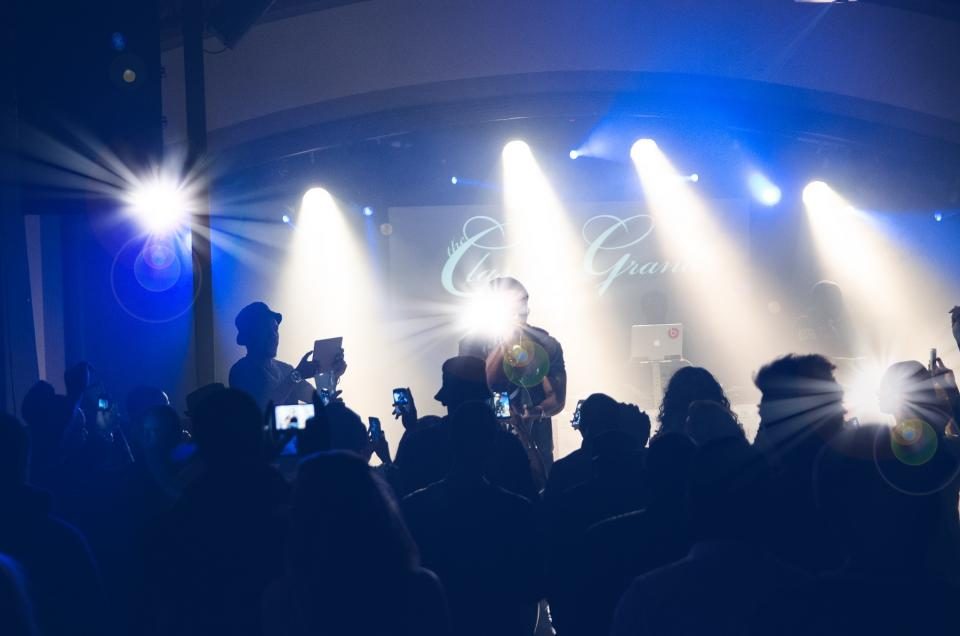
Nearly every pop routine is mapped in groups of eight beats, and K-pop is no different. One “8-count” is two bars of music in a typical 4/4 song. Choreographers build, teach and rehearse in these blocks, so once you hear them, a three-minute dance turns into a stack of short, manageable pieces.
How to find the count in a song
Tap your foot to the steady beat (the kick drum is the easiest guide). Count to eight and start over. The first beat of a section, where the chorus or the verse kicks in, is almost always a “1”. Write down a rough map, for example: intro, two 8-counts; verse, four; pre-chorus, two; chorus, four. Now you know the size of the job.
Feet first, arms second, face last
Your feet decide where your weight is, and if the weight is wrong, the arms will never land on time. Mark the footwork of one 8-count without arms. Add the arms once your feet move without thinking. Head angles, facial expression and the small hand details come last; in K-pop these are the polish that makes a cover look “right”, so don’t skip them, just don’t start with them.
How Korean teachers count
In a Seoul class you may hear counting in Korean: hana, dul, set, net, daseot, yeoseot, ilgop, yeodeol (one to eight). Many instructors also use English “five, six, seven, eight” to cue the start, or shorthand like “and-a” for the off-beats. You can follow a class just by listening for the rhythm of the counts, even if you don’t understand the rest.
Best K-pop songs for beginners to learn first
A good first song has a clear beat, a repeating chorus move, and not too many floor work or fast footwork sections. The ones below have stayed popular for years and have plenty of mirrored videos and tutorials. Pick based on what you enjoy, because you’ll hear it a lot.
| Song | Artist | Year | Signature move to learn first | Why it suits beginners |
|---|---|---|---|---|
| Gangnam Style | PSY | 2012 | The “horse riding” step | One famous move carries the chorus, and it’s mostly rhythm and bounce |
| Sorry, Sorry | Super Junior | 2009 | Hand-rubbing chorus move | Repetitive, upper-body heavy, easy to count |
| Tell Me | Wonder Girls | 2007 | The wrist-circling “tell me” move | Simple patterns and a slower groove |
| TT | TWICE | 2016 | The “TT” crying-face hand pose | Cute, compact moves that work in a small room |
| Dynamite | BTS | 2020 | Disco-style chorus grooves | Steady tempo, playful moves, lots of tutorials |
| DDU-DU DDU-DU | BLACKPINK | 2018 | The finger-gun chorus move | The hook is learnable fast; the verses are a good step up |
Once you can do two or three of these, move to newer songs with denser choreography. Groups known for intense, high-energy performance routines, such as SEVENTEEN and Stray Kids, make good goals for your second or third month, not your first week.
What is point choreography?
Point choreography (포인트 안무, pointeu anmu) is the short, signature move a song becomes known for, usually in the chorus. It’s the move fans copy at concerts and in short-video challenges. Learning it first gives you a quick win and the part people recognize.
Common mistakes when learning K-pop dances
Trying to learn the whole song in one session
You’ll remember the intro and forget everything else by the next day. Learn one section, sleep on it, review it the next day, then add the next. Memory for movement consolidates between sessions.
Going full speed too early
Practicing a move sloppily at full speed teaches your body the sloppy version. Stay at 0.75x until the section is clean, then try full speed.
Ignoring the levels and angles
K-pop groups are famous for kal-gunmu (칼군무, “knife-sharp group dance”): everyone hitting the same angle at the same moment. That precision comes from arm height, how far the body turns, and where the eyes look. Pause the video on each count and match the exact shape.
Dancing small
Beginners often shrink every movement. Stretch the arm out fully, bend the knees properly, commit to the hit. A big, slightly wrong move looks better on camera than a timid correct one, and it’s easier to fix.
Skipping the warm-up
Lots of choreography uses quick knee bends, hair whips and wrist snaps. Warm up your neck, wrists, knees and ankles before you start, and stop if something hurts sharply.
How to take a K-pop dance class in Seoul as a visitor
Seoul has a dense network of dance studios, and many sell single drop-in classes, so you can take one class during a trip without signing up for a course. The best-known name abroad is 1MILLION Dance Studio, whose YouTube channel made Seoul choreographers famous with international fans. Plenty of smaller studios and academies teach K-pop choreography too, especially around Hongdae (the area around Hongik University, known for street dance and busking) and in Gangnam.
Three ways visitors book a class
- Directly with a studio: check the studio’s official website or social media for the class timetable, level and booking method. Some ask you to reserve online, some take walk-ins.
- Tourist experience platforms: booking sites such as Klook list K-pop dance classes designed for visitors, usually with English support and a set song. Read the listing for the language, duration and whether you’ll get a video at the end.
- Private or group lessons: some studios and instructors offer one-to-one or small-group sessions for travelers. These take more planning but let you choose the song.
For getting there, a Korean maps app makes life easier, since Google Maps walking directions are limited in Korea; see our list of the best apps for Korea travel.
What to expect in a Seoul dance class
A typical drop-in class teaches a short section of one song, often the chorus, from scratch, then runs it with music a few times. The pace can be fast, and regular classes may be taught in Korean. Stand where you can see the mirror and the instructor, wear comfortable clothes and clean indoor shoes, and bring water. Many classes end by filming the group, so check beforehand if you’d rather not be filmed.
Korean words you’ll hear in a dance class
| English | Korean | Romanization | When to use it |
|---|---|---|---|
| One, two, three, four | 하나, 둘, 셋, 넷 | hana, dul, set, net | The teacher counting the first half of an 8-count |
| Five, six, seven, eight | 다섯, 여섯, 일곱, 여덟 | daseot, yeoseot, ilgop, yeodeol | The second half; “yeodeol” means the next count starts |
| Choreography | 안무 | anmu | Talking about the routine itself |
| Left / right | 왼쪽 / 오른쪽 | oenjjok / oreunjjok | Direction cues |
| One more time, please | 한 번 더 해 주세요 | han beon deo hae juseyo | Asking to repeat a section (polite) |
| Slowly, please | 천천히 해 주세요 | cheoncheonhi hae juseyo | Asking for a slower run (polite) |
| Thank you | 감사합니다 | gamsahamnida | At the end of class (polite) |

How to film a K-pop dance cover that looks good
A dance cover (커버댄스, keobeo daenseu) is a video of you performing an existing choreography. You don’t need expensive gear. You need a steady camera, a full-body frame and decent light.
Camera, framing and light
- Steady phone: use a tripod, or stack books on a chair. A shaky handheld shot makes clean choreography look messy.
- Chest height, full body: place the phone around chest height and step back until your head and feet both stay in frame during the biggest moves, with a little room above.
- Light in front of you: face a window or a lamp. A bright window behind you turns you into a silhouette.
- Plain background: clear the clutter. A simple wall makes your lines easier to read.
- Vertical or horizontal: shoot vertical for TikTok, Instagram Reels and YouTube Shorts; horizontal for a full-song YouTube cover.
Music and copyright
Platforms handle K-pop audio differently, and rules change. On TikTok and Instagram, adding the song from the app’s own music library is usually the smoothest path. On YouTube, a cover using the original track can be claimed by the rights holder, which may mean ads or restrictions on your video. Check each platform’s help pages on music before you post a full-song cover.
Filming in public in Seoul
“K-pop in public” covers, filmed on a street or in a plaza, are hugely popular. If you film in Seoul, pick a wide, uncrowded spot, keep paths clear, and don’t put strangers’ faces front and center; people in Korea care a lot about being filmed without consent. Some venues, malls and palace grounds have their own rules on filming, so check before you set up a tripod.
A 7-day plan to learn one K-pop chorus
Here’s a worked example using TWICE’s “TT” chorus, in sessions of about 20 to 30 minutes. Swap in any song from the table; the structure stays the same.
| Day | Focus | Speed | Done when |
|---|---|---|---|
| 1 | Listen, map the chorus into 8-counts, watch the official practice video | Normal (watching only) | You know how many 8-counts the chorus has |
| 2 | Footwork for 8-counts 1 and 2 with the mirrored video | 0.5x | You can mark the feet without looking |
| 3 | Add arms to 8-counts 1 and 2, start footwork for 3 and 4 | 0.5x to 0.75x | The first half feels connected |
| 4 | Arms for 3 and 4, link the full chorus | 0.75x | No pauses between 8-counts |
| 5 | Film a run, compare side by side with the original, fix angles | 0.75x to 1x | Your shapes match on paused frames |
| 6 | Full speed, add facial expression and the “TT” pose details | 1x | Three clean runs in a row |
| 7 | Film your cover | 1x | One take you’re happy to keep |
If a day goes badly, repeat it rather than moving on. Two clean 8-counts beat four messy ones.
FAQ
Can you learn K-pop dance with no dance experience?
Yes. Most people who post K-pop covers learned at home from videos. Start with a simple chorus, use a mirrored video at slow speed, and build up one 8-count at a time. Basic fitness and flexibility improve as you go.
How long does it take to learn a K-pop dance?
It depends on the song and how often you practice. A beginner can usually learn one chorus in about a week of short daily sessions, as in the plan above. A full routine takes longer, and fast, dense choreography takes longer still.
What does mirrored mean in dance videos?
A mirrored video is flipped horizontally, so when the dancer moves their right arm, it appears on the right side of your screen. You can copy it directly, like following your reflection, instead of reversing every move in your head.
What is the easiest K-pop dance to learn?
Songs built around one repeating chorus move are the easiest place to start, such as PSY’s “Gangnam Style”, Super Junior’s “Sorry, Sorry” and TWICE’s “TT”. They have a steady beat, simple patterns and plenty of tutorials online.
Do Seoul dance studios teach in English?
Some do, and classes sold to visitors through experience platforms usually include English support. Regular studio classes are often in Korean, but counting and demonstration carry most of the teaching. Check the studio’s official page or message them before booking.
Do I need a mirror to practice at home?
No. A mirror helps with instant feedback, but filming yourself on your phone works just as well, and it’s more honest, since you can pause and compare frame by frame with the original video.
What to learn next after your first K-pop dance
Once your first chorus is clean, learn the rest of that song section by section, using the same 8-count method. Then pick a second song in a different style: if you started with something cute like “TT”, try a harder-hitting routine such as BLACKPINK’s “DDU-DU DDU-DU”, so you build both control and power.
After that, set a real goal. Film a full-song cover, join a cover dance group in your city, or plan a drop-in class into your next Seoul trip and book it early through the studio’s official site. Learning the choreography for a group’s next comeback (a new release and its promotions) in the week it drops is the classic challenge fans set themselves, and the official dance practice video is usually where it starts.
Related reading



Sources k-korea.blog
Prices, opening hours and availability change. Check the official page before you buy or travel.