13 min read
The best things to do in Seoul on a rainy day start with 15 indoor picks, most a subway ride away. Seoul handles bad weather well: whole shopping malls run beneath the streets, the National Museum of Korea’s permanent galleries have long been free to walk into, and a jjimjilbang (찜질방, a Korean bathhouse and sauna that’s often open around the clock) can fill a wet afternoon on its own. If you only want one stop, head to COEX in Gangnam, where shopping, a huge open library and an aquarium all sit under one roof.
Key takeaways
- Starfield Library is inside Starfield COEX Mall, which connects underground to Samseong Station on Line 2, so you can get there without getting wet.
- The National Museum of Korea is easily a 3-hour visit, and you can get there from Ichon Station without spending long outside.
- Monsoon season (jangma, 장마) usually runs from late June to late July, and July is typically Seoul’s wettest month.
- Every GS25, CU and 7-Eleven convenience store sells umbrellas, so you don’t need to pack a big one.
The 15 best things to do in Seoul on a rainy day
A rainy Seoul day goes best if you stay within one or two subway lines and pick places with a station exit nearby, or better, an underground link. The table groups the 15 ideas by where they are and what they’re good for, so you can build a route instead of crossing the city in the wet.
| # | Idea | Nearest station | Best for | Time needed |
|---|---|---|---|---|
| 1 | National Museum of Korea | Ichon (Line 4, Gyeongui-Jungang Line) | Korean history and art, families | 2-4 hours |
| 2 | War Memorial of Korea | Samgakji (Lines 4, 6) | Korean War history | 2-3 hours |
| 3 | Starfield Library, COEX | Samseong (Line 2) | Photos, browsing, a free place to sit | 30-60 minutes |
| 4 | COEX Aquarium | Samseong (Line 2) | Kids, couples | 1-2 hours |
| 5 | Goto Mall underground shopping | Express Bus Terminal (Lines 3, 7, 9) | Cheap fashion, home goods | 1-2 hours |
| 6 | Downtown underground arcades | City Hall, Euljiro 1-ga, Myeongdong | Walking between downtown sights without getting wet | 1 hour |
| 7 | Lotte World Adventure | Jamsil (Lines 2, 8) | Theme park rides under a roof | Half a day |
| 8 | Jjimjilbang (bathhouse and sauna) | Citywide; Dragon Hill Spa near Yongsan (Line 1) | Warming up, napping, watching local life | 2-5 hours |
| 9 | Noraebang (karaoke room) | Citywide, busiest in Hongdae and Gangnam | Groups, evenings | 1-2 hours |
| 10 | PC bang (gaming cafe) | Citywide | Gamers, killing time | 1-3 hours |
| 11 | Board game and manhwa cafes | Hongdae, Sinchon, Gangnam | Slow afternoons | 2-3 hours |
| 12 | Korean cooking class | Various; book ahead | Food lovers | 2-3 hours |
| 13 | National Palace Museum and National Folk Museum | Gyeongbokgung (Line 3) | Palace history without getting soaked | 2-3 hours |
| 14 | Leeum and MMCA Seoul art museums | Hangangjin (Line 6), Anguk (Line 3) | Classic and contemporary art | About 2 hours each |
| 15 | Jeon and makgeolli at Gwangjang Market | Jongno 5-ga (Line 1) | Korea’s rainy-day food habit | 1-2 hours |
Opening days, ticket prices and special exhibitions change. Check each venue’s official site the morning you go, because several museums close one day a week and that’s the day you’ll be most tempted to visit.
Rainy day museums in Seoul worth a full afternoon
Museums are the easiest rain plan in Seoul, and the big national ones are large enough that you won’t finish them in an hour.
National Museum of Korea (국립중앙박물관)
This is the one to pick if you only see one museum. It runs from prehistoric tools through the Silla kingdom’s gold crowns to Joseon-era (1392-1910) paintings and ceramics, and the building is long enough that you can walk for hours without going outside. The permanent galleries have long been free to enter; special exhibitions usually charge, so check the official site.
- Area
- Yongsan, central Seoul
- Nearest station
- Ichon (Line 4, Gyeongui-Jungang Line)
- Time needed
- 2-4 hours
- Before you go
- check opening days and fees on the official page
War Memorial of Korea (전쟁기념관)
The indoor galleries explain the Korean War (1950-1953) better than any textbook, with films, maps and recreated scenes. The tanks and aircraft are parked outside, so save those for a dry spell. It’s one subway stop from Yongsan’s other rain-friendly sights, which makes it easy to add to a Yongsan day.
Palaces in the rain: the museum alternatives
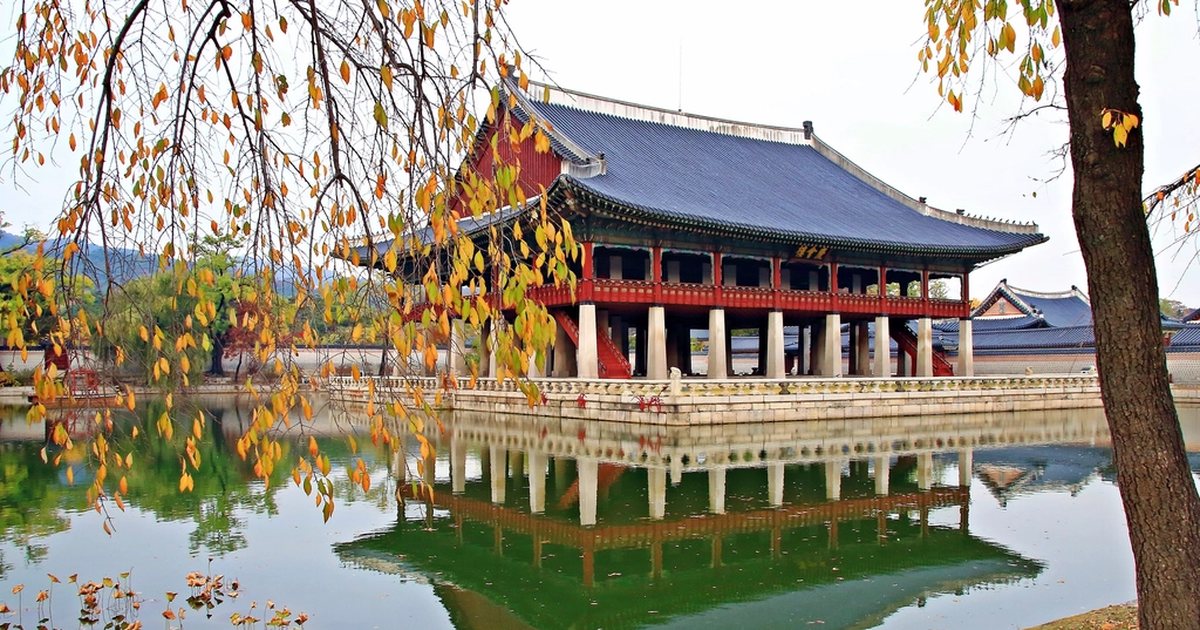
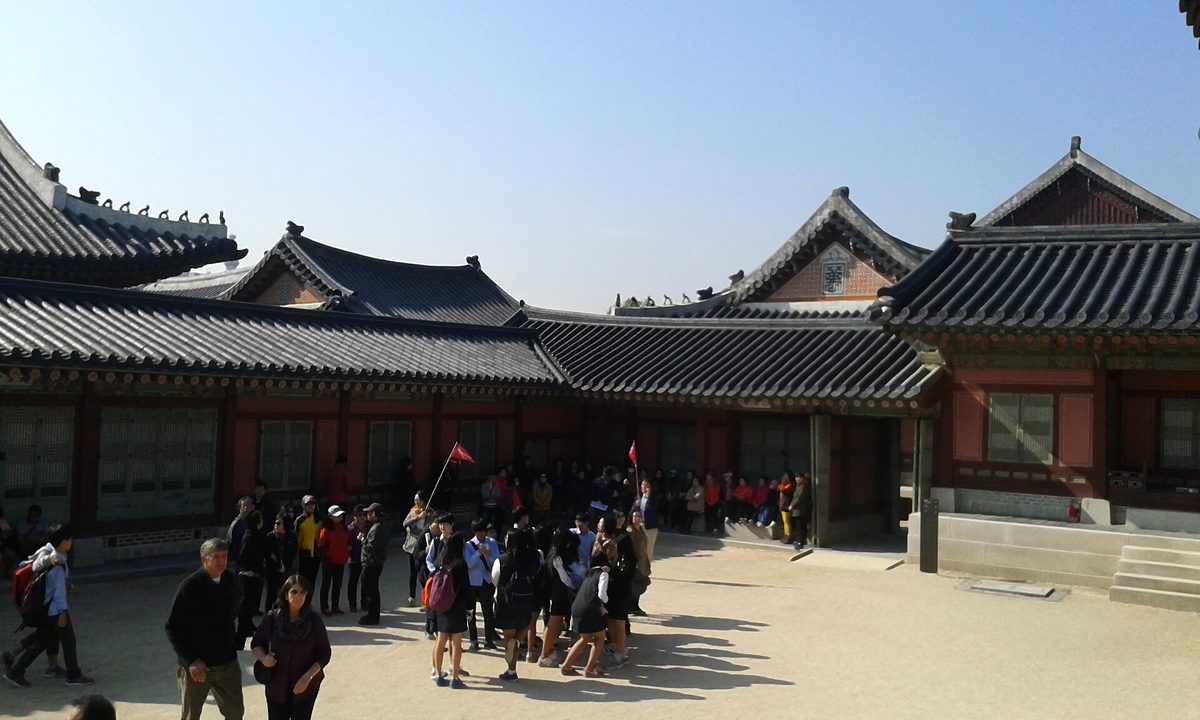
Gyeongbokgung (경복궁), Seoul’s main royal palace, is mostly open courtyards and gravel, which isn’t much fun in a downpour. The National Palace Museum of Korea next to it shows the royal seals, carriages and court objects indoors. The National Folk Museum of Korea, inside the palace grounds, covers everyday Joseon life. You’ll still walk a short way outside between them, so take a convenience-store umbrella. If the rain is light, the palace in a soft drizzle is beautiful and much quieter than on a sunny day.
Art museums: Leeum and MMCA Seoul
Leeum Museum of Art in Hannam-dong, run by the Samsung Foundation of Culture, puts celadon (green-glazed Goryeo pottery) in the same building as major contemporary works. The National Museum of Modern and Contemporary Art (MMCA) Seoul, near Anguk Station, is a good choice if you like big installations. Both change exhibitions often, so check what’s on before you cross town.
COEX and Starfield Library: the easiest rainy day in Gangnam
COEX is a convention center and Starfield COEX Mall is the huge underground shopping complex beneath it. Together they’re the closest Seoul has to a whole rainy day in one place. You can come up from Samseong Station on Line 2 or Bongeunsa Station on Line 9 and never need your umbrella.
What is Starfield Library?
Starfield Library (별마당 도서관, Byeolmadang Library) is an open public reading space in the middle of the mall, with bookshelves several stories high. Anyone can walk in, take a magazine or book from the shelves and sit down. It’s free to browse, so expect crowds on wet weekends. Go early on a weekday if you want photos without people in them.
- Area
- Samseong-dong, Gangnam
- Nearest station
- Samseong (Line 2) or Bongeunsa (Line 9)
- Time needed
- 30-60 minutes for the library, half a day for the whole complex
- Before you go
- check opening days and fees on the official page
What else is inside COEX?
COEX Aquarium is ticketed and works well with kids. There’s also a Megabox multiplex cinema, a big food court and restaurant floors, plus brand stores that cover most of a K-beauty shopping list. Bongeunsa, a Buddhist temple, is across the road. In heavy rain, look at its gate from the mall side and save the visit for later.
Underground shopping in Seoul: malls you reach without going outside
Seoul built long underground arcades under its busiest stations, partly as passages between subway exits. For a visitor, that means a kilometer or more of shops with no rain at all.
Goto Mall at Express Bus Terminal
Goto Mall (고투몰) runs beneath Express Bus Terminal Station, where Lines 3, 7 and 9 meet. It’s packed with small shops selling clothes, accessories, phone cases and home goods at prices aimed at students. The Shinsegae department store is right next to it, so you can go from bargain stalls to a basement food hall without needing an umbrella.
Downtown: City Hall, Euljiro and Myeongdong
Under central Seoul, long passages link City Hall, Euljiro and the Myeongdong area, with shops along the way. They aren’t glamorous. They are useful: you can walk a good part of downtown underground and come up close to the department stores and Myeongdong’s beauty shops, including Olive Young, the Korean health-and-beauty chain. For a full area-by-area breakdown, see our guide to where to shop in Seoul.
One common mistake: underground arcades have dozens of numbered exits. Before you head back up, check the exit number on Naver Map or Kakao Map, or you’ll come out two blocks away in the rain.
Jjimjilbang, noraebang and PC bangs: what Koreans do when it pours
The three rooms Seoul people go to on a bad-weather day all end in bang (방, room). They’re cheap, they’re everywhere, and you’ll get a better look at local life than in any museum.
Jjimjilbang: the bathhouse that eats a whole afternoon
A jjimjilbang has single-sex bathing areas (you bathe nude, after showering first) and a shared, clothed area where everyone wears the same issued T-shirt and shorts. In the shared area you’ll find heated rooms at different temperatures, a snack bar and floor space where people nap. The standard snacks are sikhye (식혜, a sweet rice drink) and eggs baked in the sauna. Dragon Hill Spa, a short walk from Yongsan Station, is the big one most visitors know. Our jjimjilbang guide covers the etiquette and overnight stays.
Noraebang: karaoke in a private room
A noraebang (노래방) is a private karaoke room you rent by the hour, with a big song catalog that includes plenty of English pop alongside K-pop. Coin noraebang are small booths where you pay per song, which suits one or two people. You’ll find them around every university area and nightlife street. If you’re out late, our guide to things to do in Seoul at night covers getting home.
PC bang: Korea’s gaming cafes
A PC bang (PC방) is an internet cafe with fast gaming PCs, good headsets and a menu, so you can order instant ramyeon or fried snacks to your seat. You pay by time. Some ask you to sign up as a member, but staff can usually set up a guest login. Even if you don’t game, it’s worth seeing once, because PC bangs are a big part of why Korea is so strong in esports.
Board game, manhwa and themed cafes
Korean cafe culture is built for staying a long time. In most places you can order one drink and sit for hours. Board game cafes charge for table time and have staff who’ll explain the rules. Manhwa cafes (만화카페, comic cafes) have shelves of Korean comics and cozy nooks where people curl up and read. Most of the titles are in Korean, so these work best for the atmosphere or if you read some Korean.
Why Koreans eat pajeon on rainy days, and where to join them
Ask anyone in Seoul what to eat when it rains and you’ll hear the same answer: jeon (전, savory pan-fried pancakes) with makgeolli (막걸리, milky rice wine). Pajeon (파전) is the green onion version, often with seafood. The usual explanation is that the sizzle of batter in hot oil sounds like rain on a roof. Whatever the reason, on wet evenings jeon bars fill up fast.
Gwangjang Market (광장시장)
Gwangjang Market is one of Seoul’s oldest markets, and its central food alleys are covered, so you can eat at the counters without getting wet. Look for bindaetteok (빈대떡), a thick mung bean pancake fried in plenty of oil, and pair it with a bowl of makgeolli. Get off at Jongno 5-ga Station on Line 1. Be ready to point at what you want and share a bench with strangers. That’s how it works here.
Take a Korean cooking class
A cooking class turns a wasted day into a skill you take home. Most classes for visitors cover dishes like bibimbap, bulgogi, japchae or kimchi pancakes, and you eat what you make. Book a few days ahead through the class’s own site or a major booking platform, and read recent reviews. Skip any class built around an outdoor market tour if the forecast looks bad.
Lotte World, DDP and The Hyundai Seoul for a bigger indoor day
If you’re traveling with kids, or just want something louder than a museum, these three places can fill most of a day.
Is Lotte World indoors?
Mostly, yes. Lotte World Adventure, the main theme park, sits under a huge glass roof and connects to Jamsil Station on Lines 2 and 8. Magic Island, the outdoor part on Seokchon Lake, may close some rides in bad weather, so check the official site before you count on it. The Lotte World Mall next door has more shopping and food. You can skip the Seoul Sky observatory in Lotte World Tower when clouds are low, because you’ll be paying to look at gray mist.
Dongdaemun Design Plaza (DDP)
Zaha Hadid’s curving silver building at Dongdaemun History & Culture Park Station (Lines 2, 4 and 5) holds design exhibitions and pop-up shows, and there are late-night wholesale fashion malls next door. It’s a good choice for design fans. Check what’s on, because exhibitions rotate.
The Hyundai Seoul and department store food halls
The Hyundai Seoul in Yeouido is a department store with a large indoor garden under a skylight, which makes it a popular rainy-day walk for locals. Like most Korean department stores, it has a big basement food hall where you can work your way through tteokbokki, bakery counters and lunch boxes. That’s a cheap, dry way to try a dozen Korean foods at once.
When is rainy season in Seoul? Monsoon basics
Korea’s summer monsoon, jangma (장마), usually arrives in late June and lasts until around late July. July is typically Seoul’s wettest month. During the monsoon, rain can come down very hard for an hour and then stop, or drizzle for days. The air is hot and humid, and after the monsoon ends, a typhoon can still bring a stormy day in late summer.
Spring and autumn get showers too, but they’re lighter and shorter. Autumn is usually the driest, clearest season. Winter in Seoul means cold, not rain.
Is it safe to travel to Seoul in monsoon season?
For a visitor who sticks to the city, generally yes, with some common sense. In heavy downpours, Han River parks, riverside paths and the Cheonggyecheon stream walk can close because water levels rise fast, so don’t go down to the water when warnings are out. Korean phones get emergency text alerts in Korean, and the government’s Emergency Ready app (안전디딤돌) gives alerts in English. Check the Korea Meteorological Administration’s site or the weather tab in Naver for the day’s forecast. Our Korea packing list covers what to bring for each season.
Umbrellas, wet shoes and the subway: getting around Seoul in the rain
Don’t take up suitcase space with a sturdy umbrella. Convenience stores (GS25, CU, 7-Eleven) sell clear vinyl umbrellas and folding ones, and they put extra stock by the door as soon as it starts to rain. Many subway station shops sell them too.
Wear shoes with grip. Station stairs and marble mall floors get slippery fast when everyone drags rain in. Taxis are harder to find when it pours, so use a ride-hailing app like Kakao T rather than waiting at the curb. The subway is the best way around, and it’s busier than usual on rainy days. Our list of the best apps for Korea travel covers maps, taxis and translation.
Two sample rainy-day routes
Here’s how to string the ideas together without crossing the city twice. Both routes keep travel to a few subway stops.
Plan A: Yongsan
Morning at the National Museum of Korea (Ichon Station), lunch in the museum or nearby, then the War Memorial of Korea at Samgakji if you still have energy. Finish with a long evening at Dragon Hill Spa near Yongsan Station, with sikhye and baked eggs.
Plan B: Gangnam and Jamsil
Start at Starfield Library when COEX opens, before the crowds arrive, then the COEX Aquarium. Take Line 2 a few stops east to Jamsil for an afternoon at Lotte World Adventure, and end with dinner and a noraebang session nearby.
FAQ
Is Seoul worth visiting in the rainy season?
Yes, if you plan around indoor places. Seoul has more covered and underground space than most big cities, and many Koreans spend wet days in malls, bathhouses and cafes anyway. Leave outdoor plans like palace grounds and hiking flexible, and swap them onto dry days.
What month does it rain the most in Seoul?
July is usually the wettest month, because it falls in the middle of the jangma monsoon, which typically runs from late June to late July. August can bring storms and the occasional typhoon. Autumn is usually the driest season.
Can you visit Seoul’s palaces in the rain?
You can. The grounds stay open in light rain and are quieter than usual, but most of the walking is outdoors. In a heavy downpour, go to the National Palace Museum next to Gyeongbokgung instead, and save the palace courtyards for a drier day.
Where can I buy an umbrella in Seoul?
At any convenience store, such as GS25, CU or 7-Eleven, which you’ll find on almost every block. Shops in subway stations and the underground arcades sell them too. Clear vinyl umbrellas are the cheapest and are perfectly fine for a short trip.
Is Starfield Library free?
Yes. Starfield Library is an open space inside Starfield COEX Mall, and you can walk in, browse and sit down without a ticket. It gets crowded on weekends and rainy days, so go early on a weekday for quieter photos.
What do Koreans eat on rainy days?
The classic rainy-day pairing is jeon, especially pajeon (green onion pancake), with makgeolli rice wine. Hot soups like kalguksu (knife-cut noodle soup) are popular too. Gwangjang Market’s covered food alleys are the easiest place for a visitor to try the jeon-and-makgeolli habit.
What to plan next for a wet trip to Seoul
Check the Korea Meteorological Administration forecast or Naver weather two or three days before you land. Then put your outdoor sights, like palaces, the Han River and hikes, on the clearest days, and save COEX, the museums and a jjimjilbang for the gray ones. Look up the closing days on each museum’s official site, because a closed museum on a rainy day is the one thing this plan can’t fix. If you’re traveling between late June and late July, plan for at least one full rain day and book a cooking class or noraebang night ahead of time, so the forecast can’t wreck your trip.
Related reading
Sources k-korea.blog
Prices, opening hours and availability change. Check the official page before you buy or travel.