
12 min read
The 12 best Korean snacks to try and take home are the ones Seoul locals actually buy every week. Start with Honey Butter Chip, Turtle Chips, Choco Pie, Pepero, Shin Ramyun and a few packs of seasoned seaweed, then drink your banana milk in Korea, because the classic version needs a fridge.
Everything below is sold at any Korean convenience store or supermarket, so you won’t need a special shop. The hard part is packing, and that’s where most visitors lose half their haul.
Key takeaways
- Honey Butter Chip (허니버터칩) sold out across Korea after its 2014 launch and is still the sweet-salty chip locals reach for.
- Big marts like E-mart and Lotte Mart sell multipacks, which are cheaper per bag and pack flatter than single bags from a convenience store.
- The squat Binggrae banana milk (바나나맛우유) bottle is chilled and short-dated, so it’s a drink-it-here snack, not a souvenir.
- Ramen seasoning packets often contain meat extracts, so check your home country’s customs rules before filling a suitcase.
The best Korean snacks: 12 that Koreans actually buy
Korean snack culture runs on long-lived classics. Several items on this list have been on shelves since the 1970s, and Koreans in their 50s grew up on the same Saeukkang and Choco Pie their kids eat now. Newer hits get a frenzy, and the ones that survive the frenzy join the classics.
This table puts the 12 side by side, with how well each one travels. “Travels well” here means it survives a checked bag and keeps for weeks.
| Snack | Korean name | Maker | What it is | Travels well? |
|---|---|---|---|---|
| Honey Butter Chip | 허니버터칩 | Haitai | Thin potato chip with honey and butter seasoning | Fair: crushes easily |
| Turtle Chips | 꼬북칩 (Kkobuk Chip) | Orion | Layered corn chip shaped like a turtle shell | Good |
| Shrimp crackers | 새우깡 (Saeukkang) | Nongshim | Light, puffy shrimp-flavored sticks | Good |
| Kkokkalcorn | 꼬깔콘 | Lotte | Cone-shaped corn snack | Fair |
| Choco Pie | 초코파이 | Orion | Chocolate-coated cake with marshmallow filling | Excellent: boxed and individually wrapped |
| Pepero | 빼빼로 | Lotte | Thin biscuit sticks dipped in chocolate | Good, but can melt in heat |
| Homerun Ball | 홈런볼 | Haitai | Bite-size choux puffs with chocolate cream | Fair |
| Shin Ramyun | 신라면 | Nongshim | Spicy beef-flavored instant noodles | Good (check customs) |
| Chapagetti | 짜파게티 | Nongshim | Black bean sauce instant noodles | Good (check customs) |
| Buldak Bokkeummyeon | 불닭볶음면 | Samyang | Very spicy stir-fried chicken-flavor noodles | Good (check customs) |
| Seasoned seaweed | 김 (gim) | Many brands | Roasted laver sheets with oil and salt | Excellent: light and flat |
| Banana milk | 바나나맛우유 | Binggrae | Sweet banana-flavored milk in a jar-shaped bottle | Poor: refrigerated |
If you only have room for four, take Turtle Chips, Choco Pie, a multipack of ramen and a stack of seaweed. They’re the hardest to break and the easiest to share.
Which Korean chips should you try first?
Korean chips lean sweeter than most Western ones. Honey, corn, butter and seafood seasonings dominate the aisle, and plain salted potato chips are almost an afterthought.
Honey Butter Chip (허니버터칩): the chip that sold out a country
When Haitai launched Honey Butter Chip in 2014, convenience stores couldn’t keep it in stock, and people traded bags online. That mania is long over, but the chip stayed. It’s thin, sweet first and salty second, with a buttery finish. If you dislike sweet snacks, skip it. If you like kettle corn, buy two bags.
Turtle Chips (꼬북칩): the best texture on the shelf
Orion’s Kkobuk Chip (kkobuk-i means turtle) is built from several thin layers stacked into one ridged piece, so each bite crunches more than once. The original corn soup flavor is the one Koreans recommend first, and the chocolate churro version is a favorite with anyone who likes sweet snacks. Because each chip is sturdy, Turtle Chips survive a suitcase far better than thin potato chips.
Saeukkang (새우깡) and the rest of the cracker aisle
Nongshim’s Saeukkang has been around since 1971, and its jingle is one Koreans of every age can sing. The sticks are light, crisp and gently shrimpy. Koreans eat them with beer, and people feed them to seagulls on ferry rides, which tells you how ordinary they are.
Lotte’s Kkokkalcorn (kkokkal is a pointed hat) is the cone-shaped corn snack kids wear on their fingertips. The roasted corn flavor is the classic. Both are cheap, everywhere, and good if you want something less sweet than Honey Butter Chip.

Choco Pie, Pepero and the Korean sweets aisle
Korean sweet snacks are mostly about chocolate and soft cake, and the two biggest names are both decades old.
Is Korean Choco Pie different from other chocolate pies?
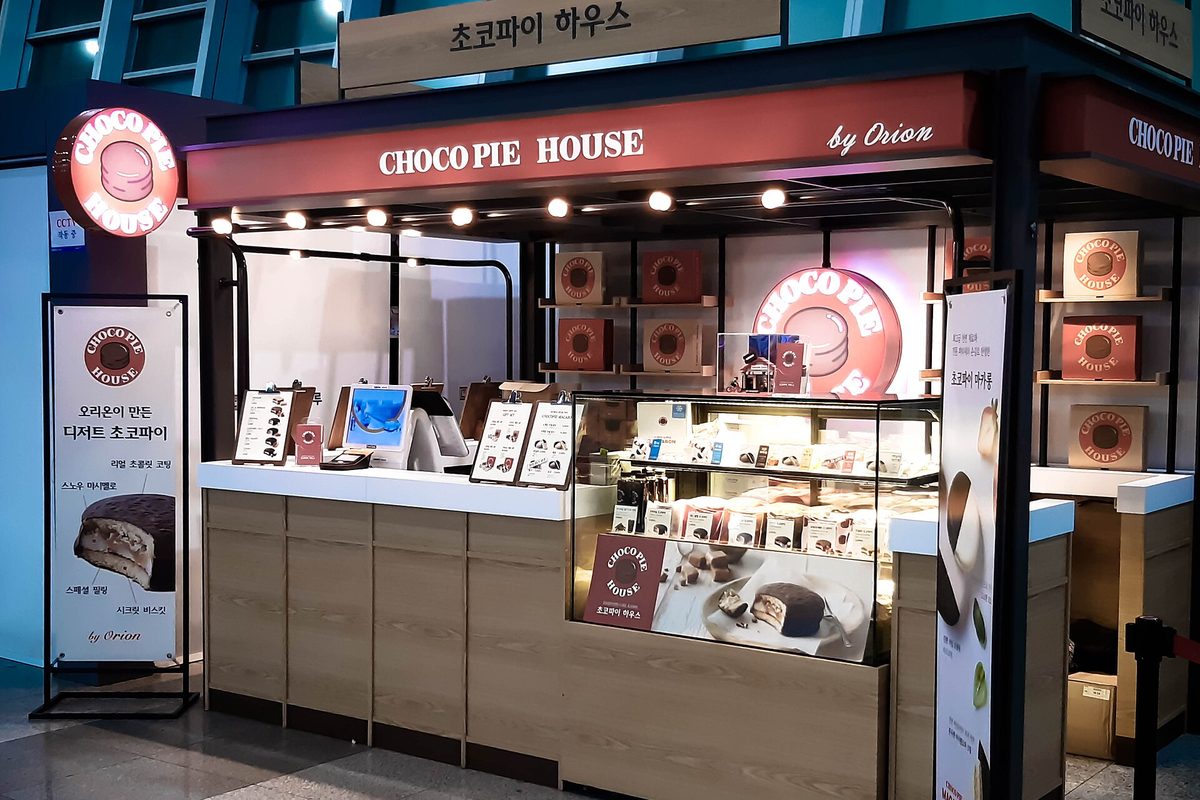
Orion Choco Pie (초코파이) arrived in 1974: a soft cake round with marshmallow inside and a chocolate coating. Orion built its advertising around jeong (정), the Korean word for warm, lasting affection between people, and the box still carries the character. That’s why Koreans hand Choco Pies out to coworkers, soldiers and classmates. Lotte makes a rival version, and Koreans happily argue about which is better. For gifts, Orion’s red box is the safer choice because it’s the one people recognize.
Pepero (빼빼로) and Pepero Day
Lotte’s Pepero is a thin biscuit stick dipped in chocolate, similar to Pocky. Every November 11 (11/11, because the date looks like four sticks), Koreans give Pepero to friends, partners and colleagues on Pepero Day, and stores stack giant gift boxes at the entrance. Outside that week, the regular boxes are still on every shelf. The almond and original chocolate versions are the everyday picks.
Homerun Ball (홈런볼) and soft snacks
Haitai’s Homerun Ball is a bag of tiny choux puffs filled with chocolate cream. It’s a snack Koreans associate with childhood and with watching baseball. Lotte Custard, a soft cake with custard cream sold in individually wrapped packs, sits in the same aisle and is a lunchbox staple for kids. Both are best eaten within your trip because they bruise easily.
Korean ramen worth carrying home
Instant noodles (ramyeon, 라면) are a real meal in Korea, not just a student food. Convenience stores even have hot water dispensers and counters so you can eat a cup on the spot, often with a triangle kimbap (삼각김밥, rice wrapped in seaweed).
Shin Ramyun (신라면): the default
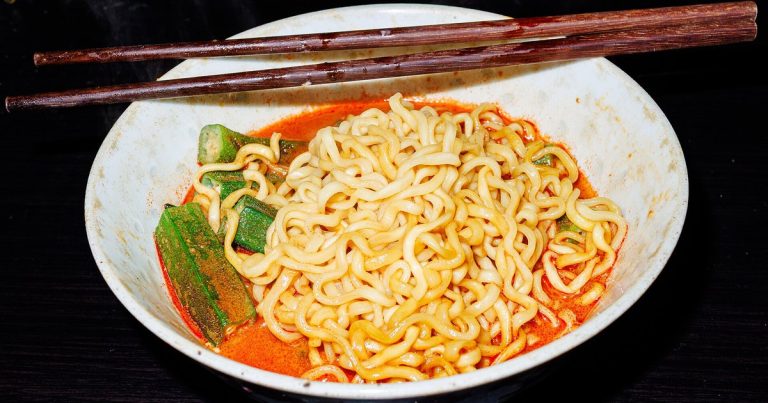
Nongshim launched Shin Ramyun in 1986, and it’s still the bag most Korean kitchens keep in the cupboard. The broth is beefy and spicy without being punishing. Koreans upgrade it with an egg, a slice of cheese or chopped green onion, and many eat it with kimchi on the side.
Chapagetti (짜파게티) and the Parasite noodle mix
Chapagetti is Nongshim’s jjajang ramen, a take on jjajangmyeon (짜장면, noodles in black bean sauce). You cook the noodles, drain most of the water, and stir in the sauce powder. Mix it with Nongshim’s Neoguri (너구리, a seafood udon-style ramen) and you get jjapaguri, the dish made famous worldwide by the 2019 film Parasite. Buy one bag of each and try it at home.
Buldak (불닭): only if you like real heat
Samyang’s Buldak Bokkeummyeon is a stir-fried noodle with a very spicy sauce, and it now comes in many flavors, from carbonara to extra hot. Koreans buy the milder versions far more than the challenge ones. Our Buldak flavors ranked from mildest to hottest guide tells you which pack to start with.
Ramen tip: buy the five-pack bags at a mart instead of cups. Cups are bulky and crush; bags stack flat.
Seaweed snacks (gim) and banana milk: the two everyday staples
What is Korean seaweed snack, and how do Koreans eat it?
Gim (김) is roasted laver seaweed, and the snack version is brushed with oil (often sesame or perilla) and salted. Koreans eat it mostly with rice, wrapping a spoonful in a small sheet, so it’s as much a side dish as a snack. Lunchbox-size packs of small sheets are the standard buy. You’ll also find gim bugak (김부각, seaweed chips fried in a light rice batter) and seaweed sandwiched with almonds or rice crisps, which work better as a straight snack.
Seaweed is the smartest souvenir on this list: light, flat, long shelf life and loved by almost everyone. Buy the multipacks with 10 or more small trays.
Why Koreans love banana milk (바나나맛우유)
Binggrae’s banana-flavored milk has been sold since 1974 in its round, jar-shaped bottle, which Koreans nickname the danji-uyu (단지우유, jar milk). It’s sweet, mild and nostalgic. A classic Korean pairing is banana milk with a bathhouse visit, or with a pastry from the convenience store. Strawberry, melon and coffee versions come and go next to it.
The classic bottle sits in the fridge section and has a short date, so drink it in Korea. If you want a souvenir, look for banana milk-flavored snacks or merchandise instead.
Where to buy Korean snacks: convenience stores, marts or Daiso?
You’ll see the same brands everywhere. The difference is pack size, choice and deals.
| Where | Best for | Watch out for |
|---|---|---|
| Convenience stores (CU, GS25, 7-Eleven, emart24) | Trying single bags, banana milk, cup ramen eaten on the spot, 1+1 and 2+1 deals | Small packs, higher price per bag |
| Big marts (E-mart, Lotte Mart, Homeplus) | Multipacks of ramen, seaweed and chips; gift boxes; the widest choice | Large stores close on some Sundays; check the store page |
| Daiso (다이소) | Cheap small snacks, plus zip bags and boxes for packing | Limited snack range, varies by branch |
| Airport shops | Last-minute gift boxes | Smaller range than a mart |
Convenience stores: try before you stock up
Korea has a convenience store on almost every block, and Koreans use them constantly. Watch for the 1+1 (원플러스원) and 2+1 stickers: buy one, get one free, or buy two, get a third free. Deals rotate, so you’ll see different snacks on promotion each visit. Use the first days of your trip to taste single bags, then buy your favorites in bulk at a mart.
Big marts: where Koreans actually stock up
E-mart, Lotte Mart and Homeplus are where families buy snacks by the box. E-mart’s own No Brand line has cheap copies of many classics. Lotte Mart Seoul Station is popular with visitors because it’s on the airport rail line. Large marts in Korea are required to close on certain Sundays each month, so check the branch’s official page before you plan a final shopping run.
Daiso: snacks plus packing supplies
Korean Daiso is a multi-floor household store with fixed low price tiers. Many branches carry a small snack shelf, but its real value for snack shoppers is the zip bags, plastic boxes and bubble pouches you’ll need for packing. The Myeongdong branch is one of the biggest.
If you’re also shopping for skincare, our Olive Young Global vs Korea stores guide explains what’s worth buying in person.
How to pack Korean snacks for the flight home
Chips are mostly air, which is great for your stomach and terrible for your suitcase. Here’s what works.
- Buy multipacks, not single bags. A mart multipack is a firmer block that packs like a brick.
- Pick sturdy snacks. Turtle Chips, Choco Pie, Pepero boxes and seaweed hold up. Thin potato chips and Homerun Ball don’t.
- Pack chips last and on top. Keep them in the middle of soft clothes, away from shoes and hard bottles.
- Use a plastic box for fragile items. A Daiso storage box turns a crushable snack into a safe one.
- Keep chocolate cool. Pepero and Choco Pie can melt in a hot car or a summer layover. Pack them in the center of the bag.
- Put drinks in checked luggage or drink them. International carry-on rules generally limit liquids to 100 ml containers, so banana milk and other drinks don’t belong in your cabin bag.
Chip bags often puff up at altitude. That’s normal and they rarely burst, but a squeezed bag with no room to expand can split, so don’t cram them into a full corner.
Heading to the airport loaded with bags? Our Incheon Airport to Seoul guide compares AREX, bus and taxi, which matters when you’re carrying a big suitcase.
Common mistakes when buying Korean snacks
- Buying everything at the first convenience store. Single bags add up fast. Taste first, bulk buy at a mart.
- Grabbing the hottest Buldak as a gift. Many people can’t finish it. Give the original or a milder flavor unless you know they love heat.
- Ignoring the flavor name. Popular snacks come in many versions, and the packaging can look nearly identical. Look for the Hangul flavor word or the picture on the front.
- Taking banana milk home. It’s chilled and short-dated. Enjoy it on the trip.
- Leaving it to the last night. Large marts may be closed on certain Sundays, and airport shops have less choice.
- Forgetting limited editions are limited. Seasonal and collaboration flavors appear and vanish quickly. If one catches your eye, buy it then.
For more mistakes first-time visitors make, read Korea travel tips: 20 things first-time visitors get wrong.
Can you buy Korean snacks outside Korea?
Many of these snacks are exported. Shin Ramyun, Buldak, Choco Pie and seasoned seaweed are common in Asian supermarkets in North America, Europe and Australia, and big chains like H Mart carry a wide range. Orion and Nongshim also make some products in factories outside Korea, so the version abroad can differ slightly from the one sold in Seoul.
The snacks that are harder to find abroad tend to be the newer chips, regional or seasonal flavors, and anything refrigerated, like banana milk in the original bottle. That’s the case for spending your suitcase space on Turtle Chips flavors, limited editions and multipacks of seaweed rather than Shin Ramyun you can buy at home. For current availability, check the brand’s official site or your local Asian grocery’s online store.
FAQ
What is the most popular snack in Korea?
There’s no single answer, but the names Koreans of every age know are Saeukkang, Choco Pie, Pepero, Honey Butter Chip and Shin Ramyun. Every convenience store carries them. For a first try, Honey Butter Chip and Turtle Chips show what modern Korean chips taste like.
What Korean snacks make the best souvenirs?
Seasoned seaweed, Choco Pie boxes, Pepero and Turtle Chips are the most reliable. They’re recognizable, travel well and are easy to share. Ramen is popular too, but check your country’s customs rules on meat ingredients first.
Is Korean food cheaper at convenience stores or supermarkets?
Big marts are usually cheaper per item, especially for multipacks. Convenience stores make up for it with rotating 1+1 and 2+1 deals. Prices change, so compare on the shelf rather than relying on old lists.
Can I take Korean ramen on a plane?
Dry instant noodles are generally allowed in luggage by airlines. Whether your destination lets them in is a customs question, since some soup packets contain meat extracts. Check your home country’s customs website and declare food if the arrival form asks.
Does Daiso in Korea sell snacks?
Many Korean Daiso branches have a small snack and drink section, though the range varies. Daiso is more useful for cheap zip bags and boxes to protect snacks in your suitcase. For a full snack range, go to E-mart, Lotte Mart or Homeplus.
What is Pepero Day?
Pepero Day falls on November 11 because 11/11 looks like four Pepero sticks. Koreans give Pepero to friends, partners and coworkers, and stores sell oversized gift boxes in the days before. It’s a commercial holiday, but a fun one to see if you’re in Seoul that week.
What to try next on your Korea snack run
Make your first convenience store stop a tasting session: one Honey Butter Chip, one Turtle Chips, a banana milk and a cup of Shin Ramyun at the window counter. Note what you like, then do one big mart run near the end of your trip for multipacks, seaweed and gift boxes, with a Daiso box for anything fragile.
After that, branch out: try jjapaguri at home with Chapagetti and Neoguri, work up the Buldak heat scale slowly, and keep an eye on the limited-edition flavor shelf, because that’s where Korea’s next favorite snack usually shows up first.
Related reading


Sources k-korea.blog
Prices, opening hours and availability change. Check the official page before you buy or travel.