14 min read
Our Seoul subway guide comes down to 3 moves: tap T-money, follow station numbers, pick your exit. Get those right and you can cross the whole city on one card, swapping trains and buses without paying again, using the same apps Seoul commuters have open every morning.
It matters because the subway is the fastest way around Seoul for most trips, and it’s how locals get to work, to Gangnam, to Hongdae and to both airports. Below you’ll find how paying works, which app to download before you fly, how transfers and exits work, when the last train leaves and the unwritten rules Koreans quietly expect you to follow.
Key takeaways
- One rechargeable T-money card (티머니) pays for the subway, city buses and many taxis, and it’s sold at convenience stores like GS25, CU and 7-Eleven.
- Tap your card at the gate going in and coming out: the fare is charged by distance, and free bus-subway transfers only count if you tap out.
- Every station has a three-digit number (Gangnam is 222 on Line 2), and every exit has its own number that Koreans use as a meeting point.
- Naver Map and KakaoMetro are what Seoul locals actually use; Google Maps works for transit but is weak for walking routes in Korea.
How to pay for the Seoul subway with T-money
Koreans pay with a transit card, almost never a paper ticket. The default is T-money (티머니, pronounced “tee-money”), a stored-value card you top up with cash and tap on the reader at the gate. It works on all Seoul subway lines, city buses, airport railroad all-stop trains and many taxis, and in most other big Korean cities too.
Where to buy a T-money card
Walk into any GS25, CU, 7-Eleven or emart24 convenience store and ask for a T-money card. They’re also sold at machines in many stations and at the airports. Plain cards are cheap; character cards (Kakao Friends, Line Friends and K-pop tie-ins) cost more but work exactly the same, and plenty of visitors keep them as souvenirs.
To top up, use the yellow-and-blue recharge machines (충전기, chungjeongi) inside every station, which have an English button, or hand cash to a convenience store cashier and say “T-money charge, please”. Recharging at station machines is cash only, so keep some won notes handy.
How Seoul subway fares are calculated
Fares are distance based. A base fare covers your first stretch (roughly the first 10 km), and a small extra amount is added for each additional section after that. The card deducts the right amount when you tap out, which is why skipping the exit tap causes problems. Paying by card is cheaper than buying a single-journey ticket, and the current fare table is posted on Seoul Metro’s official website and on the fare boards in stations.
Single-journey tickets, tourist cards and passes
If you only ride once or twice, ticket machines sell a single-journey card with a small refundable deposit; feed it into the deposit-refund machine (보증금 환급기) at your destination to get the deposit back. For longer stays, three other options are popular:
- Climate Card (기후동행카드, “climate companion card”): Seoul’s unlimited-ride pass, with short-term versions aimed at visitors. It covers Seoul city buses and most subway sections inside Seoul, but not every line or every station outside the city limits, so check the coverage on the Seoul city official page before you buy.
- Prepaid travel cards such as WOWPASS combine a T-money function with a currency-exchange or payment balance, handy if you don’t want to carry much cash.
- Foreign credit cards: some contactless cards are being accepted at gates, but support varies, so treat T-money as the reliable default.
How Seoul subway lines, colors and station numbers work
The Seoul Metropolitan Subway is one connected network that stretches from central Seoul into Incheon and Gyeonggi Province, the province that surrounds the capital. Lines 1 to 9 are numbered, and the rest have names: Gyeongui-Jungang, Suin-Bundang, Shinbundang, AREX (the Airport Railroad), Gyeongchun, Ui-Sinseol, Sillim, Gimpo Goldline, GTX-A and others. Each line has its own color, and the color is everywhere: on maps, floor stickers, signs and app screens.
Why station numbers save you
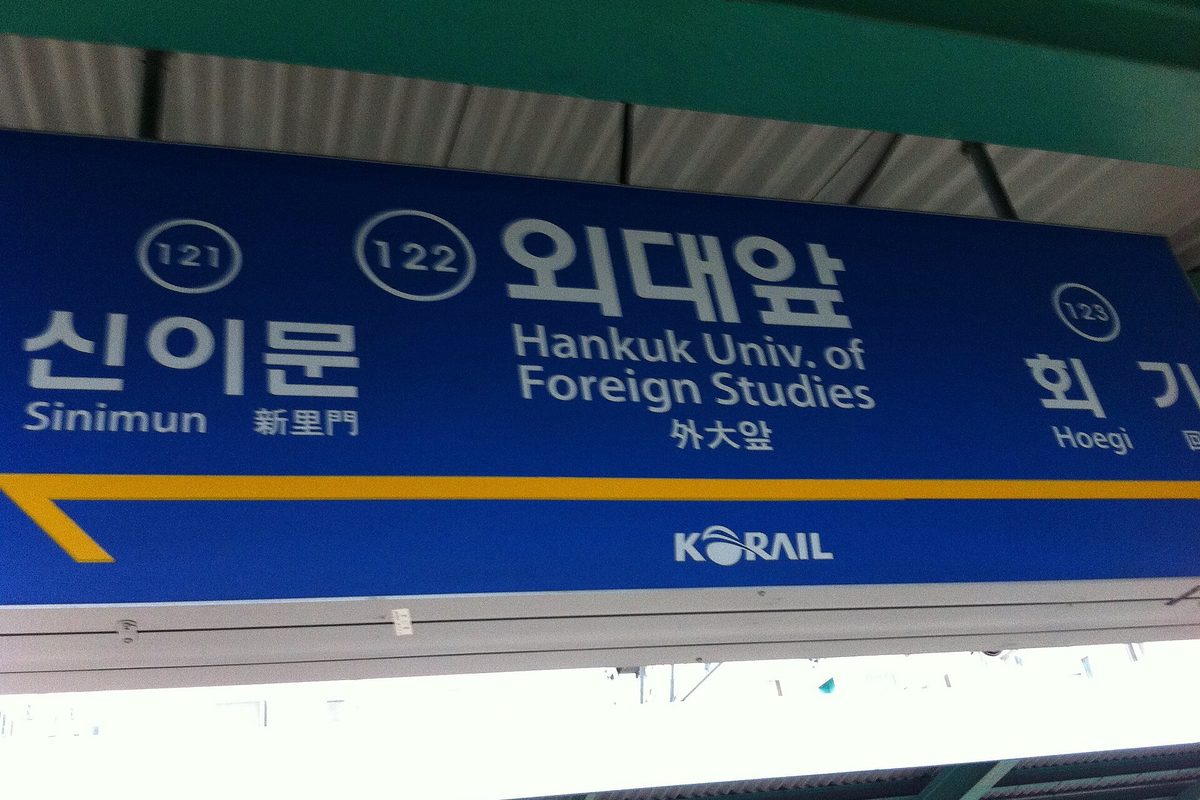
Every station has a number. The first digit (or letter) is the line, the rest is the stop. City Hall is 132 on Line 1 and 201 on Line 2; Gangnam is 222; Hongik University (Hongdae) is 239; Jamsil is 216. When you can’t read Hangul or two names look alike, the number tells you exactly where you are. Signs, maps and screens on the train all show it.
Which direction to take
Platforms are signed by the next station and the line’s end point, not by north or south. Before you go through the gate, check the sign above it: many stations have separate entrances for each direction, and crossing to the other platform can mean tapping out and paying again.
Line 2 is a loop. Trains on the inner circle (내선, naeseon) run clockwise, and the outer circle (외선, oeseon) runs counterclockwise. Your app will tell you which one is shorter. Some Line 2 trains also branch off toward Seongsu or Sinjeong, so read the destination on the screen.
Local versus express trains
A few lines run express trains (급행, geuphaeng) that skip stops: Line 9 is the one most visitors meet, and Line 1 and the Gyeongui-Jungang Line have them too. Express trains are marked in red on station screens. They’re faster, but they skip the smaller stations, so make sure your stop is on the express pattern before boarding.
Best apps for the Seoul subway: what Koreans actually use
Download two apps before you fly: a full map app and a dedicated subway app. Most Seoul office workers keep Naver Map (네이버 지도) or KakaoMap for door-to-door routes, and many add KakaoMetro (카카오지하철) for subway-only planning. Google Maps does show transit routes in Korea, but walking directions and business listings are limited because of Korea’s map data rules, so locals rarely use it.
| App | Best for | English support | What locals like about it |
|---|---|---|---|
| Naver Map (네이버 지도) | Door-to-door routes combining subway, bus and walking | Yes, switch the app language to English | Real-time arrivals, the exact exit to use and the best car for quick transfers |
| KakaoMetro (카카오지하철) | Subway-only route planning | Yes | Clean line map, fastest-car tips and last-train info at a glance |
| KakaoMap | Door-to-door routes and places | Partial | Strong bus data, shares accounts with KakaoTalk, Korea’s main messenger app |
| Subway Korea | Offline subway map for Seoul and other cities | Yes | Works without data, simple for first-timers |
| Google Maps | Rough transit planning you’re used to | Yes | Familiar layout, but weak walking routes and fewer local listings in Korea |
How to use Naver Map for the subway
A worked example: you’re staying near Hongik University station (239) and want to reach Gwangjang Market. Type the market’s name, or paste its Korean name 광장시장, into Naver Map and tap directions. The app will suggest Line 2 toward City Hall, a transfer to Line 1, and getting off at Jongno 5-ga, then show which exit to use and how long the walk takes. If you’re heading there to eat, our guide to Gwangjang Market food tells you what to order once you arrive.
Naver Map also shows numbers like “3-2” next to a route. That means car 3, door 2: board there and you’ll step off right next to the transfer stairs or your exit. Commuters use this every day, and it can save several minutes in big interchange stations.
How transfers work on the Seoul subway
Transfers (환승, hwanseung) between subway lines are free as long as you stay inside the fare gates. Follow the orange or line-colored transfer signs, which name the line and direction. At large hubs such as Seoul Station, Jongno 3-ga, Express Bus Terminal or Gimpo Airport, the walk between lines can take several minutes, so plan for it when you’re on a tight schedule.
Subway-to-bus transfers
The same card also gives you a discounted or free transfer between the subway and Seoul city buses. You pay for the total distance rather than for each ride. The window to transfer is about 30 minutes after tapping out (longer late at night), and you can chain up to four transfers in one trip. Exact rules can change, so check the Seoul transit or T-money official page if you’re relying on them.
Exit numbers: why Koreans choose the exit before the station
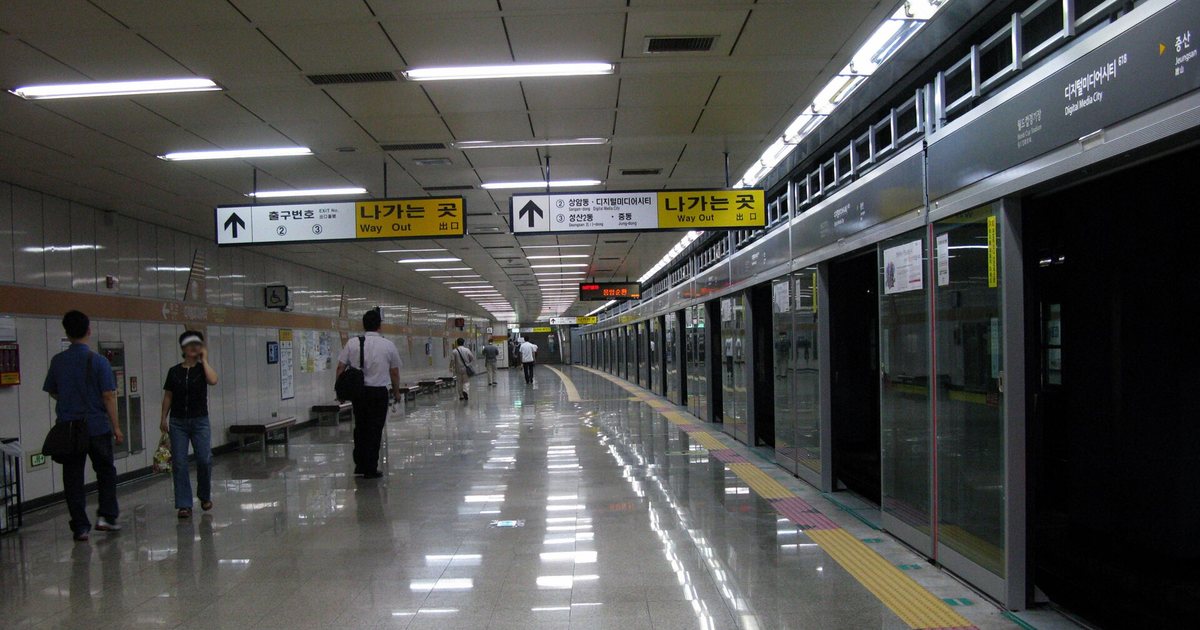
Big Seoul stations have many exits (출구, chulgu), and they open onto different streets, sometimes several blocks apart. Gangnam, Jamsil and Hongik University each have more than ten exits. Coming out of the wrong one can put you on the far side of an eight-lane road.
That’s why Koreans arrange to meet at “Gangnam station exit 11” or “Hongdae exit 9”, never just “Gangnam station”. Restaurants, clinics, hotels and pop-up stores list their nearest exit in their directions, and Naver Map tells you which exit to use for any address.
How to find the right exit inside the station
- Look for the yellow exit signs with numbers, plus the station area map near the gates showing what’s above each exit.
- If you need an elevator, check the map for the wheelchair symbol: not every exit has one, which matters with large suitcases.
- Check before you tap out. Some stations have separate gate areas for different exits, and walking above ground between them takes far longer.
Seoul subway guide to rush hour, first trains and last trains
Rush hour is roughly 7 to 9 in the morning and around 6 to 7:30 in the evening on weekdays. Line 2 through Gangnam and Line 9 express trains are packed tight enough that Koreans have a nickname for them: jiokcheol (지옥철), a mash-up of “hell” and “subway”. If you have luggage or small children, avoid those windows, or take a local train instead of an express.
When is the last subway in Seoul?
The last train (막차, makcha) on most lines leaves around midnight, but times differ by line, direction, station and day, and weekend and holiday schedules often end earlier. Check your own route in Naver Map or KakaoMetro, which both show the last train for your exact station. The first trains (첫차, cheotcha) start early in the morning, before 6 on many lines.
If you miss the makcha, Seoul runs late-night owl buses (올빼미버스, N buses, numbered with an N) on main routes, and taxis are plentiful. Locals heading home from a late dinner or a noraebang session often watch the clock for exactly this reason.
How crowded is the Seoul subway on weekends?
Weekends are calmer for commuters but busy around shopping and nightlife stops: Hongik University, Seongsu, Myeongdong and Jamsil (for Lotte World) can be crowded on Saturday afternoons. Weather plays a part too: on rainy or freezing days more people take the subway, and our Korea weather by month guide covers what to pack for both.
Seoul subway etiquette: priority seats and the unwritten rules
The Seoul subway is clean, quiet and orderly, and Koreans keep it that way through habits nobody explains to visitors. Here’s what you’ll see on every train.
Priority seats and pink seats
The seats at each end of the car are priority seats (노약자석, noyakjaseok) for older people, people with disabilities, pregnant women and people with small children. Even on a full train, younger Koreans usually leave them empty. Sitting there when you don’t fit those groups draws looks, and sometimes a comment from an older passenger.
In the middle of the car you’ll find pink seats (임산부 배려석, imsanbu baeryeoseok), set aside for pregnant women. Many riders leave them empty too, so an early pregnancy that doesn’t show yet still gets a seat.
What Koreans do (and don’t do) on the train
- Let people off first. Wait to the side of the doors, then board.
- Keep your voice down. Phone calls are short and quiet; most riders watch videos with earphones.
- Don’t eat. A coffee in a lidded cup is tolerated, but a meal or smelly snack is not.
- Wear your backpack on your front or put it on the overhead rack when the train is crowded.
- Escalators: official campaigns ask people to stand still on both sides, but in practice many Seoul riders stand on the right and walk on the left.
Lost something on the subway?
Note the time, the direction and, if you can, the car number printed above the doors. Station staff can help, and items handed in on the network are listed on Lost112, the Korean police’s lost-property site. Most stations also have free toilets, and many have coin or card lockers for bags.
How to get from Incheon and Gimpo airports into Seoul by subway
Both of Seoul’s airports connect directly to the subway network, so you can tap the same T-money card from the arrivals hall into the city.
Incheon Airport: AREX express or all-stop train
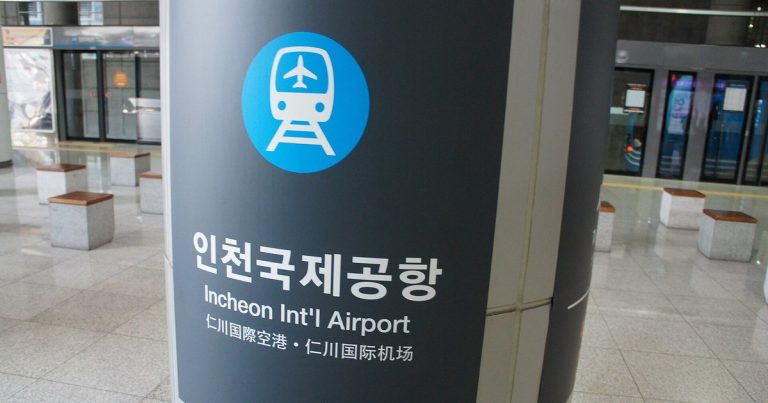
The AREX (Airport Railroad Express) runs from both Incheon terminals to Seoul Station. There are two services. The Express Train (직통열차) runs non-stop to Seoul Station and needs a separate reserved ticket.
The All-Stop Train (일반열차) takes longer but accepts T-money and stops at Gimpo Airport, Hongik University and Gongdeok, where you can switch to other lines. If you’re staying in Hongdae or Mapo, the all-stop train is usually the smarter pick. Check fares and timetables on the AREX official site.
- Area
- Incheon International Airport, Terminals 1 and 2
- Nearest station
- Incheon Int’l Airport Terminal 1 and Terminal 2 stations (AREX)
- Time needed
- Allow extra time to walk from arrivals to the train level and buy a ticket
- Before you go
- check opening days and fees on the official page
Gimpo Airport: four rail lines in one station
Gimpo Airport handles mostly domestic flights (Jeju, Busan) and some short regional routes. Its station connects Line 5 (toward Gwanghwamun and central Seoul), Line 9 (toward Yeouido and Gangnam, with express trains), AREX and the Gimpo Goldline. It’s one of the easiest airports in the world to reach by subway.
KTX, SRT and intercity buses from the subway
For trips beyond Seoul, the subway takes you to every major departure point:
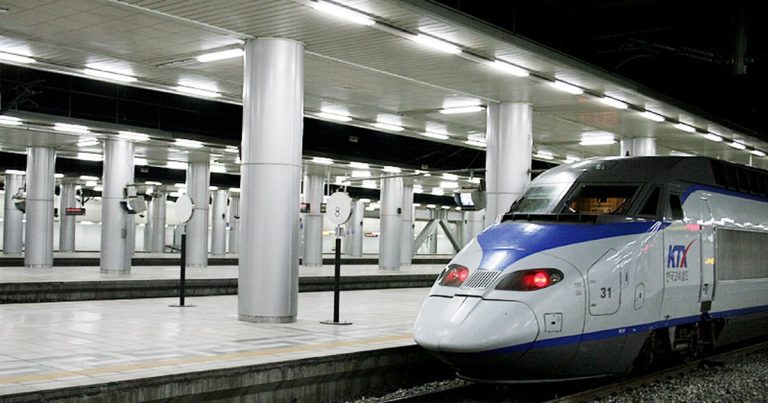
- Seoul Station (Line 1, Line 4, AREX, Gyeongui-Jungang Line): the main KTX hub, Korea’s high-speed train, for Busan and other cities.
- Yongsan (Line 1, Gyeongui-Jungang Line): KTX trains toward Gwangju and Mokpo, among others.
- Suseo (Line 3, Suin-Bundang Line, GTX-A): the SRT, a separate high-speed operator popular with people living in southern Seoul.
- Cheongnyangni (Line 1, Gyeongui-Jungang Line): trains east toward Gangneung.
- Express Bus Terminal (Lines 3, 7 and 9), Nambu Bus Terminal (Line 3) and Dong Seoul Bus Terminal (Gangbyeon station, Line 2): intercity buses.
- Area
- Seoul Station, central Seoul (Yongsan-gu)
- Nearest station
- Seoul Station: Line 1 (133), Line 4 (426), AREX, Gyeongui-Jungang Line
- Time needed
- Allow several minutes to walk between subway lines and the KTX concourse
- Before you go
- check opening days and fees on the official page
Common Seoul subway mistakes first-timers make
Most problems visitors run into come from a handful of habits. Avoid these and your first day goes smoothly:
- Taking the wrong direction. Read the next-station name above the platform before you tap in, not after.
- Forgetting to tap out. You’ll get stuck at the gate or charged incorrectly, and you lose your bus transfer.
- Arriving at the station, not the exit. Save the exit number along with the address.
- Running low on T-money balance. The gate won’t open if the balance can’t cover the base fare, so top up before late-night rides.
- Boarding an express that skips your stop on Line 9 or the Gyeongui-Jungang Line.
- Planning around the last train without checking it. Weekend and holiday schedules can end earlier.
For more slip-ups beyond the subway, from tipping to cash, see 20 things first-time visitors to Korea get wrong.
FAQ
Can I use a credit card on the Seoul subway?
Korean residents tap credit and debit cards with a transit function, and some foreign contactless cards are starting to work at gates, but support is not universal. The reliable choice for visitors is a T-money card or a prepaid travel card with a T-money function. Check your card issuer and the T-money official page for the latest acceptance.
Is the Seoul subway easy for English speakers?
Yes. Station names, signs, ticket machines and in-train announcements are in Korean and English, and many signs also show Chinese and Japanese. Station numbers and line colors make it easy even if you can’t read Hangul. Naver Map and KakaoMetro both offer English menus.
How late does the Seoul subway run?
Most lines run their last trains around midnight, but times vary by line, station, direction and day of the week. Check the exact last train for your station in Naver Map or KakaoMetro before you head out. If you miss it, look for N-numbered late-night owl buses or take a taxi.
Can I share one T-money card with a friend?
No. One card covers one person per tap, so each traveler needs their own card. Koreans traveling together each carry their own T-money or transit-enabled bank card.
Is the Seoul subway safe at night?
The Seoul subway is generally considered safe, clean and well lit, with CCTV, emergency intercoms and staff in stations. Normal city caution applies: keep your phone and wallet secure in crowded cars. Emergency buttons and intercoms are marked inside every car.
Can I bring large suitcases on the Seoul subway?
Yes, but avoid rush hour and use the elevator exits shown on the station map. Big interchange stations involve long walks and stairs, so the airport railroad or an airport bus can be easier with heavy bags.
What to set up before your first Seoul subway ride
Do these three things before you land: install Naver Map and switch it to English, add KakaoMetro as a backup, and save your hotel’s nearest station number and exit. When you arrive, buy a T-money card at the airport convenience store, top it up with cash, and decide between the AREX all-stop train and the express based on where you’re staying.
After that, plan your first day the way locals do: pick a destination, check the exit, note the car-and-door number for your transfer, and keep an eye on the last train. If K-pop is on your list, our K-pop guide for beginners helps you plan concert nights, which are exactly when the makcha matters most.
Related reading
Sources k-korea.blog
Prices, opening hours and availability change. Check the official page before you buy or travel.