12 min read
Korean dating culture counts love in days: couples celebrate the 100th day, then every 100 after. Most relationships start with a sogaeting (소개팅, a blind date set up by a friend). They become official with a spoken confession and go public fast, with matching rings, coordinated outfits and a calendar of couple holidays that runs from White Day to Pepero Day.
If you’re dating a Korean, or hoping to, this guide covers the habits behind the clichés: why your partner expects a KakaoTalk reply tonight, why day 100 counts for more than month one, and why meeting the parents is a bigger step than it usually is in the US.
Key takeaways
- Most couples count the day they got together as day 1, so the 100-day anniversary (백일, baegil) lands 99 days later.
- On Valentine’s Day (February 14) women give men chocolate. Men return the favor with candy on White Day (March 14).
- Singles get Black Day on April 14, when they eat jajangmyeon, noodles in black bean sauce.
- Meeting a Korean partner’s parents usually signals serious intent, often marriage, so bring a gift and use polite speech.
How Korean dating culture works, from first date to family
Relationships in Korea tend to follow clear stages, each with its own name. In the US people can be “seeing each other” for months without defining anything. Korean couples usually know the exact day they became a couple, and both partners treat that date as the start of everything that follows.
Here’s the typical path, with the Korean terms your partner and their friends will actually use.
| Stage | Korean term | What happens | What it signals |
|---|---|---|---|
| Introduction | 소개팅 sogaeting / 미팅 miting | A friend sets up a one-on-one blind date, or a group of friends meets another group | Both sides are single and open to dating |
| Talking stage | 썸 sseom | Daily texts, a few dates, flirting, nothing official | Mutual interest, still undecided |
| Confession | 고백 gobaek | One person asks directly: “Will you go out with me?” | Day 1 of the relationship |
| Dating | 연애 yeonae | Couple items, anniversaries, frequent check-ins | An exclusive, public couple |
| Milestones | 100일 baegil, 1주년 iljunyeon | Gifts and dates on day 100, 200, 300 and each year | The relationship is going well |
| Family | 인사 insa, 상견례 sanggyeonrye | Meeting a partner’s parents, then a formal meeting of both families | Marriage is on the table |
What is sogaeting? How Korean blind dates work
A sogaeting is a one-on-one blind date arranged by a mutual friend, and it’s the most common way young Koreans meet a partner outside school or work. The friend acts as matchmaker and usually shares a photo and the basics first, such as age, job or school, and sometimes height. If both sides agree, the friend passes on contact details and the pair arrange the meeting themselves over KakaoTalk, Korea’s dominant messaging app.
What a first blind date looks like
Expect a café or a casual restaurant, a conversation of an hour or two and a polite goodbye. Nobody expects fireworks. A common rule of thumb is to give someone up to three meetings before you decide, since nerves make first dates stiff. Feedback often travels back through the friend who set it up, so a quiet “thanks, but no” to the matchmaker is normal and not considered rude.
Group dates, apps and matchmakers
University students also do miting (미팅), group blind dates where a few friends meet a group of strangers, often over food and drinks. Dating apps are widely used too, especially in big cities. People who are focused on marriage sometimes sign up with a gyeolhon jeongbo hoesa (결혼정보회사), a matchmaking agency that screens members on background and family.
Who pays on a date in Korea
The old expectation was that the man paid. Today many couples split it informally: one person pays for dinner and the other covers coffee or dessert afterward. Couples who’ve been together a while sometimes open a date account (데이트 통장, deiteu tongjang), a shared bank account both partners pay into and use for dates. On a first sogaeting, offering to pay for the second round is the easy, gracious move.
Sseom and gobaek: when you’re officially a couple in Korea
Sseom (썸) comes from the English word “something,” as in “there’s something between us.” It covers the gray zone of daily texts, late-night calls and a few dates without commitment. Friends will ask “Are you in a sseom?” the way Americans ask “Are you talking to someone?”
The sseom ends with a gobaek (고백), a confession. Someone says it outright, often a version of “사귈래?” (sagwillae?, “Want to go out with me?”). A yes makes it official, and that date becomes day 1. Many Koreans find it odd to drift into a relationship without this moment.
For foreigners this is the step most worth getting right. If you’re unsure whether you’re together, ask. A Korean partner who hasn’t heard a clear confession may not consider you exclusive, and one who has will count the days from it. Once it’s official you’ll hear pet names like jagi (자기, “honey”) and, from a younger woman to an older boyfriend, oppa; our guide to Korean words in K-dramas explains what those terms carry.
Why Korean couples celebrate the 100-day anniversary
The word baegil (백일) means “100 days,” and it’s borrowed from an older tradition: Korean families have long celebrated a baby’s 100th day as a milestone. Couples took the idea and made it their first big anniversary. It usually matters more than the one-month mark, which many couples barely notice.
How to count 100 days in a Korean relationship
Most couples count the day they got together as day 1. Here’s a worked example. If your gobaek happened on March 1, then March 31 is day 31, April 30 is day 61, May 31 is day 92, and day 100 falls on June 8. Couple apps and phone widgets do this math automatically, and plenty of couples keep one on their home screen.
Which anniversaries Korean couples mark
- Day 22, nicknamed tutu (투투, “two-two”), mostly among teenagers and university students.
- Day 100, the big one: a nice dinner, flowers, a handwritten letter and often couple rings.
- Days 200 and 300, smaller celebrations for most couples.
- The first anniversary (1주년), and every year after that.
You don’t need to go big for every number. You do need to remember day 100. Forgetting it is the classic K-drama argument for a reason.
Couple items and matching outfits: what Korean couples buy
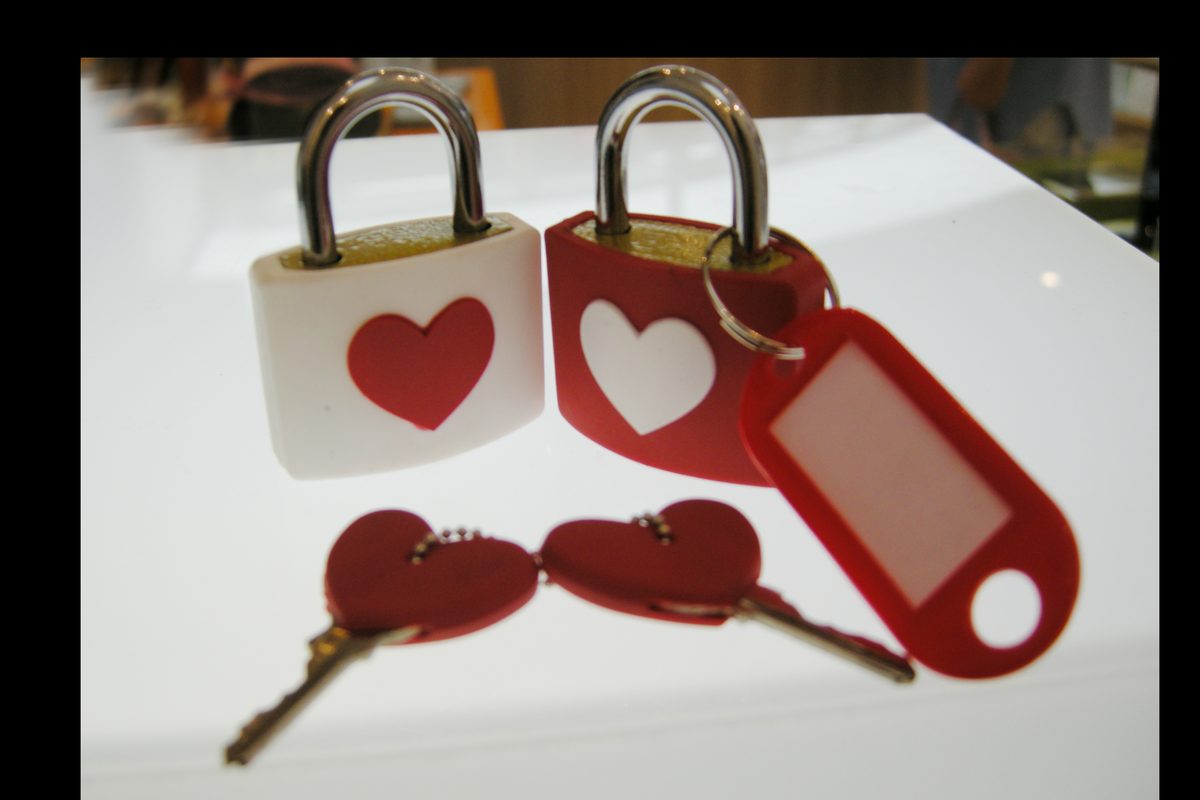
A couple item (커플템, keopeul-tem) is anything you both own in matching form, and it’s the clearest way Korean couples show they’re taken. The most common is the couple ring (커플링, keopeul-ring), a pair of matching bands that many couples buy around day 100. It isn’t an engagement ring. It simply says you’re in a relationship.
Next comes the couple look (커플룩), matching or coordinated outfits. You’ll see it most at theme parks such as Lotte World and Everland, on weekend dates and in photo-booth strips. Identical hoodies are the classic version. Many couples now go for the same color or similar pieces instead of identical prints, and that still reads as “we’re together.”
Other popular couple items:
- Matching phone cases and keyrings, the low-commitment starter option
- Couple sneakers, though some people skip them because of a superstition that giving your partner shoes means they’ll walk away from you
- Matching pajamas or T-shirts
- Engraved bracelets or necklaces
If you’re buying abroad, any jeweler can engrave a pair of simple bands. In Seoul, jewelry shops in busy shopping districts and the underground shopping malls near major stations sell couple rings, and many will engrave the date of your day 1 inside.
White Day, Black Day, Pepero Day: Korea’s couple calendar
Korea has more couple holidays than most countries, and several land on the 14th of the month. Valentine’s Day works the other way around from the US: women give chocolate to men. Men answer a month later on White Day. Singles who got nothing on either day have their own date in April.
| Day | Date | Who gives what | What people do |
|---|---|---|---|
| Valentine’s Day | February 14 | Women give men chocolate | Chocolate gifts, dinner dates |
| White Day | March 14 | Men give women candy | Candy baskets, often with a small gift |
| Black Day | April 14 | Nothing, it’s for singles | Singles eat jajangmyeon, noodles in black bean sauce, often with friends |
| Pepero Day | November 11 | Everyone gives Pepero | Couples, friends and coworkers swap boxes of Pepero |
| Christmas Eve and Day | December 24-25 | Couples exchange gifts | Date night, crowded restaurants and hotels |
Pepero is Lotte’s chocolate-dipped biscuit stick, and November 11 was picked because 11/11 looks like four sticks. Convenience stores stack it to the ceiling in the days before. Couples tend to give oversized boxes or decorated gift sets, while friends and coworkers give the regular packs.
Christmas surprises many visitors. In Korea it’s mainly a couples’ holiday, closer to Valentine’s Day in the US, while family time centers on the Lunar New Year and Chuseok, the autumn harvest holiday. If you want a restaurant table on Christmas Eve in Seoul, book early on the restaurant’s own booking page.
Marketers have given a name to the 14th of nearly every month, Rose Day in May for example. Outside the big three, few people mark them.

Texting and PDA rules in Korean dating
How often Korean couples text
Expect a lot of contact. Many Korean couples message throughout the day: a photo of lunch, a “밥 먹었어?” (bap meogeosseo?, “Did you eat?”), a note when one of you leaves work, and often a short call or a “잘 자” (jal ja, “sleep well”) before bed. That isn’t clingy by local standards. It’s how people show they care.
KakaoTalk shows a small “1” next to a message until it’s read. When the 1 disappears and no reply comes, Koreans call it ilgssip (읽씹), being left on read, and in a new relationship it can sting. If you’re busy, a quick “in a meeting, talk later” saves a lot of friction. If you need less contact than your partner wants, say so early and plainly rather than replying less and less.
Is PDA okay in Korea?
Holding hands, linking arms, couple outfits and leaning on each other in a café are all normal. Kissing, heavy touching or sitting on someone’s lap in public is frowned on, especially on the subway and around older people. Couples go somewhere more private for that.
One thing that confuses visitors: friends of the same sex, especially young women, often hold hands or link arms. That’s friendship and says nothing about anyone’s relationship.
Dating a Korean as a foreigner: what to expect
Every person is different, and no guide can tell you how one particular partner or family thinks. Still, a few patterns come up again and again for foreigners in relationships with Koreans.
Age and speech levels
Koreans often ask your age early because it decides how people speak to each other. Korean uses different politeness levels, and the older person is usually addressed more formally. Couples tend to switch to casual speech (반말, banmal) once they’re together. With your partner’s family, polite speech (존댓말, jondaenmal) is expected.
The pace and the family
Relationships can move from first date to couple rings within months. Family also carries more weight than many Americans expect. Parents often have strong views on their child’s partner, and some families take time to warm up to an international relationship, while others are welcoming from the first meal. Don’t take early caution personally, and don’t push your partner to choose sides.
Military service
Almost all able-bodied Korean men serve in the military, so many couples spend a stretch apart. A girlfriend who waits is jokingly called a gomusin (고무신, “rubber shoes”). Our explainer on Korean military service covers how it works and why it affects so many relationships.
K-dramas aren’t a manual
Dramas exaggerate everything: the wrist grabs, the jealous chaebol heir (the son of a family that runs a huge business group), the piggyback rides. Real Korean couples are more ordinary, and a partner who acts like a drama hero isn’t necessarily a good sign. Be wary of anyone online who claims to be Korean, moves fast emotionally and then asks for money. Never send money to someone you haven’t met in person.
Meeting the parents in Korea: how to prepare
In Korean dating culture, meeting a partner’s parents is rarely casual. It usually means the relationship is serious, often that marriage is being discussed. Here’s how to get through it well.
- Ask your partner what to expect. Who’ll be there, whether it’s at home or a restaurant, and what topics to avoid.
- Dress neatly and conservatively. Think smart casual or one notch above. No ripped jeans or bare shoulders.
- Bring a gift. A fruit basket or a quality food gift set from a department store food hall is safe. Skip shoes.
- Greet them properly. Bow and say “처음 뵙겠습니다” (cheoeum boepgetseumnida, the formal “nice to meet you”). Our guide to why Koreans bow explains how deep to go.
- Follow the table manners. Wait for the oldest person to start eating, pour and accept drinks with two hands, and turn your head slightly away when you drink alcohol in front of elders.
- Offer to help. Offer to clear the table if you’re in their home, and let your partner tell you whether to insist.
- Follow up through your partner. A thank-you message passed along, or a short one sent yourself if you’ve been given a number, goes a long way.
What is a sanggyeonrye?
A sanggyeonrye (상견례) is the formal first meeting between both families, usually after a couple decides to marry. It’s often held in a private room at a restaurant, and it’s where the families get to know each other and wedding plans start. If you’re a foreigner whose parents live abroad, couples sometimes adapt it with a video call or a visit timed around the wedding. Talk through what both families expect well before you set the date.
FAQ
Do Korean men pay for dates?
Traditionally, yes, but it’s changing. Many couples now take turns, with one paying for the meal and the other for coffee, and some long-term couples share a joint “date account.” On a first date, offering to pay for something is always appreciated.
When do Korean couples get couple rings?
Many buy them around the 100-day anniversary, though there’s no fixed rule. A couple ring shows you’re in a relationship, and it isn’t an engagement ring. Some couples skip rings altogether and choose other couple items.
What is Black Day in Korea?
Black Day falls on April 14, one month after White Day. Singles who didn’t receive anything on Valentine’s Day or White Day eat jajangmyeon, noodles in black bean sauce, often with friends. It’s lighthearted and self-mocking, not sad.
Is kissing in public okay in Korea?
Holding hands and linking arms are fine almost anywhere. Kissing and heavy touching in public are generally frowned upon, especially on public transport or near older people. A quick peck on a quiet street won’t cause a scene, but most couples keep affection low-key.
What does sseom mean in Korean dating?
Sseom (썸) comes from the English word “something” and describes the talking stage before a relationship becomes official. Two people text often and go on dates but haven’t committed. It ends with a gobaek, a clear confession, or it fizzles out.
Do Korean parents accept foreign partners?
It depends entirely on the family. Some parents welcome a foreign partner right away, and others need time, often worrying about language, distance or where the couple will live. Learning basic polite Korean and following the table etiquette shows respect and usually helps.
What to plan next if you’re dating a Korean
Start with the calendar. Put your day 1 into a couple app or a counting widget so day 100 doesn’t sneak up on you, and note the fixed couple days: February 14, March 14 and November 11. Pepero Day is the easiest to join, since one box from a convenience store counts.
Then learn a few phrases before you meet anyone’s family: 처음 뵙겠습니다 for the first greeting, 잘 먹겠습니다 (jal meokgetseumnida, said before eating) and 감사합니다 (gamsahamnida, thank you). If a family visit is coming up, ask your partner which gift fits their family, and check the department store’s official site for current gift sets.
Related reading

Sources k-korea.blog
Prices, opening hours and availability change. Check the official page before you buy or travel.