13 min read
The best Korean horror movies to start with are Train to Busan (2016) and The Host (2006). Both are fast, emotional and easy to follow, so they teach you how Korean horror works before you get to the slow, strange classics like A Tale of Two Sisters (2003) and The Wailing (2016).
Below you’ll find 12 films in a sensible order, what sets Korean horror apart from the Hollywood kind, and how to find these titles from outside Korea.
Key takeaways
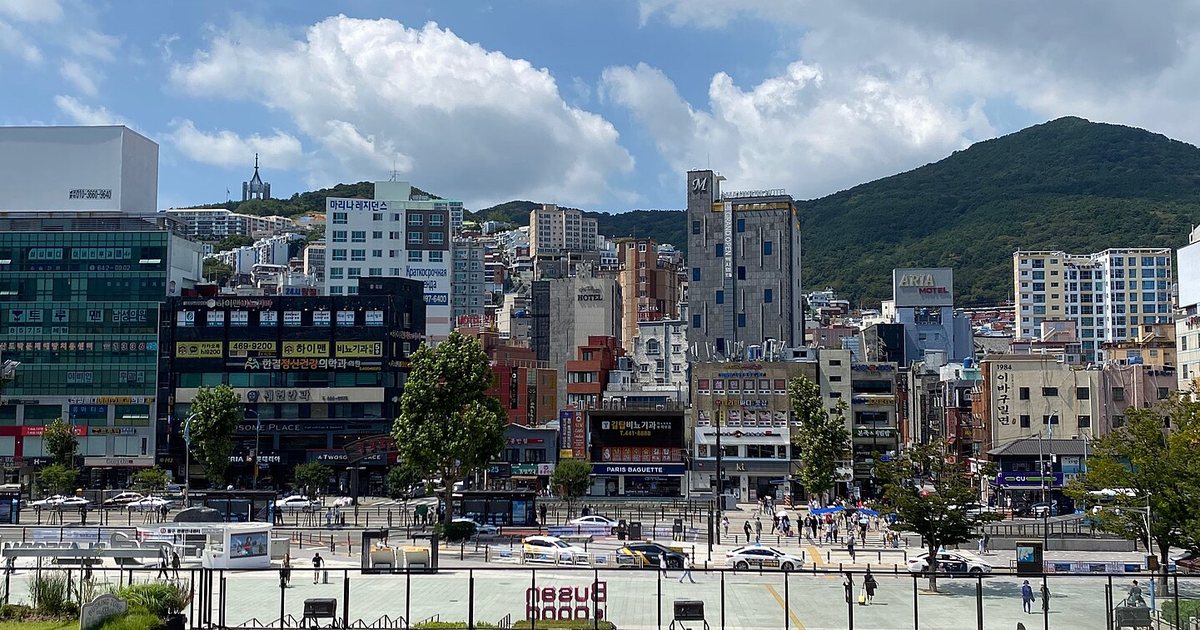
- Train to Busan (부산행, 2016) is the easiest way in: a zombie outbreak on a high-speed train, with more heart than gore.
- The Wailing (곡성, 2016) is the film people call the best of the genre, but save it for later, because it runs about two and a half hours and refuses to explain itself.
- Shamans (mudang, 무당) and their rituals (gut, 굿) drive films like The Wailing and Exhuma (파묘, 2024), so knowing what a shaman is makes them far easier to follow.
- Streaming rights differ by country and change often, so check JustWatch or your local service before you plan a movie night.
Which are the best Korean horror movies to start with?
Here’s the short list, in the order we’d hand them to a friend who has never seen a Korean film. The intensity column is our editorial read on how hard each one hits, not a score.
| Film (Korean title) | Year | Director | Type of horror | Intensity | Watch it if you like |
|---|---|---|---|---|---|
| Train to Busan (부산행) | 2016 | Yeon Sang-ho | Zombie action | Medium, relentless pace | World War Z, disaster films |
| The Host (괴물) | 2006 | Bong Joon-ho | Monster film with dark comedy | Low to medium | Jaws, Godzilla, Parasite |
| Gonjiam: Haunted Asylum (곤지암) | 2018 | Jung Bum-shik | Found footage | High jump scares | The Blair Witch Project, Grave Encounters |
| A Tale of Two Sisters (장화, 홍련) | 2003 | Kim Jee-woon | Psychological ghost story | Medium, slow dread | The Others, Hereditary |
| Whispering Corridors (여고괴담) | 1998 | Park Ki-hyung | School ghost story | Low to medium | Ring, school horror |
| R-Point (알포인트) | 2004 | Kong Su-chang | War ghost story | Medium | Apocalypse Now, The Thing |
| The Priests (검은 사제들) | 2015 | Jang Jae-hyun | Exorcism | Medium | The Exorcist |
| Exhuma (파묘) | 2024 | Jang Jae-hyun | Occult, shaman horror | Medium to high | The Conjuring, folk horror |
| The Wailing (곡성) | 2016 | Na Hong-jin | Occult mystery | High, long and bleak | Midsommar, The Witch |
| Thirst (박쥐) | 2009 | Park Chan-wook | Vampire drama | High, adult content | Let the Right One In, Oldboy |
| Sleep (잠) | 2023 | Jason Yu | Domestic horror | Medium | Rosemary’s Baby, Rear Window |
| The Housemaid (하녀) | 1960 | Kim Ki-young | Gothic domestic thriller | Low gore, high unease | Classic Hitchcock |
If you watch only three, make them Train to Busan, A Tale of Two Sisters and The Wailing. That trio covers the three faces of the genre: the crowd-pleaser, the ghost story and the folk nightmare.
What makes Korean horror different from Hollywood horror?
American horror usually wants to frighten you and let you go. Korean horror wants you to feel sad, angry and frightened all at once, and it rarely hands you a clean ending. Four ideas explain most of what you’ll see.
Han: grief that turns into a ghost
Han (한) is a Korean word for deep, unresolved sorrow and resentment, the kind that builds up over years of injustice. In horror it’s the engine behind the ghost. The spirit isn’t evil for fun. She was wronged, nobody listened, and the haunting is the bill coming due. That’s why so many Korean ghost films end in tears rather than relief.
Shamans, rituals and Korean folk belief
Korean shamanism (musok, 무속) is a centuries-old folk religion that still exists alongside Christianity and Buddhism. A mudang (무당) is a shaman, usually a woman, who performs a gut (굿), a loud ritual with drums, bells, bright robes and dancing to speak with spirits. When you see the drumming scenes in The Wailing or Exhuma, you’re watching a dramatised version of a real practice. Exhuma also leans on pungsu (풍수), the Korean form of feng shui, which holds that where an ancestor is buried affects the family’s fortune.
The wronged woman in white
The classic Korean ghost is the cheonyeo gwishin (처녀귀신), a young woman who died unmarried, with long black hair and a white sobok (소복, a mourning dress). Japanese films like Ring made a similar figure famous worldwide, but the Korean version goes back to folk tales. A Tale of Two Sisters is itself based on an old Joseon-era story, Janghwa Hongryeon.
Social anger in a horror costume
Korean horror loves a target. The Host takes aim at a careless government and a foreign military presence. Whispering Corridors goes after the brutal pressure of Korean high schools. Train to Busan has a selfish fund manager as its real monster for much of the running time. If you liked the class anger in Squid Game, you’ll recognise it here; our Squid Game explainer covers where that anger comes from.
One more trait: genre mixing. A Korean horror film will happily put slapstick, family melodrama and a crime procedure into the same two hours. The Wailing opens almost like a comedy about a lazy village cop. Don’t fight the shifts in tone. They’re the point.

A beginner watch order for Korean horror movies
The biggest mistake newcomers make is starting with the most acclaimed film. The Wailing is a masterpiece, but if it’s your first Korean horror movie, its length and ambiguity can feel like a test. Work up to it in three stages.
- Stage 1, the gateway (week one): Train to Busan, then The Host. Both are tight, emotional and easy to follow with subtitles. Add Gonjiam if your group likes jump scares.
- Stage 2, the ghosts (week two): Whispering Corridors, A Tale of Two Sisters, then R-Point. You’ll start to recognise the slow build, the wronged ghost and the guilt that sits underneath.
- Stage 3, the occult and the masters (week three): The Priests, Exhuma, then The Wailing. Finish with Thirst, Sleep and The Housemaid once you want something darker or older.
A worked example: say you have one Friday night and a friend who scares easily. Show Train to Busan. It’s thrilling, it has a clear hero, and the ending lands emotionally. If they enjoy it, the next weekend is The Host, then A Tale of Two Sisters. By the fourth film they’re ready for Exhuma, and The Wailing makes sense as the finale rather than the starting line.
The gateway films: Train to Busan, The Host and Gonjiam
Train to Busan (부산행, 2016)
A zombie outbreak breaks out across South Korea while a workaholic father, played by Gong Yoo, takes his young daughter on the KTX (Korea’s high-speed train) from Seoul to Busan. Ma Dong-seok, known abroad as Don Lee, steals scenes as a tough expectant father. The zombies are fast and twitchy, the train setting keeps everything tight, and the film is really about who behaves decently under pressure. Director Yeon Sang-ho also made an animated prequel, Seoul Station (2016), and a follow-up, Peninsula (2020). Watch the original first; it’s the strongest of the three.
The Host (괴물, 2006)
Before Parasite, Bong Joon-ho made this monster film about a creature that rises from Seoul’s Han River and snatches a girl. Her scruffy, bickering family, led by Song Kang-ho, sets out to find her when the authorities won’t. The opening, in which the creature tears through a riverside park in daylight, is one of the best monster entrances on film. It’s funny, angry and sad, and it’s the least scary film on this list, which makes it a perfect second step.
Gonjiam: Haunted Asylum (곤지암, 2018)
A group of horror livestreamers breaks into an abandoned psychiatric hospital for views. It’s found footage, shot on body cams and handhelds, and it’s built almost entirely on jump scares. The asylum in the story is inspired by a real abandoned building that became a famous Korean urban legend. Pick it for a group night with popcorn; skip it if shaky cameras make you queasy.
Korean ghost stories: A Tale of Two Sisters, Whispering Corridors and R-Point
A Tale of Two Sisters (장화, 홍련, 2003)
Two teenage sisters, Su-mi and Su-yeon, come home from a stay in hospital to a country house, their quiet father and a stepmother who seems far too tense. Kim Jee-woon shoots it like a gorgeous, decaying dollhouse, all patterned wallpaper and green-tinted rooms. Nothing is quite what it seems, and the film rewards a second viewing more than almost any horror movie you’ll see. It was remade in Hollywood as The Uninvited (2009); the Korean original is the one to watch.
Whispering Corridors (여고괴담, 1998)
Set in a girls’ high school where a teacher dies and a student who died years earlier may never have left, this film started a whole series and helped launch the modern K-horror boom. Its real horror is the school itself: abusive teachers, ranking pressure and girls pitted against each other. It looks dated in places, but it explains why school is such a common setting in Korean horror. If you’ve read about the pressure around Korea’s university entrance exam, this film shows where that fear goes.
R-Point (알포인트, 2004)
During the Vietnam War, in which South Korea sent troops to fight alongside the US, a squad of Korean soldiers is sent to a remote area to find a missing unit that keeps sending radio messages. The men start to suspect their own numbers don’t add up. It’s a slow, sweaty ghost story with almost no cheap scares, and it’s one of the most underseen films on this list.
Shamans and occult horror: The Priests, Exhuma and The Wailing
The Priests (검은 사제들, 2015)
Two Catholic priests, played by Kim Yoon-seok and Gang Dong-won, try to exorcise a demon from a teenage girl in Seoul. It borrows the shape of The Exorcist but fills it with Korean details, and it’s tighter and more accessible than the other two films in this section. Watch it before Exhuma, because they share a director, Jang Jae-hyun, and you’ll see how his style grew.
Exhuma (파묘, 2024)
A young shaman (Kim Go-eun), her partner (Lee Do-hyun), a veteran geomancer (Choi Min-sik) and an undertaker (Yoo Hai-jin) are hired by a wealthy family to dig up and move an ancestor’s grave. It goes badly. The film mixes shaman ritual, pungsu and a buried layer of history from the Japanese colonial period (1910 to 1945). Kim Go-eun’s gut scene, with drums and knives, is the image most people remember. It’s scarier than The Priests and easier to follow than The Wailing, which makes it the ideal bridge between them.
The Wailing (곡성, 2016)
In a rural village called Goksung, people start dying violently after a mysterious Japanese stranger moves into the hills. A clumsy local policeman (Kwak Do-won) tries to save his sick daughter, and a flamboyant shaman (Hwang Jung-min) arrives to perform a gut. Na Hong-jin’s film runs roughly two and a half hours, switches from comedy to terror without warning, and deliberately leaves you unsure who to trust. The Korean title is the village name, a pun on the word for wailing. Watch it with the lights off, and don’t look up explanations until you’ve finished.
Na Hong-jin also produced The Medium (2021), a Thai-Korean co-production directed by Banjong Pisanthanakun and set in Thailand. Treat it as a cousin of The Wailing: same interest in shamans, very different country.
Darker Korean horror picks once you’re hooked
Thirst (박쥐, 2009)
Park Chan-wook, the director of Oldboy, turns Song Kang-ho into a Catholic priest who becomes a vampire after a medical experiment, then falls for a friend’s unhappy wife. It won the Jury Prize at Cannes in 2009. Expect blood, sex and moral rot rather than ghosts. If you only like supernatural scares, skip it; if you like your horror adult and strange, it’s essential.
Sleep (잠, 2023)
A young couple’s life falls apart when the husband (the late Lee Sun-kyun) starts doing frightening things in his sleep and his pregnant wife (Jung Yu-mi) turns to a shaman for help. Bong Joon-ho’s former assistant director Jason Yu made it as his debut, and it’s short, sharp and often darkly funny. It’s a good choice for couples who’ve finished the classics.
The Housemaid (하녀, 1960)
Kim Ki-young’s black-and-white classic follows a music teacher’s family whose new maid slowly takes over the house. It’s closer to a gothic thriller than to modern horror, but you can draw a line from it to Parasite, which shares its interest in staircases, class and a house turning on its owners. Watch the restored version if you can find it.
A warning on two films that often show up on lists: I Saw the Devil (악마를 보았다, 2010) and Bedevilled (김복남 살인사건의 전말, 2010). Both are revenge thrillers with extreme violence. They’re well made, but they’re not ghost stories, and they’re a rough first introduction.
How to watch Korean horror movies from abroad
Rights for Korean films are sold country by country, so a title streaming in the US may be missing in the UK or Germany, and lineups change. Use JustWatch (or a similar search tool) to see what’s available where you live, then check the streaming service’s own page. Some of these films also turn up on physical media from specialist labels, which is often the only legal way to see older titles like The Housemaid.
Age ratings matter if you’re watching with teenagers. Several films here, including The Wailing, Thirst and Exhuma, carry adult or mature ratings in many countries. Check the rating your streaming service or local ratings board lists before you press play.
Subtitles also lose some layers. Characters shift between formal and casual speech in ways that signal power, fear or disrespect; our guide to Korean honorifics and titles explains what those shifts mean, and our list of Korean slang words helps with the bits subtitles skip.
Common mistakes when starting Korean horror
- Starting with The Wailing. It’s the genre’s peak, so it’s tempting. But it lands harder once you understand shamans and K-horror’s tone shifts.
- Expecting a neat explanation. Korean horror often leaves the ending open. A Tale of Two Sisters and The Wailing both expect you to piece things together, and arguing about them afterwards is part of the fun.
- Treating the comedy as a mistake. Goofy scenes in The Host or The Wailing are deliberate. They make the turn to horror feel worse.
- Bingeing the extreme thrillers. Mixing I Saw the Devil into a ghost-story night changes the mood fast. Keep the gore and the ghosts on separate evenings.
- Ignoring the history. Exhuma, The Host and R-Point all touch real history (colonial rule, the US military presence, the Vietnam War). Two minutes of background makes the endings make sense.
FAQ
What is the scariest Korean horror movie?
For jump scares, Gonjiam: Haunted Asylum is the one most people find hardest to sit through. For lasting dread, The Wailing is the usual answer, because it’s long, bleak and never tells you who to trust. Exhuma sits between the two.
Is Train to Busan a horror movie?
Yes, it’s a zombie horror film, though it plays like an action thriller and a family drama too. That mix is why it works so well as a first Korean horror movie. It’s tense and has some gore, but it’s far less disturbing than The Wailing or Thirst.
Do I need to know Korean culture to understand The Wailing?
No, but it helps to know what a mudang (shaman) is and what a gut ritual looks like. Knowing that some characters are outsiders to the village, including a Japanese stranger, also helps. Go in without spoilers and read about the ending afterwards.
What is the Korean horror movie with two sisters?
That’s A Tale of Two Sisters (장화, 홍련), directed by Kim Jee-woon in 2003 and based on an old Korean folk tale. It was remade in the US as The Uninvited in 2009. The original is widely considered the better film.
Are there Korean horror TV series too?
Yes. Kingdom (킹덤) is a zombie series set in the Joseon dynasty, and All of Us Are Dead (지금 우리 학교는) is a zombie series set in a high school. Both suit you if you liked Train to Busan and want something longer.
Where can I stream Korean horror movies?
It depends on your country, because rights are licensed region by region and change often. Search the title on JustWatch, then confirm on the streaming service’s own page. For older classics, look for official physical releases.
What to watch after your first 12 Korean horror films
Once you’ve finished the list, go deeper by director rather than by ranking. Watch more Kim Jee-woon (I Saw the Devil, if you can handle it), more Na Hong-jin (The Chaser and The Yellow Sea are crime thrillers with the same bleak tone), and Jang Jae-hyun’s Svaha: The Sixth Finger (사바하, 2019), which sits between The Priests and Exhuma. The later Whispering Corridors sequels, starting with Memento Mori (1999), are worth it if school ghost stories hooked you.
For new releases, follow the official pages of the Busan International Film Festival and the Bucheon International Fantastic Film Festival, Korea’s main genre festival, where many new Korean horror films premiere. Then check JustWatch every few months, because Korean titles keep arriving on international streaming services.
Related reading


Sources k-korea.blog
Prices, opening hours and availability change. Check the official page before you buy or travel.