14 min read
Korea under Japanese rule lasted 35 years, from the August 1910 annexation to liberation on August 15, 1945. Koreans call the era Ilje Gangjeomgi (일제강점기), meaning “the period of forced occupation by imperial Japan.” It also explains a lot that visitors notice today, from March 1 and August 15 being national holidays to the way a Japanese politician’s remark can still lead the evening news in Seoul.
Below you’ll find how the annexation happened, how the colony was run, what the 1919 uprising changed, the facts on forced labor and the “comfort women” system, and why 1945 left so much unsettled between the two countries.
Key takeaways
- Japan took Korea in stages: it forced Korea to open ports in 1876, took over its foreign affairs in 1905 and fully annexed it on August 29, 1910.
- On March 1, 1919, the reading of a Declaration of Independence set off protests across the country. The day is now a South Korean national holiday, Samiljeol (삼일절).
- From 1940, Koreans were pressed to register Japanese-style names, and Korean-language teaching was cut back sharply from 1938.
- Forced labor and “comfort women” claims are still disputed. Tokyo says the 1965 treaty settled every claim, and many victims, along with Korea’s Supreme Court, disagree.
How did Japan annex Korea? 6 steps from 1876 to 1910
Japan did not take Korea in one move. It spent 34 years pushing out rival powers and taking apart Korean sovereignty one piece at a time. In the late 1800s Korea was ruled by the Joseon dynasty (조선), which had lasted more than 500 years. It was caught between Qing China, Russia and a fast-industrializing Japan.
The Treaty of Ganghwa in 1876, imposed after a naval confrontation, opened Korean ports to Japanese trade and gave Japanese residents legal immunity from Korean courts. Japan then beat China in the Sino-Japanese War of 1894-95 and Russia in the Russo-Japanese War of 1904-05. After that, no power in the region was able or willing to stop it. The United States and Britain both accepted Japan’s position in Korea in 1905, the US through the Taft-Katsura understanding.
| Year | Event | What Korea lost |
|---|---|---|
| 1876 | Treaty of Ganghwa | Control over trade and over Japanese residents on its soil |
| 1895 | Queen Min (later titled Empress Myeongseong) killed by Japanese agents inside Gyeongbokgung Palace | The court’s leading opponent of Japanese influence |
| 1905 | Eulsa Treaty (을사조약), signed under military pressure | Its foreign policy; Ito Hirobumi became Japan’s first Resident-General |
| 1907 | Emperor Gojong forced to abdicate after sending secret envoys to The Hague peace conference | Its army, which was disbanded the same year |
| 1909 | Independence activist Ahn Jung-geun shoots Ito Hirobumi in Harbin | Nothing; Japan sped up annexation plans |
| 1910 | Annexation Treaty signed August 22, proclaimed August 29 | Statehood itself |
Koreans call August 29, 1910, Gyeongsul Gukchi (경술국치), “the national humiliation of the year Gyeongsul.” The treaty was signed for Korea by Prime Minister Lee Wan-yong, and in Korea his name is still shorthand for betrayal. Fighting did not wait for 1910. After the army was disbanded in 1907, local militias known as the Righteous Armies (의병, uibyeong) fought Japanese troops for years, and thousands of them died.
How Japan ruled Korea: the 3 phases of colonial policy
The colony was run by the Government-General of Korea (조선총독부), headed by a Governor-General appointed from Tokyo. Every Governor-General was a Japanese army general or navy admiral. In 1926 the Government-General moved into a huge domed building put up directly in front of Gyeongbokgung, the main royal palace in Seoul (then officially called Gyeongseong, 경성). Many Koreans read that placement as a statement. South Korea began tearing the building down in 1995, on the 50th anniversary of liberation.
Historians usually split the 35 years into three phases. Each matches a shift in Japanese strategy.
| Phase | Years | Korean term | What it meant for Koreans |
|---|---|---|---|
| Military rule | 1910-1919 | 무단통치 (mudan tongchi) | Military police ran daily policing; Korean-run newspapers and political groups were banned; a national land survey redrew who owned farmland |
| “Cultural rule” | 1919-early 1930s | 문화통치 (munhwa tongchi) | Korean-language papers such as the Chosun Ilbo and Dong-A Ilbo were allowed from 1920, but under censorship; the police force grew, and the 1925 Peace Preservation Law was used against independence activists |
| Assimilation and war mobilization | 1930s-1945 | 민족말살통치 (“policy to erase the nation”) | Shrine worship, Japanese-style names, Korean language pushed out of schools, and mobilization of labor, soldiers and women for Japan’s wars |
One practical note: the second phase gets its label from Japanese policy of the time. Koreans who lived through it saw more room to publish and organize, alongside more surveillance and more arrests.
What daily life was like in Korea under Japanese rule
For most Koreans, colonial rule was felt first through land and food. Around four in five people farmed, so who owned the fields mattered more than anything happening in Seoul.
Land and rice
The land survey of 1910-1918 required owners to register their plots through a formal process. Land that was not registered, much of it village common land or royal property, passed to the Government-General. Part of it was then sold or handed to the Oriental Development Company, a Japanese colonization company founded in 1908, and to Japanese settlers. Many Korean farmers ended up as tenants paying heavy rents.
From 1920, a rice production program raised harvests, and much of that rice was shipped to Japan. Korean consumption of rice per person fell over the same years, and many families ate cheaper millet and barley instead. Large numbers of Koreans left for Manchuria or for work in Japan. That migration is where the Korean community in Japan, the Zainichi (재일), comes from.
Did Japan modernize Korea?
This is one of the most argued questions in the field. Japan built railways, ports, a modern bank system and, in the 1930s, heavy industry concentrated in the north. Seoul got department stores and streetcars. The Shinsegae department store’s flagship in central Seoul still occupies the building that opened in 1930 as a branch of Japan’s Mitsukoshi. The Korean business world also took root in this period: Samsung began as a small trading store in Daegu in 1938 (see our Samsung history explainer).
Critics point out who that infrastructure served. Railways ran toward ports and the Manchurian border. Schools for Korean and Japanese children were separate and unequal. Senior posts in government and business went overwhelmingly to Japanese.
Some scholars argue that “colonial modernization” laid groundwork for South Korea’s later growth, and others argue that it held Korea back. The fair summary is that change happened, Koreans paid much of the cost, and Japanese interests decided where the benefits went.
The March 1st Movement (삼일운동): what happened in 1919
The March 1st Movement was the largest protest of the colonial era and the moment modern Korean nationalism took shape. Several things came together that winter: US President Woodrow Wilson’s talk of national self-determination after World War I, a declaration of independence by Korean students in Tokyo on February 8, and the death of former Emperor Gojong in January 1919, amid widespread rumors that he had been poisoned.
On March 1, 33 religious and civic leaders from the Cheondogyo (an indigenous Korean religion), Christian and Buddhist communities signed a Declaration of Independence and read it at a Seoul restaurant called Taehwagwan. A few streets away, students read it to a crowd in Tapgol Park, which started marches through the city. People shouted “Daehan dongnip manse!” (대한독립만세), “Long live Korean independence!”
Over the following months the protests spread to virtually every part of the country. The response was harsh. At Jeam-ri, south of Seoul, Japanese troops locked villagers inside a church in April 1919 and set it on fire. A teenage student named Yu Gwan-sun (유관순), arrested for organizing a protest in her hometown, died in Seodaemun Prison in 1920 and became the movement’s best-known symbol. The death toll is disputed: Japanese official figures were in the hundreds, while Korean historian Park Eun-sik counted about 7,500 dead.
What did the March 1st Movement change?
It did not end colonial rule. It did push Tokyo into its softer “cultural rule” phase, and in April 1919 exiled activists founded the Provisional Government of the Republic of Korea (대한민국 임시정부) in Shanghai. South Korea’s current constitution names both the March 1st Movement and the Provisional Government in its preamble as the foundations of the state.
How Koreans fought for independence after 1919
Resistance went in several directions at once, and those splits still shape how the two Koreas tell the story.
Armed struggle in Manchuria and China
Korean independence fighters based in Manchuria defeated Japanese units at the battles of Fengwudong and Qingshanli in 1920. In 1932, Yun Bong-gil, an activist sent by Kim Gu’s Korean Patriotic Organization, threw a bomb at a Japanese ceremony in Shanghai’s Hongkou Park, killing senior officials. The Provisional Government formed the Korean Liberation Army in Chongqing in 1940. In the 1930s, communist guerrillas also fought in Manchuria, among them Kim Il Sung, later North Korea’s founding leader (see how the Kim family passed down power).
Resistance at home
Inside Korea, students led the 1926 June 10th Movement and the 1929 Gwangju Student Independence Movement. Scholars of the Korean Language Society worked on a standard Korean dictionary, and in 1942 dozens of them were arrested.
Collaboration
Some Koreans worked with the colonial state as officials, police officers, landlords, writers and businesspeople. They are called chinilpa (친일파), “pro-Japanese faction.” Many kept their positions after 1945, and how far to investigate their records is still a political argument in South Korea.
How Japan tried to erase Korean identity (1937-1945)
After Japan went to full-scale war with China in 1937, the colony’s policy moved from control to absorption. The slogan was Naisen ittai (내선일체), “Japan and Korea as one body.”
- Loyalty rituals: students and workers recited an Oath of Imperial Subjects, and Koreans were pressed to worship at Shinto shrines. Christians who refused were arrested.
- Language: the 1938 education ordinance made Korean an optional subject, and in practice it was soon dropped from classrooms. Children could be punished for speaking it at school.
- Press: the Chosun Ilbo and Dong-A Ilbo were closed in 1940.
- Names: the 1940 Changssi Gaemyeong (창씨개명) order pressed families to register Japanese-style surnames. Roughly 80 percent of households had done so within the first six months, often because refusing brought trouble at school, at work and with ration offices.
This period explains why language and names still carry so much emotional weight in Korea. Hangul Day (October 9) and the push to keep Japanese loanwords out of official Korean both draw on it.
Forced labor and the comfort women: what history records
These are the two issues most often behind Korea-Japan disputes, so it helps to separate what is documented from what is still argued.
Forced labor
Japan’s 1938 National Mobilization Law put the whole empire on a war footing. From 1939, Koreans were recruited for mines, factories and construction sites in Japan, Sakhalin and the Pacific. Recruitment moved from company drives to government-arranged placement and, from 1944, to formal labor conscription. Estimates of the numbers differ by source, but hundreds of thousands of Koreans were sent to Japan alone, and far more were mobilized inside Korea.
Korean men were also drafted into the Japanese military from 1944. Thousands of Koreans were left stranded on Sakhalin when the war ended.
Hashima, the coal-mining island off Nagasaki known as Battleship Island, became UNESCO-listed in 2015 as part of Japan’s Meiji industrial sites. Korea objected that the listing should fully explain the Korean labor used there in wartime. A similar dispute followed the listing of the Sado gold mines in 2024.
The comfort women
During its wars in Asia, the Japanese military set up and regulated “comfort stations,” where women and girls were forced to provide sex to soldiers. Women came from Korea, China, Taiwan, the Philippines, Indonesia, the Netherlands and elsewhere. Many were recruited through deception, debt or coercion, and some were abducted. Estimates of the total range widely, from tens of thousands to around 200,000, and Korean women were among the largest groups.
For decades survivors stayed silent. That changed in 1991, when Kim Hak-sun testified publicly; Korea now marks August 14 as a memorial day for the victims. Weekly protests outside the Japanese Embassy in Seoul, the Wednesday Demonstrations, began in 1992.
Japan’s 1993 Kono Statement acknowledged the military’s involvement and offered an apology, and a 1995 fund paid compensation from private donations. A 2015 government agreement described as “final and irreversible” set up a fund with 1 billion yen from Japan, but many survivors rejected it, and Seoul moved to dissolve the foundation in 2018. Some Japanese politicians and scholars have disputed how much direct coercion the military itself used, a position survivors and their supporters regard as denial.
How liberation came in 1945, and why Korea split in two
Koreans call August 15 Gwangbokjeol (광복절), “the day light was restored.” Liberation came with Japan’s surrender in World War II, after the atomic bombings of Hiroshima on August 6 and Nagasaki on August 9 and the Soviet declaration of war on August 8. Tens of thousands of Koreans working in Hiroshima and Nagasaki were among the bombing victims. Emperor Hirohito announced the surrender by radio on August 15.
The Korean Liberation Army had been preparing operations with US help, but the war ended before they began. That meant the peninsula’s future was decided by the Allies. US officials proposed dividing it at the 38th parallel. Soviet troops moved into the north in August, and American forces landed in the south in September.
Two rival states were declared in 1948, and the Korean War began in 1950. Our Korean War explainer picks up the story there. For many Koreans, the hard lesson of 1945 is that freedom from Japan came together with division.
Why Korea under Japanese rule still matters for Korea-Japan relations
Japan and South Korea are close neighbors, US allies and major trading partners. Colonial history is still the subject most likely to set off a crisis between them, and the main reason is a 1965 treaty.
The 1965 treaty and the “settled” question
The 1965 Treaty on Basic Relations restored diplomatic ties. A side agreement gave South Korea $300 million in grants and $200 million in loans, and it stated that claims between the two countries were settled “completely and finally.” Much of the money went into industrial projects, including the steelmaker POSCO. Tokyo’s position is that this closed all individual compensation claims. Many Koreans argue the deal was made by a military government without asking victims and never covered illegal colonial wrongs.
Court rulings and the 2019 trade fight
In 2018, South Korea’s Supreme Court ordered Japanese companies, including Nippon Steel, to compensate former forced laborers. Japan called the rulings a breach of the 1965 agreement. In 2019 it tightened export controls on three chemicals used in chipmaking, and Korean consumers responded with a widely followed boycott of Japanese goods. In 2023, Seoul announced that a Korean foundation would pay the court-ordered compensation, a move that improved ties with Tokyo but that some plaintiffs refused.
Apologies, textbooks and other flashpoints
Japanese leaders have expressed remorse several times, notably in the 1995 Murayama Statement and the 1998 joint declaration by Prime Minister Keizo Obuchi and President Kim Dae-jung. After that declaration, South Korea began lifting its long-standing restrictions on Japanese films and music. Many Koreans feel those apologies are undercut by later events: some Japanese textbook revisions, visits by politicians to Yasukuni Shrine (which honors Japan’s war dead, including convicted war criminals) and the dispute over the Dokdo islets, which Japan calls Takeshima. Japanese officials, for their part, often say Korea keeps reopening issues that were already settled.
None of this stops ordinary traffic. Koreans and Japanese visit each other’s countries in huge numbers, and pop culture flows both ways (our Korea vs Japan travel comparison covers the practical side). If you’re visiting Seoul around March 1 or August 15, expect ceremonies, flags on apartment balconies and news coverage of the past.
FAQ
How long was Korea under Japanese rule?
Full colonial rule lasted 35 years, from the annexation on August 29, 1910, to liberation on August 15, 1945. If you count the protectorate period that began with the 1905 Eulsa Treaty, Japan controlled Korea’s foreign affairs for 40 years.
Why did Japan colonize Korea?
Korea sat between Japan and the Asian mainland, so Japanese leaders saw it as a strategic buffer and a route into Manchuria and China. It also offered rice, land and later industrial resources. Owning a colony also put Japan on the same footing as the Western imperial powers.
Has Japan apologized to Korea?
Japanese governments have issued several statements of remorse and apology, including the 1993 Kono Statement on comfort women, the 1995 Murayama Statement and the 1998 joint declaration with Korea. Many Koreans see these as weakened by later remarks from Japanese politicians and by Tokyo’s position that legal claims were settled in 1965. So the question of whether Japan has “really” apologized stays contested.
What is the Korean name for the Japanese colonial period?
The standard term is Ilje Gangjeomgi (일제강점기), “the period of forced occupation by imperial Japan.” Older texts sometimes say Ilje sidae, “the Japanese imperial era.” The word gangjeom (“forced occupation”) reflects the Korean position that the annexation was never legitimate.
Were Koreans Japanese citizens during colonial rule?
Legally, Koreans were Japanese subjects, but they were listed on a separate Korean family register and did not have equal rights. Koreans living in Japan lost Japanese nationality after the 1952 San Francisco Peace Treaty came into effect. That is one reason many Zainichi Koreans still hold South Korean or other nationality today.
Why is March 1 a holiday in Korea?
March 1, Samiljeol (삼일절), marks the 1919 Declaration of Independence and the nationwide protests that followed. Ceremonies are held across South Korea, including a national event with the president. It is one of Korea’s five national days, alongside Liberation Day on August 15.
Where to see this history next: museums, films and books
If you’re going to Korea, these three sites tell the story better than any textbook. Opening days and admission rules change, so check each official site before you go.
- Place
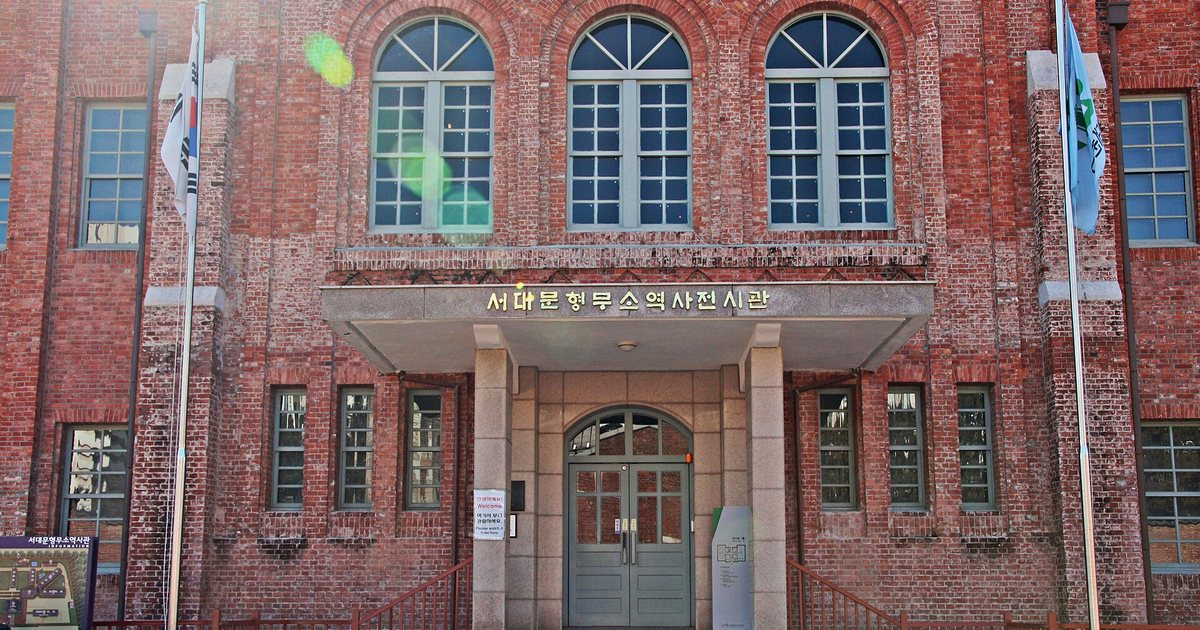
- Seodaemun Prison History Hall (서대문형무소역사관)
- Area
- Seodaemun-gu, central-west Seoul; the prison opened in 1908 and held many independence activists, including Yu Gwan-sun
- Nearest station
- Dongnimmun Station, Seoul Subway Line 3
- Time needed
- About 1.5 to 2 hours
- Before you go
- Check opening days and fees on the official page
- Place
- Independence Hall of Korea (독립기념관)
- Area
- Cheonan, South Chungcheong Province, south of Seoul; a large national museum of the independence movement, opened in 1987
- Nearest station
- Cheonan or Cheonan-Asan Station, then a bus or taxi
- Time needed
- Half a day
- Before you go
- Check opening days, English guides and transport on the official page
- Place
- Tapgol Park (탑골공원)
- Area
- Jongno, central Seoul, where students read the Declaration of Independence on March 1, 1919
- Nearest station
- Jongno 3-ga Station
- Time needed
- 30 minutes
- Before you go
- Check the official page for any closures
Films and shows set under Japanese rule
- The Age of Shadows (밀정, 2016): a spy thriller about independence fighters and a Korean officer in the colonial police.
- Assassination (암살, 2015): a resistance cell plots to kill a Japanese commander and a collaborator in 1930s Seoul.
- Mr. Sunshine (미스터 션샤인, 2018): a drama set in the years leading up to annexation, including the Righteous Armies.
- Pachinko (2022): Apple TV+ series based on Min Jin Lee’s 2017 novel, following a Korean family from colonial Busan to Japan.
- Harbin (하얼빈, 2024): a film about Ahn Jung-geun’s 1909 mission.
Streaming rights differ by country, so check JustWatch or the platform for where each one is available to you. For reading, Min Jin Lee’s Pachinko is the most accessible way in, and Bruce Cumings’s Korea’s Place in the Sun is a widely used English-language history that puts the colonial era in its longer context.
Related reading
Sources k-korea.blog
Prices, opening hours and availability change. Check the official page before you buy or travel.