
11 min read
Is Korean hard to learn? Reading Hangul’s 24 letters takes days, but real fluency takes years. For English speakers the alphabet is the easy part. The hard parts are the verb-last word order, the small grammar tags called particles, and a system of politeness levels that changes how every sentence ends.
That split matters for how you plan. You’ll get quick wins early, like reading menus, subway signs and K-drama subtitles letter by letter, and then a long middle stretch where grammar and politeness take patient work. Knowing which part is which keeps you from quitting at the wrong moment.
Key takeaways
- Hangul (한글), the Korean alphabet, has 24 basic letters, and most learners can sound out words within a few days of practice.
- Korean puts the verb at the end (subject, object, verb), so “I coffee drink” is the normal order.
- Particles such as 은/는, 이/가 and 을/를 mark the topic, subject and object, and they’re the most common beginner errors.
- The US Foreign Service Institute puts Korean in its hardest group for English speakers, alongside Japanese, Mandarin and Arabic.
Is Korean hard to learn? The short answer, skill by skill
Korean isn’t uniformly hard. It’s very easy to start and slow to finish. If you speak English, the script will take you days, basic phrases a few weeks, and comfortable conversation a long, steady commitment measured in years.
Here’s how the main parts of the language rank for an English speaker, and why.
| Part of Korean | Difficulty for English speakers | Why | What fixes it |
|---|---|---|---|
| Hangul (alphabet) | Easy | 24 logical letters stacked into syllable blocks | A few days of reading practice |
| Pronunciation | Medium | Three-way consonant contrasts, sound changes between words | Shadowing native audio, minimal-pair drills |
| Word order and particles | Hard | Verb comes last; particles replace English word order | Many short example sentences, daily |
| Verb endings | Hard | Tense, mood and politeness all attach to the verb | Learning endings as chunks, not rules |
| Honorifics and speech levels | Hard | Form changes with age and social relationship | Polite -요 form first, banmal later |
| Vocabulary | Medium | Few shared roots with English, but many loanwords | Learning Sino-Korean roots as families |
The pattern is clear: Korean front-loads its easiest part. That’s why so many people feel fast progress in month one and a wall in month three. The wall is grammar, and it’s normal.
Why Hangul (한글) is the easiest part of learning Korean
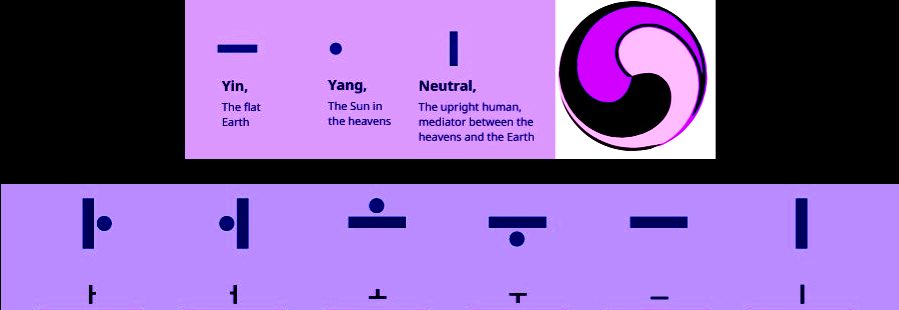
Hangul was created in the 15th century under King Sejong so ordinary people could read and write, and it shows. Each letter stands for one sound, and the consonant shapes were designed to suggest the position of the mouth or tongue. ㄱ (g/k) sketches the back of the tongue touching the roof of the mouth; ㅁ (m) is the closed lips.
The one new idea is the syllable block. Letters don’t run in a line like English; they stack into squares. 한 (han) is ㅎ (h) + ㅏ (a) + ㄴ (n). 글 (geul) is ㄱ + ㅡ + ㄹ. Put them together and you’ve read the name of the alphabet itself.
How long does it take to learn Hangul?
Most learners can recognize all the basic letters within a few days and sound out unfamiliar words slowly within a week or two. Speed is what takes longer. Reading a café menu in real time is a different skill from decoding a word on a flashcard, so read something short every day, even shop signs in K-drama backgrounds.
One warning: don’t lean on romanization (writing Korean in Latin letters). It hides the sound distinctions you’ll need later, and Korean signs, apps and textbooks all assume you read Hangul.

Korean grammar: verb-last word order and particles
This is where Korean stops feeling like a puzzle and starts feeling like a different way of thinking. English relies on word order to show who did what. Korean relies on small tags attached to nouns, called particles, and puts the verb at the end.
What does subject-object-verb order look like?
Take a simple sentence: 저는 커피를 마셔요 (jeoneun keopireul masyeoyo). Word for word, it’s “I (topic) coffee (object) drink.” The verb 마셔요, “drink,” closes the sentence. Questions, negatives and tense all live at that end, so you often don’t know what a Korean sentence is doing until the last syllable.
The good news: because particles mark the roles, the nouns can move around and the meaning still holds. Koreans also drop words that are obvious from context, especially “I” and “you.” 마셔요? alone can mean “Do you drink it?”
Why are Korean particles so confusing?
Three pairs cause most of the trouble. Each pair has two spellings depending on whether the noun ends in a consonant or a vowel.
- 은/는 (eun/neun): topic marker, roughly “as for.” It sets the scene or contrasts.
- 이/가 (i/ga): subject marker. It points at who or what specifically.
- 을/를 (eul/reul): object marker, the thing being acted on.
The topic-versus-subject distinction has no clean English equivalent, and even advanced learners slip on it. Treat it as something you absorb from thousands of example sentences, not something you master from one grammar chart.
How Korean verb endings work
Korean is agglutinative, meaning endings are glued onto a verb stem in layers. Start with 먹다 (meokda, to eat). 먹어요 is “eat,” 먹었어요 “ate,” 먹을 거예요 “will eat.” Each ending adds a piece of meaning. Learn common endings as ready-made chunks and you’ll speak faster than if you try to build every sentence from rules.
Honorifics and speech levels: the part that takes longest
Korean grammar books describe up to seven speech levels, but in daily life you’ll meet three. Your choice depends on who you’re talking to: their age, your relationship, and the setting. This is the clearest case where Korean reflects Korean culture, the same hierarchy you’ll see in how Koreans bow.
Two terms matter. Jondaetmal (존댓말) is polite speech. Banmal (반말), literally “half speech,” is casual speech for close friends, younger people and family. Here’s one phrase in all three common levels.
| English | Korean | Romanization | When to use it |
|---|---|---|---|
| Thank you (formal polite) | 감사합니다 | gamsahamnida | Shops, strangers, older people, announcements. Safest choice for visitors. |
| Thank you (polite) | 고마워요 | gomawoyo | Friendly but respectful, with acquaintances and coworkers your age. |
| Thanks (casual, banmal) | 고마워 | gomawo | Close friends and younger people only. Rude to strangers. |
| Please eat (honorific, polite) | 드세요 | deuseyo | Inviting someone older or a guest to eat. Uses a special honorific verb. |
| Eat (casual, banmal) | 먹어 | meogeo | Between close friends of the same age. |
Notice the last two rows. Honorifics don’t only change endings; some verbs swap for entirely different words when the person doing the action deserves respect. 먹다 (eat) becomes 드시다 (deusida), and 자다 (sleep) becomes 주무시다 (jumusida).
Korean pronunciation: the sounds English speakers miss
Korean has no f, v, z or th sounds, so English speakers rarely struggle to make Korean sounds. The trouble is hearing differences that English ignores.
Three kinds of the same consonant
Korean splits several consonants three ways: a plain (lax) version, an aspirated version with a puff of air, and a tense version with no air. ㄱ / ㅋ / ㄲ, ㄷ / ㅌ / ㄸ, ㅂ / ㅍ / ㅃ and ㅈ / ㅊ / ㅉ all follow this pattern. 불 (bul, fire), 풀 (pul, grass) and 뿔 (ppul, horn) are three different words. Hold a tissue in front of your mouth: it should flutter only on the aspirated one.
Vowels and the ㄹ sound
ㅓ (eo) and ㅗ (o) sound close to English ears, and ㅡ (eu) has no English match at all. ㄹ sits between r and l: a light flap between vowels, closer to l at the end of a syllable.
Why words sound different from how they’re spelled
Korean spelling shows the root of a word, but sounds change when syllables meet. 감사합니다 is written gam-sa-hap-ni-da but said gamsahamnida, because ㅂ before ㄴ turns into ㅁ. Final consonants (batchim) also collapse into seven sounds. Our guide to Korean pronunciation rules walks through each shift with examples.
Korean vocabulary: Chinese roots, Konglish and Hanja
Korean shares almost no native roots with English, so early vocabulary is pure memorization. Two things make it easier over time.
Sino-Korean words come in families
By common estimates, more than half of Korean vocabulary is Sino-Korean, built from Chinese-origin roots. Once you know a root, it unlocks dozens of words. 학 (hak) relates to learning: 학교 (hakgyo, school), 학생 (haksaeng, student), 대학 (daehak, university). 생 (saeng) relates to life or birth: 학생, 생일 (saengil, birthday), 선생님 (seonsaengnim, teacher). Learning roots as families turns memorizing into pattern-spotting.
Konglish (콩글리시) is free vocabulary, with traps
English loanwords are everywhere: 커피 (keopi, coffee), 컴퓨터 (keompyuteo, computer), 아이스크림 (aiseukeurim, ice cream). Some shifted meaning, though. 핸드폰 (haendeupon, “hand phone”) means a cellphone, 아파트 (apateu) is an apartment in a high-rise complex, and 파이팅 (paiting, “fighting”) is a cheer meaning “you can do it.” You’ll hear plenty of these in our list of Korean words in K-dramas.
Do you need to learn Hanja (한자)?
Hanja are the Chinese characters behind Sino-Korean words. You don’t need them to read modern Korean: everyday text, signs, apps and subtitles are written in Hangul. South Korean schools teach a set list of basic Hanja, and you’ll occasionally spot characters in newspapers, names and formal documents. For most learners, Hanja is an optional advanced tool that helps with vocabulary, not a requirement.
How long does it take to learn Korean? What the FSI says
The best-known benchmark comes from the US Foreign Service Institute (FSI), which trains American diplomats. It places Korean in its Category IV, the group needing the longest full-time training for native English speakers, together with Japanese, Mandarin, Cantonese and Arabic. Spanish, French and Italian sit in the easiest group. Check the FSI’s official page for its current week estimates.
Two caveats. FSI figures describe intensive, full-time classes for professional working proficiency, not a hobby learner studying evenings. And they measure English speakers only; your first language changes the picture a lot.
A more useful way to think about time is milestones. Hangul comes first, in days. Survival phrases and the polite -요 form come next, over a few weeks. Following slow, clear speech on familiar topics is a months-long goal. Understanding K-dramas without subtitles is a years-long one, because drama dialogue is fast, slangy and full of banmal.
What is TOPIK?
TOPIK (Test of Proficiency in Korean) is the official Korean proficiency exam, graded across six levels, and Korean universities and some employers ask for it. It’s offered in many countries; check the official TOPIK website for test dates and locations near you. Even if you never sit it, its level descriptions are a good map of what “intermediate” actually means.
Is Korean harder than Japanese or Chinese? Tips by native language
Difficulty depends heavily on where you start. Korean grammar resembles Japanese closely, its vocabulary overlaps with Chinese and Vietnamese, and its word order matches Turkish, Hindi and Mongolian.
| Your first language | What helps | What’s still hard | Best first move |
|---|---|---|---|
| English | Konglish loanwords, an easy alphabet | Word order, particles, speech levels | Drill short SOV sentences daily |
| Spanish, French, Portuguese | Clear vowel systems help with Korean vowels | Everything grammatical is new | Learn particles with many examples |
| Japanese | Nearly the same word order, similar particles and honorifics | Pronunciation, Hangul spelling rules | Map Japanese particles to Korean ones |
| Mandarin or Cantonese | Sino-Korean roots, many shared word origins | Verb-last grammar, endings | Learn Sino-Korean words in root families |
| Vietnamese | Large shared Chinese-origin vocabulary | Grammar order and endings | Link Sino-Vietnamese and Sino-Korean roots |
| Turkish, Hindi, Mongolian | Same verb-last word order | Honorifics, vocabulary | Focus on vocabulary and speech levels |
Is Korean harder than Japanese for English speakers? For reading, Korean is easier: Hangul is one script, while Japanese mixes two syllabaries with thousands of kanji. For grammar and politeness, they’re roughly comparable. Against Mandarin, Korean avoids tones and characters but has more complex grammar. Each of the three is hard in a different place.
Common mistakes that make Korean feel harder than it is
Most people who quit Korean don’t fail at the language. They fail at the method. These are the patterns that slow learners down most.
- Living in romanization. It feels faster for a week and slower for a year. Switch to Hangul from day one.
- Learning banmal from dramas first. Drama characters speak casually to friends and lovers. Copy that with a shopkeeper and you’ll sound rude.
- Translating English sentences word by word. Korean drops subjects and puts verbs last. Build sentences from Korean models instead.
- Studying grammar charts without listening. Particles and endings stick from repetition in context, so pair every rule with audio.
- Ignoring sound changes. If you only learn spellings, you won’t recognize words in fast speech.
- Waiting until you’re ready to speak. Short, imperfect sentences out loud beat silent reading every time.
FAQ
Is Korean hard to learn for English speakers?
Yes, overall, but not evenly. The alphabet is one of the easiest writing systems to pick up, while grammar order, particles and honorifics take sustained work. The US Foreign Service Institute puts Korean in its hardest group for English speakers.
Can I learn Korean by myself?
You can learn to read and handle basic conversation on your own with a textbook, a dictionary app such as Naver Dictionary and plenty of audio. Speaking improves fastest with feedback, so add a tutor, a language exchange partner or a class once you have the basics. King Sejong Institutes, backed by the Korean government, run classes in many countries; check their official site for locations.
Is Korean easier than Japanese?
Korean is easier to start reading because Hangul is a single, phonetic alphabet, while Japanese uses kana plus kanji. Grammar and politeness systems are similar in difficulty. Speakers of one usually find the other much easier than English speakers do.
Can I learn Korean from K-dramas and K-pop?
They’re excellent for listening and motivation, and you’ll pick up common words and phrases quickly. They aren’t enough alone, because dialogue is fast, casual and often in banmal. Use them alongside a structured course, and pause to repeat lines out loud. Our guide to saying hello in Korean is a good first step.
Do Koreans still use Chinese characters?
Rarely in daily life. Modern Korean is written almost entirely in Hangul, and you can read signs, menus and websites without Hanja. Characters still appear in some newspaper headlines, personal names, formal documents and dictionaries.
What is the hardest part of Korean?
For most English speakers, speech levels and honorifics are the slowest to master, because the right form depends on age and relationship, not just grammar. Particles come a close second. Pronunciation of the three-way consonant contrasts is the hardest listening skill.
What to try next: your first month of Korean
Spend week one on Hangul only. Write each letter, read every Korean word you can find, and stop using romanization once you can sound words out. In week two, learn the polite -요 form with a handful of everyday verbs like 가요 (gayo, go), 먹어요 (meogeoyo, eat) and 있어요 (isseoyo, have or there is).
Weeks three and four belong to particles. Write ten short sentences a day using 은/는, 이/가 and 을/를, read them aloud, and check them against native examples. Keep one K-drama or podcast running as listening practice, and repeat lines you understand.
After that first month, decide whether you want structure: a textbook series, a local class or a TOPIK goal. Korean rewards steady daily effort far more than long weekend sessions, and the early speed you got from Hangul is a fair preview of what consistent practice can do with the rest.
Related reading



Sources k-korea.blog
Prices, opening hours and availability change. Check the official page before you buy or travel.