
11 min read
To learn how to say thank you in Korean, start with 1 phrase: gamsahamnida (감사합니다). It’s the safe, polite thank you you can say to a shop clerk, a taxi driver or a friend’s grandmother, and nobody will find it odd. After that, add gomawoyo (고마워요) for warmer everyday moments and gomawo (고마워) for close friends. Then learn the reply Koreans actually use most, which is anieyo (아니에요), more often than the textbook cheonmaneyo.
Key takeaways
- Gamsahamnida (감사합니다) is the default. It’s formal and polite, and it’s right with strangers, staff and anyone older than you.
- The written 합니다 is said “ham-ni-da”. The ㅂ turns into an m sound before ㄴ, so you say gam-sa-ham-ni-da, never gam-sa-hap-ni-da.
- Gomawo (고마워) is banmal, the casual speech level. Save it for close friends, children, and people who have asked you to drop the formality.
- Cheonmaneyo (천만에요) means “you’re welcome” but sounds bookish. In real conversations Koreans more often wave thanks away with anieyo (아니에요), “it’s nothing.”
How to say thank you in Korean: the 5 forms at a glance
Korean has 5 everyday ways to say thank you. They come from just 2 roots. Gamsa (감사) is a Sino-Korean word, meaning it comes from the Chinese characters 感謝. Gomapda (고맙다) is a native Korean word. Each root then takes a different ending depending on how formal you need to be.
Here’s the whole set, plus 2 upgrades you’ll hear in speeches, emails and K-drama award scenes.
| English | Korean | Romanization | When to use it |
|---|---|---|---|
| Thank you (formal) | 감사합니다 | gamsahamnida | Default for strangers, staff, elders, work. Polite form. |
| Thank you (formal, native word) | 고맙습니다 | gomapseumnida | Same politeness as gamsahamnida, often felt as a little warmer. Polite form. |
| Thank you (polite) | 감사해요 | gamsahaeyo | Relaxed but respectful: acquaintances, coworkers, neighbors. Polite form. |
| Thank you (polite, softer) | 고마워요 | gomawoyo | Friendly politeness with people you know a bit. Polite form. |
| Thanks (casual) | 고마워 | gomawo | Close friends your age, younger siblings, kids. Casual (banmal). |
| Thank you very much | 정말 감사합니다 | jeongmal gamsahamnida | When someone really went out of their way. Polite form. |
| I humbly thank you | 감사드립니다 | gamsadeurimnida | Speeches, business emails, formal announcements. Most formal. |
If you remember only one line from this table, make it the first one. Too much politeness won’t offend anybody in Korea. Too little can.
Why Korean has more than one thank you: speech levels explained
Korean grammar builds respect into the verb ending. The same thank you changes shape depending on who you’re speaking to. Learners usually meet 3 speech levels first:
- Formal (hapsyo-che, 합쇼체): endings in -ㅂ니다 / -습니다, like gamsahamnida. You’ll hear it in shops, on the subway announcements, in the news and at work.
- Polite (haeyo-che, 해요체): endings in -요, like gomawoyo. Still respectful, just less stiff. Most daily conversation between adults who aren’t close happens here.
- Casual (banmal, 반말): literally “half speech,” with the -요 dropped, like gomawo. It’s for people you’re close to, or people clearly younger than you in a relaxed setting.
The level depends on the listener’s age, their status and how close you are. How grateful you feel goes into extra words like jeongmal (정말, “really”). The same respect logic sits behind Korean bowing, which is why a slight nod usually goes along with gamsahamnida (our guide to why Koreans bow and how deep to go covers the gestures).
A worked example: one friendship, three thank yous
Say you meet a Korean language-exchange partner in Seoul. At the first meeting, they hand you a coffee and you say gamsahamnida. A few weeks later you’re comfortable with each other, so you switch to gomawoyo. Then one day they suggest “mal noja” (말 놓자, “let’s drop the formal speech”). From then on, gomawo is fine.
That’s the usual order. Let the Korean speaker, especially an older one, be the one to suggest the switch to casual speech.
Gamsahamnida vs gomapseumnida: which formal thank you to use
Both are formal, and both are always correct with strangers and elders. In practice they’re interchangeable. Gamsahamnida is the one you’ll hear most from shop staff, in announcements and on TV. Many Koreans feel gomapseumnida, built on the native word, has a slightly more personal, heartfelt ring. You can’t go wrong with either.
How to say thank you very much in Korean
To make it stronger, put an adverb in front:
- 정말 감사합니다 (jeongmal gamsahamnida): “thank you so much,” the most natural upgrade.
- 진짜 감사해요 (jinjja gamsahaeyo): “really, thank you,” more colloquial. Jinjja (진짜) is the everyday word for “really.”
- 너무 감사합니다 (neomu gamsahamnida): “thank you so very much.” Neomu (너무) once meant “too much,” but today it’s a common intensifier.
- 대단히 감사합니다 (daedanhi gamsahamnida): “thank you very much indeed,” stiff and formal. Good for a speech or a business letter.
Gamsadeurimnida: the humble version
감사드립니다 (gamsadeurimnida) adds deurida (드리다), a humble verb meaning “to offer.” Literally, it’s “I offer you my thanks.” Use it to sign off a formal email, in an acceptance speech, or when writing to a company. Out loud at a convenience store it would sound theatrical.
Gomawoyo, gamsahaeyo and gomawo: the everyday forms
Once you’re past the first meeting, the -요 forms take over. They’re polite enough for almost any adult and much less stiff than -ㅂ니다.
When to use gomawoyo (고마워요)
Use gomawoyo with coworkers around your age, a neighbor you chat with, the friend of a friend who gave you directions. It sounds friendly and kind. Gamsahaeyo (감사해요) sits at the same level and feels a touch more formal, since it uses the Sino-Korean root. With a friend’s parents or your boss, stay with gamsahamnida.
When gomawo (고마워) is OK, and when it’s rude
Gomawo is banmal. It’s warm and natural between close friends, siblings and partners, or from an adult to a child. Say it to a stranger, a shopkeeper or anyone older, though, and it can come across as talking down to them. K-dramas are the usual trap. Friends and couples on screen use banmal all the time, so viewers pick it up as normal (see our list of Korean words you hear in K-dramas for more of that casual vocabulary).
You may also hear 고맙다 (gomapda), the plain dictionary form, from an older person to a younger one, such as a parent to a grown child. Don’t use it upward.
Cute and texting versions
In KakaoTalk (Korea’s main messaging app) chats among friends, thanks gets shortened. ㄱㅅ or ㄳ are the first consonants of gamsa. 감사 alone works as a quick “thx.” 고마워용 (gomawoyong) is a playful, cutesy spelling, and 땡큐 (ttaengkyu) is simply the English “thank you” in Korean letters. All of these are for friends only, never for a work chat.
How to pronounce gamsahamnida, gomapseumnida and gomawoyo
Korean spelling and pronunciation part ways in a few predictable spots. The formal thank yous hit exactly one of them.
Gamsahamnida, syllable by syllable
Written: 감-사-합-니-다. Spoken: gam-sa-ham-ni-da. The ㅂ (b/p) at the bottom of 합 sits right before ㄴ (n), and Korean turns it into an m sound. That’s nasalization, one of the core rules in our Korean pronunciation rules guide.
The opening ㄱ is softer than an English hard g, somewhere between g and k. That’s why the older spelling “kamsahamnida” still floats around. Korean has little word stress, so keep all 5 syllables fairly even and let your pitch drop slightly on -da.
Gomapseumnida
Written: 고-맙-습-니-다. Spoken: go-map-sseum-ni-da. Two changes happen. The ㅅ after ㅂ tenses into a sharper ss sound, and 습 before 니 nasalizes to 씀 (sseum). Say it slowly 5 times and it settles in.
Gomawoyo and gomawo
고-마-워-요 is go-ma-wo-yo, 4 even beats. 워 sounds close to “wuh.” Drop the last syllable and you have casual gomawo.
At a busy counter you’ll hear gamsahamnida squeezed so fast it blurs. Don’t copy the blur. A clear, slightly slower version sounds more polite from a learner.
How to reply to thank you in Korean: cheonmaneyo and what people actually say
Textbooks teach 천만에요 (cheonmaneyo) as “you’re welcome.” Cheonman (천만) means ten million, and the phrase works roughly like “not in a million years,” in the sense of “not at all.” It’s correct. In daily life it can sound formal or old-fashioned, the way “you are most welcome” does in English. Koreans more often brush thanks aside.
| English | Korean | Romanization | When to use it |
|---|---|---|---|
| It’s nothing / no problem | 아니에요 | anieyo | The most common polite reply. Polite form. |
| You’re welcome | 천만에요 | cheonmaneyo | Correct, slightly bookish. Polite form. |
| Don’t mention it | 별말씀을요 | byeolmalsseumeullyo | Gracious reply to someone older or senior. Polite form. |
| What for? / Oh, it was nothing | 뭘요 | mwollyo | Modest, friendly reply. Polite form. |
| I should be thanking you | 저야말로 감사합니다 | jeoyamallo gamsahamnida | Business, customer service, mutual favors. Polite form. |
| Nah, it’s nothing | 아니야 | aniya | Close friends only. Casual (banmal). |
In a shop, the exchange usually runs both ways. You say gamsahamnida, and the clerk says gamsahamnida straight back. You don’t need to answer that with cheonmaneyo. A small nod, or another gamsahamnida, ends it naturally.
How to say sorry and excuse me in Korean
Thank you, sorry and excuse me do most of the work for a visitor. Sorry follows the same speech levels you already know.
Sorry: joesonghamnida vs mianhaeyo
- 죄송합니다 (joesonghamnida): the formal, deeper apology. Use it to staff, elders and strangers, and whenever you’ve really inconvenienced someone. It’s also what customer service says to you.
- 미안합니다 (mianhamnida): formal, but a little lighter than joesonghamnida. With elders, joesonghamnida is the safer choice.
- 미안해요 (mianhaeyo): polite and everyday, for acquaintances and coworkers.
- 미안해 (mianhae): casual, close friends only.
Excuse me: 4 phrases for 4 situations
- 저기요 (jeogiyo): “excuse me” to get someone’s attention, such as a server in a restaurant or a stranger you want to ask something.
- 여기요 (yeogiyo): literally “over here,” also used to call staff to your table.
- 실례합니다 (sillyehamnida): “excuse me for intruding,” formal. Use it before interrupting someone or entering an office.
- 잠시만요 (jamsimanyo): “just a moment,” the phrase for squeezing past people on a crowded subway or bus.
If you bump someone, a quick joesonghamnida with a small nod always lands well, even in a packed train where people often say nothing.
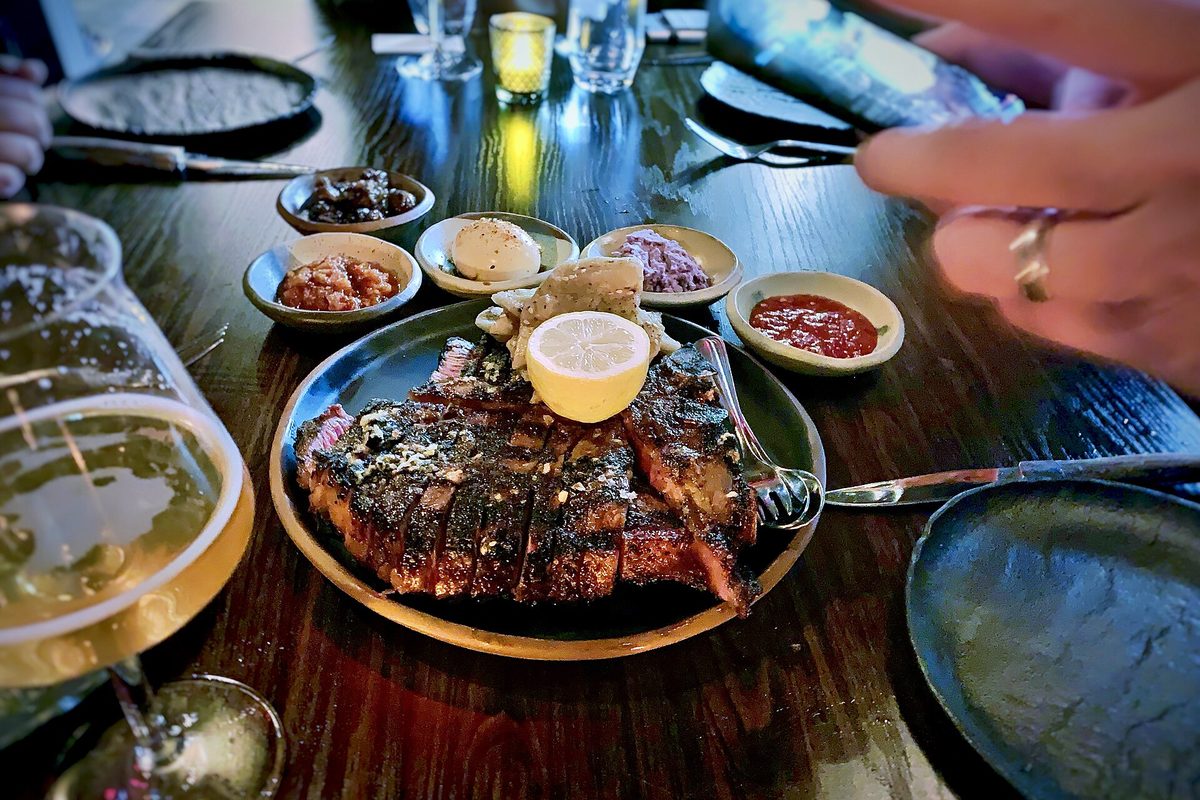
Which thank you to say in a restaurant, taxi, shop or office
Some situations have their own set phrase. Koreans use these instead of, or as well as, gamsahamnida.
| Situation | What to say | Why it fits |
|---|---|---|
| Paying at a café, convenience store or market stall | 감사합니다 (gamsahamnida) | Standard and polite. Expect it back. |
| Someone treats you to a meal (before eating) | 잘 먹겠습니다 (jal meokgetseumnida) | “I will eat well,” a thank you to the host or cook. |
| After that meal | 잘 먹었습니다 (jal meogeotseumnida) | “I ate well,” thanks for the food. |
| A colleague leaves after a long day | 수고하셨습니다 (sugohasyeotseumnida) | “You worked hard,” thanks for the effort. |
| Getting out of a taxi or leaving a shop | 감사합니다, or 수고하세요 (sugohaseyo) | Sugohaseyo means roughly “keep up the good work.” Some older people find it presumptuous from a younger person, so gamsahamnida is the safer exit line. |
| A friend buys you a coffee | 고마워, 잘 마실게 (gomawo, jal masilge) | “Thanks, I’ll enjoy it,” casual and natural. |
| Receiving a gift or business card | 감사합니다, taken with both hands | The two-handed gesture matters as much as the words. |
Office life has its own layer of thank yous. Sugohasyeotseumnida comes up at every handover and every after-work goodbye. Our explainer on Korean work culture and hierarchy shows where it fits.
Common mistakes foreigners make when saying thank you in Korean
- Using gomawo with strangers. It’s the classic K-drama habit. With staff or anyone older, use gamsahamnida or gomawoyo.
- Saying “hap-ni-da.” Pronouncing the spelling letter by letter marks you as a beginner right away. It’s ham-ni-da.
- Adding 요 to the formal form. “Gamsahamnidayo” mixes 2 speech levels and doesn’t exist. Pick gamsahamnida or gamsahaeyo.
- Answering every thank you with cheonmaneyo. It isn’t wrong, but anieyo or a nod sounds far more natural.
- Thanking with one hand while holding your phone in the other. The words are right but the gesture reads as careless, especially with elders.
FAQ
Is gamsahamnida or gomawoyo more polite?
Gamsahamnida is more polite. It uses the formal -ㅂ니다 ending, while gomawoyo uses the softer polite -요 ending. Both are respectful, but gamsahamnida is the safe choice with strangers, elders and at work.
What is the difference between kamsahamnida and gamsahamnida?
None. They’re the same word, 감사합니다, in 2 spellings. Gamsahamnida follows Revised Romanization, the official system in South Korea since 2000. Kamsahamnida reflects the older McCune-Reischauer style, which wrote the first sound with a k.
How do you say thank you very much in Korean?
Say jeongmal gamsahamnida (정말 감사합니다), “thank you so much.” For something more formal, use daedanhi gamsahamnida (대단히 감사합니다). Among friends, jinjja gomawo (진짜 고마워) works.
What do you say back when someone says gamsahamnida?
The most natural reply is anieyo (아니에요), “it’s nothing.” Cheonmaneyo (천만에요) is the textbook “you’re welcome” and is still correct, just a bit formal. In shops, people simply say gamsahamnida back to each other.
Is it rude to say gomawo?
Only with the wrong person. Gomawo is casual speech, perfect with close friends and younger people you know well. With strangers, staff or anyone older, it can sound disrespectful.
How do Koreans say thank you in a text?
Among friends, short forms like ㄱㅅ, ㄳ or just 감사 are common, as are 고마워 and the cute 고마워용. In work messages and emails, write the full 감사합니다, or 감사드립니다 to sound more formal.
What to learn after thank you in Korean
With thank you, sorry and excuse me covered, these 5 phrases complete a working survival kit:
- 안녕하세요 (annyeonghaseyo): hello, polite.
- 안녕히 계세요 (annyeonghi gyeseyo): goodbye, said by the person leaving to someone who stays.
- 안녕히 가세요 (annyeonghi gaseyo): goodbye, said to the person who is leaving.
- 이거 주세요 (igeo juseyo): “this one, please,” for pointing at a menu or shelf.
- 얼마예요? (eolmayeyo): “how much is it?”
Practice out loud with native audio. Online Korean dictionaries such as Naver Dictionary play recordings of each word, so you can check your ham-ni-da against a real voice. Say gamsahamnida 10 times today until it comes out as one smooth word. It’s the phrase you’ll use most in Korea.
Related reading



Sources k-korea.blog
Prices, opening hours and availability change. Check the official page before you buy or travel.