14 min read
Squid Game explained: 456 people in debt play 6 children’s games, and losing a game means death. The last player standing takes the whole cash pot. Every game except one comes from a real Korean schoolyard, and that is why the show hit so hard at home. Korean viewers recognized both the games and the debt.
This guide covers the games one by one, what the circle, triangle and square mean, the Korean words the subtitles flatten, and why a story about loan sharks and layoffs reached viewers around the world. Spoilers stay at the level of the season 1 setup. Anything past that is clearly marked.
Key takeaways
- 5 of the 6 games in season 1 are real Korean children’s games. The glass bridge is the one the show made up.
- The doll’s chant, “Mugunghwa kkochi pieotseumnida” (무궁화 꽃이 피었습니다), means “The rose of Sharon has bloomed.” The rose of Sharon is Korea’s national flower.
- Circle, triangle and square are ranks: workers, soldiers and managers. The same shapes appear in the Korean title logo.
- “Gganbu” (깐부) is old neighborhood slang for a partner you share everything with. After the marbles episode it became the show’s best-known Korean word.
- Korean title
- 오징어 게임 (Ojingeo Geim)
- Year
- 2021 (season 1)
- Genre
- Survival thriller, social drama
- Where to watch
- Netflix (a Netflix original). Check the Netflix app for audio and subtitle options in your country.
What is Squid Game about? The setup in 60 seconds
Seong Gi-hun is a laid-off car factory worker from Ssangmun-dong (쌍문동), a working-class neighborhood in northern Seoul. He gambles on horse races, owes money to loan sharks and can’t afford a birthday present for his daughter. A stranger in a suit at a subway station offers him a game of ddakji (딱지, slapping folded paper tiles) for cash. Gi-hun gets a business card printed with a circle, a triangle and a square.
He calls the number and is drugged. He wakes up in a dormitory with hundreds of other people in green tracksuits, each with a number. All of them are drowning in debt. Guards in pink jumpsuits and black masks explain the rules: win six games and take the prize. Nobody mentions what losing means until the first game ends.
Two details make the premise work. First, the players get a vote. A majority can stop the games at any point, so the show keeps asking why people walk back in when they could leave.
Second, the prize money is visible. It collects in a giant clear piggy bank hanging over the dorm, and the pile grows every time a player dies. Each death is turned into a number you can see.
Who made Squid Game?
Hwang Dong-hyuk (황동혁) wrote and directed it. Before it, he was known in Korea for the courtroom drama Silenced (도가니), the comedy Miss Granny (수상한 그녀) and the historical film The Fortress (남한산성). He has said in interviews that he wrote the first version of the story around the late 2000s and spent roughly a decade failing to find a backer. Studios thought it was too strange and too violent. Netflix finally picked it up, and in 2022 the show won Emmys, including best director for Hwang and best lead actor for Lee Jung-jae (이정재), who plays Gi-hun.
The 6 Squid Game games and the real Korean games behind them
If you grew up outside Korea, several of these games will look familiar under other names. What changes in the show is the punishment. The table puts the playground version next to the show’s version.
| Game in the show | Korean name | How kids play it | What the show changes |
|---|---|---|---|
| Red Light, Green Light | 무궁화 꽃이 피었습니다 | The “it” player faces a wall and chants. Everyone creeps forward and freezes when the chanter turns around. | A giant doll does the watching, and anyone caught moving is shot. |
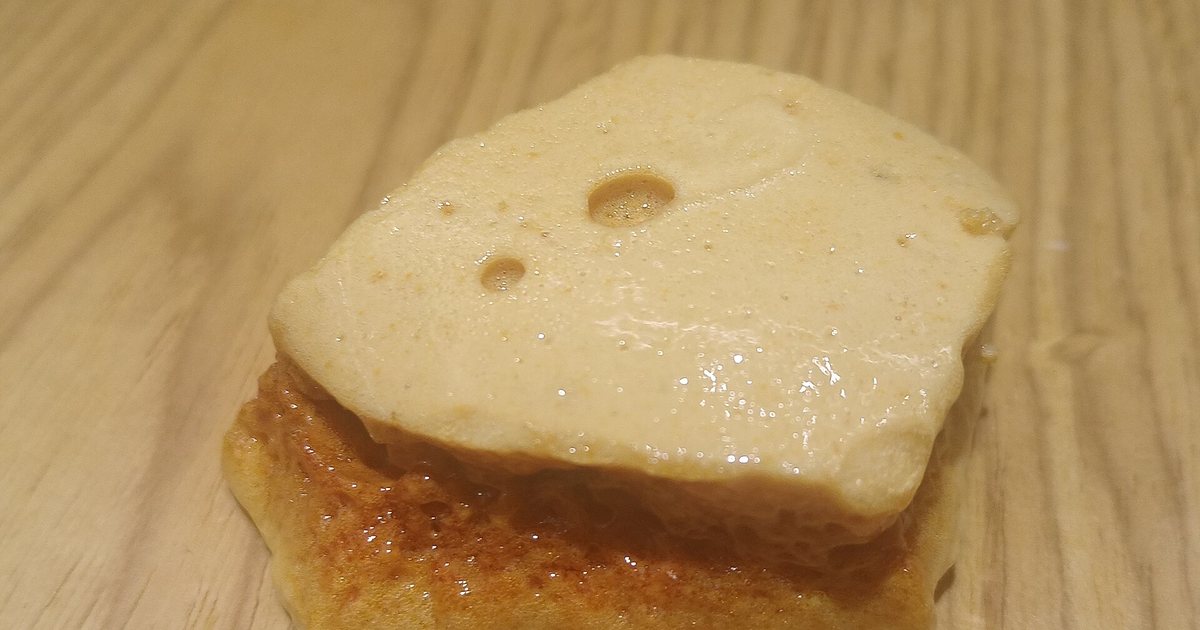
| Dalgona / honeycomb | 달고나 (also 뽀기, ppopgi) | Street vendors stamp a shape into melted sugar candy. If you cut the shape out without breaking it, you win a free candy. | Breaking the shape is fatal, and players don’t know which shape they’ll get. |
| Tug of war | 줄다리기 (juldarigi) | Two teams pull a rope. It’s a school sports day staple and a folk tradition. | The losing team is pulled off a high platform. |
| Marbles | 구슬치기 (guseul chigi) | Kids flick, toss or guess the number of marbles in a fist. The rules change from yard to yard. | Players pick partners first and only then learn they must play against them. |
| Glass stepping stones | 징검다리 (jinggeomdari, stepping stones) | No real playground version. The name comes from stepping stones across a stream. | A bridge of tempered and ordinary glass panels. Guess wrong and you fall. |
| Squid game | 오징어 게임 (ojingeo geim) | A squid-shaped court is drawn in the dirt. Attackers hop on one foot until they cross the squid’s “waist,” and they win by stepping on the small circle at the head. | The final, played between the last players standing. |
Why the doll’s chant is “the rose of Sharon has bloomed”
Korean kids don’t say “red light, green light.” They chant “Mugunghwa kkochi pieotseumnida”, ten syllables that the “it” player can sing as fast or as slowly as they like before turning around. That’s the trick. Changing the speed of the chant is how you catch people.
The mugunghwa (무궁화, rose of Sharon or hibiscus syriacus) is South Korea’s national flower, so a deadly game opens with a patriotic children’s line. The doll is often called Young-hee (영희), after the girl in old Korean primary school readers.
Why dalgona became a craze
Dalgona (달고나) is sugar melted with a pinch of baking soda until it foams, then pressed flat and stamped. Kids in many regions call the stamped version ppopgi (뽀기). It was cheap street candy sold outside schools for decades, and it is still made at nostalgia stalls and tourist streets. After the show came out, people around the world filmed themselves trying to pick shapes out of homemade candy with needles. The usual shapes are a circle, a triangle, a star and an umbrella, and the umbrella is the one players dread.

What the circle, triangle and square mean
The three shapes are the show’s main visual code. Once you know it, many scenes read differently.
- Circle (○): the lowest-ranked workers. They do the cleaning, carrying and cleanup.
- Triangle (△): armed soldiers who enforce the rules.
- Square (□): managers who give the orders.
The ranking copies the hierarchy of a Korean workplace, which is part of the joke. Even the people running a death game sit inside a strict ladder, can’t show their faces and are punished for breaking rank. Above the squares sits the Front Man in a black, angular mask, and above him are the masked foreign VIPs who come to bet on the players.
The shapes also link to the squid court, which is drawn with a circle, a triangle and a square. The Korean title logo uses the same three shapes to stand in for letters. And they’re printed on the business card that recruits Gi-hun. The first thing he holds and the last game he plays come from the same three shapes.
Why the players wear green and the guards wear pink
The green tracksuits look like old Korean school PE uniforms, the clothes many adults last wore in middle school. Putting grown men and women in them shrinks them back into children. The guards’ pink is a soft, toy-like color, which makes the violence more disturbing. Hwang has also described the arena sets, with their pastel staircases and huge playground props, as deliberately childish. The candy colors are there to contrast with the deaths.
Other symbols worth spotting
- The piggy bank: the prize is literally a children’s savings jar, and it is fed by the players’ deaths.
- Coffins with pink bows: bodies leave the arena wrapped like gifts.
- Player numbers: the players lose their names, and 456 (Gi-hun) and 001 matter to the plot.
- Ddakji tiles: the blue and red paper tiles in the recruiter’s case are the same ones Korean kids fold from old notebooks.
Squid Game and debt: why Korean viewers recognized it
Every player in the dorm has debt, and the show makes clear that most of them didn’t get there through one bad choice. They got there through a chain of small disasters. Korean viewers saw their own country in that, for a few reasons.
The layoff behind Gi-hun’s story
Gi-hun lost his job at “Dragon Motors” after a strike that police broke up violently. Many viewers in Korea read this as a nod to the 2009 strike at Ssangyong Motor, where a long factory occupation over mass layoffs ended in a police raid. The show never names it, but the flashbacks of riot police and a fellow worker dying make the reference hard to miss. Gi-hun’s gambling and borrowing come after the job loss, not before.
Hell Joseon and the spoon classes
In the 2010s, young Koreans began calling their country “Hell Joseon” (헬조선). The phrase combines “hell” with the name of the old Joseon dynasty to mock long hours, expensive housing and a job market that rewards family background. Another popular frame was spoon class theory (수저계급론). It splits people into gold spoons (금수저), born rich, and dirt spoons (흙수저), born with nothing.
Squid Game shows the dirt-spoon side up close and puts bored ultra-rich spectators above it. If you want background on Korea’s family-run conglomerates and why inherited wealth is such a sore point, read our guide to what a chaebol family is.
Debt beyond the working class
Cho Sang-woo, Gi-hun’s childhood friend, is the neighborhood success story. He graduated from Seoul National University (서울대, the country’s most prestigious school) and went to work in finance, and he is in deeper trouble than Gi-hun. That part of the setup carries much of the argument. The show is saying that in a system this harsh, even the people who did everything right can fall through.
The players as a cross-section of Korea
The main cast is built to cover groups Korean society often pushes to the edges. That’s a big reason the show reads as social commentary and not only as a gore thriller.
- Kang Sae-byeok (player 067): a North Korean defector who needs money to get her family out and to look after her younger brother. Defectors in the South often face prejudice and money trouble. For the other side of that border, see our explainer on daily life in North Korea.
- Abdul Ali (player 199): a Pakistani migrant worker whose boss hasn’t paid his wages. He brings in the lives of foreign laborers in Korean factories, who are often unseen.
- Oh Il-nam (player 001): an elderly man with a brain tumor who plays like a delighted child.
- Jang Deok-su (player 101): a gangster who owes money to the wrong people.
- Han Mi-nyeo (player 212): a loud, scheming survivor who attaches herself to whoever looks strongest.
Gi-hun’s mother, who runs a market stall and has diabetes, is another quiet piece of the picture. Gi-hun lives off her savings while she works, which is a familiar kind of shame for middle-aged Koreans who haven’t “made it.”
Korean words in Squid Game that subtitles flatten
A lot of the show’s emotion sits in forms of address and slang that don’t translate cleanly. Knowing these words makes several key scenes hit harder.
| English | Korean | Romanization | When to use it |
|---|---|---|---|
| Squid (and the name of the game) | 오징어 | ojingeo | The everyday word for squid. The game is named after the shape of its court. |
| Close partner, sworn buddy | 깐부 | gganbu | Old neighborhood slang for a friend you share everything with, marbles included. |
| Older brother (said by a man) | 형 | hyeong | A man speaking to an older man he’s close to. Ali calls Sang-woo this. |
| Older brother (said by a woman) | 오빠 | oppa | A woman speaking to an older man. Mi-nyeo uses it on Deok-su, and the subtitles lose the flirting. |
| Older sister (said by a woman) | 언니 | eonni | A woman speaking to an older woman she trusts. |
| Mister, middle-aged man | 아저씨 | ajeossi | A neutral way to address an older man you don’t know. Players use it for Gi-hun. |
| Honeycomb toffee | 달고나 | dalgona | The sugar candy from game two, also called ppopgi (뽀기). |
| Paper tile slapping game | 딱지 | ddakji | The recruiter’s game. You flip the other player’s tile by slamming yours down. |
| Rose of Sharon | 무궁화 | mugunghwa | Korea’s national flower and the first word of the doll’s chant. |
The gganbu scene carries the most cultural weight. In Korean playground custom, gganbu don’t keep separate piles. What one wins belongs to both. The word was nearly forgotten slang before the show, and after it aired Koreans briefly adopted it again in ads and everyday talk. For more terms like these, our guides to Korean honorifics and titles and Korean slang words explain why who calls whom “hyeong” or “oppa” says so much about a relationship.

Why Squid Game became a global hit
Netflix said at the time that Squid Game had become its most-watched series. Several things lined up to make that happen.
Rules anyone can follow
You don’t need to know Korean history to understand Red Light, Green Light. Each episode lays out simple rules, and the tension comes from watching people you care about try to survive them. The setup of a game, stakes and a ticking clock works in any language. Netflix’s global launch, with dubs and subtitles in many languages on the same day, let that simplicity travel.
Debt is not only a Korean problem
Viewers in the US, Latin America, Europe and Southeast Asia saw their own student loans, medical bills and gig work in the dorm. The show is very Korean in its details, but the central question is universal: what would you agree to if you owed more than you could ever repay? The Korean film Parasite (기생충), which won Best Picture at the Oscars in 2020, had already shown global audiences that Korean class stories could travel. Squid Game took that idea into a format people could binge.
Images built for the internet
The pink guards, the giant doll, the green tracksuits, the shapes and the dalgona candy are easy to recognize, cheap to copy and almost impossible to ignore. That made Squid Game one of the most popular Halloween costumes of its year, and the dalgona challenge spread across social video. Many fans who never finished the show still knew the shapes.
Common misreadings of Squid Game
A few ideas about the show come up again and again in comments and quick explainers. They’re worth correcting.
- “All the games are traditional Korean games.” Not quite. The glass bridge is invented, and the marbles game is several neighborhood variants rolled into one episode.
- “Korean kids play these games to the death.” Obviously not, but some viewers take the realism too literally. These are ordinary games from the 1970s and 1980s, the decades in which most of the adult players would have grown up.
- “The shapes are random design choices.” They come from the squid court and the title logo, and they set the ranks inside the game.
- “It’s a copy of Japanese death-game stories.” The survival-game premise is shared with titles like Battle Royale and Alice in Borderland. Squid Game stands apart for its focus on debt, middle-aged players and Korea’s specific class worries.
Spoiler zone: the big themes of season 1’s ending
Spoiler warning: this section talks about how season 1 ends in general terms. Skip to the next heading if you haven’t finished episode 9.
The final episodes turn the show’s question back on the people who run it. The VIPs see the players as racehorses, and the reveal of who is behind the games makes the point clear: the very rich are bored, and other people’s desperation is their entertainment. Gi-hun leaves the arena with the money and can’t bring himself to spend it. He dyes his hair red and turns away from a flight at the end, which sets up a story about whether one person can fight the system.
The ending also comes back to the subway platform. Gi-hun sees the recruiter slapping ddakji with another desperate man. The machine keeps running because there will always be new people with nothing left to lose. That bleak loop is the show’s sharpest comment on debt.
What to watch after Squid Game season 1
Netflix released later seasons that continue Gi-hun’s story, and it also made a reality competition, Squid Game: The Challenge, with real contestants and no deaths. Check the Netflix app for which seasons and spin-offs are available where you live, since catalogs change by country. If you want to find a title on other services, JustWatch shows what’s streaming in your region.
To go deeper into the same themes, these are the best next steps:
- Parasite (기생충): Bong Joon-ho’s film about a poor family slipping into a rich household. It’s the closest match in theme.
- Silenced (도가니): Hwang Dong-hyuk’s earlier film, based on real abuse at a school for deaf children, which led to legal change in Korea. It’s grim, and it shows where his anger at institutions comes from.
- All of Us Are Dead (지금 우리 학교는) and Sweet Home (스위트홈): Korean survival series that use the same pressure-cooker setup in a school and an apartment block.
And if the dalgona scene made you hungry, Korean street food is easier to try at home than you might think. Start with our Korean food guide.
FAQ
What does “Squid Game” mean in Korean?
The Korean title is 오징어 게임 (ojingeo geim), and ojingeo means squid. It’s named after a real playground game whose court, drawn in dirt, looks like a squid with a round head, a triangular body and a square base. Attackers try to reach the head while defenders push them out of bounds.
Is Squid Game based on a true story?
No. The death games are fiction. The background is real, though: household debt, layoffs after violent strikes, defectors, unpaid migrant workers and the gap between rich and poor. Many Korean viewers linked Gi-hun’s lost factory job to the 2009 Ssangyong Motor strike.
What do the circle, triangle and square mean in Squid Game?
They mark the ranks of the masked staff. Circles are workers, triangles are armed soldiers, and squares are managers. The same shapes appear on the recruitment card, in the title logo and in the outline of the squid game court.
What does gganbu mean?
Gganbu (깐부) is old Korean neighborhood slang for a best friend and partner. Gganbu share everything, including their marbles. The word comes up in the marbles episode and carries one of the show’s most painful scenes.
What is the candy in Squid Game?
It’s dalgona (달고나), also called ppopgi (뽀기). It’s a thin sheet of sugar melted with a little baking soda and stamped with a shape. Kids in Korea tried to cut the shape out cleanly with a pin to win a free candy, which is the game the show uses.
Is Squid Game appropriate for teenagers?
It’s made for adults. The violence is graphic and frequent, and there are disturbing scenes beyond the games. Ratings differ by country, so check the maturity rating shown on Netflix where you live and use parental controls if needed.
Related reading





Sources k-korea.blog
Prices, opening hours and availability change. Check the official page before you buy or travel.