13 min read
Ulzzang fashion is the 2000s Korean internet look named after 얼짱, meaning “best face.” It peaked in the early 2010s with oversized hoodies, short pleated skirts, knee socks, lens-free round glasses, circle lenses and selfies shot from a high angle, all meant to make the wearer look young, soft and ready for the camera.
You can still wear it. Keep the silhouettes and the soft, fresh face, and drop most of the costume extras. That’s how Korean street style handles the look today.
Key takeaways
- The word joins eolgul (얼굴, face) and jjang (짱, slang for “the best”), so an ulzzang is literally a “best face.”
- It described people before it described clothes: students who got famous for their selfies on early-2000s Korean portals and Cyworld, the social network Korea used before Instagram.
- The classic 2010s formula: a big top, a short bottom, knee socks or sneakers and a face that looks bright, pale and wide-eyed.
- To update it, keep one signature piece per outfit (the oversized knit, the pleated skirt or the round frames) and wear everything else plain.
What ulzzang fashion means: the word 얼짱
Ulzzang (얼짱, roughly “ul-jjang”) is a piece of Korean internet slang. Eolgul (얼굴) means face. Jjang (짱) is casual slang for “the best” or “number one.” Put the two together and you get a nickname for someone whose face is the best in the room, or in the comment section.
The same pattern produced related words. Momjjang (몸짱, “best body”) is still used for very fit people. Eoljjang gakdo (얼짱 각도, “ulzzang angle”) is the high, slightly tilted selfie angle that makes your face look smaller and your eyes bigger. Many Koreans still use that phrase as a joke whenever someone raises their phone above their head.
Is ulzzang a style or a person?
In Korean it’s mostly a person. Call someone 얼짱 and you’re saying they’re very good-looking, often with a nostalgic, 2000s flavor. Outside Korea, especially on Tumblr, YouTube and Pinterest during the 2010s, “ulzzang” grew into the name of a whole aesthetic: clothes, makeup, hair and photo style together. When you type ulzzang fashion into Google in English, you get that second meaning, and it’s the one this guide covers.
That gap matters if you visit Korea. Ask a Seoul shop assistant for “ulzzang clothes” and you may get a puzzled smile. Ask for oversized knits, a pleated skirt or a “daily look” (데일리룩, the term Korean shops use for everyday outfits) and you’ll get exactly what you want.
Where the ulzzang look came from: selfies, Cyworld and best-face contests
The look started with photos, not designers. Korea had fast home broadband earlier than most countries (we explain why in our guide to Korean internet speed), and in the early 2000s teenagers were already posting pictures on a large scale. Portals such as Daum and Naver hosted fan “cafes” (카페, online community boards), and Cyworld gave every user a mini-homepage with a photo album.
Ordinary students posted selfies. Fan cafes and online “best face” contests picked favorites, and a few of those students became famous across the country for their pictures alone. Copycats followed, and a recognizable formula settled in.
Why the camera shaped the clothes
Early webcams and compact digital cameras were low-resolution, and photos were viewed as small thumbnails. That pushed the style toward details that read clearly in a tiny square: a pale, even complexion, big dark eyes, blunt bangs, a giant bow, thick round frames, bold plaid and hoodie strings. Subtle tailoring disappeared at that size. A cat-ear headband didn’t.
Why school uniforms keep showing up
Many of the first ulzzangs were high school students, and their uniforms (gyobok, 교복) were simply what they wore in photos: fitted blazers, short pleated skirts, ribbon ties, knee socks. The uniform became part of the aesthetic, and “school look” outfits stayed popular long after graduation. You can still see the nostalgia today in the uniform rental shops near Lotte World, the Seoul theme park, where adult visitors dress up for photos.
How online shopping spread it
Korean online fashion stores grew up at the same time, and many of them used young models with exactly this look. Stylenanda, the best-known label to come out of that era, started as an online shop and was later bought by L’Oréal. Shops like these turned a selfie trend into something anyone could order.
The early-2010s ulzzang look, piece by piece
By the early 2010s the formula was fixed: big on top, short or slim below, cute accessories, soft colors. Here’s every core piece, what it looked like then, and how Korean street style wears it now.
| Piece | The 2010s ulzzang version | Today’s update | Why the update works |
|---|---|---|---|
| Top | Oversized hoodie or chunky knit with “sweater paws” covering the hands | Boxy cream or gray knit, or a clean oversized shirt | Keeps the soft, roomy shape without the teen-bedroom feel |
| Bottom | Very short pleated or tennis skirt, high-waisted skinny jeans | Pleated skirt at mid-thigh or knee, or wide-leg jeans | Same proportions, easier to wear in daylight and at work |
| Legwear | Knee socks or over-the-knee socks, often striped | Plain crew socks or sheer black tights | Still a nod to the school look, but quieter |
| Shoes | Canvas sneakers, platform sneakers, Mary Janes | Chunky loafers, simple leather sneakers, low Mary Janes | More grown-up materials, same cute shape |
| Accessories | Huge hair bows, cat-ear headbands, lens-free round glasses, mini backpacks | One hair clip or small ribbon, thin metal frames, a shoulder bag | One playful detail reads as styled; five reads as costume |
| Couple look | Fully matching outfits for couples (커플룩) | Matching one item, such as the same sneakers or knit color | Coordinated in photos without looking like a uniform |
The ulzzang silhouette: big on top, short below
The shape is the whole trick. An oversized top makes the shoulders and arms look smaller. A short skirt or slim jeans shows the legs and balances all that volume. Flat or chunky shoes keep it casual. Put those three together and the outfit looks young even in plain colors, which is why the silhouette outlived almost everything else from the era.
Colors, prints and fabrics
Expect pastel pink, baby blue, mint, cream and navy. Prints ran to plaid, Breton stripes, polka dots, cartoon characters and slightly odd English slogans on sweatshirts. Fabrics were soft and cozy: fleece, knit, cotton, faux fur on hoods. Black-and-white minimalism belonged to a different, cooler Korean look and rarely showed up in ulzzang photos.
Ulzzang makeup and hair: the “best face” part of the look
The clothes were the frame. The face was the point, since the word literally means “best face.” If you only copy the outfit, it won’t read as ulzzang. These are the elements that defined the classic face (our 7-step Korean makeup guide covers the current techniques in detail):
- A pale, even base. BB cream (a tinted moisturizer-foundation hybrid Korean brands made famous) gave a bright, matte-to-satin finish, often a shade lighter than the wearer’s skin.
- Straight brows (일자 눈썹, “one-line brows”), flat and soft instead of arched, which make the face look younger.
- Puppy eyeliner, a line that tips slightly down at the outer corner so the eyes look round and gentle, not sharp.
- Aegyo sal (애교살), the small puffy band under the lower lashes. Ulzzangs highlighted it with a light shimmer and a faint shadow underneath to look cheerful.
- Circle lenses, colored contacts with a dark outer ring that make the iris look larger.
- Gradient lips (그라데이션 립): color in the center of the lips, blurred out toward the edges, like you’ve just eaten a popsicle.
Hair was just as coded. Think full blunt bangs or wispy see-through bangs (시스루 뱅), long straight hair dyed chestnut brown, or a chin-length bob. For guys it meant a soft fringe covering the forehead, which is why you’ll see “ulzzang boy” (얼짱 남자) hair in so many 2010s barbershop photos.
The photo was part of the style
An ulzzang outfit was finished by the camera. The high 45-degree angle, a hand near the face (the V sign or a cheek touch), soft window light and early beauty-filter apps all helped. Remember that when you compare yourself to old reference photos: many of those faces were edited, and nobody looks like that in a mirror.
How ulzzang style evolved after its peak
Two things happened at once. Inside Korea, the word started to sound dated. Outside Korea, it was getting bigger.
Why Koreans rarely say “ulzzang fashion” now
Cyworld faded as smartphones arrived, and Instagram became the main stage. The old best-face contests and fan cafes lost their pull, and the vocabulary moved with them. Korean fashion posts now talk about a daily look, OOTD or a specific mood (a “campus look,” a “clean look”) instead of ulzzang. Saying 얼짱 today often sounds like a fond throwback, a bit like an American saying “MySpace angles.”
What happened outside Korea
Abroad, ulzzang took off on Tumblr, Pinterest and YouTube makeup tutorials, often as a fan’s way into Korean culture alongside K-dramas and K-pop. Over time the global conversation moved toward “Korean fashion” and idol styling, and pieces of the old ulzzang kit returned under new names. Bows, Mary Janes, knee socks and pleated skirts came back worldwide through the Y2K and “coquette” trends, often without anyone calling them ulzzang.
What changed in the face
Korean makeup moved from pale and matte to glowy and skin-like. Brows got fuller and more natural, circle lenses got subtler (or vanished), and the goal shifted from looking doll-like to looking well-rested. The youthful softness stayed, and the heavy tricks faded.
Ulzzang vs K-pop idol style vs today’s Korean street style
These three get mixed up all the time online. They overlap, but they come from different places and want different things.
- Ulzzang style came from regular students and online selfie culture. Its goal was cute and approachable, styled for a phone camera, and cheap enough for a teenager.
- K-pop idol style is made by professional stylists for stages, music videos and photo shoots. It changes with every comeback (a new album release and its promotion) and can be anything from glam to grunge. Even idols’ off-duty outfits are planned, as our explainer on K-pop airport fashion shows.
- Today’s Korean street style is calmer: neutral colors, oversized coats, wide trousers, clean sneakers, minimal jewelry. It borrowed the ulzzang silhouette and the soft face, and dropped most of the cute props.
So if a TikTok calls a black leather jacket and a sharp cat-eye “ulzzang,” it’s really closer to idol stage styling. If it’s a cream knit, a plaid mini and round glasses, that’s the real thing.
How to wear ulzzang fashion today: a worked example
The modern rule is simple: one hero piece, everything else quiet. Here’s how to build it.
- Pick the silhouette first. Choose one oversized top (knit, sweatshirt or shirt) that ends at the hip or covers it.
- Balance it below. A pleated skirt, slim jeans or straight trousers. If the top is huge, keep the bottom fitted, or the whole outfit swallows you.
- Choose one signature detail. Round frames, a small ribbon clip, crew socks with loafers or a plaid skirt. Just one.
- Stick to a soft palette. Cream, gray, light blue, navy and one pastel. Save bright prints for a single item.
- Finish with a fresh face. Skin-like base, straight soft brows, a bit of shimmer on the aegyo sal and a blurred lip tint. That’s what makes it read as Korean, not just preppy.
Worked example: one outfit, three versions
Start with a cream oversized cable knit and a gray pleated skirt.
The full 2010s throwback: add white knee socks, platform canvas sneakers, a big black bow and thick round glasses. Fun for a themed photo day in Seoul or a costume party. Too much for most offices.
The everyday update: swap the knee socks for plain crew socks and the sneakers for chunky loafers, keep the round glasses in a thin metal frame, and carry a small shoulder bag. This is the version you’ll actually see on a Seoul campus.
The guys’ version: keep the cream knit, change the skirt for straight gray trousers or wide jeans, add white leather sneakers and a soft fringe. The classic “ulzzang boy” look was this soft and boyish, and it still works.
Ulzzang fashion for cold and hot weather
Winter is easy, since the style was built on knits, hoodies and long padded coats over short skirts with tights. In summer, switch to an oversized cotton shirt or a boxy short-sleeve tee over a tennis skirt or shorts, with crew socks and sneakers. Same proportions, lighter fabric.
Where to buy ulzzang-style clothes, in Seoul or from abroad
None of these pieces needs a special label. They’re basics, styled a certain way. Still, Korean shops cut them the way the look expects.
Shopping in Seoul
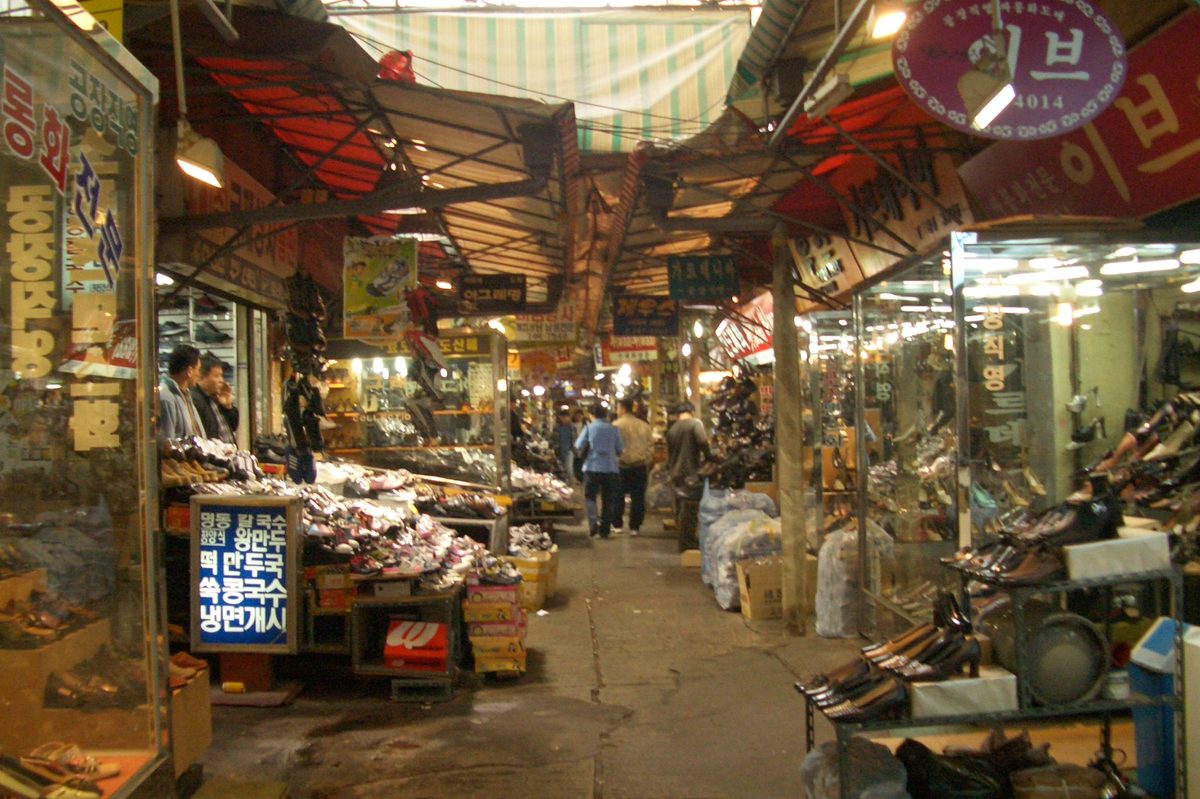
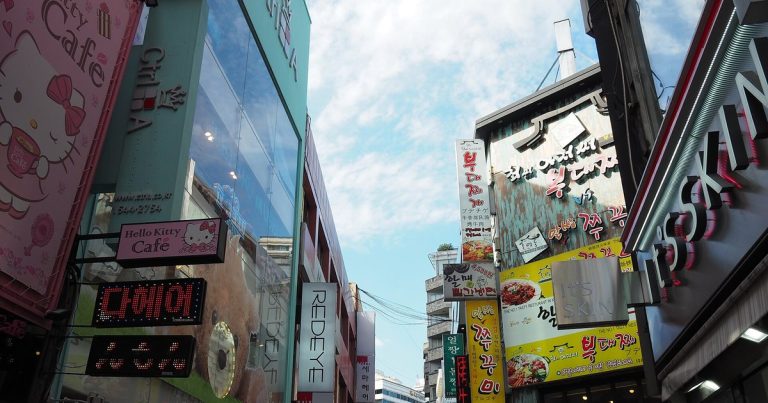
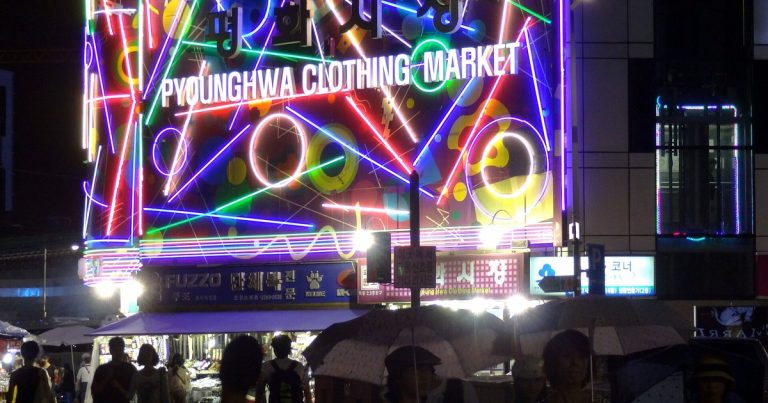
The look’s natural habitat is the cheap and fast end of the market. Dongdaemun’s wholesale and retail fashion malls supply much of Korea’s online shopping, and Hongdae and the streets around Ewha Womans University are packed with small shops selling knits, pleated skirts and accessories. Myeongdong mixes clothing with beauty chains such as Olive Young, so you can pick up lip tints and brow pencils on the same trip. Our guide to where to shop in Seoul compares the main areas.
Shopping from abroad
Many Korean online stores ship internationally, and global retailers carry Korean brands too. Before you order, check three things on the store’s official page: international shipping options, return rules for overseas orders and the size chart.
Korean sizing: read the centimeters
Lots of Korean clothing is sold as “free size” (프리사이즈), which means one size that’s meant to fit most people. In practice it often runs small and short on many Western bodies. Ignore the label and compare the listed measurements in centimeters (chest width, length, waist) with a piece you already own.
Common ulzzang fashion mistakes and how to avoid them
- Wearing every prop at once. Bow, cat ears, knee socks, slogan hoodie and backpack together look like a costume outside a theme park. Pick one.
- Getting the proportions backward. Oversized top plus oversized bottom loses the shape. One side has to be fitted.
- Buying lenses from random sellers. See the callout above. Your eyes aren’t worth the shortcut.
- Chasing filtered faces. Old ulzzang photos were angled, lit and edited. Use them for mood, not as a target for your real face.
- Going too pale. The early-2010s base was often lighter than the wearer’s skin. Current Korean makeup matches your skin tone and adds glow instead.
- Ignoring the setting. School-uniform styling reads as playful at a theme park or a photo studio. At a job interview it reads as odd, in Seoul or anywhere else.
FAQ
What does ulzzang mean in English?
Ulzzang (얼짱) means “best face.” It joins eolgul (얼굴, face) and jjang (짱, slang for “the best”). In Korea it mainly describes a very good-looking person, while abroad it also names the 2010s fashion and makeup style linked to those people.
Is ulzzang still a thing in Korea?
The word sounds a little retro in Korea now, and fashion posts tend to say “daily look” or name a specific mood instead. The look itself survived in a quieter form: oversized knits, pleated skirts, soft makeup and youthful hair are still everywhere on Seoul streets and campuses.
Can guys wear ulzzang fashion?
Yes. “Ulzzang boy” style was a big part of the trend, built on a soft forehead fringe, oversized knits or hoodies, slim or straight trousers and clean sneakers, often with round glasses. The same one-hero-piece rule applies.
What is the ulzzang angle?
The ulzzang angle (얼짱 각도) is a selfie taken from above, roughly at 45 degrees, with the face slightly tilted. Shooting from above makes the jaw look smaller and the eyes bigger, which is why it became the signature photo pose of the era. Koreans still use the phrase, often jokingly.
Is ulzzang the same as K-pop idol style?
No. Ulzzang style came from regular students and online selfie culture, while idol style is created by professional stylists and changes with every comeback. They influence each other, but ulzzang leans cute and everyday, and idol style can go anywhere from glam to edgy.
Do I need circle lenses for the ulzzang look?
No. Soft puppy liner, a lit-up aegyo sal and the right brows do most of the work, and many Koreans skip lenses entirely now. If you do want them, get a prescription and fitting from a licensed eye-care professional first.
What to try next with ulzzang style
Start with the cheapest experiment: put an oversized knit you already own over a pleated skirt or slim jeans, add one detail (round frames or crew socks with loafers), and take a photo from the ulzzang angle to see if the proportions work. If you like it, the face is the next step, and straight brows and a gradient lip change the mood more than any new clothes.
Heading to Seoul? Plan a half day around Hongdae or the Ewha area for clothes and a beauty stop for tints, and bring your measurements in centimeters. If you’re shopping online from home, compare size charts with clothes you own before you order anything labeled free size.
Related reading
Sources k-korea.blog
Prices, opening hours and availability change. Check the official page before you buy or travel.