13 min read
North Korea daily life for most of its roughly 26 million people is shaped by two systems that pull against each other. On one side is a state that assigns your job, your home and your class rank. On the other are private markets, which have fed families since the famine of the 1990s. Nearly everything outsiders know comes from defectors (people who escaped the country), the 2014 United Nations Commission of Inquiry and research bodies in Seoul and Washington, so read it as a well-sourced picture with a time lag.
The gap between the official image and the routines people describe explains a lot. It’s the reason family background, market trading and smuggled South Korean dramas carry so much weight inside the country.
Key takeaways
- A family’s songbun (성분), a political class file traced back through the father’s line, still affects where people may live, what they may study and whether they can join the ruling party. The UN Commission of Inquiry and defector-based research both report this.
- The state ration system largely broke down during the 1990s famine. Since then, private markets called jangmadang (장마당) have been where most families get their food and income.
- Defectors describe men being tied to an assigned state workplace while women in many households run the market trade that actually pays the bills.
- You need a residence permit to live in Pyongyang, and the capital is reserved for families the state trusts. Provincial towns get less food and electricity, and people there have less freedom to travel.
What North Korea daily life looks like for most people
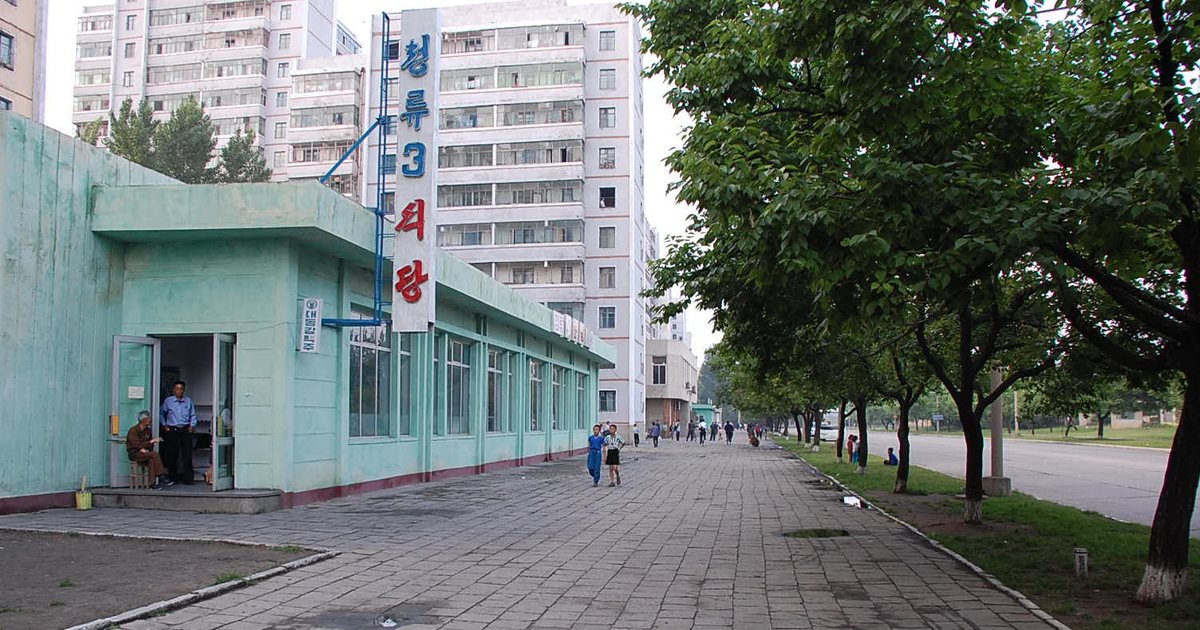
Start with a composite household in a provincial city, built from the routines defectors describe again and again. It’s an illustration, not a real family. The father reports to a state factory that may barely run because of power and material shortages. He still has to show up or pay the enterprise to excuse him, since the workplace is where the state keeps track of him.
The mother leaves early for the local market, where she sells home-made food, clothes or Chinese goods. That stall is often the household’s real income. The children go to school and are regularly pulled out for organized labor such as helping on farms in planting and harvest season. Everyone attends political study sessions, and the week ends with a group meeting where each person reviews their own conduct.
At home, the family belongs to a neighborhood unit that knows who visits and who stays overnight. In the evening the power may cut out. If someone has a USB stick with a foreign drama on it, they watch with the curtains closed, because researchers and defectors report that getting caught can bring heavy punishment.
None of this is exotic to North Koreans. It’s the ordinary rhythm. The details shift by region, by family class and by how much money a household has made in the markets.
How the songbun (성분) class system shapes your life
Songbun is the state’s record of a family’s political reliability. It was built through investigations from the late 1940s through the 1960s. Families were sorted by what relatives did around the time of national division and the Korean War. Descendants of anti-Japanese fighters and war heroes ranked high, and descendants of landlords, collaborators or people who fled South ranked low.
What are the 3 songbun classes?
Researchers describe three broad layers: the core class, loyal to the regime; the wavering class, the large middle; and the hostile class, treated as suspect. A 2012 study by the Washington-based Committee for Human Rights in North Korea, titled Marked for Life, mapped dozens of subcategories under those three headings. The class passes mainly through the father’s line, so a child inherits a grandparent’s file.
What songbun decides
The UN Commission of Inquiry found that songbun affects where people may live, which schools and jobs they can get, whether they can join the Workers’ Party and how harshly they’re punished for offenses. Low-songbun families have historically been pushed toward mines, farms and remote northern provinces. High-songbun families dominate Pyongyang, the officer corps and the elite universities.
The market era has blurred this a little. Researchers and defectors report that money can now buy some things songbun used to gatekeep, such as a better job posting or relief from mobilizations. Money hasn’t erased the file, though. A wealthy trader from a low-songbun family still faces a ceiling that a poorer core-class family doesn’t.
Work units and the weekly routine: jobs, inminban and life reviews
In theory, the state assigns every adult a workplace after school or military service. That workplace, called a work unit, is far more than an employer. It’s where your political organization meets, where you get assigned to mobilization campaigns and, historically, where your rations came from.
Paying not to work: the August 3 system
Many state enterprises have run far below capacity since the 1990s. Defectors describe a widespread practice named after the August 3, 1984 consumer goods campaign. A worker pays the enterprise a fee or a share of earnings, stays on its books and goes off to trade or work privately. It keeps the registry intact while the family earns real money elsewhere.
The inminban (인민반) neighborhood unit
Every household belongs to an inminban, a neighborhood unit made up of a few dozen families. Its leader, usually a woman, passes on state instructions, organizes cleaning and labor duties and keeps an eye on residents. According to defector accounts and the UN inquiry, that includes reporting overnight guests who aren’t registered.
Life review sessions
Everyone above primary-school age belongs to a state organization, such as the children’s union, the youth league, a trade union, the women’s union or the farmers’ union. Each one holds a regular saenghwal chonghwa (생활총화), a life review session where members criticize their own lapses and those of others. Defectors consistently describe these as a weekly fixture. They also say they’re tiring and very ritualized.
Mobilization campaigns
The state runs “battles,” intensive production drives that last a set number of days. It also sends office workers, students and soldiers to help on farms during rice planting and harvest. For many families the main cost is time taken away from the market.
Food and the jangmadang (장마당): how people actually eat
For decades the Public Distribution System, the state ration network, was supposed to feed non-farm households grain at nominal prices. It largely stopped working in the mid-1990s, during the famine North Korea calls the Arduous March (고난의 행군). Estimates of how many people died vary widely between researchers, and no independent count exists.
People who survived did it by trading. Farmers’ markets that the state had tolerated on a small scale grew into jangmadang, the general markets where you can now buy rice, corn, pork, Chinese clothing, phones and solar panels. Defector-based surveys published in Seoul, including the annual white papers from the Korea Institute for National Unification, report that most households now depend on market activity for much of their income.
What ordinary North Koreans eat
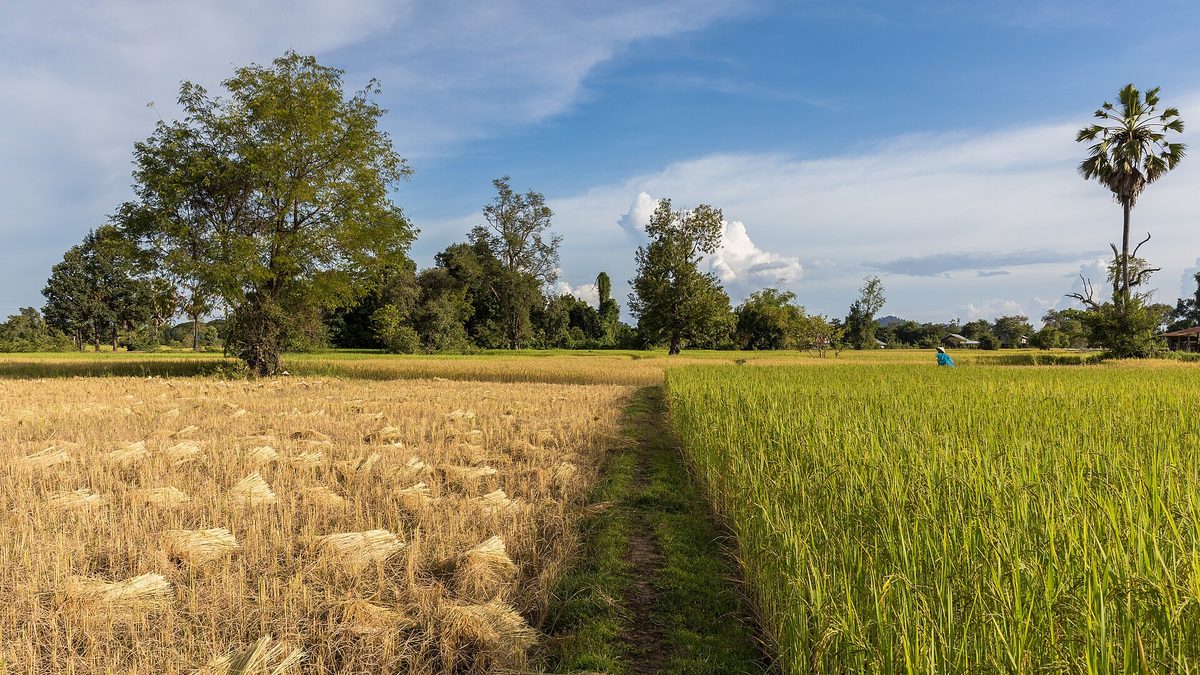
The staples are familiar to anyone who knows Korean food, with less of everything. In the provinces, rice is often stretched with or replaced by corn. Kimchi made in the late-autumn kimjang season (the big communal kimchi-making) carries families through winter.
Corn noodles, tofu, soybean paste and seasonal vegetables fill out the table. Meat is a market purchase, not a given. UN food agencies have repeatedly assessed a large share of the population as food insecure.
The state’s on-off relationship with markets
Policy has swung back and forth. A 2002 package of economic management changes loosened prices and wages. A currency redenomination at the end of 2009 wiped out cash savings held by market traders and caused widespread anger, according to reporting at the time.
Researchers have since described cycles of tolerance and crackdown, especially on grain trading. A new class of wealthy traders, the donju (돈주, “money masters”), now finances housing construction and transport. They operate in a legal grey zone that depends on official protection.
Housing, electricity and phones in North Korea
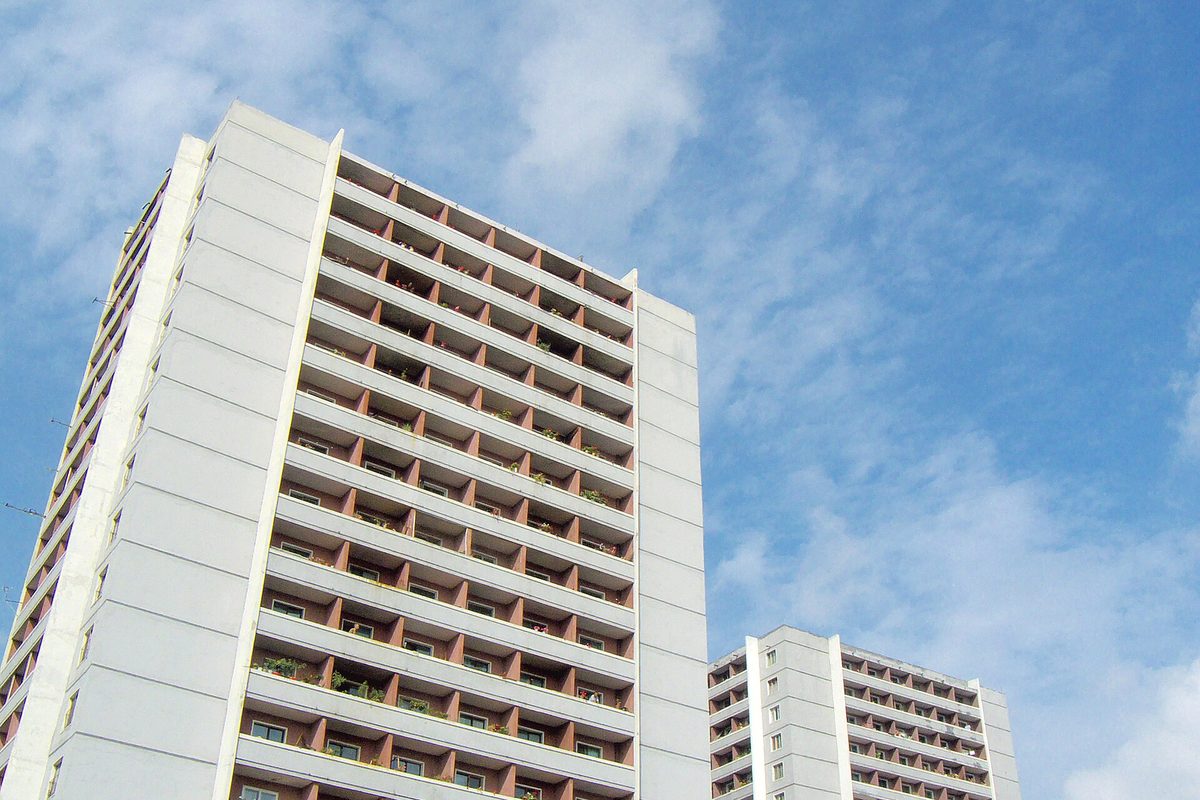
Officially, the state allocates all housing and nobody owns a home. In practice, defectors and researchers report that residence rights are bought and sold informally, often through officials, and donju money has funded new apartment blocks. City households mostly live in apartments. Farm families live in low, single-story houses grouped around cooperative farms.
Power cuts as a fact of life
Satellite images of the Korean Peninsula at night, with the South lit up and the North almost dark, sum up the electricity problem. Outside favored parts of Pyongyang, people describe power arriving only for a few hours. Small solar panels on balconies and windowsills have spread widely in recent years, according to visitors and researchers, and they charge phones, lights and TVs.
Phones without the internet
Millions of North Koreans own mobile phones, but those phones connect only to a domestic network. Ordinary citizens have no access to the global internet. They can use Kwangmyong, a closed national intranet. Phones near the Chinese border that connect illegally to Chinese networks are a known channel for calls to defector relatives, and researchers report they carry serious risk.
Foreign media and the 2020 law
Smuggled South Korean dramas, films and music have circulated on USB sticks and SD cards for years. In 2020 North Korea passed a law against “reactionary ideology and culture,” widely reported by South Korean researchers and media. It set severe penalties for watching or distributing South Korean content and for copying South Korean speech. The rule even covers slang and forms of address that sound South Korean, the kind of words covered in our guide to Korean slang words and their meanings.
School and military service in North Korea
In 2012 North Korea adopted 12 years of free, compulsory education: one year of kindergarten, five years of primary school and six years of secondary school split into junior and senior stages. The curriculum is built around the ruling Kim family. Children study the lives of Kim Il Sung, Kim Jong Il and Kim Jong Un as core subjects (our profile of Kim Jong Un explains how the third leader fits in).
What a school day includes beyond lessons
Children join the Korean Children’s Union in primary school and wear its red scarf. Defectors describe schools collecting “assignments” from pupils, such as scrap metal, rabbit pelts or paper, plus regular days of farm labor. Families with money often pay to cover these quotas. Private tutoring for richer families has been reported, too.
How long is military service in North Korea?
For men, conscription has historically been one of the longest in the world. It’s commonly reported at around a decade, and later reports describe adjustments to that length, so treat any single figure with care. Women have long served as volunteers, and reports from the 2010s said service became mandatory for women for a shorter term. Soldiers spend a lot of their time on construction projects and farm work as well as training. Defectors also describe poor rations in lower-ranking units.
University and the class filter
Entry to top universities such as Kim Il Sung University depends on exam results, recommendations and songbun. For many young men, the main routes to party membership and a better career are long military service followed by a good record.
Life in Pyongyang vs the provinces
North Korea effectively has two standards of living. Pyongyang is where trusted families live with permits, and residents can be expelled for political offenses. The provinces, especially the mountainous north along the Chinese border, depend far more on markets and smuggling.
| Area of life | Pyongyang | Provincial towns and farms |
|---|---|---|
| Who lives there | Mostly core-class families with residence permits | Everyone else, including low-songbun families sent to mines and farms |
| Food | Priority supply through state channels plus well-stocked markets | Mainly the jangmadang; corn often replaces rice |
| Electricity | The most reliable in the country, though cuts are still reported | A few hours a day in many areas; solar panels fill gaps |
| Travel | Entry from outside the capital needs special permission | A travel permit is needed to leave your home area |
| Outside information | Tight surveillance, with high costs for getting caught | Border areas get more smuggled media and Chinese phone signal |
| What foreigners see | Most of what organized tours show | Rarely seen by outsiders apart from selected sites |
What we know about daily life, and how we know it
The firmest ground is evidence that independent sources agree on. The UN Commission of Inquiry interviewed more than 80 witnesses in public hearings and many more privately. In 2014 it concluded that North Korea’s systematic human rights violations included discrimination based on songbun, restrictions on movement and control of information, and that some amounted to crimes against humanity. North Korea rejected the report.
Researchers add the economic picture. That includes the Korea Institute for National Unification, a South Korean state think tank; the Committee for Human Rights in North Korea in Washington; and analysts at 38 North, a North Korea analysis site. Specialist outlets such as Daily NK and NK News report from contacts inside the country. Single reports from those contacts are useful but should be read as reports, not confirmed facts.
Timeline of events that changed ordinary routines
| When | Event | Effect on daily life |
|---|---|---|
| Late 1950s to 1960s | Family background investigations formalize songbun | Class file shapes housing, jobs and schooling for generations |
| 1984 | August 3 consumer goods campaign | Origin of the “August 3” side-production and paid-absence system |
| Mid-to-late 1990s | Famine (Arduous March), ration system breaks down | Markets become the main source of food and income |
| 2002 | Economic management changes on prices and wages | Partial recognition of market prices |
| 2009 | Currency redenomination | Cash savings of traders wiped out |
| 2012 | 12-year compulsory education adopted | Schooling extended by one year |
| 2014 | UN Commission of Inquiry report | First UN-level documentation of the class system and controls |
| 2020 | Law against “reactionary ideology and culture” | Harsher penalties for foreign, especially South Korean, media |
What we don’t know about life inside North Korea
Be careful with any confident claim about “how North Koreans live now.” There are real blind spots.
- How representative defectors are. Most escapees come from the northern border provinces, and many left years before they gave interviews. Pyongyang residents and core-class families are underrepresented.
- Current conditions after border closures. North Korea sealed its borders tightly from 2020, which cut the flow of defectors and smuggled information. Recent testimony is thinner than it was a decade ago.
- Reliable numbers. No independent census, price index or food survey reaches the whole country. Market prices quoted by specialist outlets come from small samples of contacts.
- Official claims. State media, led by the Korean Central News Agency (KCNA), describe rising living standards, new housing districts and record harvests. Outsiders can’t verify most of these claims and treat them as the government’s own account.
What to watch and read next on North Korea daily life
The biggest signal for ordinary people is how the state handles markets. Grain trading rules, crackdowns on private sellers and cross-border trade with China all move household income more than any parade does.
Watch ideology, too. North Korea has posted a revised constitution that drops the goal of reunification with the South, according to UPI. NK News reported that the text confirms Kim’s expanded powers. One open question is how quickly that change reaches schoolbooks, study sessions and the slogans people see every day.
For ongoing coverage, follow the UN human rights office’s North Korea pages, the annual white papers from the Korea Institute for National Unification, and specialist sites such as 38 North, NK News and Daily NK. To see how a sanctioned state pays for itself, read our explainer on the Binance hack and North Korea.
FAQ
Can people in North Korea use the internet?
Ordinary citizens can’t reach the global internet. They can use Kwangmyong, a closed domestic intranet, and mobile phones that only work on the national network. Access to the real internet is limited to a small number of approved officials, researchers and institutions.
How do North Koreans make money if state wages are so low?
Most households rely on market activity: selling food, clothes or Chinese goods at the jangmadang, small-scale manufacturing and transport. Defectors describe workers paying their state enterprise to be excused so they can trade. Women run much of this business.
What is songbun in North Korea?
Songbun (성분) is a political class rating inherited mainly through the father’s line, based on what a family did around the founding of the state and the Korean War. Researchers describe three broad classes (core, wavering and hostile) with dozens of subgroups. It affects housing, education, jobs and party membership.
Can North Koreans travel inside their own country?
Not freely. People need a travel permit to leave their home area, and entering Pyongyang requires special permission. Defectors report that bribes often speed up permits, especially for traders.
Do North Koreans watch K-dramas?
Many have, through USB sticks and SD cards smuggled from China, according to defector testimony and researchers. A 2020 law sharply raised penalties for watching or sharing South Korean content, so it’s done secretly and at real risk.
Can tourists see ordinary daily life in North Korea?
Only a curated slice. Tours are guided at all times and focus on Pyongyang and showcase sites, so visitors rarely see provincial homes, markets or workplaces as they really operate. Check your government’s official travel advice before considering a trip, since some countries restrict or warn against travel there.
Related reading
Sources k-korea.blog · news.google.com
Prices, opening hours and availability change. Check the official page before you buy or travel.